Green Innovators 2022 programme launched in Sindh

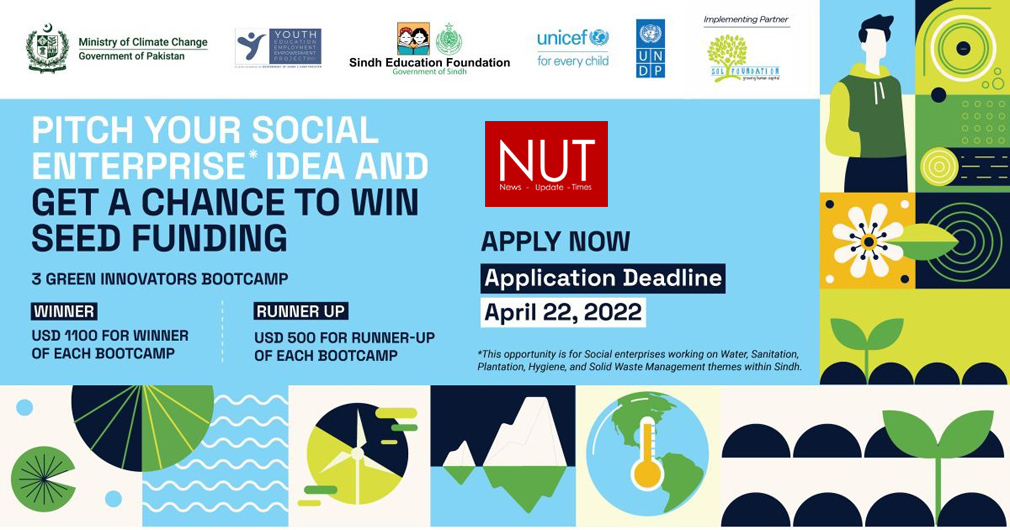
Karachi (Muhammad Yasir) The Green Innovators 2022 programme has been launched by Ministry of Climate Change, Sindh Education Foundation (SEF), Sindh government and United Nations Development Programme (UNDP) to promote social entrepreneurship among youth in remote districts of Sindh.

Sindh has been facing major socioeconomic issues which have exacerbated in the past decade. According to Pakistan Social and Living Standards Measurement Survey of 2017-2018, 39.4 percent of households do not have any proper sanitation system in Sindh. Furthermore, solid waste collection and its safe disposal is also a major challenge of rural and urban areas of the province. While the government and development partners are working together to bring socio-economic development in Sindh, youth also need to be involved to address these challenges.

Thus, to involve the youth, the Green Innovators Programme 2022 has been launched in Sindh which will be implemented under Youth Education Employment and Empowerment Project (YEEEP) – a joint initiative of UNDP and SEF by School of Leadership Foundation. Under this programme, three 4-day boot camps across Sindh will be organized in which young social entrepreneurs working in the thematic areas of water, sanitation, plantation, hygiene and solid waste management will be assisted in planning, sustaining and scaling up their social enterprise through capacity building workshops and mentoring sessions.

Speaking about the Green Innovators Programme, Lal Kumar, Assistant Director, Sindh Education Foundation, said, “YEEEP UNDP under the Green Innovators Challenge is providing opportunities to young social entrepreneurs to polish their skills to sustain their enterprises and present their innovative solutions to a larger audience including the industry experts and government. This will not only bring visibility to their enterprises but also help them form right partnerships to scale up and address complex issues of Sindh related to health hygiene, water and sanitation.”

Moin Zaidi, Project Manager, YEEEP-UNDP, said, “Youth form the biggest segment of the population and need to be realized as one of the most important stakeholders in development of the country. Green Innovators Challenge is an excellent initiative of Ministry of Climate Change, Sindh Education Foundation and UNDP which will help to economically empower young social entrepreneurs of remote districts of Sindh while also addressing pressing development issues of the province.”

The youth between the age group of 15 to 35 years, belonging to one of the target districts of Sukkur, Hyderabad, Sanghar, Jacobabad, Karachi (Malir, Korangi), Larkana and Tharparkar will be initially participating in these boot camps by 22nd April, 2022. The programme ensures inclusion of all segments of the society including women, transgenders, people with disabilities and individuals belonging to ethnic and religious minorities and residents of remote areas. To apply, visit: https://bit.ly/3IOcXqm

Riphah International University Opens the First-Ever All-Female Campus in Gulberg Greens Islamabad

Lahore (Nut Desk)

In the recent years, an upsurge in the development of the education sector is observed leading to an increase in the number of university graduates from 6% in 2009 to 15%. Even though the rise in numbers of higher education graduates is increasing the literacy rate of Pakistan but the ratio of female literacy is still low resulting in multiple social and familial issues. In 2019, Pakistan’s total literacy rate was around 58% and women’s literacy rate was less than the average rate of 46.9% which reinforces the dire need for female education. 

The factor resulting in lower female literacy rate varies with respect to culture, place, and city however, the major issue is the lack of Female-only universities and Co-education. In the Twin cities, Islamabad, and Rawalpindi, only 3 Government Women Universities are working to accommodate the educational needs of women which is far lower in comparison to the demand ratio. 

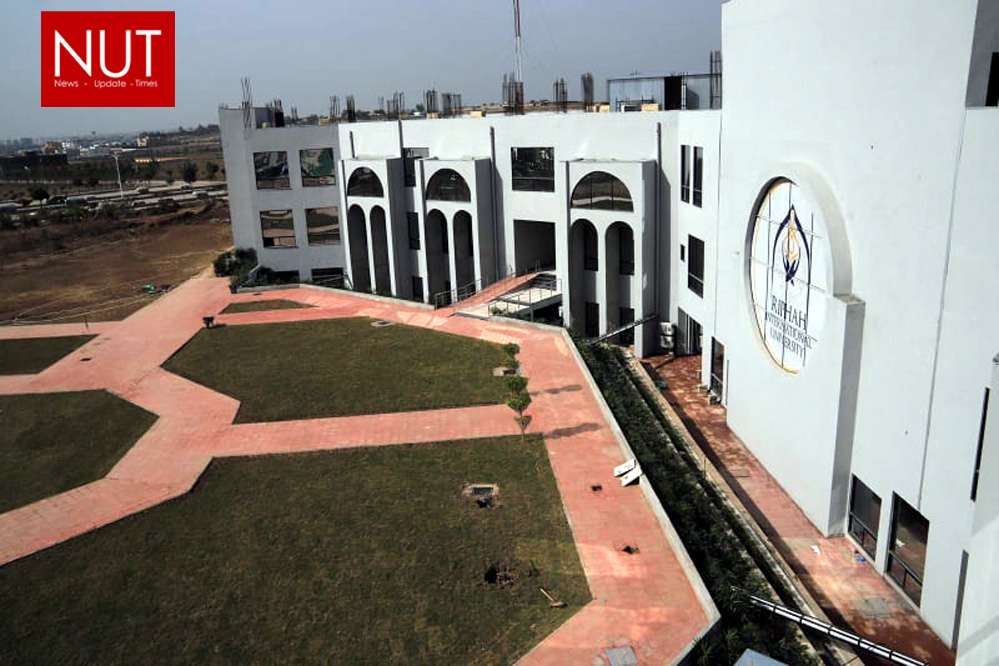
To increase the Female education ratio and to facilitate the students of Twin Cities, Riphah International University has taken an inspiring initiative of introducing the first-ever Female Campus in beautiful vicinity of Gulberg Greens Islamabad. This is first time that an exclusive campus for female students has been opened by a private sector varsity. The campus has been made fully functional in march 2022. It can accommodate the learning needs of more than 3000 students offering professional degree programs including Health Sciences.

Riphah International University’s Gulberg Greens Campus is equipped with modern learning and campus management resources with a focus on a low energy footprint and it provides a healthy natural learning environment that will be culturally in line with the Islamic ideology of Pakistan. This project is designed with a view of making a state of art education system with medical and DPT labs, medical laboratories, libraries, and up-to-date academic blocks. This is the first-ever Female campus that will provide medical education especially the programs related to rehabilitation sciences including Doctor of Physical Therapy, Speech Therapy, and Psychology. The campus will also offer Computer sciences programs as well as social sciences subjects.

Along with the theoretical knowledge, the RIU administration has created up-to-date modern labs and laboratories in which the students can practice their skills and gain firsthand experience. RIU administration is also planning to build a 600 Bed Hospital within the campus boundaries to provide healthcare services to the public and to help students practice their skills in it. On this campus, the students will get every facility to meet their academic goals and achieve the highest. In terms of geographical location, RIU-Gulberg Greens Campus is the first university that will facilitate the people living in and around the local domain of Gulberg Greens Islamabad which itself is a huge achievement. 

For the past 25 years, Riphah International University has made a remarkable contribution in the education and healthcare sector of Pakistan. The presence of University in six different cities through twelve campuses allow it to fulfill the learning needs of more than 23000 students at present. In the coming years, Riphah International University is determined develop further infrastructure and to initiate more programs to increase the literacy rate and to contribute in overall development of Pakistan in terms of producing highly qualified, self-sufficient citizens.


International Rescue Committee’s recently published white papers

International Rescue Committee’s recently published white papers shed light on fundamental challenges adversely impacting girls’ education in Balochistan

Lahore (Muhammad Yasir) “The past couple of decades have witnessed Government of Balochistan’s efforts to improve education service delivery in the province. Nevertheless, the struggle to effectively serve most marginalized learners particularly girls continues,”  said Tayyaba Aurangzeb, Acting Country Director, International Rescue Committee, in a press statement issued by the International Rescue Committee(IRC). To understand the key barriers to education in Balochistan, particularly for adolescent girls, and identify potential solutions, the International Rescue Committee reached out to key stakeholders and communities.

Based on the discussions, the International Rescue Committee published a five-part series of white papers under its Teach and Educate Adolescent Girls with Community Help (TEACH) initiative. The white papters point to five main challenges that adversely impact girls’ education:  insufficient schools, long commute to schools, dearth of female teachers, lack of basic facilities in schools and the absence of gender responsive budgeting. “Each published white paper focused on one fundamental issue facing girls to access education and proposed a set of recommendations,” shared Tayyaba Aurangzeb, Acting Country Director, International Rescue Committee.

On the demand-side coherent awareness raising campaigns to propagate the importance of girls’ education and discourage practices such as early and child marriages can go a long way in improving girls’ access to education as well as their retention in school and completion of post-primary education.

The key supply-side barriers that require immediate rederessal include the provision of basic facilities such as clean water, gender-sensitive health and hygiene facilities, boundary walls, and electricity. Trained female teaching and administrative staff in post-primary schools, and the provision of subject specialist teachers in science and math are also important supply-side considerations that require immediate attention. Finally, the commencement of second shifts in existing primary schools, up-gradation of existing primary schools, and construction of new post-primary schools for girls were among the short- and long-term solutions presented in International Rescue Committee’s white papers. Ms. Aurangzeb added, “A coherent gender-sensitive approach to education service delivery will be needed that addresses demand- and supply-side barriers to girls’ education through a variety of innovative strategies to ensure that the access, quality and retention concerns are resolved.”

International Rescue Committee’s TEACH initiative is designed to overcome prominent barriers to education for girls in Balochistan. TEACH also aims to raise nationwide awareness about binding constraints that continue to deprive more than 13 million girls across Pakistan of their right to education.

SAF-GCT charitable alliance to enroll another 10,000 out-of-school children in Sindh in one year

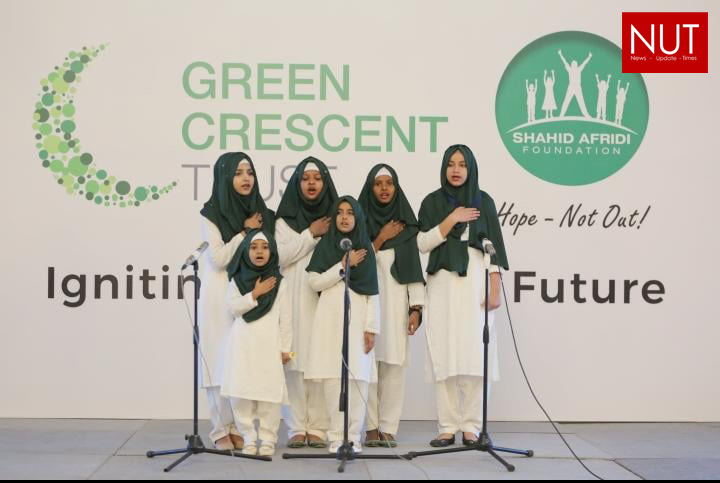
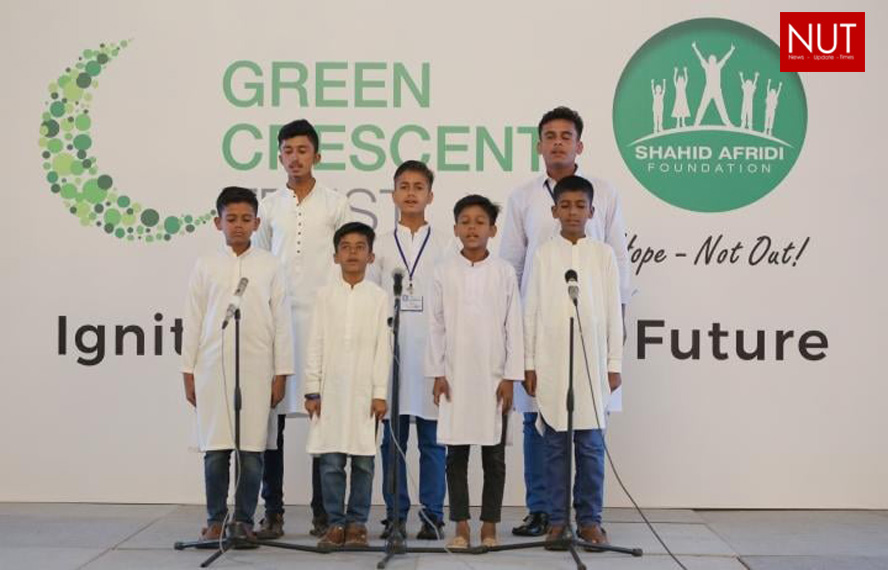
Karachi  (Muhammad Yasir) Karachi The alliance of the two leading non-profits has announced to enroll 10,000 more out-of-school children in one year in the network of jointly run charitable schools in Sindh. The non-profits Shahid Afridi Foundation (SAF) and Green Crescent Trust (GCT) made the announcement to this effect at their joint annual fundraiser held here at a hotel and attended by the leading businessmen and philanthropists of Karachi. The two charities have been working together in the education sector for the past four years having an enrolment of over 3,000 children from underprivileged families in eight jointly run schools in backward areas of Karachi.

Both the charities aim to expand their network of charitable schools to tackle the gigantic task of enrolling out-of-school children. GCT CEO, Zahid Saeed, said that over 22 million children are still out-of-school in Pakistan. He said the authentic data showed that the number of illiterate children in the country surpassed the total population of Australia. He said the latest verified data compiled by GCT showed that Pakistan’s total spending on education exceeded the defense budget of the country. He said the education budgets of provincial governments, Islamabad, Azad Kashmir, and Gilgit-Baltistan, if combined together was more than the annual defense budget of Pakistan. He said that Pakistan despite spending Rs 1,300 billion on education annually was far from tackling the issue of out-of-school children as their number kept on increasing every year.

GCT Trustee, Saad Zia, said that a group of concerned businessmen 28 years back had adopted an abandoned building of a government school and hired teachers to revive academic activities for the needy children in a backward area of Karachi. He said that the adoption of the government school building became the basis of GCT’s creation that had now 155 charitable schools all over Sindh having an enrolment of 29,000 children of the needy families. He said the footprint of the GCT’s charitable work had been present all over Sindh as its schools were situated from Sukkur to the Arabian Sea coast. He told the audience that the GCT established its schools in such backward areas where there had been no prior facility to educate the children. He said the GCT’s charitable network enrolled 1950 orphan children who were not just provided education but the pressing economic needs of their families were also regularly fulfilled.

Introducing his charity to the guests of the fundraiser, SAF Chief Operating Officer, Rizwan Ahmed, said the cricket celebrity Shahid Afridi had entered the field of charitable work in 2014 with a focus on the areas of health, education, community development, sports, and emergency relief for the deprived communities. He said that in all the SAF ran 14 charitable schools all over Pakistan having an enrolment of 4,207 children from destitute families who were being given education free of charge. He said the water supply projects built by the SAF had benefited over 25,000 families in 90 villages that had been supplied around 102,400 gallons of filtered water. He said that during the initial strict lockdown imposed in the country against the spread of Covid-19, Shahid Afridi had himself travelled 18,000 kilometres all across the country especially in Balochistan to give food rations to the needy families. He said that Afridi had to attend the fundraiser himself but couldn’t do so due to worsening of his health due to the injury as the cricketing star had personally sought an apology from the prospective donors who wanted to become a partner with him to educate children of the deprived areas. Short documentaries of both the NGOs were shown on the occasion. GCT’s documentary was about an orphan graduate of GCT’s school network, Danish Ghafoor, who later graduated from the IBA. Ghafoor after completing his education became an entrepreneur by establishing his own livestock farm that now employs the local needy population of his village in Mehrabpur.

The documentary shows that every child enrolled in the charitable schools of the GCT and SAF has the potential of following the footsteps of Ghafoor in practical life. Renowned actor, Adnan Siddiqui, conducted the show and expressed his fullest commitment to the alliance formed between the GCT and SAF for educating the children of needy families.

Jinnah Inter-School Declamation Competition 2022 held at Quaid-e-Azam House Museum

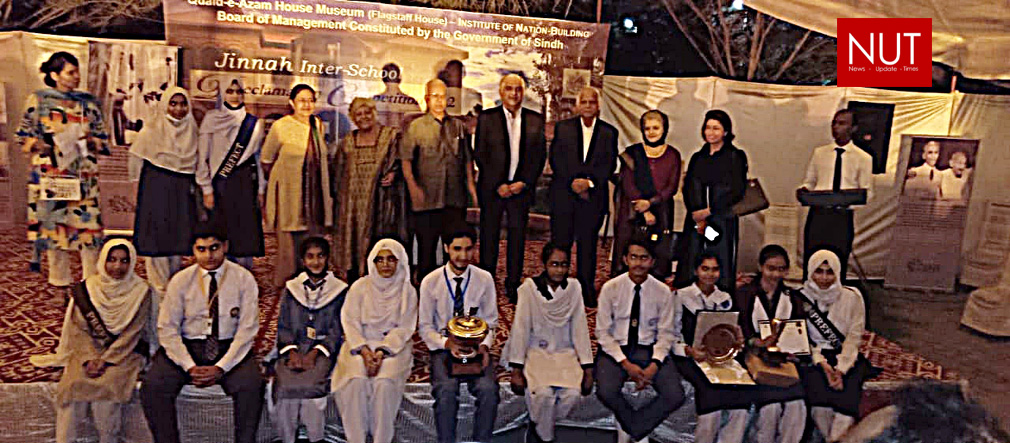
Karachi (Muhammad Yasir) The Board of Management (BoM), Quaid-e-Azam House Museum – Institute of Nation Building-constituted as a public / private venture and given legal cover by Sindh Government’s notification, in accordance with Sindh High Court’s Order dated 6th April 2021, organised the “Jinnah Inter-School Declamation Competition 2022” today, at Quaid-e-Azam House Museum (Flagstaff House), Karachi.

It should be noted that after over a decade, the annual popular event for students of Karachi schools was resumed by the Board of Management, Quaid-e-Azam House Museum Institute of Nation Building.

The final round of the Jinnah Declamation Competition 2022 was held on 19 March following two rounds for the selection of finalists on 17 and 18 March in which 29 students participated. Over 65 Karachi-based schools were invited to participate.

Among the 12 finalists were Samia Bint from Mama Parsi School; Abyanuddin Ahmed Ansari from St. Michaels Convent School; Abid Ali from Ida Rieu School; Pratik Harani from St. Pauls High School; Aliya Zehra from Al Murtuza School; Bakhtawar Jahanzeb from PECHS School; Nawal Abbasi from Aisha Bawany Academy; Sabeen Hameed from Bahria College, EABT Majeed Campus; Marium Kapadia from Jaffer Public School; Eman Ali from Bahria College, Karsaz; Munazza Fareed from Sindh Madressatul Islam; Hadiya Iman from Karachi Public School.  

The judges were Naseem Liaquat Merchant, The Jinnah Society; Ameena Saiyid, Lightstone Publishers; Aliya Tayabi and Dr Huma Baqai, IBA, Karachi.

The topics for the finalists were: Jinnah’s Pakistan and Pakistan and the Muslim world – Interaction and Benefits. Attractive prizes were given to the first three winning students. First position was awarded to Abid Ali from Ida Rieu School and was given the ‘Jinnah Trophy’ along with Rs. 50,000/- cash prize, books, merit certificate. Second position was awarded to Eman Ali from Bahria College, Karsaz and was given the ‘Jinnah Shield’ along with Rs. 25,000/- cash prize and books. Third position was awarded to Bakhtawar Jahanzeb from PECHS School and was given the ‘Jinnah Cup’ along with Rs. 15,000/- cash prize and books.

All participating students were given certificates of participation while the 12 finalists received certificates of merit. All students present at the venue received complimentary copies of the book on Jinnah, titled ‘Our Quaid’, a brainchild of Liaquat Merchant, Jinnah’s grand nephew, written for primary school pupils by Amina Azfar and published by Lightstone Publishers with a Foreword by Mrs. Nadira Panjwani from Panjwani Charitable Foundation & Trust.

Introduction by Ameena Saiyid, was presented to all the students at the event. Students, Parents, Teachers and Principals were present at the event.

The Guest of Honour, Mr Mohsin Nathani, Head of Habib Metropolitan Bank, the main sponsor mingled with the children and took pictures with the winners. Mr Liaquat Merchant, Senior Vice-Chairman BoM, Mr Ikram Sehgal, Chairman PathFinder Group and Ameena Saiyid, Lightstone Publishers also spoke.

The event was sponsored by Habib Metropolitan Bank Limited, The Jinnah Society and Karachi Council on Foreign Relations. It will become an annual event at the Quaid-e-Azam House Museum in addition to other nation-building activities for students. A similar event will be arranged for students in Urdu and Sindhi.


Experts stress joint efforts to ensure enabling future for Persons with Disabilities

Lahore (Muhammad Yasir) Acknowledging the fact that persons with disabilities (PWDs) in Pakistan have potentials, speakers at a two-day conference have called for a multi-pronged approach at all levels to ensure an enabling future where PWDs can experience equal opportunities and contribute towards nation building with full capacities.

The conference was held at the LUMS campus, Lahore, jointly by the Office of Accessibility and Inclusion at LUMS and Sightsavers Pakistan.

This conference served as an important milestone in promoting safe, secure, accessible, and inclusive spaces for PWDs at the higher education level in Pakistan. A number of sessions were also held focusing on disability rights and movements. The event raised awareness on the importance of creating a future where persons with disabilities experience equal opportunities and develop policy proposals to chart this path in the specific area of higher educational institutions.

The opening day of the conference focused on international context of disability and inclusion with panellists from different countries while the concluding day focused on the local context with panellists sharing experiences from country level.

Justice Mansoor Ali Shah, Yousaf Saleem (first blind judge in Pakistan), Country Director Sightsavers Pakistan Munazza Gillani, Global Education Leads from Sightsavers, coordinators of disability networks, representatives of government and NGOs and persons with disabilities were amongst the the panellists.

In her welcome address, Munazza Gillani said this strategic event was aimed at identifying gaps and coming up with solutions to cope with the challenges being faced by the persons with disabilities in the society. She added learnings and the key recommendations and related solutions from these two days event will create a strong impetus towards empowerment of persons with disabilities. She further shared those learnings of the conference will be included in next Voluntary National Report (VNR) to be presented at High Level Political Forum (HLPF) of United Nations.

Provost LUMS Tariq Jadoon in his welcome note said that it is our collective responsibility to ensure an equitable society which extends equality of opportunity to all its members. He further said that the aim of the conference was not only to bring all the stakeholders together, but more importantly, to ensure that the voice of persons with disabilities at the decision making table is highlighted.

During the two-day conference, various interactive sessions were also held where the experts, some of them participated virtually, highlighted the provincial and federal government legislation with regard to the protection of the rights of the persons with disabilities, gender perspective especially from a feminist approach and came up with key recommendations.

Justice Mansoor Ali Shah who had been a great supporter to the disability rights, emphasized on the use of sensitized language regarding disability. Director General Social Welfare Department, Punjab, Mudassir Riaz shared that Punjab Disability Bill has been submitted and soon will be tabled in provincial assembly for approval. He further told that an online portal for persons with disabilities has been developed where they can get registered for disability certificate as per their convenience.

The sessions examined the culture and consequences of inclusive community-based living for persons with physical, intellectual and psychosocial disabilities. Panellists shared lived experiences and conducted a deeper analysis of case studies focusing on human rights, dignity, quality of life and health, equal rights and access to education, autonomy and social inclusion of Persons with Disabilities.

The students with disabilities at conference highlighted different barriers to education including discrimination in enrolment, schools that are not accessible, and failure by schools to provide an individualized approach or reasonable accommodations. The session also evaluated interventions and initiatives that help advance disability rights in line with the SDGs Framework.

Govt launches Green Youth Movement to ensure better environment

Under this programme, 2.1 million youths from across the country will be engaged to ensure green initiatives besides creating more than 65,000 jobs

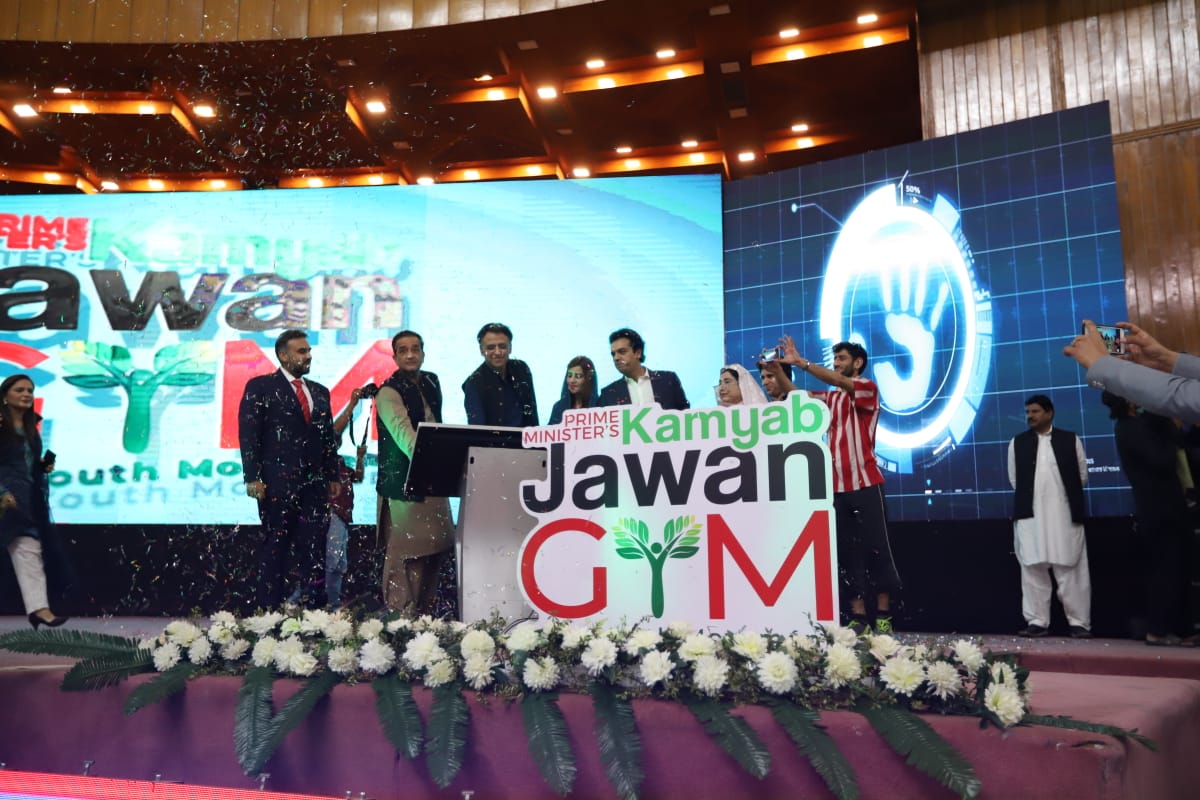
Islamabad (Muhammad Yasir) Reiterating the PTI government’s commitment towards making Pakistan green and clean, Federal Minister for Planning and Development, Reforms and Special Initiatives Asad Umar has said that the Green Youth Movement (GYM) would play a significant role in mitigating the climate change impacts on environment.

The minister expressed these remarks while inaugurating the Green Youth Movement under the Prime Minister’s Kamyab Jawan Programme at the Convention Centre, Islamabad, on Thursday.

Minister of State for Climate Change Zartaj Gul, Special Adviser to Prime Minister on Youth Affairs Usman Dar, Country Director British Council Pakistan Amir Ramzan, Chairperson Higher Education Commission Shaista Sohail along with a large number of youth and students from various universities as well as stakeholders in education sector attended the ceremony.

Federal Minister Asad Umar said that Pakistan is facing climate change challenges as it is the 10th most affected country of the world bearing the brunt of the climate change. He, however, said that new dams are being constructed that will be completed in next five to seven years.

Explaining about the Green Youth Movement, the minister said that this initiative will prove to be a milestone in engaging youth, enhancing their capacity building as well as skills and approaching towards growth of Pakistan.

Minister of State for Climate Change Zartaj Gul said that the Kamyab Jawan Program has enabled the youth towards better decision making. These programs are designed under the prime minister’s vision of producing a skilled young generation to ensure betterment and prosperity of the country.

Addressing the audience, Special Adviser to the Prime Minister on Youth Affairs Usman Dar said that the PTI has launched Kamyab Jawan Programme that has played a key role in jobs creation, engaging youth and creating business opportunities in the country.

The green champions under the Green Youth Movement initiative will represent Pakistan in other countries and learn new approaches to address the climate change, he added.

In his remarks, Country Director British Council Pakistan Amir Ramzan said that the British Council is delighted to partner with the government of Pakistan on Kamyab Jawan’s Green Youth Movement. It is the initiative that will define the future of our youth, he remarked.

Chairperson Higher Education Commission Shaista Sohail said that the Green Youth Movement initiative, in collaboration with British Council and School of Leadership Foundation (SoLF) will engage 137 universities and 2.5 million youth for this initiative. More than 65,000 jobs will be created from this initiative, she said.

The GYM is part of the PM’s Kamyab Jawan Programme under which several initiatives have been taken to make youth of the country a potential instrument required to make the country progressive. Other initiatives of the PM’s Kamyab Jawan Programme include Loan Scheme, Skill Scholarship, National Youth Council, Green Youth Movement, Kamyab Jawan Markaz, Kamyab Jawan Innovation League and Tigers Force (the volunteers).

The GYM initiative is being supported by British Council’s new youth leadership programme called “Pakistan Youth Leadership Initiative” through technical support via trainings, digital engagement and international linkages. The School of Leadership Foundation (SoLF) is extending its support to the British Council in mobilizing the youth and create GYM clubs across 137 public sector universities through Green Elections.

The British Council will invest 2.8 million pounds to support the Green Youth Movement initiative, whereas the Pakistan government has already invested Rs. 238 million for this much-needed initiative.

Reimagining education in a post-COVID world

Lahore (Muhammad Yasir) Today Microsoft hosted an insightful discussion on the opportunity educators have to reimagine education for the post-COVID world. During the discussion, Microsoft Education Industry Lead Angela Nganga explored the various ways Microsoft is supporting educators to harness the value of education technology in hybrid learning. Nganga was joined by Khadija Amer, a representative from Microsoft customer Punjab Group of Colleges (PGC), Kaan Cetinturk, CIO & Director, Information Management & Technology Department, and Moritz Bilagher, Acting Director of Education, both from UNRWA Jordan, who shared their experiences of working with Microsoft technologies.

Digital tools support immersive education
Education fast became another casualty of COVID-19. A year into the pandemic, UNICEF reported that over 168 million children across the globe were still unable to attend school due to lockdown closures. Of those children, 9 million were in the Middle East and North Africa.  

This level of disruption shone a spotlight on the lack of resilience in our global education system. We must be able to teach our children despite future disruptions and in a way that arms them for success in the Fourth Industrial Revolution and beyond. To do that, policy makers and educators will need to reimagine education.
UNICEF, ISTE, UNESCO, and the World Bank have recognized the importance of digital tools in this effort, as the tools can provide a flexible, personalized approach for students. “At Microsoft, we too believe in this power of digital tools, which can transform educational systems and support schools, teachers, and students,” says Nganga.

“We have a once-in-a-generation opportunity to reimagine education in a post-COVID world. We can take the hard-won lessons of the pandemic and use this knowledge to create a future-proof education system that serves our children and protects their future,” she adds.

Using educational analytics to inform educational strategies
Modern teaching and learning make the most of new and immersive ways to explore curricula. This reimagined education system nurtures a ‘growth mindset’ in students, emphasising future-ready skills to help them thrive in jobs not yet invented. Such a system is unafraid to use new technologies and new forms of assessment to gauge student progress. It’s a reimagining that Microsoft has brought to life through its K-12 Education Transformation Framework. With tools such as Education Insights for Teams, educators have one place to get real-time analytics of participant progress and activity within a class team. At a glance, they can proactively track student progress, get the data they need to shape the student experience, and ensure they are meeting social and emotional as well as academic needs. The goal is never to replace the expertise of skilled teachers. AI and analytics scale and augment that expertise, freeing teachers to apply their skills in the most effective ways.

“By using data and analytics in the hybrid classroom, educators can gain unique insights into their students’ successes and struggles, and then tailor individual interventions to maximise the children’s learning opportunities,” says Khadija Amer, Director, Punjab Group of Colleges.

“Making educational opportunities more widely available using technology and a reimagined education system offers the chance for children and young people across the region to access quality education and empowers them to pursue future success,” says Moritz Bilagher, Acting Director of Education, UNRWA Jordan.
Microsoft supports education equality

Microsoft understands that a holistic digital transformation strategy is a crucial to ensuring successful outcomes for both students and educators. That’s why through its Project Constellation, the company is working with its partner-systems to develop a set of technical resources that will empower them to build capacity and pursue education analytics at a much faster pace.

Project Constellation is a collaboration between education systems dedicated to advancing the use of education analytics and AI in order to maximize learning outcomes. The goal is to build an international community with common approaches to education analytics and AI. These resources are made available publicly through an open-source community called Open Education Analytics on Github. Together, members of Project Constellation are setting the foundation for the future of broad capacity-building in education analytics across the education sector.

Helping educators implement systemic transformation
Modern teaching and learning makes the most of new and immersive ways to explore the curriculum. It nurtures a growth mindset in students, emphasizing future-ready skills to help them thrive in jobs not yet invented. It’s unafraid to use new technologies and new forms of assessment to gauge student progress. The Microsoft Education Transformation Framework is an effective, flexible platform for education transformation, with the framework offering communities of practice, software and professional development.

“Through our strategic partnership with Microsoft, we have had great success implementing hybrid and blended learning for students via Teams, ensuring a secure and seamless access to all our platforms through Microsoft’s identity solutions and security policies, upskilling our IT teams and educators on the latest technologies, and benefitting from the power of Azure to host, manage, and secure our apps,” says Kaan Cetinturk, CIO & Director, Information Management & Technology Department at UNRWA Jordan.

“The key to a transformed learning system is understanding students’ strengths and weaknesses – whether academic, emotional or social, to offer learning opportunities that resonate with them. Microsoft aims to empower education systems around the world to provide students with the best learning opportunities and improve student learning outcomes, through shared knowledge and technical resources,” says Nganga.
 

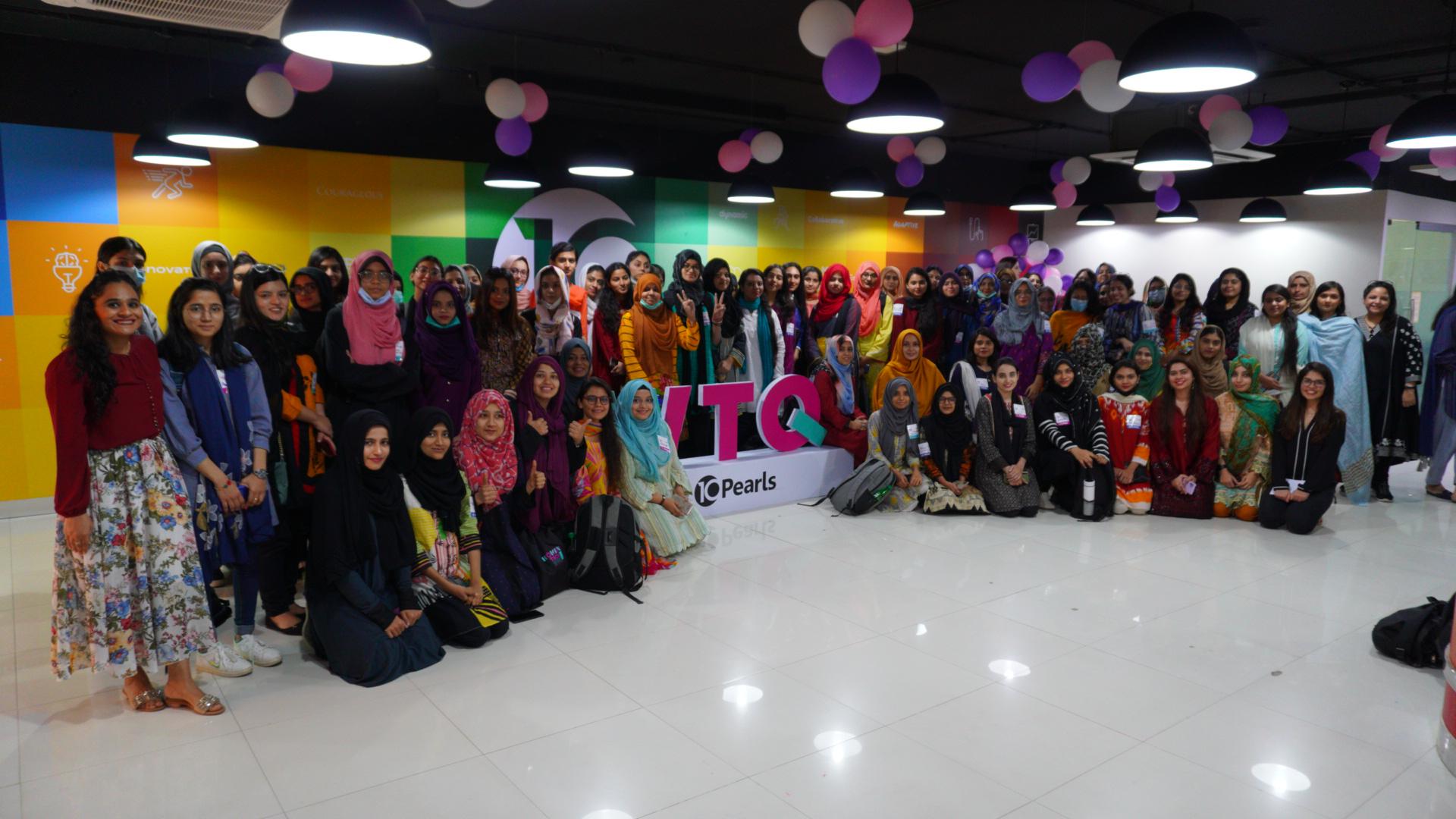
10Pearls University holds Women Tech Quest 2022

10Pearls University holds Women Tech Quest 2022, Pakistan’s biggest tech competition for women

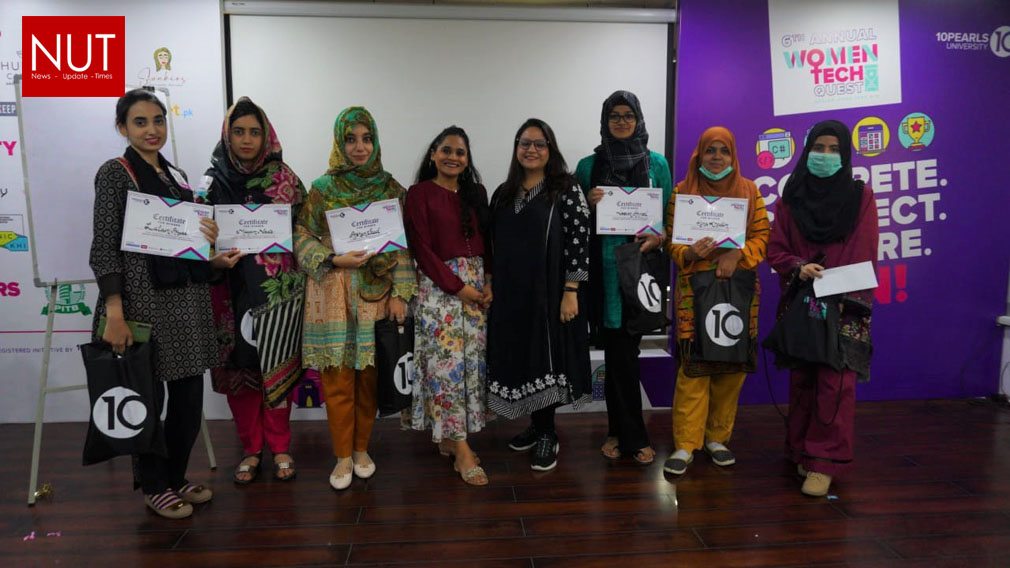
Lahore (Muhammad Yasir) Women Tech Quest 2022, an initiative of 10Pearls University, is a platform for women to compete, network and showcase their tech talents. The 6th edition of Women Tech Quest (WTQ) took place on March 12, 2022, and was physically held in Karachi, Lahore and Islamabad. Over 1200 women in technology from across the 3 cities took part in the event.

WTQ, launched in 2017, is a competition dedicated to help women gauge and showcase their tech skills, get recognition, and also win great cash prizes and exposure. Additionally, there are inspirational speaker sessions and hands-on workshops, in which leading professional women share their experiences to help other budding professionals grow and excel.

According to Zeeshan Aftab, Co-Founder and MD, 10Pearls, “This was our 6th consecutive year of successfully conducting Women Tech Quest. As one of our pioneering initiatives for gender diversity and women empowerment, WTQ has accelerated careers of 4000+ women, strengthened Pakistan’s tech industry with incredible talent pool, and provided women an established platform to shine and showcase their limitless potential.”

Multiple competition streams
The competition comprised three streams; Coding, Testing and Design. The Coding competition included a series of problems presented to the participants; they could use any programming language to solve them. The Testing competition presented contestants with a set of objectives to test database and automation concepts; while the Design Competition required participants to solve a UI/UX challenge, and their approach towards user research, persona building and user flows was gauged.

There were two categories for participation: Professional and Student category for each stream (Coding, Testing and Design), and each city had winners from them. Winners received grand cash prizes and shields, whereas all participants received swag kits and certificates of completion.

Invigorating speaker sessions and workshopsApart from the Competition, WTQ also featured inspirational speaker sessions by esteemed women such as Halima Iqbal, CEO/Founder, Oraan; Dr Asia Khanum, Founder of Emerging Technologies Labs; and Fatemah Sajwani, Manager, Global Talent Sourcing at KeepTruckin. The opening keynote was delivered by Carrie Kerpen, CEO, Likeable and Managing Director, 10Pearls.

In her opening note, Carrie shared her enriching journey to the top, and stressed on the importance of staying authentic, “Own who you are. If you lean in to who you are and work the best parts of yourself, you’ll see the path of growth and be destined for success!” 

The event hosted interactive workshops on Mental Maps for Personal Leadership and Success by Uzma Sadaqat, Founder, Wellnesshive; and Find your Balance by Dr Tasnim Rehna, Professor, Department of Applied Psychology, NUML Islamabad.

Endorsed by leading companies
As the event of the year for tech women, WTQ 2022 was endorsed by top names in technology and other industries. This time, the event partners included names such as AWS Pakistan, NIC Karachi, Microsoft Learn Islamabad, GDG Islamabad, WomenTechmakers Lahore, PWiC, Epiphany, CaterpillHERS and PITB.

The event was sponsored by KeepTruckin, Sastaticket.pk, AWS Community Pakistan, Swvl, GiftKarte, Hunza Candles and Junkie Crafts.

Education Malaysia Global Service

Education Malaysia Global Service – EMGS, facilitating international Students to pursue higher education in Malaysia

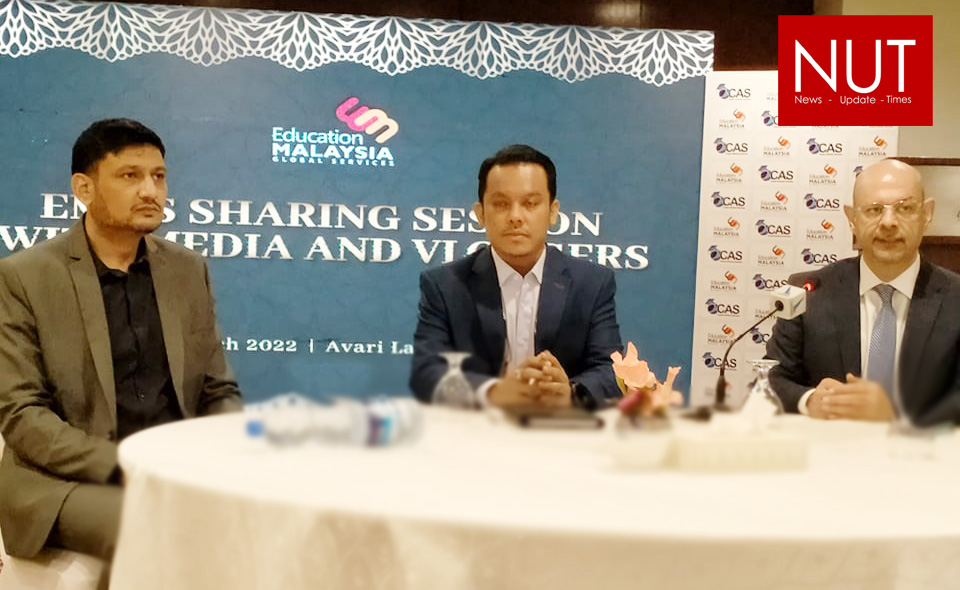
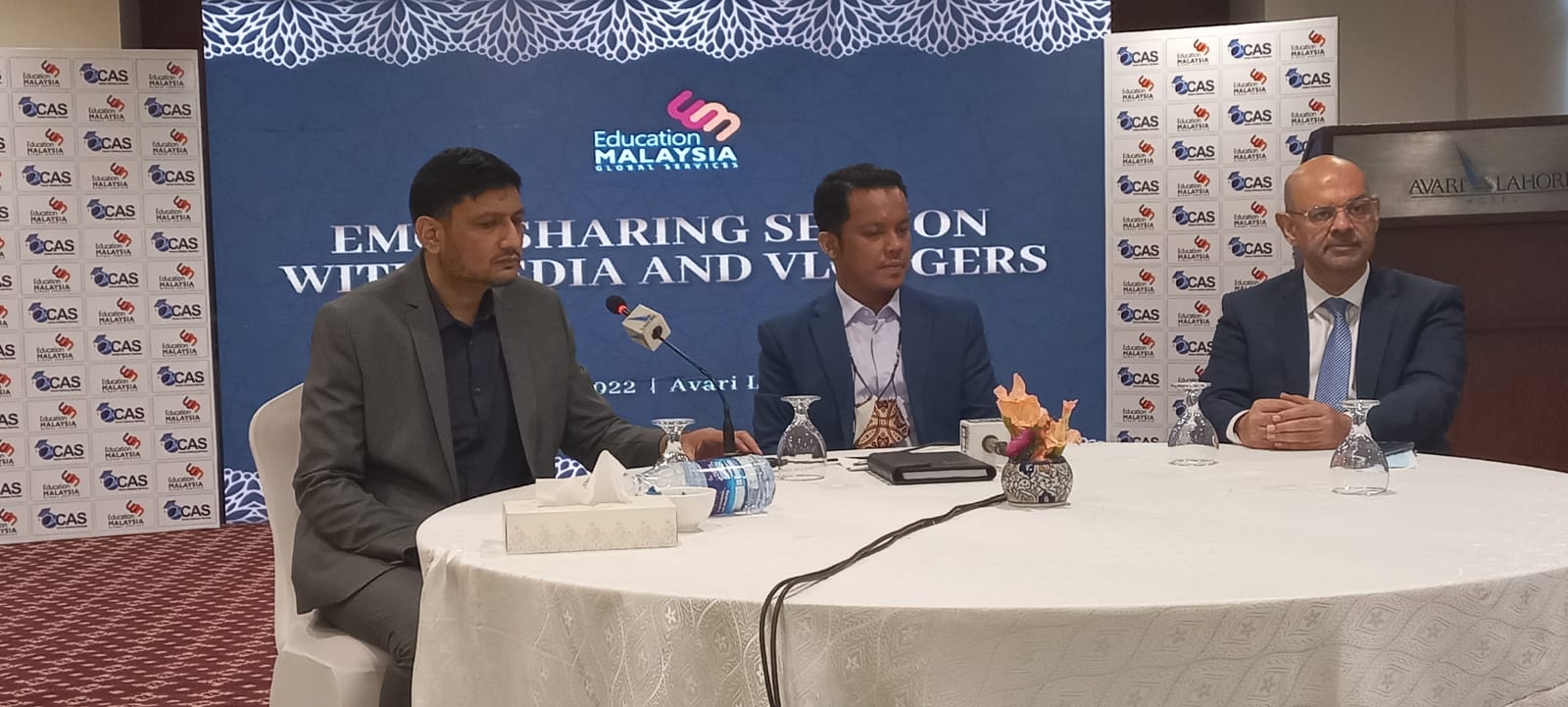
Lahore (Muhammad Yasir) Education Malaysia Global Services (EMGS), is responsible for promoting and assisting international students to pursue higher education in Malaysia. EMGS CEO Mr. MohdRadzlan bin Jalaludin in Pakistan and presented opportunities, possibilities and benefit of seeking higher education in Malaysia at a Press Conference. He emphasized on the presence of foreign students in Malaysia will offers economic benefit to the country and add value to its education system.

According to UNESCO data, Malaysia is currently in the top 11 charts in terms of Inbound student mobility. As of 2020 figure, the total number of international students enrolled in Malaysian universities and academic institutions are 131,000. Malaysian Government has raised the level of their education system which helped them to compete with top ranking countries like USA, Australia and UK in the field of education by highlighting its own uniqueness in terms of diversity and educational prowess.

MohdRadzlan bin Jalaludin CEO EMGS emphasized on benefit being offered to international student who choose to study in Malaysia. “Students will experience world-class education in Malaysia with top ranking institutions of the world offering a degree that is well recognized globally. Based on QS world university rankings, 32 Malaysian programs were placed among the top 100 universities for the study of their academic subjects. Malaysian has 435 state-of-Art higher education institutions across the country showing large capacity to absorb international students. Malaysia offers diverse culture, affordable living, safe environment and dynamic lifestyle to its international students”.

EMGS is responsible for promoting Malaysia as the international education hub of choice and positioning Malaysia amongst the top 10 education destinations. EMGS also manages the movement of international students in Malaysia, which includes facilitating of visa processing. It has also launched a new portal, ‘Discover Education Malaysia Portal’, an information portal on all higher education institutions in Malaysia in line with the ‘Study in Malaysia’ brand. This portal has complete information such as background, program, fee structure, career path, student testimonials, and informative articles from Malaysian institutions. Beside this, EMGS has also created ‘Course Talk Series’ where we invite representatives from higher education institutions to share information about programs and faculties at their institutions live on social media platforms.

EMGS is committed to supporting all initiatives made by the Government of Malaysia for the country’s economic recovery through various methods. EMGS will also continue to be consistent in making Malaysia the global education hub of choice and ensuring the welfare of all international students in Malaysia.