British Council trains 100 emerging young women for leadership role

Lahore (Muhammad Yasir) Celebrating the launch of its ‘Women in Leadership’ programme in South Asia, the British Council has reiterated its commitment to take more effective initiatives to increase women contribution towards nation building through women empowerment.

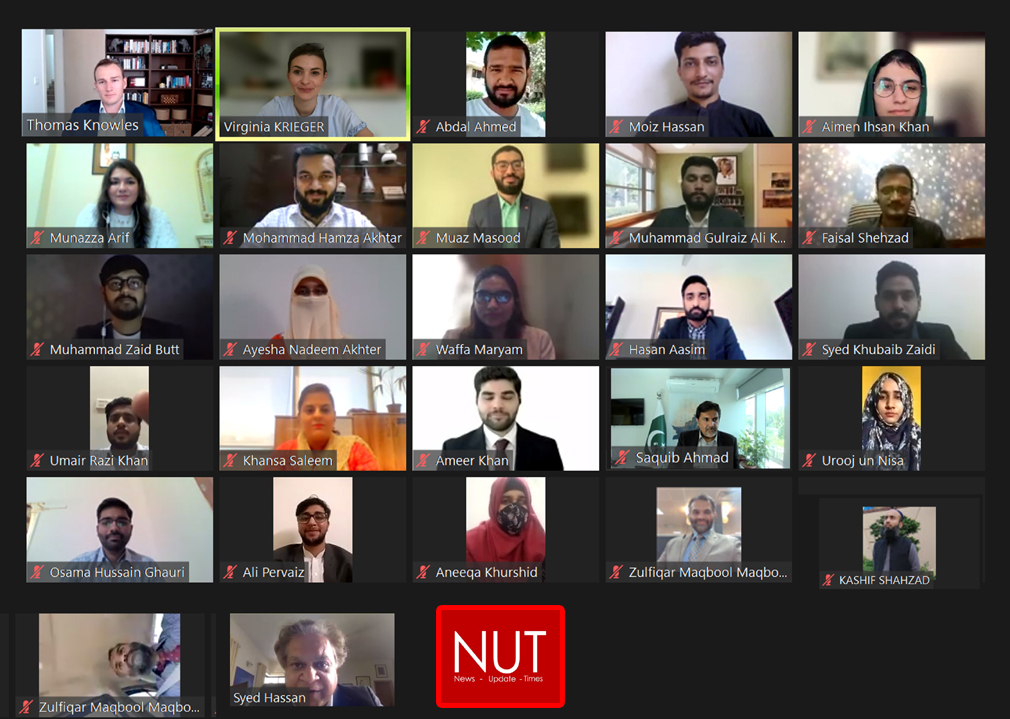
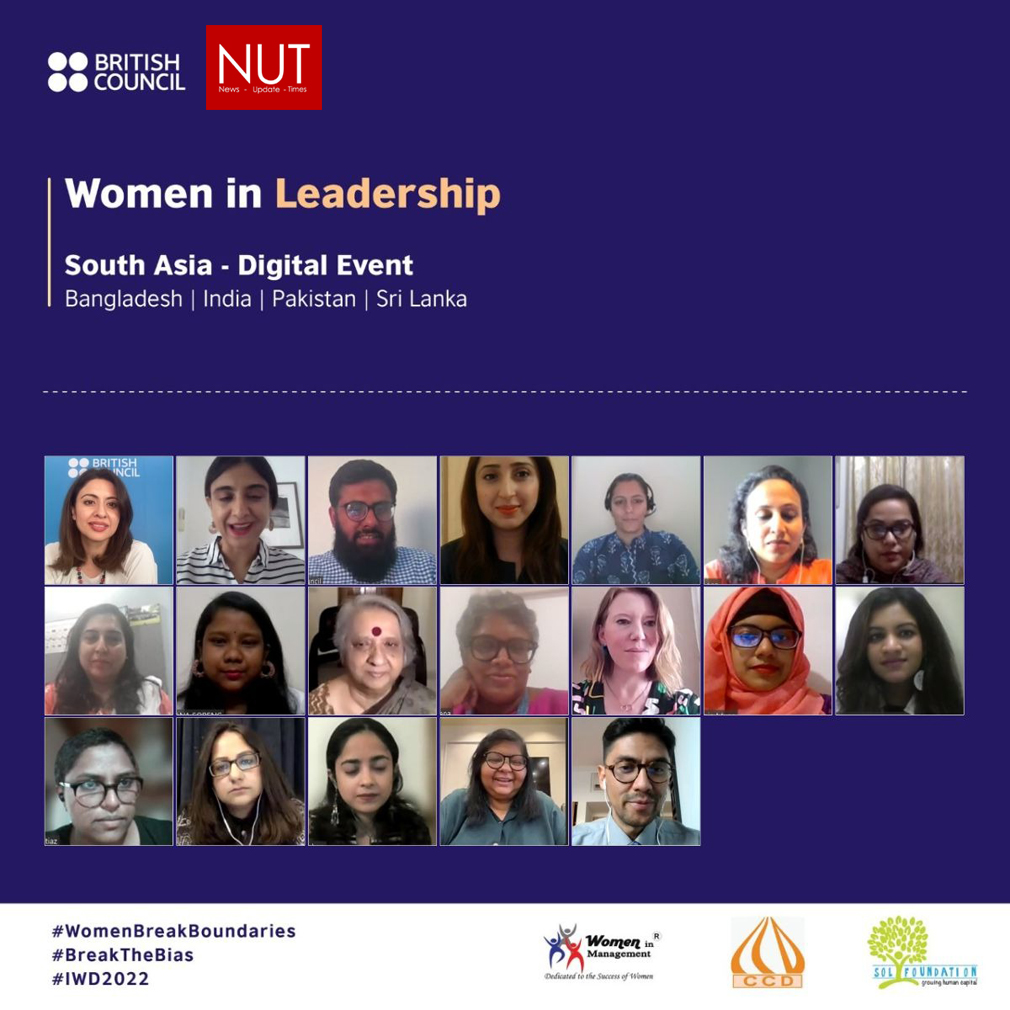
The British Council hosted a digital event across South Asia to celebrate the launch of its ‘Women in Leadership’ programme, a training programme for women in Bangladesh, India, Pakistan and Sri Lanka.

Inspired by Her Majesty the Queen’s seventy-year service and leadership, this training programme was launched under which a network of 100 young women leaders in Bangladesh, India, Pakistan and Sri Lanka and the UK was built. This programme offered 100 emerging young women leaders (25 each from these four states) a learning opportunity through an eight-week online, self-access leadership course to become more effective in leading interventions to support gender equality and women’s leadership within their sectors.

Representatives from British Council, Clore Social Leadership UK, SoLF, Women in Leadership participants, and other experts participated in the event. The event was moderated by Sidra Iqbal, a celebrated broadcast journalist and media personality from Pakistan while Jehan Ara, Founder and CEO of Katalyst Labs was the keynote speaker.

A panel discussion also took place where stakeholders shed light on the factors hindering gender parity and women decision-making roles. The discussion called for more vigorous efforts to ensure an enabling environment for capacity building of women.

The panellists included Coordinator Nijera Kori, Bangladesh, Khushi Kabir; Member of Youth Advisory Group on Climate Change, India, Archana Soreng; Country Director Marie Stopes Society, Pakistan, Asma Balal; and CEO Chrysalis, Sri Lanka, Ashika Gunasena.

During the event, inspirational stories of women who have been part of the Women in Leadership programme were also showcased.

The British Council is the UK’s international organisation for cultural relations and educational opportunities. It builds connections, understanding and trust between people in the UK and other countries through arts and culture, education and the English language.

HEC and Microsoft announced the Imagine Cup 2022 winners of Pakistan

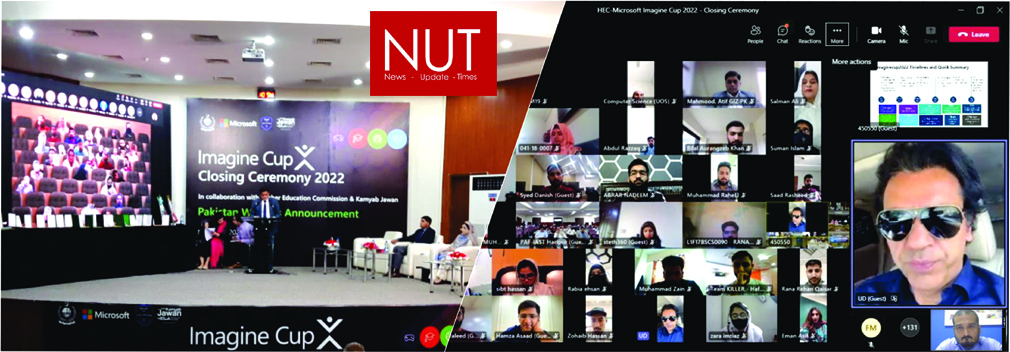
Islamabad (Nut Desk)  Microsoft and the Higher Education Commission jointly organized the Virtual Imagine Cup 2022 closing ceremony on 29thMarch, 2022 where the winners and runners up were announced in Pakistan.

During the event, The “Omega GIKI” team with their project “Mind Braille” from Ghulam Ishaq Khan Institute of Engineering, Science and Technology (GIKI) Pakistan and the “Reliance Team” with their project “Health Care 360” from University of Peshawar (UET) were declared national winners of Imagine Cup2022 and each team received a prize money of PKR150,000/=The “Roz team” from Forman Christian College was declared as “The EPIC Challenge Winners”.  The EPIC challenge winners of Imagine Cup got the unique opportunity of qualifying directly for world finals with a  prize money of 1000$. The three winning teams will now be representing Pakistan at the international level by competing with world top 48 world finalist teams. Additionally, 14 more university teams from South, Center, Baluchistan and Sindh regions were declared Imagine cup regional winners and runners-up and won cash prizes.

The event was joined virtually by Special advisor to the Prime Minster on Youth Affairs, Mr. Usman Dar. He appreciated and congratulated the top 17 teams declared as Imagine cup regional and national winners during the virtual event. He also appreciated the efforts of Microsoft and HEC on successful execution of Imaginecup2022. He discussed the possibilities of integrating Microsoft imagine cup with Kamyab Jawan program to empower students across the country.

While talking virtually at the occasion, Mr. Jibran Jamshad, Country Education Lead, Microsoft Pakistan said that “ the Imagine Cup 2022 ” remains the most popular initiative for Microsoft as it provides an opportunity to tech students, software developers and entrepreneurs to develop applications and technology-based solutions worth introducing in the market. “We at Microsoft strive to promote a culture of technological innovation and entrepreneurship across the globe. We believe that it is even more important for developing nations such as Pakistan. We have seen some excellent projects selected and recognized locally and now the best of best team from Pakistan will be competing in the world championship for a chance to win USD100,000, Azure grant, and a mentoring session with Microsoft CEO Satya Nadella”, Mr. Jibran added.

The Vice Chancellors and representatives of the winning institutions and other universities alsospoke of their participation in the competition. They were unanimously of the view that events such as Imagine Cup promote a spirit of hard work amongst students. The Imagine Cup provides the students with an opportunity to bring innovative ideas to life, gain new skills, avail the exclusive training, mentoring opportunities and great prizes.

In her closing remarks on the occasion, the Executive Director HEC, Dr. Shaista Sohail added that “HEC andMicrosoft are constantly endeavoring  to introduce technological advances in the education sector and Imagine Cup is one of the key projects that they have worked together successfully. We believe that these activities not only encourage the students to think innovatively but to join hands with each other, stay motivated and contribute for the greater good of their country. She complimented all participants specially the winners for their innovative contribution”.

Microsoft has already entered into an education transformation agreement with HEC covering keyhigher educational institutions in Pakistan. Under this agreement, Microsoft organizes several capacity building programs and holds similar activities for the education stakeholders throughout Pakistan. The key objective remains empowering the education sector through technology and with the latest Microsoft products and services.

Stakeholders for further promoting TVET practices for youth

Lahore (Muhammad Yasir)  Stakeholders at a skills development forum have stressed the need for further promoting the best technical and vocational education and training (TVET) practices in the country and sensitizing the youth about the significance of TVET in order to meet the needs of international job market.

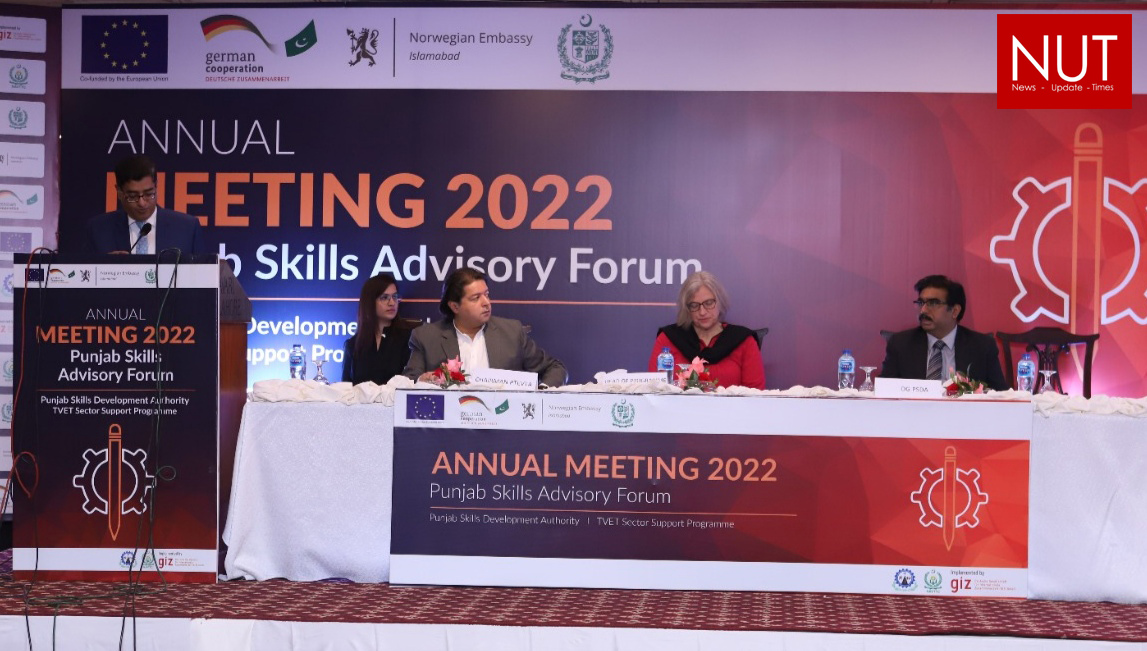
These views were expressed during the annual meeting of Punjab Skills Advisory Forum (PSAF) organized in collaboration with the donors-funded TVET Sector Support Programme (TVET SSP) here on Tuesday.

The PSAF was constituted in 2017 by the Industries, Commerce, Investment, and Skills Development Department Punjab with the support of the TVET SSP which is funded by the European Union, the German Federal Ministry for Economic Cooperation and Development (BMZ) and Norwegian Embassy. The PSAF was established with the goal of bridging the gap between stakeholders participating in TVET through advocacy and awareness, providing strategic guidance for TVET programme implementation, discussing broad strategic and policy issues, and overseeing the progress of TVET sector reforms in Punjab.

Director General Punjab Skills Development Authority (PSDA) Moazzam Iqbal Sipra was the chief guest of the PSAF meeting while other attendees included Head of TVET SSP Ms. Iris Cordelia Rotzoll, representatives of business and industry associations, leading employers from major economic sectors, allied departments, training providers (TEVTA, PVTC, PSDF, SMEDA, TUSDEC), NAVTTC regional office Punjab, qualifications awarding bodies (PBTE, TTB, PVTC) and international donors/technical agencies working in Punjab (GIZ, JICA etc).

The PSDA Director General said, “We are here to recognize and promote the best TVET practices and create awareness about the significance of TVET to produce a skilled force in the country.”

He further remarked that this forum is the pathway for the Punjab youth to achieve a successful life ahead by gaining the excellent and latest technical and vocational training to compete in the world job market.

“It is the best forum where the policies regarding TVET reforms, green skills, gender mainstreaming, reintegration of returnees, and digitalization are discussed, and strategies are made while having all stakeholders at the same place to achieve the height of the success of these reforms,” the minister maintained.

In her remarks, Iris Cordelia Rotzoll said that she sees great potential in this forum where achievements of TVET sector in Punjab are shared on yearly basis and our people can take the best benefit from the opportunities being discussed in the meeting and implemented in the TVET sector.

She hoped better results of the policies being designed for the implementation of these reforms and building a proper channel for public and private partnership.
The meeting also provided a platform to gather ideas, inputs, and expectations on the key topics in the TVET sector like reintegration of returnees, green and digital skills.

TVET Sector Support Programme and Punjab Vocational Training Council join hands to reintegrate returnees through skills development

Lahore (Nut Desk) TVET Sector Support Programme (TVET SSP) joined hands with Punjab Vocational Training Council (PVTC) today, to offer reintegration assistance to returnees and local population. TVET SSP is facilitating the reintegration of returnees under its new component, Reintegration of Returnees in Pakistan, which is funded by the German Federal Ministry for Economic Cooperation and Development (BMZ). TVET SSP is funded by the European Union, the Federal Republic of Germany and the Royal Norwegian Embassy and is being implemented by Deutsche Gesellschaft für Internationale Zusammenarbeit (GIZ) GmbH in partnership with the National Vocational and Technical Training Commission (NAVTTC), provincial Technical Education and Vocational Training Authorities (TEVTAs), PVTC and several public and private sector organizations.

The partnership signing ceremony was attended by the representatives of several stakeholders from the development sector, including Punjab Skills Development Authority (PSDA), the Women Chamber of Commerce and Industry (Lahore Division), the Punjab Skills Development Fund and Worldwide Fund for Nature (WWF) Pakistan.

The ‘Reintegration of Returnees in Pakistan’ component of TVET SSP, aims to facilitate the socio-economic development of Pakistani returnees and the locals by offering them quick and effective start-up opportunities, especially in Punjab, as it is one of the regions most affected by return migration. The component will support 15,000 individuals, including 6,500 returnees from Germany and Gulf Cooperation Council (GCC) countries through various support measures including Career and Entrepreneurship Advisory Services, Competency-based Training & Assessments (CBT&A), Recognition of Prior Learning, and Employment Promotion.

The partnership agreement between TVET Sector Support Programme and Punjab Vocational Training Council will particularly offer reintegration assistance to 700 returnees and locals through CBT&A and Recognition of Prior Learning. In addition, 275 beneficiaries will receive toolkits in their respective trades enabling them to earn their livelihood through sustainable means.

The agreement was signed by Major Shahnawaz Badar, Chairperson, PVTC and Ms. Iris Cordelia Rotzoll, Head of TVET Sector Support Programme. Major Shahnawaz Badar, while addressing the audience, said, “Seeing initiatives like Reintegration of Returnees in Pakistan come to life makes us believe that we are heading in the right direction. People who emigrate for work, bring years of international experience back with them. Our partnership with TVET SSP won’t only be helping the returnees, it will be providing an opportunity for locals to learn from their transnational experience as well. PVTC remains committed to contributing to the economic development of Pakistani people, and such unique partnerships always push us to bring innovation to the work we do.”

Ms. Iris Cordelia Rotzoll was also of the view that this partnership was yet another significant success for them as partnerships with key players in the TVET sector is integral to the success of any initiative. ”A robust and thriving TVET sector provides pathways for the youth to become a part of the workforce, eventually contributing to the socio-economic development of Pakistan. The addition of the RoR component would also help the returnees benefit from the TVET sector interventions, enabling them to take a better charge of their economic situation” she said.

SAP accelerates digital skills build, tackles youth unemployment with SAP Young Professionals Program

Lahore (Muhammad Yasir) In its commitment to address the pressing issues of youth unemployment and (digital) skills gap, SAP’s flagship digital skills build initiative, the SAP Young Professionals Program, is empowering tech talents in Pakistan with its comprehensive ennoblement plan, increasing their employ ability and driving economic growth while supporting digital transformation in the country.

The program recently conducted its sixth graduation ceremony virtually which was attended by SAP customers and partners. Syed Javed Hassan, Chairman National Vocational & Technical Training Commission (NAVTTC), also graced the event. The program was launched in Pakistan in 2014 and has since trained over 150 students. Globally, the SAP Young Professionals Program runs in a total of 37 countries, having trained more than 3600 students till date.

An initiative by the SAP Training and Development Institute, the program comprises of 2-3 months development plan that takes a blended learning approach and offers SAP software functional/technical knowledge as well as soft skill trainings. The program enables talented university students to gain SAP certification, graduating them as SAP Associate Consultants who are then immediately employable with SAP customers and partners. About 95% of all program graduates have already been placed into employment.

Sharing his views on the occasion of the program’s sixth cohort graduation, Syed Javed Hassan, Chairman NAVTTC said, “Pakistan currently has the largest youth bulge in its history which may prove to be one of our biggest assets if harnessed efficiently. However, the global shift towards automation and digitalization has evolved the skill needs and it is critical that we keep our youth up-to-date on skills needed to thrive in a digital landscape so as to ensure their economic wellbeing by expanding employment opportunities. The SAP Young Professionals Program is a commendable initiative by SAP and I encourage our youth to benefit from it as much as they can.”

Saquib Ahmad, Managing Director, SAP Pakistan, added, “Amplifying SAP’s efforts for bridging youth’s skills gap and creating sustainable work opportunities, SAP has a number of capacity-building initiatives running in the country that equip university students with a competitive edge in pursuing various career paths among SAP’s globally positioned customers and partners. It not only helps tackle youth unemployment and build skills, but also allows SAP customers and partners hire top talent, enhance the SAP ecosystem by expanding SAP-skilled consultant capacity for business growth, and further Government of Pakistan’s Digital Pakistan initiative by accelerating digitalization of the country’s economy and society.”

Murtaz Ali Khan, one of the recent graduates of the SAP Young Professionals Program from Pakistan said, “After successfully graduating from the SAP Young Professionals Program, I did not have to face any difficulty in finding the right job. Currently, I am doing my dream job – all thanks to SAP for making this possible.”


The 2nd Annual International Conference on Development: Discourses and Critiques resumes at IBA Karachi

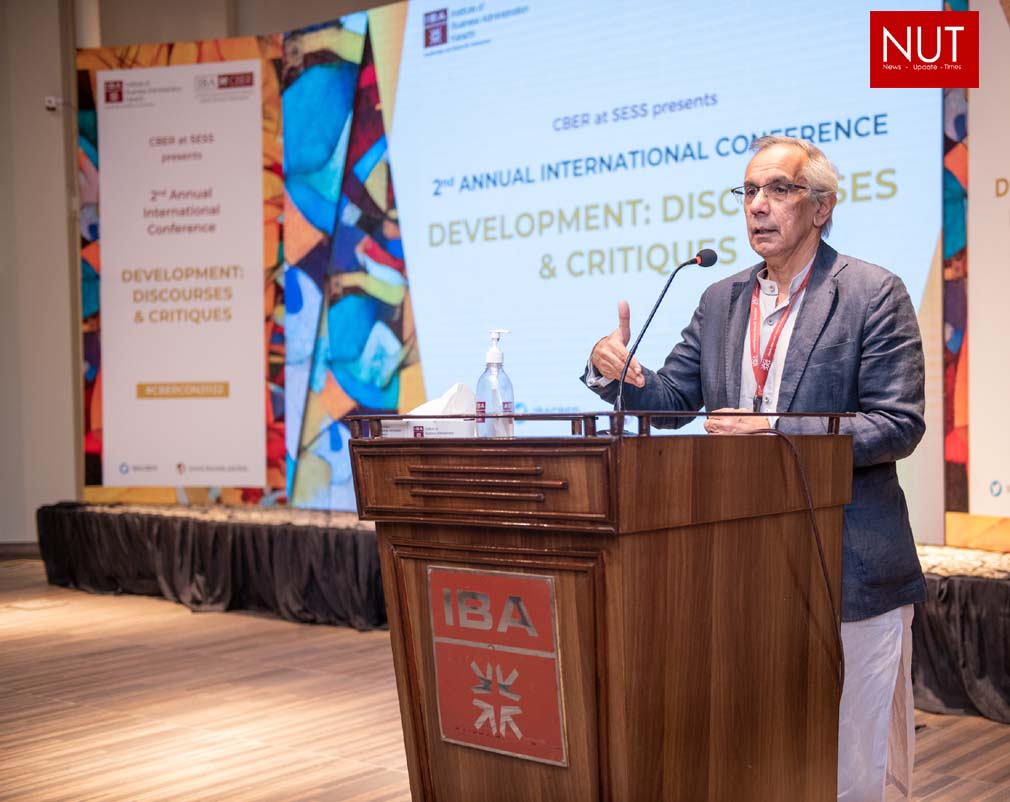
Lahore (Muhammad Yasir) The School of Economics and Social Sciences (SESS), in collaboration with the Center for Business and Economic Research (CBER) at the IBA Karachi, hosted day two of the 2nd Annual International Conference titled, ‘Development: Discourses and Critiques’. The three-day conference is taking place from March 25-27, 2022 at the IBA Karachi, Main Campus.

This year’s theme invites works from a wide range of disciplines to critique, question and reconsider the experiences of transnational, national and sub-national actors with the development process. What does ‘development’ mean for different actors, and how has this narrative shifted over time? How does development define and redefine power relations and what implications does this have for different groups? How have colonial experiences shaped futures and how does one deconstruct ideas rooted in these experiences?

To encourage innovation and diversity within modes of thinking, the conference is hosting presenters and participants from diverse backgrounds, including Skardu, Sukkur, Gilgit, Quetta, and Islamabad from Pakistan, and multiple professors from esteemed universities from the USA.

By centering radical subthemes, including but not limited to, decolonial and feminist frameworks, this conference aims to center critical perspectives that help us gain a nuanced understanding of social change and development.

The keynote address of the day and the second keynote for the conference, was Hans Timmer, Chief Economist, World Bank South Asia. The address emphasized the need to reorient the development sector’s emphasis towards the digital services and digital economy. Mr. Timmer underlined the need to account for the global mobility of capital through various interactions with the internet.

The first panel of the day, and the third one for the conference, was titled ‘Impact Evaluation of Public Policies.’ The discussion included the following five panelists: Dr. Ishrat Husain, Professor Emeritus IBA and Former Advisor to the Prime Minister; Dr. Sanval Nasim, Assistant Professor of Economics, Lahore University of Management Sciences; Najy Benhassine, Country Director of World Bank Pakistan, South Asia Region; Dr. Shehreen Mustafa, Civil Servant – Sindh Rural Support Organization; and Martin Dawson, Deputy Head of Mission and British Deputy High Commission. The panel discussed the importance of different strategies with which impact evaluation of public policies can be conducted.

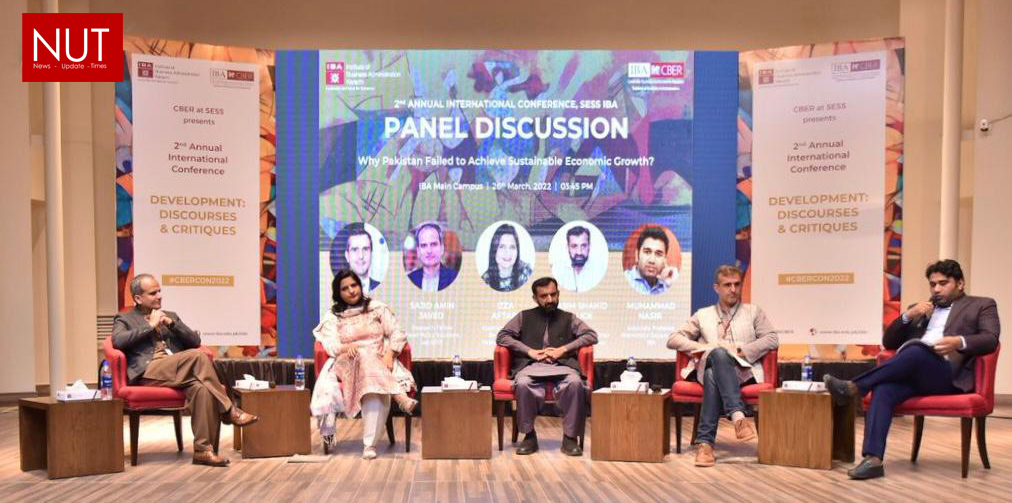
The second panel of the day, and the fourth one for the conference, was titled ‘Why Pakistan failed to achieve sustainable economic growth?’. The following five discussants contributed to the discussion: Dr. Gonzalo Varela, Senior Economist, World Bank; Dr. Sajid Amin Javed, Research Fellow, Head Policy Solutions Lab – SDPC; Dr. Izza Aftab, Assistant Professor, Beaconhouse National University; Dr. Wasim Shahid Malick, Professor Mehbub ur Raschid Chair, University of Peshawar; and Dr. Muhammad Nasir, Assistant Professor, Economics department, IBA Karachi. The panelist brought their own unique and rich perspectives to the discussion that questioned the Pakistani economic growth at the intersection of employment generation and economic inclusion across the board. The discussion analyzed the role of structural issues, policy failures, and the potential growth capacity in this regard.

The third panel of the day, and the fifth one for the conference, was titled ‘Dissent,’ which included the following four discussants: Dr. S Akbar Zaidi, Executive Director, IBA Karachi; Dr. Aasim Sajjad Akhtar, Associate Professor of Political Economy, Quaid-e-Azam University; Sheema Kirmani, Social activist and Performer; and Asma Shirazi, Pakistani Journalist. This panel provided comparative perspectives from theoretical frameworks and grassroot organizing all over Pakistan to underline the interplay between the structure of domination and hegemony with perceptions of rights and citizenship. This panel provided critiques against such hegemonic power and underlined the alternative possibilities that grounded more towards equity, inclusion, and diversity.

An Inaugural ceremony on a collaboration between the IBA and World Bank on ‘Social Inequality Lab & Economic Growth and Forecasting Lab’ was also held. This collaboration intends on collecting more situated and expansive data on inequality and growth from across Pakistan using diverse methods that will further help in providing more accurate and relevant knowledge production and policies.

The first conversation of the day was titled ‘Social Inequality and the Dynamics of Political and Ethnolinguistic Divides in Pakistan, 1970-2018.’ The conversation engaged the following four thinkers: Dr. Sultan Mehmood, Assistant Professor, New Economics School, Moscow; Amber Shamsi, Director, CEJ, IBA Karachi; Dr. Aqdas Afzal, Assistant Professor of Economics, and Program Director, Habib University; Asim Bashir Khan, Economics, Public Finance Expert, IBA Faculty.

The second conversation was titled ‘Sludge: Administrative Burdens, Confusing Forms, Time Taxes, and Other Problems,’ where Professor Cass Sunstein, Professor at Harvard University engaged in a dialogue with Dr. Sahar Nadeem, Assistant Professor and Chairperson, Social Sciences & Liberal Arts, IBA Karachi.

The second day also included 50 presentations by undergraduate and graduate students who shared their work on various segments of the larger field of development. Two student circles on resistances also took place, the first did close readings of two poetic texts to trace themes of resistance towards unsustainable development within poetic memory, while the second circle by Karachi Bachao Tehreek discussed the greenwashing of dispossession through the case study of Malir Expressway.


Kinnaird College inked MOU with French varsity

Women empowerment and strengthening young girls’ education:

Kinnaird College inked MOU with French varsity for student Exchange & Advancement of Research Programs.

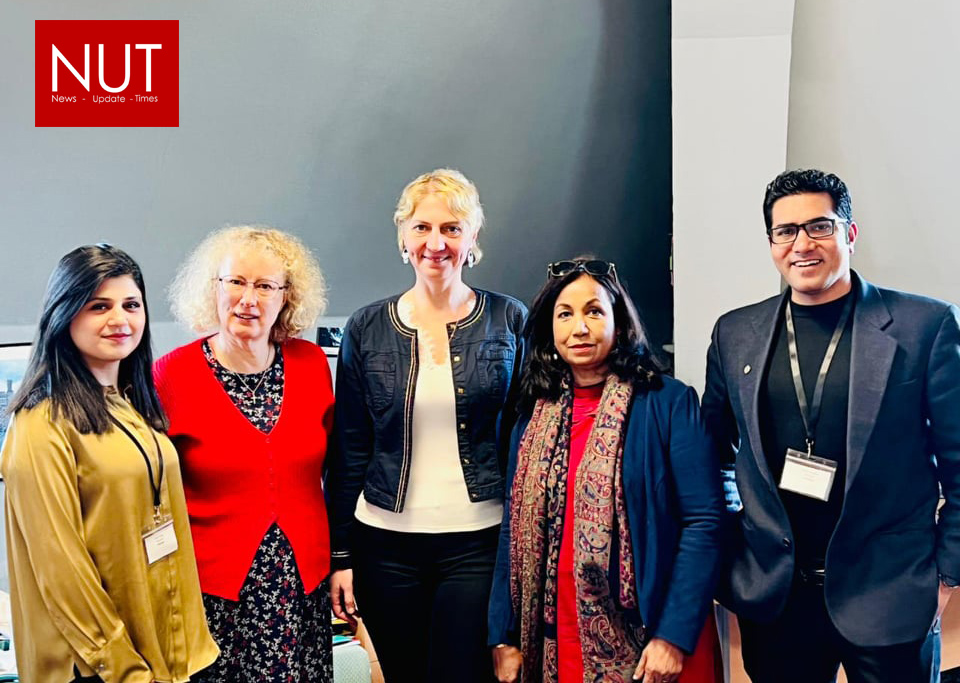
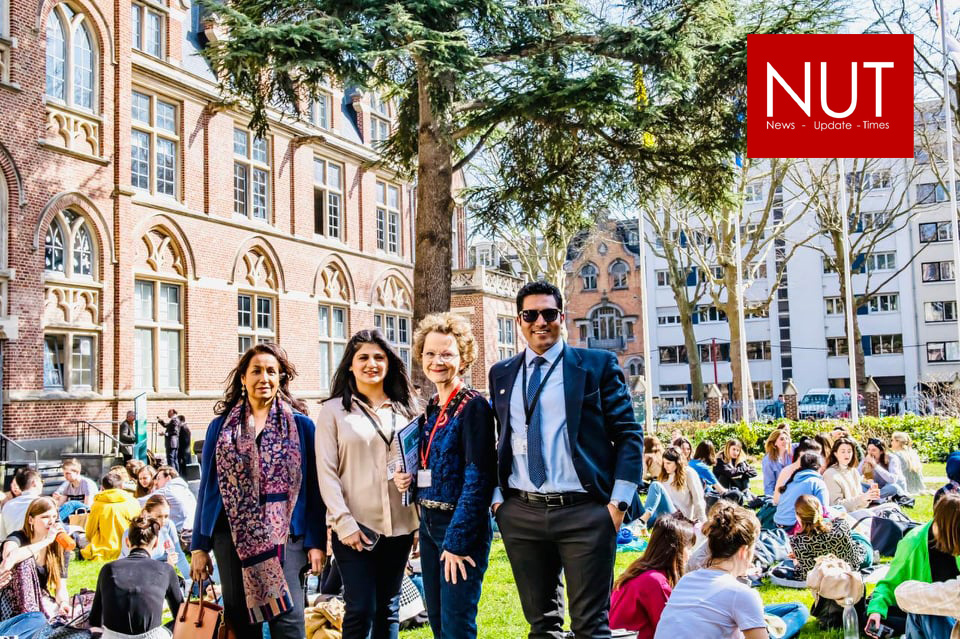
Lahore (Nut Desk) A Delegation from Pakistan comprising of Prof. Dr. Rukhsana David, the Principal of Kinnaird College for Women along with Mr. Rizwan Anwar, Executive Director KCLCD Kinnaird College for Women & UN Youth Ambassador and Director KCLCD Maha Jamil is representing Kinnaird and Pakistan at the Erasmus Week”, of University of Catholic De lille at Lille, France these days. Kinnaird’s Delegation is participating at “Erasmus week”, an event that is being organized by University of Catholic de Lille in France every year to introduce and discuss the innovation in teaching and learning, student experience and United Nation’s SDGs in Context of Europe and Worldwide development.

Kinnaird delegation inked an MOU with France’s Top ranking Universities Including University of Catholic de Lille For Student Exchange Programs, Advancement of Research, SDGs and Exchange oof Academic faculties in the field of business Education, Literature, International Relations, Science and Technology. Pakistani delegation discussed about promoting and advancing innovation in Teaching, Education and Research.

Furthermore, During the sessions various topics came under spot light, including the women empowerment and strengthening young girls’ education which will help accomplish UN sustainable goals and 2030 Agenda. “Women Empowerment is key to strengthen the Nation and Education can contribute in building a positive Nation., Kinnaird is empowering women since 1913 and will continue to educate and enlighten the young women of Pakistan to Achieve the UN Goal of Quality Education and Gender Equality. “ Said Prof. Dr. Rukhsana David.

“We need to depict constructive, valuable, and positive image of Pakistan all over the world by engaging the young generation and students with United Nations (UN) and other International Organizations like University of Catholic De lille and for this Youth and Women need to be empowered through education for the progress and advancement of Sustainable Development Agenda.”

Said Rizwan Anwar, Executive Director at Centre for Learning and Cultural Development at Kinnaird College for Women. Maha Jamil Director KCLCD; Stressed upon the Equal Educational Opportunities for all for the sustainable future. High level representatives of Kinnaird put forth and spoke about supporting women and girls in crisis and emergency and furthermore about setting up and accelerating the advancement in research & education and addressing the requirements around the world.

The international Erasmus week is taking place from March 21-25 at Lille, France with over 50 international Delegates from all Continents of the world.

The 2nd Annual International Conference on Development: Discourses and Critiques begins at IBA Karachi

Karachi (Muhammad Yasir) The School of Economics and Social Sciences (SESS), in collaboration with the Center for Business and Economic Research (CBER) at the IBA Karachi, hosted the 2nd Annual International Conference titled, ‘Development: Discourses and Critiques’. The three-day conference is taking place from March 25-27, 2022 at the IBA Karachi, Main Campus.

This year’s theme invites works from a wide range of disciplines to critique, question and reconsider the experiences of transnational, national and sub-national actors with the development process. What does ‘development’ mean for different actors, and how has this narrative shifted over time? How does development define and redefine power relations and what implications does this have for different groups? How have colonial experiences shaped futures and how does one deconstruct ideas rooted in these experiences?

To encourage innovative and diversity within modes of thinking, the conference is hosting presenters and participants from diverse backgrounds, including Skardu, Sukkur, Gilgit, Quetta, and Islamabad from Pakistan, and multiple professors from esteemed universities from the USA.

By centering radical subthemes, including but not limited to, decolonial and feminist frameworks, this conference aims to center critical perspectives that help us gain a nuanced understanding of social change and development.

The first keynote speaker was Dr. Mushfiq Mobarak, Professor of Economics, Yale University, USA. He spoke in depth on ‘Seasonal Poverty and Seasonal Migration’. The session was moderated by Arooj Waheed Dar, Lecturer, SESS, IBA Karachi. Dr. Mobarak recognized the forms of poverty that emerge during seasonal changes and highlighted its implications, specifically in the form of seasonal hunger. The second section of the address focused on the attempts that help address this problem through structural strategies such as micro-loans that help bridge the financial strain in the lean season.

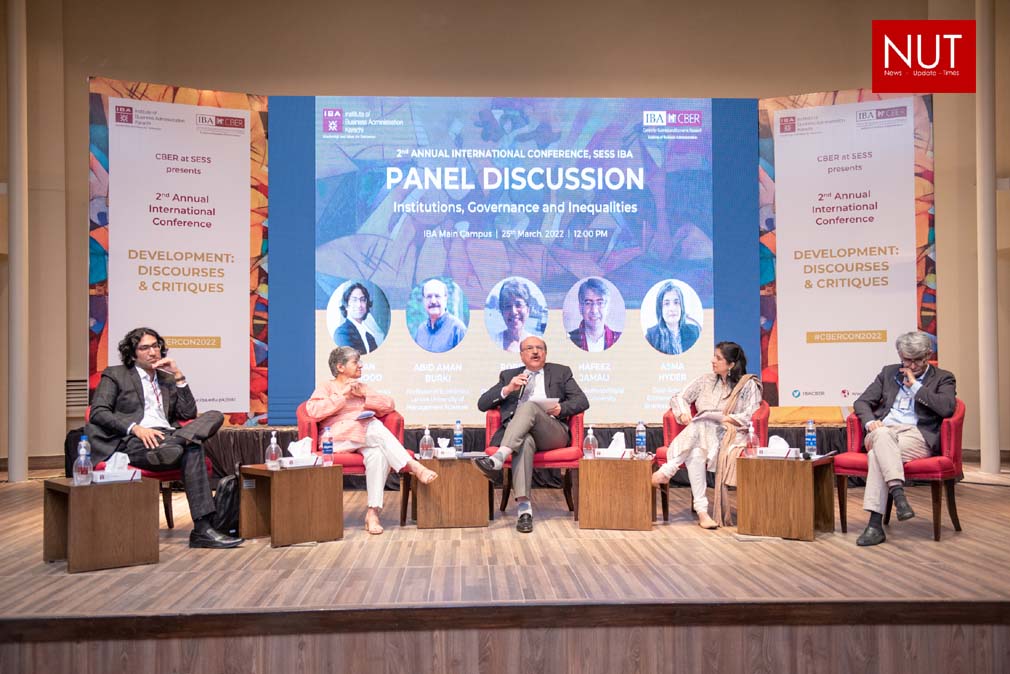
The first panel discussion of Day 1 was titled ‘Institutions, Governance and Inequalities’ which included the following four scholars: Dr. Sultan Mehmood, New Economic School, Moscow; Dr. Abid Aman Burki, Senior Research Fellow, Mahbab ul Haq Research Centre, Lahore University of Management Sciences; Dr. Hafeez Jamali, Senior Anthropologist and Civil Servant; Robina Ather, Chairperson, National Tariff Commission, and Dr. Asma Hyder, Professor of Economics and Dean, SESS, IBA Karachi. The session highlighted various statistics on the economic and social inequalities in Pakistan, and also included the inclusion of indigenous communities within the policy-making process, and judicial independence in Pakistan.

In the session titled ‘Agrarian Crisis and South Asian Political Economy’, Dr. Barbara Harriss-White, Professor Emeritus of Development Studies and Emeritus Fellow of Wolfson College, University of Oxford, was in conversation with Dr. Ahmed Azhar from the IBA as a moderator. Dr. Harriss-White shared her close insights and research on the South Asian political economy, particularly food and energy, and aspects of deprivation.

The second panel of the day was titled ‘Urban Development: Practices and Realities’ and included five scholars and researchers: Dr. Mubbashir Rizvi, Anthropologist, American University; Palwashay Shahab, Social Justice Lawyer and Researcher; Haya Fatima Iqbal, Emmy winning documentary filmmaker; Dr. Laila Farooq, Assistant Professor, IBA Karachi and Director, CBER; and Dr. Shehram Mokhtar, Assistant Professor, IBA Karachi.

The first day also included around 20 presentations by undergraduate and graduate students who shared their work on various segments of the bigger field of development. Two student circles, one on calligraphy, and another on breath-body work, also took place. \


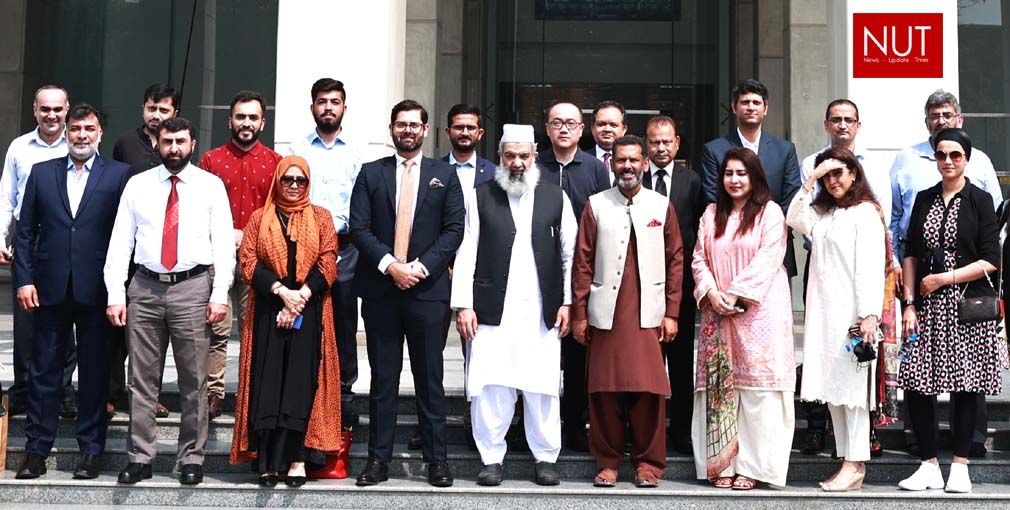
NEPRA Chairman and its CSR award winners visit LUMS

Lahore (Muhammad Yasir)  The Chairman, National Electric Power Regulatory Authority (NEPRA), Mr. Tauseef H. Farooqi was recently invited to visit the LUMS campus in Lahore. He was joined by representatives from seven NEPRA licensee organisations, which have done tremendous work towards social initiatives, particularly within the areas of renewable energy.

The aim of the meeting at LUMS was to discuss avenues of collaboration with the University. The visiting organisations included K-Electric, Pakistan Atomic Energy Commission (PAEC), Water and Power Development Authority (WAPDA), Engro Energy, China Power Hub Generation Company (CPHGC), Karot Power and Kot Addu Power Company (KAPCO).

Mr. Farooqi and the other visitors were welcomed by the University’s senior leadership. These included LUMS Provost, Dr. Tariq Jadoon, Associate Dean of Student Affairs, Dr. Bilal Ahsan Malik and Director of Advancement, Ms. Nuzhat Kamran. Alumni and students also participated in the session.

During the welcome address by Dr. Jadoon, he praised the CSR initiatives undertaken by Mr. Farooqi in the areas of education, health, environment, and others. He congratulated Mr. Farooqi on setting up the CSR department at NEPRA in 2020 with a focus on Sustainable Development Goals. He also shared how LUMS faculty experiment with innovative instructional and learning techniques and seek to create impact through cross-disciplinary research in the areas, water informatics, energy, linguistics, and economics among several others.

This was followed by a presentation by Ms. Kamran elaborating how over the last three decades, the University has evolved into Pakistan’s leading institution with an immeasurable impact on business and society. “This has been achieved through our donors, who have supported the University’s mission of providing a world-class education to students, enabled ground-breaking research, and helped LUMS become a premier learner-centred institution,” she added.

She also highlighted the University’s commitment to inclusive education through its signature National Outreach Programme (NOP). Providing an overview of the NOP’s transformative experience for scholars from disadvantaged backgrounds, she shared the multiplier effect of this initiative as they come full circle to give back to their communities.

Dr. Malik elaborated on the support services provided to NOP scholars during their time at LUMS with regards to academic advisement. “LUMS spends considerable resources in actively finding talented students in order to give them a fair chance and a level playing field. NOP students are supported in three key areas: helping them settle in at LUMS, providing them with resources to succeed during their time at the University, and preparing them for their future careers,” he shared.

Speaking at the event, NOP alumni, Ms. Adeela Sarfraz, Class of 2009 and Mr. Hafiz Ali Naeem, Class of 2016 and CSS topper, shared their inspiring journeys at LUMS and how they went on to achieve success in their respective fields. They credited the University for providing them with the foundation for their achievements.  Mr. Farooqi, a graduate of LUMS MBA Class of 1996, praised the University’s NOP scholarship as “transformative” that impacts the lives of students, their families as well as their communities. He also spoke about his own journey as a student at LUMS and discussed the various CSR initiatives undertaken by NEPRA, the most prominent of which is the ‘Power with Prosperity’ programme.

The event served to be a starting point where licensees were really excited to collaborate with LUMS.

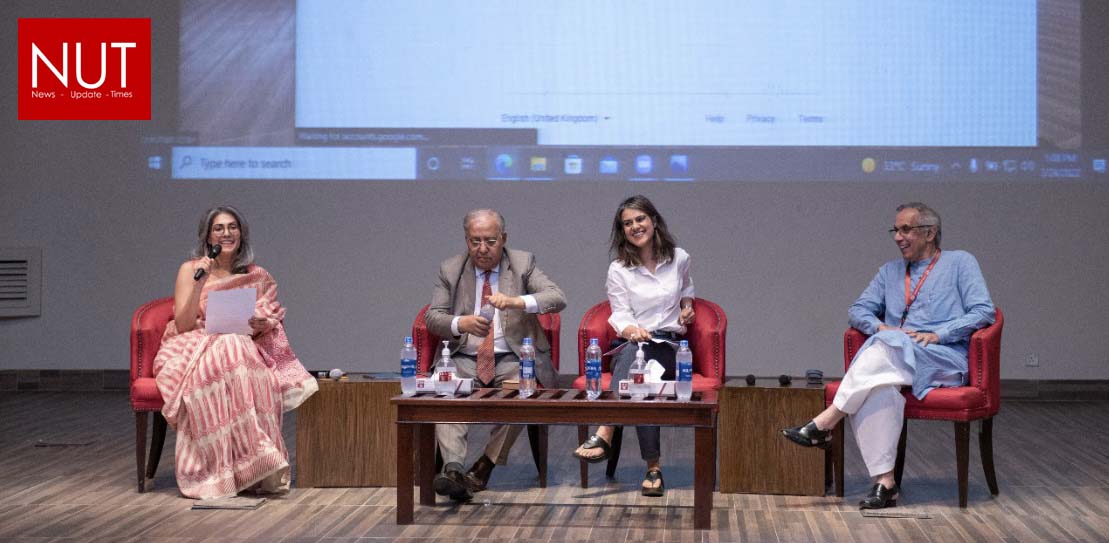
IBA Karachi hosts an insightful panel discussion on the Lahore Resolution

Karachi (Muhammad Yasir) The IBA History Society (IHS) at the Institute of Business Administration (IBA), Karachi in collaboration with School of Economics and Social Sciences (SESS) and The Citizens Archive of Pakistan Archive (CAP) hosted an insightful panel discussion on ‘Paving the way for Pakistan: The Lahore Resolution’. Eminent historians and specialists revisited the events around the Lahore Resolution of March 23, 1940.

The speakers included Dr. Syed Jaffar Ahmed, Dean, Faculty of Social Sciences, Sohail University, and Director, Institute of Historical and Social Research, Karachi; Dr. S Akbar Zaidi, Executive Director, IBA Karachi; Ms. Aaliyah Tayyebi, Senior Project Manager, CAP; and Ms. Aliya Naqvi, Faculty member, SESS, IBA Karachi. 

The aim of this session was to engage in a discussion of the legal and political context of the Muslim League’s 1940 resolution, its historical significance and its political repercussions. 

Commencing the panel discussion, Dr. Ahmed spoke about the events that shaped the political paradigm for the Lahore resolution. Discussing the contents of Mr. Jinnah’s speech, Dr. Ahmed pointed out that the right to self determination for the Muslim ‘nation’ was a major part of Quaid e Azam’s demands for the Muslim community in the Indian subcontinent, which he derived from the international laws of the day, as laid out by the League of Nations. Mr. Jinnah had also said that India is a subcontinent comprising many nations and not just just two. 

Ms. Tayyebi shed light on the importance of oral history and walked the audience through a selection of original audios from people who had witnessed the addresses and speeches at the Minto Park gathering in Lahore. She stated that oral historical accounts make the audience travel back in time and provide a crucial window into history. 

Dr. Zaidi highlighted the importance of reading original and authentic documents to learn true accounts of historical events.

The panel discussion was followed by an engaging Q&A session. 

CAP has also arranged an exhibition at the IBA Main Campus from March 24-27, 2022, featuring original audios of people present at the 1940 Lahore jalsa, and historical photos from the CAP archives.