Finance professionals suggest rebound in confidence has stalled, but no downturn imminent

Pakistan (Muhammad Yasir)

The latest economic conditions survey from ACCA and IMA of accountants and CFOs across the globe suggests that the sharp rebound in global confidence in the aftermath of Russia’s invasion of Ukraine has ended

Ongoing aggressive interest rate hikes by central banks, and China’s weaker than expected economic recovery, have likely weighed on confidence, offsetting any benefit from receding fears of a global banking crisis and falling inflation.

There is no evidence that a global recession is on the cards though. Sentiment at the global level remains around its long-term average, as do the key New orders, Capital expenditure, and Employment indices.

There were some notable regional trends. Confidence fell sharply in Asia-Pacific and the export-sensitive Western Europe. But confidence in North America actually rose for the fourth consecutive quarter, with gains in the New orders, Capital expenditure, and Employment indices. This would suggest that the U.S. economy may continue to defy predictions of a recession.

It is somewhat surprising that the aggressive monetary tightening has not had a material impact on the GECS “Fear’’ indices which reflect respondents’ concerns that customers and/or suppliers may go out of business. Both these indices continue to improve (see chart below), which suggests little concern about the impact of higher interest rates, recession risks, or the growing number of bankruptcies.

Of course, it may just be a case of calm before the storm, as the lagged effect of tighter monetary policy works its way through the global economy and financial system. Indeed, our indices measuring global problems accessing finance and securing prompt payment both deteriorated in 2Q, although neither looks particularly worrying yet by historical standards. Meanwhile, the percentage of global respondents concerned about increased costs declined slightly again, although it remains very elevated by historical standards, suggesting that central banks may have more work to do.

Rashid Khan, ACCA’s campaign manager in Pakistan, said: ‘The second quarter economic conditions survey from ACCA and IMA of accountants and CFOs across the globe suggests that the sharp rebound in global confidence in the aftermath of Russia’s invasion of Ukraine has ended. There is little evidence that a global recession is on the cards though. From Pakistan’s perspective, the sharp decline in confidence in the important Western European and Asia-Pacific markets is of some concern. However, the resilience of the US economy, its largest single export market, is a key positive. Going forward, external developments will remain very important for the Pakistani economy, both through the trade and financial channels.

Jonathan Ashworth, Chief Economist at ACCA, said: “The survey aligned with my sense of how things are developing in the global economy, with some loss in momentum through 2Q. Things don’t look particularly alarming though, and a global recession does not look imminent. By region, things aren’t looking that great in Asia-Pacific and Western Europe. Chinese policymakers may need to increase policy stimulus, while the ECB and BoE might want to tread carefully with monetary tightening. In contrast, the U.S. economy is looking pretty resilient, suggesting the Fed may be able to carry off the much talked about soft landing”.

Dr. Susie Duong, Director of Research at IMA, said: “Looking at the change in the GECS Confidence Indices over the year, one notable factor is the resilience of North America. With a stronger than expected growth of the U.S. economy in 2023 Q2, it suggests that an imminent recession for the U.S. does not seem likely this year, although Asia and Europe could increasingly become a drag if growth decelerates significantly there. The robustness of the global ‘fear’ indices is also unexpected. However, it’s less clear that will still be the case at the turn of the year.”

Becoming a value-adding CFO takes integrative thinking, says new ACCA guide

Pakistan (Muhammad Yasir)

Chief financial officers (CFOs) have an immense responsibility and career-defining challenge in helping their organizations navigate complex multi-dimensional problems.

Businesses and other organizations face significant challenges in introducing sustainability into their business models and strategies. They also face increased sustainability reporting and assurance requirements. Their processes and systems will need to be updated and transformed to manage these.

These challenges arise against a backdrop of limited financial resources as well as human and natural resources. The long-term survival and success of business can no longer be assured with a narrow focus on financial return alone.

Today’s CFOs and senior business professionals require a combination of skills, behaviours and mindset, described as ‘integrative-thinking capabilities’, according to ACCA’s latest research ‘Integrative thinking: the guide to becoming a value-adding CFO’.

Report author Sharon Machado, head of sustainable business at ACCA said ‘CFOs and professionals who are ultimately accountable for well-informed decision making must be integrative in their own thinking. They need to consider the balance across the resources and meeting of differing stakeholder needs. Often, this will be in the face of incomplete, complex, uncertain or ambiguous information. CFOs need to act without being able to reliably predict the outcomes. In a fast-changing world, the organisation’s purpose and strategy may need to change, either incrementally, or sometimes, fundamentally.’

What are the integrative-thinking capabilities required by CFOs?

This guide explains the CFO’s five must-have integrative-thinking capabilities, and details how they are required for impact in navigating complex multi-dimensional problems, which are also explained.

  • Continually becoming – constantly evolving through nurturing personal capabilities.
  • Empathising – understanding other viewpoints and perspectives.
  • Exploring – searching out unfamiliar territory.
  • Co-creating – seizing the opportunities that arise from collaborating with others.
  • Empowering – enabling colleagues and stakeholders to take actions.

The guide also outlines development needed for integrative thinking by providing insight on six approaches professionals should take to develop their integrative-thinking capabilities.

Raymond Jack, CFO of ACCA, commented: ‘This guide is both a call to action and a support to all finance professionals as they embrace complicated problems, and add broader than financial value to their organisations, society and the planet. It will help CFOs of today and of the future serve their purpose better.’

Being a successful CFO is not a static end-state. Continual learning, reflection and engagement with other people, are key to being the CFO that the organisation and the world needs.


VICPAK Expands Educational Consulting Services with New Karachi Office

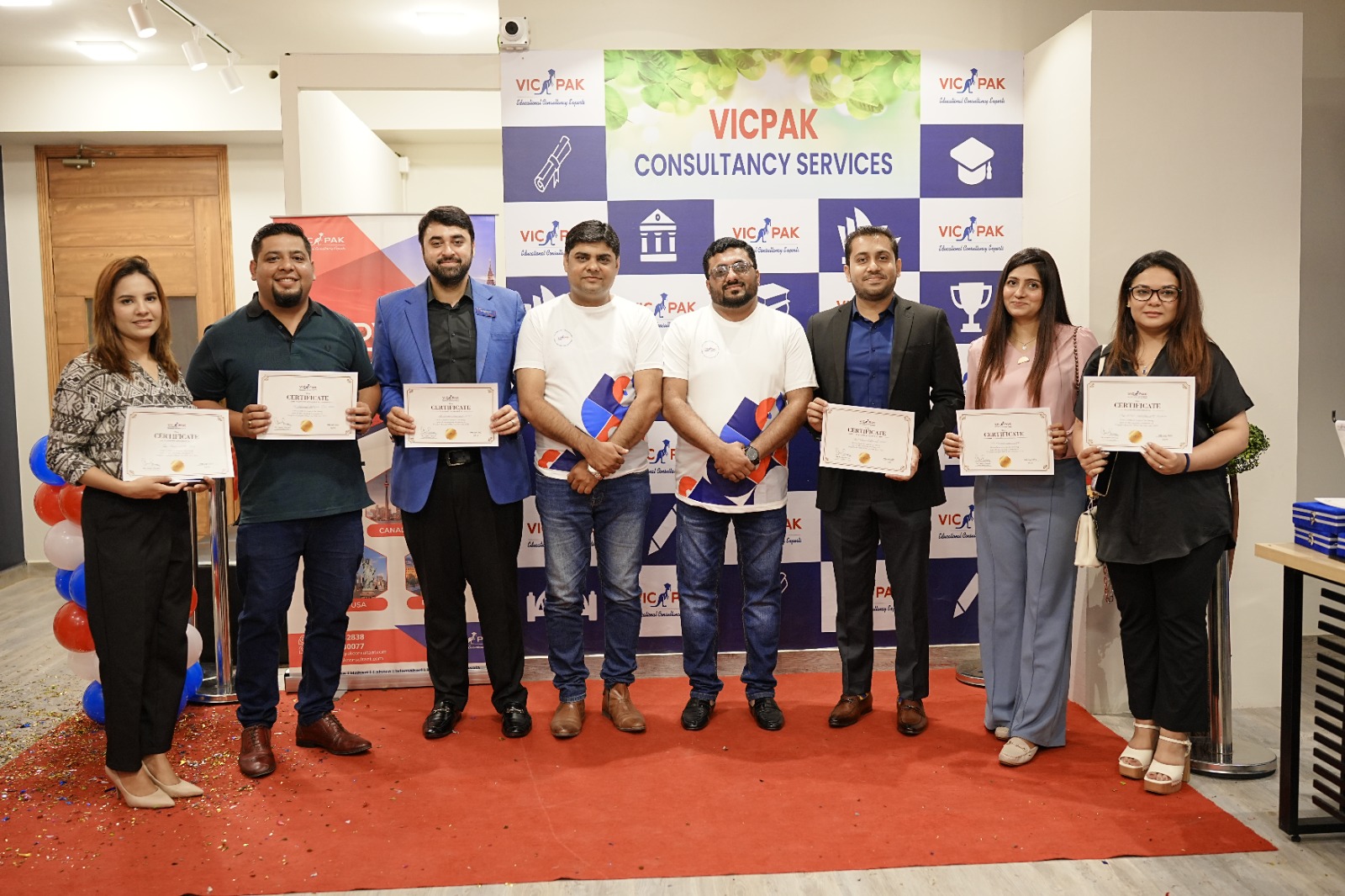
VICPAK, a leading overseas educational consultant, is excited to announce the launch of its new office in Karachi. With a strong reputation and a decade of experience in providing comprehensive educational services, VICPAK is dedicated to facilitating students in their pursuit of high-quality education opportunities abroad.

Established in 2009, VICPAK has been instrumental in assisting numerous students in gaining access to prestigious educational institutions across the globe. Recognized by a wide range of overseas educational institutions, VICPAK has successfully placed students in reputable universities and colleges, enabling them to achieve their academic and career aspirations.

The mission of VICPAK is to provide students with convenient access to top-tier education overseas while simplifying their living and working prospects in their dream destination country. By bridging the gap between advanced education and students, VICPAK leverages its extensive network with foreign universities and colleges to create invaluable opportunities for aspiring students.

The expansion of VICPAK with the launch of its new Karachi office demonstrates the organization’s commitment to serving students in Pakistan and facilitating their international education journey. The Karachi office will offer a comprehensive range of services, including personalized counseling, university selection guidance, application assistance, visa support, and pre-departure guidance.

“We are thrilled to establish our presence in Karachi and extend our services to students in this vibrant city,” said a spokesperson at VICPAK.

“With our experienced team of educational consultants and strong partnerships with renowned educational institutions, we are confident that our Karachi office will be a valuable resource for students seeking to pursue their education abroad.”

VICPAK understands the significance of making informed decisions when it comes to international education. The organization’s dedicated team of professionals will provide personalized guidance and support to students, helping them choose the most suitable educational institutions and programs based on their individual goals, interests, and academic qualifications.

As VICPAK launches its Karachi office, it invites students and their families to visit the new location to explore the diverse educational opportunities available worldwide. The office will be a hub of information, resources, and expertise, ensuring that students receive comprehensive assistance throughout their educational journey.

Accountancy and finance professionals must drive the journey towards social equity, says ACCA report

Pakistan (Muhammad Yasir)

Accountancy and finance professionals are at the forefront of the transition to a sustainable future according to the latest research by ACCA (the Association of Chartered Certified Accountants). Finance professionals from around the world shared their views, resulting in our new report Accounting for Society’s Values.

Organisations need to transition to a sustainable future that embraces the economic, environmental and social aspects in combination. Society faces long-term challenges from social injustice, with stakeholders and regulators increasingly focusing on the social implications of the actions of organisations. That’s why defining and measuring the return to society by an organisation’s activities is becoming as important as the financial objectives themselves.

The accountancy and finance profession needs to see this as an opportunity to define its future role and put the social agenda at the core of the profession.

Three key messages from this report:

1. The profession’s future embraces sustainability through social equity and protecting the environment.

2. Measuring the social agenda is difficult, but we must act.

3. There is a strong business imperative to embed this agenda into strategy now.

Helen Brand OBE, ACCA chief executive commented: ‘The social agenda is a broad one and requires organisations to act now. Without the valued and proactive input of the accountancy and finance profession, the goal of reaching sustainability for all organisations will be unattainable. The profession has an opportunity to play its full part in enabling the just transition, not least the social aspect – one that it cannot afford to shirk.’

Assad Hameed Khan, head of ACCA Pakistan, said: ‘Whilst the emphasis for many organisations may have become focused on the environmental aspects of a just transition it is important to ensure that nobody is left behind. The social agenda is a vital element of the transition and whilst it may present challenges in readily measuring progress this cannot be an excuse for a lack of action. Accountancy and finance professionals need to be at the forefront on ensuring that their organisations measure and report performance in this area if we are to be a just society.’

ACCA’s Pakistan careers fair facilitates networking with 200+ employers, opening doors to 600+ finance job roles

Pakistan (Muhammad Yasir)

ACCA (the Association of Chartered Certified Accountants) successfully organised its 4th edition of the Virtual Careers Fair, featuring 200+ top organisations and 600+ job opportunities. The event also included exclusive sessions conducted by industry experts to enhance participants’ employability skills.

The event, enabled by a world-class digital platform with exciting features, attracted thousands of accounting and finance students and professionals. They actively engaged with top employers, accessed valuable insights from industry experts, and formed meaningful connections, making the event highly interactive and impactful.

Participating employers represented diverse industries, including Shared Services/BPO, Consultancy, Accounting & Public Practice (including Big 6 and SMPs), Manufacturing (Textile, Cement, and Automotive), BFSI, FMCG/Retail, Property & Construction, Telecom, and Health/Pharma. This wide range of industries showcased a rising demand for ACCA qualified accountancy and finance professionals.

The event garnered overwhelmingly positive feedback from both participating employers and attendees, who highly valued the overall experience. The presence of prominent employers and the caliber of job opportunities showcased through ACCA Careers (online jobs portal) further emphasised the significance of the accountancy profession. Employers expressed their satisfaction with the exceptional pool of highly motivated and qualified individuals, recognising their potential in building resilient and future-ready organisations.

Assad Hameed Khan, Head of ACCA Pakistan, warmly welcomed all attendees and expressed his thoughts on the event, stating, ‘The growth and impact of the Pakistan careers fair are truly remarkable. In the face of global economic uncertainty, initiatives like this play a vital role in super-connecting our employers with globally in-demand ACCA professionals, thereby supporting talent acquisition and fulfilling career needs.’

Students from Kinnaird College Pakistan Excel at Summer School Program in France.

Lahore (Qasim Ali)

A group of talented students from Kinnaird College, Pakistan, recently participated in the highly anticipated Summer School Program organized by Rennes School of Business in France. The program, which focused on sustainable development, global diplomacy, cultural entrepreneurship, and cross-cultural management, provided an enriching learning experience for the students.

Throughout the program, esteemed professionals such as Prof. Jennifer Ramsay, Mr. Rizwan Anwar, Ms. Maha Jamil, Dr. Sami Bajwa and several other experienced professors delivered insightful sessions, exposing the students to valuable knowledge and experiential learning. Their expertise and guidance enabled the participants to broaden their horizons and gain practical skills in various fields of study.

In addition to the academic pursuits, Rennes School of Business is proud to announce its participation in the Second Edition of the Choose France Pakistan program. This program, initiated by the French Embassy in Pakistan, aims to foster collaborations between the two nations and promote educational opportunities in France for Pakistani students. Kinnaird College for Women is committed to strengthening the educational ties between Pakistan and France, further enhancing academic exchanges and cultural understanding.

The students and participants of the Summer School Program expressed their heartfelt gratitude to the French Embassy in Pakistan and Ms. Sabine Vermillard, Attaché for Educational and Scientific Cooperation, for their instrumental role in developing such remarkable opportunities for students. Their support and efforts have opened doors to a world of possibilities, empowering students to explore their potential on an international platform.

Kinnaird College takes immense pride in the achievements of its students and recognizes the invaluable contribution of Rennes School of Business and the French Embassy in Pakistan in nurturing the academic growth of Pakistani students. This endeavor has not only expanded their knowledge and expertise but has also strengthened the ties between the two nations.


ACCA proposes budget measures for tax year 2023-24 to address Pakistan’s economic challenges

Lahore (Muhammad Yasir)

ACCA (the Association of Chartered Certified Accountants) has unveiled its budget proposals for the fiscal year 2023-24, highlighting the need for significant shifts in Pakistan’s economic policies to tackle pressing challenges. The proposals aim to address issues such as population growth, climate change, agricultural disincentives, and food security concerns.

ACCA emphasises that to keep policies and their implementation consistent, the government, political parties, and business groups should sign a ‘charter of the economy’ for the next 10-15 years. This long-term commitment will provide stability and foster sustainable economic growth.

The budget proposals suggest a multi-faceted approach to improving the balance of payments, reducing imports, boosting local consumption, lowering inflation, and increasing exports. ACCA underscores the importance of consistent economic policies, leveraging indigenous resources and talent, and embracing a new economic model.

In line with these objectives, ACCA recommends sustainable reduction of non-essential imports and identifying import substitutes to lower the import bill. Efforts to promote eco-friendly energy sources, implement daylight savings, and reduce business hours and working days can help decrease reliance on oil and gas imports.

To enhance exports, ACCA emphasises the need to focus on services that leverage Pakistan’s abundant raw materials and skilled youth. Shifting the tax burden to higher-income individuals and subsidising the cost of living for middle and lower-income segments are proposed to ensure equitable taxation policies.

ACCA calls for significant strides in the documentation of the economy to expand the taxpayer base. Leveraging technologies such as Artificial Intelligence and data analytics, the global body recommends identifying individuals living beyond their declared means and businesses making misdeclarations to bring them into the tax net.

Structural reforms, including reduced tax rates and simplified compliance processes, can make tax evasion less attractive and improve the efficiency of the taxation system. ACCA proposes minimal tax rates for large agricultural landowners, with generated revenue used to subsidise essential farming needs for small farmers.

To facilitate economic recovery, ACCA suggests incentivising local industry, manufacturing, and mining while revising costly agreements in the energy sector. Investment in green energy projects, encouraging the use of domestic products, and promoting entrepreneurship through the banking sector are also highlighted as key strategies.ACCA underscores the growth potential of Pakistan’s IT/ITeS sector and calls for favorable policies, tax rebates, and investment in high-skill training to unleash its full potential. ACCA also recommends expanding the tax net by bringing professionals such as doctors, accountants, engineers, lawyers, and architects into the tax system.

Furthermore, ACCA proposes the establishment of a venture capital fund to support Pakistani start-ups, subsidies for solar panels, and prioritisation of the livestock sector in the upcoming budget.

ACCA’s Global Tenets of Taxation serve as a guiding framework to establish public trust and an effective taxation system. The accountancy body emphasises the importance of openness, transparency, simplicity, and certainty in tax legislation and operations.ACCA believes that by implementing these budget proposals, Pakistan can pave the way for sustainable economic growth, address unemployment challenges, and position itself as a regional powerhouse.

New generation of CFOs driving broader view of business performance and purpose

Pakistan (Nut Desk)

New research by ACCA (the Association of Chartered Certified Accountants) and BDO, the international network of public accounting, tax and advisory firms, has revealed how the role of the CFO is growing to include driving business decisions and reporting on the non-financial areas of their operations.

Over 100 CFOs and business leaders from around the world took part in roundtables and in-depth interviews to contribute their insight into how the traditional role of the CFO is changing, resulting in the report ‘Chief value officer – the important evolution of the CFO’.

To be successful and sustainable, businesses and other organisations increasingly need to combine economic, environmental and social equity. Those that don’t, face risks and their value can diminish – there is a very strong link between value creation and strategy. Using the breadth of drivers (financial, manufactured, intellectual, human, social & relationship and nature) to generate benefit for a wide range of stakeholders creates value. With a focus for many organisations on purpose and value, contributors were asked to consider whether there is a trend to asserting the need for a new role of chief value officer and whether this a role that the CFO is already fulfilling.

The resulting three key findings from the report are:

  • The concept of value is fundamental to the management of performance in organisations and its adoption is a key element in their path to a sustainable future.
  • CFOs are increasingly adopting a value centric approach in their work and this represents an evolution towards encompassing the chief value officer role within a more traditionally financially focused remit.
  • The development path for those aspiring to be CFOs requires an increasingly broad range of experience which embraces both formal and informal learning activities: professional bodies and practices need to engage with this.

Helen Brand, ACCA chief executive, noted: ‘We already know that CFOs are increasingly acting as strategic leaders and advisers in their organisations. The CFO role is one that has moved significantly from the traditional view, while retaining the core responsibilities. Now there’s a real opportunity for them to satisfy the value agenda and evolve the role for the next generation of CFOs.’

Carly Bleathman, Partner – Business Services and Outsourcing at BDO UK said: ‘Our research highlights the exceptional role that CFOs are playing in developing their organisations. We commend the role that these individuals play and how they are truly embracing the broader value agenda. I know from my own experience that CFOs are truly chief value officers’.

Albert Lopez, Global Head of Business Services and Outsourcing, BDO Global said: ‘There are many CFOs from across the world who are embracing this wider concept of value and our research highlights many positive stories. Embracing the sustainability agenda and delivering against it is a key role that our profession must play to help ensure that we have a positive future.’

Author Clive Webb, Head of Business Management at ACCA said: ‘Creating sustainable organisations is a key priority for all organisations and CFOs have a fundamental role to play in delivering this. The perception of the CFO and the finance team needs to change from being Dr No to Dr How. It is pleasing to see how many finance teams are working towards this agenda’.

For more information, read the full report at our website.

Accountancy talent in Pakistan is among the best in the world

Pakistan (Muhammad Yasir)

Employers worldwide, particularly those in countries facing a talent crunch, are keen to tap into the pool of finance and accountancy professionals in Pakistan, with outsourcing and remote work opportunities becoming increasingly popular.

Employers worldwide trust professionals with the ACCA designation, indicating the person has the right combination of skills, experience, and ethics to lead the organization into the future. Almost half of ACCA members from Pakistan are currently working overseas, with the UK, Australia, the U.S., Canada and the UAE being the most sought-after destinations.

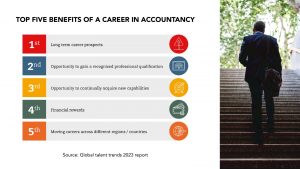
The accountancy field is known to provide career security in turbulent times, and given the changing world, accountancy is seen as a smart career choice for its flexibility, global mobility and growth prospects. The stability, rewards, and opportunities the profession offers remain highly appealing, with long-term career prospects seen as the number one benefit of a career in finance.

Opportunities for finance professionals are only increasing, particularly for those with the sustainability-focused green skills. Exciting opportunities await accountants in sustainable finance and reporting. According to a recent ACCA study, 69% of respondents believe that accountants will play a more significant role in helping organizations address sustainability and climate change issues in the future.

With a presence in 178 countries and regions, ACCA provides a global passport for Pakistani professionals with the talent and ambition to build rewarding global careers.


Public sector finance professionals have key role in sustainability and addressing climate change

Pakistan (Muhammad Yasir)

Finance professionals working in the public sector play a crucial role in addressing sustainability and climate change issues. ACCA’s (the Association of Chartered Certified Accountants) Global Talent Trends survey shows three out of four public sector respondents agree that accountants will play a bigger part in helping organisations address this agenda in the future.

In one of the largest ever studies across the accountancy profession, ACCA’s inaugural Global Talent Trends Survey 2023 provides a unique and vital view of how people feel about working in the finance profession right now. Finance professionals working in the public sector share many of the same concerns as the wider profession, but there are some differences.

ACCA’s research highlighted seven key talent trends for the public sector.

  1. Inflation is fueling wage pressure: the impact of rising prices on salaries is more of a concern for public sector employees than for any other sector.
  2. Hybrid work is a work in progress: a significantly lower proportion of public sector employees have adopted hybrid and remote working practices compared to the private sector. 71% of public sector financial professionals are fully office based compared to 57% in all sectors.
  3. Addressing burnout must be a priority: just over half of public sector financial professionals (52%) believe their employers do not consider employee mental health to be a priority.
  4. Mobility is driving a possible talent crunch: public sector respondents indicated a similar level of mobility to the average of all sectors. However, amongst those planning to move roles, 4 in 10 public sector finance professionals expect to move internally in the next two years, while 5 in 10 are predicting an external move.
  5. Technology is empowering but training is key: 88% of those in the public sector want more technology training as they recognise the power technology has in supporting finance professionals to add more value. But 40% fear technology will replace all or part of their role.
  6. Inclusivity is strong but perceptions about social mobility are more troubling: 61% of public sector financial professionals think their organisation is inclusive (compared to 68% of all sectors), while 49% in all sectors (including public) have the perception that a lower socio-economic background is a barrier to progress.
  7. In turbulent times accountancy provides career security: public sector financial professionals see the key benefits to a career in this sector as the opportunity to gain a professional qualification (38%); having a job with purpose (27%) and the ability to make an impact (23%) – scores which outstripped all sectors at 33%,23% and 17% respectively.

Jamie Lyon, head of skills, sectors and technology at ACCA, said: ‘Developing the talent of tomorrow is one of the top priorities for the accountancy profession, especially in the public sector. ACCA’s inaugural annual talent trends survey ensures the voice of those working in the profession – including the public sector – is heard and that the profession helps create a working environment where today’s professionals thrive and where tomorrow’s talent wants to be.’

As well as providing valuable insights the report sets out the ways in which ACCA supports employers, student and members, as well as the wider public sector.

Mark Johnson, senior subject manager, public sector, ACCA, said: ‘These findings have important implications for public sector employers as they seek to retain and attract finance professionals to careers in the sector. While the sector faces its challenges, those working in accountancy and finance in the public sector see the ability to make a real difference to people’s lives as a key aspect of their roles. This new report is intended to support a workforce of vibrant and dynamic public sector finance professionals to drive through essential public financial management reforms.’

“The timing of this research is appropriate for Pakistan, considering the growing emphasis on professionalisation, technology-driven value creation, and green budgeting in the public sector. These are recognised as crucial elements in achieving a significant improvement in public sector financial management,” stated Assad Hameed Khan, head of ACCA Pakistan.