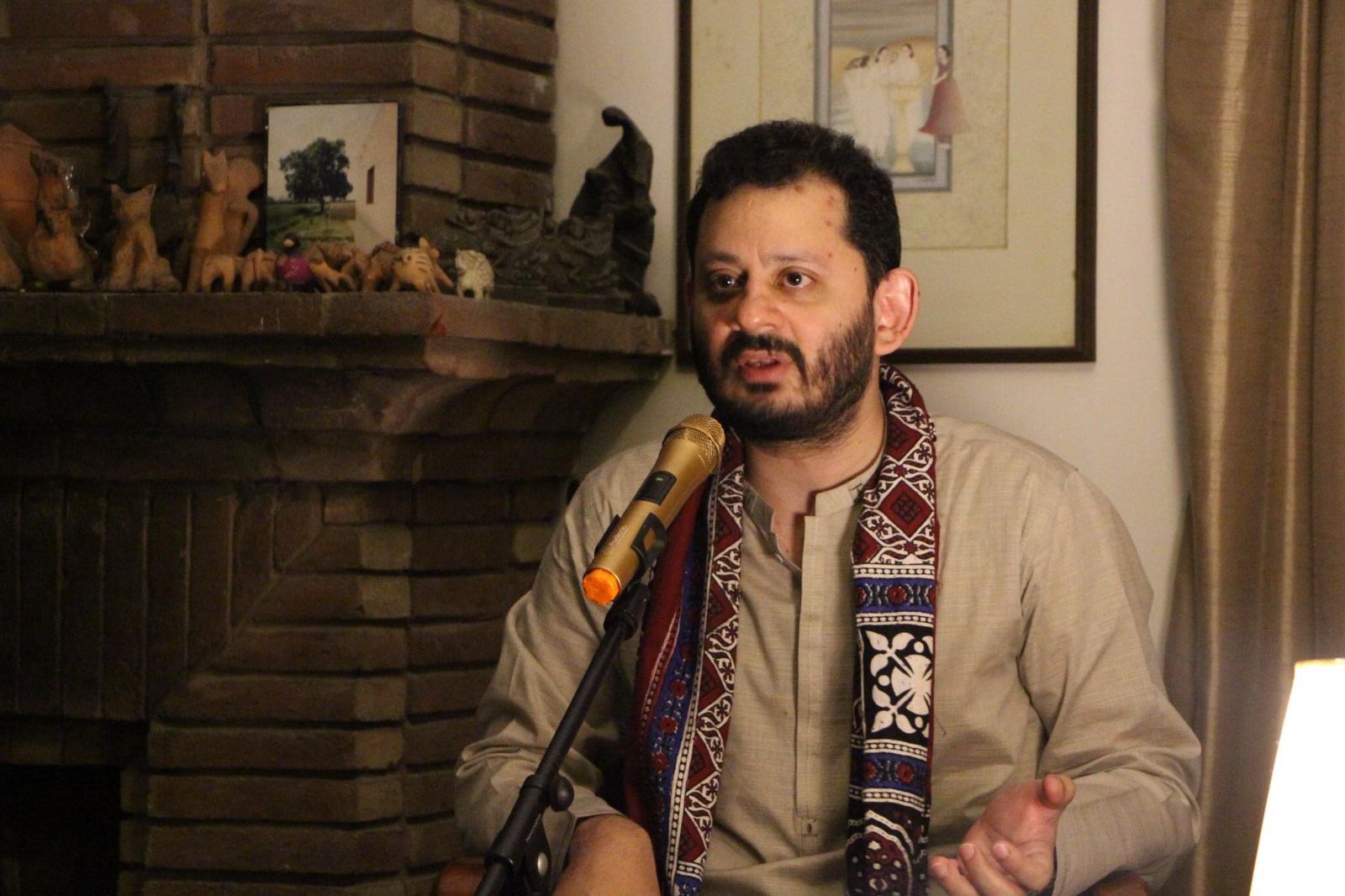
IBA-CEE hosts ‘The Future of Dispute Resolution in Pakistan’

Pakistan (Muhammad Yasir)

The Institute of Business Administration (IBA), Karachi in collaboration with the Singapore International Mediation Center (SIMC) and the Commercial Law Development Program (CLDP), U.S. Department of Commerce successfully hosted a seminar titled ‘The Future of Dispute Resolution in Pakistan: Embracing the Singapore Convention on Mediation and Green ADR’, at the National Institute of Banking and Finance (NIBAF) in Islamabad. The event brought together distinguished legal experts, climate change advocates, and key stakeholders to discuss the future of dispute resolution in Pakistan with a focus on mediation and sustainable practices.

Kamran Bilgrami, Director IBA-CEE and SIMI Accredited Mediator, delivered the welcome address, setting the stage for an engaging and informative session.

Eric Ives, Attorney Advisor, Commercial Law Development Program (CLDP), U.S. Department of Commerce, shared insights into the U.S. government’s services and assistance to Pakistan’s ADR movement. This was followed by an enlightening explanation of the Singapore Convention on Mediation by Sidharth Jha, Legal Counsel at the SIMC.

Amin Lakhani, Honorary Consulate General to Singapore in Pakistan, provided his perspective on the convention, and Dr. S Akbar Zaidi, Executive Director, IBA Karachi, highlighted the ADR initiative by IBA and expressed his commitment to future of ADR in Pakistan through the IBA ADR International Center (IBA ADRIC).

A significant milestone of the seminar was the signing of Memorandums of Understanding (MOUs) of IBA ADRIC with the Ministry of Law and Justice of Pakistan, the Directorate of Legal Education, Pakistan Bar Council, and the Islamabad Bar Council.

The second part of the seminar focused on ‘Green ADR for Sustainability’. Syed Bulent Sohail, Attorney-Adviser to IBA ADRIC and SIMI Accredited Mediator, introduced the concept of Green ADR, emphasizing its core principles and environmental benefits. This session included an engaging panel discussion on climate change and ADR, featuring prominent experts such as Ali Tauqeer Sheikh, Senior Climate Change Expert, and Dr. Jo DeLaGarza-Chitlik, U.S. Fulbright Specialist and Expert Mediator, among others, including Muzzafar Ahmed Mirza, Head of Legal SECP; Saima Kamilla Khan, Chief Legal Counsel Jazz; Iqra Mussadaq, CLO Special Technology Zones Authority; Dr. Mobeen Shah, CLO Zong; Sibah Farooq Advocate and Barrister Zunaira Fayyaz climate change expert. The panel discussed practical ways to adopt and institutionalize Green ADR in Pakistan so that the law and dispute resolution mechanisms are galvanized to address burgeoning impact of climate change in Pakistan. During the panel discussion, heads of various departments highlighted their contributions to combating climate change. Multiple panels underscored the significance of green technology and AI for effective disaster management. There was a consensus on the necessity to expand existing laws to address contemporary environmental challenges adequately. Furthermore, the discussion emphasized the establishment of specialized tribunals for specific alternative dispute resolution (ADR) methods, recognizing the complexity and specialized nature of environmental disputes.

In his insightful address at the seminar’s conclusion, Justice Jawad Hassan, Lahore High Court, highlighted the pro-mediation stance of the superior judiciary. He underscored the positive advancements in this regard and stressed the urgent need for Pakistan to ratify the Singapore Convention, which already had provisions in implementation. Supporting his argument, he referenced numerous judgments.

Chief Guest, Justice Syed Mansoor Ali Shah, Supreme Court of Pakistan, delivered a keynote address, emphasizing the crucial role of mediation in the justice system. He presented alarming statistics, revealing a staggering 2.4 million pending cases in Pakistan, mainly within the district judiciary, with 68,000 new cases filed monthly at the district level. Advocating for a paradigm shift, he proposed a sequence from negotiation to mediation to arbitration, positioning courts as the final recourse.

The discussion also highlighted the importance of raising awareness and ongoing training initiatives, stressing the transformative potential of embracing alternative dispute resolution methods.

Raza Chinoy, COO, EcoPack Pvt. Ltd. and President of the IBA Alumni Islamabad Chapter, delivered the vote of thanks, expressing gratitude to all participants and organizers. The seminar concluded with a networking tea, providing attendees an opportunity to connect and discuss the evening’s insights.

This seminar marks a significant step forward in promoting mediation and sustainable dispute resolution practices in Pakistan, paving the way for a more efficient and environmentally conscious legal framework.

FCEPL Leadership Visits Raast School for Educational and Nutritional Outreach

Karachi (Muhammad Yasir)

Managing Director FrieslandCampina Engro Pakistan (FCEPL), Kashan Hasan, along with senior leadership of the company, spent the day with the students of RAAST Welfare School in Qayyumabad, Karachi, as part of their ongoing collaboration to provide milk, quality education, and vocational training to underprivileged communities in Pakistan, and to mark the start of the company’s World Milk Day celebrations.

While addressing the event, Kashan Hasan emphasized how such partnerships are imperative for developing a safe and secure environment for children. He stated: “Our partnership with Raast School underscores our commitment towards fostering healthy habits and educating the upcoming generation on the benefits of dairy. As a nation fighting a difficult battle against malnutrition and stunted growth, I am proud to represent a company that is committed towards making nutrition accessible to the bright minds who will eventually shape the future of Pakistan”.

During the event, FrieslandCampina Engro Pakistan’s team held an educative session with the students on the importance of dairy products in their diet plans and spoke about the crucial role milk plays in every child’s growth and education.

Speaking about the collaboration, Sadia Agha, General Secretary of RAAST Welfare Society stated: ‘‘In a country where 40% of children under the age of five are stunted due to lack of consistent and proper diet, we are thrilled to be collaborating with FCEPL to ensure our students have continuous access to high nutrition dairy products which will particularly help them in their early age development and growth”.

In its mission to nourish Pakistan, the company has been providing milk to over 300 students enrolled at the RAAST school and is currently engaged in similar strategic partnerships with multiple schools across Pakistan.

Microsoft and HEC collaborated to Bridge Academia-Industry

Microsoft and HEC collaborated to Bridge Academia-Industry Gap by Empowering Future Tech Leaders.

Pakistan (Muhammad Yasir)  Microsoft Pakistan brought together leading figures from academia and industry for a dynamic event “Bridging the Academia-Industry Gap” on Thursday, May 30th, 2024. Held at the Auditorium, HEC Headquarters – Islamabad, the event focused on fostering collaboration and equipping graduates with the skills needed to thrive in the modern workplace.

The event commenced with a welcome address by Dr. Zia Ul-Qayyum, Executive Director of the Higher Education Commission followed by a Keynote by Microsoft’s Director Education Industry, Central Europe Middle East & Africa Jaye Richards Hill. Highlighting the importance of this collaboration, Jaye Richards Hill stated, “At Microsoft, we believe that technology can be a powerful bridge between academia and industry. By equipping students with the latest tools and technologies, and fostering collaboration with industry leaders, we can prepare them for the jobs of tomorrow.”

Mr. Jibran Jamshad addressed the audience on latest AI offerings by Microsoft. Mr. Jibran Jamshad highlighted a recent survey from the World Talent Initiative, which paints a picture of a rapidly changing workplace driven by Artificial Intelligence (AI). The survey revealed a significant increase in AI adoption, with a staggering 75% of knowledge workers now using AI tools in their daily tasks. Interestingly, nearly half (46%) reported adopting these tools within the last six months, highlighting a rapid acceleration in AI integration. Despite initial fears of job losses due to AI, the survey also identified a talent shortage in cybersecurity, engineering, and design. Companies are now prioritizing AI skills when hiring, and employees are actively upskilling themselves through platforms like LinkedIn Learning to stay competitive. LinkedIn has introduced a new AI skilling framework for organizations, offering over 50 free learning courses to help professionals at all levels enhance their AI expertise. This suggests that AI is creating new opportunities for those who are willing to adapt.

Imagination and innovation took center stage with a showcase by Team Sign Saathi, a group of GIKI students whose project reached the Imagine Cup global semi finals. Top Imagine Cup projects were showcased to dignitaries.

The event also featured remarks by Dr. Mukhtar Ahmed, Chairman of the Higher Education Commission, and the Honorable Chief Guest, Mr. Rana Mashhood Ahmad Khan, Chairman Prime Minister youth programme. Mr. Rana Mashhood emphasized the crucial role of technology in empowering Pakistan’s youth, stating, “Equipping our graduates with the latest technological skills is paramount to ensuring their success in the competitive global landscape. Events like this pave the way for a more collaborative and future-proof education system. A big kudos to Microsoft for organizing these events”.

Marking a significant milestone, the event witnessed the launch of Microsoft Copilot, Microsoft Learn for Educators & Microsoft for Startups – Founders Hub in the presence of respected Vice Chancellors of Higher Education Institutions (HEIs). This initiative signifies Microsoft’s commitment to supporting academic institutions in Pakistan and empowering the next generation of tech leaders.

The event concluded with a networking session, solidifying the connections between academia and industry leaders.

IBA-SBS 3rd International Conference 2024

‘Innovation and Disruption: Business Success Through AI’ – IBA-SBS 3rd International Conference 2024

“In today’s rapidly evolving landscape, innovation and disruption are not just buzzwords. They are imperative for survival and growth.”

Dr. Tariq Rafi, Chairman, Higher Education Commission (HEC), Sindh

Karachi (Muhammad Yasir) School of Business Studies (SBS), Institute of Business Administration (IBA) Karachi, organized IBA-SBS 3rd International Conference 2024 on ‘Innovation and Disruption: Business Success Through AI’ at Main Campus, IBA. Esteemed national and international academicians, researchers, practitioners, students and speakers participated in the conference.

Executive Director, IBA Karachi, Dr. S Akbar Zaidi, warmly welcomed the attendees to a dynamic conference featuring presentations and discussions on AI in business, innovation, and entrepreneurship. In his opening remarks, he stated, “The presence of artificial intelligence is causing major interference, disruption in how we think about life and the School of Business Studies is particularly impacted by such interferences and innovations.” This makes it pivotal to hold such conferences addressing the evolving challenges and opportunities presented by AI. Furthermore, Dr. Zaidi recognized the SBS for hosting its 3rd international conference on the pertinent topic of AI, emphasizing that we are behind the curve in Pakistan on this front and therefore need to catch up and adapt as faculty.

Welcome remarks were given by Dean SBS and Conference Chair, Dr. Abdullah Zafar Sheikh, who shed light on the potential of AI to drive business success. Dr. Sheikh stated, “We are living in an era which is nearly impossible without artificial intelligence. Universities are key actors in the development of digital culture and business schools take center stage when it comes to such discussions and dialogues.” He further emphasized that “The goal of business school is to ensure that our curriculum and pedagogy is sufficiently technology infused and how we can leverage from artificial intelligence and digital transformation.”

Associate Professor SBS and Conference Convener, Dr. Irum Saba, delivered the introductory remarks, emphasizing the uniqueness of IBA’s SBS International Conference in bringing together academic scholars from Pakistan and around the world, along with industry practitioners. She added that this third conference received 130 research papers (from around the world), articles, and case studies submissions. More than 15 universities of Pakistan participated in the conference and the IBA is delighted to provide this platform for intellectual discourse on AI and its nuances.

Chairman, Higher Education Commission (HEC), Sindh and Guest of Honor, Dr. Tariq Rafi, commended IBA for organizing the conference on such a relevant topic. He shared his thoughts on how artificial intelligence can be applied in education. He stated, “Through strategic partnership with industry leaders, development agencies, and international organizations, we are working to bridge the gap between the academia and the industry.”

He added that by bringing together leaders, practitioners, policy makers from around the world, we can collectively explore the possibilities, challenges, and ethical complications of AI-driven innovations and disruptions.

Federal Minister, Maritime Affairs, Pakistan and Chief Guest, Mr. Qaiser Ahmed Sheikh, highlighted the importance of AI in modernizing industries and improving operational efficiencies. He stated, “Today’s topic of Artificial Intelligence is of great importance. Businesses in Pakistan, many of which are family-run, have not taken advantage of the innovations of AI.” He emphasized the significance of AI, as it offers immense opportunities for our youth and can propel our country towards greater economic achievements.

Keynote speakers at the conference included Professor of Leadership & Management for Healthcare and Director of Global Business School for Health, University College London (UCL), Dr. Nora Colton; Department Chair of DAN Management, Western University, Canada, Dr. Geoffery Wood; and Associate Professor of Finance, Montpellier Business School, France, and Poznam University of Economics and Business, Poland, Dr. Adam Zaremba.

Dr. Colton in her keynote address stated, “Universal healthcare is impossible to achieve in our current model without innovation. And that’s where innovation and AI come in. Health needs cannot be left unaddressed.” She emphasized the critical role of AI and innovation in transforming global healthcare. She also highlighted challenges like workforce shortages, rising costs, and the impacts of pandemics and climate change. Using UCL as a case study, she stressed the importance of systemic technology adoption to improve healthcare efficiency and productivity.

Dr. Wood focused on several critical aspects of AI and its implications, focusing on five components: significant events, calibrating intelligence, the double-edged sword of technology, AI and its associated hype, and an overview of AI’s workings, including a detailed exploration of how AI works, along with the questions and challenges it raises. He emphasized the challenges of integrating AI with humanity, noting that while technology offers substantial benefits, it can also have unforeseen consequences. Additionally, Dr. Wood addressed the ethical responsibilities involved in the development and application of AI, urging a more profound consideration of these factors.

Multiple panel discussions, keynote addresses, and parallel technical sessions took place on both days of the conference, delving into the intricacies of AI, innovation, and business disruption.

Aga Khan University’s Centre for Innovation in Medical Education (CIME) Hosts Groundbreaking SIMPACT 2024 Conference in Karachi and Nairobi

The Aga Khan University Centre for Innovation in Medical Education (CIME) launched its first-ever international conference, SIMPACT 2024, in Karachi, Pakistan, and Nairobi, Kenya. SIMPACT 2024 brings together a diverse array of simulation professionals, including doctors, nurses, educators, researchers, engineers, students, expert and industry leaders, to revolutionize healthcare education for  a safer and more skilled future.

The conference, held from May 20 to 21, will serve as a dynamic platform fostering collaboration, innovation and education. With a hybrid format blending in-person events at CIME in Karachi and Nairobi with virtual participation options, SIMPACT 2024 ensures global accessibility and inclusivity, drawing attendees from around the world.

Dr Michael Moneypenny, Regional Director of CIME East Africa, expressed his excitement saying, “As we embarked on this pioneering journey with SIMPACT 2024, we were thrilled to bring together the brightest minds in healthcare education simulation. This inaugural conference has marked a significant milestone for our region, and we were excited to explore new horizons and drive innovation that will transform the future of healthcare training and practice.”

The conference commenced with pre-conference hands-on workshops covering specialties such as Interprofessional Simulation, Laparoscopic Skills, Obstetrics and Gynaecology, Paediatrics, and Cardiology Management of Dermatological Disorders in Primary Care, facilitated by renowned experts. It also includes discussions around research and publication essentials..

Dr Sulaiman Shahabuddin, President and Vice-Chancellor of the Aga Khan University, officially opened SIMPACT 2024, praising the efforts of the CIME teams in organising this groundbreaking event. “SIMPACT embodies the essence of simulation-based education, offering benefits such as enhanced patient safety, skill acquisition, team training, personalized learning, and fostering research and innovation. In the words of His Highness, The Aga Khan, ‘We must look to the future, seeking always to think creatively, to innovate, and to improve.’ These sentiments resonate deeply with CIME’s vision since its inception. With 14 workshops, 93 abstract submissions, and keynote addresses from leading figures, SIMPACT has drawn over 300+ attendees, reinforcing the importance of simulation-based practice and charting a clear path forward.”

Aga Khan University Hosts Second Landmark Event with Higher Education Commission

Karachi (Muhammad Yasir)

Following the resounding success of its inaugural event in 2021, the Higher Education Commission’s (HEC) Quality Assurance Agency in collaboration with the Aga Khan University’s Network of Quality, Teaching and Learning, organized a pivotal three-day workshop aimed at improving the quality of higher education in Pakistan.

Mr Nasir Shah, Director General, Quality Assurance Agency, HEC, and other distinguished leaders, scholars, and stakeholders from a variety of public and private universities in Sindh and Balochistan met at Aga Khan University’s campus in Karachi from May 6 to 8, 2024. They engaged in substantive discussions and deliberations aimed at enhancing educational standards in Pakistan’s higher education system. Dr Sulaiman Shahabuddin, AKU President, Professor Tashmin Khamis, Vice Provost, Quality, Teaching and Learning and Mr Faisal Notta, Director Quality Enhancement Cell also spoke about the importance of rebuilding educational structures to better equip students for their success.

President AKU Dr Sulaiman Shahabuddin congratulated them on the crucial work that they were doing to advance quality enhancement, which is one of the most important issues in higher education today. When talking about this, he commented on how important quality was to AKU: “Our founder and Chancellor, His Highness the Aga Khan, has always placed the utmost stress on quality. And I’m proud to say that we’ve achieved numerous quality benchmarks, on both the hospital and academic side including two UNESCO-supported Zairi awards for our teaching and research”.

The three-day consultative workshop on Pakistan Standards and Guidelines (PSG-2023) with Directors of Quality Enhancements aims to promote a culture of quality at an institutional and programme levels, as well as share best practices and impact through case studies such as the Aga Khan University, which has shown continuous improvement of programmes. Professor Tashmin Khamis emphasized the importance of establishing Teaching and Learning Support Units at universities to support faculty development and provide a strong student learning experience. 

“I commend Network of Quality, Teaching and Learning’s (QTL_net) steadfast dedication to quality assurance,” said Mr Nasir Shah. “The Higher Education Commission (HEC) and QTL_net have a long-standing relationship and we see the impact of the work our close ally has undertaken to uphold and continuously improve the academic excellence of AKU. For this reason, we trust AKU as a provider of quality education for the youth of Pakistan.”

As Pakistan strives for educational excellence, Aga Khan University and the Higher Education Commission remain committed to supporting educators and institutions in their efforts to provide high-quality learning experiences to students, as well as in their collective pursuit of academic distinction and scholarly excellence.

IPAK Book Building Starts Today (8th May)

Karachi (Muhammad Yasir)

International Packaging Films Limited IPO’s book-building phase will be held on May 08 and 09, 2024 where high net worth individuals and institutional investors will subscribe to 70.1 million shares.

The book building will start at the floor price of Rs 21 per share.

Based on the interest from investors during the book-building process, the strike price can rise by 40% (Rs 29.4 a share), thus helping the company collect Rs 2.04 billion.

After the book-building process, successful bidders will be provisionally allotted 75% of the issue size (70.1 million shares).

The 25% of the issue size will then be offered to retail investors at the strike price.

Investors see it as an opportunity to invest in the largest packaging film manufacturer with a high growth potential.

International Packaging Films Limited aims to raise Rs 1.47 to 2.04 billion by offering a 10.01 stake to institutional and ordinary investors.

International Packaging Films Limited recorded net sales of PKR 19.9 billion in the year 2023 while its gross margin for the financial year 2023 remained 27%. Its profit before tax for the year 2023 was 2.9 billion while its net profit after tax was 1.6 billion.  The company’s 3-year revenue CGAR remained at 41%.

The group collectively offers a complete portfolio of packaging solutions, producing BOPP, CPP, and BOPET films, making it the first-ever group in Pakistan to provide one-window flexible packaging solutions, located at two strategically important locations in the country.


AKU & CSJ Collaborate to Address Education Policy Challenges

The Aga Khan University Institute for Educational Development (AKU-IED), in collaboration with the Centre for Social Justice (CSJ), Pakistan hosted a dynamic policy dialogue on ‘Overcoming Educational Policy Challenges through Better Governance’.

The event served as a platform for engaging experts and stakeholders, fostering innovative strategies for governance enhancement, gaining valuable insights into improving educational outcomes, and contributing to the development of a comprehensive policy roadmap for sustainable progress.

The distinguished panel featured prominent figures including Dr Riaz Ahmed Shaikh, Dean of the Faculty of Social Sciences and Education at Shaheed Zulfikar Ali Bhutto Institute of Science and Technology (SZABIST); Ms Sadiqa Salahuddin, Founder and Executive Director of the Indus Resource Centre; Professor Farid Panjwani, Dean of AKU’s  Institute for Educational Development; Mr Jamil Ahmed Khan, Former Ambassador and Advisor to the President at AKU; Ms Maleeha Manzoor, Member of the Sindh Provincial Assembly; Ms Nausheen Adnan, Member of the Punjab Assembly and CM Advisory Committee on Education; and Mr Sukhdev Hemnani, Board Member of the Sindh Human Rights Commission. The sessions were moderated by Mr Peter Jacob, Executive Director, and Ms Tayyaba Rafiq, Project Coordinator, both representing the Centre for Social Justice.

Reflecting on the importance of effective policy implementation, Professor Panjwani emphasized, “The true success of policy lies not just in its creation, but in its effective execution. Bridging the gap between policy and action requires strong collaboration across stakeholders. It’s through open dialogue and a focus on shared goals that we can unlock the full potential of our education system. By fostering continuous communication and accountability, we can ensure that sound policies translate to real benefits for our students and the nation.”

The event also featured an insightful analysis of education manifestos by AKU-IED students. They established 16 parameters, including education for out-of-school children, character education, inclusive education, gender disparities, mental health of students and teachers, technology challenges and more. Based on these parameters, they developed a rubric to evaluate the manifestos and assess the performance of their respective policies.

In his closing remarks, Mr Jacob of CSJ welcomed the government’s education reform announcement saying, “We are hopeful that the current dialogue will continue and will help to improve educational standards and leading to increasing the quality to education system overall.”

????????????????????????????????????

AKUH’s Global Recognition: Pakistan’s Healthcare Excellence in the Limelight

Pakistan (Muhammad Yasir)

In the latest Brand Finance 2024 Global Top 250 Hospitals report, Aga Khan University Hospital (AKUH), Karachi, has been listed in the top 100 Academic Medical Centres (AMCs) worldwide. AKUH is the first and only hospital from Pakistan making to the top 100 on this list.

Meanwhile, four other hospitals from Pakistan, Mayo Hospital, Jinnah Hospital, Combined Military Hospital and University Dental Hospital have scored spots in the 101-250 rank list. Three Indian hospitals are also in the top 100, while one is in the 101-250 list.

According to Joint Commission International (JCI), the world’s leading hospital accreditation body considered the gold standard in healthcare quality, an “Academic Medical Centre is a tertiary care hospital that is organizationally and administratively integrated with a medical school.” It is important to note that the Aga Khan University Hospital, Karachi, is the only JCI-accredited academic medical centre in Pakistan.

The Aga Khan University Hospital has an almost 40-year tradition of serving the community of Karachi and wider Pakistan with the highest standards of care. AKUH has a strong tradition of quality. It was the first hospital in Pakistan to get ISO certified in 2000, the first to get JCI accreditation in 2006, the first to get JCI accreditation as an AMC in 2015 and the first to get CAP accreditation in 2017.

This latest recognition underscores AKUH’s commitment to exemplary patient care, teaching standards, ground-breaking research, and extensive community service initiatives, not only within Pakistan but also reaching beyond its borders.

Renowned for its state-of-the-art infrastructure, cutting-edge equipment, and a team of highly skilled medical professionals, AKUH stands out as a beacon of innovation and excellence in Karachi’s healthcare landscape.

Brand Finance, the company behind these global rankings, is a chartered accountancy firm that was set up in England in 1996 with the goal to bring marketing and finance together. The quoted report is the second time Brand Finance has listed the Academic Medical Centres, globally. This year, the top two global AMCs are the world-renowned US hospitals, Mayo Clinic and Massachusetts General Hospital, with India’s AIIMS in the third spot and Singapore’s Singapore General Hospital in the fourth spot.

Brand Finance has detailed its research methods and identified some key factors they researched on when developing the list of the top 250 AMCs in the world.

  1. Facilities and Resources: Hospitals offering modern facilities, a conducive environment, and advanced medical technologies which ensure optimal patient care and treatment outcomes.
  2. Skilled Personnel: Experienced and compassionate healthcare professionals who prioritize patient well-being and contribute significantly to a positive hospital experience.
  3. Location and Accessibility: Hospitals located in convenient and easily accessible areas within the city to facilitate seamless access to healthcare services for patients and their families.
  4. Comprehensive Services: Hospitals offering a wide array of medical specialties and support services that cater to diverse healthcare needs under one roof, enhancing patient convenience and continuity of care.
  5. Affordability and Accessibility: Hospitals that prioritize affordability through financial assistance programs and discounted services to ensure equitable access to quality healthcare for all segments of society.

AKUH’s ascent to global prominence serves as a testament to Pakistan’s commitment to advancing healthcare standards and delivering world-class medical services. With its unwavering dedication to excellence, AKUH continues to set new benchmarks in patient care, research, and community welfare, reaffirming Pakistan’s position as a frontrunner in the global healthcare arena.


IBA Karachi receives ‘W’ category accreditation for its BSCS program from NCEAC

Karachi (Muhammad Yasir) 

The School of Mathematics and Computer Science (SMCS) at the Institute of Business Administration (IBA), Karachi is pleased to announce that the National Computing Education Accreditation Council (NCEAC) has awarded ‘W’ category accreditation to our BS Computer Science (BSCS) program for the batches of 2019, 2020, and 2021.

Earlier this year, the inspection team visited the Institute to assess the program against NCEAC standards, conducting a thorough examination of our facilities. The meeting, attended by Dr. S Akbar Zaidi, Executive Director IBA; Dr. Shakeel Khoja, Dean SMCS; Dr. Shahid Hussain, Chairperson Computer Science Department; Dr. Sana Tauseef, Director QEC, CS Faculty; and teams from QEC and SMCS, underscored IBA’s commitment to academic excellence.

By adhering to the highest academic standards, IBA continuously strives to ensure quality across its diverse degree programs. This recent accreditation further validates our dedication to enhancing our computing degree.