Amazon jumping into Bollywood business

MUMBAI (NUT Desk)  Amazon is diving into Bollywood with its first Hindi-language movie, starring India´s highest-paid actor, as it fights for viewers in the huge but crowded market. Bollywood superstar Akshay Kumar will be the lead in the action-adventure flick “Ram Setu”, which will be released in cinemas before its streaming debut on Amazon Prime Video, the American tech giant said in a statement Wednesday. Global streaming platforms, including Netflix, Amazon and Disney´s Hotstar, have expanded their presence in the country of 1.3 billion in recent years, including by commissioning local productions featuring Bollywood stars. Streaming services have surged in popularity due to the coronavirus pandemic as locked-down, cinema-loving Indians turned to them for entertainment, with theatres shut for more than six months. Amazon, which has already bet big on India with its core e-commerce business, recently ruffled feathers when it was forced to issue an apology for “Tandav”, a drama streamed on Prime. Politicians from India´s ruling party called for the show to be banned for “deliberately mocking Hindu gods” and disrespecting religious sentiments. Streaming TV services are not subject to the country´s notoriously fussy censor boards, which regularly cut scenes from movies shown in cinemas and on television.


Price drop alert! Your most Favorite TECNO phone Spark 6 Go is now more reasonable

The globally eminent smartphone brand, TECNO keeps bringing something for its fans. The brand launched its Spark series – a series of mid-range phones with near-flagship features. Spark 6 Go was launched in the third quarter of 2020 and became an instant hit. Spark 6 Go has 2 great variants 3+64GB and 4+64GB. The brand has now reduced the price for these mid-range phones for its fans. So hurry up and grab your devices before they are sold out!

TECNO Spark 6 GO came with great features. Spark 6 GO is equipped with MediaTek Helio A22 1.8GHz Quad-Core Processor, Dot-Notch 6.52″ HD+ Display, AI 13MP + QVGA Camera with Dual LED Flash, AI 8MP Front Camera with LED Flash, and 5000mAh Battery. The phone was a great seller due to its astounding features at on such a minimal budget.

Spark 6 Go came in three variants (2GB+32GB), (3GB+64GB), and (4GB+64GB). All variants were available in the market but TECNO has now further reduced the price of two of the best-selling devices. Spark 6 Go with 3GB RAM and 64GB storage was available earlier at PKR 16,499 but has now been reduced to only PKR 15,999. The second variant Spark 6 Go with 4GB RAM and 64GB massive storage was available at PKR 20,599 but is now available at only PKR 19,599.

Isn’t this great news? So what are you waiting for? Visit now at your nearest TECNO store or order online from TECNO official website to get yourself your Spark 6 Hero Phone and Spark 6 Go!

Facebook announces changes to keep Groups safe

Facebook published a newsroom post to announce changes that have been made to the way it recommends groups and will also be limiting the reach of those that break its rules. The new policies are part of a continued effort to clean up misinformation and harmful content, like hate speech and misinformation, and make it harder for certain groups to operate or be discovered, whether they’re Public or Private. When a group repeatedly breaks these rules, Facebook will take it down entirely.

“We know we have a greater responsibility when we are amplifying or recommending content,” Tom Alison, Facebook’s Vice President of Engineering, said in the post. “As we work to make sure that potentially harmful groups aren’t recommended to people, we try to be careful not to penalize high-quality groups on similar topics. The tension we navigate isn’t between our business interests and removing low-quality groups — it’s about taking action on potentially harmful groups while still ensuring that community leaders can grow their groups that follow the rules and bring people value. We try to balance this carefully in our recommendations guidelines” .

While people can still invite friends to newly created groups or search for them, Facebook has now started to expand these restrictions globally. This builds on restrictions they have made to recommendations, like removing health groups from these surfaces, as well as groups that repeatedly share misinformation.

Facebook is also adding more nuance to their enforcement. When a group starts to violate their rules, it will now start showing up lower in recommendations, which means it’s less likely that people will discover them. This is similar to Facebook’s approach in News Feed, where they show lower quality posts further down, so fewer people see them. When necessary in cases of severe harm, Facebook will outright remove groups and people without these steps in between.

“There is always more to do to keep Facebook Groups safe, and we will continue to build and invest to make sure people can rely on these places for connection and support.” stated Tom in the closing of the post.


Bottles to Blankets: Climate Activism In A New Age

By Jeuni Khan (President), Sameer Nasir (Vice President) & Rania Khan (Chairperson)

The age we live in is that of exceptional denial. The Pakistani populace has ignored the adverse effects of climate change on the country. Climate Impact PK set out on a journey, one that would address all facets of climate change in Pakistan in an effort to slow its consequences. The mission is to advocate for climate change through a two-pronged approach. The first prong is prioritizing increased awareness of overlooked environmental problems through a wide range of forums. The second prong is putting forth innovative, action-based solutions to attend to Pakistan’s environmental crises.


Climate Impact PK began with the two co-founders Rania Jawad Khan and Jeuni Amir Khan, who firmly believed in a new approach to youth environmental activism: actions speaking louder than words. Rania acts as chairperson with her undying passion whereas Jeuni takes the role of president with her enthralling ideas. The rest of the core team consists of Sameer Nasir, the no-nonsense vice president and head of operations, Momena Rana, the spirited Projects Director, Mehma Rashid, the exceptionally creative Media & Communications Director, and Jasim Butt, the analytical Director of Finance. This motivated team, consisting of varying expertise and personalities, serves to provide a fresh perspective on climate change in Pakistan.


The main objective of CIPK’s first assignment, Project Zero Waste, was to combat the excess plastic waste problem through recycling to minimize its detrimental effects. More specifically, to utilize a sustainable process that converts PET bottles into blankets. The blankets are then to be donated to an orphanage called the Bali Memorial Fund, in an effort to make eco-friendly products accessible to the underprivileged.


The first step of the project was the collection of PET bottles from across Lahore. With the help of KFC Pakistan, which is known to be the world’s second-largest restaurant chain, the team was able to gather a total of five hundred bottles that would have otherwise been thrown away or incinerated. Next, with the help of Wastebusters, a progressive waste management, and recycling company, Climate Impact PK was able to carry out the main process, where the bottles were taken to the Wastebusters factory to be recycled into the final product: rPET blankets. The process starts with a collection of bottles, after which the bottles are thoroughly cleaned and shredded into pallets at the waste busters facility. Next, the plastic pallets are liquified and turned into recycled polyester fiber and yarn, with which we are able to create almost anything. However, the product we chose was rPET blankets. Recycled polyester is a material that requires 59% less energy and resources in contrast to virgin polyester. In addition to that, the production of rPET polyester is known to release 32% less CO2 emissions in comparison. This is crucial because if you are not talking carbon emissions, you are not talking climate change.


The CIPK team is passionate about mitigating the environmental consequences of plastic waste, while simultaneously providing for those in need. The distribution of the final product targeted areas where the blankets and awareness about the harm surrounding plastic waste are needed the most. The team chose the Bali Memorial Fund to be the place where the blankets were distributed, thus concluding Project Zero Waste. The core team of CIPK personally visited the orphanage and spent quality time with the girls, educating them about the environment. Above all, the end products serve to be eco-friendly solutions to the vulnerable parts of the society, along with a new perspective for the children.


The social media campaign has continued to provide transparency alongside Project Zero Waste. In pursuit of having more awareness, an awareness campaign on the Climate Impact Instagram page has been launched to apprise anyone and everyone about the detrimental effects of plastic waste and major environmental news (i.e the Paris Climate Agreement Anniversary). The organization, as a whole, has always believed that awareness is imperative to make an impact or a change in the climate situation of Pakistan. The Green is the New Black blog is yet another way CIPK is raising awareness of major climate issues, most notably how urbanization and COVID-19 lockdown has affected climate change in Pakistan. It is to say that awareness along with implementation form the backbone of the organization


Over the course of the last 8 months, the project has received recognition from many large firms and has been a social media sensation. CIPK has been involved in contacting those who are most passionate and knowledgeable on plastic pollution, such as Rafay Alam, a renowned environmental lawyer, the sustainability department at Pepsico, the CEO of Wastebusters and countless others. We thank them for their guidance, insight and time. Climate Impact PK owes the success of Project Zero Waste to these figures as well as its social media community.


            Seeing as the climate issue of Pakistan is central to our development as a nation, Climate Impact PK does feel that it has achieved part of its purpose –slowing the consequences of climate change through local, innovative projects while also spreading awareness– and will strive more towards its purpose over the coming years. Project Zero Waste, being the debut project of CIPK, is a project that it is incredibly proud of as it has positively impacted the plastic waste issue. The advances made towards a green Pakistan have been rendered remarkable by various environmental personalities. The organization hopes to make a larger, and more meaningful “climate” impact in everything that it takes on. The core team has continued to bring an innovative perspective in an effort to break away from the stereotypes of what it truly means to be environmentalists in a new age.

ASIF AHMAD Named General Manager, IBM Pakistan

Lahore (Muhammad Yasir) IBM announced today that Asif Ahmad has been named General Manager of IBM Pakistan. Ahmad succeeds Ghazanfar Ali, who led IBM’s business operations in Pakistan since 2016 and has taken on a new leadership role in IBM Middle East and Africa.

“Technology adoption is not only vital to a successful, more competitive business but a key driver to economic development and growth,” said Ahmad. “I am privileged to lead IBM Pakistan and, together with my colleagues, work with governments and clients across the country to help them reap the benefits from IBM’s hybrid cloud and AI portfolio.”

“Ahmad is a respected leader with a solid track record for developing high-performing teams and being a true partner to our clients, helping them with their transformation journeys,” said Hossam Seif El-Din, General Manager for IBM Middle East and Pakistan. “I am confident that Ahmad will bring unique value to our clients and stakeholders in Pakistan and help accelerate their hybrid cloud and AI strategies.”

Ahmad joined IBM in 2011 and held a number of key roles within the company, including country sales manager and public sector sales leader for IBM Pakistan. He also served a number of strategic roles in leading international technology and telecommunications companies.

Ahmad’s appointment is effective 1 April 2021.

New Dramatic readings by Ajoka Theatre

Lahore (Qasim ALi) Aspiring writers from Ajoka institute’s art of writing course will present original creative writings on Saturday 20th March in a live online streaming ceremony on the Facebook. Four young writers including Saqib Ali Rana, Aamir Ali, Rafia Kashif and Aqsa Gharshin will present their new writings entitled “Azal Se Abad Tak”, “Dhundly Khawab”, “Mainda Ishq v toon” and “Barlaas “respectively. This will be 9th presentation of Ajoka’s writing class students and acting class students including Ishrat Shaheen, Bisma Ghazal, Qurat ul Ain Taj and Khurran Hamid will join the writers in the reading session.
All writers have developed their scripts under the mentorship of Ajoka’s executive director Shahid Nadeem and explored different themes and motivating stories in their writings. Young generation is full of ideas and has great potential, this reading session will highlight their creative expertise as well. They have taken inspiration from some real life incidents and some fictional ideas for the development of their scripts.
Ajoka Institute director Nirvaan Nadeem briefed that from the start of corona pandemic, Ajoka is focusing on the training of upcoming talent and providing them necessary professional expertise in short term courses for better nourishment in various fields including acting, writing, dance and art of anchoring as well. Upcoming talented artists from different cities of Pakistan and abroad are attending these online classes which is very encouraging. He added that new writing course will start from 27th March and some young passionate writers have already enrolled to participate in it. The ceremony will go live on Facebook and can also been on Ajoka’s official Youtube Channel later.

Philip Morris (Pakistan) Limited announces financial results for the year ended December 31st, 2020

Lahore (Muhammad Yasir) Philip Morris (Pakistan) Limited (“Company”) announced a profit after tax of PKR 1,765 million for the year ended December 31st, 2020 as compared to a loss after tax of PKR 1,980 million in the corresponding period last year. The overall increase in profit after tax from last year is mainly due to a significant decrease in other expenses by PKR 2,732 million, which is largely attributable to the one-off impairment and employee separation cost charged on account of closure of the Company’s factory in Kotri during 2019.

During the year ended, the Company’s volume declined by 20% mainly reflecting the pressure faced by the legally compliant tax paying cigarette sector from the expanding illicit one, which now accounts for approx. 37% of the total market for the year 2020 versus 33.1% for the year 2019 (Retail Audit). The Company’s contribution to the National Exchequer, for the year ended December 31, 2020, in the form of excise duty, sales tax and other government levies, stood at PKR 22,210 million, a decrease of 6%, compared to the preceding year. This is mainly attributable to the excessive excise duty increases of 93% (Value Tier) during Federal Budgets of September 2018 and June 2019 that stretched the price gap between duty evaded and duty paid cigarettes which are selling at lower prices than the minimum price prescribed under tax regime with respect to levy and collection of federal excise duty i.e. PKR 63/ per pack. In March 2020, the government issued a Statutory Regulatory Order No. 72(I)/2020 further restricting advertising, promotion and sponsorship of tobacco and tobacco products leading to a lack of a level playing field between law abiding corporates and illicit domestic manufacturers who continue to violate advertising restrictions.

During the period ended December 31st, 2020 the Company’s domestic net turnover stood at PKR 13,983 million resulting in an increase of 7% driven by the excise led price increase in June 2019 coupled with price increase in February 2020, both were essential to offset the adverse impact of severe volume decline of 20% versus 2019. During the same time, the Company’s exports turnover stood at PKR 2,613 million (US$ 16.3 million) showing a significant increase as compared to last year. The export of approximately 7 million kilos of tobacco is part of the Company’s commitment to support Pakistan’s goals of increasing exports and earn foreign exchange for the country.  

Sharing his views on the announcement, Roman Yazbeck, Managing Director Philip Morris (Pakistan) Limited said, “Although last year brought a series of unprecedented challenges due to the pandemic, our entire management team remained committed to minimizing the disruption to ensure business continuity. We appreciate the Government’s efforts in taking steps to curb the menace of illicit sector but we continue to believe that strict and consistent enforcement are extremely critical against tax evading illicit sector to provide the level field for the compliant tax paying industry and to improve Government revenue.”

NIC LUMS opens applications for innovators

NIC LUMS opens applications for innovators to operationalise tech-enabled solutions for real-world impact

Lahore (Muhammad Yasir) The National Incubation Center at LUMS, Lahore (NICL) is ready to induct the next group of passionate innovators looking to make a meaningful impact by transforming their ideas into investor-ready business plans.

NICL’s mission is to partner with visionary thinkers and radical doers. With a focused approach towards providing the best training, facilities, and networking support in Pakistan, NICL brings unprecedented opportunities to mobilise start-ups and provide them with the necessary tools to not only ensure scalable success, but also to bolster the start-up ecosystem of the country.

The Center has identified high impact areas for improvement in Pakistan including education, healthcare, agriculture, finance, and the environment. By harnessing the power of technologies such as artificial intelligence, cloud, blockchain and the Internet of Things, NICL aims to partner with the next generation of innovators to solve Pakistan’s most critical problems. This national-level purpose also gives start-ups supported by NICL a much larger commercial opportunity than offered by most.

The cohort will be selected to the free-of-cost programme through a rigorously competitive process. “Each application will be reviewed by members of NICL’s Foundation Council, which includes successful entrepreneurs with a diverse range of experiences who have themselves raised significant capital for growth, as well as angel and venture investors active in Pakistan. Each member is passionately committed to ensuring progress and success for Pakistan, committing their time, capital and experience to curate and develop the start-up ecosystem of the country,” commented Saleem Ahmad, Chairman NICL.

Over the course of six months, the curriculum will be delivered by esteemed LUMS faculty and international technical experts and will comprise six intensive bootcamps covering: 1) design thinking; 2) strategy and business modelling; 3) marketing, branding and sales; 4) finance, accounting, valuation and equity management; 5) negotiations and legal aspects of entrepreneurship; and 6) presentation and communication skills. The applied focus of academic programming, supplemented by bespoke workshops, a speaker series and mentorship by LUMS alumni, will be instrumental in developing ideas into reality.

In addition, the cohort can take advantage of a multitude of resources including the Entrepreneurs in Conversation series which gives start-ups direct access to those who have successfully tread the path of innovation and entrepreneurship so they can learn and be inspired by those who have made it. And through it all, start-ups will find support and guidance from an esteemed panel of mentors- industry leaders and LUMS graduates who continue to keep the university’s ethos of “Learning Without Borders” alive by utilising their strong network to connect start-ups with relevant opportunities, often establishing a long-term relationship with ventures.

The programme will culminate with an Investor Summit, where early-stage venture investors will interact with the most promising start-ups. The top graduates will also be offered a three-month residency with participating venture capital firms entailing one-on-one mentorship to develop and further commercialise their ideas. They will also be referred to or nominated to other global programmes that can bring even greater value to their venture.

This is an invaluable opportunity for mission-driven entrepreneurs looking for the right experts to guide them on the journey of transformative disruption. The application deadline is March 28, 2021.

The Investor Summit for the cohort currently in session will be held on April 10 and 11, 2021. It will be live streamed via Facebook on NICL’s page, @NICLSolveTogether.

Analysis of mining, oil and gas companies by ACCA

Extractive industry companies fall short when telling the whole picture about climate risks in their annual reports

Lahore (Muhammad Yasir) A detailed analysis of mining, oil and gas companies by ACCA (the Association of Chartered Certified Accountants) and the University of Glasgow Adam Smith Business School reveals the need for more clarity and depth in climate change related disclosures. The scrutiny of 60 companies’ 2019 annual reports indicates that many companies do not sufficiently engage with disclosures about their climate change-related risks. With COP26 taking place in Glasgow in November, this analysis comes as a wakeup call, with the report authors saying there is a more urgent need for improving climate change-related disclosures. Richard Martin, head of corporate reporting at ACCA says: ‘Our study sheds light on the current climate change-related reporting practices of these companies, revealing that they provide, on average, overly generic disclosures and they refrain from discussing how climate change risks affect their operations. Only a small number of companies acknowledge the central role of climate change on their current and future activities.’ Diogenis Baboukardos at the University of Essex and the lead researcher in this project, adds: ‘Considering that companies in the extractive industries contribute significantly to the global greenhouse gas (GHG) emissions, climate change can no longer be seen as a side effect of their operations but as a central issue for their business model and a core business risk.’ Key findings in Climate change risk related disclosures in extractive industries reveal: · Fewer than a quarter (14 companies) provide scenario analysis that considers/discusses climate change risks. · 60% (36) identify addressing climate change risk as an integral part of their business model. · Just 15 companies (25% of the sample) consider international initiatives for climate change (eg the Paris Agreement) in the discussion of their business model. · Only four companies (7% of the sample) provide performance indicators where financial and climate change-related information is integrated. · Only 10% (6) disclose that they incorporate climate change risks in their estimations of future cash flows, as part of their impairment testing calculations. · None of the sample companies identify climate change risk as an important factor in determining their assets’ useful lives. · In only 15% of the sample companies’ audit reports (9) is climate change risk identified as a key audit matter. Richard Martin concludes: ‘Our analysis raises questions over the consistency, relevance and decision-usefulness of these companies’ financial reporting. In the management report – the ‘front end’ of the annual report – though most make reference to the issue, not all by any means provide adequate information about how climate change risk may impact their reserves, the results of different climate change scenarios or how their business model is adjusting to these immense risks.’

Huawei reaffirms cybersecurity commitment

Huawei reaffirms cybersecurity commitment and agreements 

on data openness and transparency

Lahore (Muhammad Yasir) On the sidelines of this week’s Milipol Qatar summit, the President of Huawei Middle East reaffirmed the company’s commitment to supporting digital transformation across the Middle East by building stronger ICT ecosystems supported by cooperative cybersecurity mitigation programs. This ecosystem will ultimately contribute to the realization of national development visions over the coming years.

When it comes to 5G in particular, Huawei has noted that the GCC countries have been among the world’s first wave of 5G deployments, now becoming a reference point for global commercial use. These investments will demonstrate their value once again during mega-events like the upcoming FIFA World Cup 2022 in Qatar, Hajj season and similar eventsenabling brand-new experiences such as 8K live broadcasts and exciting in-home viewer experiences through augmented and virtual reality.

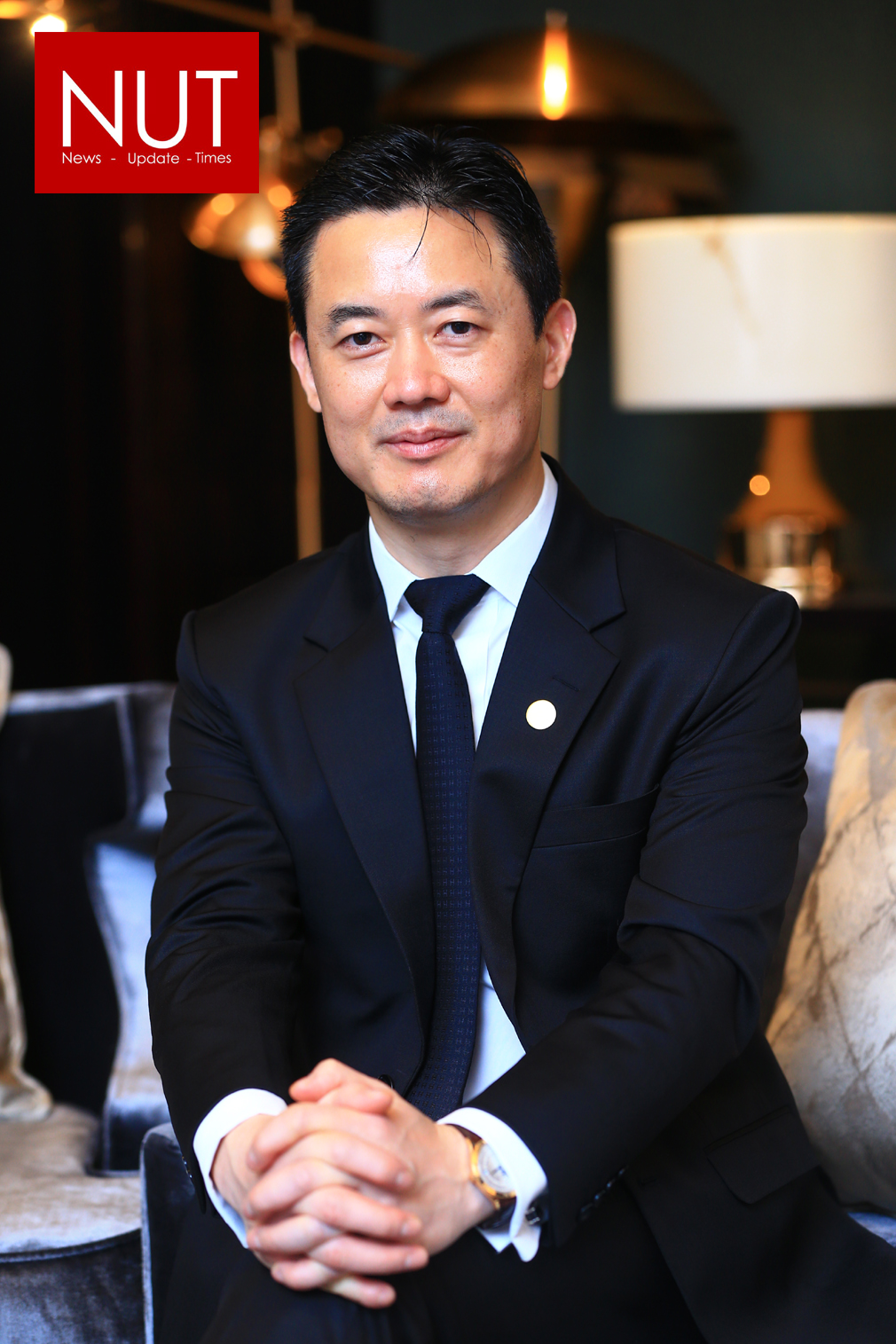
“The use cases of 5G are almost unlimited in terms of healthcare, education, entertainment, transportation, energy, and more,” said Charles Yang, President of Huawei Middle East. “Nonetheless, with the rapid development of 5G together with AI and cloud industries, countries in the region arerightfully attaching great importance to data sovereignty and cybersecurity. Huawei is committed to cooperative cybersecurity mitigation programs while never putting commercial interests ahead of cybersecurity policies. I reiterate that Huawei welcomes signing cyber security agreement with governments to ensure openness, transparency, and trust.”

Over recent days, Huawei has been working closely with other global manufacturers, security and safety experts, governments, and enterprises at Milipol to help establish a more secure digital ecosystem in the region.Building and fully implementing an end-to-end global cybersecurity assurance and privacy protection system is one of Huawei’s most crucial strategies for the region, according to Yang.

In 2020 alone, Huawei supported the stable operations of over 300 networks internationally, and helped operators to provide online services and minimize the impact of the pandemic on their business. Huawei has also signed more than 1,000 contracts for industrial 5G applications in more than 20 industries, demonstrating the trust that governments and its customers have in Huawei.

“Our responsibility has always been to make secure, trustworthy, and high-quality products,” noted Yang. “Huawei has not had any major cybersecurity incidents while working with more than 500 telecom providers for nearly 20 years in 170 countries. No other vendor can claim this level of cybersecurity success.”

In parallel with its cybersecurity emphasis, Huawei is doubling down on its research efforts in the region and internationally. The company is already one of the largest patent holders in the world. In 2020, Huawei was the top filer of patents for the fourth consecutive year, according to the World Intellectual Property Organization (WIPO). The company has also been leading in areas like 5G patents for some time, and has in turn been featured on rankings such as the EU Industrial R&D Investment Scoreboard in 2020.

“In the post-pandemic era, local governments and enterprises are all actively pushing for industrial digitalization, upgrading smart systems and solutions to enhance the level of public services,” said Yang.“As a consequence, they are looking at enhanced cybersecurity and privacy frameworks to guide how that transformation can happen. New policies, organizational structures, and processes will need to be determined, and will ultimately nurture a vibrant ecosystem that promotes innovation in the Middle East.” 

That future will also require bolstering local ICT talent, added Yang. Huawei’s talent ecosystem currently consists of four parts: a Seeds for the Future program, the Huawei ICT Competitions, an internship program, and various ICT Academies. Yang also cited how in 2020, the LearnOn online learning platform was launched in the Middle East. Over the last five years, this talent ecosystem has included work with 440 universities in the region, more than 20 ministries and commissions, with more than 35,000 people being trained and over 9,000 being certified by Huawei in areas like 5G, AI, and cloud. Yang stressed that the company will continue to work with local universities, partners, governments, and enterprise customers to cultivate more qualified ICT talent.

“With powerful technologies, a local talent ecosystem, and well-established cybersecurity frameworks, we are confident that advanced digital applications across all industries can become more widespread in the region,” concluded Yang.

Huawei’s cybersecurity practices have already gained the trust of global value chain partners and industry-leading organizations. To date, more than 700 cities and 228 Fortune 500 companies—among which 58 are from the Fortune 100—have selected Huawei as a digital transformation partner.