School of Business Studies at IBA Karachi concludes 1st international conference on ‘Decision Making in a Disruptive Age’

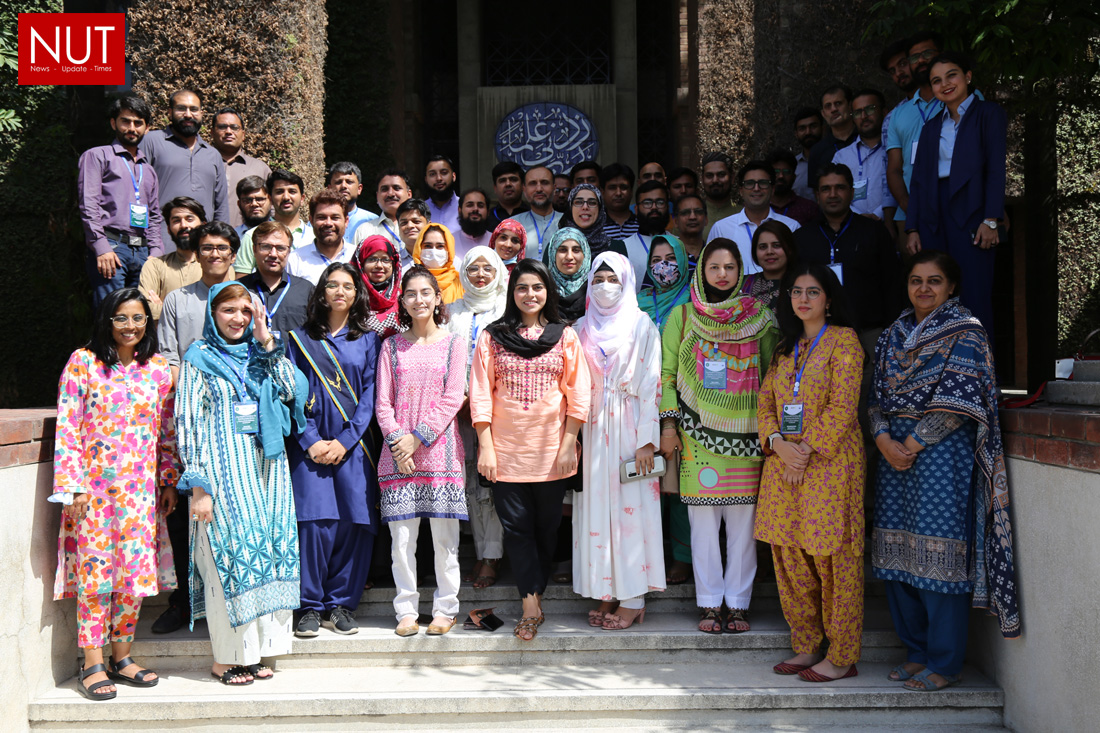
Karachi (Muhammad Yasir) The School of Business Studies (SBS) at the Institute of Business Administration (IBA) Karachi held its first International Conference (IBA-SBSIC 2022) on ‘Decision Making in a Disruptive Age’. The three-day conference provided a platform for scholars, researchers and academicians to showcase their research and findings along with facilitating collaborative transnational research to further our understanding of disruption in a fast-paced digital economy. The theme of the conference centered around neuromarketing and its rapid growth due to swift digitalization, especially following the post COVID era.

Along with keynote speaker sessions, the conference also featured several parallel paper presentation sessions in the areas of management, marketing, accounting and finance tracks. Papers were presented on different areas of research by faculty, researchers, and graduate students from national and international universities. Paper presentation sessions helped in identifying new research directions and areas of collaboration among researchers from various backgrounds. The keynote sessions were aligned with the four thought leadership areas of IBA-SBS including, Entrepreneurship and Innovation, Behavioral Studies, Investment Decision Making and Islamic Business and Finance.

The first day of the conference comprised of two workshops on ‘Consumer Neuroscience’ and ‘Governance in Islamic Finance’. The first workshop on ‘Consumer Neuroscience’ was conducted by Dr. Joseph Devlin, Professor of Cognitive Neuroscience & Vice Dean (Innovation & Enterprise), Faculty of Brain Sciences, University College London (UCL); Dr. Daniel Richardson, Professor of Experimental Psychology, UCL; and Dr. John Hogan, a Neuroscientist at UCL. The workshop on neuroscience featured interactive sessions and examined the role of technology in understanding human behavior and its applicability in business research. The second workshop on ‘Governance in Islamic Finance’ commenced with an enlightening session on the theory, practice and challenges in corporate governance faced by Islamic Institutions by researchers including, Dr. Tasawar Nawaz, Lecturer in Finance, University of Plymouth; and Dr. Nader Virk, Senior Lecturer, in Finance, Accounting and Finance, Swansea University.

On the second and third day of the conference, keynote speakers from the US and UK universities spoke about various aspects of neuroscience, adaptive learning as well as ethical and sustainable finance.

The second day commenced with an opening note by Dean SBS, and Head of Neuroscience lab, IBA, Dr. Wajid Rizvi. Followed by an enlightening session by Keynote Speaker, Dr. Richardson, on the topic, ‘Using Neuroscience to study Collective Behavior: Underwater Nightclubs, Live Theatre and the Eurovision Song contest’. This session under the thought leadership area of Behavioral studies at IBA-SBS also related to work on consumer neuroscience at IBA-SBS. The second Keynote Speaker session was delivered by Dr. Omar Al-Tabbaa, Associate Professor, Leeds University, on the topic ‘How does adaptive learning take place in cross-sector collaboration during global crises? Insights from emerging economies’.

The third day began with a third Keynote Speaker session by Dr. M. Kabir Hassan, Professor of Finance, Department of Economics and Finance, University of New Orleans, on the topic, ‘Research in Sustainable and Ethical Finance’. This session related to the IBA-SBS thought leadership area of investment decision making and helped audience identify emerging areas of research in the ESG investing. The last and fourth Keynote Speaker session was delivered on the topic ‘A Mind Reading Machine: Facts, Fictions and Ethics’ by Dr. Devlin.

Sharing their thoughts, the keynote speakers appreciated the well-organized conference in which they had a chance to share the latest research in their respective fields of expertise. They appreciated the attentive audience whose participation stimulated scholarly discussions throughout the conference.

Addressing the closing ceremony, Executive Director, IBA Karachi, Dr. S Akbar Zaidi commended the conference theme of ‘Decision making in a disruptive age’ as interdisciplinary and relevant. Dr. Zaidi thanked the keynote speakers who had traveled for the conference and invigorated the audience with quality presentations in their areas of expertise. He also appreciated the organizers for making seamless arrangements for the first international conference by SBS. Furthermore, Dr. Zaidi acknowledged the services of Dr. Wajid Rizvi, the inaugural Dean of SBS at IBA Karachi.

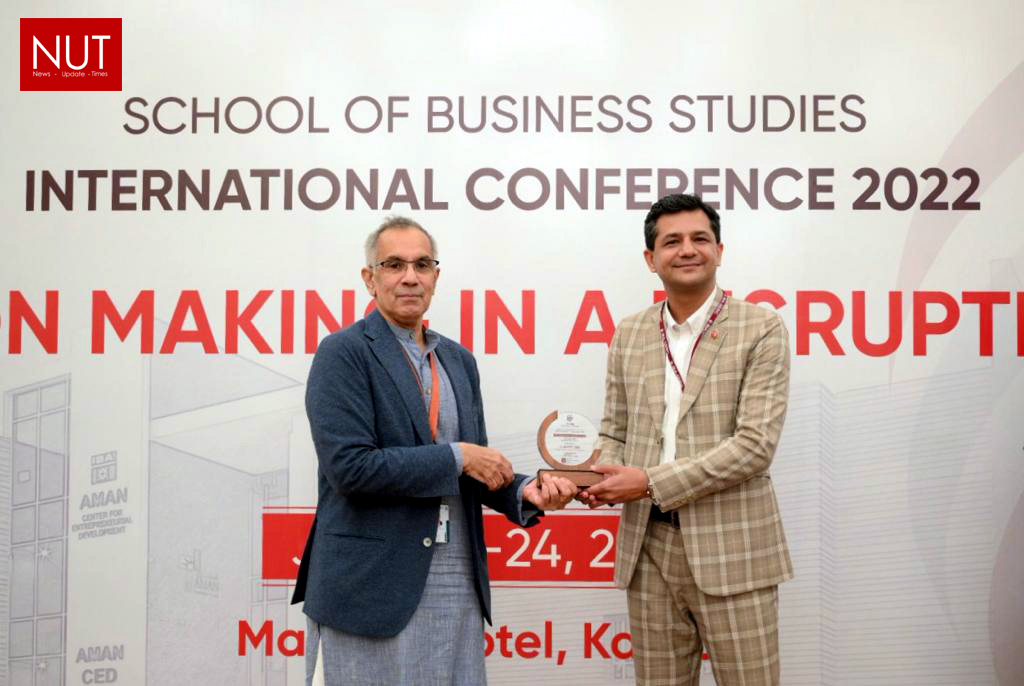
The conference concluded with the presentation of mementos to the guests and the organizing team. Subsequent conferences are planned in line with the inaugural event as part of the SBS mission to foster contemporary research and scholarly interactions.


OPPO receives eight prizes in the Computer Vision and Pattern Recognition Conference 2022

  • Seven papers submitted by OPPO were selected for presentation at the 2022 Computer Vision and Pattern Recognition Conference, breaking a new record for the company. The selected papers cover OPPO’s various R&D breakthroughs in a range of artificial intelligence disciplines.
  • OPPO received a total of eight prizes in the CVPR challenges, including three first-place, one second place, and four third place prizes.

Lahore (Muhammad Yasir) The annual Computer Vision and Pattern Recognition Conference (CVPR) came to an end in New Orleans, with globally leading technology company OPPO successfully having seven of its submitted papers selected for the conference, putting it among the most successful technology companies at the event. OPPO also placed in eight of the widely watched competition events at the conference, taking home three first place, one second place, and four third place prizes.

“In 2012, deep neural networks designed for image recognition rejuvenated the research and application of artificial intelligence. Ever since, AI technology has seen a decade of rapid development.” said Guo Yandong, Chief Scientist in Intelligent Perception at OPPO.

“OPPO continues to promote artificial intelligence to accomplish complex perceptual and cognitive behaviors. We empower AI with higher cognitive abilities to understand and create beauty and develop embodied AI with autonomous behavior. I’m delighted to see that seven of our papers have been selected for this year’s conference. Building on this success, we will continue to explore both fundamental AI and cutting-edge AI technology, as well as the commercial applications that will enable us to bring the benefits of AI to more people.”

The Seven papers accepted by CVPR 2022 showcase OPPO‘s progress in creating humanizing AI

Seven papers submitted by OPPO for CVPR 2022 were selected for presentation at the conference. Their areas of research include multimodal information interaction, 3D human body reconstruction, personalized image aesthetics assessment, knowledge distillation, and others.

Cross-modular innovation is viewed as the way to ‘humanizing’ artificial intelligence. Text data frequently includes an elevated degree of over-simplification, while visual picture data contains a lot of specific contextual details. OPPO researchers proposed a new CRIS framework based on the CLIP model to enable AI to get a more fine-grained understanding of the text and image modal data.

The biggest difference between human and artificial intelligence today lies in multimodality. Humans can undoubtedly figure out data in both words and pictures and draw relationship between the two sorts of data. The novel method proposed by OPPO improves multimodal intelligence, which could potentially lead to artificial intelligence being able to truly understand and interpret the world through multiple forms of information such as language, hearing, vision, and others, making the robot and digital assistants of sci-fi movies become a reality.

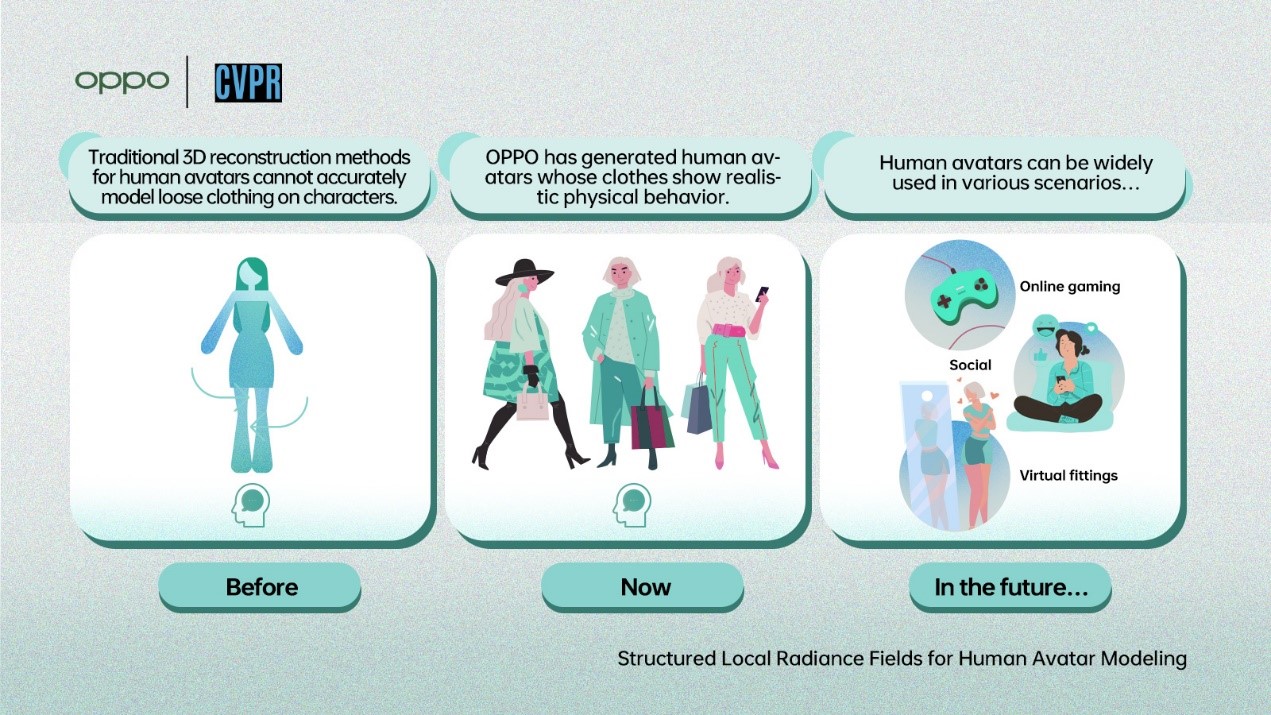
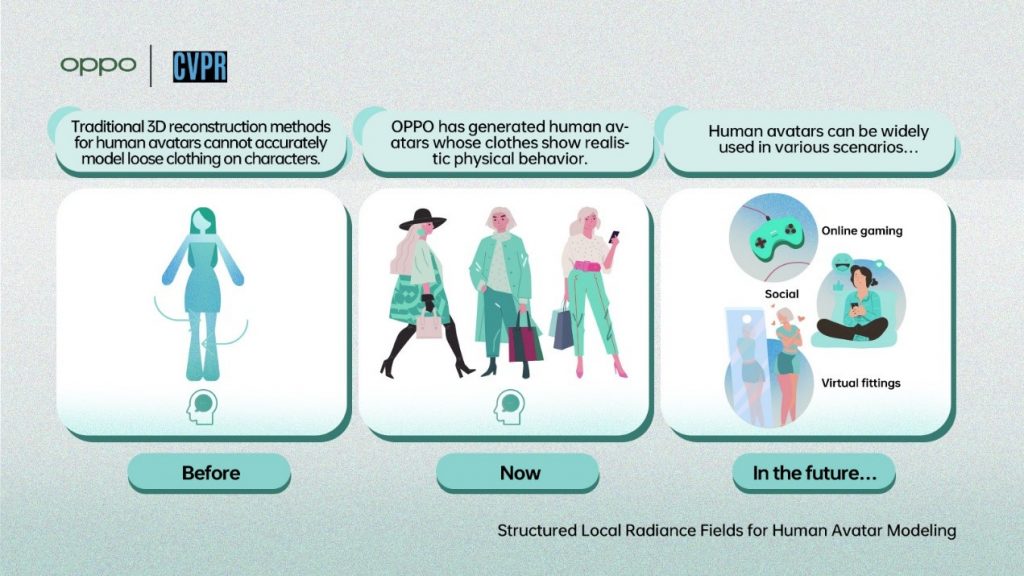
3D human body remaking is one more region in which the OPPO Research Institute has made significant progress. At CVPR, OPPO demonstrated a process for automatically generating digital avatars of humans with clothing that behaves more naturally. By analyzing RGB video of humans captured with a camera, the OPPO model can accurately generate 3D, 1:1 dynamic models that include small details like logos or fabric textures. Creating accurate 3D models of clothes has remained one of the biggest challenges. The new model effectively reduces the requirements needed to perform 3D human body reconstruction, providing technical foundations that can be applied to areas such as virtual dressing rooms for online shopping, AI fitness instruction, and the creation of lifelike avatars in VR/AR worlds.

Structured Local Radiance Fields for Human Avatar Modeling

 AI image recognition has now reached a stage where it can accurately identify a wide range of objects within an image. The ability of AI to evaluate images in terms of their perceived aesthetic quality is often strongly related to the big data used in training the AI model.

In collaboration with Leida Li, a professor from Xidian University proposed Personalized Image Aesthetics Assessment (PIAA) model. The model is the first to optimize AI aesthetics assessment by combining users’ subjective preferences with more generalized aesthetic values. In the future, the model will be used to create personalized experiences for users, not just limited to the curation of photo albums, but also provide recommendations on how to shoot the best photo and which content a user might prefer.

Personalized Image Aesthetics Assessment with Rich Attributes

OPPO has also chosen to make the PIAA model evaluation data set the open source for developers, with a number of research institutions and universities already expressing an interest in using the data to further their own efforts in personalized AI aesthetic assessment.

Further to this, OPPO also proposed a multi-view 3D semantic plane reconstruction solution capable of accurately analyzing surfaces within a 3D environment. Developed in partnership with Tsinghua University, the INS-Conv (INcremental Sparse Convolution) can achieve faster and more accurate online 3D semantic and instance segmentation. This can effectively reduce the computing power needed to perform environment recognition, which will enable such technology to be more easily adopted in applications such as automated driving and VR.

 OPPO makes AI ‘lightweight’ with second place win in the NAS Challenge

CVPR 2022 also saw a number of technical challenges take place, with OPPO placing third and above in eight challenges. These include the neural architecture search (NAS) challenge, SoccerNet, SoccerNet Replay Grounding, ActivityNet temporal localization, the 4th Large-scale Video Object Segmentation Challenge.

From mobile photography to automated driving, deep learning models are being applied in an increasingly large pool of industries. However, deep learning relies heavily on big data and calculation power and consumes a lot of cost, both of which present challenges to its commercial implementation. Neural architecture search (NAS) techniques can automatically discover and implement optimal neural network architectures. In the NAS competition, OPPO researchers trained a supernetwork of 45,000 sub neural networks to inherit the parameters of the supernetwork by optimizing the Model.

Using the NAS technique, researchers only need to train a large super network and create a predictor to let the subnetworks learn by inheriting the super network parameters. This provides an efficient and low-cost approach to obtaining a deep learning model that outperforms those manually designed by expert network architects. This will ultimately bring previously unthinkable levels of AI technology to mobile devices in the near future.

During CPVR 2022, OPPO also participated in seminar presentations and three high-level workshops. At the SLAM seminar, OPPO researcher Deng Fan shared how real-time vSLAM could be run on smartphones and AR/VR devices. In AICITY Workshop, Li Wei proposed a multi-view based motion localization system to identify abnormal behavior of drivers while driving.

OPPO is bringing the benefits of AI to more people, sooner

This is the third year that OPPO has participated at CVPR. OPPO’s rising success at CVPR during these three years owes much to its continued investment in AI technology. At the beginning of 2020, the Institute of Intelligent Perception and Interaction was established under the OPPO Research Institute to further deepen OPPO’s exploration of cutting-edge AI technologies. Today, OPPO has more than 2,650 global patent applications in the field of AI.

Guided by its brand proposition, ‘Inspiration Ahead’, OPPO is also working with partners across the industry to take AI technology from the laboratory into daily life. OPPO’s AI technology has also been used to develop products and features such as the real-time spatial AR generator CybeReal, OPPO Air Glass, Omoji, and more. Through these technologies, OPPO is aiming to create more lifelike digital worlds that combine virtual and reality to create all-new experiences for users.


Delegation of business leaders from Saudi and Kuwait meet PM to discuss KE issues

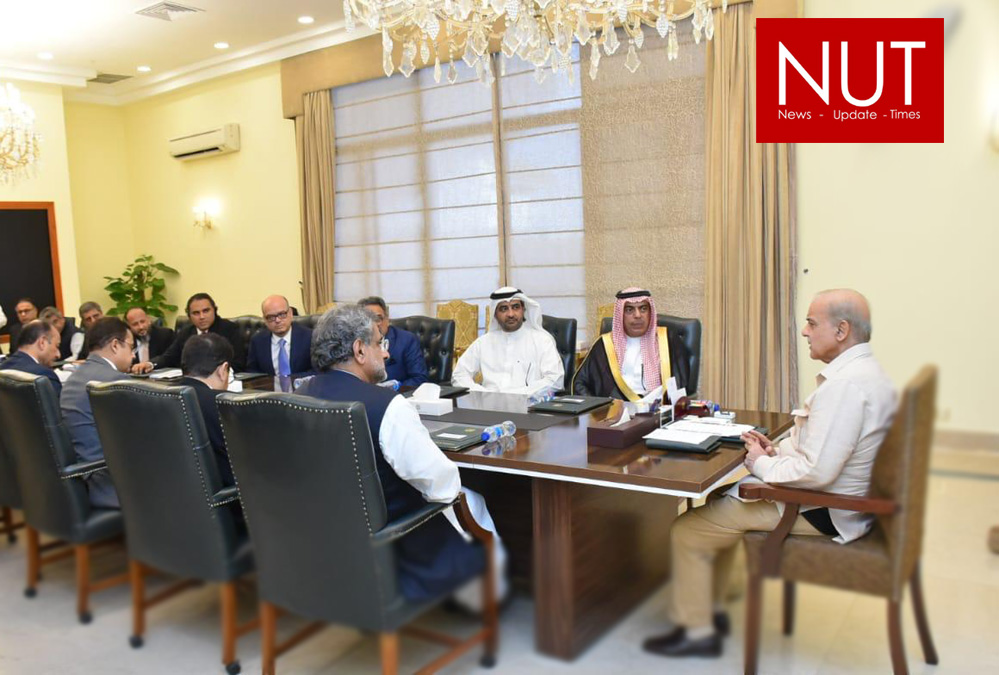
Karachi (Muhammad Yasir) A delegation of K-Electric’s majority shareholders representing Saudi Arabia’s Aljomaih Holding Company, Kuwait’s National Industries Group (NIG) and Infrastructure Growth and Capital Fund (IGCF) called upon the Honorable Prime Minister of Pakistan Mian Shehbaz Sharif on Thursday.

Delegation was led by Sheikh Abdulaziz Aljomaih – Managing Director of Aljomaih Holding Company, one of the strongest conglomerates in Saudi Arabia with interests in diversified industries along with Riyadh Edrees – CEO of NIG. 

Prime Minister Shehbaz Sharif highlighted that he has constituted a task force headed by former Prime Minister Shahid Khaqan Abbasi to resolve the concerns related to K-Electric for improving the power utility’s cash flows and streaming generation of electricity from its power plants. Task force members including Shahid Khaqan Abbasi, Federal Minister for Finance, Miftah Ismail, Minister for Petroleum Dr. Musadiq Malik, and Special Assistant to Prime Minister Ahad Cheema were also present.

The delegation briefed the premier about the utility’s achievement in the last 17 years. “We enjoy good brotherly relations with Pakistan. This is why we opted to invest in the power sector – which is the backbone of any economy – of Karachi, which holds a special place as Pakistan’s financial and industrial hub,” highlighted Aljomaih who was also the first Chairman of the company post privatization.

“Aljomaih and I have been part of the KE journey since 2005. As part of the largest investment group of Kuwait, we are ambassadors of Pakistan in investment circles across the GCC. KE’s continued success can be instrumental in generating interest in Pakistan’s energy distribution sector,” shared Riyadh Edrees.

Post-privatization, over USD 4 billion has been invested in KE’s value chain, enabling it to upgrade the power infrastructure including addition of new power plants. The operational improvements since privatization have resulted in savings of USD 5 Billon to the national exchequer. Today, the company has doubled the number of customers, delivers twice the amount of energy units and has halved the transmission and distribution losses as compared to 2005.

The investors further informed that the transformation’s success has attracted investors like Shanghai Electric Power (SEP), one of the major players in the global energy sector. However, the acquisition process – which was formally initiated in 2016 – remained stalled due to unresolved issues, they informed.

The delegation also expressed its concerns over the industry’s growing challenges that are affecting KE’s financial sustainability. The delegation sought support from the premier on the resolution of long standing issues such as the Power Purchase Agreement (PPA) and the arbitration of historical dues between KE and various government entities, which are deterrents towards the sale of KE’s majority shares.

The group of investors were accompanied by Mark Skelton, Director of Infrastructure Growth Capital Fund, Shan Ashary, the Chairman of KE’s Board and Syed Moonis Abdullah Alvi, CEO K-Electric.

The delegation also called upon Dr Shahid Khaqan Abbasi, Minister for Energy (Power Division) Khurram Dastgir, as well as Tauseef H. Farooqi, Chairman National Electric Power Regulatory Authority (NEPRA).

During the meetings, KE’s investors acknowledged Pakistan’s importance as an investment destination. They expressed that considering the historical ties and brotherly relations between Gulf countries and Pakistan, the investment was made at the time when the government was actively looking for investment in the power sector. The delegation also reiterated its firm commitment to resolving the challenges and securing the city’s energy future, which is inevitable for the country’s prosperity.

KE has 3.2 million customers whereas T&D losses have reduced to 15.8% today down from 34.2% in FY05. On the generation front, KE has added 5 efficient power generation plants and fleet efficiency has improved from 25% in 2005 to 38% in 2021.

Karandaaz leads a discourse on Renewable Energy, Energy Efficiency and Climate Smart Housing

Lahore (Muhammad Yasir) Karandaaz held a full-day webinar on the challenges and opportunities of renewable energy and energy efficiency in Pakistan. Leading experts and stakeholders in the renewable energy and climate finance space deliberated on the challenges and opportunities in this emerging space. Pakistan’s energy demand in 2021 was 29,435 MWs, whereas the supply after line losses in the same period was 26,083 MWs. This gap existed despite the fact that Pakistan possessed a potential to supply 37,261 MWs with existing infrastructure. Innovative steps need to be taken such as, net metering through which consumers who own renewable energy facilities can supply excess produce to national grid in exchange for incentives, and energy efficient commercial construction and housing models. According to Ministry of Energy, Power Division’s 2021 figures, Pakistan’s energy mix remained heavily reliant on non-renewable sources with a meager share of renewable sources such as solar (400 MWs), wind (1235 MWs), and bagas (364 MWs) despite their vast potential.

Dr. Shamshad Akhtar, Chairperson Karandaaz said, “Karandaaz’s research tabled for today’s deliberation offers perspectives on Pakistan’s key initiatives, which if pursued effectively, have potential to be a game changer in decarbonization subject to expeditious resolution of sector issues and challenges by fixing the enabling sector and regulatory policy frameworks, developing public private partnership to leverage private capital with appropriate risk mitigation and management frameworks. Few promising initiatives are noteworthy. 2019 Alternative and Renewable Energy Policy if proactively implemented will promote low carbon pathways as it targets a change in energy mix by lifting the share of renewables to 20% by 2025 and 30% by 2030.  Complementing this target is raising the share of hydel capacity to 30%. Advancement in this area will help resolve the energy crisis and reduce the dependence on imported energy fuel such as oil, coal, and LNG that exposes the economy to international price shock.  Climate mitigation anchored on renewables and energy efficiency will help ease the BOP and fiscal pressures that have put the entire economy at risk.   Pakistan is falling short of its targets already as the share of renewable energy in the total energy mix went down to 2.2% in 2021 so significant catching up is required in the next 3 years.”

Waqas ul Hasan, CEO Karandaaz said, “Pakistan remains among the group of countries most vulnerable to climate change. The ND-GAIN Index ranks Pakistan at 152nd, among 181 countries, based on its vulnerability to climate change and readiness to improve its resilience. Countries in developed and emerging economies alike are moving towards innovative solutions and technologies in energy efficiency and renewable energy through creative financing solutions such as bonds, climate adaption funds, and wholesale financing facilities. Through Karandaaz’s Green Initiative, we have also made several investments in the renewable energy domain and launched a challenge fund as well. We are particularly proud of an investment in a commercial green building in Karachi which will fulfill criteria of reputable accreditations. This investment can potentially be converted into Pakistan’s first Green REIT. So far, Karandaaz has supported 10.6 MWs capacity of clean energy in textile, SME and household segments through its investments in renewable energy.”

In her concluding remarks, Ms. Annabel Gerry, Development Director of the UK’s FCDO said, “I would like to commend the organisers and participants of this extremely important webinar to discuss issues related to renewable energy and energy efficiency that face Pakistan. The UK is leading global efforts to combat climate change and has already cut its own emissions by 43% since 1990, which is the fastest among the G-7 countries. The UK is also at the forefront of leading on international climate cooperation and in 2019, the UK Government announced plans to double its provision of international climate finance to £11.6 billion over the period 2021 – 2025 to support developing countries respond to challenges of climate change. Our work in Pakistan for the promotion of renewable energy and energy efficient businesses and housing through Karandaaz is part of the same approach.”

The webinar also had in-depth panel discussions on topics such as regulatory and financial constraints in the renewable energy generation, distribution, and efficiency; role of emerging technologies in accelerating the impact of renewable and efficient energy; potential for climate finance; need for energy efficient green buildings in Pakistan; and the potential benefits and modalities of commitment to Net Zero. During the webinar, Karandaaz also shared key findings of its two research reports. The first report on green financing, renewable energy, and energy efficiency in Pakistan is now available on Karandaaz website at:

karandaaz.com.pk/karandaaz_publication/ The second report for which key findings were shared during the webinar focuses on climate smart low-income housing and will be available publicly on Karandaaz website by mid-July, 2022.

Karandaaz Pakistan is a not-for-profit special purpose vehicle set up under Section 42 in August 2014. Karandaaz is the implementation partner of the Enterprise and Asset Growth Programme (EAGR) and Sustainable Energy and Economic Development (SEED) programme of FCDO. SEED is grant funded by FCDO whereas EAGR is co-funded by FCDO and Bill & Melinda Gates Foundation on grant basis. Karandaaz promotes access to finance for micro, small and medium-sized businesses through a double bottom line investment platform and financial inclusion for individuals by employing technology enabled solutions.

Govt urged to minimize reliance on costly LNG import

Lahore (Muhammad Yasir) As Pakistan is facing with severe natural gas shortage for the last couple of years, it has started relying heavily on Liquefied
Natural Gas (LNG), however, the government needs to explore other
energy sources to save environment as well as financial spending on
the LNG import. There are other green energy options like solar and
wind that can provide cheap environment-friendly energy sources and
the country needs go for these options.

This was the crux of one of the two reports “Gas Monitor – Pakistan” &
“Tabeer LNG Terminal, Socio-Economic & Environmental Analysis”
launched by the Indus Consortium held about the gas provision as an
energy source in the country at a ceremony here on Friday.

The reports launch was attended by representatives of academic
institutions, member of GROW Green Network, which is an umbrella of
environmental organizations of Pakistan working for the promotion of
renewable energy, independent researchers, member of Renewable Energy
coalition Pakistan and alliance for climate Justice and clean energy.

Sharing findings of the Gas Monitor – Pakistan report, Dr. Amanullah
Mahar, Director, and Center for Environmental Sciences, University of
Sindh, Jamshoro, said that since LNG, fossil gas is a very high carbon
intensive fuel and cannot be called “transition” fuel source to a
cleaner energy system. He explained that fossil gas (methane) can be
leaked from the re-gasification, transport, and consumption and
processing of it. After carbon dioxide (CO2), methane is the second
most abundant anthropogenic greenhouse gas and responsible for 20% of
worldwide atmospheric emissions. The methane is 25 times more potent
than CO2 at absorbing atmospheric heat.

While presenting findings of another report on “Tabeer LNG Terminal,
Socio-Economic & Environmental Analysis”, an independent
sustainability consultant Fatima Fasih said that keeping the global
LNG markets and their volatility in consideration, it is clear that
LNG is no longer a financially-viable source of fuel. She said,
“Instead of focusing on short-term monetary gains and quick gains in
energy for the economy, public and private institutions should focus
on building stronger energy security within Pakistan and develop a
greener economy through a just and equitable energy transition towards
renewable energy.”

She suggested that solar and wind power have shown remarkable success
in Pakistan from an economic perspective and should be invested in to
increase their ratios within the country’s energy mix and help the
country transition towards a just and sustainable energy transition.

Iqbal Hyder, Board member of Indus Consortium and Executive Director
Laar Humanitarian Development Program (LHDP), while concluding his
remarks, said that the livelihood of population inhabiting along the
coastal areas is directly dependent on mangrove forests. He said
cautioned that any additional construction or industrial operations in
these areas will exacerbate the declining socio-economic conditions of
the local communities. “We need to recognize the valuable indigenous
knowledge for local fishing and rejuvenate the current worsening
fishing populations.”

The Gas Monitor – Pakistan report focuses on the case of the
development of Pakistan’s gas sector, especially LNG. It discusses how
increasing reliance on LNG is posing challenges to the country’s
economy on one hand and the release of methane gas emissions is
deteriorating the environment on the other. The monitor also comes up
with a set of recommendations that present a potential way out of this
entrenched dependence and its associated impacts.

An analysis of the socio-economic and environmental impacts of the
Tabeer LNG terminal, Port Qasim, Karachi, investigates the
Environmental Social Impact Assessment (ESIA) and explores the
Corporate Social Responsibility criterion with a set of
recommendations.

Indus Consortium is an umbrella organization of over 60 civil society
organizations across Pakistan, working on DRR, climate change, green
development, and green finance. It also envisions a democratic and
equitable society where all citizens enjoy equal economic, cultural,
and political rights, with a mission to work for local communities to
enhance their resilience and participation in green development.

Google launches Think Games & Gaming Growth Lab

Lahore (Muhammad Yasir Google today announced it has successfully launched Think Games, Pakistan’s first thought leadership and knowledge-sharing event for game developers, which saw over 1,600 attendees. First announced in May 2022, the two–day event aimed to create an environment for Google leaders and local gaming experts to share insights, tools, and best practices to help developers create, grow and scale world-class games. 

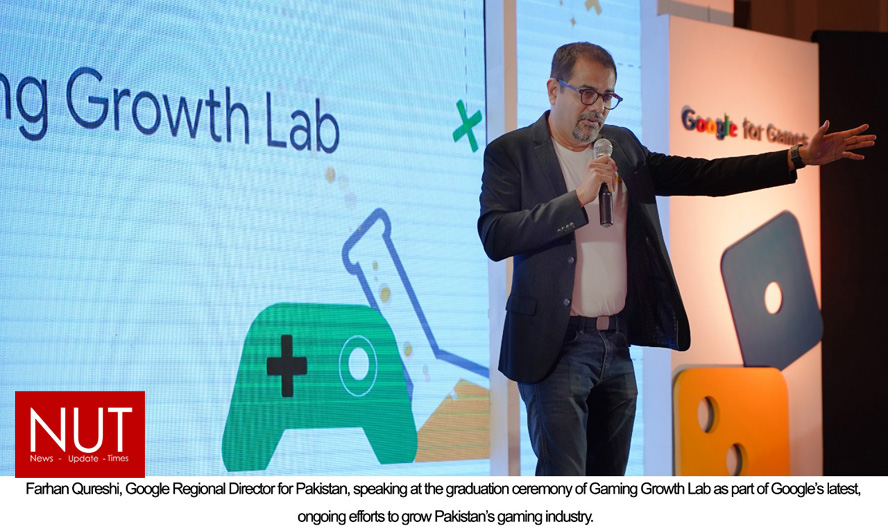
Google today also celebrated the graduation of the Gaming Growth Lab (GGL), an 11-week acceleration program designed to help emerging mobile game studios in Pakistan reach their full potential by addressing their business challenges and expanding their offerings. Participants underwent training workshops and deep-dive consultations where they had access to a wide range of experts from Google and the gaming industry. A total of 54 mobile gaming studios graduated today after completing the program. 

Think Games and GGL marked the latest efforts by Google to help grow Pakistan’s gaming industry and put it on the world map. Gaming continues to be one of the biggest industries worldwide and Pakistan is well-positioned to be a global gaming powerhouse. Globally, the gaming industry is expected to reach $219 billion in 2024. Some of the local game developers such as Hazel Mobile GroupGame District, and GeniTeam have gained recognition on the international stage. 

Farhan Qureshi, Google Regional Director for Pakistan, Bangladesh and Sri Lanka, said, “We’re excited to see the progress of our key initiatives Think Games and Gaming Growth Lab as we strive to support Pakistan to become a top player in the global gaming industry. On top of a vibrant gaming ecosystem that is supported by companies like Google, the country has all the components it needs, among them ​​a rising community of young, diverse, and entrepreneurial gaming developers who have the ambition and hunger to build great games. Our work is ongoing and through our various efforts, we hope to help Pakistani developers build great games for the world.”

Among the GGL graduates is MicZon, a mobile gaming publishing company founded by Nouman Sharif in 2018. The company’s key learnings from the GGL include strategies on user acquisition and games monetization. Since joining the program in March 2022, MicZon has seen a 35% increase in app downloads and revenue, and is forecasting a 20% year-on-year growth in downloads and revenue for 2022. 

Ehtisham Malik, Head of Marketing at MicZon shared, “The GGL program is an important initiative that will take Pakistan’s gaming industry to the next level. All the information we learnt at GGL has been very helpful and relevant to our business. Thank you Google Gaming Growth Lab Pakistan for helping Pakistani developers and publishers!”


To know more about Google’s commitment to Pakistan Gaming, read and sign up on the Google for Games newsletter here.


University of Karachi partners with PepsiCo Foundation Funded Amal Career-Prep fellowship

Karachi (Muhammad Yasir) University of Karachi, Amal Academy and PepsiCo Pakistan signed a Memorandum of Understanding (MoU) at the University of Karachi to work together on enhancing the professional skills of university graduates. Vice Chancellor University of Karachi, Prof. Dr.  Nasira Khatoon, Ali Siddiq, CEO Amal Academy and Hatim Khan, Director Corporate Affairs PepsiCo Pakistan signed the MoU. Through the MoU, Amal Academy will offer the Amal Career-Prep fellowship program to the students at the University of Karachi.

Amal Academy is focused on upskilling youth since 2014 through the Amal Career-Prep Fellowship. Graduates join the fellowship to complement their technical skills with professional skills, so they are better prepared for the job market. ‘Our youth has tremendous potential; our Fellowship enables students to become more aware of all that they are capable of. We aim to help them develop self-belief, become lifelong learners, problem solvers, and socially responsible citizens. Employers today are looking for more than just technical skills, and we are proud to be partnering with PepsiCo and Karachi University to empower these leaders of tomorrow! said Mr. Ali Siddiq, CEO Amal Academy.

The PepsiCo Foundation, the philanthropic arm of PepsiCo has partnered with Amal Academy to fund the Amal Career-Prep Fellowship. Since 2019, over 6000 graduates have completed the fellowship. The PepsiCo foundation funding has enabled Amal Academy to scale the program at the national level creating opportunities for graduates living in far flung areas to benefit from the program. Over 40% of the program graduates are women. ‘We are completely invested in our PepsiCo Positive vision of driving positive action for the planet and people. We thank the University for hosting us; this partnership helps expand the program coverage in the province of Sindh.’ said Mr. Hatim Khan, Director Corporate Affairs PepsiCo Pakistan.

Education experts call for making maths accessible to govt schools children

STEAM Pakistan Joins Forces with LUMS to Make Maths Accessible to
School Children.

Lahore (Muhammad Yasir) Education experts at a two-day workshop have
emphasized the need for providing an opportunity to students in public
sector schools to narrow their innate interest in maths and the
traditional learning environments as it would help in encouraging
their mathematical thinking, mainstreaming mathematics, and
collectively creating new knowledge.

The workshop on maths circles was organized at the Lahore University
of Management Sciences (LUMS) here on Friday.

The event was part of the STEAM Pakistan project led by the Ministry
of Federal Education and Professional Training in partnership with the
Malala Fund. This is the first effort of its kind in Pakistan to
mainstream maths circles among Pakistani school-going students.

Key speakers at the event included Founder of Math for Love, Mr. Dan
Finkle; Prof. Dr. Mayada Shahada from University of Bahrain, and Chair
of the Maths Department at LUMS Prof. Dr. Imran Anwar. Students and
faculty focal persons from STEAM Pakistan’s partner universities from
across Pakistan participated in the workshop.

In his opening remarks, Dr Imran Anwar, Chair of the Maths Department,
LUMS, said, “There continues to be a gap between a child’s innate
interest in maths and the extent to which traditional learning
environments provide them with an opportunity to explore this
fascinating subject. We hope to bridge this gap by mainstreaming the
practice of maths circles in government schools across Pakistan.”

Talking about the concept of maths circles, the organizers on the
occasion shared that they were essentially learning spaces that
engaged participants in mathematical enrichment activities. Such
spaces are aimed at encouraging mathematical thinking, mainstreaming
mathematics, and collectively creating new knowledge.

In her remarks, Head of Partnerships with the STEAM Pakistan project
Sana Kazmi said that Maths Circles are one of the core program
activities of STEAM Pakistan through which faculty members and
students of our partner universities will visit government schools to
attract children towards maths by introducing them to concepts and
problems through fun, relatable activities that they will learn as
part of this two-day workshop. “We are confident that our efforts will
inspire a generation of learners in Pakistan, especially young girls,
to approach maths with curiosity and love instead of fear,” she added.

According to Dr. Mayada Shahada, she understands that this was a
first-of-its-kind event in Pakistan and it will prove instrumental for
the evolution of maths learning in Pakistan and make greater space for
global linkages.

Highlighting the significance of STEAM Pakistan, Javed Malik,
Programme Director Malala Fund Pakistan, said that the STEAM Pakistan
is a collaborative project through which they are providing support to
the Ministry of Federal Education and Professional Training to advance
secondary school-aged girls’ access to science, technology,
engineering, arts, and mathematics education in Pakistan.

The STEAM model of education essentially adopts an integrated approach
to learning that propagates cross-disciplinary learning among students
and capacitates them from an early age to think critically, work
collaboratively, independently devise creative solutions and become
resilient problem solvers.

Muneeb Khurshid is Aiming to capture the Arab market after the success of Ds Members Collection in America

Pakistan (Nut Desk) Muneeb Khurshid made a name for himself internationally after completing his education at an early age. Now he is involved in the world’s most expensive car business in the United States and Dubai, where he has been involved in the Hollywood film industry. Muneeb Khurshid is now renting the world’s most expensive cars, including Mercedes BMW Benz Private Jet, for music videos ,business tours and Bollywood movie and music stars in Dubai. “ I was always attracted to luxury cars & lifestyle, networking with like minded people allowed me to understand the potential in luxury lifestyle business. Through my network it wasn’t a challenge for me to jump into the industry & to implement my approach, luckily it turned out to be way better than I thought” After successfully trapping the business class in United States, Ds Members Collection is now aiming to expand in tier entire United Arab Emirates. Muneeb Khurshid was a prominent participant in the Expo 2020 and this when he analysed the potential in the gulf. “Our services are mainly for the tourists & business activities, I believe Dubai is becoming a hub for both of these sectors” Additionally Ds Members Collection fells in the celebrity wish list, the organisation has a past experience of working with countless public figures, entrepreneurs & celebrities, which boosted the business initially.

Careem partners with TCF, Chughtai Labs to provide health and education benefits to its Captains

Lahore (Muhammad Yasir) On the occasion of UN Public Service Day, Careem, the Super App of the greater Middle East and Pakistan, has partnered with The Citizens Foundation (TCF) and Chughtai Labs to provide subsidized rates for quality education and healthcare to its Captains and their children.

As per the partnership agreement, TCF will provide a subsidized fee to 300 Careem Captains enabling their children to benefit from a rigorous curriculum development, maintaining global standards.

Through the collaboration with Chughtai Labs, Captains belonging to different grades will receive customized discounts for laboratory tests. Captains of platinum, silver and bronze categories will be able to ‌redeem discounts worth 30%, 27% and 24% respectively. Similarly, all other Captains will be entitled to a flat 8% off on medicines. Chughtai Labs will also share unique codes on a monthly basis that will be promoted and disbursed with Captains through the Careem Captain App and other internal channels, as per their grades.

Sharing his thoughts on the occasion, Feroz Jaleel, Country Head, Careem Pakistan said, “Careem has always strived to improve the quality of life for its Captains and will continue to look after them and advocate for them as they are the backbone of our services. These partnerships are a testament to our determination of supporting the wellbeing of our Captains and their families, all while incentivizing them by offering a range of discounts on essential products and services”.

Careem has over 800,000 Captains registered on its platform so far and has invested up to $100 million since its inception in Pakistan in 2016. Transforming into a Super App; Careem offers multiple opportunities as it expands its services from the mobility of people to mobility of things (daily essential deliveries) and money (peer-to-peer credit transfer and mobile top-ups).