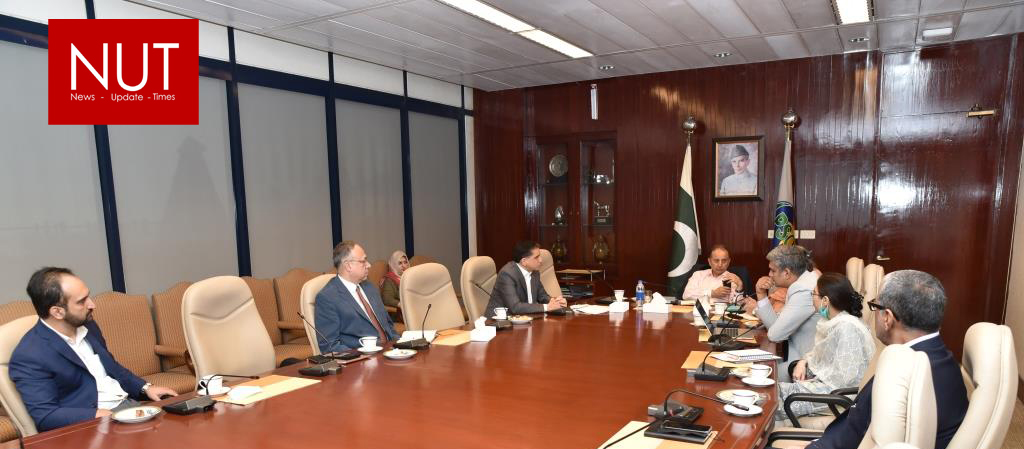
Minister of State (Petroleum Division), Ministry of Energy, Mr. Musadik Malik visited PSO’s Head Office in Karachi.

Karachi (Nut Desk) Minister of State (Petroleum Division), Ministry of Energy, Mr. Musadik Malik visited PSO’s Head Office in Karachi. Managing Director & CEO, Pakistan State Oil (PSO), Syed Taha welcomed the honorable guest along with the company’s senior management.

The honorable minister was given an overview of the company’s financial and operational performance, milestones achieved and key challenges. The minister acknowledged PSO’s role in reshaping Pakistan’s energy landscape with technological advancements and digitization.

PSO continues to set new industry benchmarks and reaffirm its role as the national flag bearer and leader of positive change in Pakistan.

GameBird revolutionises the future of gaming with the launch of country’s biggest Esports platform

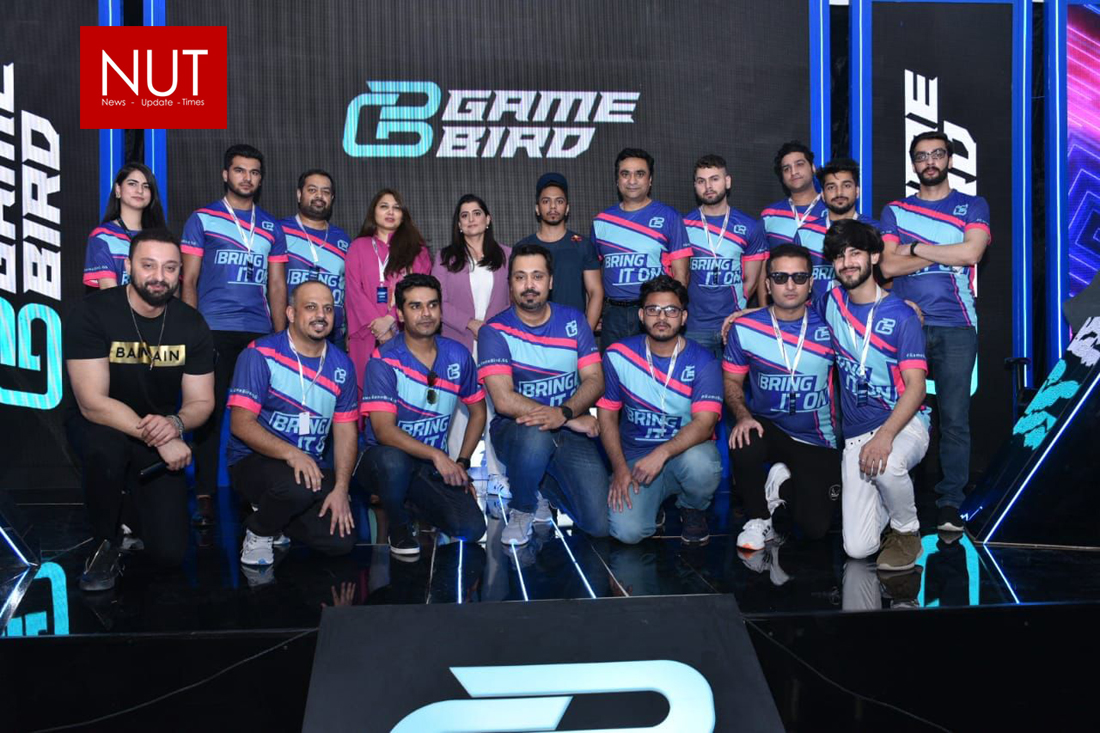
Islamabad (Muhammad Yasir) In boosting the country’s gaming ecosystem, Telenor Pakistan launched Pakistan’s first and only Esports platform, GameBird. The launch event was held at Telenor’s 345 campus, attended by some of the biggest names in the industry. Former women’s cricket team captain Sana Mir was the chief guest at the event. Pakistan’s top Esports professionals like Arsalan Ash, Haseeb aka HSB, Amu Shahid, and members of House of Blood were among the Pakistani gaming community.

GameBird is the only platform in Pakistan that offers online gaming tournaments with AAA-rated partners, entertaining a digital footprint of more than 50,000 active users and more than 140,000 unique users every month. Video game enthusiasts can now live stream and participate in tournaments, find top-quality gaming merchandise, browse news, make purchases, and much more. As Pakistan’s premier gaming platform, GameBird aims to create a community and provides opportunities for talented gamers to showcase their skill. In addition, the gamers get access to international gaming arenas to showcase their talent.

Esports is already one of the most popular industries worldwide, especially amongst youth, and Pakistan is rapidly gaining momentum. There are estimated to be more than 55 million users and 33 million gamers in the Pakistani Esports ecosystem, contributing significantly to the $200 billion global industry. Designed as a one-stop solution for every gamer, GameBird has already hosted more than 60 tournaments and 20 broadcasts during its testing phase.

Chief Executive Officer, Telenor Pakistan, Irfan Wahab Khan, commented on the launch, “Pakistan’s online gaming industry is vibrant, and we have launched GameBird to strengthen the nationwide gaming community. It has been designed to advance our ambition of going beyond connectivity and bridging the gap between local talent and global opportunities, bringing together all the fascinating aspects of gaming within their reach. Gaming enthusiasts around the country will also be offered the possibility to explore alternative revenue streams through GameBird, making it the first and only platform of its kind in Pakistan.”

The launch event also included a panel discussion titled “Esports: The Future of Gameplay”, where game developers discussed the rapidly evolving state of the industry in Pakistan and the value of developing local games. Moreover, the panel discussed conducting game jams in Pakistan and their potential. In addition to the panel discussion, game enthusiasts were treated to a “Clash of Titles” gaming tournament between top players. The event concluded with a prize distribution for winners of previous GameBird tournaments.  

GameBird is bringing Pakistan’s gaming and e-sports communities the unique opportunity to experience a one-stop gaming platform. GameBird hopes to provide the untapped talent in Pakistan with more opportunities in the international arena through this platform.


Leadership’s role is crucial for Pakistan’s progress: Arif Alvi

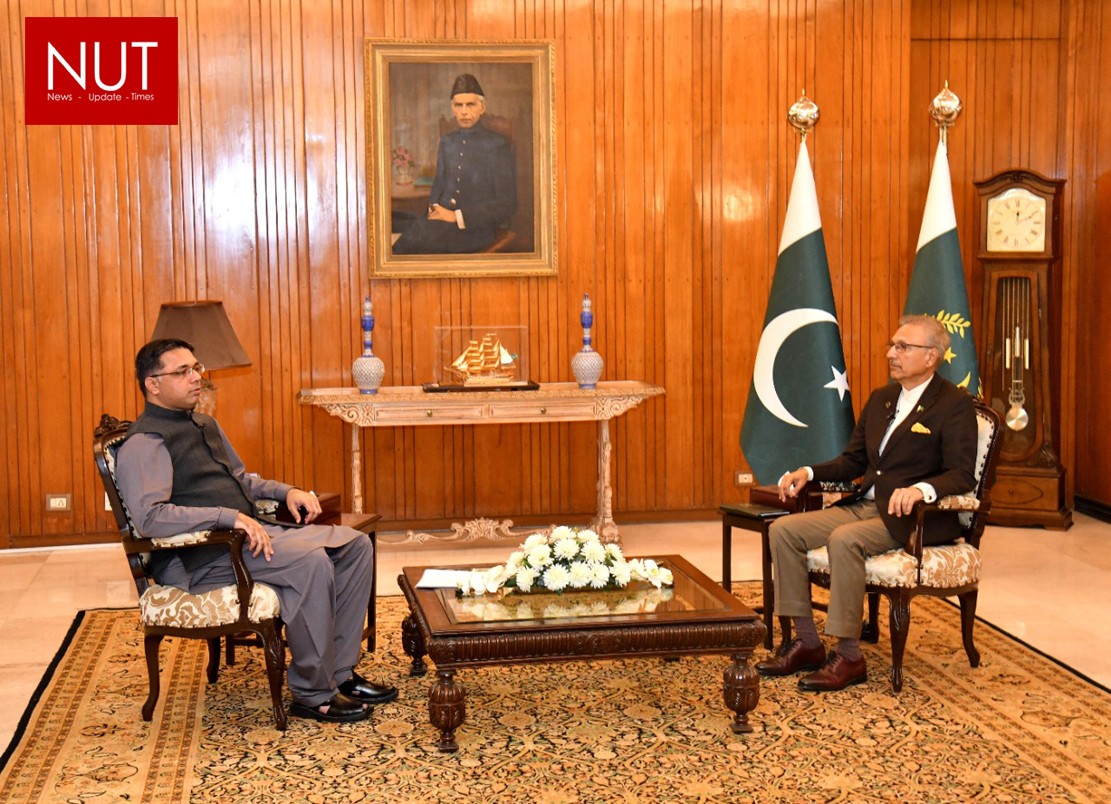
Islamabad (Muhammad Yasir) The role of leadership is very crucial in challenging times; it is about understanding issues and being persistent in the pursuit of solutions. If the leadership is clear-headed, it can lead the nation on the path to progress. This was stated by Dr. Arif Alvi, President of the Islamic Republic of Pakistan, in an exclusive interview with Muhammad Azfar Ahsan, CEO and Founder CORPORATE PAKISTAN GROUP and Nutshell Group.

He said that stability in the economy does not happen overnight; it needs sustainable efforts for an elected government based on competent people with the right skill set to address issues of public interest. In Pakistan, unfortunately, public representatives become part of the assemblies on the basis of relationships in different communities.

Dr. Alvi said that the Charter of Economy seems a very promising idea for the stability of the economy, but it is challenging in a country where different political parties have starkly different political ideologies; however, the best course of action for economic progress is a democratic setup which is empowered through votes.

Pakistan has fared far better than world economies during the last few years, particularly during the COVID-19 pandemic, the President said. He hoped that Pakistan will soon get out of the ongoing crisis, which has a lot to do with global inflationary trends as well as domestic uncertainties.

“I am optimistic that the situation will get better in Pakistan, which was first the victim of a long wave of terrorism that kept the foreign investors at bay. By the grace of God, we fought well against terrorists and prevailed. Then the COVID-19 pandemic came, and Pakistan fought that battle well too,” the President further said.

He emphasized that the adoption of knowledge and technology in the system is needed to bring change in our society, and this can be pursued better by the private sector than government institutions, but the policies should be consistent, and their implementation should be speedy.

Dr. Alvi said that he is a firm believer that the focus of Parliament and leadership should be on access to education for the masses. “There is a huge gap in education in Pakistan; it is going to be the single biggest issue in the next ten years. Uneducated people should receive suitable skills, and those with a mediocre educational background should be equipped with a better skill set,” he added.

The President praised the overseas Pakistanis for their unwavering support and valuable contribution to the economy, urging them to provide intellectual support for the empowerment of the Pakistani people, mainly through education.

The overseas Pakistani diaspora comprises workers, largely in the Middle Eastern countries, but a significant section, of up to 10%, is well settled in different countries; they can play a significant role for the development of Pakistan, the President said. “I requested them to adopt health and education institutions in Pakistan as the world needs human intellect. For instance, in cyber defense and cyber protection, the world needs 80 million professionals. I told them that every professional they train in this field will get work. There are so many other fields that need human resources,” he added.

Speaking about the geopolitical situation, Dr. Alvi opined that Pakistan should follow a smart approach which must be independent, while avoiding a definite tilt towards a specific bloc. To withstand pressures from different sides, he said that the economy needs to stand on its own feet. Plus, we must prefer sovereignty (khuddari) for the nation.

To a question about the growing polarization in Pakistani society and what should his role be as the head of the state, Dr. Alvi replied that he may not be able to convince the most polarized people to change their views, but he can unite the less polarized people around national causes.

“In COVID times, I did my best to keep Ulemas on board, and it worked very well. What we decided with the religious fraternity in Pakistan, the Muslim world followed the same later, e.g. keeping the mosques open for prayer during the pandemic,” Dr. Arif Alvi said.

He mentioned that the Presidency played a role in raising its voice on the issue of women’s right to inheritance. It also provided significant support to the PM Digital Skills Program, in which 24 million people participated, and a significant number out of them is making good money to support their families.

Regarding the future of Pakistan, Dr. Alvi said that the country is destined for development and prosperity due to its remarkable potential, but its institutions should be strengthened on a sustainable basis. A knowledge-based Pakistan needs less brick-and-mortar investment and more intellectual investment, he said.

The nation should elect a good leadership, and it is then up to the leadership to establish institutions and rid Pakistan of people with the vested interests, he concluded.

MMBL partners with foodpanda and AdalFi to offer inclusive financial services to HomeChefs

Lahore (Muhammad Yasir) Mobilink Microfinance Bank Limited (MMBL), the largest digital bank in Pakistan, has partnered with foodpanda HomeChefs, the nation’s leading platform for home-based restaurants, and AdalFi, a Techlogix subsidiary focused on digital financing, to initiate short-term micro-financing solutions for household chefs. Being a first-of-its-kind initiative, this strategic alliance will offer weekly loans of up to PKR 50,000 for HomeChefs to help resolve supply chain, marketing, and food quality issues, ultimately driving higher revenues and branding benefits for these home-based business ventures.

The HomeChef market in Pakistan is a significantly diverse and growing segment. It has enabled entrepreneurs, especially women, to explore new ways of being financially independent while leveraging their culinary skills. foodpanda provides a viable platform to these talented individuals, facilitating them to seamlessly reach millions of customers across the nation, while giving them access to its extensive network of riders.

This strategic partnership is an exciting development for Pakistan’s economic and financial landscape as it enables an essential monetary support stream to help female entrepreneurs scale their ventures sustainably. With the recent introduction of MMBL’s Dost Tajir, the bank has been prioritizing efforts to promote financial inclusion for the underserved masses through access to convenient and affordable digital financial solutions to empower them to scale their businesses.

Speaking on the development, Muntaqa Peracha, CEO of foodpanda, stated, “While empowering HomeChefs, especially women who are exploring a new field of entrepreneurship, foodpanda is on a mission to level the playing field for these talented individuals. Through this partnership, we are easing one of the biggest barriers to growth in the market, i.e., financing. With the support of leading institutions like Mobilink Microfinance Bank and Adal Fintech, these HomeChefs now have the opportunity to grow without worrying about finances.”

Addressing the partnership, Sardar Mohammad Abubakr, Chief Finance and Digital Officer at MMBL added, “Collaborations with like-minded organizations are key to achieving our ambitious financial inclusion goals. At MMBL, we believe in extending support to various segments of society, especially women, who constitute more than half of the nation’s population but have significantly low financial inclusion figures to date. We are at the cusp of not just empowering these entrepreneurs financially, but also creating innovative paths for them to be active contributing drivers of the economy.”

“We at Adal Fintech foresee women entrepreneurs as an emerging contributor to Pakistan’s GDP,” said Salman Akhtar, CEO – AdalFi, “The AdalFi mission is to equalize access to credit for all Pakistanis using data and AI to power credit decisions. foodpanda HomeChefs is a phenomenal example of our technology in operation”

As Pakistan’s leading digital financial institution, MMBL has over 40 million registered users, including 15 million monthly active mobile wallets. The Bank strives to facilitate customers by streamlining nationwide access to simplified and convenient financial solutions. MMBL, over the past decade, has introduced multiple innovative and customized digital and financial initiatives, such as digital onboarding of customers, Self-service banking through the DOST App (available on both iOs & Android), Internet Banking, the Women Inspirational Network (WIN) program, and the Humqadam program to provide employment opportunities to the differently-abled and much more.

PTCL Group donates life jackets to fishermen community of Karachi

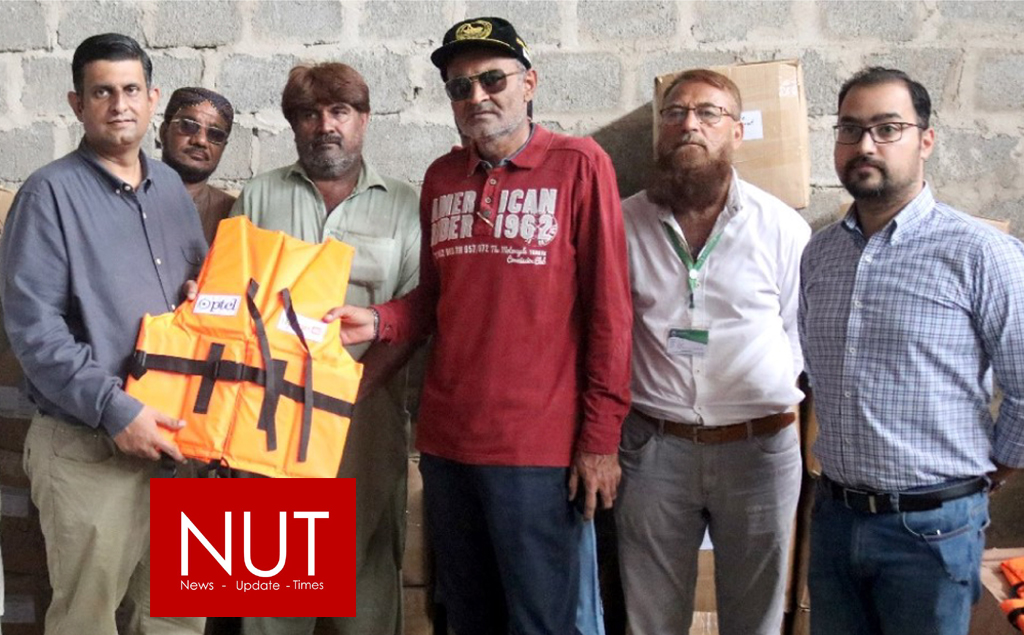
Karachi (Muhammad Yasir) PTCL Group, Pakistan’s largest telecom operators PTCL & Ufone has donated life jackets to the fishermen community of Karachi to ensure safety of small-scale level fishermen during high tide season at a ceremony held in FCS HQ in Karachi.

Chairman, Fishermen Cooperative Society (FCS), Zahid Ibrahim Bhatti was presented with life jackets by PTCL Group representatives, to acknowledge the efforts of the local fishermen.

Expressing his thoughts regarding the initiative, Head of Public Relations and Corporate Communication, PTCL Group, Amir Pasha said that “PTCL Group was always on the lookout for opportunities to give back to the community where it is most needed. He said that the Monsoon season is around the corner and there is pressing need to undertake measures to ensure safety of fishermen community, who risk their lives to sustain the seafood supply chain. He said safety is of paramount importance and these fishermen need to be equipped with both training and necessary safety gear.”

Also speaking at the occasion, Chairman Fishermen Cooperative Society (FCS), Zahid Ibrahim Bhatti expressed his gratitude toward PTCL Group for the thoughtful intervention. He said that “fishermen are aware of the risk, however, there is a cost involved in taking the necessary precautionary measures, which is unbearable for small-scale fishermen. He hoped that the support coming from the private sector in terms of training and safety equipment will go a long way in reducing safety incidents.”

PTCL Group is widely recognized for its corporate social responsibility initiatives that create impactful shared value. Both PTCL & Ufone are at the forefront to ensure welfare of the communities it serves. 

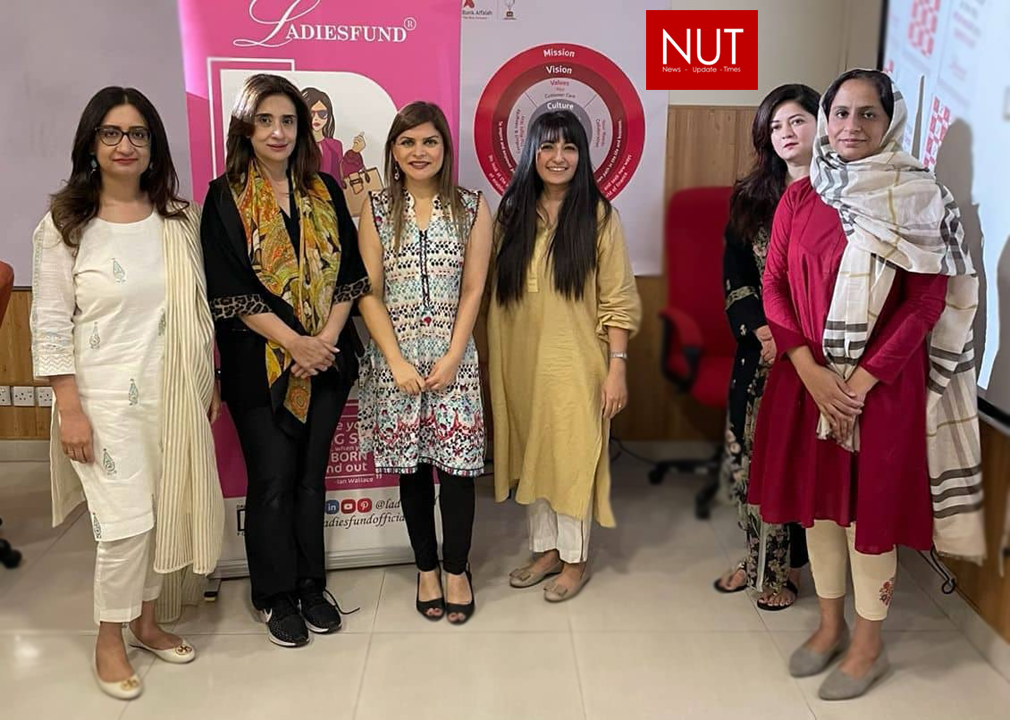
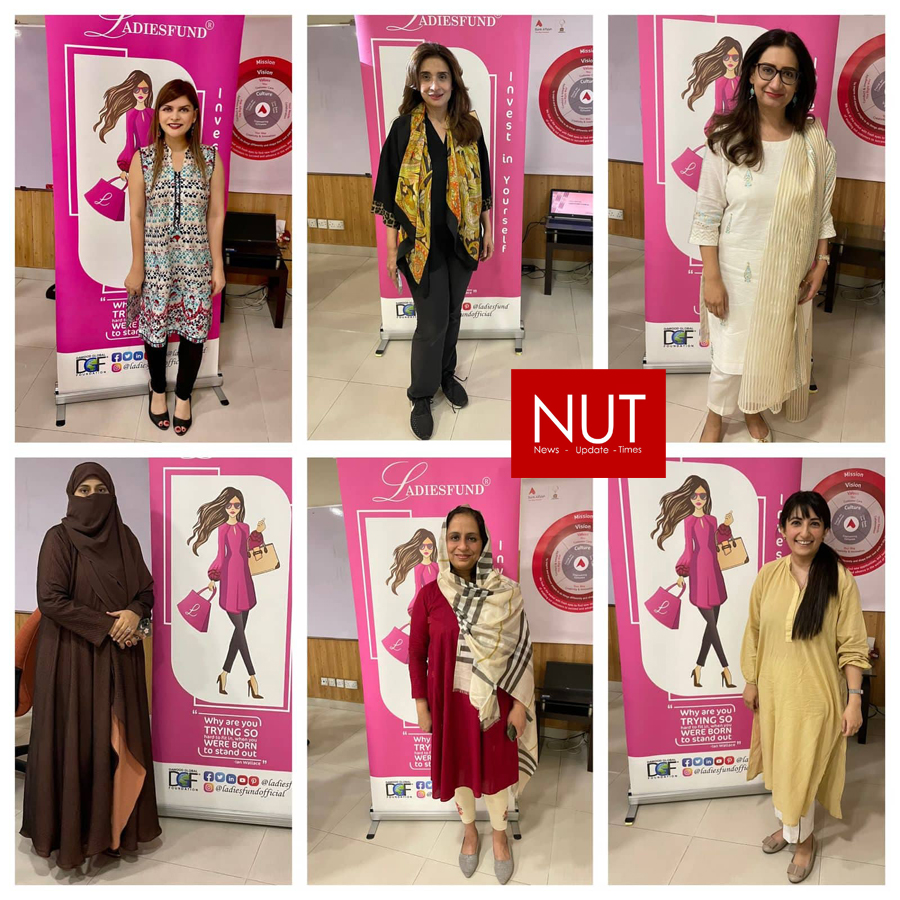
LADIESFUND held an exclusive #LFVIP Lahore interactive learning event and dinner

Lahore (Nut Desk) LADIESFUND held an exclusive #LFVIP Lahore interactive learning event and dinner. In attendance were some of the most dynamic budding women in the city including architect Rafia Ilyas, editor Sara Amir Turab, educationist and coder Sadaf Rahman, philanthropist Misbah Momin, former MD AC Neilson Pakistan Quratulain Ibrahim, jeweler and exporter Fareeha Malik, banker Arooj Afzal, and a brief appearance by Syeda Henna Babar Ali. There was deep diving into personal and professional development goals, intimate, vulnerable discussions, an understanding of how to apply/obtain/best use loans, and a scrumptious live dining feast hosted by Bank Alfalah.

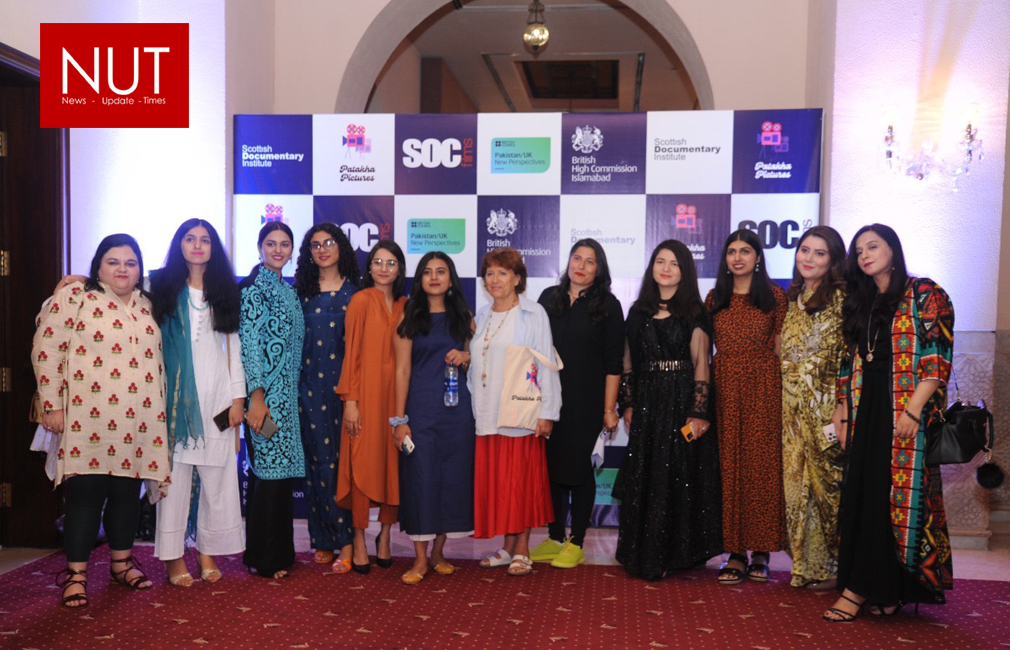
British Council organizes Pakistan Stories Film Screening as part of Pakistan/UK: New Perspectives

Islamabad (Muhammad Yasir) The British Council in collaboration with Patakha Pictures in Pakistan and the Scottish Documentary Institute in the UK organized a film screening event for “Pakistan Stories” at a hotel in Islamabad. Pakistan Stories seeks to support a new generation of female Pakistani documentary filmmakers to enable them to create engaging films that reflect on their society, and Pakistan’s 75 years of independence. 

The event celebrated the journey of the ten selected filmmakers through the programme. The filmmakers worked in pairs over a period of eight weeks and were mentored by experts in Pakistan and Scotland to develop and finance their creative skills so they could produce five short documentaries in a safe environment and reach new local and international audiences through their work. Important themes the documentaries cover include: early child and forced marriages, the rights of transgenders, women and disability, women in education and the feminist movement in Pakistan.

Guests at the event included the British High Commissioner to Pakistan, Christian Turner, the Deputy Director of the British Council, Mark Crossey, filmmaker and founder of Patakha Pictures, Sharmeen Obaid-Chinoy, the Director of the Scottish Documentary Institute, Noe Mendelle, as well as top diplomats, senior government officials, journalists, leading experts from the arts space, and young aspiring artists and filmmakers.

The British High Commissioner to Pakistan, Christian Turner said, “Film is a brilliant vehicle for telling stories and giving women voice.  With trailblazers like two-time Oscar winner Sharmeen Obaid-Chinoy, and by combining the best of UK and Pakistan expertise, we can unleash the potential of the next generation of female filmmakers and women and girls across Pakistan.”

The Deputy Director at the British Council Pakistan, Mark Crossey said, “The British Council is delighted to have enabled this platform for emerging female Pakistani filmmakers to hone their skills and tell stories about Pakistan as we mark it’s 75th anniversary with our Pakistan/UK: New Perspectives programme of activity. I look forward to these films being showcased across festivals in Pakistan and the UK.”

For Pakistan Stories, female documentary filmmakers from all across Pakistan submitted entries to be selected for the programme out of which ten were selected. The selected filmmakers went through a mixture of seminars, consultant-led advice and mentorship sessions including 18 practical documentary sessions online over eight weeks where they explored documentary creativity for the international film festival market.

 The founder of Patakha Pictures and leading filmmaker, Sharmeen Obaid-Chinoy said, “In the past week I have witnessed the growth of these ten filmmakers and I know that we are laying the seeds of a movement that will ensure that young women across Pakistan will be empowered to finally to tell their own stories in their own words.”

 Pakistan Stories screened five short documentaries at the event; Sinf-e-Taal by Amna Maqbool and Beenish Sarfaraz, My Mother’s Daughter by Ahmen Khawaja and Mariam Khan, Ways of Seeing by Seema Iqbal and Sehrish Kanwal, Haqeer by arzeen Aziz and Bushra Pervaiz and A Feminist’s Struggle by Fatima Syed and Areeba Naveed.

 The Director of Scottish Documentary Institute, Noe Mendelle said, “Scottish Documentary Institute is very excited to be part of a collaboration with Patakha Pictures and British Council Pakistan, involving nurturing female filmmakers in enhancing their directorial voice in documentary. Working with reality is a humbling experience and female filmmakers are especially well equipped creatively and mentally to engage with emotional, challenging stories that need to be shared with the rest of the world.”

The short documentaries will be displayed at various film festivals in Pakistan and the UK.

Federal minister talks about the truth ‘Pakistani media style’

Two-day conflict reporting conference concludes with Peace Journalism awards

Karachi (Muhammad Yasir) Social media has erased the line between truth and lies, and this is in my view is extreme reporting. Where facts, reality are manufactured but only if you have sufficient manpower and resource, you can alter reality, said Federal Minister of Power Khurram Dastagir Khan at the keynote address on the second day of the two-day conference on ‘Extreme Reporting: Conflict and Peace in the Digital Age’ held at the Centre of Excellence in Journalism at the Institute of Business Administration (CEJ-IBA) on Sunday.

“Extreme reporting is an endeavor that requires bravery and strength and courage. If you look at Pakistan’s history there have been courageous men and women who have tried to express the truth and they have suffered for it. For example, Journalists have been shot in broad daylight, kidnapped and what not.

“But the media has failed to save the public from lies. It has put us in a difficult position. It might be an exaggeration to say so but this erasure of the line between truth and lies is endangering democracy worldwide. But in this country, where democracy is a one leaf plant, is crushed every so often. The media’s challenges are immense – almost the same as those as elected representatives because there are certain truths that cannot be said in this country and that is a fact. Just look at Balochistan…why are we not allowed to talk about its truth,” he added. 

The federal minister touched upon the civil military relationship and how it impacts the economy, the 2018 elections, ownership of media outlets, evolving technology and what is the truth. He also recited a couplet by Allama Iqbal.

As the conference concluded, the CEJ-IBA recognized and awarded journalists with the Peace Journalism awards which were a part of the Peace Journalism Program held by the CEJ in collaboration with US Consulate Karachi.

Mehreen Burney from Lok Sujag, PTV World reporter Tayyaba Nisar Khan, freelance journalist Afifa Nasarullah (Best Multimedia Story), Lok Sujag’s Kaleemullah received awards for their outstanding stories.

Reporter Faiza Gillani received the Best Acknowledgement Award and Swat’s Asmat Ali Akhun of Daily Jehan got the Special Mention Award.

Speaking at the award ceremony, US Consul General Mark Stroh said: “It has been a really fascinating couple of days. The US is supporting this Centre and training because we are committed to supporting journalists in Pakistan. We are proud to support this training programs at the CEJ-IBA. A strong professional press is important – especially in conflict – and it is through such trainings and conferences where journalists can play their role in shaping the discourse.”

The day ended with dinner and a musical performance by The Sketches.

The second day of the conference kicked off with a session on reporting from a conflict zone. The session was moderated by seasoned journalist Aamer Ahmed Khan. The panel included CNN’s Sophia Saifi, journalist and editor Raza Hamdani, WIONews bureau chief Anas Malick, TNN’s Khalida NAz and BBC’s Sahar Baloch.

The panel discussed at length the dangers of reporting from a conflict zone and shared their personal experiences. They talked about the importance of safety trainings and mental health check ins.

‘Woman have to think about additional safety measures when reporting in conflict zones’, said Ms Saifi.

“You are never prepared enough to be in a conflict zone, regardless of how well you know the region or how much you’ve studied or learnt over the years,” said Mr Malick.

BBC Urdu correspondent Sahar Baloch agreed with Mr Malick and said that anything can happen in the field.

Talking about the pressure from the desk while reporting in a conflict zone, Ms Baloch said that there is a style guide but “we are still told what to say. There is a lot of pressure. In print, it is easier as you can write it but on TV or on camera it is different. It sets a tone for your entire coverage. Also look at social media which does set another narrative. Each and every situation, however, is different,” she added.

The second session of the day, ‘Beyond Conflict?’ was moderated by media personality and lawyer Ayesha Tammy Haq. She was joined on stage by journalist and researcher Iftikhar Firdous, author and communication specialist Shahzad Sharjeel, journalist and writer Umber Khairi and journalist Zia Ur Rehman on the panel.

The panel discussed reporting in a post conflict world and the need for media houses to invest in their reporters.

Talking about how the panel and participants were born in times of conflict and are products of conflict, Ms Khairi said that conflict is everywhere, the entire country is in conflict. “Yesterday at a session, we saw two politicians who had so much conflict in their tones and what they were talking about. I think it is important that when you look at conflict, you need to have some form of a reconciliation process as well.

For journalist Zia Ur Rehman, he only remembers conflict. “I was born in Karachi, my entire upbringing – school and university, everything was and still is in conflict. I don’t think conflict has ended, I think it has transformed and has a new face,” he said.

“If you look at Karachi, the conflict might look like its gone away but it has just been pushed into the background. The political, ethnic and sectarian conflict still exists but is not mainstream right now. We haven’t tried to understand or investigate why,” he added.

The last session of the day was ‘Is The Future Now?’ which was moderated by Dawn.com’s editor and chief digital strategist, Jahanzaib Haque. He was joined on stage by policy analyst and editor of The Friday Times and Naya Daur Raza Rumi, Balochistan Voices’ Adnan Amir, TV producer and co-founder of The Current Mehmal Sarfaraz and the founder of The Centrum Media, Talha Ahad.

“Digital media is not the future, it is the present. Legacy media is out. In less than a decade or so you will see less public trust in legacy media and their business sense as well. On the other hand, social media has its own issues and digital has its own issues,” said Mr Rumi. 

For journalist and researcher Adnan Amir, when he started his career in journalism in Quetta, there was no space for him to contribute and mainstream media was not interested in covering Balochistan much.

“So me and a few other journalists got together and started our own platform ‘Balochistan Voices’ to get the news out. It is in English so our news would be accessible to a wider audience. We focus on different stories. For example, we did a data journalism piece on highway deaths in Balochistan and found out that more people die on the highway than terrorism,” he said.

Emirates to operate extra flights for upcoming Hajj season

Lahore (Muhammad Yasir With the significant demand for air travel during Hajj, Emirates is deploying extra flights to ensure more connectivity for the scores of pilgrims making their way to the Holy City of Makkah. Emirates will be operating special flights to Jeddah and Medina during the upcoming Hajj season to carry pilgrims for this special period.

Emirates will be deploying 31 additional flights to Jeddah and double daily flights to Medina from 23 June to 20 July to help transport pilgrims to carry out one of the key pillars of Islam. These services will run in parallel with Emirates’ regularly scheduled services.

The Kingdom of Saudi Arabia has greatly expanded its Hajj participation this year to nearly a million pilgrims. This year, Emirates has seen strong demand for Hajj travel from Indonesia, Pakistan, India, Bangladesh, Nigeria, Turkey, Egypt, Ethiopia, Malaysia, the UK, US, UAE and Algeria.

The special services are available to travellers holding a valid Hajj visa. Pilgrims must also be under the age of 65, hold a valid vaccination certificate with a vaccine authorised by the Saudi Ministry of Health, and must also carry a negative PCR test done within 72 hours of departure. 

A pilgrim-centric experience with Emirates

Given the significance of the once-in-a-lifetime Hajj experience, the airline’s teams have been working hard to ensure that every detail of the pilgrim’s experience is aligned with the tenets of their faith.

On the ground in Dubai, Emirates has a special Hajj airport team to help manage check-in, transfers, and helping to facilitate a seamless and convenient on ground experience for Hajj pilgrims. Emirates has also set up dedicated check-in and transfer counters for Hajj passengers transiting in Dubai. For Hajj travellers having a longer layover in Dubai before continuing on to Jeddah or Medina, dedicated teams are on hand to escort those groups and support them on all of their arrival formalities.

From the moment pilgrims step onto the aircraft, a range of initiatives have been planned in keeping with the values and traditions of the Hajj journey.

Extra provisions to accommodate Hajj traveller needs such as ablution cleansing rituals, unperfumed towels, advising passengers while en route to Jeddah about when they have entered Al Miqat zones (state of sanctity) and changing of Ihram robes through special PAs, and other arrangements have been planned to ease their journey and ready them for the rest of their pilgrimage. Emirates’ award winning ice system will also feature a special Hajj video that covers safety, general formalities and information about performing the Hajj pilgrimage. Pilgrims will also be able to tune into the Holy Quran channel, in addition to other religious content.

On flights from Jeddah, passengers can check-in up to 5 litres of holy water (Zamzam), which will be placed in special areas in the cargo hold.


Conflict reporting conference kicks off at CEJ-IBA

Politicians, journalists, filmmakers, comedians talk about regulation, satire and the culture connection

Karachi (Muhammad Yasir) The two-day conference on ‘Extreme Reporting: Conflict and Peace in the Digital Age’ held at the Centre of Excellence in Journalism at the Institute of Business Administration washeld on Saturday with a keynote speech by veteran journalist Hamid Mir.

Mr Mir discussed how his career started and why it is important to groom young Pakistani journalists and teach them about journalism.

IBA’s Dr S. Akbar Zaidi and CEJ-IBA’s executive director Amber Rahim Shamsi welcomed the participants and speakers to the event.

According to Ms Shamsi, without political satire, without freedom of speech, without quality journalism, the world is a slightly nastier place. “Peace isn’t just the absence of conflict, it’s conditions where justice, equity, and harmony can flourish. Journalists don’t broker peace that’s the job of the politicians and frankly, they’re not doing a great job of settling disputes themselves – journalists help those seeking justice, and highlight inequity,” she said. 

“Meanwhile, social media has turbo-charged the politics of conflict and populism. We live in a world where heroes are easy to manufacture and villains even easier to vilify. It takes a few tik tokkers and YouTubers. Like and subscribe to my channel, follow me.

“Besides, why promote harmony when polarization gets the access to the powerful, the fame, the clicks and ratings? I hope that’s one of the many questions we can find an answer to over the next couple of days, and one of those questions is fundamental – why do we still need journalism when we can’t even assume that people learn about the world through good journalism,” she added.  

Dr Zaidi said that he was delighted to be part of the conference which brings together Pakistan’s best and bravest journalists talking peace and about the challenges they face in an age of growing conflict, from those related to control and regulations, to outright intimidation and threats.

Talking about conflict as a social scientist, Dr Zaidi said that in the social sciences, there is conflict in everything including the family – the hierarchy creates conflict and conflict can also have many forms.

Welcoming the participants to the two-day conference, Dr Zaidi said: “I hope there’s a lot of conflict in your discussion and some resolution too.”

The first day kicked off with a powerful session titled: do we need journalism? Moderated by journalist Shahzeb Jillani, the powerhouse panel which included, Lok Sujag’s chief editor Badar Alam, BBC’s Zeeshan Haider and Geo’s Benazir Shah.

The panel discussed the grim reality of the state of journalism in Pakistan and how important it is for the country now and in the future.

Mr Haider said that it wasn’t a question about creditability but trust. “A user is now basing news preference on if they like/dislike the person sharing the news (which is essentially their opinion). Verification of news or fact is secondary for them,” he said.

For Geo’s Benazir Shah while journalism is important and needed – the quality of what you read in the newspapers had gone down.

“The problem with consuming news on social media is that there will always be doubt — is this accurate and authentic? I get a lot of messages from my friends who will send me a link and ask if this is fake. There is also a misconception between a journalist and reporter. A reporter provides information and a journalist will provide it in context. There are a lot of layers in a media organisations which get eliminated in social media,” she added.

According to Mr Alam, journalism does not exist in a vacuum. “Conflict is essential for what we do. The conflict Pakistan is facing right now is not being resolved in a democratic way and so journalism cannot survive in an undemocratic atmosphere. There is no real democracy in this country so journalism right now is distorted and mutilated. If people don’t trust the media, you can’t blame them. Even within that, image in we have done good journalism and are still doing it,” he said, adding that while the future of journalism might not be bright but was there.

The second session, Foes and Friends: Media Laws and Regulations promised to be an explosive session with former information minister Fawad Chaudhry, State Minister for Petroleum Dr Musadik Malik, journalist Hamid Mir and lawyer Zainab Janjua. The session was moderated by prime TV anchor and journalist Maria Memon.

“Back in 2018, I predicted that media boom will be over and in the next five years it will just be social media. There is no proper mechanism for the media – there is no regulation,” said Mr Chaudhry.

In his opinion, Pakistani media needs three things to survive: regulation, proper mechanism and keep up with technology changes.

State Petroleum Minister Musadik Malik had a very different take on the topic. For Dr Malik, the media and politicians are the same. “I don’t think there is a difference. You can call them organisation, politicians, journalists – essentially they are all the same thing. They are the country’s elite and they are shocked. Their responses are of shock or as they say frozen in shock, and they do not know how to respond,” he said.

“We need to realise that the times have changed. The medium of news consumed has changed, politics has changed. It is all bankrupt but the question is: who shook them? The people,” he added.

The panel went on to debate on regulations, implementation, self-regulation, fake news and freedom of the press.

The third session of the day, Hasna Mana Hai, the panel had everyone laughing with their witty one liners and stories.

Comedian Shehzad Ghias Shaikh asked content creator Tamkenat Mansoor, writer, poet and communications expert Shahzad Sharjeel, musician Ali Aftab Saeed and Urdu columnist Yasir Pirzada to talk political satire, social commentary, comedy’s role in social change and is it difficult to write satire in Pakistan and what to do when the ridiculous is normal, the normal is ridiculous.

The last session of the day was: The Culture Connection – Track II with journalist Buraq Shabbir moderating the session.

The panel which included journalist and filmmaker Beena Sarwar, producer Misbah Shafique and Joyland director Saim Sadiq discussed cross cultural content, the need to collaborate and why culture exchange is important.

This conference is a part of the Peace Journalism program, held by the CEJ in collaboration with US Consulate Karachi, that began in May 2021 and will conclude this month. The program included online workshops on peace and conflict reporting, mobile journalism, data journalism, social media & photojournalism. The program also offered a mentorship with senior journalists.