TECHSTIRR Aims To Digitize All Business In Pakistan

Lahore (Muhammad Yasir)  Techstirr, a leading global tech giant has just started its operations in Pakistan. With the estimated increase of 24% – 142% in this year’s online sales in the Pakistani market, the company leaders saw the immense potential in the country’s IT sector. The mission of Techstirr is to revolutionize the industrial sector of the country with its advanced strategic technological solutions and information technology portfolio. The company mainly focuses on the following areas: SaaS-based Solutions, Artificial Intelligence, Blockchain Technology, Mobile App Development, Big Data, Cyber Security, Technical Consultancy, and other comprehensive data-driven solutions.

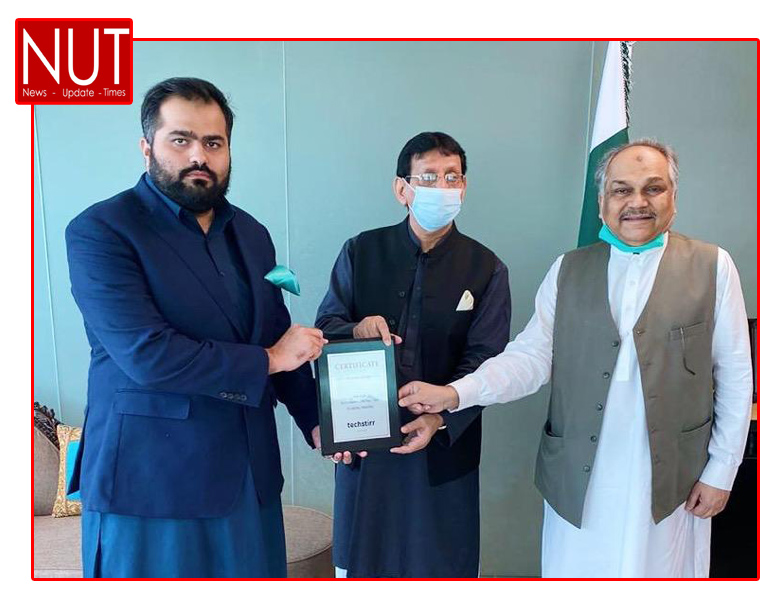
The Federal Ministers for IT and Telecommunication Syed Amin Ul Haque and Shoaib Ahmad Siddiqui formally welcomed The Chief Executive Officer (CEO) of Techstirr (Pvt). Ltd, Abdur Rehman Chinoy in a meeting on Friday, 7th of August 2020. The future of Digital Pakistan, along with the role of Techstirr’s mission to enrich Pakistan’s IT sector were discussed. The beginning of Techstirr’s operations in Pakistan is bound to create sizable opportunities in various industrial sectors that have yet to adapt to the technological practices of todays world. The organization intends to create over 5,000+ jobs in the IT sector in the medium term and plans to drive forward the initiative of a digital Pakistan.

According to the CEO Abdur Rehman Chinoy, “At Techstirr, we are looking at being the pioneers of digitalizing every business in Pakistan.”

‘Tax harmonisation issue likely to be resolved within the Q1 of FY20-21’: FS Punjab

Business & tax experts examine Punjab’s Budget 20-21, share future-focused recommendations

Leading representatives from the business community, professional bodies and government sat together at a high-level virtual post-budget seminar themed ‘Economic Impact, Harmonisation and Future Orientation’ to examine the Punjab’s provincial Budget 2020-21 and identified economic opportunities and shared forward-thinking recommendations.

The online seminar was organised by ACCA (the Association of Chartered Certified Accountants) with representatives from Lahore Tax Bar Association (LTBA), Punjab Revenue Authority (PRA), Institute of Cost Management Accountants of Pakistan (ICMA Pakistan), and Lahore Chamber of Commerce & Industry (LCCI).

Secretary Finance Punjab, Muhammad Abdullah Khan Sumbal, was the Chief Guest at the event who shared the government’s perspective and answered the concerns shared by the business community and tax professionals during a one-on-one question and answer session.

The seminar also included a highly interactive, future-focused panel conversation moderated by the Member of ACCA’s Global Tax Forum, and the Chair ACCA MNP & Tax Committee, Omer Zaheer Meer FCCA, featuring contributions from following senior Conversation Leaders: Javed Ahmed, Tax Economist, Punjab Revenue Authority (PRA), Kashif Anwar, Chairman – Standing Committee on Taxation, Lahore Chamber of Commerce & Industry (LCCI), Khurram Shahbaz Butt, President, Lahore Tax Bar Association (LTBA), Sajjeed Aslam, Head of ACCA Pakistan, and Zia-Ul-Mustafa, President, ICMA Pakistan.

Emphasising on the need for the harmonisation of federal, provincial taxes, ACCA’s head of Pakistan, Sajjeed Aslam stressed,

‘To make it easy for the services sector to keep creating job opportunities for the country’s youth and attract foreign direct investment, there’s an urgent need for policy makers to truly understand the real needs of this sector and provinces need to introduce a mechanism to facilitate the adjustment of tax refunds and bring harmonisation in tax rates across all provinces.’

In his address, Muhammad Abdullah Khan Sumbal, Secretary Finance Punjab, shared,

‘Despite the fact that working in the IMF regime remains challenging that requires significant revenue generation and expenditure management, the Punjab’s budget 2020-21 is business-friendly and forward-thinking and contains inputs from all major stakeholders. The provincial government is determined to support the private sector to enable them to create new jobs, and consistent with Federal government’s efforts, we’re heavily facilitating the construction sector. Considerable efforts are being made to ensure ease of doing business in Punjab. We’re the first province to give zero rating to Public Private Partnerships showing our desire to support the private sector. We’re working towards broadening of sales tax base and actively engaging with federal and provincial counterparts to ensure harmonisation and cooperation.’ 

The Finance Secretary also shared that the government feels Human Development (HD) is a more effective indicator compared to Economic Growth (EG), therefore social development projects to remain its priority with major investments in education and health.

He also shared his hope that the tax harmonisation issue will be resolved within the first quarter of the current FY and we can expect reaching some level of consensus between federation and provinces to devise a workable framework accommodating different views.  

Javed Ahmed shared that PRA is moving with pace toward digitisation to facilitate taxpayers and is committedly working to remove impediments.

The President of LTBA, Khurram Shahbaz questioned the introduction of regressive measures like attaching credit facilities and encouraged government to actively engage with professionals to ensure progressive legislations.

Representing the business community, Kashif Anwar shared the difficulties that businesses are facing and recommended business-friendly initiatives with focus on providing more value to taxpayers.  

Attendees appreciated the role of ACCA in super-connecting all the stakeholders and facilitating an action-oriented conversation to support policy makers to directly engage with the business community and create a conducive environment for commercial activity and corporate sector innovation.
IBA Karachi launches Master of Science in Finance

Karachi (Muhammad Yasir)  The IBA Karachi is pleased to announce the launch of Master of Science in Finance program commencing in Fall 2020. The MS leading to PhD program will be spread over 3 semesters with a total of 36 credit hours. The program is aimed to facilitate students with business as well as non-business background.

Chairperson, Department of Finance, Dr. Ahmad Junaid highlighted that the program is structured to aid students who wish to excel in corporate sector as well as help those who wish to pursue an academic career.  Dr. Junaid explained that students who wish to take the corporate route will opt for a real-life project while students with academic route in mind will choose a thesis alongside their course work.

Commenting on the efficacy of the program, Executive Director, Dr. S Akbar Zaidi said, “The financial sector of Pakistan has posted highest growth rates in recent past. However, the percentage of banked population and capitalization of stock market is still very low in comparison to the regional markets. This high growth offers new innovations in terms of financial products, institutions, and system as a whole. Hence the job market for finance specialists is continuously growing.”

The admission for the MS-Finance program is open till August 13, 2020.

With the addition of the MS-Finance program, the IBA Karachi is now offering 10 graduate programs alongside 6 undergraduate and 3 post graduate programs. Recently, a 2-year MS Data Science program was successfully launched and received an overwhelming response from the candidates.


Ufone successfully concludes Master Class Program 2020

Lahore (Muhammad Yasir) Pakistani Telecom Operator, Ufone’s “Future Proof Your Career with Ufone Master Classes” Program came to an end after delivering 7 insightful sessions over a span of 6 weeks. More than 7000 students across 150+ cities in Pakistan and abroad benefitted from the program. The master classes allowed students to refine their skills from the comfort of their home and enhance their learnings for the future. 

In an effort to continue the legacy of imparting practical knowledge and skills even during the COVID19 pandemic, Ufone came up with the novel idea of substituting their flagship Summer Internship Program with virtual Masterclass sessions. Students from LUMS, LSE, QAU, FAST, IBA, NUST, NUML, COMSATS, IoBM, SZABIST, BNU, AKU, GIKI, IM Sciences, Bahria University, UET, Punjab University and 160 other universities and colleges participated in the program. The humbling response from participants in the form of 300+ positive testimonials and 1000 + positive reactions on LinkedIn is a testament to the success of the program.

The content for each session was tailor made according to the needs and priorities of students so they can be prepared to become a part of the corporate world. The program comprised of 6 Ufone internally certified trainers and 1 external trainer, in total delivering 7 sessions aligned with recurring participant interest manifested through pre-launch surveys. Topics such as MS Power Point and MS Excel essentials, career path management, CV making and interviewing skills etc. were covered in depth by the experts. Each topic resonated with the need of students and enabled them to learn something new. 

Being a people centric brand, Ufone has always come up with fresh and creative ways to empower the youth. One of the primary goals of the organization has been to prepare the workforce of tomorrow for the challenges through active engagement with the academia. With the growing significance of the digital arena, the scope of such programs will further increase in the coming years.

Children’s participation in urban planning discussed

Lahore (Muhammad Yasir) THAAP (organization works for the urban development, art, architecture and history of the region) have initiated online webinar series to raise awareness about important topics affecting the lives of the citizens living in an Urban Environment. The topics range from architecture, participatory planning, sustainability and activism including others. National and international prominent scholars participate in these talks to enlighten the youth with core issues related to urban planning. 
The Second talk of the webinar series on “Children’s participation in urban planning” by guest speaker Viviana Cordero was held on 30 July at 4pm on Facebook Live. Viviana is the co-founder of Huasipichanga, an interdisciplinary collective for urban transformations that started in Ecuador in 2014 and currently based in the Netherlands, working on improving the public spaces and the built environment through participatory practices. Viviana’s focus is on the development of inclusive and child-friendly cities. She has experience in legal and policy advisory in the public sector in Latin America, as well as leading civil organizations for the transformation of public space.
The talk was hosted by Ar. Noor ul Huda and it focused on the importance of involving the children in the planning process of the city. The discussion shined a light on how children experience their city and drew attention to the need for child-friendly frameworks for spatial design. Urban Planner Viviana pointed out that including children as the center of planning allows the creation of inclusive spaces and adequate housing, switching the mobility focus to decreasing commuting hours. 
The insightful talk ended on a note to be conscious of how our choices concerning urban development impact the children and we as planners, architects, urbanists, and policymakers need to make children a part of the decision making process.

Governments must take a balance sheet approach to managing their finances through the Covid-19 crisis

  • ACCA, the World Bank and IFAC say better financial information and thinking must be applied to help manage public finances
  • Economic indicators need more clarity to provide a better picture of public sector finances in turbulent times

 The COVID-19 pandemic means government spending has increased immensely, with the IMF calculating it to be a staggering US$9 trillion. For ACCA, the World Bank and IFAC, the concern is that public sector fiscal commitment and interventions are not being captured accurately by governments due to the way they account for this.

In a new report published today, Sustainable public finances through Covid-19, the three organisations are calling for governments to use public sector balance sheets to properly manage their finances through the pandemic, paying attention to their public sector net worth. For some, this means a change in accounting methods from cash to accrual accounting.

Alex Metcalfe, author of the report and head of public sector policy at ACCA says: ‘This global pandemic crisis could be a catalyst for more governments to adopt this approach, which can improve decision-making, act as the benchmark for new fiscal targets, and support governments to rebuild economies for a more inclusive and greener future.’

By implementing a balance sheet approach, governments will benefit from:

  • Increased clarity on the true position of the public finances, with an understanding of the fiscal room available for further government action;
  • Improved value for money and financially sustainable decision-making; and
  • Enhanced public sector resilience and better adoption of key financial metrics to drive performance management.

The report asserts that governments need to avoid poor-value privatisations, which provide immediate cash but reduce public sector net worth. Governments also can minimise reliance on tax increases or austerity by taking a balance sheet approach to foster sustainable public finances.

Ed Olowo-Okere, Director, Governance Global Practice, World Bank Group says: ‘The pandemic requires that governments strike a balance between the standard fiscal discipline and control on the one hand, and speed and flexibility in public financial management on the other. To build back better, Ministries of Finance need a variety of tools for better management of public money to sustain the wellbeing of citizens.’

Alta Prinsloo, IFAC Executive Director, adds: ‘This is about global best practice. No one government can go it alone – the global nature of the pandemic makes this apparent. Part of this drive toward global best practice is to ensure that, as a profession, we discuss with colleagues and policymakers the future of financial reporting in the public sector. Professional accountants need to be giving non-finance expert decision makers a clear and trusted view of the sector’s unfolding financial position.’

Sajjeed Aslam, head of ACCA Pakistan, adds: ‘The severity of the current crisis means poor quality accounting data in the public sector is no longer an option. Now is the time to reset current economic frameworks and consider what fiscal rules will guide government decision-making during the recovery phase. The privatisation of any public assets and services needs to be carefully considered so that they provide value for money and improve government financial sustainability. And we also need to invest in skills and training as they are an important part of the economic multiplier.’

Other recommendations for governments include:

  • the need to either reference or use full-accrual International Public Sector Accounting Standards (IPSAS), the only globally accepted accounting standards for the public sector, in the production of their general purpose financial reports.
  • directing independent fiscal policy institutions to begin fiscal sustainability reporting or to increase its frequency. Central finance departments should also be required to respond publicly to these reports in a timely manner.
  • provide Supreme Audit Institutions with the independence and necessary resources to conduct performance audits, which may identify cases where public money was not used effectively, efficiently or economically in combatting the COVID-19 crisis.

And for finance professionals, ACCA, the World Bank and IFAC recommends:

  • Consider how any redirection of resource to combat COVID-19 impacts broader metrics of societal wellbeing and sustainability.
  • Conduct frequent fiscal stress testing, which forecasts the impact of negative scenarios on public sector balance sheets. This could include the impacts of a second wave of a coronavirus or an extended economic downturn.
  • Produce accessible summary material, and appropriate narrative and notes within the financial statements. The accompanying narrative in financial statements helps users make sense of the figures and should not be too biased or avoid critical issues.

 Sustainable public finances through Covid-19 includes case studies that analyse the impact of fiscal policies introduced as a result of COVID-19 on the public sector balance sheets in 10 countries: Brazil, Canada, Indonesia, Italy, Japan, New Zealand, South Africa, United Kingdom, and the United States. These show that New Zealand is the most fiscally sound country out of those analysed in the report, with a net worth of 53% of GDP in 2019, compared to the UK government’s net worth of negative 49% of GDP in 2019.

This report builds on an ACCA and IFAC report from February 2020 Is Cash Still King? which offers lessons learned from jurisdictions that have implemented accruals, with the intention that the current global transition to accruals creates real value and is more than a ‘compliance exercise’.


ArtBeat’s Digital National Child Art Competition concludes

Lahore (Muhammad Yasir) The 9th annual National Child Art Competition organized by The Little Art which transformed into an Online Competition due to Covid-19 outbreak concluded with thought provoking collection of art works created by brilliant young students across the country. As a response to Little Art’s call, nearly 3500 children and youth from age 3 to 24 submitted artworks, digital designs, photos and stories online. All the entries are published on social media, but 24 winners in all age groups are going to be announced through the Public Choice Award and Jury’s Choice Award.

A curated exhibition of artworks will be presented on Google Cultural Institute, which is a prestigious platform for art exhibitions and museums showcase. Google Cultural Institute will host the exhibition of the artworks and preserve creative expressions of young artists with the credits and complete information of artists for future.

The Little Art Director Shoaib Iqbal said; “It gives us great pleasure to know that we are going to preserve the response work of children and youth with Google Cultural Institute. Our call had an amazing response from all over Pakistan, and we are looking at an amazing exhibition that will be developed.”

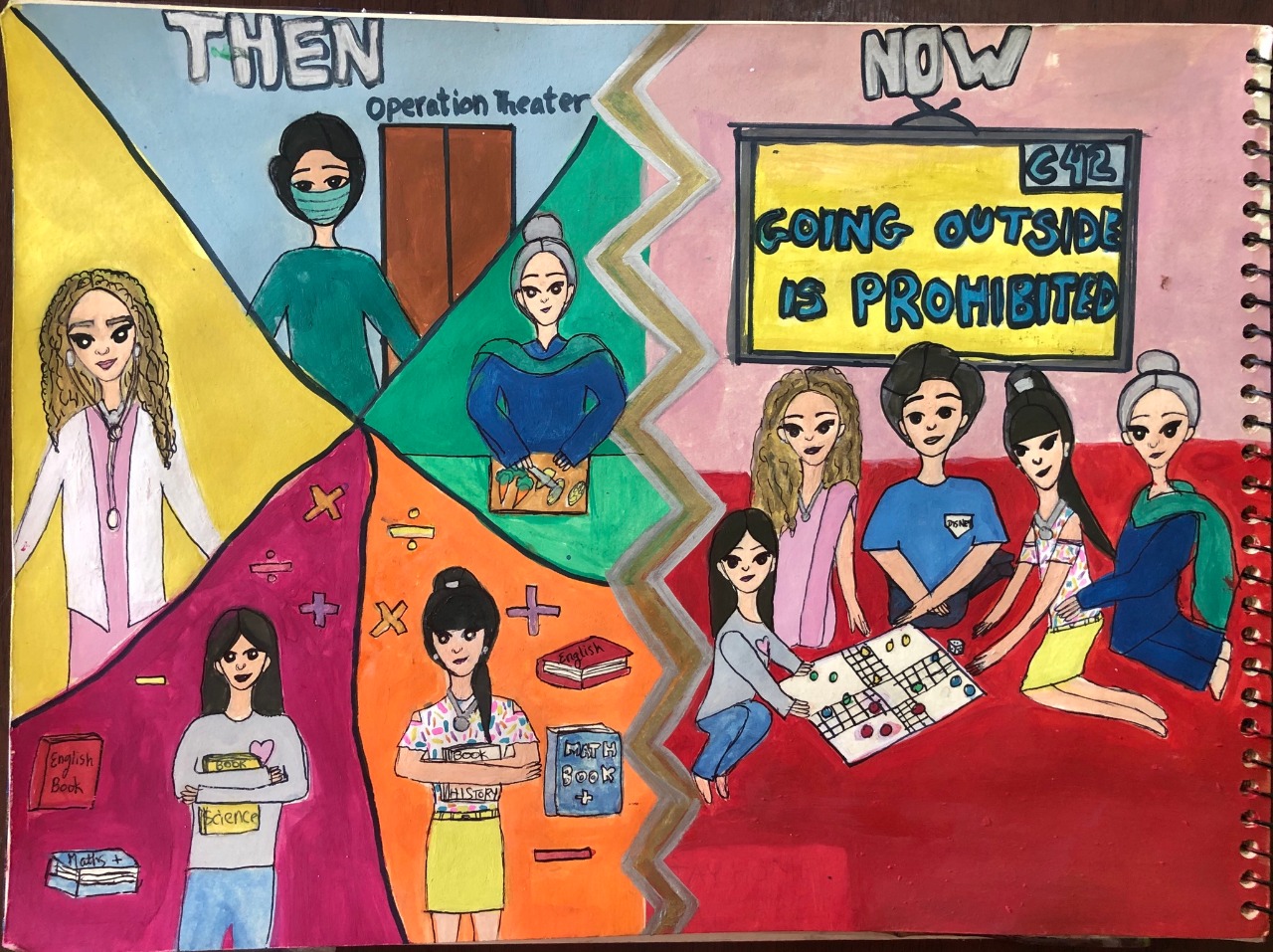
He added that in these difficult times, COVID-19 is affecting the whole world in various ways. It is really important to know how it is affecting our children, youth and their lives and childhood. What are their fears and hopes? How do they want to see their future and the future of the world? Creativity is key to know about their thoughts and imaginations.

To keep children and youth engaged into creative activity, The Little Art came up with the idea of ArtBeat Digital National Child Art Competition. Young artists were asked to paint or draw about What do you think about Corona virus, and how it’s affecting our daily routine? How important it is to maintain self-hygiene during Corona virus outbreak? How does the future look like to you to the world that is free from COVID-19?


The Little Art has been organizing ArtBeat since 2012 each year, but it was organized digital this year due to Covid-19. The jury of ArtBeat Digital consists of eminent artists such as R.M. Naeem, Abdul Jabbar Gul, Sadaf Naeem, Shireen Bano Rizvi and Sajjad Ahmed.

Jury member and prominent artists R. M Naeem said; “It is really important for parents to know what kind of interests and direction their child has. This quarantine has provided the best opportunity for the parents to know their children more closely. It is a great contribution by The Little Art in making the stars of the future. Children proudly mention that they got prizes in ArtBeat.”

Jury member Shireen Bano Rizvi, head of MA Visual Arts at NCA said; “I think what The Little Art is doing in these difficult times is really great. Children are at their homes and parents find it difficult to engage them. ArtBeat offers a creative engagement that is very helpful to channelize children’s time and grow skills.”

BASF and MNS Agriculture University of Multan join forces in research and talent development in Pakistan

Lahore (Muhammad Yasir) BASF has signed an agreement of cooperation with the Muhammad Nawaz Shareef University of Agriculture, Multan (MNS-UAM) to support the development of the agricultural industry in Pakistan.

Under this agreement, BASF and MNS-UAM will work on product testing as well as research and development. The two companies will also foster talent development for the sustainable future of the industry through internship programs at MNS-UAM.

Prof. Dr. Asif Ali, Vice Chancellor, MNS-UAM, said, “We are keen to strengthen our connection with public and private sectors and to explore new opportunities for  academic excellence. We very much appreciate that a global organization like BASF shows strong commitment in both R&D and talent building.”

“MNS-UAM plays an important role in promoting the growth of the industry. Together with MNS-UAM, we will be able to engage academia, researchers, industry players, and farming communities to tap into a tremendous potential of precision farming for economic and environmental benefits,” said Atif Kamal, General Manager Agricultural Solutions Pakistan, BASF.


IBA Karachi launches book titled ‘Policy Response During Challenging Times: Insights From The Budget 2020-21 And The Way Forward’

Lahore (Muhammad Yasir) There has been a decline of Rs. 442 billion in FBR revenues due to the pandemic, which is less than half as compared to the loss of Rs. 900 billion that was mentioned in the Budget Speech 2020-21. The total shortfall in tax revenue exceeded Rs. 1.6 trillion, which also led to a massive decline in fiscal transfers to provinces. However, the pandemic has just exacerbated the poor performance of FBR since the shortfall would have been around Rs. 1,200 even in the absence of COVID-19. IBA Executive Director Dr. S Akbar Zaidi expressed his views at the e-launch ceremony of book titled Policy Response during Challenging Times: Insights from the Federal Budget 2020-21 and the Way Forward, organized today by the Department of Economics, IBA.

The authors of the book – Dr. S Akbar Zaidi, Dr. Asma Hyder, Dr. Qazi Masood, Dr. Muhammad Sabir, Dr. Wali Ullah, Dr. Adnan Haider, Dr. Aadil Nakhoda and Mr. Asif Iqbal, during a panel discussion, highlighted that in order to achieve the targeted GDP growth of 2.1% in FY21, the government needs to increase public investment by about 29% to 32% along with easing the provision of credit to the private sector by about 32 to 35%. However, the private credit channel may not work in this pandemic situation as private investors are hesitant to invest in this uncertain and vulnerable situation.

The speakers also pointed out that according to their estimates, even the medium level impact will push 45.5 million additional individuals below the poverty line, with the total number of the poor approaching 94.6 million (41.4% of the total population). At the provincial level the worst situation – in terms of the percentage of poor population – is projected in Balochistan (68.9%), followed by KP (49.8%), Sindh (44.4%), and Punjab (34.5%).

Some recommendations were also made for restoring exports, which included improving export competitiveness, enhancing the role of TDAP, diversifying exports towards products exhibiting a certain degree of potential and focusing on few agro-based products in which Pakistan has performed relatively well in terms of the Revealed Comparative Advantage and relative unit values.

Dr. Zaidi emphasized the need for an innovative policy stance which should be opted to support households from different socioeconomic classes during this difficult time. He showed his concerns about an expected increase in inequality and a decline in socio-economic indicators due to the COVID-19 shock. The panelists recommended that commercials banks need to play their role through innovative financial products to support the vulnerable and quasi-poor groups. Since the government has already announced Rs. 209 billion support in the recent budget for FY21, it is expected that this amount will address the issues of the ultra-poor category conditional on the accuracy of targeting. However, the current situation shows that the sustainability of cash transfers and social uplift of the ultra-poor will remain a huge challenge in the coming years.

Few officials from Ministry of Finance also attended the webinar and showed their interest in macroeconomic forecasts. It was decided that IBA will provide their support to the government in future macroeconomics framework and projection of key indicators.


PSDF and Extreme Commerce launch online training for women as Amazon Virtual Assistants

Lahore (Muhammad Yasir)  Punjab Skills Development Fund (PSDF) has partnered with Extreme Commerce to launch an online training program for women to acquire skills as Amazon Virtual Assistants. The program will enable women to earn and be self-employed, while working remotely, during the current pandemic.  
The Covid-19 pandemic is an unprecedented crisis, and Pakistan is no exception. The adverse economic impact of the pandemic has affected people worldwide, particularly women in underdeveloped and developing countries. While there are widespread layoffs and unemployment, PSDF has been trying to establish new avenues and opportunities for sustainable employment. 
The Amazon Virtual Assistants online training program launched by PSDF and Extreme Commerce is one such initiative that works by enabling women in Pakistan to assist sellers on the Amazon platform. The ‘Virtual Assistant’ is an independent contractor who provides administrative services to clients while operating outside of the client’s office. From the broader perspective, the role is multi- scope in areas of interest such as administrative, social media, real estate, research, e-commerce, data entry, book-keeping, and marketing.
The training model is online and home-based, teaching women relevant skills ranging from Online Communication, Customer Service, and E-commerce landscape, to Amazon Product Research Tools, creating Listings and Order management. This training by PSDF and Extreme Commerce spans 2.5 months, with the last leg focused on establishing market linkages. In the pilot of this program, the target is to train 100 females to become Amazon Virtual Assistants. 
The program is advantageous in offering women a remote working opportunity, and the chance to become digital entrepreneurs while earning a sustainable income. Moreover, the program is also beneficial in training women in useful, transferable skills, which they can utilize to work as freelancers on Up work or Fiver. 
Speaking about the venture, Jawad Khan, CEO PSDF said, “Our focus during this pandemic has been to take the initiative to provide sustainable income generation opportunities, particularly for women hardest hit by the pandemic. Loss of jobs and conventional means of earning have meant that we have had to look at new and creative solutions to provide training and income opportunities, this venture is a prime example of our impetus to do just that”. 
Sunny Ali, CEO, Extreme Commerce, said, “we are extremely happy to partner with the Punjab Skills Development Fund (PSDF) in a noble-gesture that will enable unemployed women to acquire online skills on the Amazon platform. We hope this joint-venture will commence an era of home-based online business activity for women”.