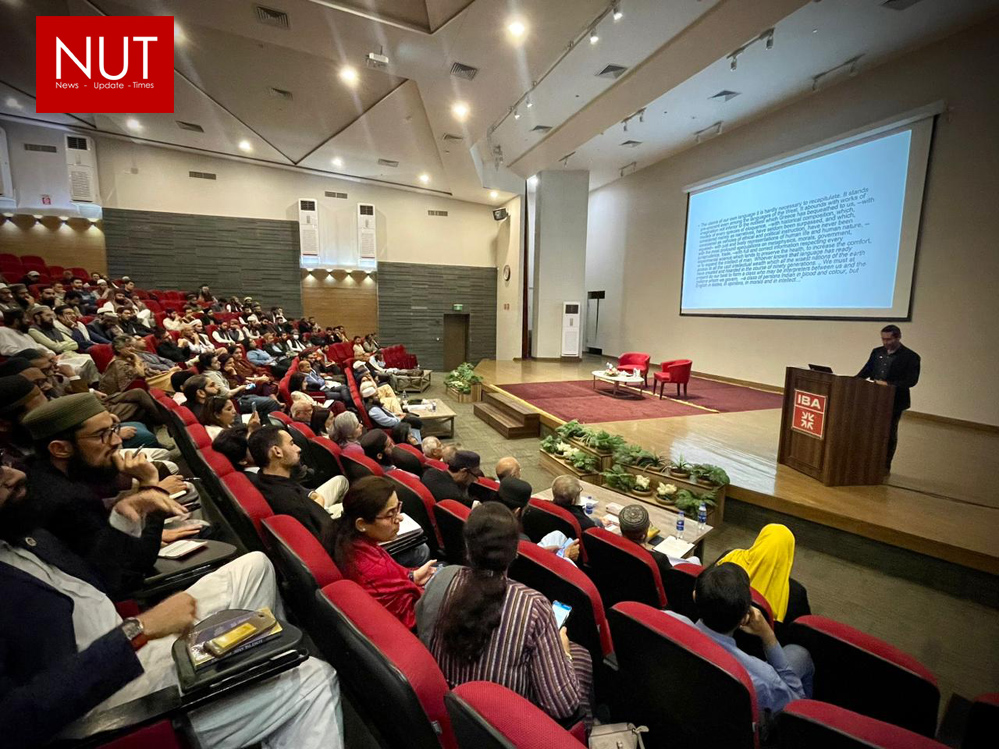
IBA Karachi and CMES – UC Berkeley organize an inaugural lecture on ‘Zaban-i-Ghayr: Islam and the Work of the Humanities’

Karachi (Muhammad Yasir) The Institute of Business Administration (IBA), Karachi hosted an inaugural lecture in collaboration with the Center for Middle Eastern Studies (CMES), University of California, Berkeley. The lecture titled ‘Zaban-i-Ghayr: Islam and the Work of the Humanities’ featured Asad Q. Ahmed, Magistretti Distinguished Professor of Middle Eastern Languages and Cultures and Director, CMES, UC Berkeley. Students, faculty, historians and Islamic scholars attended the enlightening lecture.

Executive Director, IBA Karachi, Dr. S Akbar Zaidi shed light on the significant collaboration between the institutions, as earlier IBA Karachi and UC Berkeley signed an MoU to develop collaboration between faculty and students. The IBA will work closely with CMES and develop programs and linkages focusing on the various aspects of Islamic and Muslim societies, enabling a shared landscape for discourse.

Seher Ali Shah, Coordinator, Foreign Languages Program and Lecturer at IBA welcomed and introduced the distinguished speaker. Enumerating his contributions to the fields of humanities, Islamic history and languages, she invited Professor Ahmed to discuss the impact of humanities on academia and its role in shaping communities of discourse.

Professor Ahmed explored various aspects related to canon, translation, and educational policy, and reflected on the work of the humanities in academia and how certain indigenous discursive elements were subverted to serve modernity, creating a persistent conceptual contradiction in post-colonial societies.

The speaker opined that modernity has played a role in distancing us from our languages and traditions. Professor Ahmed talked about how individuals in the Global South could find cultural, political, and social empowerment through Islamic humanities.

Following the lecture, Dr. Azam Ali, Assistant Professor, School of Business Studies, IBA and Professor Ahmed, engaged in a conversation in which the esteemed speaker emphasized on instilling enthusiasm for our own languages, culture and Islamic history in our students and youth. He further added that learning English was fine as it was a global language, but the significance of learning other languages cannot be undermined.

An engaging Q&A session ensued.

The inaugural lecture enabled a thought-provoking exploration of the dynamic relationship between Islam and the work of the humanities, showcasing IBA’s commitment to fostering intellectual dialogues and advancing knowledge.
 

PSDF Launches dedicated courses for minorities in 2024

Lahore (Muhammad Yasir) Punjab Skills Development Fund (PSDF) has launched the “Skills for Minorities (SFM) 2023-24” program, a transformative initiative under the banner of UMEED. This project aims to empower minority youth in Punjab by providing free skills training in 15 high-demand trades, opening doors to lucrative income-generating opportunities for 2,700 students in all districts of Punjab.

UMEED, a flagship initiative by PSDF, is dedicated to the skills training and integration into income generation of the highly vulnerable and marginalized segments of Punjab. With a keen focus on minority youth, the “Skills for Minorities” program identifies and addresses the specific needs of this hard-to-reach group. Understanding the unique challenges faced by minority youth, PSDF aims to skill them in demand-driven trades. This initiative is designed to create both formal and self-employment opportunities in dedicated classes tailored to their training and developmental needs. By focusing on education and skill development, PSDF seeks to empower youth and uplift their socio-economic status and fostering financial independence.

The “Skills for Minorities” program is strategically structured to offer courses that lead to high-income generation opportunities, ensuring that graduates are well-prepared for success in their chosen fields.

PSDF envisions the “Skills for Minorities” program as a catalyst for positive change, breaking barriers and fostering inclusivity in the pursuit of economic empowerment. By providing these opportunities, PSDF is paving the way for the minority youth of Punjab to become skilled, self-reliant, and valuable contributors to society.

Younus Dagha for bonding between govt, sincere non-profits to ensure quality schooling for every child in Sindh.

Karachi (Muhammad Yasir) The Sindh government has to join hands with the sincere education sector non-profits to provide quality schooling facilities to children from rural and underprivileged parts of the province in the form of public-private partnerships.

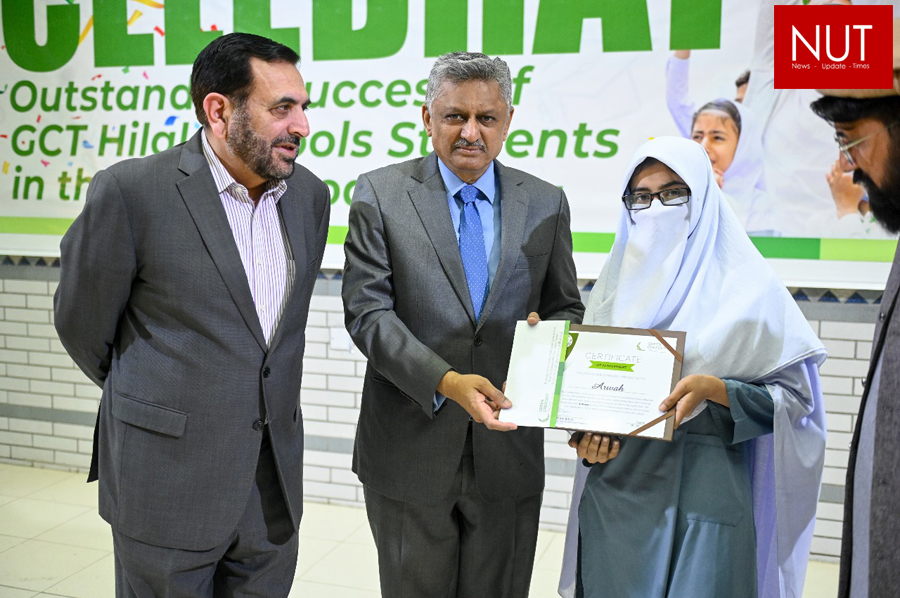
Caretaker Sindh Revenue, Industries, and Commerce Minister, Younus Dagha, stated this, while speaking as the chief guest at a ceremony held here to honour students enrolled in the charitable schools of non-profit Green Crescent Trust (GCT) who recently passed the matriculation examinations with distinction.

Caretaker Sindh Revenue Minister appreciated that the GCT in the past 29 years had established 166 charitable schools having an enrolment of over 31, 799 students from the deprived families in Sindh.

“I would like to greet the leadership, donors, and supporters of the Green Crescent Trust for establishing such a vast schooling network whose enrolment roughly equals to serving the educational needs of a medium-sized city,” said Dagha.  He said the Sindh government should learn from the exceptional success of the committed charities in the education sector like the GCT to effectively overcome the shortcomings of the state-run schooling system. He said the partnership to be forged between the Sindh government and devoted education sector charities would go a long way to provide quality schooling facilities to every child in the remote and rural parts of the province.

The Interim Sindh Revenue Minister said the government spent around Rs 3,000 to Rs 3,500 per month on every student enrolled in its schooling system but even then it couldn’t match the quality of education imparted by committed non-profits like the GCT whose per-student spending is much less. He advised non-governmental organisations in the education sector to impart vocational training to their students besides the provision of IT learning facilities to help the government overcome the shortage of skilled workforce required for the advancement of Pakistan.

Dagha while appreciating the hard work by the students who were honoured on the occasion, advised them to stay fully focused on getting further education to brighten the future of their families and become capable of playing an effective role in the progress and development of Pakistan. He assured the GCT office-bearers that he would sit with them to ponder over the issues of the education sector to jointly find the way forward for the uplift of the government schooling system.

Earlier speaking as the Chief Guest of the previous session, Caretaker Sindh Law Minister, Barrister, Muhammad Omer Soomro, said the shining examples of committed charities like the GCT gave much encouragement to the government to uplift its schooling network. He advised the students in the audience to continue with their hard work in their studies to emerge as loyal and committed citizens who could meaningfully contribute to the development of Pakistan.

Also speaking as the guest of honour, Additional Chief Secretary of Sindh Home Department, Muhammad Iqbal Memon, praised that a large number of students from underprivileged families had secured distinction upon completion of their school education.

In his welcome remarks, GCT CEO, Zahid Saeed, said it was high time that sincere NGOs and the Sindh government joined hands and worked together to enrol around eight million out-of-school children in the province aged between four and 16. He lamented that despite the expenditure of hundreds of billions of rupees annually the provincial governments couldn’t provide basic academic and infrastructure facilities at its schools. He said the concerned NGOs in the education sector and government by forging partnerships could jointly work to overcome the serious issues of the state-run schools.

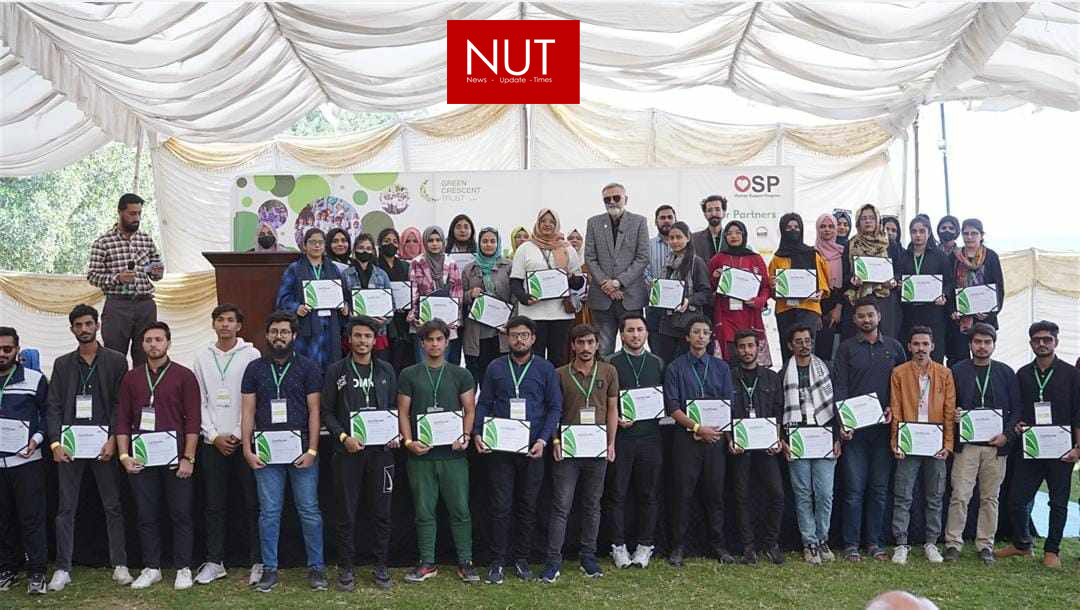
On the occasion, the chief guests and guests of honour distributed commendation certificates among 112 students enrolled in the GCT schools who passed the SSC examinations with distinction. The students also spoke and expressed gratitude to concerned philanthropists and donors for supporting quality schooling facilities for children from deprived families in Sindh. They also shared with the audience their goals in upcoming practical life after securing a higher education.

IBA Karachi and The Jaffer Family of New York collaborate to establish a Data Sciences Center at IBA

Karachi (Muhammad Yasir) 

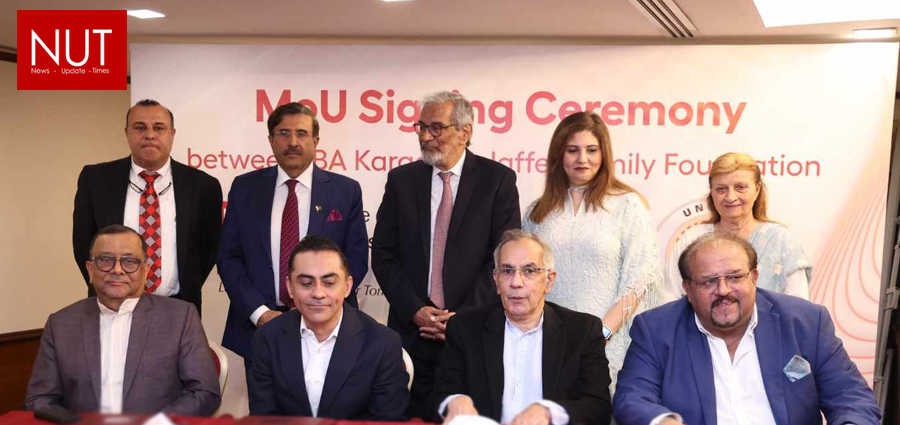
The Institute of Business Administration (IBA), Karachi hosted The Jaffer Family Foundation (JFF), a leading global non-profit organization committed to fostering education and innovation, in partnership with UGI (United Global Initiative), at the IBA through the recently held groundbreaking ceremony for The Jaffer Family of New York Data Sciences Center at IBA Main Campus on January 03, 2024. The ceremony brought together the senior leadership and faculty of IBA Karachi along with the Directors of the Jaffer Family Foundation to break ground on the site for the new facility. 

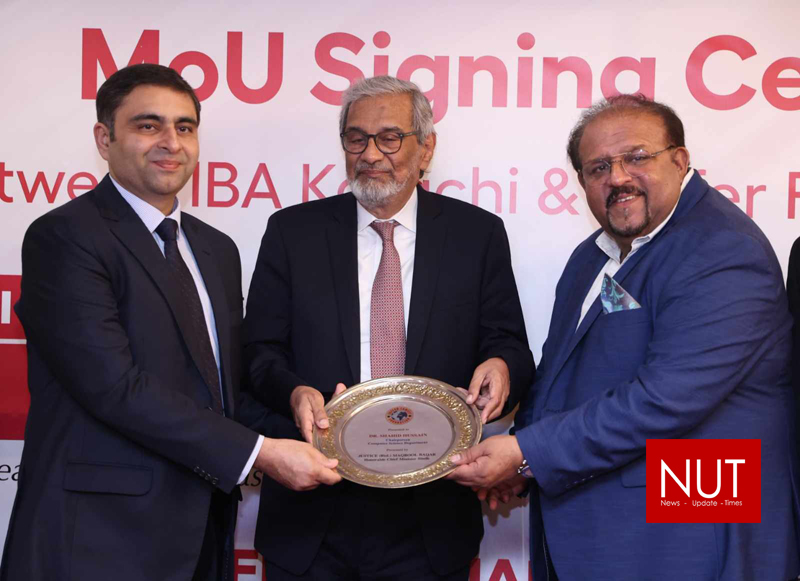
To further cement JFF and UGI’s commitment to supporting quality education, an MoU signing ceremony was held at the Movenpick hotel on January 05, 2024. The event included notable business and civic leaders including Chief Guest, Honorable Chief Minister of Sindh, Justice (Retd.) Maqbool Baqar; Professor Emeritus and Chairman IBA Centre for Excellence in Islamic Finance, Dr. Ishrat Husain; Executive Director, UGI, Dr. Hasnain Walji; Caretaker Minister, College Education Department, Mrs. Rana Hussain; and Honorable Home Minister of Sindh, Brigadier (Retd.) Haris Nawaz.

The ceremony commenced with a welcome note by Director Alumni Affairs, Resource Mobilization and Corporate Relations, IBA, Malahat Awan. She welcomed the Jaffar family to IBA and thanked them profusely for their generosity towards establishing a state-of-the-art data sciences center at IBA.

Dean, School of Mathematics and Computer Science (SMCS), Dr. Shakeel Khoja, informed the audience about the cutting-edge facilities being built in the center and its impact on the quality of research and academic rigor at the institute.  

Executive Director IBA, Dr. S Akbar Zaidi, welcomed the guests to the momentous occasion and thanked the JFF family for their support. Dr. Zaidi reinforced the importance of philanthropic support in enabling the growth and quality of academic initiatives that are a long-term investment and not a short-term return. He recognized the contributions of the Jaffer family in supporting educational initiatives and welcomed their continued engagement in helping IBA Karachi reach new horizons. 

Chairman, JFF, Alhaj Mohamedtaki Jaffer said that all praises belongs to the Almighty and that the Jaffer family are the custodians and stewards for this endeavor and humble executives for His divine work. He also said that this contribution reflects a deep-rooted commitment to education, empowerment, and serving humanity. Mr. Jaffer further added that the investment in this endeavor will yield dividends beyond measure, as the Jaffer family believes that education is a tremendous force towards societal enhancement and JFF’s undertaking to build a state-of-the-art data sciences center will create immense opportunities for the future generations.

Concluding the ceremony, Justice (Retd.) Baqar expressed his support for such collaborations and commended JFF’s incredible initiative. He applauded the foundation for their pivotal role in reshaping the future of higher education in Pakistan and for donating $1.5 million to the SMCS, IBA.  He said that this act of generosity represents more than just financial support as it is a significant investment in the intellectual capital of our nation.

With a focus on fostering entrepreneurship and innovation, the center will empower students and researchers to explore future-positive technologies, conduct ground-breaking research and develop solutions to real-world problems. This initiative aligns perfectly with IBA Karachi’s mission to be a world-class institution of higher education and will position it at the forefront of technological advancements in the region.  

The construction of the center is set to commence in early 2024, with an expected completion date in 2026. Once operational, it will provide IBA Karachi students with an unmatched environment for learning, research, and innovation.  


Pakistan’s top taxpaying industrialist fully backs drive to enroll 100,000 out-of-school children in Sindh by 2025

Karachi (Muhammad Yasir)

Pakistan’s top taxpaying industrialist and noted philanthropist, Sardar Yasin Malik, has fully backed the charitable drive of a leading education sector non-profit to enrol a total of 100,000 out-of-school children in Sindh through a network of 250 schools. The leading industrialist was speaking as the chief guest at a fun gala organized by the non-profit Green Crescent Trust (GCT) at a famous amusement park in Karachi’s suburbs to entertain around 2,000 orphaned students from the deprived families enrolled in its charitable schools.

The GCT has so far built a network of 166 charitable schools in the remote and backward parts of Sindh having an enrollment of 32,000 students from deserving families. The top taxpaying industrialist announced on the occasion that he and his fellow philanthropists and businessmen would fully support the Vision-2025 of the GCT which stands for increasing the number of its charitable schools in Sindh to 250 having an enrollment of 100,000 children from the disadvantaged areas by the end of next year. “I and my fellow businessmen will make sure that the Green Crescent Trust achieves this goal to lessen the severity of the issue of out-school children in Sindh,” said Mr Malik who also serves as the GCT’s Patron-in-chief. He urged the concerned philanthropists and donors to step up their support to the committed charities and NGOs like the GCT, which had been working hard to build quality schooling facilities in the marginalized regions of Sindh. He urged the parentless children at the fun gala to stay fully focused on their studies and work diligently to excel in their future practical life.

Also addressing the gathering, GCT CEO, Mr. Zahid Saeed, said the fun gala was a regular feature of the special assistance drive of the non-profit that is conducted throughout the year to benefit orphans and their families.

Mr. Saeed urged other bona fide non-profit organizations in the education sector to pool their resources and collaborate to overcome the challenge of out-of-school children in Sindh. He extended thanks to the federal government for the recent conferment of Tamgha-e-Imtiaz upon him to recognise and honour his services to build schools in the underserved parts of Sindh.

Mr. Saeed also thanked celebrities including Shahid Afridi and Anwar Maqsood for endorsing GCT’s campaign to build educational facilities for children in need. GCT Trustees, Saad Zia and Faizan Jawed, also spoke on the occasion.

PSDF graduates skilled professionals to boost Pakistan’s textile exports

Lahore (Muhammad Yasir)

Punjab Skills Development Fund (PSDF) has announced the successful graduation of 2,400 skilled professionals for the textile value added sector training to contribute its share for boosting the sector exports. This achievement is part of the collaborative initiative between PSDF and Export Development Fund (EDF) by investing in skilling the workforce and contributing to the growth of exports.

Pakistan, recognized as the 8th largest exporter of textile products in Asia, stands as the 4th largest producer and 3rd largest consumer of cotton. The textile sector constitutes 46 percent of the total manufacturing sector, employing 40 percent of the national labor force.

According to the Board of Investment (BOI), the textile exports contribute approximately 60 percent to Pakistan’s total exports, and the sector has witnessed substantial growth, with FY 2021 exports reaching $17.67 billion, a 28 percent increase.

In a strategic move to propel the textile industry, PSDF and EDF joined forces to launch the “Export Growth Program in the Readymade Garments and Knitwear Industry.” Funded by EDF, this groundbreaking project focuses on providing essential skills training to meet the specific demands of the textile sector, particularly in the production of readymade garments and knitwear.

The project, implemented across Punjab and Sindh via PSDF, aims to train 6,500 individuals during the first year of 2023-24. This includes a targeted 20 percent female trainees, fostering inclusivity in a traditionally male-dominated industry.

The comprehensive training program offers hands-on practical experience aligned with industry requirements, ensuring that graduates are well-prepared for the challenges of the workforce. Post-course completion, 50 percent of the trained individuals will be offered employment, bolstering the skilled workforce crucial for sustained growth and contributing to the sector’s further expansion and the overall economic development of Pakistan. This initiative underscores the commitment of PSDF and EDF to harness the potential of the skilled workforce that will play a pivotal role in Pakistan’s continued success in the global textile market.

AKU organizes theatre shows to educate children on the dangers tobacco

Karachi (Muhammad Yasir)

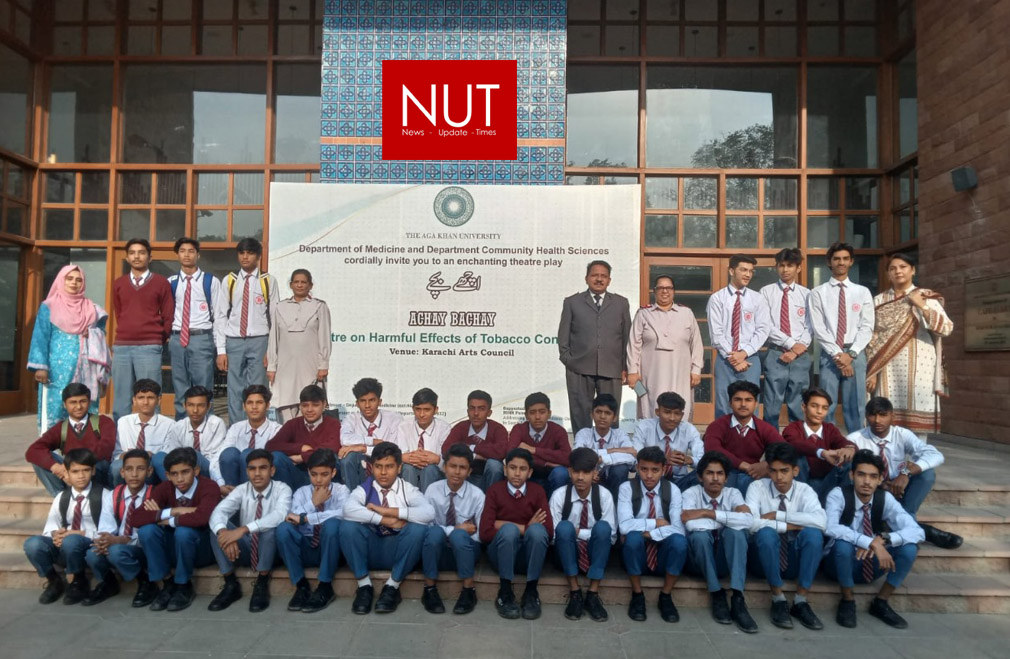
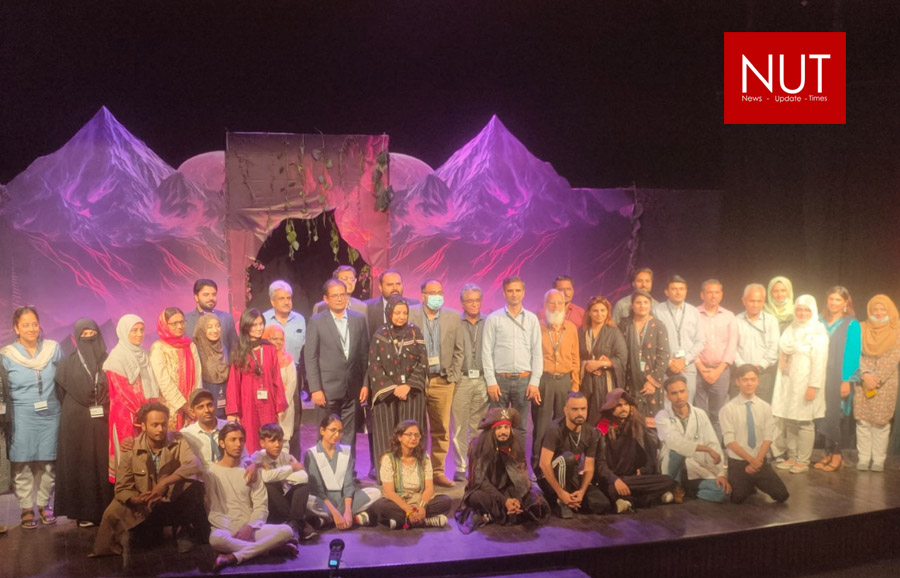
The Aga Khan University’s Department of Community Health Sciences (CHS) organised12 theatre shows for school-going children at the Arts Council of Pakistan, where over 4000 students between the ages of 11 to 15 from The Citizen Foundation, Zindagi Trust, and numerous private and government schools eagerly attended the play, accompanied by their teachers and staff.

The act, brought together by the CHS Faculty at AKU, was written and directed by Farhan Alam, faculty at the National Academy of Performing Arts. The performances were a riveting success as the young audiences learned how deeply tobacco consumption could lead to addiction, which could cause severe health problems and prevent them from improving their lives in the future.

The activity was supported by a grant from NIHR, UK, titled “Addressing Smokeless Tobacco Use & Building Research Capacity in South Asia – ASTRA,”  led by Professor Javaid Ahmed Khan, in the Department of Medicine, and supported by Dr Romaina Iqbal, Associate Professor and Section Head of NCD in the Department of Community Health Sciences.

The storyline revolved around three courageous children who valiantly took a stand against deceptive sellers of tobacco products. The mission of the protagonists was to eradicate such harmful practices from their families and overall society.

“Tobacco consumption remains prevalent in the elder generations of many households where these children come from. It is necessary to educate them on the dangers of this indulgence so they can keep themselves away from tobacco and also advise others in their home to practice restraint,” remarked the faculty members while sharing why the idea of a tobacco-awareness act was adopted for schoolchildren from underprivileged backgrounds.

The administrations in charge of the schools also extended their gratitude towards the AKU-CHS faculty on bringing forth such an insightful act to keep their children out of the harm’s way in the longer run.

“Enchanting Moments: Green Crescent Trust’s Annual Fun Gala Brightens the Lives of 2,000 Orphaned Students in Karachi” .

Karachi (Muhammad Yasir)  Around 2,000 orphaned students belonging to underserved families spent a fun-filled day at a renowned amusement park in Karachi along with the concerned donors who are firm supporters of the drive to enrol out-of-school children in Sindh. The orphaned students are enrolled in the charitable schools of the non-profit Green Crescent Trust (GCT) built in the disadvantaged parts of Sindh. GCT organizes the day-long Fun Gala under its Orphan Support Programme annually. Several patrons and donors of the GCT attended the event along with their families.

Speaking as the chief guest, noted industrialist and GCT Patron-in-Chief, Mr. Sardar Yasin Malik, urged the parentless children to stay fully focused on their studies and work diligently to excel in their future practical life. Mr. Malik said that he belonged to a very humble background as during childhood he used to study beneath the glow of a streetlight. Mr. Malik told the audience that owing to his sheer dedication and commitment to studies, he excelled in his later life and attained the coveted status of being the highest taxpaying businessman in Pakistan. He reiterated his resolve to fully support the charitable campaigns to educate children from impoverished families to help them come out of the vicious circle of poverty and financial crunch. He urged the concerned philanthropists and donors to step up their support to the committed charities and NGOs like the GCT, which had been working hard to build quality schooling facilities in the marginalized regions of Sindh.

Also addressing the gathering, GCT CEO, Mr. Zahid Saeed, said the Fun Gala was a regular feature of the special assistance drive of the non-profit that is conducted throughout the year to benefit orphans and their families. He expressed sincere gratitude to the donors and well-wishers of the GCT enabling it to build 166 charitable schools in deprived and remote parts of Sindh having an enrollment of 32,000 students. Mr. Saeed urged other bonafide non-profit organizations in the education sector to pool their resources and collaborate to overcome the challenge of out-of-school children in Sindh. He extended thanks to the federal government for the recent conferment of Tamgha-e-Imtiaz upon him to recognise and honour his services to build schools in the underserved parts of Sindh. Mr. Saeed also thanked celebrities including Shahid Afridi and Anwar Maqsood for endorsing GCT’s campaign to build educational facilities for children in need. He announced upcoming fundraisers in major cities to garner philanthropic support from business communities for enrolling out-of-school children.

GCT’s Trustees and management committee members Mr. Saad Zia, Mr. Faizan Jawed, Mr. Jawed Iqbal, Mr. Shabbir Latif and Mr. Habib Navaid were among the honoured guests in the occasion. Special commendation certificates were presented to the teachers of the GCT’s schools who work as volunteers in the Orphan Support Programme throughout the year.

GCT plans to replicate similar Fun Gala events in Hyderabad and Sukkur to bring joy to more orphaned students in its schools.

Habib University recognized at NECHE, Stanford

Karachi (Muhammad Yasir) Habib University’s unique vision to ensure quality education for high-merit students from diverse socio-economic backgrounds placed Pakistan in the forefront of global higher education discourse.

The University was recognized as a premier liberal arts institution transforming higher education in the global South in two seminal events in the USA – the New England Commission of Higher Education (NECHE) Annual Meeting 2023 and a celebration of global philanthropists at Stanford University. In a first for any Pakistani university, Habib University had the distinct honor to be invited to speak at NECHE (New England Commission of Higher Learning), one of the oldest accreditation bodies globally known for its commitment to quality, innovation and student success in higher education. Prestigious liberal arts institutions with long-standing academic integrity and merit-based access such as Yale and Harvard boast a place on its coveted roster.

Here, Habib University President Wasif Rizvi introduced the concept of “international agility” as an intellectual endeavor that captures the institution’s distinctive model of higher education, which prioritizes a holistic understanding of one’s own reality as well as contextual and indigenous knowledge. It equips our students to contribute to both community and industry as intelligent and thoughtful global citizens. Habib University’s model reflects a strong commitment to inclusivity.

Its community-owned approach, ensures all deserving students access quality higher education regardless of financial constraints. Recognizing the contributions of its Mohsineen (beneficiaries) is crucial to Habib University’s community-owned model. To this end, the University hosted a historic event, “Transformative Gifts: Creating Legacies”, at Stanford University on December 9, along with the academic leaders Dr Alexander Key and Sarah Stein Greenberg in celebration of the remarkable contributions of the Dhanani and Jeewanjee families. “Elevating the standard of academic excellence in Pakistan poses a compelling challenge,” said President Rizvi, addressing the event. “Our mission is to position Karachi as a dynamic platform that beckons higher-caliber academics. By dispelling misconceptions, we aim to unveil the true potential and vibrancy of Pakistan.” The distinguished legacies established by these families at Habib University, in the form of the Dhanani School of Science and Engineering and the Imam Ali (AS) Endowed Faculty Chair in Wisdom and Humanities, exemplify the rich tradition of US philanthropy that recognizes higher education as a transformative force for global change.

Habib’s efforts were appreciated by Dr Key, Associate Professor of Comparative Literature at Stanford University, who observed, “The Liberal Core at Habib University is a more intellectually exciting, better organized and more rigorous undergrad education program than my colleagues and I have created here at Stanford”. Greenberg, his colleague and Executive Director of Stanford University’s d.school, seconded this view and commended Habib University for “paving the way for inclusive education and ensuring equal access to knowledge and opportunities across Pakistan”.

The event brought together attendees from various US cities and participants on Stanford’s picturesque campus, reinforcing Pakistan’s positive narrative. It provided a platform for insightful discussions on challenges in Pakistan’s higher education, the marginalization of students along class lines, and deeper issues.

AKU-EB Celebrates High Achievers from the Sindh Region

Karachi (Muhammad Yasir)

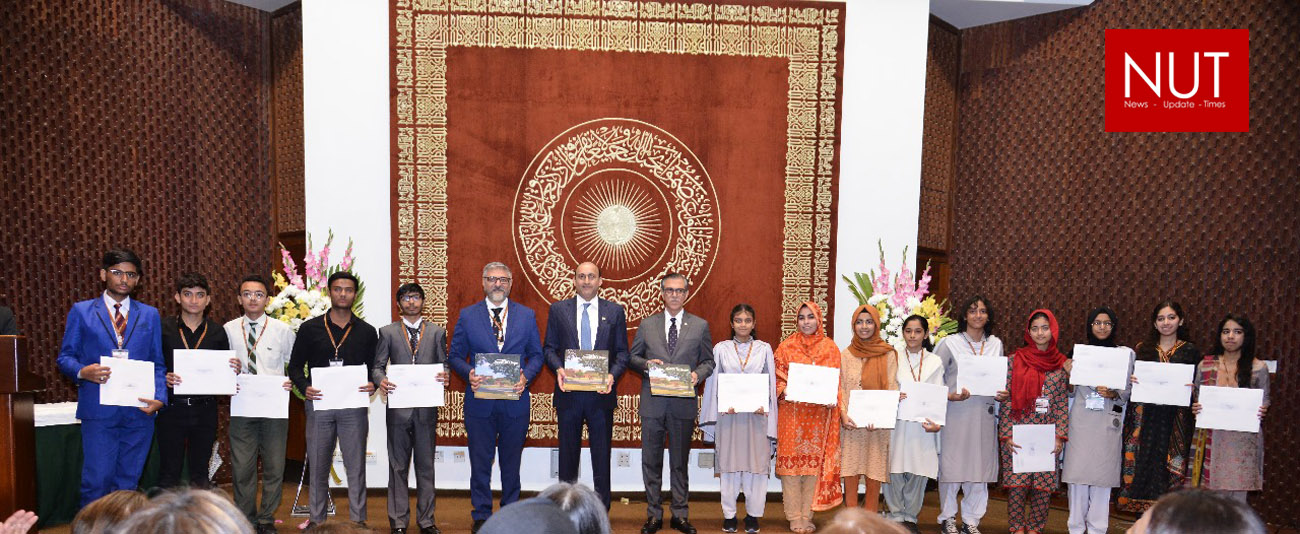
The Aga Khan University Examination Board (AKU-EB) hosted its High Achievers Ceremony to honour the outstanding academic accomplishments of students from the Sindh region. The event was hosted by Dr Sulaiman Shahabuddin, President, Aga Khan University, who welcomed students, parents and esteemed guests. The ceremony was graced by the esteemed presence of Mr. Amir S. Fancy, Chairman of Fancy Group, as the Chief Guest. 

AKU-EB High Achievers recognised a total of 145 students from Sindh of whom 103 were female, and 42 male. This impressive achievement contributes to the overall tally [KS1] of 185 High Achievers in Pakistan, reflecting the dedication and commitment of students across the nation. With 132 female High Achievers compared to 53 males on a national level, the AKU-EB continues to witness a commendable display of academic prowess among young women.  

The event also highlighted the 10th Anniversary of the AKU-EB Bridge Scholarship, which is seen as a beacon of hope and opportunity for students to access quality education under the AKU-EB system. Rejoicing in the celebration, Mr. Amir S. Fancy invited students to dream big, emphasizing the role of service and giving back.  Acknowledging the remarkable efforts of the high-achieving students, he invited them to embrace the journey of lifelong learning. 

This year’s results are also noteworthy in that AKU-EB is seeing an increasing number of High Achievers coming from outside of Karachi, including Hyderabad, Naushahro Feroze, Dadu, Larkana, Ubauro, Khairpur, and Sukkur. This is a testament of the impact of AKU-EB’s efforts to improve access for talented youth  across Sindh and Pakistan to achieve their potential. 

Embracing students’ efforts under the AKU-EB system, Dr Sulaiman Shahabuddin invited students to remember that no one succeeds on their own and that students should always remember those who stood by their side including their parents, teachers, peers, and the AKU-EB system. He asked High Achievers to, “Never stop having faith in your own abilities. Don’t lose that powerful curiosity about the world and how it works that keeps you excited about learning; that keeps you reading outside of class; that keeps you asking: “Why?” Why are things like that? And why can’t they be different? Never stop working hard.”

The AKU-EB High Achievers Ceremony not only celebrated academic success but also served as a platform to recognise the hard work, resilience, and intellectual growth of students in Sindh. The event brought together educators, parents, and students to applaud these exceptional individuals and inspire future generations to strive for excellence.


Ramisha Ammed, an AKU-EB National High Achiever who secured admission into AKU’s MBBS programme, spoke about her experience under the AKU-EB system. “Today, as we graduate, I can’t help but feel the weight of the global challenges that surround us, from the urgent calls of environmental degradation and the looming threat of global warming, to the rapid advancements in information technology and artificial intelligence. It’s easy to be overwhelmed by the magnitude of these challenges and opportunities, and the weight of the world can sometimes feel insurmountable. In the face of this all, AKU-EB has shaped us into individuals who are not just academically proficient, but socially conscious and compassionate.”

The ceremony was concluded by Dr Shehzad Jeeva, CEO, AKU-EB, who thanked students, schools’ leadership, and parents for their commitment to education. Dr Jeeva recognized the impact of the AKU-EB Bridge Scholarship across Pakistan and their remarkable success in academic and professional lives. He invited students to work hard and to understand that with every success comes a great responsibility; whether it be the responsibility to your family, to your school or to our nation, Pakistan. 

The ceremony ended with a musical performance of ‘Sohni Dharti’ by students from the Aga Khan Higher Secondary School, Karachi.