Pakistanis may travel to Saudi Arabia after AstraZeneca jab

NUT Desk- ISLAMABAD: Special Assistant to Prime Minister (SAPM) on Health Dr Faisal Sultan Tuesday said that Pakistanis travelling to Saudi Arabia can get the AstraZeneca vaccine after showing documents at the mass vaccination centres.

The country’s top health official shared that the government has decided to revise guidelines for AstraZeneca vaccines and will allow citizens who are 18 or older to get the jab which was earlier restricted to those aged over 40.

Protests had erupted across the country asking the government to allow the AstraZeneca vaccine.

The kingdom has only approved Pfizer/BioNTech, Moderna, AstraZeneca, and Johnson & Johnson vaccines, while in Pakistan, Chinese vaccines are mostly being used.

The SAPM said that Pakistanis who are travelling to Saudi Arabia can get the Oxford vaccine after showing their documents, adding that the government is in talks with Saudi health officials to allow Chinese vaccines.

Earlier, in May, the Pakistani health authorities had restricted the use of Oxford for people under 40.“(On the recommendations of an expert committee), we have updated the interim guidelines (for the use of  vaccine AZD1222) today. There are two key changes: Use among less than 40 years be restricted irrespective of gender (till the availability of further data). 2. Interval between doses fixed 12 weeks instead of range of 8-12 weeks mentioned in an earlier version,” Director General Health Pakistan Dr Rana Muhammad Safdar had told the English Newspaper.

He had maintained that both above changes will lead to operational ease and added that guidelines remain interim as new data from around the world keeps pouring.

‘Old is Gold’: 89-year-old looks forward to dance parties

Eighty-nine-year-old New Yorker Bob Holzman received his  as soon as he could, hoping it would allow him to get back to his favorite activity – dancing.

Over the last 75 years, Holzman has danced his way around the city’s events to the rhythms of swing, fox-trot, samba, and salsa.

And until last year, he had never missed a Lincoln Center’s Midsummer Night Swing opening and had been a fixture at city dance parties.

When the pandemic struck in March of 2020, Holzman found himself stuck at home. He occupied himself reading electronic books on loan from the New York Public Library and playing scrabble online with friends.

But now he is looking forward to getting back to normality.

“It was a joke from, I think, probably Betty Davis, she says, ‘Old age is not for sissies,’” said Holzman, sitting on a wooden chair in the shadow of a large umbrella spread in Bryant Park.

“I consider myself lucky and fortunate that I’m still able to dance and jump around and take my shopping cart and do everything else.”

Across the United States, COVID-19 vaccinations have changed seniors’ daily lives in ways large and small a year after the pandemic drove many in the high-risk group into forced isolation.

Older Americans are again visiting family members, eating at their favorite restaurants, and shopping in stores without fear of death or hospitalization.

“I have no doubt … that I’ll be able to do whatever I did before,” Holzman said. “And I’ll do it with a sense of gratitude that, you know, I was able to get through it.”

AstraZeneca vaccine safe for Covid-19, insists WHO

GENEVA: The World Health Organization said Friday there was no reason to stop using AstraZeneca´s Covid-19 jab after several countries suspended rollout over blood clot fears, while the hard-hit United States exceeded 100 million doses of vaccine administered to its people.

The WHO, which said its vaccines advisory committee was examining the safety data coming in, stressed that no causal link has been established between the AstraZeneca vaccine and clotting.

“Yes, we should continue using the AstraZeneca vaccine,” WHO spokeswoman Margaret Harris added, stressing that any concerns over safety must be investigated.

UK-based AstraZeneca insisted its jab was safe, adding there is “no evidence” of higher blood clot risks.

Dawlance achieves ‘Trusted Work-Place’ Certificate for its COVID-safe work-environment

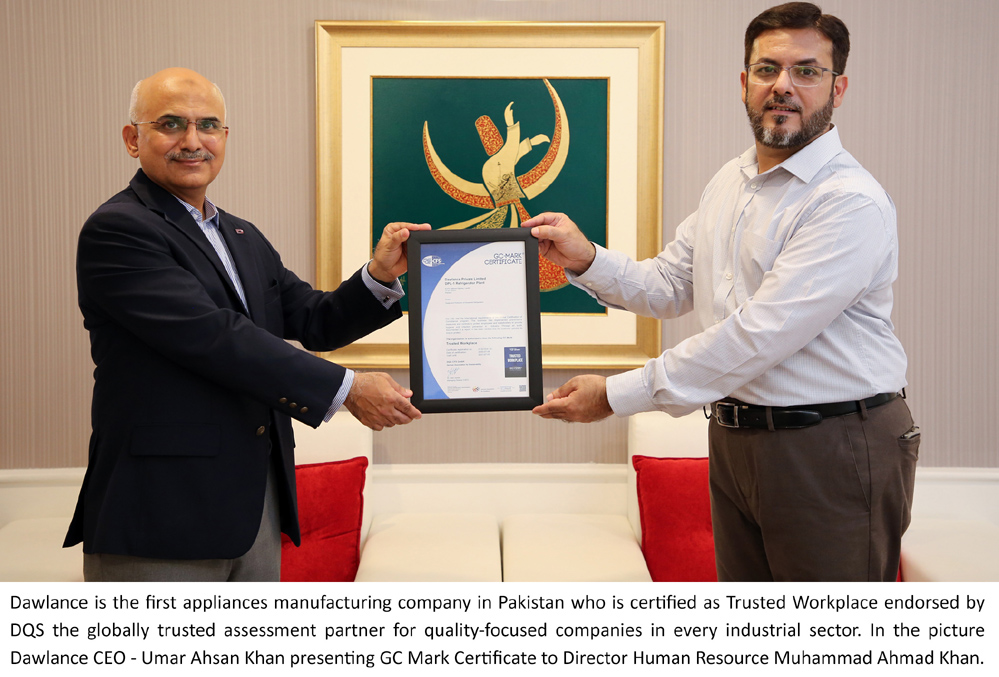
Lahore (Muhammad Yasir All three manufacturing facilities of Dawlance have been awarded the ‘Trusted Workplace’ certificate for its COVID safe work environment, after an audit that was voluntarily conducted through DQS – the globally trusted assessment partner for quality-focused companies in every industrial sector. As an independent third-party, DQS has endorsed that the work-environment, products and services of Dawlance fulfil all the safety standards. Dawlance is the first appliances manufacturing company in Pakistan who is certified as Trusted Workplace.

Dawlance is the leading technology brand in Pakistan and a wholly-owned subsidiary of the 3rd largest manufacturer in Europe – Arcelik, Turkey. Its parent-company decided to engage the experts of DQS, for a COVID-19 Safe-Practices Audit, at all its subsidiaries outside Turkey. Arcelik Subsidiaries are now entitled to use the GC Mark Logo on their products’ packages, so the consumers are assured that Dawlance is a highly responsible enterprise, where organizational health, consumers’ safety and environmental sustainability are the top priorities. During the recent audit, the DQS auditors have verified our compliance with international standards – an achievement to be proud of!

The Chief Executive Officer of Dawlance – Umar Ahsan Khan congratulated all the stakeholders and personnel of the enterprise, on this remarkable achievement and stated that: “The COVID-19 pandemic is a global socio-economic challenge. Arcelik and Dawlance have a firm belief that the resourceful corporate and industrial sectors must play a vital role in safeguarding the nations from this public-health crisis. Being certified as a Trusted Work Place by DQS reflects our commitment to provide a healthy and hygienic work-environment for our workforce and consumers.”    

In the month of July 2020, the Dawlance plants participated in and successfully qualified the ‘Trusted Workplace Certification’ for COVID19. This comprehensive audit was conducted according to the tailor-made audit checklist prepared by DQS, keeping in view different Management System Standards that would be used for ‘Trusted Workplace Certification’.

Dawlance is also making consistent efforts to create public awareness about protection from Coronavirus, while the brand has donated heavily to the hospitals during this pandemic. Dawlance has so far donated its valuable appliances to support paramedics, store COVID kits in freezers, incubation chambers for self-protection of doctors and Ventilators manufactured by its parent company Arcelik to designated hospitals across Pakistan and much more to improve healthcare facilities, save lives and minimize the socio-economic impact of this disease in Pakistan.

The Dawood Foundation and Allied Bank partner to establish High Dependency Unit at The Indus Hospital for COVID-19 patients

The Dawood Foundation and Allied Bank partner to establish High Dependency Unit at The Indus Hospital for COVID-19 patients

Lahore (Muhammad Yasir) The Dawood Foundation, the charitable arm of the Dawood Hercules Group,  and Allied Bank Limited have announced a partnership to commit PKR 18.7 million for the establishment of High Dependency Unit (HDU) at The Indus Hospital, Karachi, to enhance COVID-19 patient care and facilities.

The Dawood Foundation and Allied Bank Limited will be making an equal contribution of PKR 9.35 million for this initiative. Under this project, The Indus Hospital will use the financial assistance to set up and operationalize a 20-bed, dedicated HDU facility with medical equipment. The project will help to enhance the capacity of tertiary care for COVID-19 patients in Sindh, which accounts for more than 40 percent of the country’s confirmed virus cases.

In June, HDU facility at Nishtar Medical University & Hospital, Multan, was also setup under the PKR 1 billion pledge of Mr. Hussain Dawood, Chairman of Engro Corporation and Dawood Hercules Corporation. The Hussain Dawood Pledge is extending COVID-19 relief efforts in the four focus areas of disease prevention, protecting and enabling healthcare practitioners and other key workers, enabling patient care and facilities, and bolstering livelihoods and sustenance of the most deserving in society.

Allied Bank has also proactively supported the government and society to address the impact of this pandemic through provision of immediate relief to deserving families. The Bank conducted food distribution drive in different parts of the country in collaboration with multiple NGOs and also provided direct financial assistance to the country’s leading hospitals and medical centres for arranging diagnostic kits, Personal Protective Equipment (PPE), research and allied health care facilities.

According to Sabrina Dawood, Chief Executive Officer of The Dawood Foundation, “We are pleased that our partnership with The Indus Hospital is now entering a new phase, from promoting testing and diagnostics to enabling improved patient care. By establishing HDU’s to improve critical patient care in different parts of the country, we aspire to bring better healthcare facilities within the reach of wider society and save precious lives.”

Allied Bank CEO Mr. Tahir Hassan Qureshi said that, “In these challenging times, Allied Bank has remained committed to provide support and assistance to major hospitals of the country. Indus Hospital has been at the forefront of providing immediate healthcare to COVID-19 patients and I hope this contribution will help and assist the communities who need it the most during this pandemic.”

Dr. Abdul Bari Khan, CEO of Indus Hospital, added that, “As Pakistan continues to fight COVID-19, it is essential that we focus our efforts on improving critical patient care facilities and support the public healthcare system. This program to setup HDU is a welcome step in this regard and we look forward to this new chapter in our collaboration with the Dawood Hercules Group and Allied Bank.”

UNESCO Futures of Education – The Role of Technology in Education

Global leaders emphasize need for conversations on reimagining the future of education and safer, more balanced futures

Lahore (Muhammad Yasir) Day three of the first, fully virtual Beaconhouse School of Tomorrow Conference: A World of Tomorrow: Negotiating a Better Future concluded the conference with all 22 sessions resonating with global audiences over the weekend. A key highlight of day one of the conference was the recognition of the Pakistan government’s comprehensive response to COVID-19 by Director General of the World Health Organization, Dr Tedros Adhanom Ghebreyesus. On day two, Mr Andreas Schleicher, Head of the OECD Directorate of Education & Skills joined for a discussion with Mr Kasim Kasuri, CEO of Beaconhouse on PISA assessment and the future of Education and Learning.

The third day of the conference continued with an insightful discussion on the hope that emerging learning could offer to the world’s 258 million out-of-school children.  This panel discussion featured Stephanie Dobrowolski, co-founder, Rising Academy Network, Africa, Mosharraf Zaidi, leading public policy analyst, Professor Tahir Andrabi, economist &educational leader, and Henry Warren, a specialist in disruptive digital businesses as the moderator.

A highlight of the day was the conversation on reimagining the future of learning, 

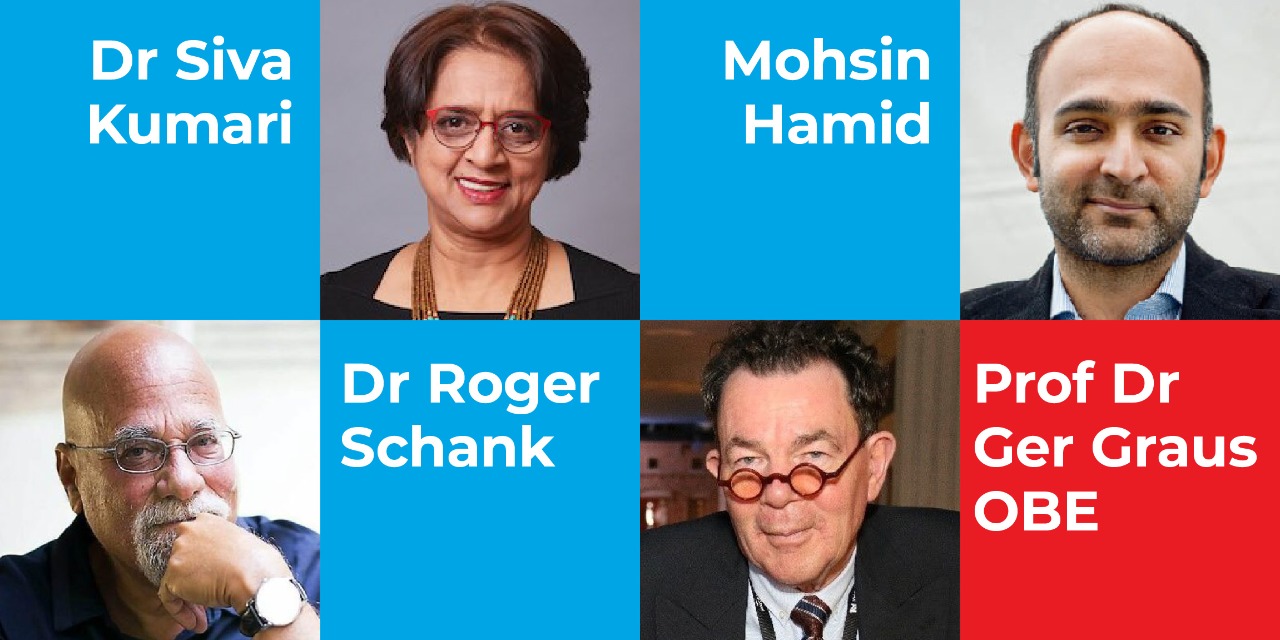
moderated by Nassir Kasuri, Executive Director, Beaconhouse, with the featured speakers Dr Roger Schank, AI Researcher & CEO, Socratic Arts, Suzie Boss, iconic US learning advocate & PBLWorks Faculty, Dr Siva Kumari, Director General, International Baccalaureate, and Professor Dr Ger Graus OBE, Global Director of Education, KidZania.

Sessions ran concurrently on topics such as supporting vulnerable & SEN learners during school closures with Professor Maggie Atkinson, former Children’s Commissioner for England, award-winning novelist, Mohsin Hamid, inclusion expert, LaCheyna Sparrow-Adebiyi, and founder ‘Cities for Children’ Madeeha Ansari amongst others, along with a seminar on the International Baccalaureate’s ATL philosophy with Lance King. Transformative values and competencies were explored with Dr Tristian Stobie, Director Curriculum CAIE, Cynthia Guyer, Executive Director, Global Dignity, Dr Umar Saif, technology advisor, and Vikas Pota, education leader & creator of Global Teacher Prize.

Professor Stephan Lewandowsky, cognitive scientist, Munizae Jahangir, journalist, and Lara Rathod, creator/host, Red Sofa Conversations, discussed the ‘Info-demic’ in an attempt to sift fact from fiction, along with Oscar-winning film producer & member, House of Lords, UK, Lord David Puttnam CBE.

The School of Tomorrow conference seeks to understand how Covid-19 is shaping important global conversations about safer and more balanced futures, as well as pushing educators to reimagine the future of education at both school and university levels.

The conference updates are made available on its website (www.sotevents.com) and the social media platforms Facebook and YouTube (Sot Events).

SOT Events are made possible by the generous support of corporate sponsors. The organisers acknowledge the support of United Bank Limited as the Lead Sponsor for SOT Edition XI.
The non-profit School of Tomorrow Event Series was launched in 2000 and is organised by Beaconhouse as part of its ongoing commitment to its social responsibility.