Etimad Online On The Mission Of Revival Of Pakistan`s Economy

Written by: Mehwish Ayyub
Manager PR & Communications

Pakistan has everything that is needed for the modern agriculture – from all 4 seasons (which serve to provide plenty of farming opportunities) to 47.79% of agricultural land, abundant water and hardworking labour force. It is one of the world’s top milk producers, leading raw milk producing country and 11th largest poultry producer in the world. Livestock is considered central component in agricultural sector of Pakistan which provides employment to more than 8 million families.

Above advantages should make farming in Pakistan extremely profitable for the farmer but unfortunately the local farmer is still suffering. The manufacturing sector also has not grown much as imported products have captured most consumer groups. At an average grocery store, 60% of the main prominent shelf space is given to the multinational companies who have enough budgets to spend on advertising and marketing to reach the local consumers and on the other hand the local products don’t even get prime shelf space for display. The local manufacturers and producers won’t be able to survive long if their products don’t gain market share and that’s why we came up with the idea of Etimad Online. 

Etimad Online is an initiative to reduce inflation and alleviate poverty from Pakistan by promoting and helping local manufacturers to get proper shelf space and by connecting farmers directly to the end consumers. We have launched over 50 stores across Karachi and aiming to have more than 300 such stores across Sindh by April 2021. Through these stores, we have created selling space for local products and now encouraging and inviting young entrepreneurs to open small industries in every town. Etimad Online will not only buy their products but also will be providing these budding entrepreneurs logistical support to make sure they reach the market properly.

Etimad Online is a brainchild of its chairman Mr. Azim Adil Sheikh who realized the need of such platform after Covid19 which has wreaked havoc on the global economy. Pakistan, where there is no price mechanism for the basic commodities – sugar, wheat, poultry, meat, vegetables, fruits, dairy etc. and the absence of check and control system for the anti-market practices has lead the artificial and unethical price rise.  Everyone from retailers to wholesalers are charging premium rates which is directly effecting the end consumer for whom it is becoming impossible to run a household on lower income and on the other hand the farmer who is producing everything, is still dying of hunger.

Sensitive Price Indicator which monitors the price of some essential items on weekly basis has already spoken on the surge in prices but no one is even addressing that.  If we take examples of vegetables which obviously are grown in abundance in winters, are still very expensive and the consumer is paying more than they were paying in summers. The chicken and meat prices are beyond to the affordability of general public. The spike in the prices of essential commodities has taken its toll on every household across the country.

The higher costs do not even guarantee higher product quality as the producer has lower profit margins and fierce competition. It is heart wrenching that no one has been held accountable for the undue profit margin at the expense of poverty stricken population.

There is a consistent increase in imports which is harmful to economic growth of Pakistan. While looking at the import bill of Pakistan, one will wonder that a country whose public debt to GDP ratio has crossed 106 percent of GDP, why is spending billions of dollars on imports. According to the World Bank’s Business Environment Report 2020 ranking of 190 economies in terms of ease of global business environment, Pakistan ranks 108th. The situation is alarming, unemployment is on the rise. It is assessed that Pakistan needs an economic growth rate of over 7 percent to ensure its unemployment stays at a reasonable level. That couldn’t be achieved until and unless the government promotes small and medium enterprises (SMEs). Policy makers should focus on SMEs instead of trying to lure big business houses and large corporates.

Working towards the economic growth of a country is not only its governments responsibility and that’s why Etimad Online is also encouraging and supporting budding entrepreneurs and SMEs as supporting them will help in revival of the economy and will create millions of jobs as well but that couldn’t be achieved without governments help and support. SMEs can serve as the backbone of economy if these are supported by the government also. Although the government is ready to support the young entrepreneurs but that also could result in a chaos with the young generation in debt of government and banks because no one is training these entrepreneurs on how to run a business. Keeping that in mind, Etimad Online has gathered different professionals and experts from the fields of marketing, advertisement, designing, branding, production, procurement, packaging, finance, audit, human resource, communication etc. who all are ready to guide and help the young entrepreneurs under the umbrella of Etimad Online which is not only training and helping the SMEs but also promising to bring them business, buying their products and providing selling space across country which will increase the demand of local products and will also reduce inflation. And once these SMEs are ready, we will promote their products internationally as well, which will increase the exports of our country – and that is the vision of Etimad Online.


Ajoka Celebrates Madeeha’s Birthday

Lahore (Muhammad Yasir) Ajoka Theatre observed the 65th birthday of its founder and theatre icon, the late Madeeha Gauhar. The ceremony was held in the artistically decorated lawn of the house where she spent her childhood, also the venue of the first Ajoka performance in 1984.  The ceremony. titled “Celebrating Madeeha”, was attended by Madeeha’s family, friends and her Ajoka colleagues. The ceremony started with a documentary on the contribution of Madeeha Gauhar for the promotion of socially meaningful theatre in Pakistan. The programme  included sitar recital by Ajoka Chair Zara Salman, Violin by Madeeha’s son and Director of Ajoka Institute Nirvaan Nadeem and musical tributes by Usman Raj, Madeeha Rasheed, Asad Yousaf and Kanwal Christopher. Thomas Yousaf played table.  Well-known Qawwal, Khawar Ali sang Sufiana Kalam on the occasion while dance teacher Luke Calvin presented a dance tribute to the Ajoka founder. Madeeha’s husband and Ajoka’s Executive Director Shahid Nadeem hosted the event. The event was live streamed on Facebook. A birthday cake was cut by Madeeha’s sons Nirvaan and Sarang. Those who were present included Ajoka’s Board member Salman Chima, Executive Committee member Nayab Faiza, General Secretary Sohail Warraich, Technical Coordinator Nadeem Mir, Core members Bilal Mughal, Mohammad Qaisar, Muzammil Ali, Ali Haider, and media person Fizza Jamal.

Mastercard Launches The MEA REGION’S FIRST NUMBERLESS Card In PAKISTAN WITH SADAPAY

Lahore (Muhammad Yasir) Building on the partnership announced in Pakistan in 2020, SadaPay and Mastercard are issuing the Middle East & Africa (MEA) region’s first numberless and contactless enabled card, allowing users to transact in simpler, faster and more secure way. This announcement further strengthens Mastercard’s commitment to promoting financial inclusion in emerging markets and encouraging the adoption of secure digital payment methods.

As Pakistan’s first numberless card, the new offering has been designed to provide SadaPay users with a safe and simple way to transact both online and offline. The physical version of the card is completely numberless, both front and back, thus providing ultimate protection from the prospect of theft of personal and financial information for additional peace of mind. Despite being a numberless card, cardholders can still use it easily to make e-commerce payments as their card details are safely stored within the SadaPay app. 

The launch of the numberless card is the first implementation of Mastercard’s Digital First program in Pakistan and the wider MEA region. This innovative technology will set the stage for a more advanced digital payment landscape in the country offering cardholders with contactless and safer ways to transact.

“Our focus is to deliver a safe and secure digital experience to all cardholders. Mastercard is a trusted partner that enables issuers and merchants to leverage technologies such as the numberless cards to ensure safety of e-commerce and over-the-counter transactions in order to protect consumers and merchants against fraud. We are truly excited to be launching the first numberless card in Pakistan and the MEA region in partnership with SadaPay. We continue to partner with digital players across the region to launch exciting digital solutions and share innovations to advance financial inclusion, bringing us closer to a world beyond cash,” said Ngozi Megwa, Senior Vice President, Digital Partnerships MEA, Mastercard.

“SadaPay takes the security of its customers very seriously and it is in that spirit that we have brought an innovative regime like numberless cards to Pakistan. Our users will now be able to make online and offline digital payments in the most secure way possible. We are also working to bring even more innovative ideas to the market all in the pursuit of customer delight. This is just the start and we’re glad to be working with Mastercard to really explore the true potential of a financially included Pakistan,” said Brandon Timinsky, Founder and CEO of SadaPay.

Banks and financial services can develop a state-of-the-art, fully digital product through the Mastercard Digital First program. The new offering makes payments and banking instantly available to consumers through the mobile banking app including services such as instant issuing, card controls and access to a wide array of features and benefits with additional bank support delivered via chat. SadaPay will issue virtual cards with every account that is instantly available when customers sign up. The physical teal and peach card is optional, which is free and delivered at no cost to the user.

More than 150,000 people have already signed up for early access and are eagerly waiting for their accounts. Anyone with a valid Pakistani ID card can join the waitlist for the numberless card by signing up via www.sadapay.pk/waitlist

SadaPay is now operational and in its pilot phase under supervision of the regulator. The public rollout will begin once the pilot is completed.

SadaPay Card Features

–           Advanced card controls: Lock your card on the fly or get notified the instant you’re charged. With SadaPay, users can control their transactions on their terms, on their phones.

            –           Save on banking fees: SadaPay card users enjoy 3 free withdrawals at any ATM in the country, free local bank transfers under Rs. 10,000 and no annual charges

            –           Secure by design: SadaPay communications are encrypted on multiple levels, the physical card is numberless and there are advanced anti-fraud protocols in place to keep user accounts safe at all times.

Bloomberg’s Philanthro-Colonialism: A Threat to Global Health and Science

Lahore (Muhammad Yasir) Former New York City mayor Michael Bloomberg is in hot water overseas —and potentially at home—with members of the Philippines government accusing Bloomberg-funded charities of illegally paying regulatory agencies to implement his anti-tobacco policies. While the general public may be shocked by the allegations, those familiar with Bloomberg may be less surprised, given his tendency to leverage his philanthropic largesse as a means of influencing government policy, from funding tobacco control efforts to installing privately funded lawyers in state attorney general offices across the U.S.

As in many other countries, the “vaping” debate has grown increasingly contentious in the Philippines, with the government considering proposals ranging from regulation to complete prohibition in recent years. Last month, while the Philippine Food and Drug Administration worked to develop general guidelines on regulating non-combustible tobacco products, a new controversy emerged. During a virtual consultation on the subject, open to the public, agency officials revealed they had been receiving money from the Bloomberg Initiative and The Union —a charity funded by Bloomberg—for their tobacco control efforts. Apparently, the funds were provided in exchange for the agency consenting to implement tobacco control strategies endorsed by Bloomberg. Given the aggressive moralistic opposition these groups have toward nicotine use, the disclosure led to questions about the agency’s ability to objectively develop regulations for novel nicotine products, like e-cigarettes.

According to a resolution filed last month by Deputy House Speaker Deogracias Victor Savellano and Rep. Estrellita Suansing, FDA officials initially denied receiving funding from these international charities. But, once confronted with evidence, they admitted to receiving grants from foreign charities to support “the implementation of the National Tobacco Control Program (NTCP) under the jurisdiction of the Food and Drug Administration.” International observers have raised concern that such donations may have a corrupting influence on foreign governmental entities, pressuring them into an unnecessarily combative stance against non-combustible nicotine products. This may in part explain why, despite the evidence that e-cigarettes are relatively safe, at least 95 percent safer than smoking, and highly effective for smoking cessation, the Philippines FDA has favored a prohibitionist approach to non-combustible nicotine products.

That a government health agency would accept money to implement “predefined policies” dictated by foreign political entities has caused justifiable outrage and spurred demands the Philippine FDA return the funds and for a thorough investigation into the activities of the agency and the charities. It also raises the possibility these NGOs violated U.S. law governing charitable giving to foreign government officials.

Members of the Philippines government have called on their FDA to return the funds and cease all interaction with the foreign charities until the House Committee on Good Government and Public Accountability concludes a thorough investigation. Such an investigation would undoubtedly uncover more evidence of improprieties by these charities in that country. But, Bloomberg’s effort to manipulate governments into restricting lower-risk tobacco alternatives is far from limited to the Philippines.

For years, Bloomberg has dedicated considerable amounts to fund a web of financially-linked nonprofits, universities, and activists, coordinating their international effort to foment panic over vaping and coerce governments into adopting rules that get as close to prohibition as possible. More insidiously, Bloomberg has enticed respected institutions into his cabal, facilitating the spread of misinformation and fear about non-combustible tobacco products. Number one among those institutions is the World Health Organization (WHO), which has received more than a billion dollars for its “Bloomberg Initiative to reduce tobacco” and at least $2.5 billion to combat other non-communicable diseases. No surprise, the WHO, in addition to making Bloomberg their official ambassador for non-communicable disease, stubbornly refuses to acknowledge mountains of evidence that non-combustible tobacco and nicotine products can save smokers’ lives. Instead, they promote blatant lies and try to strong-arm governments around the world to banning nicotine vapor products—even while pursuing no such policy for actual cigarettes.

In accordance with Bloomberg’s agenda, these groups have directed a significant amount of their energy on low- and middle-income countries. Using their money, clout, and connections, they impose their views and will on these nations, without the input of local populations and with little or no regard for their specific circumstances, needs, and values. In the midst of a wave of interest in “decolonializing” public health, this sort of patronizing interference, well-intentioned though it may be, deserves scrutiny.

For example, in the aftermath of Armenia’s 2018 “velvet revolution,” the new government sought to improve health and address the country’s sky-high rates of smoking. In a recent documentary, the new health minister, Arsen Torosyan, noted that most of their support for tobacco control comes from the WHO but also noted that they “recently signed a grant with Bloomberg Foundation…and other Tobacco-Free Kids from America.”

All three organizations mentioned by Torosyan are, of course, anti-tobacco organizations funded by Bloomberg. And now, Armenian government policies on vapor products are shifting into alignment with the Bloomberg agenda. In a country where more than half the men continue to smoke and access to cessation services and aids is limited, discouraging adults from using products that might reduce their risk by at least 95 percent is outrageously misguided.

In Vietnam, Bloomberg Philanthropies contributed at least $3.2 million to the country’s “tobacco control capacity” between 2007 and 2014. In Bloomberg Philanthropies’ own words, they had a “deep collaboration with the government and local organizations” including the Ministry of Health. What were the results of this collaboration? Well, even while 45 percent of men in the country continue to smoke, the ministry announced a plan earlier this month to completely prohibit the buying, selling, manufacturing, and importation of electronic cigarettes, despite trials showing e-cigarettes are among the most effective means of smoking cessation— at least twice as effective as traditional nicotine replacement therapy.

These are just a few examples of a vast and tangled global campaign. Bloomberg’s strategy is proving effective, particularly in lower-income countries with high rates of smoking – those that would benefit most by having access to lower-risk alternatives. This is tragic for the millions of men and women in these countries who will continue to smoke and die because their government, at the behest of agenda-driven foreign philanthropists, is stripping them of the right to make their own informed health choices. But, it also has deeply troubling implications beyond the issue of tobacco.

In the midst of the COVID-19 pandemic, for which the international health community was woefully unprepared, it has become clearer than ever how important it is that health policies be based on evidence rather than politics. That an individual like Bloomberg can co-opt governments, health organizations, and institutions into supporting his agenda despite the evidence should alarm everyone, no matter where they live.

Partnership signed for the development, empowerment and mainstreaming of women in digital media.

Fatima Jinnah Women University (FJWU) and RINSTRA sign MoU to build capacity related to digital and social skills for the faculty and students through interactive workshops, seminars and courses.  

Lahore (Muhammad Yasir Fatima Jinnah Women University (FJWU) and RINSTRA Technologies Pvt. Ltd. signed a Memorandum of Understanding (MoU) to jointly work together to build digital skills of the students and faculty. RINSTRA will enable digital media skills through interactive workshops, seminars and courses, while providing its state-of-the-art platform for digital film festivals and theme-based video competitions. 

Speaking on the occasion, Dr. Saima Hamid, Vice Chancellor FJWU, said, Fatima Jinnah University is one of the few academic institutions in the country, which prides itself in being a center of excellence for women education and leadership. The University is now moving towards knowledge development, through research-based initiatives that can be commercialized. We are thriving to make our students stand out as pioneers in academic and business research. She further added that women empowerment through higher education is our primary goal.

Through this collaboration, FJWU and RINSTRA will create hybrid media content like movies, dramas, music videos, theater, documentaries and videos for RINSTRA and other digital platforms. 

Amir Jahangir, Chief Executive Officer RINSTRA, said, this MoU is important to enable young storytellers to be equipped with digital skills that can earn them enough income so they can sustain their creative pursuits and economic wellbeing. RINSTRA has a vision to create 1,000,000 content creators in the next five years, that can create a new digital creative economy in the country.  

As per the details of the MoU, both the organizations will work on improving the digital storytelling technique and creative thinking, that will help the students to look at issues and challenges from a narrative perspective. Both the organizations also agreed to create research opportunities in the space of MediaTech. This will enable the students to find new work opportunities in the content industries, including RINSTRA.com as a potential future work partner. Fatima Jinnah Women University is a public sector university with a mission to achieve excellence through a conducive learning environment for collective well-being and societal transformation. The University is a symbol of commitment of the nation to women’s education. The University has a chartered vision to aspire and innovate for a sustainable future by promoting higher education, research, collaboration and community engagement to achieve societal empowerment. The institution is funded by the Punjab Government. 

RINSTRA is Pakistan’s first short-form digital media platform for on-demand streaming and for creation of user generated original content on iRINSTRA. RINSTRA provides entrepreneurship opportunities to emerging and established content creators and film makers in Pakistan and beyond. RINSTRA gives content creators access to a large Pakistani community around the globe. RINSTRA has been able to create a very unique platform that offers dramas and films, while enabling users to generate their own content on the same platform. It also has a feature for Content Competition where, more then 100 academic institutions in Pakistan are competing on various thematic areas. The Fest feature of the application has provided some of the leading Film Festivals to partner with RINSTRA for digital viewing of their films and documentaries. This has created an unprecedented experience for viewers in the country.   

Creative and independent content with premier shows and films can be accessed on RINSTRA by visiting the website http://www.rinstra.com or downloading apps from the Google Play Store and/or Apple App Store 

DIG Police Maqsood Ahmed TI, PSP, generously hosted the 27th LADIESFUND Power Lunch

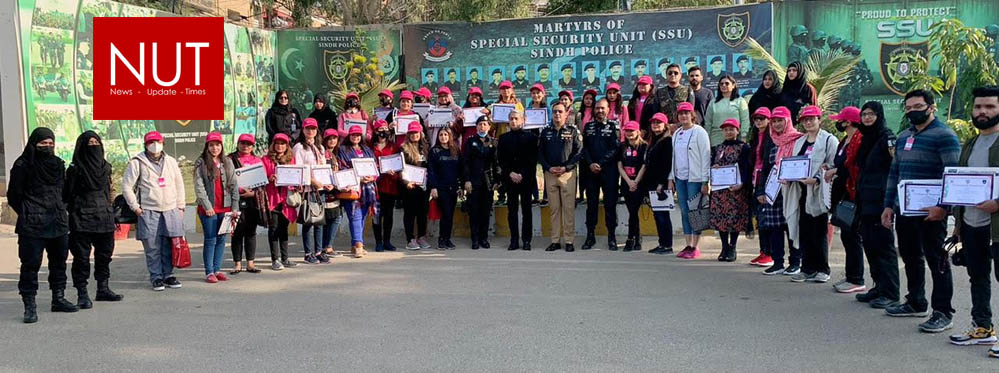
Karachi (Muhammad Yasir) DIG Police Maqsood Ahmed TI, PSP, generously hosted the 27th LADIESFUND Power Lunch at the national SSU headquarters where he invited a delegation of LADIESFUND members, donors and Educate a Girl scholarship girls to be his guests to tour the facility, learn self defence, learn firearm safety and shooting and have a delicious lunch. Each delegate was also certified by SSU.

“We are humbled to have been invited by DIG Police Maqsood Ahmed to SSU national headquarters to experience a day full of confidence-building, self-defense training as well as interaction with key members of SSU including 200 female commandos, stated Tara Uzra Dawood, LADIESFUND President.

“We have invited you all here free of charge as part of our CSR,” explained the DIG, who took out a generous amount of time to interact with and meet with this all female delegation.“This day has changed our impression of the police, said Syeda Raafia Mamujee. “We really appreciate the access to the SSU commandos and all the time they have spent with us,” said Shazia Farooqui.

The format of this popular lunch enables all guests to not only meet and interact with the Chief Guest, but have access to each other, with all SOPs in place. The SSU generously gifted each delegate and official police COVID-19 mask. Powerful alliances, business collaborations, etc. have been formed from this high in demand networking series. LADIESFUND encourages each attendee to set a meeting with at least 3 other attendees within one week of the gathering to solidify their connection and to work towards collaboration.

Spotted at the event were Nazli Abid, Moneeza Butt, Yasmin Dadabhoy, Halima Rauf, Wajiha Abid, and Jaweria Ali, among others.

Nighat Misbah Depilex was Beauty Partner, Mezan Tea was Gift Partners, and Madiha Sikander Artistry was Chief Guest Gift Partner.

IBA Karachi and PSO collaborate to support deserving students

PSO to sponsor the education of 5 deserving students

Students to be chosen from IBA-NTHP

Karachi (Muhammad Yasir) The Institute of Business Administration (IBA), Karachi and Pakistan State Oil (PSO) have joined hands through the PSO CSR Trust to help talented students from underprivileged backgrounds pursue their educational aspirations. The selected students were chosen by the IBA Karachi from across Pakistan through the National Talent Hunt Program (IBA-NTHP).

During a ceremony held at PSO’s head office in Karachi, Managing Director and CEO, PSO, Syed Muhammad Taha, presented a cheque to the Executive Director, IBA, Dr. S Akbar Zaidi, to sponsor the higher education of five undergraduate students. An agreement was also signed by Chairperson, PSO CSR Trust, Mr. Babar H. Chaudhry and Dr. Zaidi.

Sharing his views at the occasion, Syed Muhammad Taha said, “We have integrated corporate philanthropy into our core business strategy and it is our constant endeavor to encourage and inspire young people while fueling their professional growth. By spending one third of our CSR budget to further quality education in our country, we aim to energize future generations, providing them the education and skills they need to transform Pakistan.”

Dr. Zaidi echoed Mr. Taha’s sentiments and remarked, “The IBA is grateful to PSO and its CSR Trust for their continued support in ensuring that deserving and meritorious students get a chance to study without any financial restraints. We hope that this relationship between two leading organizations will be fruitful and enduring for students, society and Pakistan.”

PSO and IBA continue to play their respective roles to support the youth in pursuing education in business and allied fields based on merit irrespective of ethnicity, gender, religion or financial means.


Manufacturing Regulations Notified For Mobile Device

Islamabad (Muhammad Yasir) Mobile Device Manufacturing (MDM) Regulations, 2021, prepared by Pakistan Telecommunications Authority (PTA) have been notified. The Regulations have come into force with effect from 25th January 2021, and aim to encourage local production of mobile devices in Pakistan.

As per the Regulations, all devices are to be manufactured as per ITU Telecommunication Standardization Sector (ITU-T) technical standards. Finished/ manufactured device made locally should display the label “Manufactured in Pakistan”.

The Authority shall consider all applications on merit for authorization to manufacture mobile devices in Pakistan. The key factors such as technical competence, experience of applicant’s management, key members of staff and local participation in the business; and technical viability of the applicant’s business plan for mobile device manufacturing will determine whether authorization is to be granted to the applicant. The duration of the authorization will be valid for 10 years.

The Regulations are available on PTA website: www.pta.gov.pk

HBL PSL 6 anthem ‘Groove Mera’ released

  • The anthem has been sung by Naseebo Lal, Aima Baig & Young Stunners, the music video features Shadab Khan, Sarfraz Ahmed, Shan Masood, Babar Azam, Shaheen Shah Afridi & Wahab Riaz
  •  The song can be viewed here
  •  Media houses and outlets are requested to use correct event nomenclature in texts,headlines and bulletins
Lahore (Muhammad Yasir) The HBL Pakistan Super League 6 anthem, “Groove Mera” has been launched today. The anthem will be playing on leading TV channels and will also be available on HBL PSL digital platforms throughout the 2021 edition of the most popular Pakistani cricket event of the calendar.
Continuing the rich tradition of entertaining HBL PSL fans with a new anthem for each season, “Groove Mera” refers to the swing and feel of the movements of cricketers. It refers to moments of finesse that one finds in the heart of every cricket match.
This year’s anthem also reflects the realities of the Covid-19 pandemic. As majority of the fans will be watching Pakistan’s biggest sporting event remotely, this anthem cheers both players on the field and their fans at home as they celebrate their groove!
The anthem is a celebration of Pakistan’s musical diversity. The mix of artists is particularly exciting as it represents artists from opposite ends of Pakistan’s musical spectrum. The anthem brings together voices from Pakistan’s rich musical landscape: regional folk and urban sounds of pop and hip-hop.
Singer Naseebo Lal is an industry veteran and cultural icon, whose grasp over regional tradition is acknowledged by fans and music critics across the country.
Aima Baig is considered the pop symbol of this generation, having voiced some of Pakistan’s biggest hits in the past few years. Alongside these two powerhouse female artists, the HBL PSL 6 anthem features hip-hop superstars, Young Stunners, who with their grounded voice and social outlook have gained an unprecedented online following.
The video, directed by Fida Moin, includes six leading cricketers who would be featuring for their respective franchises in the tournament, the players are Shadab Khan (Islamabad United) Shan Masood (Multan Sultans), Sarfraz Ahmed (Quetta Gladiators), Babar Azam (Karachi Kings), Shaheen Shah Afridi (Lahore Qalandars) and Wahab Riaz (Peshawar Zalmi).
Director Commercial PCB Babar Hamid: “The HBL Pakistan Super League 6 anthem ‘Groove Mera’ is the latest addition to the blockbuster anthems that the league has produced over the years. Each year we have endeavoured to produce top-quality HBL PSL anthems and all our previous anthems have made a big impact and have been received very well by our fans in Pakistan and abroad.
“This year’s anthem has been sung by the legendary Naseebo Lal and features the hugely popular star Aima Baig along with the young sensation Young Stunners. We are confident that the fans will appreciate the anthem and it will make them groove like the anthems of the past did.
“Meanwhile, we are fully focused and as always working around-the-clock with the sole intention of delivering another exciting and world-class edition of the HBL PSL which will once again provide rich entertainment through quality cricket with some of the biggest T20 stars in the world plying their trade at the National Stadium and Gaddafi Stadium.
“The fans in Karachi and Lahore that will be re-entering the stadiums after a year-long gap, will have a lot to look forward to both with in terms of the on-field action and ‘Groove Mera’ entertaining them in the stands!”
Naseebo Lal: “It feels great to be a part of the anthem because I have never done a song like this where I have enjoyed myself so much.”
Aima Baig: “I feel overwhelmed – it’s been an amazing journey and I’m really thankful for the opportunity. The vibe of the anthem is very street and urban with elements of festival EDM.”
Young Stunners, Talha Younis: “I’m honoured to be a part of the HBL PSL 6 anthem and it’s been an excellent experience. This time the HBL PSL has tried something different and out-of-the-box and I feel like.

PCB conveys it’s condolences on the death of Umpire Said Shah

Lahore (Muhammad Yasir) The PCB has condoled the passing of former Test umpire Said Shah. Said, expired Friday evening in his hometown Peshawar at the age of 80 years.

Said umpired in one Test match in 1997 between Pakistan and West Indies that was played in Peshawar.  Said also umpired a total of five ODIs during his umpiring career (1984-1997).

Besides his six international matches, Said also umpired in a total of 90 first-class matches. After his retirement, he remained in the PCB panel for training of umpires and referees of PCB.

Director High Performance Nadeem Khan: “We are saddened by the passing of Said Shah who was one of the most distinguished umpires during my playing days. Said served the game with distinction and continued to guide and inspire a generation of umpires even after his retirement. He also played a prominent role in the development of cricket in Khyber Pakhtunkhwa by identifying and nurturing talented young players from the region.

“As a faculty member of the PCB panel of umpiring, Said trained many quality umpires. His services to cricket in the country will be remembered for a long time.”