Pak HC in UK wants cohesion among Islamic faiths, sects

NUT Desk- LONDON: Pakistan’s High Commissioner to UK Moazzam Ahmad Khan has highlighted the need for promoting greater cohesion and understanding among various faiths and sects of Islam.

The High Commissioner expressed these views in an interaction with faith leaders of Pakistani origin in Birmingham, a press release issued by the High Commission on Thursday said.

High Commissioner Moazzam, who was on the first leg of his visit to the West Midlands and South Wales, visited the Pakistan Consulate General in Birmingham on Wednesday (June 23, 2021).

Besides meeting the Consulate officials, he held interactions with faith leaders of Pakistani origin and eminent members of the expatriate community, both virtually and in-person.

In his address to the faith leaders, the High Commissioner encouraged the leaders to utilize their sermons to foster love, amity, understanding and goodwill among and within various faith communities.

He also emphasized the important role faith leaders could play in encouraging vaccination against COVID-19.

Lauding the contribution of the Pakistani community to the UK’s development, as well as progress and development of Pakistan, the High Commissioner stated that the Diaspora could play an important part in projecting Pakistan’s true and positive narrative.

He also urged the community to play its role in further strengthening bonds of friendship between Pakistan and the UK.

pakistani community in london
Pak HC in UK wants cohesion among Islamic faiths, sects

Dinosaurs lived and thrived in the ancient Arctic

NUT Desk- WASHINGTON: Dinosaur species large and small didn´t just pass through the Arctic — they made it their year-round home and probably developed wintering strategies like hibernation or growing insulating feathers, according to a new study. The paper, published Thursday in the journal Current Biology, is the result of more than a decade´s worth of painstaking fossil excavations from a remote region of northern Alaska. “A couple of these new sites we found in the last few years turned up something unexpected, and that is they´re producing baby bones and teeth,” lead author Patrick Druckenmiller of the University of Alaska Museum of the North told AFP. “That´s amazing because it demonstrates that these dinosaurs weren´t just living in the Arctic, they were actually able to reproduce in the Arctic.” Researchers first discovered dinosaur remains at the frigid polar latitudes in the 1950s, regions once thought to be too hostile for reptilian life. This led to two competing hypotheses: either the dinosaurs were permanent polar residents or they migrated to the Arctic and Antarctic to take advantage of seasonally abundant warm resources, and possibly to reproduce. The new study is the first to show unequivocal evidence that at least seven dinosaur species were capable of nesting at extremely high latitudes — in this case the Upper Cretaceous Prince Creek Formation which lies at 80-85 degrees North. The species uncovered include duck-billed dinosaurs called hadrosaurs, horned dinosaurs such as ceratopsians, and carnivores like tyrannosaurus. The team are confident the tiny teeth and bones they found, some of which are only a few millimeters in diameter, belong to dinosaurs that were either newly hatched or died just prior to hatching, because of their distinct markings. “They have a very specific and peculiar kind of surface texture — it´s highly vascularized and the bones are growing quickly, they have a lot of blood vessels flowing into them,” explained Druckenmiller. Unlike some mammals such as caribou that give birth to young that can walk long distances almost immediately, even the largest of dinosaurs had tiny hatchlings that would have been incapable of making long migratory treks of thousands of kilometers (miles).

arctic dinosaurs
Dinosaurs lived and thrived in the ancient Arctic

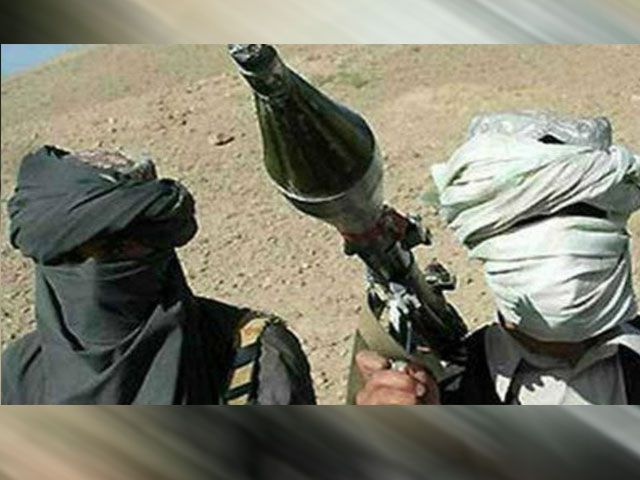
Fear stalks northern Afghan city az Taliban lay siege

NUT Desk- KUNDUZ, Afghanistan,: Fear stalked Kunduz Thursday as residents prepared for a lengthy siege, with government forces patrolling the streets and Taliban insurgents surrounding the northern Afghan city. The Taliban have held the city twice in recent years — both times briefly — but have now captured the surrounding districts and the main border crossing with Tajikistan. “The Taliban have besieged our city,” said Qudratullah, a fruit seller who has done hardly any business since fighting first erupted in Kunduz province two weeks ago. “Even today there is sporadic fighting on the outskirts of the city,” said Qudratullah, who like many Afghans uses only one name. “If the government does not launch an operation against the Taliban, their siege will continue for a long time.”

Most businesses in Kunduz remained shut and vehicles stayed off the roads, a correspondent who toured the city reported. Dozens of military vehicles patrolled the streets as new government forces were deployed in the city of around 300,000, swelled by an influx of rural residents fleeing fighting in the districts. Troops were seen firing sporadically at Taliban positions, and the bodies of two insurgents lay on the ground on the eastern edge of Kunduz. The city´s public health director told media that since the fighting erupted a week ago, 21 civilians have been killed and 225 wounded. Residents said they were suffering from water and power cuts, and few shops were open.

Kunduz resident Hasib said he feared the Taliban would soon launch a major offensive on the city. “We don´t feel safe… We have seen the Taliban capture the city twice before, and we do not want the city to fall again to them,” he said. “The government forces should break the Taliban siege, if not the Taliban will continue their offensives… and their siege will continue forever.”

Fighting has raged across Kunduz province for days, with the Taliban and Afghan forces engaged in bloody battles. On Tuesday the insurgents captured Shir Khan Bandar, Afghanistan´s main border crossing with Tajikistan, in one of their most significant gains in recent months. On Thursday, Afghan authorities attempted to put on a brave front, with Interior Minister Abdul Satar Mirzakwal flying in for a brief visit. “Saving and protecting Kunduz is among our top priorities,” he said in a video message released to media. “We are taking serious measures and will provide more weapons and technical equipment to Afghan forces in all provinces.”
Since early May, the Taliban have launched several major offensives targeting government forces across the rugged countryside and say they have seized at least 87 of the country´s more than 400 districts. Many of their claims are disputed by the government and difficult to independently verify. Violence surged after the US military began the withdrawal of its last remaining 2,500 troops from the country to meet the September 11 deadline announced by President Joe Biden to end America´s longest war.

battle of tora bora
Fear stalks northern Afghan city az Taliban lay siege

UK police set up dog DNA database

NUT Desk- LONDON: Dog theft was the scourge of the coronavirus lockdown across Britain. Now a police force is doing something about it — by setting up a canine DNA database. Gloucestershire Police in western England said Wednesday it was the first force in the world to store the unique genetic marker to help probe reported thefts and return pets to their owners. Britain — renowned as a nation of dog lovers — saw an explosion in calls to the emergency number 999 about dog thefts when the pandemic hit last year. Demand for four-legged companions surged and prices for puppies, but also older dogs, sky-rocketed, attracting not only greedy breeders but also opportunistic thieves and organised criminal gangs. “Dog theft can have a massive impact on the owner and their families as dogs are often seen as family members,” said temporary chief inspector Emma MacDonald. “As a force we are committed to doing all that we can to prevent dog thefts from happening.”

Under the scheme, known as DNA Protected, a swab of the dog´s DNA is taken from its mouth and stored on an external database accessible to police around the country to establish whether a dog is lost or stolen. Owners can provide samples from their pets by buying a £74.99 ($105, 88-euro) mouth swab kit before submitting it for storage. An advertising drive is also being planned. All of the force´s service dogs have been profiled, said MacDonald. Chris Allen, head of forensic services at Gloucestershire Police, said: “DNA is unique and a fact that has enabled forensic services to identify criminals for many years. “With the application of the same processes used for human identification, the DNA Protected service promises a searchable database of canine DNA information.

uk police department
UK police set up dog DNA database

“Gloucestershire police and crime commissioner Chris Nelson called dog theft “one of the most distasteful elements of lockdown”. “We have to adopt whatever means we can to stop this shocking trade and hopefully advances in science will help,” he added.

Philippines´ ex-president ´Noynoy´ Aquino dies

NUT Desk- MANILA: Former Philippine president Benigno “Noynoy” Aquino, the reserved scion of one of Asia´s most famous political families, died Thursday from kidney failure.

He was 61. Aquino, who was in office from 2010 to 2016, was the only son of the late former president Corazon Aquino and her assassinated husband, senator Benigno “Ninoy” Aquino, both revered for leading the struggle to restore democracy in the archipelago nation.

President Rodrigo Duterte´s spokesman announced Aquino´s death hours after local media reported the former leader had been rushed to a Manila hospital. “We commiserate and condole with the family and loved ones of former president Benigno Simeon ´Noynoy´ Aquino III,” presidential spokesman Harry Roque said. “We are grateful to the former president for his contributions and services to the country.”

noynoy aquino cause of death philippines
Philippines´ ex-president ´Noynoy´ Aquino dies

The unmarried politician “died peacefully in his sleep”, said Pinky Aquino-Abellada, one of Aquino´s four sisters. He suffered kidney failure and also had diabetes. “No words can express how broken our hearts are and how long it will take for us to accept the reality that he is gone,” said Abellada, reading from a statement outside the mortuary where her brother´s body had been taken. “Noy, mission accomplished.”

US hits 5 Xinjiang companies with restrictions over forced labor

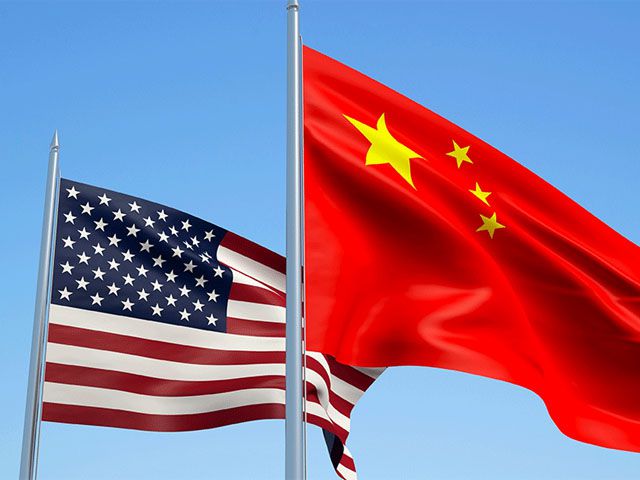
NUT Desk- WASHINGTON: The US government banned imports of solar panel materials from a Chinese company and placed trade restrictions on four others Thursday for alleged use of forced labor in the Xinjiang region. The White House said in a statement that Xinjiang-based Hoshine Silicon Industry Co. would not be able to sell its products into the United States due to “information reasonably indicating that Hoshine used forced labor to manufacture silica-based products.”
In parallel the Commerce Department announced that Hoshine and four other Xinjiang firms would be subject to tight restrictions on their ability to acquire US commodities, software and technology due to their involvement in the use of forced labor. “These actions demonstrate our commitment to imposing additional costs on the People´s Republic of China (PRC) for engaging in cruel and inhumane forced labor practices,” the White House said in a statement. “The United States believes that state-sponsored forced labor in Xinjiang is both an affront to human dignity and an example of the PRC´s unfair economic practices.”

us hits 5 xinjiang companies

The White House said the use of forced labor was part of Beijing´s systematic effort to repress millions of ethnic Uyghurs and other minorities in the far-west region, an effort which it said includes sexual violence and large-scale detentions in labor camps. The import ban on Hoshine adds to similar actions against producers and users of cotton and tomato products and hair products like weaves from the region. The four other companies include two producers of polysilicon materials for the solar panel industry, Xinjiang Daqo New Energy and Xinjiang GCL New Energy Material Technology, aluminum processor Xinjiang East Hope Nonferrous Metals, and state-owned Xinjiang Production and Construction Corps, already hit with restrictions for its cotton-related business.

Pakistani honored in UAE for rescuing woman from drowning

ISLAMABAD: Lt Col Ghaith Khalifa Salem Al Kaabi, Director of the Comprehensive City Police Station, honored Muhammad Nagman, a Pakistani national, for his courage in saving a 58-year-old Sri Lankan woman from drowning in Ajman Marina. The details of the incident came to light when Nagman saw a woman in the sea waving her hand and asking for help. Apparently, the sea currents had drawn her deeper into the water. So Nagman immediately rushed into the sea and reached the woman, who was actually in danger of getting drowned. Fortunately, Nagman reached her just in time, and held her until the Ajman Civil Defense personnel came and took her out of the sea for treatment and administered the necessary first-aid until the arrival of the National Ambulance Service personnel. Lt. Col Al Kaabi handed a certificate of appreciation and a financial reward to Nagman, praised the courage shown by Nagman and his priceless initiative in saving a person’s life. He further said that the honoring of Nagman for his act of valor was part of Ajman Police’s initiative in activating the community in helping others and thereby spreading the spirit of cooperation in order to ensure security and safety for all.

Antivirus pioneer John McAfee found dead in Spanish prison

MADRID: John McAfee, the creator of McAfee antivirus software, was found dead in his jail cell near Barcelona in an apparent suicide Wednesday, hours after a Spanish court approved his extradition to the United States to face tax charges punishable by decades in prison, authorities said.

The eccentric cryptocurrency promoter and tax opponent whose history of legal troubles spanned from Tennessee to Central America to the Caribbean was discovered at the Brians 2 penitentiary in northeastern Spain. Security personnel tried to revive him, but the jail’s medical team finally certified his death, a statement from the regional Catalan government said.

“A judicial delegation has arrived to investigate the causes of death,” it said, adding that “everything points to death by suicide.”

The statement didn’t identify McAfee by name but said the dead man was a 75-year-old U.S. citizen awaiting extradition to his country. A Catalan government official familiar with the case who was not authorized to be named in media reports confirmed to The Associated Press that it was McAfee.

Spain’s National Court on Monday ruled in favor of extraditing McAfee, 75, who had argued in a hearing earlier this month that the charges against him by prosecutors in Tennessee were politically motivated and that he would spend the rest of his life in prison if returned to the U.S.

The court’s ruling was made public on Wednesday and was open for appeal, with any final extradition order also needing to get approval from the Spanish Cabinet.

McAfee was arrested last October at Barcelona’s international airport and had been in jail since then awaiting the outcome of extradition proceedings. The arrest followed charges the same month in Tennessee for evading taxes after failing to report income from promoting cryptocurrencies while he did consulting work, made speaking engagements and sold the rights to his life story for a documentary. The criminal charges carried a prison sentence of up to 30 years.

Nishay Sanan, the Chicago-based attorney defending him on those cases, said by phone that McAfee “will always be remembered as a fighter.”

“He tried to love this country but the U.S. government made his existence impossible,” Sanan said. “They tried to erase him, but they failed.”

The lawyer said Spanish authorities have not given his legal team a cause of death, and he wants to know if there were video cameras in McAfee’s cell or in the prison.

The U.S. Attorney’s Office in Memphis declined to comment.

Hunger, drought, disease: UN climate report reveals dire health threats

PARIS: Hunger, drought and disease will afflict tens of millions more people within decades, according to a draft UN assessment that lays bare the dire human health consequences of a warming planet. After a pandemic year that saw the world turned on its head, a forthcoming report by the Intergovernmental Panel on Climate Change (IPCC), seen exclusively by media, offers a distressing vision of the decades to come: malnutrition, water insecurity, pestilence. Policy choices made now, like promoting plant-based diets, can limit these health consequences — but many are simply unavoidable in the short term, the report says. It warns of the cascading impacts that simultaneous crop failures, falling nutritional value of basic foods, and soaring inflation are likely to have on the world´s most vulnerable people. Depending on how well humans get a handle on carbon emissions and rising temperatures, a child born today could be confronted with multiple climate-related health threats before turning 30, the report shows. The IPCC´s 4,000-page draft report, scheduled for release next year, offers the most comprehensive rundown to date of the impacts of climate change on our planet and our species. It predicts that up to 80 million more people than today will be at risk of hunger by 2050. It projects disruptions to the water cycle that will see rain-fed staple crops decline across sub-Saharan Africa. Up to 40 percent of rice-producing regions in India could become less suitable for farming the grain. Global maize production has already declined four percent since 1981 due to climate change, and human-induced warming in West Africa has reduced millet and sorghum yields by up to 20 and 15 percent respectively, it shows. The frequency of sudden food production losses has already increased steadily over the past 50 years. “The basis for our health is sustained by three pillars: the food we eat, access to water, and shelter,” Maria Neira, director of Public Health, Environmental and Social Determinants of Health at the World Health Organization, told media. “These pillars are totally vulnerable and about to collapse.”

EMERGING HOTSPOTS

Even as rising temperatures affect the availability of key crops, nutritional value is declining, according to the report. The protein content of rice, wheat, barley and potatoes, for example, is expected to fall by between six and 14 percent, putting close to 150 million more people at risk of protein deficiency. Essential micronutrients — already lacking in many diets in poorer nations — are also set to decline as temperatures rise. Extreme weather events made more frequent by rising temperatures will see “multi-breadbasket failures” hit food production ever more regularly, the report predicts. As climate change reduces yields, and demand for biofuel crops and CO2-absorbing forests grows, food prices are projected to rise as much as a third at 2050, bringing an additional 183 million people in low-income households to the edge of chronic hunger. Across Asia and Africa, 10 million more children than now will suffer from malnutrition and stunting by mid-century, saddling a new generation with life-long health problems — despite greater socioeconomic development. As with most climate impacts, the effects on human health will not be felt equally: the draft suggests that 80 percent of the population at risk of hunger live in Africa and Southeast Asia. “There are hotspots emerging,” Elizabeth Robinson, professor of environmental economics at the University of Reading, told media. “If you overlay where people are already hungry with where crops are going to be most harmed by climate you see that it´s the same places that are already suffering from high malnutrition.”

WATER CRISIS LOOMING
It doesn´t end there.  The report outlines in the starkest terms so far the fate potentially awaiting millions whose access to safe water will be thrown into turmoil by climate change. Just over half the world´s population is already water insecure, and climate impacts will undoubtedly make that worse. Research looking at water supply, agriculture and rising sea levels shows that between 30 million and 140 million people will likely be internally displaced in Africa, Southeast Asia and Latin America by 2050, the report says. Up to three quarters of heavily tapped groundwater supply — the main source of potable water for 2.5 billion people — could also be disrupted by mid-century. The rapid melting of mountain glaciers has already “strongly affected the water cycle”, an essential source for two billion people that could “create or exacerbate tensions over water resources”, according to the report. And while the economic cost of climate´s effect on water supply varies geographically, it is expected to shave half a percent off global GDP by 2050. “Water is one of the issues that our generation is going to confront very soon,” said Neira. “There will be massive displacement, massive migration, and we need to treat all of that as a global issue.”

´FAULT LINES´

As the warming planet expands habitable zones for mosquitoes and other disease-carrying species, the draft warns that half the world´s population could be exposed to vector-borne pathogens such as dengue, yellow fever and Zika virus by mid-century. Risks posed by malaria and Lyme disease are set to rise, and child deaths from diarrhoea are on track to increase until at least mid-century, despite greater socioeconomic development in high-incidence countries. The report also shows how climate change will increase the burden of non-communicable illnesses. Diseases associated with poor air quality and exposure to ozone, such as lung and heart conditions, will “rise substantially”, it says.  “There will also be increased risks of food and water-related contamination” by marine toxins, it adds. As with most climate-related impacts, these diseases will ravage the world´s most vulnerable. The Covid-19 pandemic has already exposed that reality. The report shows how the pandemic, while boosting international cooperation, has revealed many nations´ vulnerability to future shocks, including those made inevitable by climate change. “Covid has made the fault lines in our health systems extremely visible,” said Stefanie Tye, research associate at the World Resources Institute´s Climate Resilience Practice, who was not involved in the IPCC report. “The effects and shocks of climate change will strain health systems even more, for a much longer period, and in ways that we are still trying to fully grasp.”


UK won’t extend deadline for EU citizens to apply to stay

LONDON: The British government won’t extend the June 30 deadline for European Union citizens in the U.K. to apply for permanent residency or risk losing their right to live and work in the U.K.

Britain’s departure from the EU last year ended the automatic right of people from the bloc to settle in the U.K., and of Britons to live in the 27 EU nations. As part of the divorce, both sides agreed everyone would keep the residence rights they had before Brexit.

In Britain, that means citizens of the EU and several other European countries must apply online for confirmation of their “settled status” if they want to continue to work, study or receive social benefits.

The U.K. government says there have been 5.6 million applications since the program opened in March 2019, only a handful of which have been refused. That is far more than the government’s pre-Brexit estimate that about 3 million EU citizens lived in Britain. The number of EU residents in Britain who have not applied is unknown.

“I want to be clear — we will not be extending the deadline,” Immigration Minister Kevin Foster said Wednesday. “Put simply, extending the deadline is not a solution in itself to reaching those people who have not yet applied and we would just be in a position further down the line where we would be asked to extend again, creating even more uncertainty.”

The government says people who have applied by the end of June will be sent letters giving them 28 days to act. People will also be able to apply after the deadline if they had “reasonable grounds,” such as an illness that prevented them doing it sooner, Foster said.