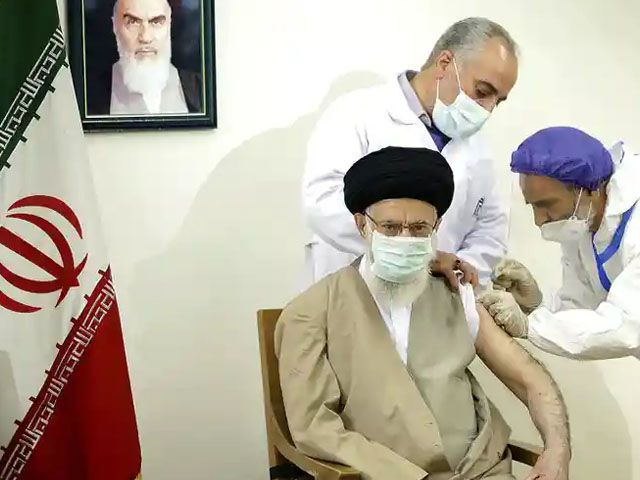
Khamenei receives domestic Covid jab

Tehran: Iran´s supreme leader Ayatollah Ali Khamenei on Friday received the first dose of a domestically produced coronavirus vaccine, his social media announced, as the country battles the Middle East´s deadliest outbreak. The 81-year-old cleric´s Twitter feed published a video it said showed him “receiving the first dose of the #IranianCovidVaccine that has been developed by young Iranian scientists”. The footage shows him wearing a surgical mask and a black turban, sitting under a picture of the Islamic republic´s founder Ayatollah Rouhollah Khomeini, as two male medics tend to him, injecting him in the left arm. State television broadcast the same scene, saying Khamenei had received a single dose of the COVIran Barekat jab, developed by a powerful state-owned foundation known as Setad. Iran announced on June 14 that it had had given emergency approval for the domestically produced vaccine. The Islamic republic is attempting to make up for a lack of vaccines and providing second jabs to those who have already received a first, on a voluntary basis. Strangled by US sanctions that have made it difficult to make money transfers to foreign firms, Tehran says it is struggling to import vaccines for its 83 million population. In early January, Khamenei banned imports of UK- and US-produced vaccines, saying they could “contaminate” the country. In another tweet on his English-language Twitter feed on Friday, he said he was “truly grateful to all those who used their knowledge & experience & made scientific & practical efforts to provide the country with such a great, prestigious capability”. Iran has been devastated by the coronavirus pandemic, which has killed more than 83,500 people among 3.1 million infected, according to official figures widely seen as understating the toll. The health ministry says more than 4.4 million of Iran´s 83 million people have received a first vaccine dose since an inoculation campaign began in February.
Khamenei receives domestic Covid jab

US to keep about 650 troops in Afghanistan after withdrawal


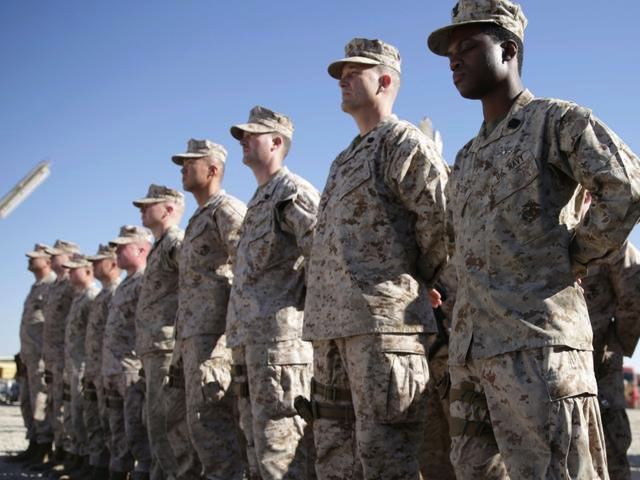
WASHINGTON: Roughly 650 US troops are expected to remain in Afghanistan to provide security for diplomats after the main American military force completes its withdrawal, which is set to be largely done in the next two weeks, US officials told The Associated Press.

Moreover, several hundred additional American forces will remain at the Kabul airport, potentially until September. They’ll assist Turkish troops providing security, a temporary move until a more formal Turkey-led security operation is in place, the officials said Thursday.

Overall, officials said the US expects to have American and coalition military command, its leadership, and most troops out by July Fourth, or shortly after that, meeting an aspirational deadline that commanders developed months ago.

The departure of the bulk of the more than 4,000 troops that have been in the country in recent months is unfolding well before President Joe Biden’s Sept. 11 deadline for withdrawal. And it comes amid accelerating Taliban battlefield gains, fueling fears that the Afghan government and its military could collapse in a matter of months.

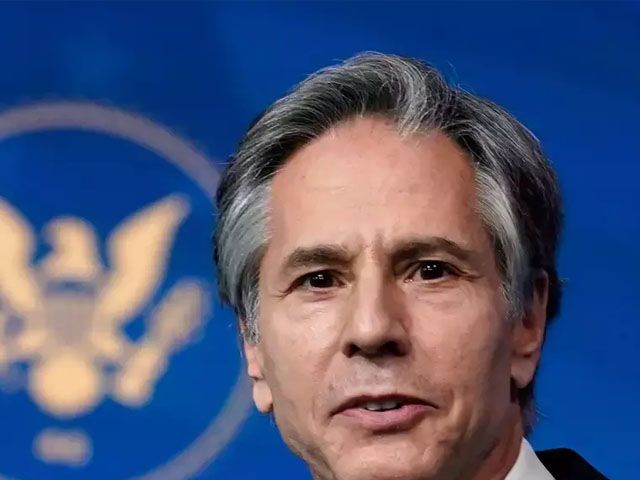
Secretary of State Antony Blinken, speaking Friday in Paris, noted the increased violence and cited “a real danger” that if the Taliban tries to take the country by force, “we’ll see a renewal of a war or possibly worse.”

But, Blinken said, the Biden administration came to the conclusion that not removing US troops, as the Trump administration had promised the Taliban in February 2020, would have been a bad choice. The administration believes the Taliban would have resumed attacks on US forces, prompting an escalation of the war.

“Had we not announced that we were leaving, then that restraint, in terms of attacking our forces and attacking the capitals, would have ended,” Blinken said.

He said a continued US presence “certainly would have helped significantly” the Kabul government. “But what is almost certain is that our military would have come to us and said, well, the situation has changed, we need more forces. And we would have repeated the cycle that we’ve been in for 20 years. And at some point, you have to say this has to stop.”

Biden faces strong criticism from some Republicans for pulling out of Afghanistan, even though President Donald Trump made the 2020 deal with the Taliban to withdrawing all US forces by May 2021.

latest news about u s army in kabul afghanistan
US to keep about 650 troops in Afghanistan after withdrawal

Woman refuses wedding as groom fails to read newspaper without glasses


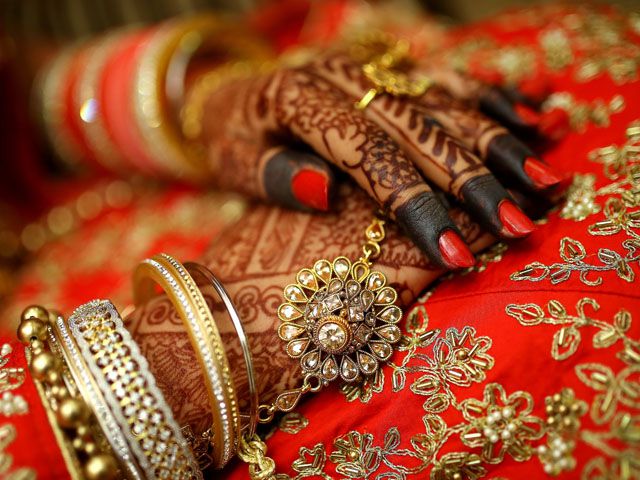
UTTAR PRADESH, India: In a unique incident, a bride in Uttar Pradesh’s Auraiya called off her wedding because the groom could not read the newspaper without his spectacles.

Not only was the wedding called off, a case against the groom and his family was also registered.

Archana, the bride from Jamalpur village of Sadar Kotwali area, was all set to marry Shivam, a resident of Banshi village.

Until the day of the marriage, the bride’s family was unaware of the groom’s weak eyesight.

It was only when the bride and other women from her family noticed that the groom was wearing spectacles for a good part of the day of the wedding that they felt suspicious about it, and asked him to read a newspaper without the glasses as a test.

The groom, who could not see without his glasses, failed the test. Consequently, through a unanimous decision of the bride’s family, the marriage was called off.

The bride’s father Arjun Singh said, “I had no idea that the groom’s eyesight was so weak. My daughter, on knowing the fact, decided to call off the marriage.”

The bride’s family then demanded that the groom’s family return the cash and the motorcycle given as dowry, along with all the expenses that they had incurred for the marriage.

An FIR was lodged at a police station in Auraiya when the groom’s family refused the demand.

The bride’s father also added that the Police had tried to sort the matter through mutual understanding, but the groom’s family never turned up.

indian wedding ceremony
Woman refuses wedding as groom fails to read newspaper without glasses

Bhutan King on ‘mountains trekking mission’ to hold down Covid deaths

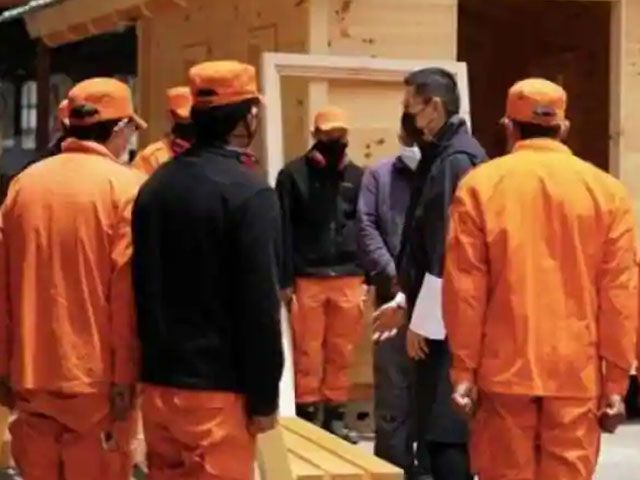
KATHMANDU: Wearing a baseball cap and knee-length traditional Gho robe, carrying a backpack, Bhutan’s king has walked through jungles infested with leeches and snakes, trekked mountains and quarantined several times in a hotel in the capital.

For 14 months, King Jigme Khesar Namgyel Wangchuck, has been travelling by foot, car and horse to remote hamlets to oversee measures to protect his tiny kingdom of 700,000 from the coronavirus outbreak that has flared up in neighbouring India.

The impact of the 41-year-old king’s excursions are evident in a COVID-19 death count of just one for the nation nestled between India and China in the Eastern Himalayas.

“When the king travels for miles and knocks … to alert people about the pandemic, then his humble words are respected and taken very seriously,” said Lotay Tshering, the country’s prime minister.

“His Majesty’s presence is far more powerful than just issuing public guidelines,” Tshering told media. His presence assures people they are not alone in their fight against the pandemic, the prime minister said.

Tshering, a practicing urologist, often accompanies the Oxford-educated king for trips near the porous border shared with India, where a second wave of the pandemic more than doubled the death count over the last two months.

Bhutan became a constitutional monarchy in 2008 when the king relinquished his absolute powers. But loyalty to the royal family still dominates the nation’s socio-political landscape.

In recent weeks, the king walked for five days on a trail passing through elevations of up to 4,343 m (14,250 ft) to thank primary health workers in remote areas.

The king’s office declined a request for an interview but his social media pages on Instagram and Facebook showcase his work and travels during the pandemic.

“Our king’s biggest fear is that if the pandemic spreads like a forest fire then our (nation) could be wiped out,” said a senior palace official.

A father of two boys, after every trip the king checks into a hotel in capital Thimphu to follow quarantine protocols. Like most of his subjects, he has received one vaccination dose.

bhutan people
Bhutan King on ‘mountains trekking mission’ to hold down Covid deaths

275m people used drugs worldwide in 2020: UN

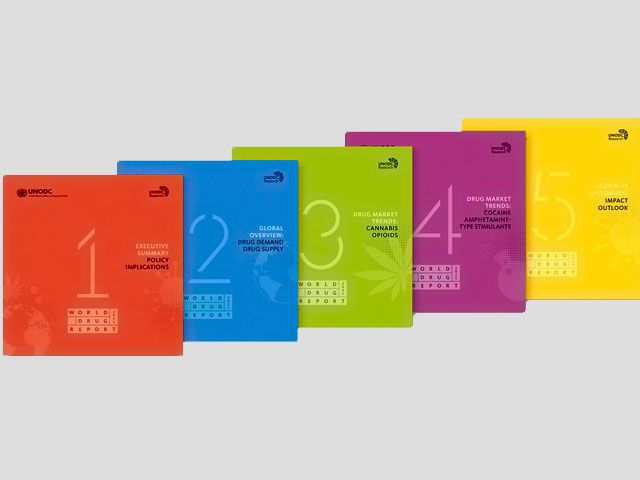
GENEVA: Around 36 million people suffered from drug use disorders as 275 million people used drugs worldwide in 2020, according to the 2021 World Drug Report which was released by the United Nations Office on Drugs and Crime (UNODC) on Thursday.

As per the report, in the last 24 years, cannabis potency had increased by as much as four times in parts of the world during the COVID-19 pandemic. In surveys of health professionals across 77 countries, 42 per cent asserted that cannabis use had increased.

“Lower perception of drug use risks has been linked to higher rates of drug use, and the findings of UNODC’s 2021 World Drug Report highlight the need to close the gap between perception and reality to educate young people and safeguard public health,” said UNODC Executive Director Ghada Waly.

“The theme of this year’s International Day against Drug Abuse and Illicit Trafficking is “Share facts on drugs. Save lives”, emphasising the importance of strengthening the evidence base and raising public awareness, so that the international community, governments, civil society, families, and youth can make informed decisions, better target efforts to prevent and treat drug use, and tackle world drug challenges,” he added.

Between 2010-2019 the number of people using drugs increased by 22 per cent. Based on demographic changes alone, current projections suggest an 11 per cent rise in the number of people who use drugs globally by 2030 — and a marked increase of 40 per cent in Africa, due to its rapidly growing and young population.

According to the latest global estimates, about 5.5 per cent of the population aged between 15 and 64 years have used drugs at least once in the past year, while 36.3 million people, or 13 per cent of the total number of persons who use drugs, suffer from drug use disorders.

Globally, over 11 million people are estimated to inject drugs, half of whom are living with Hepatitis C. Opioids continue to account for the largest burden of disease attributed to drug use.

The two pharmaceutical opioids most commonly used to treat people with opioid use disorders, methadone, and buprenorphine, have become increasingly accessible over the past two decades. The amount available for medical use has increased six-fold since 1999, from 557 million daily doses to 3,317 million by 2019, indicating that science-based pharmacological treatment is more available now than in the past.

world drug report 2021
275m people used drugs worldwide in 2020: UN

159 people unaccounted for after Florida building collapse

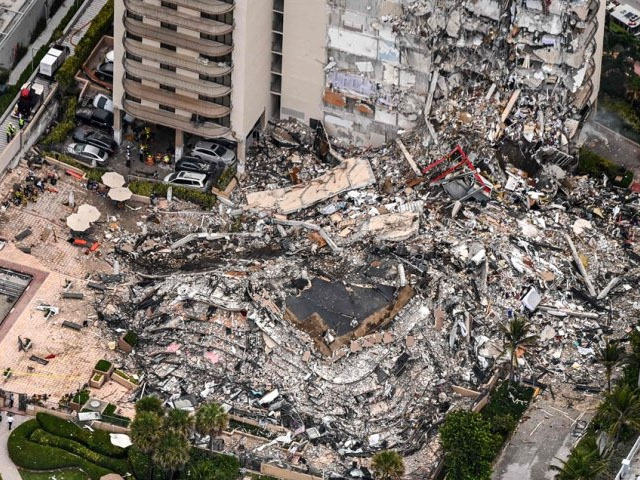
SURFSIDE, United States: The number of people unaccounted for following the collapse of a Florida apartment block has risen to 159, the county”s mayor said Friday. “We do have 120 people now accounted for, which is very, very good news. But our unaccounted for number has gone up to 159,” Miami-Dade County mayor Daniella Levine Cava told a news conference. Authorities have stressed it is still unclear how many people were inside the building when it pancaked in the early hours of Thursday, killing at least four people.

lorida building collapse
159 people unaccounted for after Florida building collapse

Blinken says status quo was not option in Afghanistan

PARIS: Secretary of State Antony Blinken on Friday said the status quo was not an option for the US in Afghanistan, as it prepares to withdraw troops by September despite a rise in attacks. “We are seeing elevated attacks on the Afghan security forces in certain parts of the country compared to a year ago,” Blinken said on a visit to Paris, acknowledging the US had to look “very hard” to see if the Taliban was serious about peace. But he added: “Had we not begun the process of drawing down. . . the status quo would not have helped. . . The status quo was not an option.

afghanistan news agency
Blinken says status quo was not option in Afghanistan

Japan s population declines by 0.7%

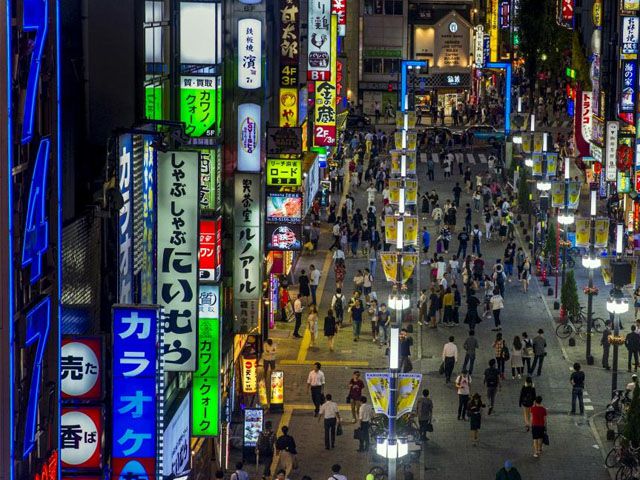
ANKARA: Japan”s population declined by 0.7% during the past five years, dropping out for the first time since 1950 from the world”s top 10 countries in terms of population. The latest census data of 2020, released by the Internal Affairs Ministry on Friday, showed that the country”s population stood at 126,226,568 as of Oct. 1, 2020, reported Tokyo-based Kyodo News. Japan, comprising 1.6% of the global population, dropped one place from 10th to 11th in the world ranking of the most populated countries, it said, citing the latest UN report. According to the report, Japan is the only nation among the top 20 populated countries of the world, while its population dropped by around 868,000 from 2015 to 2020.But the number of households increased by 4.2 % to 55.7 million. The average number of members per household fell to 2.27 from 2.38 in the 2015 survey, the lowest since comparable data became available in 1970 as more elderly people lived alone, according to the report.

worldometer japan population
Japan s population declines by 0.7%

New type of early human found in Israel

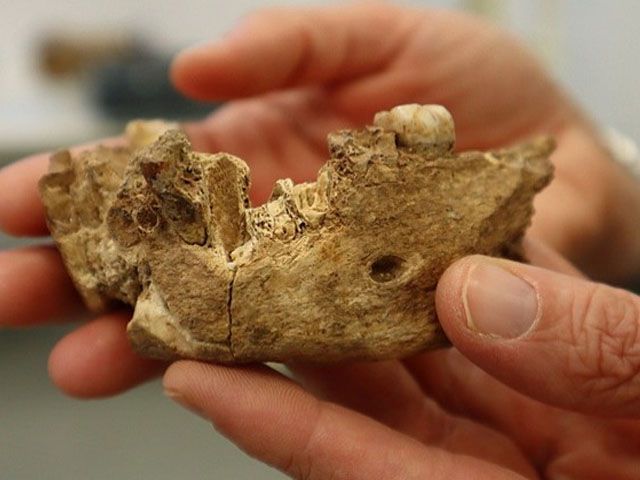
JERUSALEM: Bones belonging to a “new type of early human” previously unknown to science have been found in Israel, researchers said Thursday, claiming to have shed new light on human evolution.

Excavations in the quarry of a cement plant near the central city of Ramla uncovered prehistoric remains that could not be matched to any known species from the Homo genus. Researchers from Tel Aviv University and the Hebrew University of Jerusalem dubbed the “extraordinary discovery” the “Nesher Ramla Homo type” after the site, in a study published in the journal Science.

The fossils date to between 140,000 and 120,000 years ago, and the team believes the Nesher Ramla type would have overlapped with Homo sapiens, the lineage of modern humans. “We had never imagined that alongside Homo sapiens, archaic Homo roamed the area so late in human history,” lead archaeologist Yossi Zaidner said.

“The morphology of the Nesher Ramla humans shares features with both Neanderthals. . . and archaic Homo,” the researchers said in a statement. “At the same time, this type of Homo is very unlike modern humans — displaying a completely different skull structure, no chin and very large teeth.

” Along with the human remains, the dig uncovered large quantities of animal bones as well as stone tools. “The archaeological finds associated with human fossils show that ”Nesher Ramla Homo” possessed advanced stone-tool production technologies and most likely interacted with the local Homo sapiens,” Zaidner said.

The researchers suggested that some fossils previously discovered in Israel dating back as far as 400,000 years could belong to the same prehistoric human type.

oldest human remains ever found
New type of early human found in Israel

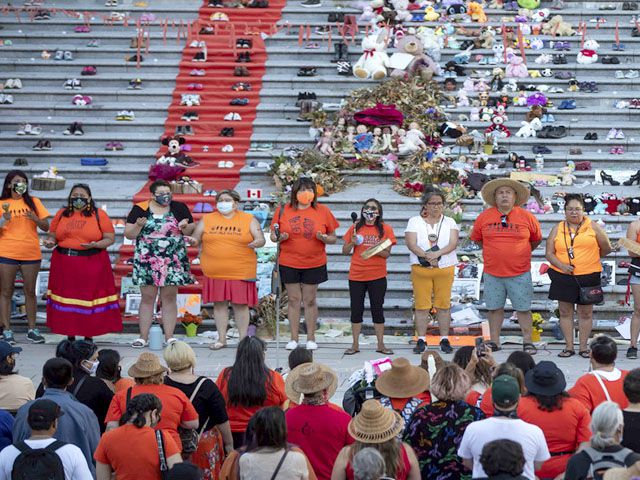
Canada: 751 more unmarked graves found at residential school

An indigenous nation in Canada says it has found 751 unmarked graves at the site of a former residential school in Saskatchewan.  The Cowessess First Nation said the discovery was “the most significantly substantial to date in Canada”.

It comes weeks after the remains of 215 children were found at a similar residential school in British Columbia.  “This is not a mass grave site. These are unmarked graves,” said Cowessess Chief Cadmus Delorme.  The Marieval Indian Residential School was operated by the Roman Catholic Church from 1899 to 1997 in the area where Cowessess is now located in southeastern Saskatchewan. It is not yet clear if all of the remains are linked to the school. It was one of more than 130 compulsory boarding schools funded by the Canadian government and run by religious authorities during the 19th and 20th Centuries with the aim of assimilating indigenous youth.

An estimated 6,000 children died while attending these schools, due in large part to the squalid health conditions inside. Students were often housed in poorly built, poorly heated, and unsanitary facilities.

residential school graves total
Canada: 751 more unmarked graves found at residential school