CPHGC to Construct School in Gaddani

CPHGC to Construct School in Gaddani

CPHGC has so far funded CSR Projects Worth PKR 124 million in Lasbella

Karachi (Muhammad Yasir China Power Hub Generation Company (Pvt.) Ltd and The Citizens Foundation (TCF) signed an agreement to construct a school in the Gaddani, Lasbella. Being constructed at a cost of PKR 30 million, the school will accommodate 180 children and will be a source of education for the less privileged segment of our society. Construction of the school building has commenced and the first class will be inducted in April 2020. CPHGC has so far spent PKR 124 million on various sustainable CSR initiatives since 2016.

The CPHGC-TCF School in Gaddani will be the first TCF school to be financed by a CPEC project. This is the 2nd collaboration between CPHGC and TCF. Earlier, in 2018, at the time of the FIFA World Cup, CPHGC financed the construction of a football pitch at the TCF-Mouza Kund school.

Speaking at the occasion, Mr. Zhao Yonggang, CEO, CPHGC reiterated the company’s commitment to help improve the living conditions of the people of Lasbella. “Education is the only way forward for a nation. Out CSR efforts can be summarized in the famous proverb; give a man a fish and you feed him for a day; teach a man to fish and you feed him for a lifetime. Education will help to ensure a peaceful and prosperous future for the coming generations.”

CPHGC has a very active CSR program. During its construction phase the company has contributed to sustainable CSR initiatives that have helped better the lives of the people benefiting from them. These include the Floating Fishermen Jetty at Allana Goth; the Clean Hub City program; training of local students and providing them with employment at the Plant; providing relief supplies for the flood-stricken people of District Lasbella.

Speech by Arshad Saeed Husain, Managing Director, Oxford University Press

Speech by Arshad Saeed Husain, Managing Director, Oxford University Press

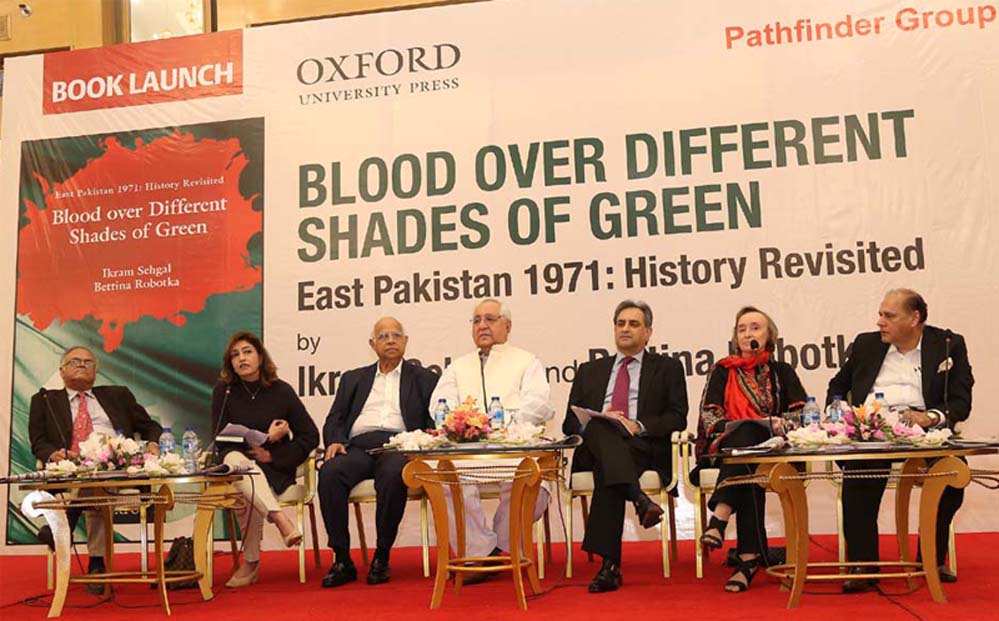
Speech by Arshad Saeed Husain, Managing Director, Oxford University Press, at the launch of Blood over Different Shades of Green–East Pakistan 1971: History Revisited by Ikram Sehgal and Bettina Robotka on Saturday, 28 December 2019 at 3 p.m. at the Marriott Hotel, Karachi. Let me welcome all of you to the launch and discussion of this important book. Pakistan is a demographically young country. The Age Profile in the Census shows that barely 11% of our present population were alive at the time of the traumatic events of 1971. That is another way of saying that, for the overwhelming majority of Pakistanis, the violent vivisection in which half the country was torn away is merely a chapter or so in the history books – something that occurred in the distant past.Worse, it is often hard to gain an objective view of the East Pakistan Civil War of 1971. Those events seem to be shrouded in clouds of confusion and misinformation, making it difficult to gain a valid perspective.

Chronicles of all that happened then seem to have been examined through the refracting prisms of many preconceived interpretations that it has become difficult to view things clearly. And it is still more difficult to derive any useful Lessons from what occurred.Let me assert that it is vitally important to derive those Lessons, to analyse such events as the Trauma of 1971 with a clear vision and without bias and to do this, it is necessary to go back to the events themselves and see them as they actually unfolded before the eyes of someone who actually lived through them and can describe them with a high degree of veracity. Only after an objective real life description of this kind can the task of developing an understanding meaningfully begin.

The book we are launching today seeks to do just that.  Blood over Different Shades of Green – East Pakistan 1971: History Revisited, expresses the purpose of the work accurately. “Shades of green” suggests the different perceptions of identity and destiny at the time, and “History Revisited” is exactly what this work comprises.  

The author, Ikram Sehgal, was formerly, a young Pakistan Army Officer, hailing from what was then East Pakistan. He lived through the events he describes and was himself, a prisoner of war, who managed to escape Indian imprisonment. His co-author, Dr Bettina Robotka, is a historian and senior researcher at the department of South Asian History and Society, Humboldt University, Berlin. Together, they have authored a book explaining the background and causes for development of the secessionist movement in the former East Pakistan. Let me now welcome the members of our distinguished Panel today, who will help us to understand this important book from three separate points of view: a military perspective, a political perspective, and an economics/ business perspective. In addition to Mr Ikram Sehgal and Dr Bettina Robotka, our panel comprises: Lt Gen. Ali Kuli Khan Khattak (Retired), the highly regarded former Chief of General Staff of the Pakistan Army; Senator Mushahid Hussain Syed, the well-known former Minister, politician, and journalist; and Mr Sirajuddin Aziz, the CEO, Group Financial Institutions, of Habib Bank AG Zurich. The deliberations of the Panel will be introduced and moderated by the notable commentator Dr Huma Baqai, Associate Dean and Associate Professor of Social Sciences and Liberal Arts, IBA, Karachi. A warm welcome to the authors and the distinguished members of the Panel. Thank you.

Iranina “Ta’azyeh theatre” discussed at IAC

Iranian Scholar Visits IAC

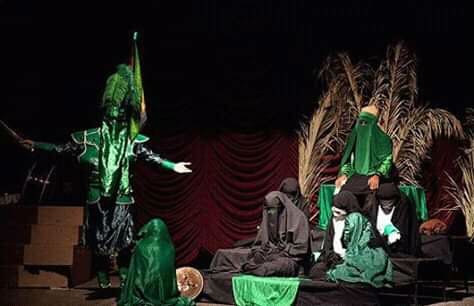
Lahore (Muhammad YasirEminent Iranian Scholar Mr. Morteza Rezvanfar visited the Institute for Art and Culture, Lahore to give a talk on Ta’azyeh Theatre and Persian inscriptions found along the silk route. The religious, historical and ancient play, Ta’azyeh, depicts the Iranian culture and the scene of Karbala. It is performed everywhere in Iran, both in large theatres and in streets and squares. The play does not just depict the grief of the event but depicts the whole story in a poetic and appealing manner. The main characters are divided into two groups, the ones that are the protagonists sing poems and song and are dressed in white and green, men act as female character and some women perform in veils.

The second group are the antagonists they appear in red and black clothes they speak in an aggressive style derived from the narration of Shahnama by Firdausi. Different animals and the supernatural appear in different forms. Music plays an important role in creating the drama. Ta’azyeh has a significant impact on Iranian culture and whenever it is played people collect around it in a social exercise. He also spoke about Persian inscriptions that are found throughout this region for examples some mosques in China have Persian inscriptions and different words from the Persian language have been added to the languages of this region. Some words have been encapsulated in their original meaning in Urdu as well, however those very words have changed their meaning in Iran. From China to Europe to Africa these inscriptions have been found throughout the silk route.

Mr. Rezvanfar is the Advisor to the Minister of Culture of Iran, and is responsible for putting the unique for of theatre Ta’azyeh on the UNESCO list for Intangible Cultural Heritage. He has written several books on the Intangible Cultural Heritage of Iran. He is also the Director of the National Museum of the Holy Quran, in Iran. Currently he is researching on the Persian inscriptions found in different mosques and other places in Pakistan.

Iranian consul, Scholar make a snaps and institute of art and culture & its Team .

Thar Foundation organizes Science Festival in Tharparkar

Pakistan Space Science Education Centre organized a science festival in Tharparkar

Karachi (Muhammad Yasir) Continuing the mission to make quality education accessible for all, the Thar Foundation in collaboration with Pakistan Space Science Education Centre organized a science festival in New Senhri Dars, Jeewan Das campus, some 70 kilometers away from Mithi.

Thar’s 1st Maker & Science Expo is the culmination of a three-phased training through hands-on science and project-based learning using STEAM (Science Technology Engineering Art Math) methodologies. This collaborative effort of Pakistan’s leading corporations and public sector organizations, along with academia, is aimed at promoting critical thinking and enriching the learning experience of teachers and students of Thar Foundation schools in the region.

The expo was inaugurated by a girl student of Thar Foundation school, Sindh Engro Coal Mining Company (SECMC) Chief Executive Officer (CEO) Syed Abul Fazal Rizvi, Tharparkar Deputy Commissioner Shahzad Thahim and Thar Foundation Manager Education Sabeen Shah.

The guests visited various science stalls and took keen interest in the presentations given by the students explaining their prototypes. The projects encouraged children to utilize their learning to develop sustainable and innovative solutions that could help solve some of Thar’s problems.

Commenting on the exhibition, Abul Fazal Rizvi – CEO of SECMC and Thar Foundation said: “Thar Foundation has adopted the Sustainable Development Goals (SDGs) as a model for inclusive development and creating broad-based impact across key sectors. The exhibition gels in with our strategy to enhance provision of a functional schooling experience for children and students of Tharparkar. The region of Thar is in need of such interventions given that the literacy rates stands at an abysmally low levels of 52% and 17% for males and females, respectively.”

Given the weak performance of Thar students in the standardized tests of Science and Maths subjects, educational campaigns and events such as Science Festival are playing a key role in bridging the gap between practical study and school curriculum.


Pearson opens PTE Academic test center in Pakistan

Pearson launched Pearson Test of English Academic (PTE A) in Pakistan

Lahore (Muhammad Yasir) Pearson launched Pearson Test of English Academic in Islamabad,
Pakistan. Pearson, the world’s leading learning company, has also been awarded commercial agreements from the UK Home Office to provide Secure English Language Tests (SELTs) to people who need to demonstrate their English language skills to work or live in the UK.

The commercial agreements will be delivered through the Pearson Test of English (PTE) Academic and PTE Home – a new speaking and listening test for family visa, settlement and citizenship applicants. Both these English language tests have been internally developed by
Pearson.

First PTE-Academic testing centre “Peach Testing Centre” was inaugurated in Islamabad, Pakistan by the Vice President of the Pearson Mr. Derek Richardson. The event was also
participated by Ms. Premila Paulraj-Director Asia, Mr. Waqar Shah-Business Head-BTEC & PTE-A, Mr. Omer Fazail-Business Head Resources, Mr. Faisal Mahmood-Business Head Academic, Ms. Aisha Farooq-Commissioner Regional Tax Office-Isb, and addressed by  Mr.
Ejaz Abassi VP Federation of Chamber Commerce & Industry of Pakistan and Mr. Muhammad Jamil-CEO JnS & Peach Testing Centre. Students and immigrants can now book their tests online for the test centre in Islamabad.

The fully digital test is delivered through Pearson VUE, the computer-based testing business of Pearson. The latest AI technology is used for scoring; biometric data collection provides enhanced security measures and voice recognition software is applied for the
speaking element of the test. These cutting-edge technologies ensure the provision of an impartial and highly accurate test of people’s English language proficiency.

Rod Bristow, President of Pearson UK, said: “We are proud that the UK Government joins the Australian and New Zealand Governments in recognising this test for visa applications, alongside thousands of leading universities across the globe who already accept it for study
purposes – including most UK universities.

This represents an exciting opportunity for PTE Academic that it will be one of four approved suppliers of UK Home Office.

PTE Academic currently has more than 250 test centres in over 50 countries, with its test centre network and global coverage due to rapidly expand to more than 110 countries during the early stages of the commercial agreements – and now including PTE Home.

ACCA focuses on building connectivity among BRI- NUT

ACCA focuses on building connectivity among BRI countries with accounting infrastructure

Lahore (Muhammad Yasir) The first workshop of the China-Central Asia Accounting Elites Exchange Programme officially kicked off at the Shanghai National Accounting Institute.

The programme, proposed jointly by the Shanghai National Accounting Institute (SNAI), the Central Asia Regional Economic Cooperation Institute (CI) and the Association of Chartered Certified Accountants (ACCA), was announced as one of the important outcomes of the second Belt and Road Forum for International Cooperation held in Beijing in April this year.

The programme consists of four workshops in a two-year cycle, targeting officials from departments in the accounting field in China and Central Asia, as well as professionals from companies, industry associations, accountancy firms and other accounting theory and practice circles. It will organise symposia, training sessions and field visits with in-depth discussions on topics such as the development of accounting standards, talent cultivation, regulation, the development of accounting service industry, new technology and the development of the accounting sector.

Nearly 30 experts from the accounting standards setting departments, accounting regulators, and accountancy profession of all 11 CAREC countries including China, Kazakhstan, Kyrgyzstan, Tajikistan, Uzbekistan, Turkmenistan, and Georgia attended the first workshop.

Li Kouqing, President of SNAI, Iskandar Abdullaev, Deputy Director of CI and Ada Leung, Director of ACCA Greater China attended the opening ceremony and delivered speeches.

Speaking about the programme and ACCA’s continuous role in promoting opportunities around the Belt and Road Initiative, Sajjeed Aslam, head of ACCA Pakistan said,

“China-Pakistan Economic Corridor (CPEC) is a great economic opportunity for Pakistan. The accounting professionals have a duty to promote the ‘Belt and Road’ connectivity to assist governments and businesses to do more trade with other BRI countries. With strong presence in the region, ACCA will continue to play a leading role.”

In his speech, Li Kouqing said that strengthening the construction of ‘accounting infrastructure’ is vital for improving economic development. A sound accounting infrastructure can promote a country’s growth and stability. Specifically, the accounting infrastructure consists of three factors, namely accounting standard system, accounting regulatory framework and accounting talent system. Accounting standard system sets the criteria for accounting method and finance report, aiming to improve the unification, factuality and comparability. Accounting regulatory framework is made up of several forces such as government and society to supervise and manage the accounting work, aiming to guarantee the factuality and completeness and accounting information. Accounting talent system provides the foundation and key to develop, improve and implement the standards and supervise the accounting work.

At present there are differences in accounting standards and accounting professionals of the Belt and Road countries including Central Asian countries. Li Kouqing said: ‘The accounting standards are like the railways of the world. Some are with wide tracks, some are with narrow tracks, and others are with standard tracks. When goods move from one country to another country, you need to unload them and then load them again. Because the tracks are different and the rules are different, the cost of the transaction will be greatly increased.’ Promoting the connectivity of accounting infrastructure should be a due part of the ‘Belt and Road’ cooperation, and an unshirkable duty for the accountancy profession.

Focus on Central Asia to improve its accounting infrastructure This July, Shanghai National Accounting Institute, joining hands with ZTE New Cloud Service Co., Ltd. and ACCA, and under the auspices of the institute’s ‘Belt and Road’ Accounting Research Centre, conducted research on accounting infrastructure in Central Asia to support the implementation of the programme. Studies have shown that some countries’ accounting infrastructure cannot keep up with their economic development. And due to differences in national conditions, the development of accounting infrastructure varies greatly from country to country, and the connectivity between them is poor. This has affected economic development and trade. As Central Asian countries have become more deeply involved in the ‘Belt and Road’ initiative, local economies have become more integrated into regional and global economic development. To better integrate with the international community and attract foreign investment, many countries in Central Asia are taking measures to strengthen accounting infrastructure.

Join hands to build a knowledge exchange platform for accounting infrastructure The implementation of the China-Central Asia Accounting Elites Exchange Programme is an achievement of joint efforts. Iskandar Abdullaev, Deputy Director of CI, a regional international think tank for knowledge cooperation, said that since its establishment, CAREC has promoted trade and transportation in Central Asia, and improved the investment environment in Central Asia. Many efforts have been made to provide financing for some regional projects, making substantial progress and important contributions to the development of Central Asia.

CAREC programme is committed to promoting connectivity and achieving shared prosperity. As a common international business language and an important ‘soft infrastructure’, accounting can serve as a bridge for economic exchanges between countries. The China-Central Asia Accounting Elites Exchange Programme will promote the sharing of knowledge and experience in the construction of accounting infrastructure between China and the countries of Central Asia, and will also promote the coordinated development of and cooperation among CAREC member countries.

As a global professional accountancy body, ACCA also plays a key role as a super connector globally, conducting substantial work on preparation and research for the programme through its international network and expertise.

Ada Leung, Director, ACCA Greater China, said that ACCA is one of the pioneers in exploring the impact of the ‘Belt and Road’ Initiative on China, the global economy and the development of the accountancy profession.

ACCA is honoured to jointly conduct the programme with its partners, and will continue to carry out a series of studies with partners such as the Shanghai National Accounting Institute and further discuss the opportunities and challenges for the accounting profession, businesses and governments brought by the ‘Belt and Road’ Initiative, supporting the implementation of the China-Central Asia Accounting Elites Exchange Programme.

The five-day workshop will conduct in-depth and continuous exchanges and discussions on issues such as the construction of accounting infrastructure, the development and coordination of accounting standards through lectures, experience sharing by various countries, field visits to enterprises, and online communication. The workshop will also establish a platform for exchange between international accounting talents in China and accounting elites in Central Asia.

The programme will also hold workshops in China and Central Asian countries in 2020 and 2021.

IAC will host the special talk on “Ta’ziye theatre” of Iran.

IAC will host the special talk on “Ta’ziye theatre” of Iran.

Lahore (Muhammad Yasir) Institute for Art and Culture will host an exclusive conversation on “Ta’ziye theatre”, a unique & famous form of ritual theatre of Iran on Friday 27th December at its campus, raiwind road Lahore. Well known Iranian scholar Professor Mortaza Rizvanfar will participate as guest speaker and brief the participants about the centuries old spiritual form of theatre which is also included in the list of intangible heritage of the world by UNESCO.

“Ta’ziye theatre” is a pure Islamic form of theatre in which artists’ presents the homage to the brave martyrs of Karbala by depiction of the tragic incidents occurred in the desert during battle of karbala. Mortaza Rizvanfar is a well known practitioner of “Ta’ziye theatre” and will highlight the salient features of this theatre during his discussion. All the faculty and students from dramatic society and other departments will attend the discussion.

The talk has been arranged under the MOU between IAC and Khana-e-Farhang Iran which was inked last week. The main purpose of the MOU is to increase the awareness about art, culture and heritage of each country regarding the global arts, media and cultural fraternity among the students and youth.

10Pearls Recognized On The 2019 INC

10PEARLS RECOGNIZED ON THE 2019 INC. 5000 LIST OF FASTEST-GROWING PRIVATE COMPANIES IN AMERICA

Lahore (Muhammad Yasir)  10Pearls is thrilled to announce that our company has made the 2019 Inc. 5000 list. The most notable in a series of awards we’ve received this year, Inc. Magazine’s annual list is the most prestigious ranking of the nation’s fastest-growing private companies.

“It’s fantastic to be included in this elite list of rapid-growth companies. Our growth has come about as a result of laser-like focus on creating value for our customers,” said 10Pearls CEO Imran Aftab. “The business environment of the future is both challenging and exciting. We are producing real results for enterprises by helping them with all things digital, be it product innovation, tech acceleration, or platform modernization.”

The Inc. 5000 list presents a unique look at the most successful companies within the American economy’s most dynamic segment—its independent small businesses. This year’s companies outpaced those on past lists by a wide margin. Together, these businesses achieved:

  • An aggregate revenue of $237.7 billion in 2018

  • Median rate of 157% growth

  • An astounding three-year average growth of 454%

  • Over the past three years, this growth accounts for 1,216,308 jobs

Uber hosts media training

Uber Hosts Media Training at National Press Club

Lahore (Muhammad Yasir) A one-day training  was organized by Uber at Islamabad Press Club for journalists. The global ride-hailing giant, as a part of their initiative to impart marketable digital skills to create successful freelancers, employees, and entrepreneurs.

Keeping pace with an increasingly digital world that requires an in-depth understanding of technological trends and advancements across the globe. The workshop discussed the role of disruptive technologies in terms of transforming the landscape of a Digital Pakistan. 

Speaking at the training, Hyder Bilgrami, Head of Communications-Uber, commented, “With the digital shift challenging old norms, it has become a necessity for the media to acquire skills to keep pace with emerging technologies. Capacity-building initiatives enabling innovation and growth are imperative for the media fraternity to be digitally equipped.”

While giving an overview of rapidly transforming communication technologies, the session discussed the need for the media to have an in-depth understanding of emerging trends in the digital era. With the right training, journalists can play a crucial role in the technological revolution by enhancing society’s readiness for Digital Pakistan.

“Innovative trends in communication technologies are transforming traditional journalistic practices. New techniques of story-telling have now enhanced reporting styles with multimedia platforms. Using these skills, the media can play an important role in creating a more digitally literate population,” said Shakeel Qarar, President-National Press Club. “We are happy to see initiatives like these aimed at ensuring the journalist community plays an active role in ensuring the digital future of Pakistan.”

Journalists reporting on various beats including business and IT from print, electronic and digital mediums were part of the workshop. The goal of the training was to equip reporters with marketable digital skills that can be turned into a sustainable stream of income.

Emerging technologies have provided the world with new avenues in overcoming economic problems by disrupting economies and businesses. The right skills will create jobs that can not only help the economy grow quickly through poverty alleviation but also improve the country’s business environment.

In the Wake of Disaster

The IBA, Karachi hosted a talk by Dr. Ayesha Siddiqi on her book “In the Wake of Disaster”

Lahore (Muhammad Yasir) The Social Sciences and Liberal Arts Department at the Institute of Business Administration, Karachi hosted a talk by scholar and researcher Dr. Ayesha Siddiqi on her recent book ‘In the Wake of Disaster: Islamists, the State and a Social Contract in Pakistan’.

Dr. Siddiqi who is visiting from Royal Holloway, University of London is trained in the discipline of human geography but described her work as being very inter-disciplinary in nature. Her talk presented key findings from the book.

The book is based on Dr. Siddiqi’s doctoral dissertation research conducted in the aftermath of the massive floods that devastated parts of Pakistan in 2010 and 2011. She spent seven-month in lower Sindh doing ethnographic fieldwork in three districts, Thatta, Badin, and Tharparkar, hoping to understand how natural disasters leave a political impact. Most communities devastated by the flooding continued to have high expectations from the state and expressed their belief that only the state is responsible for helping them, rather than local power-brokers and traditional sources of authority. The speaker argued that the common assumptions about broken state-society relations in Pakistan are unfounded and that her informants’ views show a robust social contract being present.

She also showed how the government’s cash disbursement to flood-affected communities created a sense of entitlement and further strengthened citizens’ claims on the state. The language of citizenship forged by Enlightenment-era European thinkers like Rousseau and Voltaire does not apply to these communities. Instead, they use words like ‘huqooq’ to express their sense of civic belonging.

The talk also touched upon the role of Islamist parties in flood relief activities and challenged the idea that the absence of the state created a vacuum which was filled by Islamist parties that have an alternative development discourse. Her research found Jamat-ud-Dawa to be active in the aftermath of the floods in Badin, where the state infrastructure, including the military, enlisted and enabled their participation rather than being in opposition to each other. In other areas, such as Thatta, there was little presence of the JuD because the local political elites were not in favor of it. The speaker urged a more complicated and nuanced understanding of state-society relations in Pakistan, where people’s everyday encounters with the state are rich and leave open the possibility of many different meanings attached to the state.