School of Leaderships Brings the 19th Young Leaders Conference 2020 to Karachi

Karachi (Muhammad Yasir) Pakistan’s premier Youth Leadership Summit, the 19th Young Leaders Conference, hosted by the School of Leadership has been announced to kick-start from Saturday, 19th December 2020, at Dreamworld resort in Karachi, in accordance with strict Standard Operating procedures stated by the authorities.

The theme for this year’s YLC is ‘BREAKTHROUGH’ – finding the courage to take life head-on and breakthrough your confines to transform yourself. The most innovative leaders realize that success is the result of a simple orientation and unwavering consistency, and YLC aims to breed the next generation of leaders by inspiring the youngsters to consciously shift towards the possible, continue to learn, discover, and create.

The six-day and the five-night event will be held under strict SOPs while implementing all necessary precautions to ensure the safety of the attendees. Taking responsibility at the time of a pandemic, SoL has organized the 19th YLC with only 200 student attendees and implementing strict rules to be followed by everyone present.

Young Leaders Conference is a yearly event held to inspire the youngsters from around the country to expand their horizons by fully exploring cultural differences, gaining firsthand exposure to the challenges of the world, developing a passion for leadership while exploring a future career, and gaining a fresh, new perspective. The six-day leadership journey provides an out-of-classroom learning experience and rigorous curriculum that equips students with the confidence, independence, skills, and global competitiveness required of the next generation of Leaders.

The Young Leaders Conference 2020 will also host prominent personalities from various sectors of business, government, and private corporations to guide and inspire the young minds. For the six-day event, the young participants will go through leadership training, learn from influential speakers, and engage in skill-based workshops and activities under strict SOPs and social distancing.

The conference will focus on themes related to Personal Development, History and Arts, Corporate Exposure, Community Development, and helping Youngsters understand how to go back and make an impact in their communities.
 

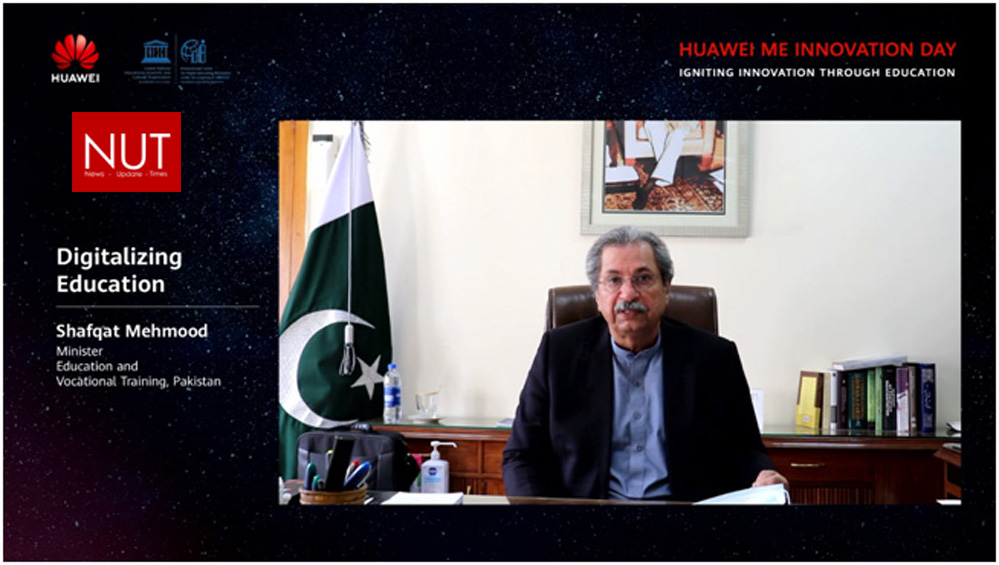
Education Minister Mr. Shafqat Mehmood attends ‘Huawei & UNESCO Innovation Day’ Education Summit

Islamabad (Muhammad Yasir) Federal Minister of Education and Professional Training, Mr. Shafqat Mehmood , attended Huawei’s ‘Igniting Innovation through Education’ summit as a key-note speaker. The Minister was amongst a prominent list of keynote speakers; experts from the ICT ecosystem, government, and international NGOs.

Hosted in partnership with the UNESCO Institute for Information Technologies in Education, the summit recognized the role of education as a catalyst for change, bringing people closer and making society more sustainable and prosperous.

The Minister spoke about the unprecedented challenge brought by the pandemic that called for innovation and digitalization of education. Within 15 days of the pandemic, the Ministry acquired an exclusive television channel to launch a Tele-school. For ten hours a day, lessons for Class 1-12 were broadcasted in different modules. An SMS system was established with the help of telecom companies to give students a medium for feedback on the lessons. Knowing that not everyone has access to television sets, especially in the rural parts of the country, a radio school was also launched by the Prime Minister of Pakistan.

For Higher Education Institutes, all mechanisms; classes, teaching examinations, were moved online. This transition came with its own set of challenges, the biggest one being unavailability of stable internet in some parts of the country, which the government is planning to further expand to ensure that the entire country is covered. The minister further added,

“We have established a department of distance learning within the Ministry, as we feel distance-learning will have a huge role, even after the pandemic ends.”

With ICT solutions now widely recognized as building blocks of an intelligent society, supporting innovation and imagination through education is increasingly important to the national development agendas of nations across the Middle East.


Orange Tree Foundation and IBA Karachi sign Agreement to Support Covid-19 Affected Students

25 final year Undergraduate students will be awarded scholarships

5 general scholarships will also be offered to deserving students

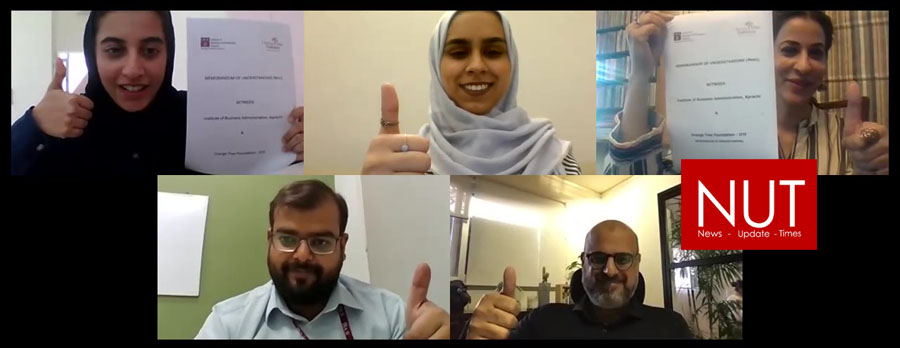
Lahore (Muhammad Yasir)  The Institute of Business Administration (IBA), Karachi and the Orange Tree Foundation (OTF) have signed an agreement to support deserving IBA students whose families have been affected by the Covid-19 pandemic. The scholarship will support 25 such students in their final year of undergraduate programs, in addition to offering 5 general scholarships for students from underprivileged backgrounds.

The signing ceremony was held online attended by the Chief Executive Officer OTF, Mr. Omer Mateen Allahwala, the Director Alumni and Corporate Relations, IBA, Ms. Malahat Awan, and the Head of Marketing and Communications OTF, Ms. Bemisal Iqbal.

Speaking on the occasion, Mr Allahwala outlined OTF’s vision of actively working to establish educational equity in Pakistan while Ms. Awan divulged the future plans of the two partners in offering trainings to scholarship recipients and helping them become contributing members of the society.

The OTF is an existing donor of the IBA and during the year has helped as many as 6 students.


Huawei helps build better education in the Middle East through latest ICT solutions

Company showcases new innovations to enhance traditional education models during GITEX Technology Week

Huawei launches eClassroom4K HD whiteboards and Wireless Campus solutions for the education field

Lahore (Muhammad Yasir) With many academic models reexamined during 2020, Huawei has previewed a series of digital transformation solutions to support continuous learning and quality education in the Middle East over the coming years. The company’s expanded Smart Education portfolio was unveiled in the Middle East during GITEX Technology Week and has been demonstrated to government and non-governmental organizations throughout the exhibition.

According to Huawei, the education of approximately 1.5 billion students worldwide has been disrupted due to the COVID-19 pandemic[1]. In response, local authorities have increasingly turned to information and communications technologies (ICT) in an effort to ensure teaching and learning can continue, and that today’s investments create long-term value.

Huawei has focused on five layers of digital transformation in the education sector. These include using ICT solutions to enhance teaching, learning, research, management, and support services. By working across these domains, Huawei is building end-to-end solutions that tap into its expertise across wired and wireless networks—especially 5G—as well as its strengths in connected devices and IoT networks.

“Both teachers and students have had to overcome unique challenges this year, but even before the COVID-19 pandemic, there was a real pivot happening to embrace converged digital platforms in education,” notes Alaa Elshimy, Managing Director & Senior VP of Enterprise Business Group, Huawei Middle East.  “Increasingly, we see organizations wanting the flexibility to have blended learning and teaching solutions that optimize online and offline time most effectively. New ICT solutions can not only improve learning and teaching experiences, but make it easier to manage academic programs.”

At the core of its education portfolio is the eClassroom for immersive learning environments in-person or remotely. These technologies enable classrooms to have 4K HD whiteboards, support one-click sharing of coursework, more fluent data interactions and annotations, and seamless video sharing. Huawei’s Online Learning solution then supports the publishing of coursework and other shared resources. It includes tools to rank and recommend courses, along with interactive community statistics and reports about how specific resources are being used. Huawei has also designed a National Research and Education Center solution that supports collaborative research, especially at the university level, enabling more education resources to be shared on the cloud and accessible through an ultra-broadband backbone network.

Behind the scenes, Huawei has tailored Wireless Campus solutions for the education field, offering full-scenario coverage so that anything that sits within a physical classroom or building is easily accessible across a designated campus area. That is combined with IP + Optical Network technologies that simplify wired connections and reduce energy cost and space by as much as 80% through the use of fiber.

These and many other industry solutions can be seen at Huawei’s stand at GITEX Technology Week. The company is collaborating with partners to showcase how governments and organizations in the Middle East can create new value through synergy across five tech domains. Located in Zabeel Hall, Stand: Z2-A10, more information on Huawei’s GITEX participation can be found here.

3-day Karachi Conference 2020 Online Dialogues at the IBA Karachi concludes

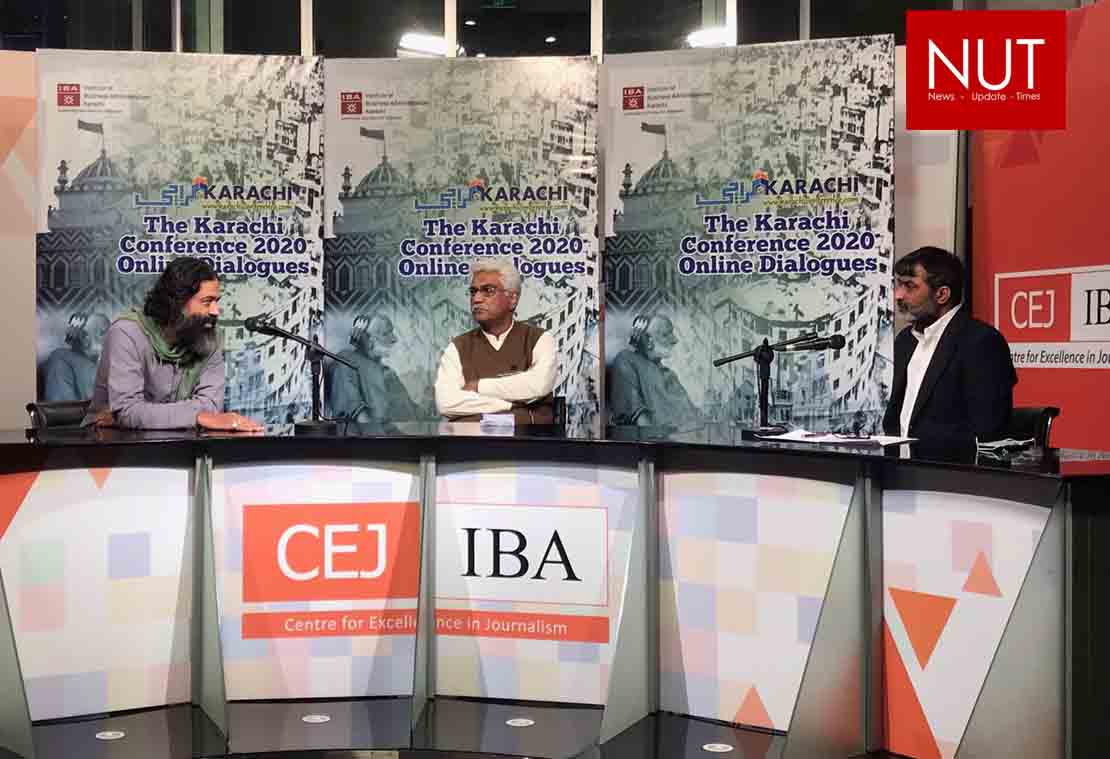
Karachi (Muhammad Yasir) The Karachi Conference 2020 Online Dialogues, in collaboration with the IBA Karachi, held its last dialogue live from the IBA-CEJ studio on Thursday with the renowned architect Arif Hasan. The keynote address on What I have learnt in 45 years about urban planning of Karachi through participation, voyeurism, disillusionment, love, hope and affection.” was streamed live on social media.

He opened his talk by explaining that Karachi, at the time of partition, had a population of 400,000 people and suddenly 650,000 more migrated to the city. Hence, for the first few years after Partition, the only problem in the city was how to accommodate these people. “And in this entire process, we never attended to the needs of the city. We just kept making houses and that too for the rich”, he remarked.

Besides accommodation, Karachi also had to deal with issues concerning the port and railway management. He questioned what decisions were made to bring it to this despite the fact that, at one point, an inland water navigation policy was worked on extensively. That policy was never implemented and as a result, Karachi’s roads were destroyed, movement rates went up and citizens are faced with these issues till today.

As the discussions continued, various other matters pertaining to town planning and encroachments were touched upon. Mr. Hasan had strong views on how the law did not always deliver justice and spoke passionately on why the government should not feel proud of its achievements in this regard over the past few years.

Elaborating further, Mr. Hasan cited examples of environment degradation through informal settlements, island schemes and nullah widening efforts. Allegedly, 3,500 hectares of mangrove jungles will be destroyed in the process and an estimated 60,000 to 65,000 households will be homeless. He also estimated that in the recent anti-encroachment drive, 9,000 khokhas and 20,000 shops were removed in four months causing a loss of 1.5b rupees to the street economy in Karachi. 

At the opposite end of the spectrum, he also gave the examples of Bani Gala and developments around the prime minister’s home which the courts regularised at the time when the Karachi Circular Railway affectees wanted their homes to also be regularised. The Grand Hyatt in Islamabad, which is in violation of its urban plan, was also regularised at the same time.

When questioned by the Executive Director IBA, Dr. S. Akbar Zaidi how people’s lives are affected by a lack of planning, Mr. Hasan responded with four points – a change of culture that redefines relationships between the different classes of Pakistan; the removal of conflict between behavioural patterns and traditional values; the replacement of traditional systems of governance by community and/or political systems; the search for new societal values.


Mahim Maher from SAMAA TV moderated this enlightening session.


Clear and practical guides to natural capital management published by ACCA

The 4Rs – restore, reduce, remove and reimagine success – are part of the strategic planning process, says global accountancy body The accountant’s role in managing natural capital – resources like water, land, minerals, and oceans – is explained by ACCA (the Association of Chartered Certified Accountants) in a new online resource and accompanying guides for business leaders, performance managers, corporate reporters and auditors and assurers. In Professional accountants changing business for the planet: A guide to natural capital management ACCA advises that accountants should begin the journey to understanding their natural capital risks and opportunities by connecting their organisation’s value chain to its areas of natural capital dependency and impact. A strong sustainability governance framework should also be put in place, that integrates with the organisation’s strategy, risk management, systems and staff development. Sharon Machado, portfolio head of business reporting and author of the guides explains: ‘For many professional accountants, formulating and executing natural capital strategies is likely to be a new experience, and a journey, that involves several key steps. So this series helps professional accountants to change business for the benefit of the planet, by providing simple and practical explanations about the process. It includes case studies, alongside links to other helpful external resources from organisations such the Capitals Coalition and the Convention on Biological Diversity.’ The guides recommend using the 4Rs strategic framework – restore, reduce, remove and reimagine success – to help generate strategic options and ideas across the business. And to design and implement the natural capital strategy, the guides also advocate learning from other organisations to understand best practice. Stakeholder management is also part of the journey, with ACCA setting out the need for relevant and reliable communication with stakeholders on plans and performance. Sharon Machado concludes: ‘Professional accountants and leaders have direct responsibility for an organisation’s long-term financial well-being, through sustainable value creation. To do this they must assess and drive the strategic decision-making, finance, risk management and control, together with leading performance reporting. For many organisations, natural capital is a material factor underpinning the organisation’s resilience – therefore financial well-being will be inextricably linked to good natural capital management.’

The 3-day Karachi Conference 2020 Online Dialogues commences at the IBA Karachi

Karachi (Muhammad Yasir)  The Karachi Conference 2020 Online Dialogues, in collaboration with the IBA Karachi, held its first dialogue live from the IBA-CEJ studio on Monday, December 8, 2020 on “Devotional Music and Sufi Traditions in Sindh”.

The session kicked off with an introduction by the Karachi Conference Foundation Vice-President, Dr. Hasan Ali Khan, who outlined the Karachi Conference vision and themes and briefly described the history of the conference since the last eight years.

Three eminent scholars from their respective fields presented their views on how Sufi and devotional music in Sindh can be understood and appreciated in different ways. M. Rizwanullah Khan from Karachi University provided his perspective on “Sema in the Khaneqah Nizam: Myth and Misconceptions.” Dr. Stefan Williamson Fa joined from the University of Birmingham in the UK to give a fascinating presentation on Aziz Balouch and the search for Flamenco’s sufi origins. Akhtar Dargahi, as a practicing musical maestro, explained the six different genres of Sindhi devotional music and demonstrated these through short live performances during the session. The panel discussion was chaired by Dr. Abdul Haque Chang, Assistant Professor, Social Sciences and Liberal Arts Department, IBA Karachi.

Day 2 of the dialogues revolved around “The Lesser-known Communities of Karachi” which was introduced by the Karachi Conference Foundation’s Joint secretary Aliya Iqbal Naqvi. This session was chaired and moderated Dr. Ali Usman Qasmi from LUMS university, well known for his publications on minorities.

Renowned scholars participated in this session, commencing with Professor Charles Amjad Ali from Chicago. In his talk, he openly outlined the history of minorities from the early era of Islam, wherein they were actually considered a part of the Ummah, as opposed to being outcasts, and the central role they played in the formation of early Islam.

Rumana Husain touched upon the Hindu sub-caste of the Vaghdis and regarded them as outcasts due to both heir untouchability and their religion. Also, as part of the discussion, Jurgen Schafflecher’s film, ‘Mother Calling: Kali in Karachi’ also dealt with the Vaghdis in Karachi, focusing on their ability to practice their religion in relative harmony.

The final presentation was delivered by Rumina Kermani, who spoke about the role the Parsi community played in the evolution of Karachi. She explained the great spirit of philanthropy that the community practiced, which helped the city flourish.

The three-day conference will culminate with a key note address by Mr. Arif Hasan and share his insights on urban planning of Karachi on December 10, 2020.

KPITB started the second phase of ‘Women Empowerment through Digital Skills’.

Lahore (Muhammad Yasir) After successfully equipping 500 females with digital skills from the province, Khyber Pakhtunkhwa Information Technology Board has embarked on the next phase of the journey to further train 2500 young women and enable them to play their role in boosting the digital economy of the province in specific and Pakistan in general. The said initiative is a component of KPITB’s initiative, “Digital Jobs in KP”, applications for which have been opened for registrations. 

‘Women Empowerment through Digital Skills’ is a component of Digital Jobs in Khyber Pakhtunkhwa project, an initiative of Khyber Pakhtunkhwa Information Technology Board (KPITB), funded by Multi-Donor Trust Fund, administered by The World Bank and executed by DEMO and TechValley Pakistan. The program aims to train 3000 women across the seven divisions of Khyber Pakhtunkhwa including newly merged districts on employable digital skills to ensure women’s inclusion in the digital economy.

While talking about the success of ‘Women Empowerment through Digital Skills Program’ Ziaullah Khan Bangash, Advisor to Chief Minister of Khyber Pakhtunkhwa on Science and Information Technology praised the initiative and also assured the continuity of government efforts for promoting such interventions and developing the capacity of women to benefit from digital employment opportunities. He encouraged females to come forward and contribute their part to the digital economy. Bangash further added that this program will set an example for other provinces to follow. “We are very hopeful that with the help of this program, different job opportunities will emerge for women across Khyber Pakhtunkhwa,” he added.

Managing Director KPITB Dr. Sahibzada Ali Mahmud elaborated that ‘Women Empowerment Digital Skills’ is one of the many initiatives taken by Khyber Pakhtunkhwa to encourage and educate the youth and provide a digitally skilled workforce to the industry of Information Technology. Dr. Mahmud further added that these training programs are significantly increasing the digital skills of youth and it provides them the opportunities for earnings. 

Maira Yousaf, a resident of Peshawar and a graduate of the first phase of ‘Women Empowerment through Digital Skills Program’ expressed that she completed her training in Social Media Marketing, the course was very well structured. She furthered that through interactive live sessions the trainers provide them basic and advanced knowledge about Social Media Marketing. “They equipped me with the right tools to help me get started in this field,” she added.

Muhammad Bilal, Project Manager of Digital Jobs in KP revealed that women between 18 to 30 years of age, holding KP Domicile and have a minimum of Intermediate education are eligible to apply for this training program. He further said that the second cycle of “Women Empowerment through Digital Skills Program” will be also conducted online and on-campus training depending on the prevailing situation of COVID-19. Applicants can enroll themselves into one of the following digital skills currently being offered; Social Media Marketing, Graphic Designing, WordPress Design and Development, Blogging & Content Writing, and Digital Tools Productivity.

“Applicants for this training program must have access to a computer with a good internet connection. They can apply online at www.kpyep.com/we before December 21, 2020,” Bilal underlined.

Contracts between public and private sectors operate with a ‘trust deficit’

ACCA’s global survey about public procurement reveals South Asia respondents want polices that give transparency to the public 

Governments around the world have faced challenges with public procurement due to the COVID-19 crisis, testing their ability and capacity to react quickly and efficiently to deliver life-saving goods and services to the public, asserts a new research report from ACCA (the Association of Chartered Accountants) New Models of Public Procurement: A Tool For Sustainable Recovery.

Surveying finance professionals from both the public and private sector in over 90 markets including South Asia, ACCA’s research identifies a trust deficit between public sector buyers and private sector suppliers. Globally, only 41 per cent of private sector respondents believe the public sector can be trusted to uphold its side of the deal, compared with 60 per cent of public sector respondents stating they trust their private sector counterparts.

According to the 136 respondents across South Asia, including Pakistan, the top three challenges faced are bribery and corruption (81 per cent); underdeveloped e-Procurement systems (45 per cent) and poor payment practices by government (41 per cent). Findings also reveal that just 22 per cent of South Asia respondents said the quality of public services was good, compared with 77 per cent in the Middle East and 65 per cent of respondents in North America and Europe.

When asked about policy objectives for evaluating public procurement, fair dealing with all bidders and suppliers was viewed as important (63 per cent), followed by transparency to the public (62 per cent) and promoting ethical practices (57 per cent).

Sajjeed Aslam, head of ACCA Pakistan, says: ‘Our report calls for procurement modernisation, with audits commonplace in all public procurement procedures, beginning as early as possible in the bid process to reduce the likelihood of corruption, while ensuring that the auditors remain independent during the process. Due to COVID-19 turbulence, another key recommendation is to use public procurement as an opportunity to keep businesses – in particular, SMEs – afloat by publishing contracts early on centralised, open databases that are accessible to all.’

Rachel Bleetman, ACCA’s Public Sector Policy and Research Manager, and co-author of the report says: ‘There’s a growing need to ensure that public spending during and beyond the COVID-19 pandemic is not only made more efficient and cost-effective, but that it’s used as an opportunity to tackle some of the biggest challenges of our time – environmental catastrophe, rising social inequalities, ending corruption and meeting the needs for life-saving procurement.’

Alex Metcalfe, ACCA’s Head of Public Sector and report co-author adds: ‘Corruption costs the public sector significant sums of money every year and can create feelings of mistrust towards governments. So the role for finance professionals in helping to make, monitor and evaluate these changes is significant and, as this report demonstrates, the global finance profession is needed now more than ever to help transform how the public sector responds to the crisis.’

Rachel Bleetman concludes: ‘Across South Asia and on the global stage, there’s room for optimism here as the reforms we recommend around eliminating bribery and corruption, competition and the buyer–supplier relationship, modernisation and COVID-19 and the public procurement ‘need for speed’ will all make for stronger public procurement, which is an essential part of public sector spending that, until now, has received relatively little attention. Now’s the time for change, as history has long taught us that, out of crises, new opportunities can emerge.’

ACCA publishes its commitments to delivering the UN Sustainable Development Goals

The UN Secretary General declared 2020 to be the year to mobilise for a “decade of action” to deliver the UN Sustainable Development Goals (SDGs) by 2030. Today, ACCA (the Association of Chartered Certified Accountants) announces its contribution to this global ambition by publishing its own commitments to the delivery of the SDGs.

ACCA recognises the importance of all 17 interconnected SDGs, and asserts that its commitments demonstrate that ACCA and its community can make the most significant contribution towards nine of them. These include offering access to a quality finance and accountancy education that is free from artificial barriers, becoming Net Zero by 2030, and working in partnership to build an inclusive global profession that supports the development of ethical, sustainable and successful businesses and economies.

Helen Brand OBE, chief executive of ACCA says: ‘Setting out our commitments is an important and necessary step in ensuring ACCA and its community plays a key role in the transformational change business and society needs to see over the next decade. Publishing them brings transparency and accountability to our work and is a logical progression for an organisation that has a proud history of championing sustainability. Our purpose, values and strategy to 2025 already align closely to the SDGs, and this latest development shows our whole-hearted commitment to delivering on them, reporting on them annually and engaging with appropriate partners to help us do this.’

Jimmy Greer, head of ACCA sustainability adds: ‘We have a clear rationale for each commitment, with a framework of measures to drive the delivery of our commitments. This measurement is important, and it complements our ongoing advocacy in this critically important area. We plan to keep “walking the talk” when it comes to sustainability. Our commitments are a work in progress, which we can build, evolve and unite around. Finally, we recognise that delivering the SDGS cannot be done alone. It is a massive global effort and ACCA is intent on continuing to play its part.’

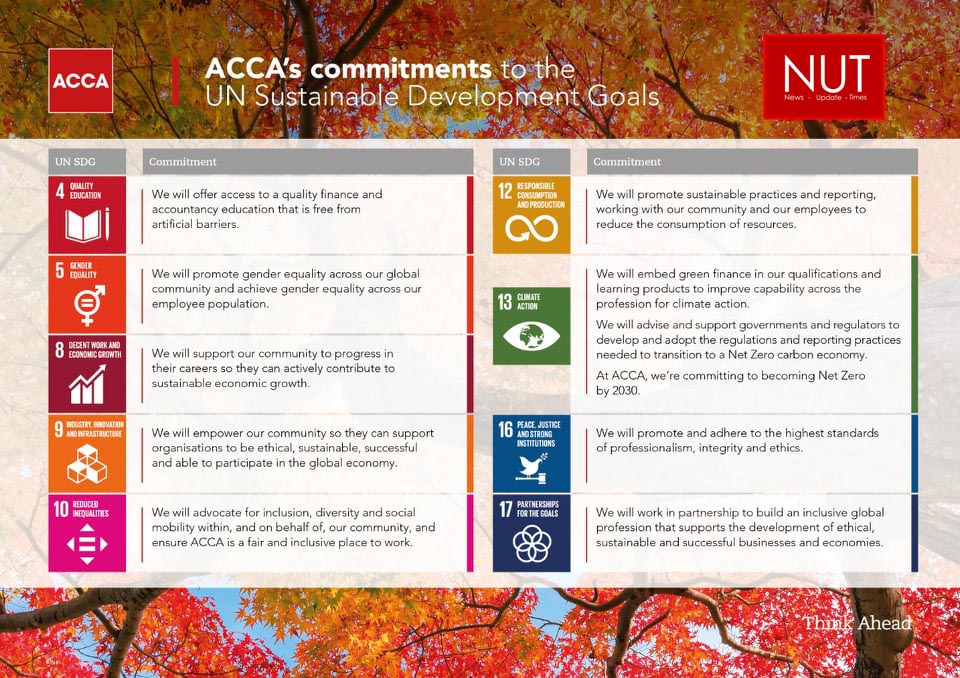
ACCA’s commitments and the relevant SDGS are:

Commitment UN SDG link

Commitment UN SDG link
We will offer access to a quality finance and accountancy education that is free from artificial barriers. UN SDG 4: Quality education
We will promote gender equality across our global community and achieve gender equality across our employee population. UN SDG 5: Gender equality
We will support our community to progress in their careers so they can actively contribute to sustainable economic growth. UN SDG 8: Decent work and economic growth
We will empower our community so they can support organisations to be ethical, sustainable, successful and able to participate in the global economy. UN SDG 9: Industry, innovation and infrastructure
We will advocate for inclusion, diversity and social mobility within, and on behalf of, our community, and ensure ACCA is a fair and inclusive place to work. UN SDG 10: Reduced inequalities
We will promote sustainable practices and reporting, working with our community and our employees to reduce the consumption of resources. UN SDG 12: Responsible consumption and production
We will embed green finance in our qualifications and learning products to improve capability across the profession for climate action.

We will advise and support governments and regulators to develop and adopt the regulations and reporting practices needed to transition to a Net Zero carbon economy.

At ACCA, we’re committing to becoming Net Zero by 2030.

UN SDG 13: Climate action
We will promote and adhere to the highest standards of professionalism, integrity and ethics. UN SDG 16: Peace, justice and strong institutions
We will work in partnership to build an inclusive global profession that supports the development of ethical, sustainable and successful businesses and economies. UN SDG 17: Partnerships for the Goals