“Trade, Peshawar and development of Mohalla Sethian” discussed at THAAP TALK.

Lahore (NUT-DESK)

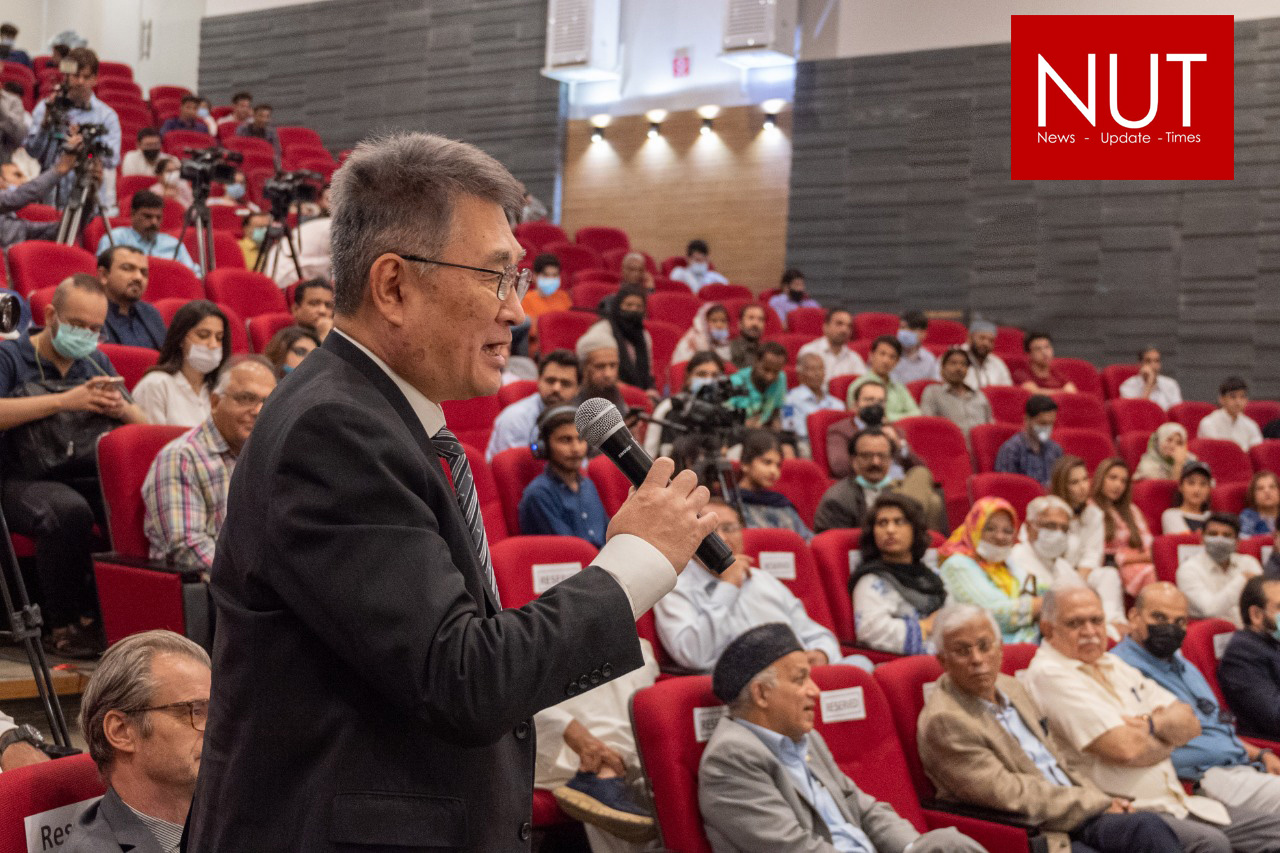
Professor Dr Samra Mohsin Khan presented a paper titled “Trade, Peshawar and development of Mohalla Sethian” at THAAP on Friday 26th  November. She traced the expansion of trade during the early modern period ca 1500-1800 and the impact it had on the growth and development on the city of Peshawar and in particular the fortunes of leading trading family the Sethis of Peshawar. Trade between the Subcontinent and Central Asia has a tradition going back centuries and it got a particular stimulus after the Turk, Pathan and other tribes from the Central Asia came to settle in Punjab and India. Professing the Muslim faith they brought in their wake scholars and soofis who spread the message of Islam and in the process encouraged the interaction of the populations of the region.

The city of Peshawar was the major beneficiary of this exchange and trade. Professor Samra traced the growth of the city and its two main gates, the Kabuli gate and the Lahori Gate emphasizing the trade route and the logistic pattern. Caravan Serais were an important link in the trade and Professor Samra explained in good details the establishment of the various serais over a period  of time.

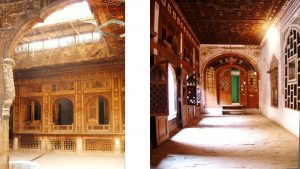
She illustrated her talk with the examples of the Havelis of the Sethi family and traced their history and the prosperity they enjoyed. The Havelis are an excellent example of Architecture that reflects the local culture and climate and should be the example to study and emulate by the local present day architects and their students.

Professor Sajida Haider Vandal, former Principal National College of Arts and CEO of THAAP moderated the session and praised the work done by Professor Samra. She said she was proud of her student, colleague and fellow teacher and was happy to note and appreciate the maturing  of Professor Samra into a scholar of international standing.

It was a well-attended talk with an active and interested audience who enlivened the event with animated discussion.

*******************

Education Powers the Wheels of Hope – Cycle for Change

Islamabad (Muhammad Yasir) Since early 2020, Covid-19 put a stop to all social activities including fundraising events, across the globe. In Pakistan, education got a big hit! It became a challenge to continue the education process online for children in all educational institutions, in particular children of lower income groups.

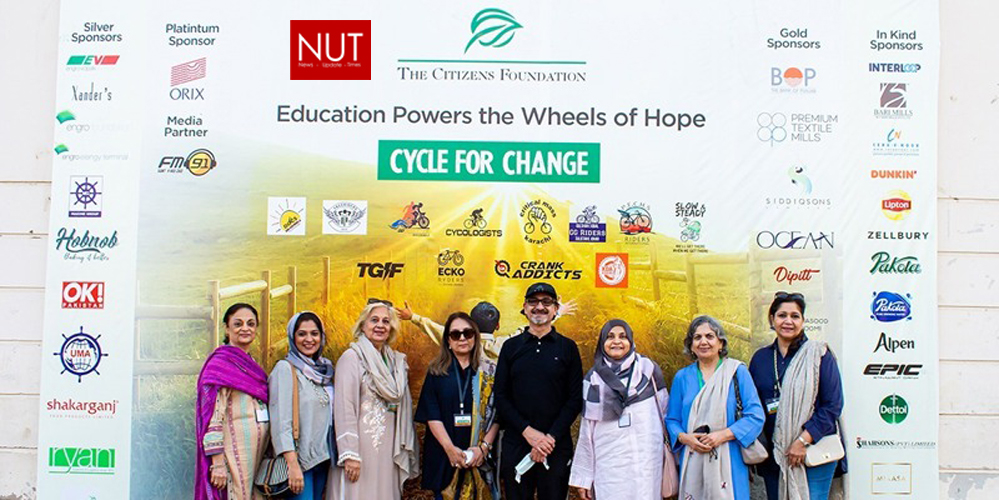
After a gap of nearly 2 years, the Supporters of TCF (STCF) organised an exciting event, Cycle For Change for much needed funds and support, in order to continue the journey of literacy. This was a wholesome and fun experience for individuals and members of leading cycling clubs of Karachi. The cyclists dedicated this day to cycle and raise funds for the children of TCF. Over 250 cyclists from Karachi as well as a few from Lahore participated in the event. They cycled early morning from Seaview and other areas of Karachi to TCF Qayummabad Campus where they met TCF students and took a tour of the school. They applauded the efforts of TCF to promote quality education in Pakistan and to nurture the dreams of the most deserving children.

Experts for stakeholders’ say on post-Covid challenges for youth

Lahore (Muhammad Yasir) Experts at a panel discussion have emphasized for a major role of stakeholders especially parliamentarians, educationists and parents for moving forward with education agenda to resolve host of critical issues and limitations created with the Covid-19 pandemic in the country.

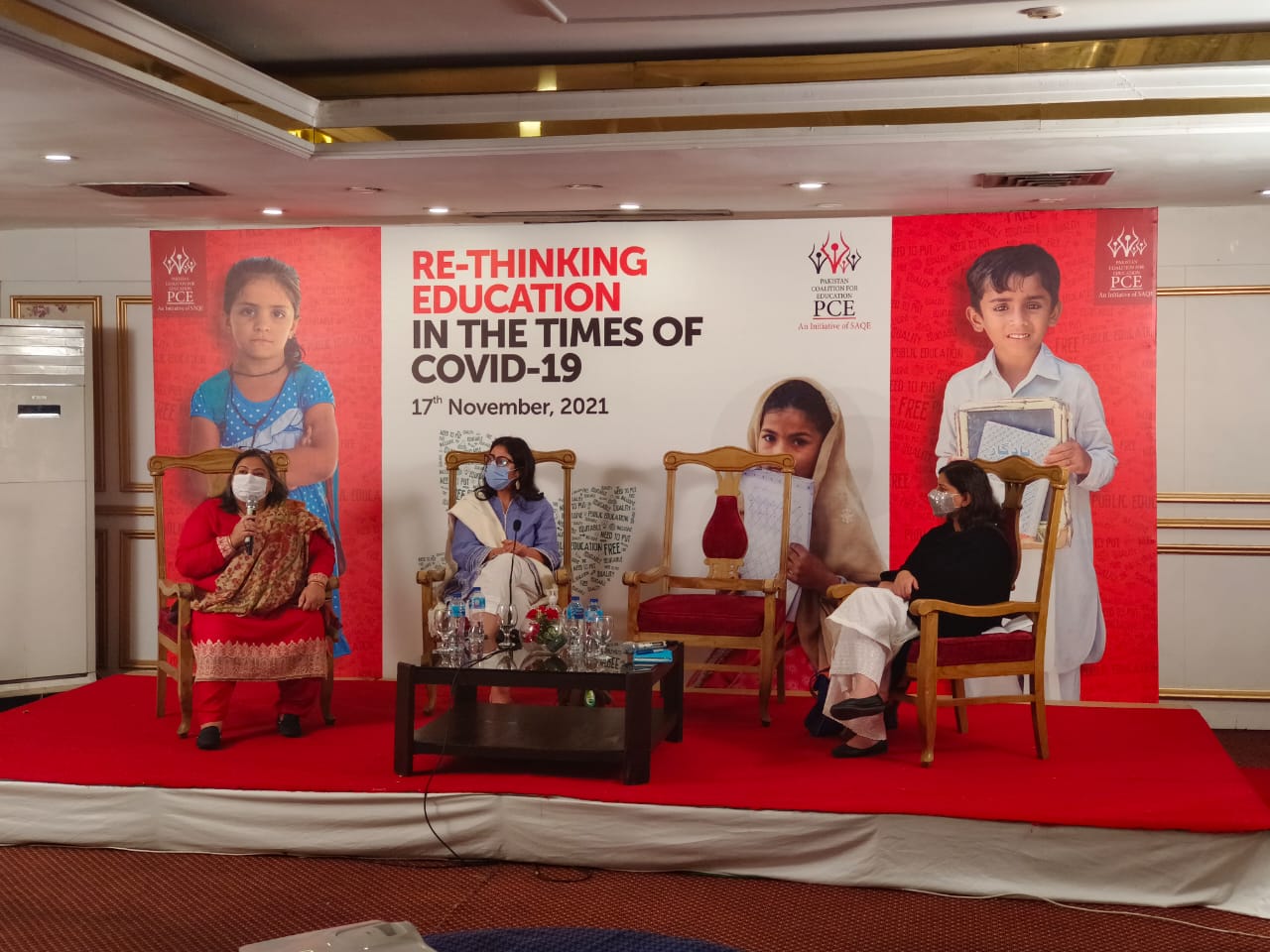
The policy discussion was organized by the Pakistan Coalition for Education (PCE) as part of its 12th Annual Convention in Islamabad with a theme “Re-thinking education in the times of Covid-19”.

Sharmila Faruqui, former Advisor to Sindh Chief Minister, Deputy Focal Person Policy Planning and Implementation Unit Balochistan Abdul Khaliq, and National Coordinator of PCE, Zehra Arshad, were the main participants of the discussion.

They discussed the grave situation created by the Covid-19 pandemic in the country and its negative impacts especially on the education sector.

The discussion revolved around the urgent need for all stakeholders, especially the parliamentarians to come together and address the areas where the existing public education system, and more recently, the digital education is falling short in accommodating the needs of the marginalized communities.

Sharmila Faruqui, former Advisor to Sindh Chief Minister, was of the view that the youth does not have proper accessibility to technology such as smartphones, laptops, and the Covid-19 has highlighted this inequality.

She mentioned that only 32 percent of students across the country reported that learning material was provided by their schools during the lockdowns. The most important aspect to promote education is poverty reduction. “We also need to have focus on social protection programs to ensure that children especially girls are protected,” Sharmila said suggesting that trainings and legislations must be done to have better results, she added.

Participating in the discussion, Abdul Khaliq, Deputy Focal Person – Policy Planning and Implementation Unit Balochistan suggested to look at different models currently in practice to adopt in Balochistan keeping in mind the extensive challenges and poverty in the province.

He said that they need a system that ensures the continuity of learning in the future. “Our government has allowed us leverage as they have created new positions of IT teachers to facilitate the process of online education which is an achievement of the institute,” he explained.

National Coordinator of PCE, Zehra Arshad, gave an overview of the educational landscape under the COVID and explained how important it is to ensure inclusivity.

She emphasized the governments to review policies and plans by including all partners and stakeholders like civil society organizations, parents and teachers across the board to ensure their voices are heard and incorporated into the policy making process to transform education in the post-pandemic era.

Executive Director Pakistan Youth Change Adovcates, Areebah Shahid also stressed that standing committees of parliament should have effective oversight to cover marginalized children mainly girls, children with disabilities and students belonging to low socio-economic.

Other participants of the discussion included Research Fellow at I-SAPS Abdullah Alam, Managing Director SCSPEB Balochistan Irfan Ahmed Awan, Program Director Shawana Shah, Chief Executive Thar Education Alliance Sindh Partab Shivani, Chief Executive AwazCDS – Punjab, Zia Ur Rehman and Pakistan Programme Director Malala Fund Javed Malik.

IBA CEIF, Mettis Global ink MOU for research, data sharing:

Karachi (Muhammad Yasir) To strengthen the link between industry and academia in the field of Islamic Finance & Economics, the IBA Centre for Excellence in Islamic Finance (IBA CEIF), a platform for discovery and dissemination of knowledge in the field of Islamic Finance and Mettis Global Pvt. Ltd, a leading financial data provider have agreed to join hands.

In this connection, the Memorandum of Understanding (MoU) was signed by Ahmed Ali Siddiqui, Director IBA CEIF and Faisal Abdullah, Director-Mettis Global Pvt. Ltd on November 10, 2021 at the IBA City Campus, Karachi.

Mettis Global is very keen to partner with IBA CEIF through establishing “Islamic Window Portal” with the right dataset to cater the needs of research pertaining to Islamic finance, Faisal Abdullah, Director-Mettis Global said. 

“We believe that student and IBA faculty will immensely benefit from Mettis data to execute the research objectives,” he added.

As per the State Bank of Pakistan (SBP’s) strategic plan 2025, the Islamic Banking is one of the evolving fields, having a share of 18% and expected to cover 30% of the industry by the end of 2025. This robust development in the Islamic Banking and Finance requires effective mechanism between industry and academia.

As per the MoU, Mettis Global will develop an Islamic window and IBA CEIF would be the best knowledge partner for the development of the said window. Meanwhile, Mettis Global will provide free access to faculty members and students of IBA to its financial portal viz “MG Link”.

In addition, Mettis would also offer internships to the IBA Students to let them gain the experience of the financial sector under a thriving atmosphere.

The MoU signing ceremony was attended by Muhammad Noman, Head of Sales, Mettis Global, Urooj Farooq, Assistant Manager Digital Marketing, Mettis Global, and Zia Khalid, Senior Program Manager, IBA CEIF.


Punjab Free & Compulsory Education Act Will Soon Be Implemented Across The Province: Aisha Nawaz Chaudhary

Islamabad (Muhammad Yasir)  “The constitutional amendment of Article 25-A, pledging free, quality and equitable education for every Pakistani child occurred in the year 2010. The Punjab Assembly passed the Free & Compulsory education Act in 2014. However, despite the lapse of seven years since the passage of this provincial law, it is yet to be notified. What then was the point of passing a law that the government did not intend to implement?” This question was raised by Mr. Mukhtar Ahmad Ali, Executive Director, Centre for Peace and Development Initiatives (CPDI) during a round table discussion in Islamabad with the members of the Standing Committee on School Education, Punjab. 

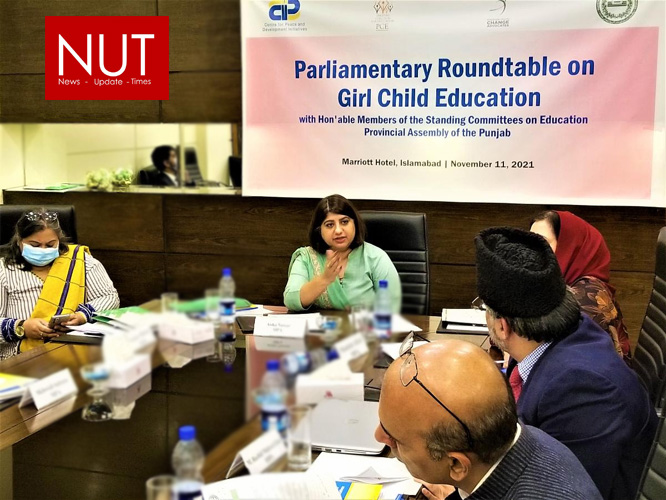
This parliamentary roundtable was organized by civil society organizations including CPDI, Pakistan Youth Change Advocates (PYCA) and Pakistan Coalition for Education (PCE) in collaboration with Pakistan Institute for Parliamentary Services (PIPS).

Chairperson of the Provincial Standing Committee on School Education, Punjab Ms. Aisha Nawaz Chaudhary chaired the roundtable. Responding to Mr. Mukhtar Ahmed’s question she assured the civil society stakeholders that the standing committee was in constant coordination with the provincial education department and the law would soon be notified. “The notification of the Punjab Free & Compulsory Education Act is a top agenda item for this standing committee. We will soon begin its phased implementation, starting with the most vulnerable districts in Punjab.”

Public finance expert and author of the recent published white-paper “Public Invest in Education: An Appraisal of SDG 4 in Pakistan” Mr. Asim Bashir Khan while providing an overview of the findings and recommendations of the white-paper said “Both the federal and provincial governments understand the fact that the current state of public investment in education is not up to the required mark. This is evident from the majority of the sector plans as well as the Vision 2025 document which pledges to allocate 4% of the GDP to education. However, in actuality Pakistan has been unable to allocate more than 2.5% of its GDP in the last 20 years. The COVID crises have led to a further decline in public investment in education with merely 1.5% of GDP being allocated for education in the fiscal year 2020 – 21.”

PCE’s National Coordinator Ms. Zehra Arshad while talking about equitable access to education said “Although our international commitment according to SDG 4 is to attain 100% literacy, we still have 22.84 million out-of-school children of which 12.16 million are girls. This number is further expected to increase by at least 4.2% in the aftermath of the pandemic.” She further warned that with merely eight years remaining until the conclusion of the United Nations Agenda 2030, Pakistan was on the verge of missing its targets under SDG-4 (i.e., quality equitable education) by a huge margin.

Commenting on the institutional and cultural barriers limiting girls’ education in the post-pandemic context, PYCA’s Executive Director Areebah Shahid urged the parliamentarians to revisit the data of the beneficiaries of the EHSAAS Education Stipend Program, which is based on the lists of vulnerable households prepared almost a decade ago. “Thousands of households have fallen below the poverty line as a direct impact of the pandemic and it is imperative that the EHSAAS Education Stipend program also takes stocks of this new situation.” She also urged the members of the Punjab Assembly to adopt gender-responsive budgeting on the same lines as Khyber Pakhtunkhwa so that educational planning and spending could effectively prioritize girls’ access to quality education cross the province.

The civil society stakeholders also asked the parliamentarians to take-up the issue of the absence of the chapter on out-of-school children in this year’s Pakistan Education Statistics report. Given that Pakistan hosts the second largest population of out-of-school children in the world, eliminating the chapter on out-of-school children deprives both the decisionmakers and the civil society from valuable data that is imperative to frame policies aimed at addressing the educational crisis in Pakistan.

Mr. Muhammad Rashid Zaka, Director General Research at PIPS shed light on the key role of the parliamentary committees to hold line departments accountable. “The implementation of education across Punjab can be made manifold more effective by strengthening parliamentarians’ oversight in the implementation process.

MPA Shamim Aftab, while talking about the need to curtail learning losses pointed at the need for piloting small digital and hybrid learning initiatives to make the country’s education system resilient and better prepared in the face of emergency situations such as the current pandemic.

In her closing remarks MPA Aisha Nawaz Chaudhary said “The best way to move forward is to have greater engagement between legislators, education department officials and civil society activists so that the consequent policy direction is both participatory and inclusive.” She also expressed interest in holding similar round tables in vulnerable districts of Punjab to learn about the challenges in the education system directly from the district officials and community members.

‘Karachi: The Way Forward’ – The Administrator Karachi in conversation with the Executive Director IBA

Karachi (Muhammad Yasir) The Institute of Business Administration (IBA), Karachi organized a discourse on ‘Karachi: The Way Forward’ by the Administrator Karachi, Mr. Murtaza Wahab, at the IBA City Campus. Attendees included the IBA faculty, students and alumni, media, members from the academia, corporate sector and diplomatic corps.

Mr. Wahab, Barrister by profession, has been associated with the Government of Sindh since 2015. He currently serves as Advisor to the Chief Minister Sindh on Law and as Administrator Karachi.

Dr. Zaidi welcomed Mr. Wahab to the IBA and quizzed him on his strategy for solving the many administrative and municipal affairs of the largest metropolis of Pakistan, Karachi.

Mr. Wahab thanked Dr. Zaidi for the opportunity to communicate with the future leaders of Pakistan. He briefed the audience about his educational background abroad and mentioned that he decided to come back and serve his city as he felt a sense of belonging and responsibility towards Karachi. As Advisor to the Chief Minister Sindh on Law, Mr. Wahab facilitated in passing some integral legislations, including a legislation for recording Hindu marriages in 2015-2016 (Sindh is the first province in Pakistan to introduce this Act) and in 2019, the Sindh Government passed a law to establish the basic rights for the prisoners. Furthermore, he played an instrumental role in developing the Sandspit road and Manora beach front.

Inquiring about Karachi’s urban flooding and debilitating road infrastructure in times of monsoon rains every year, Dr. Zaidi inquired how the Sindh Government was planning to solve the problem. Dr. Zaidi also quizzed about resolving the overall deteriorating municipal management issues, including broken roads and lack of cleanliness in the city.

Elaborating the Sindh government’s strategy on maintaining the administrative and municipal affairs of the metropolis, Mr. Wahab said that the Government of Sindh has developed urban spaces for the people of Karachi among other projects. But due to the political polarization of the city, where 17 different agencies have control of different administrative areas of Karachi, the Sindh Government’s hands are tied as it doesn’t have the sole control of the city’s administration.

Discussing the city’s sanitation, Mr. Wahab said that garbage collection drives will be initiated in the 7 divisions of the city, with the first one initiating in the worst effected Korangi District and within 2-3 months things will improve on this front. He further said that the Sindh Government will be implementing a garbage plant to produce power and electricity from the city’s waste.

Dr. Zaidi also inquired about the city’s law and order situation and what the Sindh Government was doing before the elections to remedy the lawlessness of the city.

Mr. Wahab said that adequate measures were being taken to mitigate the situation and he also urged the audience and the citizens of the city to use the power of their vote wisely, to educate themselves of all the facts before making an informed decision to select the best candidate for the betterment of the city.

Following the conversation, an engaging Q&A session ensued between Mr. Wahab and the audience.

Dr. Zaidi presented a memento to Mr. Wahab at the end of the discourse.

Hurdles in digital learning due to capacity deficiency

Lahore (Muhammad Yasir)  A global report published by Oxford University Press states that limited digital capabilities act as a major problem just like limited access to technology. Around 68% of teachers think less digital access (Internet or physical access to a device) is the biggest obstacle to digital learning. Another major issue is lack of digital skills. According to report deficiency in capabilities have not only been witnessed in teachers but students as well that hinder the success of digital learning. This report examines the digital distribution in education after the shift to digital learning during COVID-19.

The report includes the views of 1,557 schools and English language teachers on digital schooling in 92 countries including Pakistan. in light of this report, recommendations have been made to improve the education system in the future by reducing the problems n digital learning being faced by millions of students around the world.

Oxford University Press recommends that more focus should be placed on independent learning in order to end this growing digital divide. Such students perform much better in their academic careers. Independent learning provides students with valuable time off the screen and to some extent reduces the stress they face all day when dealing with poor internet connection.

The report states that the lack of digital skill deficiency  in teachers, students and their parents has hampered digital learning to an alarming extent. Regular training of teachers will ensure that digital knowledge does not become obsolete. The report urges governments around the world to prioritize investments that may contribute in efficient access to reliable Internet connections and devices. Governments must actively cooperate with teachers and students in developing future policies and curriculum by using recent experiences.

Nigel Port wood, CEO of Oxford University Press, said: “The world of education is constantly undergoing a major digital transformation and many students are feeling the pinch because of the digital divide. If we do not make sure that teachers, students and parents know how to use digital tools effectively, this digital division will continue to grow.” While quoting the report, Fatima Dada, Managing Director, OUP Education Division said  “Governments and policy experts need to come together globally to address the issues raised by this report and immediate measures should be taken to resolve these problems in digital learning”.

NEW REPORT: lack of skills holds back digital learning, affecting both students and teachers

While 68% of teachers rate poor access to the internet or a device as the biggest barrier to digital learning, 56% said it was also because of a lack of digital skills among parents, teachers, and learners

Lahore (Muhammad Yasir)  Oxford University Press (OUP), the world’s largest university press, has today published a new global report exploring the digital divide in education, following the shift to digital learning during the COVID-19 pandemic.

The report, Addressing the Deepening Digital Divide, captures the views of 1,557 school and English language teachers from 92 countries—including Pakistan—on the digital divide, including the barriers to effective teaching and learning, and the impact of the divide on learners’ development. Based on the insights gathered, the report puts forward recommendations for policymakers and educators to future-proof the education system and narrow a divide that unfairly disadvantages millions of learners all over the world.  

Key findings from report include:

•    Limited digital skills are nearly as great a problem as access to technology: poor digital access (i.e. physical access to the internet or a device) was the biggest barrier to digital learning, cited by 68 per cent of teachers as a problem. A lack of digital competency ranked a close second, with 56 per cent of respondents reporting that teachers and learners alike lacked the skills to make digital learning a success.

•    Engaging students in online lessons was a bigger challenge than costs, education funding, or digital infrastructure: teachers felt their greatest challenge during the pandemic was engaging students in online lessons—a difficulty reported by six in ten teachers (61 per cent).

•    Disadvantaged students have been significantly affected by the shift to digital learning: 70 per cent of teachers said the most disadvantaged students lost learning due to limited or no access to digital devices. 44 per cent of respondents felt that the wellbeing of disadvantaged students had been particularly negatively affected during the pandemic. 

•    Teachers want parents to play a bigger role in their child’s digital learning: half of the teachers surveyed (50 per cent) said a lack of parental understanding of digital tools/platforms limited the effectiveness of support available to their children; and 58 per cent said disadvantaged students tended to receive less educational support from their parents and families. 

OUP has made the following recommendations to address the deepening digital divide:

•    A greater focus on independent learning: students who take an active role in their learning will be more engaged in their education, leading to better outcomes. Independent learning gives students valuable screen-free time and removes some of the pressures disadvantaged students feel to be online for a full day when struggling with poor internet connection, limited access to a device, or high data costs.

•    Build digital competency skills among educators, students, and parents: OUP’s report reveals that a lack of digital competency among teachers, students and their parents is holding back digital learning to a worrying degree. A move from sporadic ‘upskilling’ to ‘always-skilling’, in which teachers have regular training touchpoints, will ensure that digital knowledge does not become outdated.

•    Target resources to address both ends of the digital divide: the report urges governments around the world to prioritize investments that support affordable access to reliable internet connections and devices. Governments should actively collaborate with teachers and students and use their recent experiences to inform future policy and curriculum development: with a focus on free resources to address the skills gap, and on wellbeing and mental health.

Nigel Portwood, CEO of Oxford University Press said: ‘The world of education continues to undergo significant digital transformation, and yet so many learners are being left behind because of the digital divide. And as our research shows, it isn’t just about ensuring people have access to the relevant devices, or improving connectivity; unless we fill skills gaps and make sure teachers, learners, and parents know how to use digital tools effectively, the digital divide will only continue to grow.’

Adding to this, Fathima Dada, Managing Director of OUP’s Education Division, said: ‘It is imperative that governments and policy experts come together on a global scale to address the issues identified in our report. We know where the problems lie, and we now need a forward-looking approach to fix them. We owe it to students to ensure that digital learning is fit for purpose, not just in times of crisis, but as we start to look ahead to the future of learning.’.

 

Youth peruse their career at Hunar Rozgar Mela in Faisalabad

Hunar Rozgar Mela 2021 is a great platform for youth to connect skilled young jobseekers in vocational and technical trades with recruiters and HR professionals from leading enterprises

Faisalabad (Muhammad Yasir) In order to provide a platform to the job seeking young graduates in Faisalabad, Hunar~Rozgar Mela 2021 was organized by TVET Sector Support Programme and Migration for Development (PME) to meet employment objectives for over 471 openings of private industry in Faisalabad.

A large number of CBT trainees and graduates had shown their skills, notably in key economic areas, and held on-the-spot interviews by the recruitment enterprises of private sector in the Hunar~Rozgar Mela here on Wednesday.

The donor funded TVET Sector Support Programme implemented by National Vocational and Technical Training Commission, Deutsche Gesellschaft für Internationale Zusammenarbeit (GIZ) and Programme Migration for Development (PME) organized Hunar~Rozgar Mela 2021 in Faisalabad.

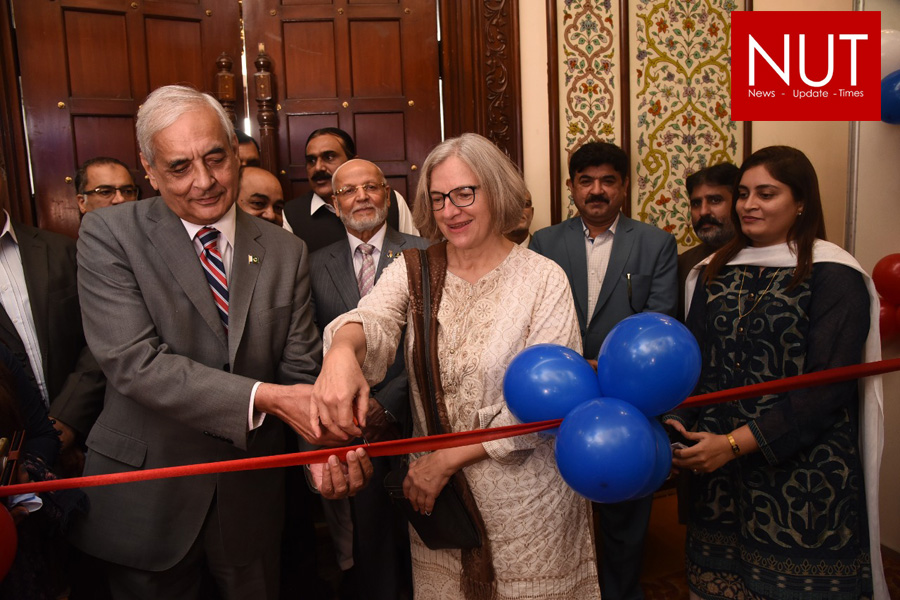
The ceremony was graced by Head of TVET Sector Support Programme Ms. Iris Cordelia Rotzoll, along with Director General NAVTTC Punjab Mr. Mujeeb ur Rehman and Chairman Punjab Vocational Training Council (PVTC) Maj. Shahnawaz Badar (Retd).

Head of TVET Sector Support Programme Ms. Iris Cordelia Rotzoll while speaking at the opening ceremony of the Rozgar Mela said that ‘Skilled youth of any country play a vital role for the economic development. TVET SSP is working with NAVTTC, PVTC and Punjab TEVTA to play its role in providing quality skills and job opportunities to youth.”

Chairman Punjab Vocational Training Council (PVTC) Maj. Shahnawaz Badar (Retd) while speaking at the occasion said that we are happy to see the results of TVET Sector Support Programme and efforts of Punjab Vocational Training Council (PVTC) especially in the area of industry-linkages. We hope and expect a greater cooperation and collaboration between PVTC and the private sector in enhancing quality of training and employment opportunities for our graduates.

DG NAVTTC Mr. Mujeeb ur Rehman said that, “Our efforts are to have best vocational and technical training system here in Pakistan than confirms the international standards. Today while seeing all these graduates having choice of the employment search as per the same demand-driven aspects of industry is the real showcasing of what we had aimed for.”

Moreover, a panel discussion on the topic ‘Employment for Economic Sustainability and the Role of the Private Sector in TVET in post COVID Scenario’ was conducted. All the panellists put forward their expert opinions on the training and human resource development aspects. The panel discussion ended with closing remarks by the chief guest.

The Hunar Rozgar Mela 2021 was concluded with the insights from the leading representatives of industry involved in TVET delivery like Chairperson Special Initiatives; Faisalabad Women Chamber of Commerce & Industry (Business incubation and skills development centre) Ms Qurrat ul Ain,  Mian Muhammad Kashif Ashfaq, CEO Chen One Stores (Chenab Group), Mr Atif Munir, President Faisalabad Chamber of Commerce & Industry, FCCI, Engr Rizwan Ashraf, certified expert industry-academia linkage, University of Cambridge, Ex Chairman APTPMA, Mr Muzzamil Sultan, President District Board of Management (DBOM) PVTC, Faisalabad and Mr Rehan Naseem Bharara, Chairman Faisalabad Garment City Company (FGCC).

Through this Mela, the TVET Sector Support Programme (Funded by the European Union, Norwegian and German Governments) and Punjab Vocational Training Council (PVTC) successfully showcased the skills of training institutes in Faisalabad that are implementing competency-based training in industry priority economic sectors.


Beaconhouse’s 14th School of Tomorrow conference: ‘Towards Happier Futures’ successfully concludes

Lahore (Muhammad Yasir) Beaconhouse, the country’s largest network of private educational institutions, has successfully concluded the 14th edition of its flagship ‘School of Tomorrow’ (SOT) conferences, themed ‘Towards Happier Futures’. The two-day virtual conference brimmed with multiple insightful discussions with over 50 global and local thought leaders in education, healthcare, athletics, and social and environmental development.

Focused on current and future educational standards, the opening session of the SOT conference featured a live discussion on the Single National Curriculum (SNC) and its progress, with the presence of Dr. Mariam Chughtai, Project Director at the National Curriculum Council and prominent leaders from private schools and publishers in Pakistan.

Valuable insights were delivered on the SNC, and whether the one-education-for-all approach suits the prevailing needs and educational setup of the country. “Whilst the content for a Single National Curriculum is being developed, its implementation lies with the provincial textbook boards, each of whom has a different interpretation of the curriculum,” shared Arshad Hussain, Managing Director, Oxford University Press. Dr. Mariam Chughtai on the other hand stated, “The National Curriculum Council has managed to achieve core standards for education in a very short time, and while there is no denying of problems in implementation of the SNC, streamlining it requires time.”

Eleven panel discussions were held, along with two workshops over two days. These talks revolved around creating a better future for the generations to come, with improved educational structures, ways to battle the impact Covid-19 has had on education, a focus on safer climate, the role parenting styles, media, and education play in developing a future, revival of sports post-pandemic, and child labour.

A prominent session titled, ‘The Power of Learner Agency – Curiosity, Creativity, and Innovation’, hosted by Ian Riley, School Head DHA at TNS Beaconhouse, featured students from the Beaconhouse network  and their efforts to cultivate initiatives and tackle challenges in order to become agents in their learning. The session showcased social initiatives led by the empowered students, including the TNS Monologue Slam’s participation in the World Monologue Games, Project Agaahi to promote adult literacy, and research and awareness on responsible consumption and production.

Another session moderated by popular TV anchor Sidra Iqbal revolved around the gender misbalance in society, harassment and consent, women’s rights and delayed justice in Pakistan. The discussion included social activist Neelam Hussain, Fauzia Waqar, Chairperson of the Punjab Commission on the Status of Women (PCSW), and Nida Usman, Founder of Women in Law, Pakistan. “Gender roles are intergenerational and have been transmitted down over centuries; unlearning needs to happen at a young age for all. Boys and girls growing up in the same house grow up with different sets of rules, and the role of education, parenting, and media is crucial in mitigating this lack of balance,” was an opinion shared during the insightful conversation.

The 14th SOT conference included prominent leaders including Drew Perkins, Director, Professional Development at TeachThought; senior journalist James Dorsey; popular sports anchor Zainab Abbas, Edward Davis, Head of Afghanistan Reconstruction Trust Fund; Mehnaz Rehman, Director Aurat Foundation; Bronwyn Jacobs, Educationist and Media Journalist from China, and others.

The SOT was initiated by Beaconhouse as a series of events to support the institution’s quest to redefine education in Pakistan. The Beaconhouse Group holds a legacy of 45 years of educational expertise and currently has over 315,000 students enrolled full-time across more than 190 private school branches in eight countries. This year’s conference was sponsored by United Bank Ltd. (UBL).