Panel discussion at Kinnaird University

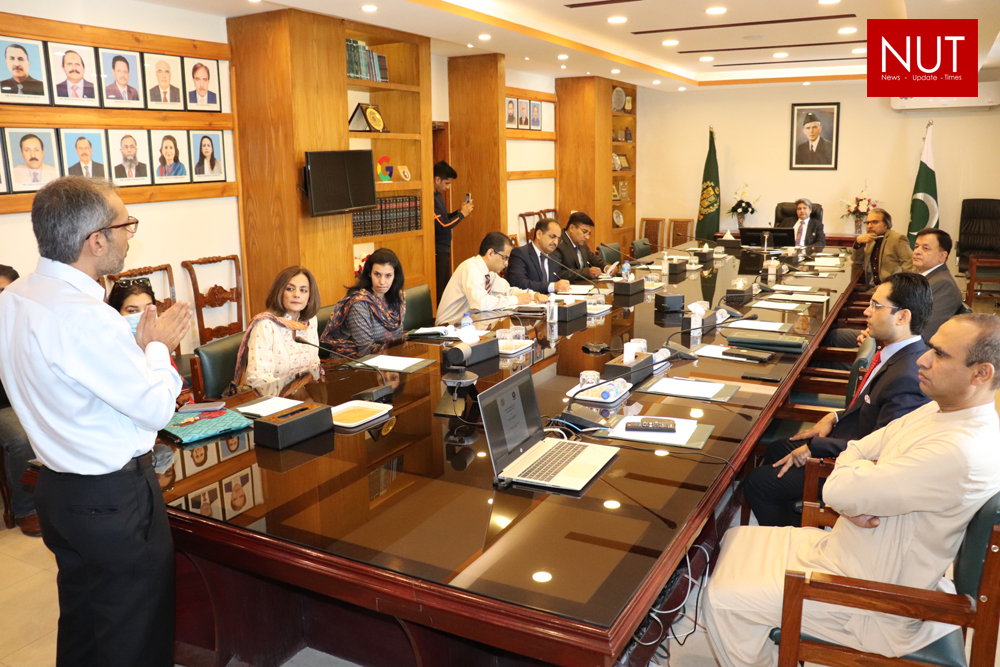
Lahore (Muhammad Yasir) Eminent scholars stressed the significance of Punjabi Partition drama on both sides of the border for promoting harmony and peace. They were speaking at a panel discussion, organised by the International Centre for Pakistani Writing in English and the Kinnairds College University, Faculty of Humanities and Social Sciences. Those who spoke on the occasion included US-based scholar Professor Amritjit Singh, playwright Shahid Nadeem, Jhang University Vice Chancellor Dr Nobila Rahman and Punjabi scholar Ms Satwant Kaur. The discussion revolved around playwright Atamjit’s recently published anthology “Plays from a Fractured Land”, which also includes an English translation of Shahid Nadeem’s “River of Sorrow” ( Dukh Darya). The speakers agreed that the Partition is still an important theme for Punjabi writers and appreciated Atamjit’s contribution towards an understanding of the theme in Punjabi drama.

Dr Waseem Anwar welcomed the panelists and introduced the subject.

The panel discussion was followed by Ajoka Theatre’s performance of a short play “Bulha te Banda”, which presented the dramatic conflict between Sufi poet Bulleh Shah and Sikh warrior Banda Singh Bairagi. The cast included Usman Raj as Bulleh Shah and Usman Zia as Banda Singh while Ali Moon Qawals sang Bulleh Shah’s kalam.

Dr Rukhsana David expressed her deep appreciation of the Ajoka performance and the panelists for an enlightening discussion. She also presented souvenirs to the guest speakers.The audience included Kinnairds faculty members, students and scholars. Ajoka’s next performance is a social play “Jhalli”. Art of Acting students of Ajoka Institute will perform “Jhalli” at PILAC 7:00 p.m. tomorrow Saturday 29 Oct, 2022.

USAID IMPARTS LEADERSHIP TRAINING TO DEANS OF PUBLIC SECTOR UNIVERSITIES

Islamabad (Muhammad Yasir) The USAID’s Higher Education System Strengthening Activity (HESSA) conducted a two-day training titled ‘Advancing Leadership Capacities of Deans’ for public sector universities. HESSA is being implemented in collaboration with 16 Pakistani universities with a focus on strengthening universities’ capacity to deliver market-driven education and research to enhance graduate employability.

The inaugural session was attended by USAID’s Director of Education Office, Ms. Anne Flaker, USAID’s Senior Education Advisor, Ms. Asima Rehman and Executive Director of Higher Education Commission, Dr. Shaista Sohail. Speaking at the occasion, Dr. Shaista stressed the importance of continued investment in higher education and appreciated USAID’s commitment to Pakistan’s economic growth. She said, “To improve the quality of all the service sectors and government departments across Pakistan, we need to invest more in the education sector and particularly the higher education. By strengthening our higher education system, we can build a cadre of expertise and leadership in the all the relevant areas.”

To effectively lead the various departments, university Deans must possess a variety of skills including excellent critical thinking ability to understand the needs of their institution, faculty, and students and find practical solutions, particularly for resource mobilization, visioning, and fundraising activities. The Deans also require strong interpersonal, communication, and leadership skills to interact with all members of the institution effectively.

This training, facilitated by international experts from the University of Utah and the University of Alabama, empowered the Deans to lead the long-term transformation of their universities by providing a sustainable pathway for change through implementing latest knowledge and theories of change. Furthermore, this 2-day training will be followed by online sessions where Deans will develop strategic plans for improvement of student success and linking outcomes with their university specific mission and values.

HESSA is a five-year, $19 million, USAID-funded program that seeks to improve public universities’ capacity, relevance, adequacy, and inclusivity by engaging a wide array of stakeholders to introduce sustainable higher education reforms in Pakistan. In addition to working with universities on international best practices in teaching, research, and governance, HESSA also seeks to enhance the support services available to students on campus.


Pakistani duo among ACCA’s global prizewinning students

Pakistan (Nut Desk) Pass rates have been announced by ACCA (the Association of Chartered Certified Accountants) for students who sat their exams in September 2022. Two Pakistani students have made the country proud by scoring highest marks to qualify for the cash prizes. ‘83,630 ACCA students from around the world entered for the September sitting and It’s particularly pleasing to see Pakistani students shining in the exams and building a strong reputation for the country on a global level for top finance talent. It’s not about one or two meritorious students, we’re seeing a growing trend of ACCA students and professionals from Pakistan creating a global impact with their ability and ambition. This also proves how our people can compete and win globally if they’re offered right support and a global platform,’ said Rashid Khan, ACCA’s spokesperson for the Asia Pacific region. The ACCA Qualification rigorously tests the skills, abilities and competencies that a modern accountant needs, with a firm grounding in ethics and professionalism. It prepares students for a rewarding global career as a qualified and ethical finance professional. Malik Shahmir Pervez Malik Shahmir Pervez earned the global position for demonstrating stellar performance in the Advanced Audit and Assurance (AAA) exam which is considered one of the most challenging of all ACCA papers. Shahmir comes from a modest family and his father was a truck driver in Rawalpindi. He completed his early schooling at an Urdu-medium local school before joining the Army Public School (APS). Despite the fact that he had to adjust to English-medium in his new school, he qualified for a scholarship after proving his mettle in exams at APS. He then completed pre-medical at Fauji Foundation College with an A-1 grade but was unable to continue his education after the sudden death of his father who was also his best friend. For two years, Shahmir went through a severe mental trauma and would spend whole day in his room. With family’s love and support, he was finally able to come out of the emotional ordeal and ended the hiatus in his studies by opting to study the globally renowned ACCA Qualification. ‘I feel it’s important for everyone to talk about mental health more openly and the reason I’m sharing my struggle of coping with all sorts of anxieties is simply because I would like to tell those who’re currently going through a similar phase that it’s okay to be not okay and it’s never too late to press the restart button.’ After joining ACCA, this is Shahmir’s first global distinction and third national distinction. He loves studying with ACCA since he was never a fan of rote learning and would rather focus on understanding the concepts. ‘ACCA is the world’s most innovative professional body and the same is reflected in how it has designed its qualifications and assessments. With ACCA, you’re always ahead of the curve when it comes to the latest knowledge and most in-demand skills,’ said the AAA prizewinner. The 23-year-old who is only one paper away from becoming an ACCA affiliate sees his career at a big4 firm and would like to join the audit profession soon after qualifying with ACCA. When not studying, Shahmir keeps himself active by playing sports such as Table Tennis and Cricket. Noman Abbasi Noman Abbasi who’s celebrating his 22nd birthday this month is one of the two Pakistanis who also made the ACCA’s list of global prizewinners by scoring the highest marks in the Financial Reporting (FR) exam. Listening to the news, Noman’s father, who is a doctor by profession, had tears in his eyes. He proudly admits that his son’s achievement is undoubtedly the highlight of his life and nothing else can ever come close to the feeling of seeing one’s son or daughter succeed in such a coveted exam. Originally from Kashmir, The Abbasi family came to Karachi in search for better economic prospects some five decades ago. Noman’s father completed his MBBS here and went on to serve in the army. He has been running his private practice since 1982, the year he finished his military service. With father being a doctor and brother an engineer, Noman felt pressured to study pre-medical in college but he always knew his interest lied elsewhere. ‘I wanted something more exciting to do in my career and travel the world. So, accountancy was a natural choice for me.’ Soon after passing Intermediate, Noman chose to start his ACCA journey and has shown exemplary performance in all his exams so far. ‘When in college, I never felt great studying due to the lack of interest. But now I get such an adrenaline rush analysing the financial data and preparing reports that I don’t need any other motivation to stay focused.’ 

Ministry of Education signs agreement with Federal Government education institutions to promote STEAM education

Islamabad (Muhammad Yasir) While transitioning from the exam-centred to learning based approach, the Ministry of Federal Education & Professional Training’s (MoFEPT) STEAM Pakistan program is focused on improving conceptual understanding and analytical skills of school children across the country, with a specific focus on girls’ education.Launched in early 2022, the program has already started its interventions in middle and high schools in the Islamabad Capital Territory.

As part of the program, MoFEPT signed a Letter of Understanding (LoU) today with the Federal Government Educational Institutions (FGEI) for a roll-out of STEAM interventions across all of its high schools.

FGEI’s Director General, Major General Muhammad Asghar, HI (M), stated that “STEAM Pakistan project will complement the various measures taken by FGEI to attain the objective of quality education and promote the conceptual learning and development of soft skills in youth”.

The LoU intends to support FGEI’s efforts on targeting students in middle schools across its network, with MoFEPT providing technical support for systems, teacher training, and STEAM content.

Additional Secretary Waseem Ajmal Chaudhry at the signing ceremony remarked, “It is important that we focus on our children’s learning, and today is a great opportunity for the Ministry of Federal Education to collaborate with another Ministry for this purpose. The Ministry looks forward to providing similar technical support to provinces on STEAM”.

FGEI currently manages 190 high schools in 45 districts across all provinces and AJ&K, and a total of 311 schools (including 13 higher secondary schools) and 47 colleges across Pakistan with over 8,000 teachers and 200,000 students. FGEI operates under the aegis of Ministry of Defence.

STEAM Pakistan is a collaborative project through which Malala Fund and partners are providing support to the Federal Ministry of Education and Professional Training to advance secondary school-aged girls’ access to science, technology, engineering, arts and mathematics education in Pakistan.

“Makers Mela” showcased the prominent talent of art and craft entrepreneurship.

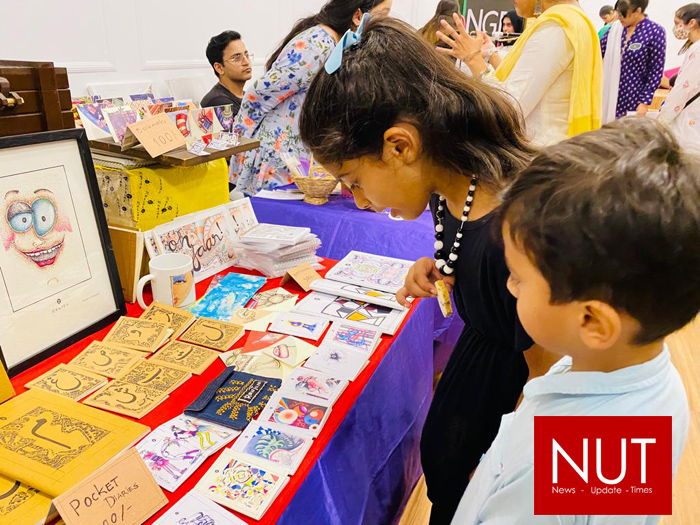
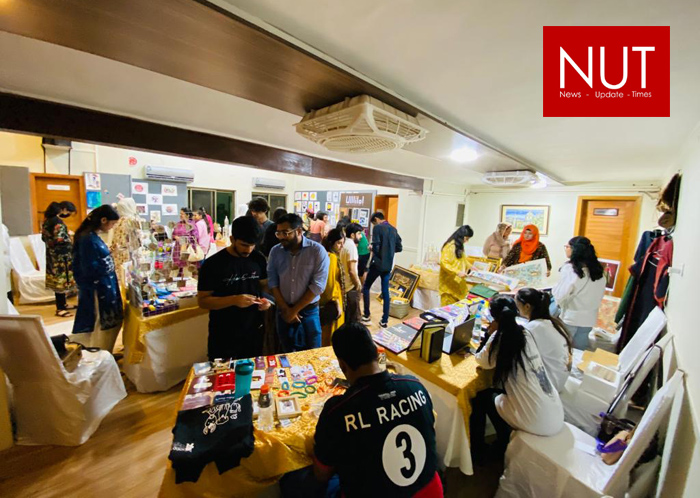
Lahore (Muhammad Yasir)  The Little Art and The Tinkers’ arranged an enlightening event entitled ” Makers’ Mela” at Aangun – Center for Learning and Culture in Lahore on saturday 1st October. 
The Makers’ Mela was all about promoting entrepreneurship among youth, while hosting creative startups to showcase their products. The event is presenting creative art and craft, home décor, stationery, fashion, food and more. 
The event also engaged children through exciting games, competitions & all-day entertainment–storytelling, dance, music, raffle draws, discounts and cool prizes. 
At Aangun, The Little Art offers unique activities in film, theatre, photography, science, arts and crafts, and yoga by skilled artists.
“Aangun is new project that The Little Art has started, and we are aiming to contribute to Lahore cultural and social life, speacaily for children and young people through arts and creative opportunities. Makers Mela is one initiative which launch as a regular feature of the center.” It was first Makers Mela which proved a roaring success as people from all walks of life attended it. Shoaib Iqbal, Director, The Little Art. 
The Little Art is a non-profit organisation that is also actively inviting other creative projects, youth organisations and collectives to collaborate to host various similar events in future.

Homebridge by Beaconhouse partners with Cambridge International for Pakistan’s First Hybrid A Level School

Pakistan (Muhammad Yasir) Beaconhouse, Pakistan’s largest network of private educational institutions, under its A Level school, Homebridge, has signed an exclusive partnership agreement with Cambridge International to offer AS and A Levels qualification through the Homebridge online school programme for students. Homebridge by Beaconhouse is Pakistan’s first hybrid Cambridge International A Level school, offering students an opportunity to study their Cambridge programme with online lectures, teachers and all the facilities required for an uninterrupted learning journey. Through the hybrid model, students have access to Beaconhouse campuses for extracurricular activities, libraries, and labs. The signing ceremony was held at Cambridge International’s head office, in Cambridge, UK. Speaking at the ceremony, Nassir Kasuri, Chief Executive Officer, Beaconhouse Group commented on the partnership saying, “As the world goes through a digital transformation, it is an opportune time for both organisations to work together on a hybrid school that will make A Levels accessible to a new group of students, breaking social barriers, as well as the widely prevalent gender gap in education in Pakistan. This collaboration is a source of social mobility in the country and we are confident that it will help open up new avenues and opportunities for the youth.” Rod Smith, Group Managing Director, International Education, Cambridge International said, “Our relationship with Beaconhouse is close to 50 years old and continues to grow to offer new opportunities to learners. The number of students taking Cambridge qualifications and using our resources in Pakistan is phenomenal, and we greatly value our relationships with schools in Pakistan. I think the more we can do to strengthen these relationships, the more we can do to impact education for the benefit of the country. We need partnerships because we need to continue to learn from each other. Our partners, like Beaconhouse, help us understand how the education services we develop in Cambridge are going to meet the needs of learners in Pakistan.” Other members of Cambridge International’s senior management team also attended the ceremony, including Uzma Yousuf, Country Director, Pakistan; Ian Harris, Deputy Director, Marketing Communications; and Jonathan Hardy, Head of Schools Development. This unique partnership will support Beaconhouse and Cambridge International’s continuing work to make high-quality education accessible to students across Pakistan, particularly students in remote areas where access to international qualifications may be difficult.


ICT can play a vital role in higher education of Pakistan: UNESCO IITE and Huawei reported

Pakistan (Muhammad Yasir)  A joint report by the UNESCO Institute for Information Technologies in Education (UNESCO IITE) and Huawei has revealed the importance of developing ICT talents and creating relevant ecosystems to enhance ICT skills in the Middle East and expand access to career opportunities in the digital world. The joint publication aims to provide recommendations for decision-makers and other stakeholders on strengthening the digital skills required for employability in the digital era labor market. The report covers Bahrain, Iraq, Jordan, Kuwait, Lebanon, Oman, Qatar, Saudi Arabia, UAE and Pakistan. Commenting on the report launch, Mr. Tao Zhan, Director of UNESCO IITE, said, “UNESCO has identified ICT as a tool for accelerating the progress towards the Sustainable Development Goals (SDGs), including equitable access to quality education for all.” Mr. Shunli Wang, Vice President of Huawei Middle East, said, “As the report shows, ICT is a powerful tool to facilitate social impact.” Higher education and TVETs are considered significant enablers of digital transformation and vital components of national visions and strategies for economic development by most of the countries. Therefore, modernizing education systems and upgrading ICT infrastructure have become national priorities across all surveyed countries. Proper infrastructure and qualified human capital are pivotal for achieving SDGs. This focus is reflected in the ever-increasing number of institutions offering ICT-related studies. For example, 23 universities and colleges (out of 30 higher education institutions) in Oman admit students to ICT-related majors. In Iraq, 12 vocational schools offered computer and information technologies courses during the 2018–2019 academic year. In Pakistan, the government has set up the Allama Iqbal Open University (AIOU), the Virtual University of Pakistan (VU), and the Information Technology University to promote ICT in higher education and TVET.

Launch of Google Career Certificates to Empower Youth and Women

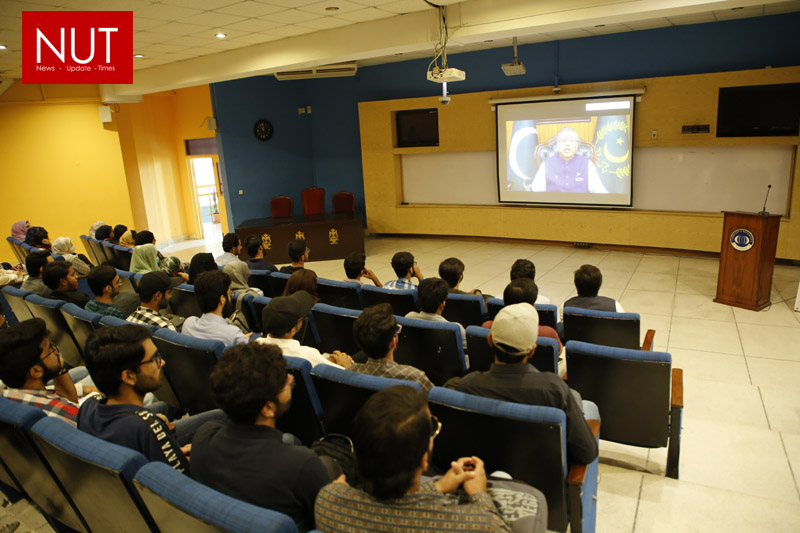
Islamabad (Muhammad Yasir) Pakistan is in dire need to capacitate the youth to enable them to contribute in the development of country, especially those who can not afford to attend the universities. These thoughts were expressed by President of Pakistan Dr. Arif Alvi, during his video keynote address in the launching ceremony of Google Career Certificates in Pakistan, being carried out jointly by Google, Institute of Rural Management (IRM) and Ignite.

Dr. Arif Alvi further said “I am very pleased that google, IRM and Ignite are launching google career certificates in Pakistan. This program has ensured the women participation throughout the program. These courses will play an important part in creating a shift towards digitization and introduction of digital technology.” He expressed hope that initiation of such projects will bring about the required digital revolution in Pakistan.

Dr. Arif Alvi stressed the youth to take benefit of these courses and enroll themselves in digital programs to increase their earnings as they are completely online and free.

During the ceremony, speakers from Google, Ministry of IT, Industry and Academia addressed the participants on the importance of the google career certificates in Pakistan.Dr. Roomi S. Hayat said that “he hopes that with the help of such programs, soon we would be a thriving country in the digital world”. CEO Ignite said that “Ignite has always contributed to the digital economy of Pakistan and through this certificates Ignite intends to further strengthen the digital economy”.
Participants were also given a detailed orientation session on how to enroll and join the google career certificate program.

Huge funds needed to rebuild schools destroyed in floods, education experts

Islamabad (Nut Desk) Educationists and experts stressed on rehabilitating and rebuilding the education infrastructure  destroyed in the recent floods to minimize the learning losses during a cross-sectoral conversation on “Defending Education Against Climate Change.” The conversation was organized virtually by the Ministry of Federal Education and Professional Training’s STEAM Policy Unit.
Strong public-private partnership models, development and implementation of a comprehensive remedial and accelerated learning program, and international commitment to rebuild the destroyed educational infrastructure on war footing were some of the solutions put forward by the experts to ensure nimble access to education for the displaced children.
 “From our conversations with the Punjab Education Department, we know that it takes around Rs. 12 million to rebuild one school. This means we need a whopping Rs. 216 billion to rebuild 18,000 schools destroyed in the recent floods.” This sobering reality was shared by senior education expert and author of “Teachers, Bureaucracy, and Politicians,” Javed Ahmed Malik.
Focusing on the infrastructural damages and the looming specter of learning losses, international Education Activist, Moiz Hussain shared, “From the initial reports, over 3.5 million children have been affected by the floods. The biggest challenge we faced during the Covid-19 pandemic was the learning losses due to prolonged school closures. We are once again facing the same challenge since most school buildings are in no condition to accommodate students anytime soon.”
Drawing from past precedents of rehabilitating and rebuilding the education infrastructure after a natural calamity, Head of the STEAM Policy Unit, Salman Naveed Khan pointed out that the process was often considerably slow and even staggered. “The reconstruction of the last lot of schools destroyed in the 2005 earthquake was completed only last year in 2021. If we take this as a benchmark, it will take us 16 to 17 years to rebuild the 18,000 schools which were destroyed in the recent floods.”
The situation of girls during this time of crisis is especially vulnerable. With millions displaced and left shelterless, girls’ return to education, it is feared might be compromised in favour of early marriages and child labour. “If we don’t act swiftly, girls, as always, will have far bleaker chances of ever resuming education than boys in the aftermath of this disaster,” shared senior Gender and Climate Change Specialist, Afia Salam.
Multi-media journalist Amber Shamsi lamented the system’s inability to learn from the past. “It seems we haven’t learned anything at all from the earthquake in 2005 and the floods in 2010-11. We are once again racking our brains to reinvent the wheel when so many solutions can be extracted from the calamities that we went through less than two decades ago.”
The need to include climate education in the curriculum also came under discussion as an important long-term strategy. “If we do not teach our children about climate change, problem-solving and decision-making skills from an early age then we will never be able to protect ourselves from the catastrophic impacts of climate change,” commented television anchorperson Zarrar Khuhro.
Fozia Parveen, Assistant Professor at The Agha Khan University, however, stressed that climate education should not merely be taken as information about natural disasters, and pollution, but should come hand-in-hand with practical skills which can effectively help a community protect itself during a crisis caused by climate change. Adding to this, Arooj Khalid, Senior Project Officer at Science Fuse shared, “During our science activities in schools in Balochistan, female students eagerly told us about the impact of climate change on their lives. If provided the right information and skills at the school level, these students can help their communities rise above the challenge.”
The recent floods that have left almost 70% of Pakistan’s landmass submerged under water, displaced close to 33 million people, and taken thousands of precious lives have also left the country’s fragile education system in tatters.
STEAM Pakistan is an initiative of the Ministry of Federal Education and Professional Training, which aims to enhance secondary-school-aged students’, especially girls’ access to science, technology, engineering, arts, and maths education across the country.

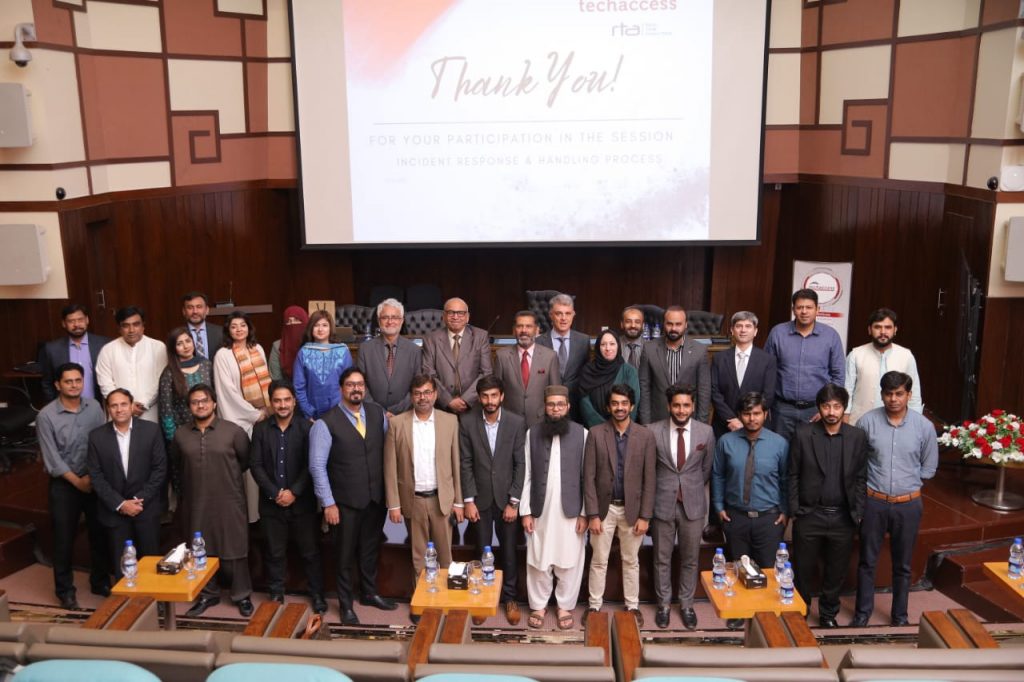
Techaccess organized seminar on cyber security and its challenges

Islamabad (Muhammad Yasir) Techaccess Pakistan today hosted a session on “Cybersecurity Challenge in Critical Infrastructure (Power Sector)” in Islamabad aim of soliciting awareness amongst national public and private sector’s energy power entities against the global risks of cyber-attacks.

The session was organized by Techaccess Pakistan and a large number of power sector’s professionals, trade and business representatives, NEPRA’s members of the authority and professionals attended the event.

Chairman NEPRA, Tauseef H. Farooqi in his welcoming address highlighted the importance of the session. He remarked that cyberspace is the new 21st century warzone. Most of the cyber-attack in 2021 and 2022 were focused on energy sector. Cybersecurity is more challenging within power sector due to dispersed geo locations of generation plants and interdependence between OT and IT infrastructure. Cybersecurity incidents are now “Eco-System” challenges because it is not just one electricity supply chain actor that is targeted but the weakest link in somewhere in country’s power system. We need comprehensive cybersecurity governance model to deal with this Ecosystem challenge and promote security and resilience-by design culture.

CTO Tariq Malik emphasized that the recent cyber-attacks by means of “viruses” or other known methods against primary energy operators and in general OT (SCADA) Systems, are once again reminding us that we are now facing a very expensive “digital pandemic” which has become an “endemic” in threat handling.

In fact, many events of cyber incidents are continuously emerging at global level on several OT Systems on different industrial technological plants with a fluctuation of increases and temporary apparent decreases in the number of cases identified (not always able to detect or report).

Unlikely, Industries have to learn to live with it, putting in place and continuously updating the necessary treatments to thwart and “mitigate their effects” according to “protocols” suggested by Cyber Security Authorities and Industrial entities, specialists in the Cyber Domain, daily involved to categories insurgences’ cyber incidents and their effects. In the session the trainer also talked about the cyclical practice of identifying, classifying, prioritizing, remediating and mitigating software vulnerabilities that provides the idea of vulnerability management.

Among the indications that emerge from various parts as a common factor, it will undoubtedly be decisive that of investing with determination in the creation of a progressive national autonomy in the development of advanced products and technologies to be promptly integrated into the public cyber security ecosystem or private cyber security ecosystem.

Mehmood Jabbar CEO of Techaccess Pakistan jointly with its industrial partner RTA has exactly approached this mission to have a national under controlled cyber security solution which is able to manage in a secure way its H24 support national Corporates and Governmental Authorities by the adaptation of RTA and iSOC to the operational requirements and IT / OT infrastructures for its most sensitive Customers. Saad Mudassir Chief Company  Engineer from Associated Press of Pakistan said that, “The event was so informative and well managed. The practical training is something above, considering generic workshops”.