Empowering Pakistani Students to Pursue Education and Careers in Canada

Pakistan (Muhammad Yasir)

In an increasingly interconnected world, access to global education opportunities is more critical than ever. For Pakistani students aspiring to study abroad, the journey to finding the right college and navigating the admission process can be daunting.

To assist these ambitious students, Career Canada Co (CCC), a recently launched educational consultancy, is offering professional and trustworthy advice, particularly for those seeking higher education options in Canada.

The platform aims to provide Pakistani students with comprehensive information about a wide range of study options in Canada, from short-term diplomas to full-scale undergraduate programs.

By providing clear pathways to potential career opportunities in Canada, the consultancy hopes to facilitate an easier transition into the Canadian education system for international students.

Career Canada Co’s commitment to the success of its students is evident in its strategic partnerships with top Canadian educational institutions, who have recognized the consultancy as a premier partner in Pakistan.

These partnerships lend credibility to students’ advice and support, helping them feel more confident as they embark on their international educational journey.

The company’s services include personalized counseling sessions, assistance in selecting suitable educational institutions, application guidance, and even visa application support.

The pre-departure orientation programs provided by the consultancy aim to prepare students for their move to Canada, providing them with insights into the academic environment and culture.

In essence, Career Canada Co promises to become a trusted companion for Pakistani students on their educational journey abroad.

The venture represents not only a valuable resource for students seeking international education but also a significant step in strengthening educational ties between Pakistan and Canada.

From Evidence to Impact in Public Health; A success story of community-based education and research.

Pakistan (Muhammad Yasir)
The Aga Khan University organized a symposium titled “From Evidence to Impact in Public Health”, which showcased the impact of the work conducted by the University’s Community Health Sciences department through education, training, and research. These initiatives have a direct impact on public policy, quality of life and health outcomes in the communities they serve. 
CHS educational programmes are designed to train the next generation of leaders in public health including community health workers and junior researchers who are integral to our health system. The department’s research is designed to investigate relevant issues, develop novel solutions and test interventions, for instance in the case of reducing maternal mortality.
Professor & Chair, Department of Community Health Sciences, Dr Sameen Siddiqui spoke of the research to policy nexus and how public health policy is informed by evidence that comes from the field. “AKU’s Community Health Sciences department has played an active role in engaging in policy and systems analysis and research that has helped inform health policies in support of primary health care, health system strengthening, and universal health coverage.” 
Some notable contributions are towards the global Asthana Declaration on Primary Health Care in 2018 and its influence on the renewed Primary Healthcare (PHC) approach. At the national level, the experience of developing evidence informed Essential Health Package of Services is one of the tangible outcomes of this approach, as well as the comprehensive review of the Sehat Card program in Khyber-Pakhtunkhwa. 
The work on child health has been exceptionally beneficial. For instance, testing innovations of minimally invasive tissue sampling techniques which has helped in identifying fetal, maternal, and placental causes of stillbirths and preterm births. Professor at the Department of Community Health Sciences, Dr Sarah Saleem’s work with global partners such as Columbia University and Research Triangle Institute North Carolina has positively impacted communities in Thatta, enabled the creation of a Maternal and Newborn Health Registry and harnessed the power of high quality data to forge local solutions that are effective. 
Dr Zafar Fatmi’s work zeroed in on issues native to local communities; household energy and health, air quality, eco revitalization of the river Ravi and arsenic contamination in the Indus river to name a few, and how these phenomena are intrinsically linked to human health. Focusing on the integration of Pakistan’s private health sector for Universal Health Coverage (UHC), Professor of Health Policy & Systems at AKU-CHS, Dr Shehla Zaidi shared her extensive portfolio of research-based knowledge drawn from implementation pilots with the government, public-private partnership assessment studies, and formative work on private provider preferences and engagement modalities with the government to align with the country’s Good Health and Well-being Sustainable Development Goal objectives. 
Experts from across AKU participated in the various panels and presentations, with many renowned national and international guests also joining in such as Mr Zafar Mirza, Former Federal Health Minister, Govt. of Pakistan, Dr Awad Mataria, Director Universal Healthcare (UHC),/ Health Systems Regional Office for the Eastern Mediterranean EMRO, WHO, Dr Paul Erwin, Dean of the School of Public Health (SPH), University of Alabama at Birmingham, and Dr Zainab Samad, Chair of Medicine, AKU. 
“Our collaborations with institutions like AKU enable us to bridge the gap between academia and policy-making”, said Dr Mataria during his panel discussion on strengthening public health. 
The Chief Guest for the event was the esteemed Sindh Minister for Health, Dr Azra Pechuho. AKU works closely with local, provincial, and federal government bodies through symbiotic collaborations aimed at improving access and quality of our healthcare systems. Dr Pechuho appreciated AKU’s partnership and the trust between the two entities, expressing a desire to forge stronger partnerships in the field of preventive healthcare, particularly, adolescent girls’ health, nutrition, maternal health, family planning, telehealth, and skill development for women.

ACCA’s Pakistan careers fair facilitates networking with 200+ employers, opening doors to 600+ finance job roles

Pakistan (Muhammad Yasir)

ACCA (the Association of Chartered Certified Accountants) successfully organised its 4th edition of the Virtual Careers Fair, featuring 200+ top organisations and 600+ job opportunities. The event also included exclusive sessions conducted by industry experts to enhance participants’ employability skills.

The event, enabled by a world-class digital platform with exciting features, attracted thousands of accounting and finance students and professionals. They actively engaged with top employers, accessed valuable insights from industry experts, and formed meaningful connections, making the event highly interactive and impactful.

Participating employers represented diverse industries, including Shared Services/BPO, Consultancy, Accounting & Public Practice (including Big 6 and SMPs), Manufacturing (Textile, Cement, and Automotive), BFSI, FMCG/Retail, Property & Construction, Telecom, and Health/Pharma. This wide range of industries showcased a rising demand for ACCA qualified accountancy and finance professionals.

The event garnered overwhelmingly positive feedback from both participating employers and attendees, who highly valued the overall experience. The presence of prominent employers and the caliber of job opportunities showcased through ACCA Careers (online jobs portal) further emphasised the significance of the accountancy profession. Employers expressed their satisfaction with the exceptional pool of highly motivated and qualified individuals, recognising their potential in building resilient and future-ready organisations.

Assad Hameed Khan, Head of ACCA Pakistan, warmly welcomed all attendees and expressed his thoughts on the event, stating, ‘The growth and impact of the Pakistan careers fair are truly remarkable. In the face of global economic uncertainty, initiatives like this play a vital role in super-connecting our employers with globally in-demand ACCA professionals, thereby supporting talent acquisition and fulfilling career needs.’

Students from Kinnaird College Pakistan Excel at Summer School Program in France.

Lahore (Qasim Ali)

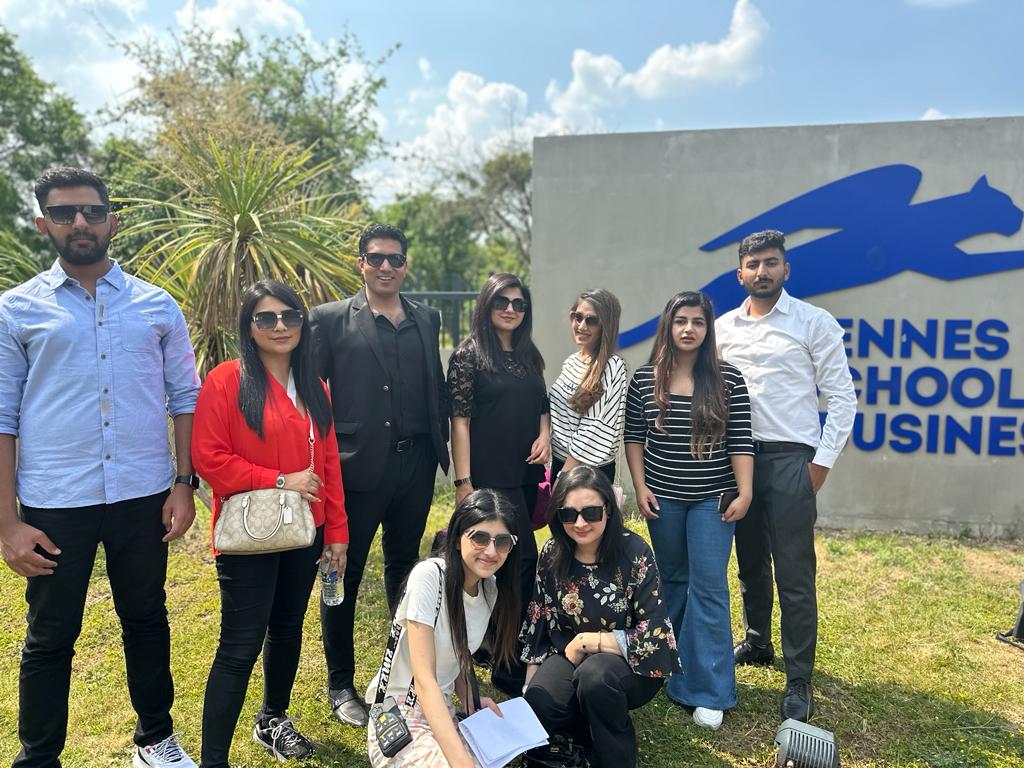
A group of talented students from Kinnaird College, Pakistan, recently participated in the highly anticipated Summer School Program organized by Rennes School of Business in France. The program, which focused on sustainable development, global diplomacy, cultural entrepreneurship, and cross-cultural management, provided an enriching learning experience for the students.

Throughout the program, esteemed professionals such as Prof. Jennifer Ramsay, Mr. Rizwan Anwar, Ms. Maha Jamil, Dr. Sami Bajwa and several other experienced professors delivered insightful sessions, exposing the students to valuable knowledge and experiential learning. Their expertise and guidance enabled the participants to broaden their horizons and gain practical skills in various fields of study.

In addition to the academic pursuits, Rennes School of Business is proud to announce its participation in the Second Edition of the Choose France Pakistan program. This program, initiated by the French Embassy in Pakistan, aims to foster collaborations between the two nations and promote educational opportunities in France for Pakistani students. Kinnaird College for Women is committed to strengthening the educational ties between Pakistan and France, further enhancing academic exchanges and cultural understanding.

The students and participants of the Summer School Program expressed their heartfelt gratitude to the French Embassy in Pakistan and Ms. Sabine Vermillard, Attaché for Educational and Scientific Cooperation, for their instrumental role in developing such remarkable opportunities for students. Their support and efforts have opened doors to a world of possibilities, empowering students to explore their potential on an international platform.

Kinnaird College takes immense pride in the achievements of its students and recognizes the invaluable contribution of Rennes School of Business and the French Embassy in Pakistan in nurturing the academic growth of Pakistani students. This endeavor has not only expanded their knowledge and expertise but has also strengthened the ties between the two nations.


ACCA proposes budget measures for tax year 2023-24 to address Pakistan’s economic challenges

Lahore (Muhammad Yasir)

ACCA (the Association of Chartered Certified Accountants) has unveiled its budget proposals for the fiscal year 2023-24, highlighting the need for significant shifts in Pakistan’s economic policies to tackle pressing challenges. The proposals aim to address issues such as population growth, climate change, agricultural disincentives, and food security concerns.

ACCA emphasises that to keep policies and their implementation consistent, the government, political parties, and business groups should sign a ‘charter of the economy’ for the next 10-15 years. This long-term commitment will provide stability and foster sustainable economic growth.

The budget proposals suggest a multi-faceted approach to improving the balance of payments, reducing imports, boosting local consumption, lowering inflation, and increasing exports. ACCA underscores the importance of consistent economic policies, leveraging indigenous resources and talent, and embracing a new economic model.

In line with these objectives, ACCA recommends sustainable reduction of non-essential imports and identifying import substitutes to lower the import bill. Efforts to promote eco-friendly energy sources, implement daylight savings, and reduce business hours and working days can help decrease reliance on oil and gas imports.

To enhance exports, ACCA emphasises the need to focus on services that leverage Pakistan’s abundant raw materials and skilled youth. Shifting the tax burden to higher-income individuals and subsidising the cost of living for middle and lower-income segments are proposed to ensure equitable taxation policies.

ACCA calls for significant strides in the documentation of the economy to expand the taxpayer base. Leveraging technologies such as Artificial Intelligence and data analytics, the global body recommends identifying individuals living beyond their declared means and businesses making misdeclarations to bring them into the tax net.

Structural reforms, including reduced tax rates and simplified compliance processes, can make tax evasion less attractive and improve the efficiency of the taxation system. ACCA proposes minimal tax rates for large agricultural landowners, with generated revenue used to subsidise essential farming needs for small farmers.

To facilitate economic recovery, ACCA suggests incentivising local industry, manufacturing, and mining while revising costly agreements in the energy sector. Investment in green energy projects, encouraging the use of domestic products, and promoting entrepreneurship through the banking sector are also highlighted as key strategies.ACCA underscores the growth potential of Pakistan’s IT/ITeS sector and calls for favorable policies, tax rebates, and investment in high-skill training to unleash its full potential. ACCA also recommends expanding the tax net by bringing professionals such as doctors, accountants, engineers, lawyers, and architects into the tax system.

Furthermore, ACCA proposes the establishment of a venture capital fund to support Pakistani start-ups, subsidies for solar panels, and prioritisation of the livestock sector in the upcoming budget.

ACCA’s Global Tenets of Taxation serve as a guiding framework to establish public trust and an effective taxation system. The accountancy body emphasises the importance of openness, transparency, simplicity, and certainty in tax legislation and operations.ACCA believes that by implementing these budget proposals, Pakistan can pave the way for sustainable economic growth, address unemployment challenges, and position itself as a regional powerhouse.

Aga Khan University celebrates World Environment Day

Pakistan (Muhammad Yasir)

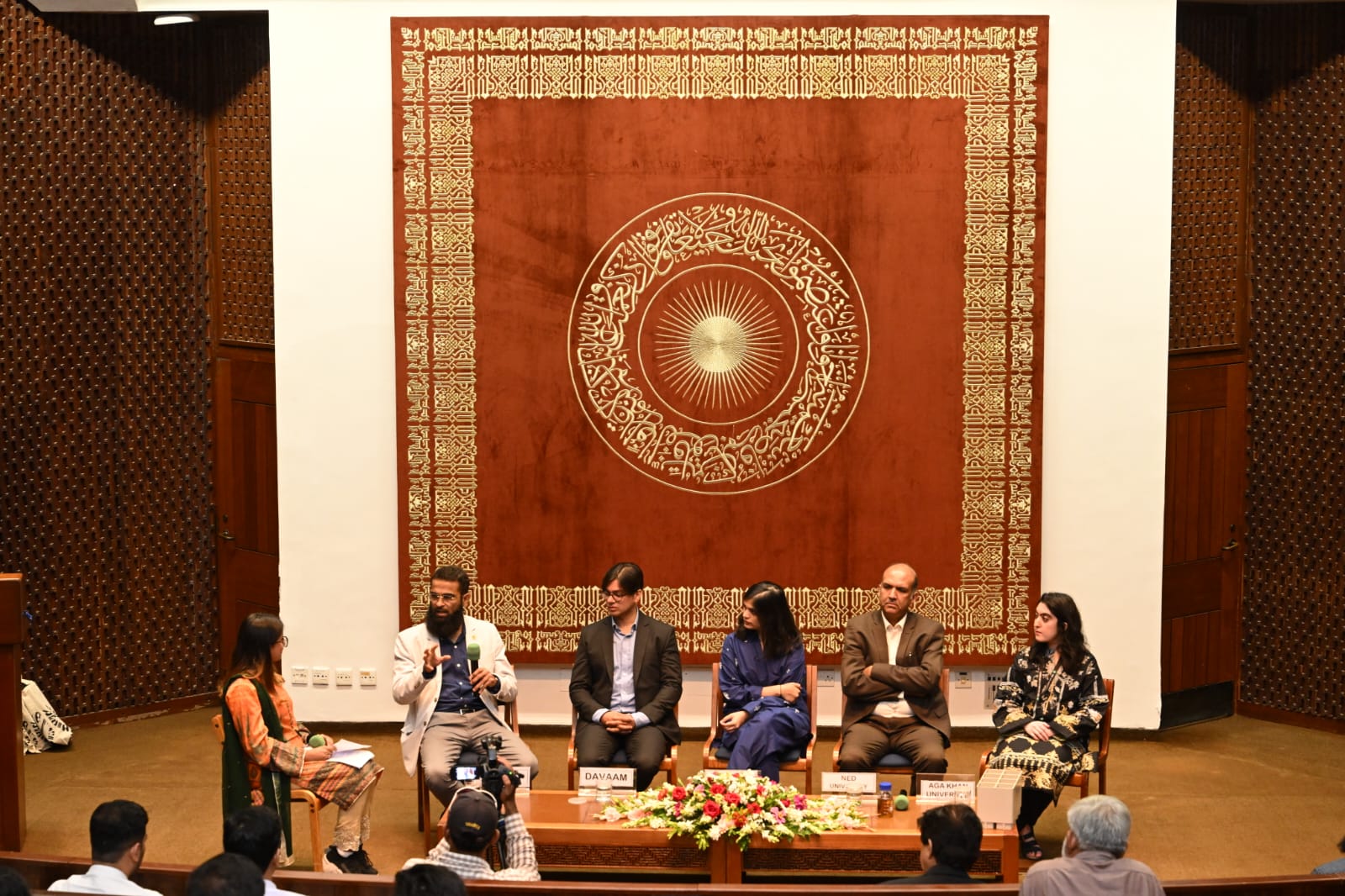
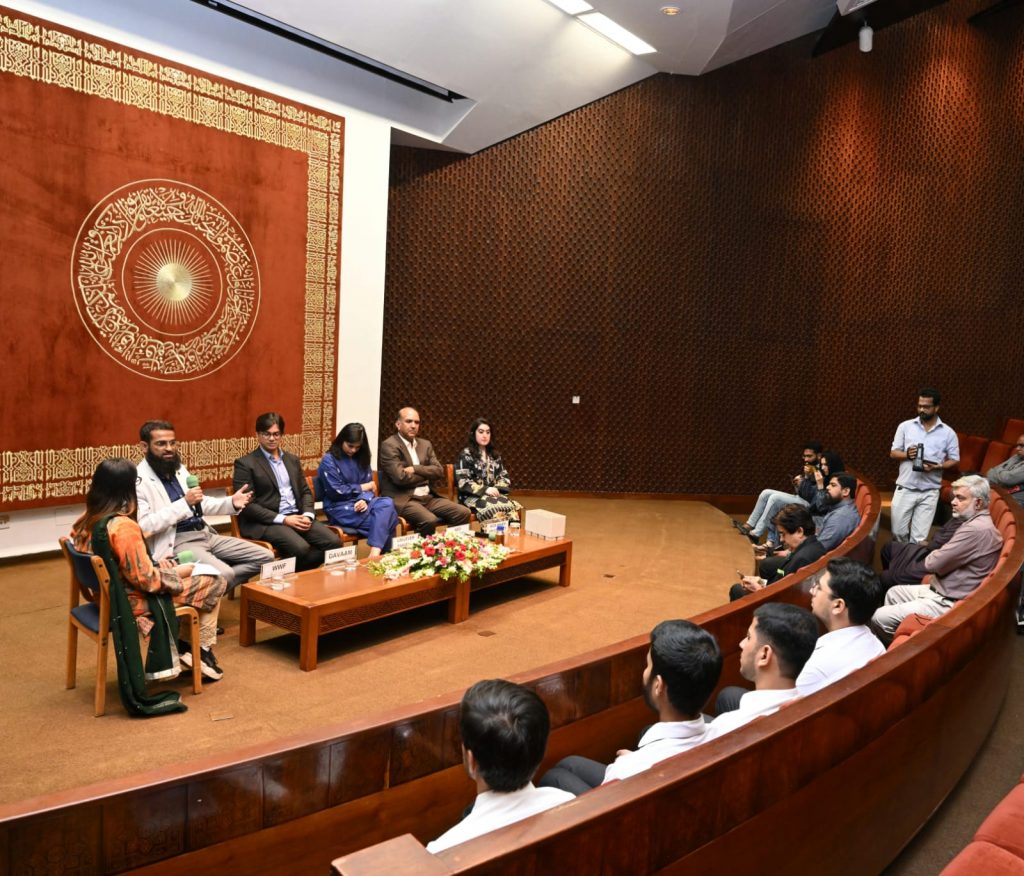
The Aga Khan University commemorated the 2023 World Environment Day, featuring the screening of documentary, “Oceans: The Mystery of the Missing Plastic” followed by a panel discussion at the AKU auditorium.

The panel discussion revolving around the topic of “Addressing plastic pollution through innovative and local solutions”, brought together experts from various fields to explore effective strategies to tackle the plastic crisis of global proportions. The panel included Mr. Ghazi Salahuddin, Regional Head (Sindh and Balochistan) at WWF Pakistan, Ms. Ramlah Tariq, Sustainability Lead at Unilever Pakistan, Mr. Salman Tariq, CEO at Davaam, Dr. Mehmood Ali, Associate Professor, Department of Environmental Engineering at NED University, and Ms. Amber Ajani, Manager Environment and Sustainability at the Aga Khan University.

The documentary showcased at the event raised awareness on how our addiction to plastic ends up polluting the deep sea, coral reefs, and other land and marine deposits, and eventually finds its way into our food chain.

Celebrated every year on the 5th of June, World Environment Day is a global commemoration to raise awareness on environmental challenges such as air pollution, plastic pollution, illegal wildlife trade, climate change, among others. Our event primarily focused on solutions to plastic pollution under this year’s theme of #BeatPlasticPollution.

As we know, the plastic waste is choking our seas and coasts, threatening ecosystems, livelihoods, and lives around the world. According to the United Nations Environment Programme, more than 400 million tonnes of plastic is produced globally every year, half of which is designed to be used only once. Of that, less than 10 per cent is recycled. An estimated 19-23 million tonnes end up in the lakes, rivers, and seas. Not only that, what is less known is that plastic broken down into microplastics which eventually find their way into the food we eat, the water we drink, and even the air we breathe. Moreover, many plastic products contain hazardous additives which pose a threat to public health.

In his welcome address, Mr. Jamil Ahmed Khan, Senior Advisor in the Office of the President at AKU said, “Plastic pollution is one of the most pressing challenges our world faces today. I appreciate the AKU’s Environment and Sustainability team for bringing awareness to the issue. AKU, along with the other agencies of the Aga Khan Development Network, has committed to net zero emissions by 2030 aligned with the latest climate science.”

During the panel discussion, Mr. Ghazi Salahuddin (WWF Pakistan) said, “Our world is swimming in plastic. Coastal communities residing along the Indus Delta are facing harrowing effects of plastic pollution. Our corporate sector has the central responsibility to incorporate sustainable production and disposal practices and root out those that harm our environment.”

Mr. Salman Tariq (Davaam) added, “Around 3.3 million tonnes of plastic is wasted every year in Pakistan which equals two times the size of Mount K2. It is important to financially incentivize circularity for people so they can be motivated to adopt the plastic-free lifestyle change needed for environmental conservation.”

Representing Unilever Pakistan, Ms. Ramlah Tariq said, “Our mantra is reduce, reuse, and recycle. We are committed to and working towards halving our use of virgin plastic by 2025.” She emphasized on having a multistakeholder model where civil society, corporations, and the government can all work together.

Dr. Mehmood said, “At NED University, we are actively working on producing research that can provide practical measures for conserving our environment. Our academia has a critical role to play in creating awareness, research, and solutions for addressing Pakistan’s environment problems.”

Ms Amber Ajani (AKU) shared, “Globally, AKU has made concerted efforts to phase-down single-use plastic water bottles and is now replacing plastic cutlery used for takeaway with natural birchwood cutlery. There’s an urgent need to reduce plastic use at the source and to become mindful of our responsibilities towards our planet.”

AKU recognizes its impact on the environment and its responsibility and is taking steps across its campuses to address the pollution and climate crises. Its efforts are guided by the AKDN-wide Environment and Climate Commitment Statement which is based on four principles: responsible stewardship, improving quality of life for the most vulnerable, socially responsible leadership, and leading by example through the net zero goal.

A similar event was organized at the Aga Khan University, Kenya campus which inspired conversations around plastic pollution and the need to take collective responsibility to combat this global challenge. 
New generation of CFOs driving broader view of business performance and purpose

Pakistan (Nut Desk)

New research by ACCA (the Association of Chartered Certified Accountants) and BDO, the international network of public accounting, tax and advisory firms, has revealed how the role of the CFO is growing to include driving business decisions and reporting on the non-financial areas of their operations.

Over 100 CFOs and business leaders from around the world took part in roundtables and in-depth interviews to contribute their insight into how the traditional role of the CFO is changing, resulting in the report ‘Chief value officer – the important evolution of the CFO’.

To be successful and sustainable, businesses and other organisations increasingly need to combine economic, environmental and social equity. Those that don’t, face risks and their value can diminish – there is a very strong link between value creation and strategy. Using the breadth of drivers (financial, manufactured, intellectual, human, social & relationship and nature) to generate benefit for a wide range of stakeholders creates value. With a focus for many organisations on purpose and value, contributors were asked to consider whether there is a trend to asserting the need for a new role of chief value officer and whether this a role that the CFO is already fulfilling.

The resulting three key findings from the report are:

  • The concept of value is fundamental to the management of performance in organisations and its adoption is a key element in their path to a sustainable future.
  • CFOs are increasingly adopting a value centric approach in their work and this represents an evolution towards encompassing the chief value officer role within a more traditionally financially focused remit.
  • The development path for those aspiring to be CFOs requires an increasingly broad range of experience which embraces both formal and informal learning activities: professional bodies and practices need to engage with this.

Helen Brand, ACCA chief executive, noted: ‘We already know that CFOs are increasingly acting as strategic leaders and advisers in their organisations. The CFO role is one that has moved significantly from the traditional view, while retaining the core responsibilities. Now there’s a real opportunity for them to satisfy the value agenda and evolve the role for the next generation of CFOs.’

Carly Bleathman, Partner – Business Services and Outsourcing at BDO UK said: ‘Our research highlights the exceptional role that CFOs are playing in developing their organisations. We commend the role that these individuals play and how they are truly embracing the broader value agenda. I know from my own experience that CFOs are truly chief value officers’.

Albert Lopez, Global Head of Business Services and Outsourcing, BDO Global said: ‘There are many CFOs from across the world who are embracing this wider concept of value and our research highlights many positive stories. Embracing the sustainability agenda and delivering against it is a key role that our profession must play to help ensure that we have a positive future.’

Author Clive Webb, Head of Business Management at ACCA said: ‘Creating sustainable organisations is a key priority for all organisations and CFOs have a fundamental role to play in delivering this. The perception of the CFO and the finance team needs to change from being Dr No to Dr How. It is pleasing to see how many finance teams are working towards this agenda’.

For more information, read the full report at our website.

Pakistani Students took top positions in Huawei ICT Competition 2022-2023

Pakistani Students took top positions in Huawei ICT Competition 2022-2023 Global Final Held in Shenzhen, China.

 146 Teams from 36 Countries and Regions Win Awards in this competition.

Pakistan (Muhammad Yasir)  The Huawei ICT Competition 2022-2023 Global Final concluded in Shenzhen, drawing to a close the seventh instalment of this competition. The first to be held in person since 2019, the event’s culmination was a competition between finalists in 146 teams from 36 countries. Before the Final, more than 120,000 students from more than 2000 universities in 74 countries and regions around the world took part in the ICT Competition.

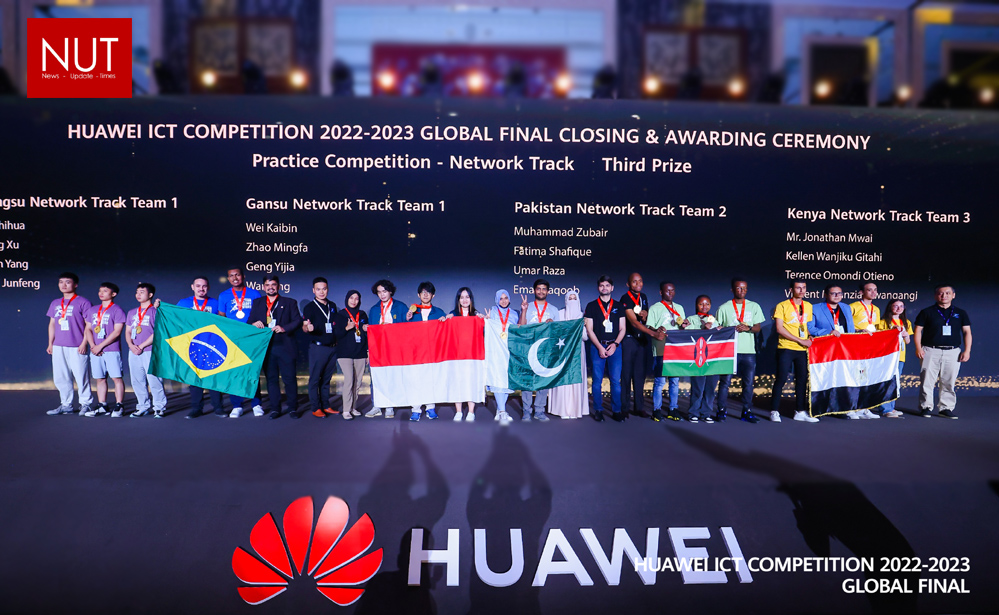
The students from Pakistan won the second and third prizes in the Network Track and third prizes in the Innovation Track at the Huawei ICT Competition 2022-2023 Global Final concluded recently at Huawei Headquarters in Shenzhen, China. The winner of the second prize in the Network Track comprised of Muhammad Faeez, Asad Anwer and Faheem Yar Khuhawar from Mehran University of Engineering and Technology Jamshoro and Maryam Fareed from Lahore College for Women University while the team made of Fatima Shafique from Mehran University of Engineering and Technology Jamshoro, Eman Yaqoob from Lahore College for Women University, Umar Raza from FAST-nu Islamabad and Muhammad Zubair from University of Engineering and Technology Lahore bagged the third prize in the same category, among other teams globally.

Additionally, both Team Glam from Pakistan comprising Hasan Ali Khattak, Moaaz Tameer and Sidra Farooqui and Team Quran Ustads comprising Minhal Zafar, Hyder Ali, Muhammad Shaheer and Noor-ul-ain from FAST – National University of Computer and Emerging Sciences, Islamabad won the third prize in the Innovation Track, among other teams globally.

This year, the proportion of female contestants in the global final exceeded 21%, an increase of 8% compared to three years ago.

Shunli Wang, VP of Huawei Middle East & Central Asia said, “I would like to congratulate all the winning teams from Middle East. Digital talents and skills will be the foundation for the digital economy development- a key part of Middle East countries future plans and visions- and Huawei will continue to be committed to build the ICT ecosystem with a focus on local talents nurturing and bringing ICT education resources to more academies and universities in the region.”

Stefania Giannini, UNESCO Assistant Director-General for Education, sent her wishes for the Huawei ICT Competition through a video. She said that Huawei ICT Competition not only improved students’ digital skills, but also explored feasible solutions for the sustainable development. She expressed that UNESCO fully supports Huawei’s efforts in the education industry to improve global connectivity and digital skills.

Teams from the Middle East and Central Asia performed with distinction at this year’s event. Apart from the Pakistan teams, the teams from the UAE and Kazakhstan won the first prize in the Network Track while teams from Iraq, Jordan, and Bahrain won the second prize in the Network Track among other teams globally. Additionally, the team from Saudi Arabia won the third prize in the Network Track among other teams globally, and the teams from Jordan and Kazakhstan won the third prize in the Cloud and Innovation tracks.

The Huawei ICT Competition aims to provide a platform for global college students to compete and communicate with each other in the ICT field. As of the end of 2022, Huawei has cooperated with 2200 universities to build Huawei ICT Academies, helping to train more than 200,000 students each year. Since its initial launch in 2015, more than 580,000 students from 85 countries and regions around the world have participated in the competition.

Globally Huawei is committed to build 7,000 Huawei ICT Academies in total by 2026, train more than 1 million students every year, greatly improving students’ digital literacy and skills for a more dynamic and inclusive digital world. In the Middle East region alone, Huawei has trained over 150,000 ICT talents and are committed to achieving more in collaboration with its partners while over 57,000 people have obtained Huawei certification. Also, the number of Huawei ICT Academies in the region has reached to186.

” Medical Study Abroad Services”.

At” Medical Study Abroad Services”, we are proud to be one of the most reputable and approved specialists in the field of medical education. We offer expert advice and support to candidates who are interested in enrolling in MBBS, BDS, and MD programs at prestigious medical and dental universities europe.

For those who dream of pursuing a career as a doctor or dentist abroad, we are here to help. We can assist you in finding and applying to your desired medical university in the country of your choice. Choose “Medical Study Abroad Services “for the best academic consultancy services in Pakistan. Let us help you shape your future today.

Sindh Government Introduces Teaching License Policy to Elevate the Teaching Profession

Karachi (Muhammad Yasir)

The Sindh Cabinet has approved a new teaching license policy, aimed at attracting talented youth to the teaching profession and raising the status of the profession.

This landmark reform aims to bring the same rigour and respect to the teaching profession as enjoyed by other skill-based professions, including medicine, accounting, law and engineering. New entrants to the field of teaching will be both required and incentivized to get professional training before seeking jobs.

Sharing his views, Provincial Minister of Sindh for Education, Culture, Tourism and Antiquities, Syed Sardar Ali Shah, said, “Conceptualising and bringing the teaching license policy to life has not been easy. However, I am grateful to Aga Khan University’s Institute for Educational Development (AKU-IED), Sindh Teachers Education Development Authority (STEDA), Durbeen and all other partners who have worked tirelessly to make this policy a possibility. The success of the next generation of teachers and students ultimately depends on its smooth implementation.”

He further added that: “Sindh is the only province that has approved a teaching license policy, which represents a proactive approach to recognising the value and importance of effective teaching. With the policy in place, the Sindh Government has laid the foundation for a more robust and professional teaching workforce, which will have a positive and lasting impact on the educational landscape in the province.”

The Sindh Government has already taken the first step toward rolling out the new policy. 700 new vacancies have been created for Elementary School Teachers (eligible to teach grades 1-8) across Sindh at BPS-16. Previously, Junior Elementary School Teachers (JEST) were being inducted at BPS-14 and were required to have completed graduation in any field. These new 700 vacancies will only be offered to graduates of the B.Ed. degree programme who have also cleared the licensing exam.

A growing body of research clearly establishes the value of effective teachers. Econometric research from the past decade shows that effective teachers can deliver three times the learning in a single academic year than ineffective teachers can.

As is well known, a good teacher can transform a mediocre curriculum into a very rich learning experience. This makes a strong case for education reform to focus on raising teacher quality and support. Teacher licensing is one of the ways to do so.

The teaching license sets a minimum standard for new entrants, which will raise the status of the teaching profession in public perception. This has been seen in several other professions, both in Pakistan and globally. In the short-term, improved public perception provides the justification for raising teachers’ salaries. Long term, it helps attract talented youth to the profession.

The policy preparation was preceded by a year-long research and consultation led by AKU-IED which culminated in a White Paper which was jointly launched by AKU-IED, STEDA and Durbeen in June 2022. Consultations were held among a wide range of stakeholders – Pakistani universities, school management, teachers, teachers’ unions, parents and students. Scholars from several other institutions, including Ziauddin University, contributed to the policy writing efforts.

Under the new policy, Bachelor of Education (B.Ed.) graduates can now apply to take a licensing exam. This licensing exam will assess both content knowledge as well as pedagogical knowledge. Upon passing the exam, they will be awarded teaching licenses in one of the three categories – elementary (Grades 1-8), primary (Grades 1-5) and secondary (Grades 6-12).

Existing, full-time, government schoolteachers can choose to continue employment as per status quo, or if they meet the requirements under the policy, may opt to apply for the licensing exam and expedite their promotions. Contractual teachers in government schools, who meet the requirements, can expedite regularisation through the licensing process.

This reform takes a unique position in the history of education in Pakistan. Most reforms have been driven and funded by the prescriptions of donor agencies. They have seen mixed results and have generally died out once donor support ends. In comparison, this teacher licensing policy has been initiated by the Sindh Government and has been developed in consultation with Pakistani academia, teachers, unions and other stakeholders.