World s second largest hydropower dam goes online in China

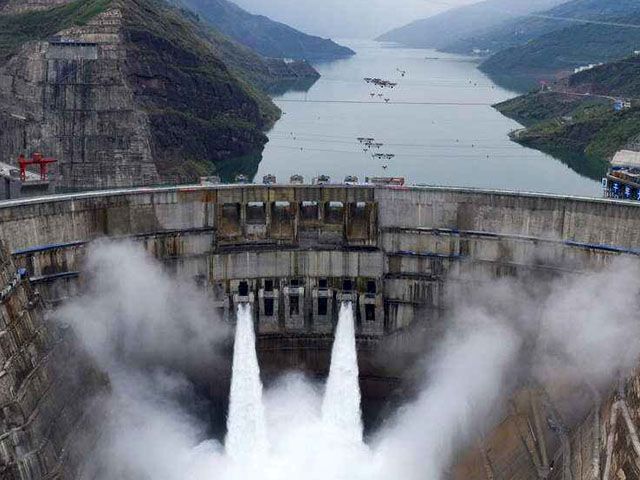
Beijing: China began operating the world”s second-largest hydropower station on Monday in what officials hailed as a milestone towards Beijing”s carbon neutrality goals, despite warnings of environmental damage. The 289-metre (948 feet) high Baihetan Hydropower Station in southwest China, second in the world only to the country”s Three Gorges Dam in terms of power generation, began partial operation Monday morning, state media reported. Baihetan was built with a total installed capacity of 16,000 megawatts, which means it will eventually be able to generate enough electricity each day once to meet the power needs of 500,000 people for an entire year, according to state broadcaster CCTV. The country has been on a hydropower building spree in recent years as it races to meet the ever-growing energy needs of the world”s largest population. The dam spans a deep, narrow gorge on the upper section of the Yangtze, China”s longest river, on the earthquake-prone border between Yunnan and Sichuan provinces. Chinese President Xi Jinping said he hoped the plant would be able to “make greater contributions toward achieving the goals of carbon peaking and carbon neutrality,” in a congratulatory message published by the government. The Baihetan dam”s trial run on Monday coincides with celebrations of the Communist Party”s centenary this week. Xi”s pledge last year to reach carbon neutrality by 2060 has added urgency to the construction. But environmental groups have warned for years that dam-building disrupts the habitats of rare plants and animals, including the critically endangered Yangtze Finless Porpoise.
World's second largest hydropower dam goes online in China
World’s second largest hydropower dam goes online in China

China world s biggest producer of industrial goods

BEIJING: China is the world”s largest producer of over 220 types of industrial China manufacturing products, including vehicles and computers, an official said at a press conference held to mark the 100th anniversary of the founding of the Communist Party of China in Beijing on Monday. In the early days of the founding of the People”s Republic of China, the China manufacturing country could not even manufacture a tractor, said Han Wenxiu, an official with the Central Committee for Financial and Economic Affairs.China manufacturing has become the only country in the world to have all the industrial categories listed in the United Nations industrial classification, Han said.
china manufacturing industry analysis
China world s biggest producer of industrial goods

Chinese ‘polar bear hotel’ starts bookings

SHANGHAI: A hotel that bills itself as the world’s first “polar bear hotel” has opened in China’s far northeastern Heilongjiang province, drawing both guests and criticism for its central feature: live polar bears.

The Polar Bear Hotel, part of the Harbin Polarland theme park in Heilongjiang’s capital and largest city, Harbin, opened its doors on Friday with the promise of round-the-clock polar bear viewing from all 21 guest rooms.

“Whether you’re eating, playing or sleeping, polar bears will keep you company,” Harbin Polarland’s official WeChat account said in a post dated Thursday.

Photos and videos from Chinese state media showed people watching two polar bears in an indoor enclosure featuring artificial ice and small pools of water.

Yang Liu, a spokeswoman for Harbin Polarland, told media that the indoor area is only part of the bears’ total enclosure, and that they are let outdoors when temperature and air quality permit.

She said interest in staying at the hotel, where rooms range from 1,888 to 2,288 yuan ($290.10 to $351.56) per night was “very high”, adding that it is fully booked through a trial period.

Conservationists criticised the hotel.

“Polar bears belong in the Arctic, not in zoos or glass boxes in aquariums – and certainly not in hotels,” Jason Baker, senior vice president at animal rights group PETA told media on Saturday. “Polar bears are active for up to 18 hours a day in nature, roaming home ranges that can span thousands of miles, where they enjoy a real life.”

In 2016, a shopping mall in the southern city of Guangzhou attracted global condemnation after videos emerged of a polar bear, Pizza, lying on her side in a glass-walled enclosure.

Harbin Polarland, established in late 2005, calls itself the world’s first polar performing arts amusement park.

US judge removes China´s smartphone Xiaomi maker from Trump-era blacklist

WASHINGTON: A US judge on Friday ordered Chinese smartphone maker Xiaomi temporarily removed from a government blacklist barring American investment in the company.

Six days before Donald Trump left office last year, his administration cemented its trade war legacy against Beijing with a series of announcements targeting Chinese firms including Xiaomi, state oil giant CNOOC, and social media darling TikTok.

Xiaomi was one of nine firms classified by the Pentagon as “Communist Chinese military companies.

“But US District Judge Rudolph Contreras in Washington ruled Friday the Departments of Defense and Treasury “have not made the case that the national security interests at stake here are compelling.

“He issued a preliminary injunction removing Xiaomi from the blacklist and suspending the ban on US investors buying the company´s securities.

In an appeal filed in January against its blacklisting, Xiaomi — which overtook Apple last year to become the world´s third-largest smartphone manufacturer — said Washington´s moves were “incorrect” and had “deprived the company of legal due process.

“Contreras´s decision came the same day US regulators listed Huawei and ZTE among Chinese telecom gear firms deemed a threat to national security, signalling that a hoped-for softening of relations is not on the cards.

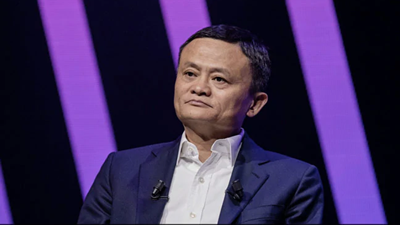
China denies plan for $1 bn Alibaba fine

, as authorities turned up the pressure on the country´s vast technology sector. Alibaba, China´s largest online shopping portal, has been in the crosshairs of authorities in recent months over concerns of its reach into the daily finances of ordinary Chinese people.

The market´s regulator denied it was planning to fine the company almost $1 billion for anti-competitive behaviour, as reported by the Wall Street Journal, who cited unnamed sources “familiar” with the matter. However, on Friday it hit 12 other tech firms — including giants Tencent, Baidu and ByteDance — with symbolic fines for allegedly flouting monopoly rules. Tencent was fined $77,000 for its 2018 investment in online education app Yuanfudao without seeking prior government approval for the deal, the State Administration for Market Regulation said in a statement Friday. Search giant Baidu has to pay the same amount for acquiring consumer electronics maker Ainemo under the radar in 2014.

Beijing has warned it will take an increasingly ruthless approach to antitrust questions. Premier Li Keqiang last week said the government would “strengthen anti-monopoly laws” and “prevent the disorderly expansion of capital”. Analysts said Friday´s blizzard of fines send a strong signal of the Communist Party´s dominion over the country´s tech landscape. “These penalties send a message: the economy and everything within it must comply with the state´s directive,”

alibaba-jack-ma
alibaba-jack-ma

Alex Capri, a senior fellow at the National University of Singapore´s business school, told media. Capri said heavy-handed regulations will rein in the ability of tech firms to gobble up market share and influence with unchecked acquisitions.

China exports hike to highest in level


China´s export growth jumped to the highest in over two decades, official data showed Sunday, with imports also surging in a sharp bounce-back from the coronavirus outbreak that had brought activity to a near halt. Electronics and textile exports such as masks contributed to the spike in outbound shipments, as demand for work-from-home supplies and protective gear against the virus outbreak soared during the pandemic. Exports spiked 60.6 percent on-year in the January-February period, well above analysts´ expectations, while imports rose 22.2 percent, official data showed Sunday.

The latest customs figures stand in stark contrast to last year´s fall of around 17 percent in exports and 4 percent drop in imports.  The country struggled to contain the spread of Covid-19 early on, with consumers staying home and businesses seeing a slow return to operations. The customs administration said comparison to last year is also likely to have bolstered the latest figures, saying in a statement that the “low base is one of the reasons for the larger increase this year.

” On Sunday, official data showed that electronics exports rose 54.1 percent, while textiles including masks rose 50.2 percent. China´s overall trade surplus came in at $103.3 billion, its customs administration said. Chinese authorities started combining January and February trade data last year, while it battled the coronavirus outbreak. This is in line with how some other indicators are released, to smooth over distortions from the Lunar New Year holiday, which can fall in either month.