Healthy lifestyle a must to combat cancer

Lahore (Muhammad Yasir) Each one of us must adopt a healthy lifestyle, ensure daily walk and play effective role in spreading awareness, inspire change and reduce the global impact of cancer, which is the second leading cause of death globally.

This was stated by Dr. Khadeeja Azhar, Director of Shifa Foundation — a not for profit organization working for the alleviation of human suffering in different regions of Pakistan – while addressing a hiking activity on Trail III of Margalla Hills organized by Shifa Foundation to create awareness among general public in commemoration of the World Cancer Day in Islamabad on otherday.

Dr. Khadeeja Azhar said that the prime objective of the activity was inculcate among the people to follow best health practices to protect themselves and their family members from this deadly disease. She said suggested heath tips to the participants and advised them to ensure walk in their daily life for physical and mental health.

Addressing the participants, Dr Zeeshan, Medical Director, Shifa International Hospital, said that it is important to understand each type of cancer and how it impacts the body. He said that we should adopt healthy lifestyle for a healthier and brighter world free of cancer.

Taimoor Shah, Chief Operating Officer, Shifa Hospital, said that the aim to observe the World Cancer Day is to reduce misconceptions about cancer and to help people in getting the right information about it. He said that it also offers a chance to make an impact in the betterment of the life of cancer patients and survivors.

He thanked Nadeem Ahmed Malik, Director Marketing and Sales, Merixil Pharma, Syed Mubashir Hussain, Senior Sales Manager, PharmEvo and Muhammad Atif from Amgomed, Shifa International Hospital, eShifa for their support in organizing this cancer awareness hiking activity.

As many as 150 students, youth, professionals and members of the civil society organizations participated in the activity.

Shifa Foundation provides free of cost medical services in areas with no access to basic health facilities and to people who cannot afford it. The organization being a sister concern of Shifa International Hospitals enjoys well-trained staff and senior doctors providing healthcare facilities to underprivileged communities. In 2017 Shifa Foundation successfully initiated project for treatment of cancer patients and to date have provided treatment and assistance to over 65 patients with estimated spending of over 25 Million through our generous donors.

realme 7i with 64 MP quad camera is now available at discounted price of PKR 36,999 only. Grab Now!!

The fastest-growing smartphone brand realme has dropped the price for its best-selling smartphone realme 7i for its young and trendy fans. The famous number series successor, realme 7i with 64MP AI Quad camera was released in December 2020. The price for the phone has immensely dropped from PKR 39,999 to PKR 36,999.

The Performance King, realme 7i comes with a high-resolution 64MP AI Quad Camera, a 90 Hz Ultra Smooth Display and a 5000mAh Massive Battery. Due to its trendy design and youth-centric specifications, the phone was a great seller among its young customers. With an impressive 64MP AI Quad camera, realme 7i was one of the best camera phones in Pakistan. It supports built-in three most popular night filters, Cyberpunk, Flamingo, and Modern Gold to capture nightlife in a stylish way.

With the ‘Dare to Leap’ vision, realme focuses on bringing trendsetting designs, improved software, and impressive hardware for enlightening the youth, making their lifestyle more fashionable. After the victory of previous number series models, realme 7i has opened new horizons for the brand. The phone was also accompanied by multiple AIoT and Category N products.

The phone went a great hit when it was released and now with a special discount offer, it is expected to set new records. The realme fans will be going crazy about the realme 7i being available at only PKR 36,999. If you haven’t bought the phone yet, do not miss this chance to get your hands on it at exclusive rates.


An Unannounced Features of Flagship-grade Qualcomm Chip & a 5x Telephoto Camera in the latest Xiaomi Mi 11 Lite

By JUNAID JAVED

Xiaomi’s latest Mi 11 flagship series have the two upcoming editions named as Mi 11 Lite and Mi 11 Pro. The ‘Pro’ edition is making headlines ever since its unapproved marketing images were leaked. But until now, the gossips and rumors spreaders has been mostly silent about the Mi 11 Lite after its product renders surfaced online. A credible leaker just shared the key specifications of the phone.

The new premium mid-range phone features the unreleased Qualcomm SM7350, a 5x telephoto camera, and an OLED screen, Digital Chat Station, the Chinese phone leaker, reported. Mi 11 was the debut phone for Qualcomm’s latest Snapdragon 888. Likely, the Xiaomi Mi 11 Lite will also launch with a new Qualcomm chipset.

In November last year, Roland Quandt tweeted that Qualcomm is testing a new chip, codenamed “Cedros.” He believes the SM7350 model number belongs to the unannounced Snapdragon 775. The new SoC is “closely related” to the flagship chips, according to Mr. Quandt.

The ‘SM7350’ model name was later found buried in the Mi 11 Kernel source code, all-but-confirming that this new “almost flagship” chipset powers the Mi 11 Lite. Speculation suggests that the Snapdragon 755 uses Qualcomm’s most cutting-edge 5nm process, blurring the line between flagship and upper mid-range silicon. 

According to Digital Chat Station, the Mi 10 Lite offers 5x optical zoom. But the leak doesn’t specify a periscope-style lens.

If it’s true lossless zooming and not the hybrid kind, it stands to reason that we’re looking at a periscope-telephoto camera — much like the 5x lens found in last year’s Mi 10 Lite Zoom Edition. Also, note that the standard Mi 11 lacks telephoto functionality of any kind.

Nokia 5.4 with 4,000mAh long battery life

By JUNAID JAVED

Nokia 5.4 with 4,000mAh long battery life and the clean android one with Snapdragon 662  

Nokia 5.4 is the latest entry in Nokia’s budget line of phones after the recently launched Nokia 3.4. The 5.4 got unveiled globaly in December last year, featuring the Snapdragon 662, which puts it in direct competition with the POCO M3 and the like. And it’s now available in Pakistan. Advance Telecom made the official announcement yesterday. 

The all-new Nokia 5.4 offers a clean, stock Android One experience that many would appreciate, but it lacks the feature set that its aggressively priced competitors have. 

The smartphone is made of plastic without any Gorilla Glass protection. It’s 8.7mm thick, but the shell curves to make up for it. We’re looking at the familiar Nordic design that comes in Polar Night and Dusk shades. A donut-shaped camera housing rests above the capacitive fingerprint scanner. Nokia 5.4 has a dedicated button to summon the Google Assistant (but it can’t be mapped to other shortcuts).

Flip the phone over to find a generic 6.39” IPS LCD panel with a hole-punch cutout. Where the cheaper Xiaomi models feature 1080P screens, the Nokia 5.4 peaks at 720P. The charging speeds also feel out of place in 2021. The phone’s 4000 mAh battery is powered over 10W.

Android10 is shipped with the 5.4. It’s not the latest version, but HMD guarantees two years of Android upgrades. Combined with the low-res screen, the bloat-free OS easily stretches the battery life past a day. And thanks to the hybrid tray, the storage on the new addition to the Nokia price list can be expanded with a microSD card.

Similarly, a 3.5mm headphone jack is available. The mono-speaker is unremarkable. Of the total five cameras, four live in the rear-camera housing. The array features a 48MP f/1.8 wide camera, joined by a low-res 5MP wide-angle cam and a pair of 2MP sensors to pad the count. The front camera is a higher-res 16MP.

Nokia 5.4 starts from Rs. 31,999. The Pakistani variant uses 4GB of memory and 128GB of storage.


Facebook hosts virtual briefing session on ‘Fighting Misinformation’

(Muhammad Yasir)

Amid growing concerns of misinformation spreading online, Facebook recently hosted a virtual briefing session to highlight the aggressive steps the platform has taken to combat it. These include creating an unparalleled global network of over 80 fact-checking partners and promoting accurate information to removing content when it breaks Facebook’s rules.

The session covered the definition of ‘misinformation’ as false information that is often shared unintentionally. The content is shared on an individual basis and is not part of any coordinated attempt to mislead or deceive people. ‘Disinformation’ refers to sharing content with the deliberate intent to mislead as part of a manipulation campaign or information operation. This activity is coordinated and can involve the use of fake accounts.

Facebook’s own approach to counter misinformation involves a three-part strategy for addressing misinformation on Facebook – Remove, Reduce and Inform. Part of this strategy is their third party fact checking program.

Explaining the platform’s Third Party Fact Checking further, Facebook informed participants of the session, “We do not believe any single entity – either a private company or government – should have the power to decide what is true and what is false. When one single actor is the arbiter of truth, there is a power imbalance and potential for overreach. With this in mind, we rely on independent fact-checkers to identify and review potential misinformation, which enables us to take action.”

Facebook partners with over 80 independent third party fact checkers globally, working in over 60 languages. In the past year, Facebook extended support to the fact-checking communities including $2 million in grants from Facebook and WhatsApp – for third-party fact-checkers in highly affected regions to help them increase capacity as they do this essential work. Facebook also launched a year-long fellowship with 10 fact-checking organizations, including several from this region, to bring on new team members to help build capacity within the region. Facebook partners have been certified through the independent, non-partisan International Fact-Checking Network.

The speakers also shed some light on the measures Facebook has taken due to COVID-19. “We remove COVID-19 misinformation that could contribute to imminent physical harm including false claims about cures, treatments, the availability of essential services, or the location and severity of the outbreak. We also remove false claims in relation to the COVID-19 vaccine that have been debunked or are unsupported by evidence such as false claims about the safety, efficacy, ingredients or side effects of COVID-19 vaccines. Between March and October 2020, we removed 12 million pieces of COVID-19 misinformation content.”

Facebook advertising policies have long-prohibited misleading claims, but the platform has implemented new advertising policies in relation to COVID-19. Facebook is also removing a number of ad targeting options, such as “vaccine controversies,” that might have been used to help spread this sort of misinformation.

Fighting Misinformation at Facebook: Press Fact Sheet

We share society’s concern with misinformation which is why we have taken aggressive steps to combat it — from creating an unparalleled global network of over 80 fact-checking partners and promoting accurate information to removing content when it breaks our rules. Misinformation is complex, constantly evolving and there’s no ‘silver bullet’, which is why we continue to consult with outside experts, grow our fact-checking program, and improve our internal technical capabilities. 

Defining Misinformation 

Misinformation is false information that is often shared unintentionally. The content is shared on an individual basis and is not part of any coordinated attempt to mislead or deceive people. 

Disinformation refers to sharing content with the deliberate intent to mislead as part of a manipulation campaign or information operation. This activity is coordinated and can involve the use of fake accounts. We don’t tolerate this activity and take these actors and their content down as soon as we become aware of them. We also disclose our work in this space via a monthly report in our Newsroom

Our Approach to Misinformation 

We have a three-part strategy for addressing misinformation on Facebook – Remove, Reduce and Inform. Part of this strategy is our third party fact checking program. 

Third Party Fact Checking

We do not believe any single entity – either a private company or government – should have the power to decide what is true and what is false. When one single actor is the arbiter of truth, there is a power imbalance and potential for overreach. With this in mind, we rely on independent fact-checkers to identify and review potential misinformation, which enables us to take action.

We partner with over 80 independent third party fact checkers globally, working in over 60 languages. In Asia Pacific, this includes fact checkers in Indonesia, Singapore, Malaysia, Hong Kong, Taiwan, Myanmar, Thailand, Sri Lanka, Bangladesh, Pakistan, Korea, India and the Philippines. 

In the past year, we have extended support to the fact-checking communities including $2 million  in grants from  Facebook and WhatsApp – for third-party fact-checkers in highly affected regions to help them increase capacity as they do this essential work. We also launched a year-long fellowship with 10 fact-checking organizations, including several from this region, to bring on new team members to help build capacity within the region. 

Our partners have been certified through the independent, non-partisan International Fact-Checking Network.

More information about our third party fact checking program can be found here.

Remove

We have policies in place to address some of the most harmful types of false information and we REMOVE this content as soon as we become aware of it. 

We remove COVID-19 misinformation that could contribute to imminent physical harm including false claims about cures, treatments, the availability of essential services, or the location and severity of the outbreak. We also remove false claims in relation to the COVID-19 vaccine that have been debunked or are unsupported by evidence such as false claims about the safety, efficacy, ingredients or side effects of COVID-19 vaccines. Between March and October 2020, we removed 12 million pieces of COVID-19 misinformation content.

Our advertising policies have long-prohibited misleading claims, but we’ve implemented new advertising policies in relation to COVID-19. Amongst other things, these policies prohibit:

  • Ads for supplies or products related to COVID-19 that use the public health crisis to create a sense of urgency or incite fear
  • Direct or implied prevention claims or overstating the impact on health or safety outcomes in relation to  non-medical masks, hand sanitizer and/or surface disinfectant wipes.
  • Ads that make deceptive, false, or unsubstantiated health claims, including claims that a product or service can provide 100% prevention or immunity, or is a cure for the virus.

We are also removing a number of ad targeting options, such as “vaccine controversies,” that might have been used to help spread this sort of misinformation.

If ads about COVID-19 include political content, or if the content includes advocacy, debate or discussion about social issues (in certain countries), then advertisers are required to get authorized and include a “Paid for by” disclaimer on these ads to run them.

For misinformation or false information that doesn’t fall under these particular policies, it may be shared in a way that violates our other Community Standards – for example hate speech, bullying and harassment or spam, and we will remove anything we identify for violating these policies. 

We’ve also taken additional steps to address hoaxes related to vaccines in advertising. By investing in systems to better ensure that ads that include this type of misinformation about vaccines will be rejected. We are also removing a number of ad targeting options, such as “vaccine controversies,” that might have been used to help spread this sort of misinformation.

Reduce

When fact-checkers rate a story as false, altered or partly false, we significantly REDUCE its distribution in the Facebook News Feed and Instagram Feed so that less people see it. On Instagram, we also make it harder to find by filtering it from Explore and hashtag pages. 

Pages and domains that repeatedly share false news will also see their distribution reduced and their ability to monetize and advertise removed.

We also reduce the distribution of other spammy, sensational content like clickbait and engagement bait– which can also coincide with misinformation.

Inform

We INFORM people by giving them more context so they can decide from themselves what to read, trust and share.

On Facebook and Instagram

There are a number of different labels our third party fact checkers can choose from when they are rating content including False, Altered, Partly False, Missing Context and Satire. 

Content across Facebook and Instagram that has been rated false or altered is prominently labeled so people can better decide for themselves what to read, trust, and share. These labels are shown on top of false and altered photos and videos, including on top of Stories content on Instagram and link out to the assessment from the fact-checker. For content rated partly false or missing context, we’ll apply a lighter-weight warning label.

To help scale the work of our third party fact checkers, we use artificial intelligence to identify identical or similar content to that which has been rated by our fact checkers and automatically apply labels or reduce the distribution of the content. 

In 2018, we launched a context button which provides information about the sources of articles people see in News Feed. It includes important details such as when the article was first shared, when the publisher registered on Facebook and links to other stories from the publisher. 

In June 2020, we launched a new notification to let people know when a news article they’re about to share is more than 90 days old.

Access to reliable information 

We have a number of additional measures in place to keep people informed about COVID-19.

In March 2020, we launched the COVID-19 Information Center at the top of News Feed, which includes real-time updates from health authorities, as well as helpful articles, videos and posts about social distancing and preventing the spread of COVID-19. People can also follow the COVID-19 Information Center to receive updates from health authorities directly in their News Feed. Through our COVID-19 Information Center we have connected over 2 billion people to resources from health authorities. 

In April 2020, we began showing messages in News Feed to people who liked, reacted or commented on harmful misinformation about COVID-19 that we have since removed. These messages connect people to the World Health Organization for accurate information. In April, we put warning labels on about 50 million pieces of content related to COVID-19 on Facebook, based on around 7,500 articles by our independent fact-checking partners.

Digital literacy programs

We invest in a range of programs, and partner with civil society organizations as well as industry partners on different initiatives to address the underlying issue of digital and news literacy.

One of our flagship programs is We Think Digital which was created in Asia Pacific, for Asia Pacific.  

We Think Digital, an online education portal with interactive tutorials aimed at helping people think critically and share thoughtfully online. We designed the program in partnership with experts from across Asia Pacific, and aim to train 1 million people across 8 countries in Asia Pacific by 2020, with our resources available in 6 different languages.

Our Work Across our Family of Apps

WhatsApp

WhatsApp uses advanced machine learning technology that works around the clock to identify and ban accounts engaging in bulk or automated messaging so they cannot be used to spread misinformation. 

We are fighting misinformation in three ways:

  1. Preventing abuse with spam detection technology and product changes that limit how messages are sent
  2. Educating and empowering people on how to use WhatsApp in a safe and responsible way 
  3. Partnering with government, civil society, and law enforcement.

WhatsApp has made a number of product changes to reduce and address virality on the platform. In 2019 we reduced the number of people you can forward a message to just five chats at once, and introduced the ‘forwarded’ and ‘highly forwarded’ labels to highlight when something has been shared multiple times. 

We have since further reduced the number of people you can send a highly forwarded message to to just one chat at once, which has resulted in a 70% reduction in the number of highly forwarded messages on WhatsApp. 

Unlike text messages, WhatsApp bans mass messages outright. We use machine learning to identify and ban accounts engaged in mass messaging, and ban 2 million accounts a month in this way. We published a white paper on the impact of these efforts.

We help users decide who can add them to groups, which gives everyone the ability to control which groups they are added to. This significant change increases user privacy and prevents people from being added to unwanted groups.

Instagram

We use image detection technology to find content that has been debunked by Facebook’s third party fact checking program on Instagram. Once we find this content, we filter it from hashtags and Explore. We are also working on additional measures to reduce Instagram-specific misinformation, including surfacing this content to our third party fact-checkers.

The way misinformation spreads on Instagram is different from Facebook, since there’s no re-share button and no capability to share clickable links in Feed posts. This lessens the potential for something to spread ‘virally’ on our platform.

Messenger

We want Messenger to be a safe and trustworthy platform to connect with friends and family. Last year we introduced features like safety notifications, two-factor authentication, and easier ways to block and report unwanted messages. This new feature provides yet another layer of protection by limiting the spread of viral misinformation or harmful content, and we believe it will help keep people safer online.

Messages in Messenger can only be forwarded to five people or groups at a time. Limiting forwarding is an effective way to slow the spread of viral misinformation and harmful content that has the potential to cause real world harm.

Many of our other efforts to combat misinformation on Facebook such as removing content that may lead to real-world harm or third-party fact-checking already help limit the spread of misinformation from being shared in Messenger.




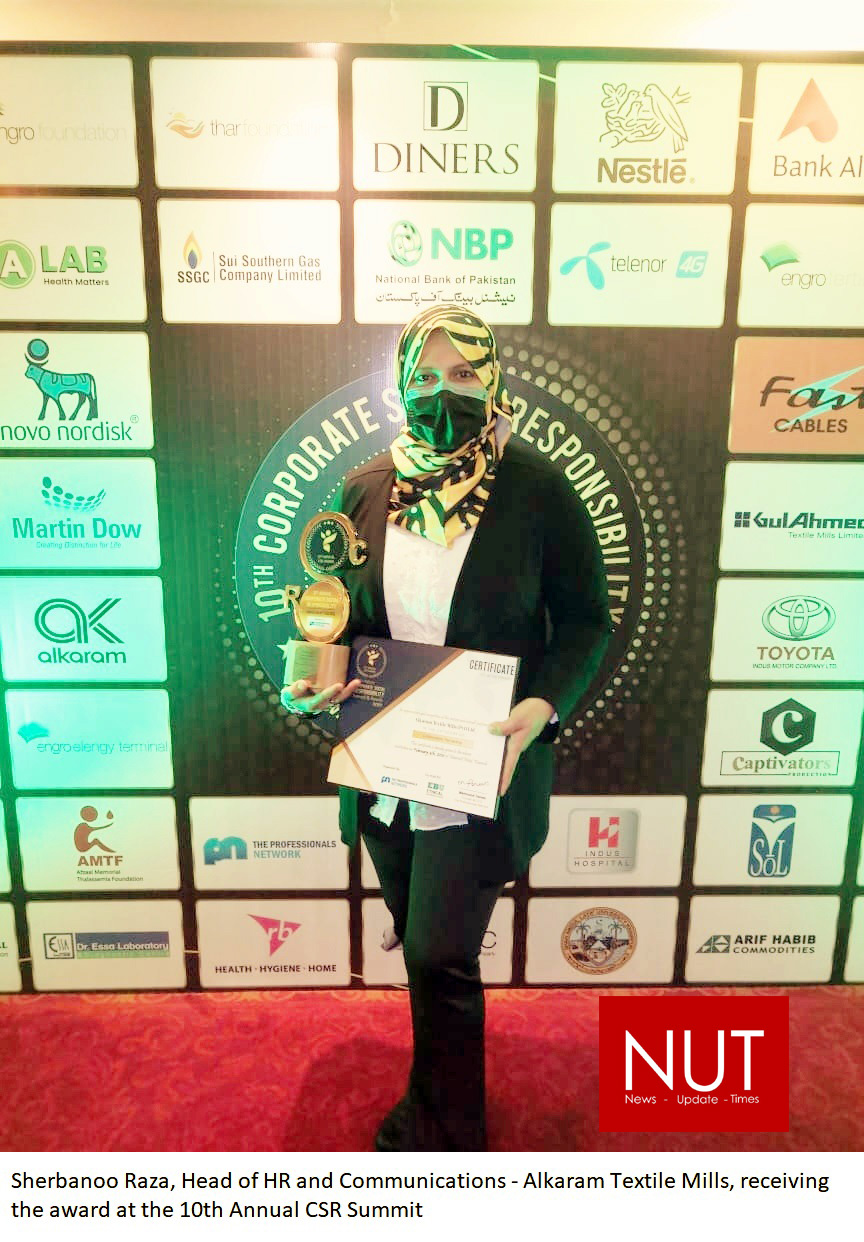
Alkaram Textile Mills wins big at the 10th Annual CSR Summit & Awards 2021

Karachi (Muhammad Yasir) Alkaram Textile Mills won three awards at the ‘10th Annual Corporate Social Responsibility Summit & Awards 2021’, in the categories of Collaboration and Partnership, CSR Event and Community Impact. The award ceremony was held at a local hotel in Karachi.

Alkaram Textile Mills has been regularly recognised for its continuous commitment towards contributing to the society. In this prestigious summit, the company won accolades around three of its major CSR initiatives which are completely in line with the company’s CSR objectives and thus embedded in the way it conducts business.

Fawad Anwar, Managing Director, Alkaram Textile Mills, while sharing his views on the achievement said, “It is an honour to be recognised for our efforts. This not only shows Alkaram’s commitment and dedication towards development of our community but also motivates us further to continue our mission in line with our CSR objectives.” He added further, “All CSR initiatives are dedicated towards our focus areas such as women empowerment and community engagement and enhancement, and we have been tirelessly playing our role through various programs to reach out to a wider network and make meaningful contribution in the society.”

“Alkaram Textile Mills believes in the philosophy of benefiting our stakeholders and the communities in which we thrive by improving their quality of life. Therefore, CSR is embedded in our business model, where direct engagement and support to communities is extended across the value chain. We undertake several different means of giving back to the environment and to the community we are so deeply intertwined with,” said Sherbanoo Raza, Head of HR and Communications, Alkaram Textile Mills on the occasion.

This award underscores Alkaram’s commitment towards women empowerment and community development as an integral part of its Corporate Responsibility initiatives.

Digital media, an opportunity for the youth to explore Entrepreneurial ventures.

Attention Span Drops Down to Eight Seconds, Pakistani Youth Effected by Digital Transition.

Islamabad (Muhammad Yasir)  Pakistan’s distinguished media expert and strategist, Amir Jahangir, discussed the evolution of Pakistani media during a webinar. The session discussed that the evolution of media in Pakistan is not just a result of technical inventions but also a process of invention and social institutionalizing. The speaker explained the process of social nationalization as the discovery of new communication possibilities in public and private spheres while the media adopts and formats. The session was organized by DHA Suffa University’s Professional Development Center in collaboration with TechSaeein.com. The presentation made by Mr. Jahangir can be accessed and downloaded from Here.

Click image to download presentation

Speaking on the session for the Professional Development Center (PDC) , Farhat Umar, Director of the center said, that through such seminars DHA Suffa University hopes to encourage continuous skill enhancement across faculty, administration, students and society at large since it is the need of today’s knowledge-based economy.  Such webinars led by industry thought leaders like Amir Jahangir, Co-Founder and Chief Executive Officer, Rinsta Technologies, help with valuable idea recognition, incubation of new ideas and partnerships between industry and academia, which is imperative for the success of any economy.


Please click the image to download the presentation

Amir Jahangir described evolution as the process of continuous change from a lower, simpler, or worse to a higher, more complex, or better state. He elaborated on already happening workflow disruptions as a result of media evolution in Pakistan. He said that streamlining workflows, automating mundane tasks, crunching more data, digging out insights and generating additional outputs is the need of this time. It is anticipated that journalists will start serving as editorial gatekeepers while producing more complex and qualitative work, following the AI enabled newsrooms. Mr. Jahangir also explained that since, 2000 the mobile revolution has impacted greatly on the attention span of the young people, while the attention span has reduced to Eight seconds only, however, the ability to do multitask has improved many folds as well. 

Speaking at the webinar, Mohsin Iqbal, Chief Operating Officer for Tech Saeein, informed the participants that Tech Saeein and DHA Suffa University are working together to focus the attention of our young people, budding entrepreneurs and business leaders, on evolving industries, emergence of tech-based industries, the professional expertise required in tomorrow’s workforce and the emerging entrepreneurial opportunities in a post COVID-19 era.

Amir Jahangir is a leading strategic communication & public policy professional. He was honoured as the Young Global Leader by the World Economic Forum for his work on development initiatives to improve the state of media and governance. He is the Co-founder & CEO of RINSTRA.com; Pakistan’s first digital platform for content creators. He leads Mishal Pakistan; a country partner institute of Future of Economic Progress System Initiative, World Economic Forum. He has served as an Advisor to the Stanford Center of Innovation & Communication, Stanford University on Journalism & Media. The Festival of Media, Valencia ranked him among top 10 most influential media personalities in the world. At the age of 31, Jahangir was the youngest CEO for any CNBC franchise in the world. He is an alumnus of the Harvard Kennedy School and the National Defense University, Islamabad on National & International Security. Jahangir has been trained as a public policy professional from Harvard, Yale, MIT, Tufts and the Lee Kuan Yew School of Public Policy of the National University of Singapore. He is a frequent speaker at the World Economic Forum, World Bank, Harvard, Stanford, BBC College of Journalism and other research institutions.

Tech Saeein is an online mall, which create a shopping experience with multiple options that caters to students and businesses alike. It is the brain-child of three veterans from Information Technology, Banking and FinTech, individually having over three decades of highest-level management experience of their fields. The thought process behind creating a Premium-Online store was to provide a One-Stop-Shop for those Quality Seeker who despite their extensive efforts couldn’t find the right gadget in the market. Tech Saeein aspires to become “First Choice” of the Quality Seekers, not only in the field of Technology gadgets, but also Quality Paper, Consumables and Accessories.

DHA Suffa University (DSU), was established in the year 2012. DSU has systematically taken giant strides to become the institution of choice in Pakistan. DSU not only helps to expand the mental faculties of individuals but also transforms them into more open-minded, accepting and involved citizens. With a vision to move forward, DSU is becoming a globally recognized institution of higher education and research by extending the frontiers of knowledge and contributing towards grooming the scholars of tomorrow. From the expansion of infrastructure to the development of technology, revamping of curricula to the formation of pedagogy, addition of foreign qualified faculty to the international collaborations multi face, DSU has been committed to provide well-equipped engineers, computer scientists, entrepreneurs and corporate leaders.

RINSTRA is Pakistan’s first short-form digital media platform for on-demand streaming and for creation of user generated original content on iRINSTRA. RINSTRA provides entrepreneurship opportunities to emerging and established content creators and film makers in Pakistan and beyond. RINSTRA gives content creators access to a large Pakistani community around the globe. RINSTRA was floated as an idea at the DICE Foundation, USA’s annual meeting, where committed Pakistanis in North America and Europe felt the need to start a digital platform that can create opportunity for Pakistani storytellers to have Pakistan’s narrative in the global content stream.

You can start exploring RINSTRA and the creative content from Pakistan today at
http://www.rinstra.com or Google Play Store and Apple App Store

Global Study: C-Suite Execs Experienced More Mental Health Challenges

Global Study: C-Suite Execs Experienced More Mental Health Challenges Than Their Employees in Wake of Global Pandemic


  • The COVID-19 pandemic impacted workers differently depending on their seniority, generation, and location
  • C-Suite execs had a harder time adapting to virtual work than their employees
  • Gen Z and Millennials workers are feeling the most burned out
  • Employees in India, UAE, China and US struggled the most with mental health at work 

Lahore (Muhammad Yasir) Mental health challenges created by the COVID-19 pandemic have impacted workers differently depending on their seniority, generation, and location according to a new report by Oracle and Workplace Intelligence, a HR research and advisory firm. The study of more than 12,000 employees, managers, HR leaders and C-Suite executive across 11 countries, found that C-Suite executives struggled to adapt more than their employees, younger generations experienced the most burnout, and that India, UAE, China and the U.S. had the most workers reporting the pandemic has negatively impacted their mental health.

C-Suite Executives See the Biggest Challenges in Remote Work

C-level executives have struggled the most with adapting to remote work realities and report they are suffering from mental health issues more than their employees, but they are also the most open to finding help in AI.

  • C-Suite execs (53 percent) have struggled with mental health issues in the workplace more than their employees (45 percent).
  • C-Suite execs also had the hardest time adapting to virtual lifestyles with 85 percent reporting significant remote work challenges including collaborating with teams virtually (39 percent), managing increased stress and anxiety (35 percent), and lacking workplace culture (34 percent).
  • C-Suite execs were also 29 percent more likely to experience difficulties learning new technologies for remote work than employees; once they adjusted to the new normal, C-Suite execs were 26 percent more likely to find increased productivity than employees
  • C-Suite execs are the most open to using AI for help with mental health: 73 percent would prefer to talk to a robot (i.e. chatbots and digital assistants) about their mental health over a human compared to 61 percent of employees.
  • C-Suite execs are 23 percent more likely to see AI benefits than employees; 80 percent of C-Suite leaders noted AI has already helped their mental health at work.

Gen Z and Millennials are Hustlin’ Harder, Suffering More, and Seeking AI Relief

Younger workers are feeling the most burnout due to the mental health effects of the pandemic and are more open to asking AI for relief.

  • Gen Z is more likely to be negatively impacted by the pandemic than any other generation. Nearly 90 percent of Gen Z workers said COVID-19 has negatively impacted their mental health and 94 percent noted workplace stress impacts their home life as well.
  • Gen Z workers are 2X more likely than Baby Boomers to work extra hours during the pandemic, and Millennials are 130 percent more likely to have experienced burnout than Baby Boomers.
  • Younger generations are the most likely to turn to robots for support: Gen Z workers are 105 percent more likely to talk to a robot over their manager about stress and anxiety at work than Baby Boomers. 84 percent of Gen Z and 77 percent of Millennials prefer robots over humans to help with their mental health.
  • Gen Z workers are 73 percent more likely than Baby Boomers to benefit from AI at work: 90 percent of Gen Z say AI has helped their mental health at work and 93 percent want their companies to provide technology to support their mental health.

Employees in Different Countries are Experiencing Very Different Realities

Just like COVID-19, the mental health crisis has impacted people differently across the world. People in India and China are being hit the hardest and are the most open to AI support, while workers in Italy, Germany, and Japan are seeing less of an impact.

  • India (89 percent), UAE (86 percent), China (83 percent) and the U.S. (81 percent) had the most workers reporting the pandemic has negatively impacted their mental health. Workers in China (43 percent) and India (32 percent) are also the most burned out from overwork as a result of COVID-19.
  • Italy reported the lowest number of people experiencing a negative impact on their mental health from the pandemic (65 percent). Workers in Germany were the least likely to report that 2020 was the most stressful year at work ever (52 percent).
  • 29 percent of people in Japan say they have not experienced many difficulties at all working remotely or collaborating with teams virtually. In contrast, 96 percent of people in India admit it has been challenging to keep up with the pace of technology at work.
  • People in China (97 percent) and India (92 percent) are the most open to having a robot as a therapist or counselor. People in France (68 percent) and the UK (69 percent) were the most hesitant.
  • People in India and China are 33 percent more likely to talk to a robot than their peers in other countries: 91 percent of Indian workers and 91 percent of Chinese workers would prefer a robot over their manager to talk about stress and anxiety at work.

Despite Demographics, People Need Help from Their Employers. It’s Time to Step Up

Despite seniority, generation and geographic differences, people all over the world agree: The pandemic has negatively impacted the mental health of the global workforce—and they want help.

  • 78 percent of workers say the pandemic has negatively affected their mental health.
  • 76 percent of people believe their company should be doing more to protect their mental health.
  • 83 percent would like their company to provide technology to support their mental health.

Supporting quotes

“Diving deep into the differences between demographic and regional groups highlights the significant impact of the pandemic on the mental health for employees in various age groups, roles and regions,” said Dan Schawbel, Managing Partner, Workplace Intelligence. “Amidst the challenges of the pandemic, companies can use this moment as a catalyst for positive change in their organizations. While the pandemic raised the urgency for companies to start protecting the mental health of their employees, the efforts they put in now will continue to create happier, healthier and more engaged workforces in the decades to come.”

“The pandemic put employee mental health in the global spotlight, but these findings also showed that it created growing support for solutions from employers including technologies like AI,” said Emily He, senior vice president, Oracle Cloud HCM. “The way the pandemic changed our work routines makes burnout, stress and other mental health issues all too easy. Everyone has been affected in different ways and the solutions each company puts in place need to reflect the unique challenges of employees. But overall, these findings demonstrate that implementing technology to improve the mental health of employees needs to be a priority for every business.”

Learn more about this global study and download the new report here.

Methodology

Research findings are based on a survey conducted by Savanta, Inc. between July 16–August 4, 2020. For this survey, 12,347 global respondents (from the United States, United Kingdom, United Arab Emirates, France, Italy, Germany, India, Japan, China, Brazil, and Korea) were asked general questions to explore leadership and employee attitudes around mental health, artificial intelligence technology, digital assistants, chatbots and robots in the workplace. The study targeted people between the ages of 22-years-old and 74-years-old. Respondents were recruited through a number of different mechanisms, via different sources to join the panels and participate in market research surveys. All panellists passed a double opt-in process and completed on average 300 profiling data points prior to taking part in surveys. Respondents were invited to take part via email and were provided with a small monetary incentive for doing so. Results of any sample were subject to sampling variation. The magnitude of the variation is measurable and is affected by the number of interviews and the level of the percentages expressing the results. In this particular study, the chances are 95 in 100 that a survey result does not vary, plus or minus, by more than 0.9 percentage points from the result that would be obtained if interviews had been conducted with all persons in the universe represented by the sample.

Implementation Gap; Health Levy Might Not Be Effective to Reduce Tobacco Consumption

Nielsen retail audit data depicts that despite Governments consistent measures to increase taxes and tariffs, the consumption of cigarettes is stagnant. Experts believe that this is due to illicit cigarettes being available in the market which constitutes more than 40% of the total market and it can even be an underestimation.

A review of the statistics from 2016 to 2019 of cigarette sales in Pakistan proves that despite the imposition of taxes and the increase in the proportion of health warnings, there was no noticeable reduction in the smoking observed in the country.

“With every step to increase the price of cigarettes, a sizable faction of smokers move to low priced illicit alternatives,” data revealed.

With 80 billion cigarette sticks sold last year, the share of tax paying sector was around 50 billion while that of illicit market to be 30 billion giving 43% of the pie to illicit sector. Despite Government consistent efforts to discourage tobacco use, the consumption has remained stable in last 4 years. All thanks to illicit non tax paying brands for providing room to smokers.

It is pertinent to mention that illicit tobacco sector include locally manufactured tax evading cigarettes and smuggled cigarettes. It is the root cause of evading laws of minimum regulated price, selling to minors, selling loose cigarettes and ban of advertising and promotion schemes on cigarettes.

Annual reports of the top two tax paying cigarette manufacturers indicate that the market share of companies that sell cigarettes legally has been steadily declining since 2018, and the share of illicit cigarettes has been on a rise with one of company witnessing a volume decline of as much as 26% (versus same period in 2019).  According to industry statements and estimates gleaned from the financial accounts of the listed companies, the prevalence of tax-evaded or illicit cigarettes is expected to increase significantly in the year 2020 with its share expected to exceed the 40% mark.

“Illegal cigarette companies have thwarted the government’s policy of making cigarettes inaccessible, which the government had deemed as possible by imposing increased taxes from time to time. Instead of the smoking trend being reduced in Pakistan due to the high cost of cigarettes, the consumers switched towards illicit brands because they are being sold for a lot less than the government mandated pack price which is approximately PKR 63,” added experts.

“Government’s top priority should be implementation of existing laws and controlling the ever growing illicit trade of cigarettes, if it is really serious to discourage smoking otherwise existing and new control initiatives will continue to be undermined” said experts.

PTCL supports Islamabad Traffic Police frontline officers

Lahore (Muhammad Yasir) Pakistan Telecommunication Company Limited (PTCL), as part of its coronavirus support program, has handed over face masks and hand-sanitizers for the Islamabad Traffic Police frontline officers during a ceremony held at the Deputy Inspector General (DIG) Security Office in Islamabad.

The ceremony was attended by Group Chief Marketing Officer, PTCL & Ufone, DIG Security Division, Islamabad Police, along with officials from both organizations. DIG Security, Islamabad, was presented with face masks and hand-sanitizers by the PTCL representatives, to acknowledge the efforts of courageous Traffic Police frontline officers.

On the occasion, Waqar Uddin Syed, DIG Security Division, Islamabad Police, said, “We laud PTCL’s contribution and appreciate their support during the pandemic. This will surely help to further curb the spread of Coronavirus amongst our frontline officers, who are performing their duties fearlessly. We also appreciate and pay tribute to the PTCL frontline workers, who are keeping our country connected and are standing with the nation during these testing times.”

PTCL, being a national company, has made concerted efforts to support the people of Pakistan by providing seamless services. Furthermore, PTCL officials also appreciated the role of Police, who go above and beyond their duties to provide a safe and secure environment. Both organizations stand with the people of Pakistan and are committed to support individuals, their families and communities countrywide.