BankIslami Reports its Highest-Ever Profitability during 2020

Lahore (Muhammad Yasir) BankIslami has reported its highest-ever profitability during financial year 2020. Profit after tax closed at Rs. 1.70 billion, up by 56% comparing with profitability of Rs. 1.09 billion during the financial year 2019. Despite downward adjustment in policy rate, net spreads of the Bank increased by 16% on account of 21% growth in earning assets and improvement in CASA deposit mix to 64% from 60% in Dec’19. Total deposits and current account deposit of the Bank rose by 23% and 33% respectively despite all challenges due to spread of COVID-19 pandemic. To remain resilient against ensuing credit risk from economic slowdown and to counter potential delinquencies, the Bank also booked additional provisioning on prudent basis during the outgoing year.

During the year 2020, the Bank was also successful in completing the IPO of Pakistan’s First Shariah Compliant and Listed Additional Tier-1 Sukuk, carrying the brand of ‘Ehad Sukuk’. Total size of the Ehad Sukuk is Rs. 2 billion. The issuance of this capital instrument has paved the way for BankIslami to enhance its financing portfolio and deposit base.

Timely support measures taken by the Government of Pakistan (GoP) and State Bank of Pakistan (SBP) effectively addressed the pressures emanating from pandemic on various businesses and households.  Considering gradual improvement in market appetite on the back of endeavours being made by Government and SBP to enhance private sector financing, the Bank is working on efficiently increasing its exposure towards rated Corporate clients, Government-backed avenues, Auto Finance, Low Cost Housing Schemes, Agri Finance and FI placements. Furthermore, the Bank will continue with its current strategy to capture low-cost CASA deposits which will in turn provide stable returns during the prevailing low benchmark rate regime.
 

Pagri Sambal Jatta and International Women’s Day in India

Blogger: Arshad Meraj

In historical perspective, the entire Punjab of subcontinent was rules by sovereign powers in the form of Royal family Rajas, Kings, Sultans and Nawabs having power slot and controlling authority in Delhi (now in India).

After Mughals’ decline and weakened pivotal power, the peasant of Punjab whose economic condition was pathetic at that time, started rebellion against scattered principalities of subcontinent by joining Sikh Missls/Jathas (groups) to make the both ends meet. For alleviation of poverty the Punjab peasant resorted to looting and bounced back with full forces and revengeful acts after a long period of deprivation. Despite centuries-old land labour, the Punjab peasant could not get its proper share to rid of poverty.

After Mughals decline and start of ‘Sikha Shahi’ period (the time when Punjab remained under the iron hands of three Sikhs which is considered the darkest period having mismanagement, unrest and panic.

However, the Punjab peasant kept on fighting. If we explore the history we find many heroes and regional movements in Punjab, from Mughal to British Empire, for freedom to cultivate the mother land freely with peace and meet with poverty. Worth-mentioning are:

Dullah Bhatti

Born in Pindi Bhattian in 1547 in Sandal Bar area during Mughal Empire of Akbar the Great and buried at Miani Sahab graveyard in Lahore in 1599. Actually his name was Abdullah Bhatti but in Punjab old songs he is famous with the name Dullah Bhatti, the ‘Son of Punjab Soil’. His ancestors were Zamindars. He led a revolt against Mughal Empire in late 16th century. His efforts proved fruitful and he succeeded in exempting the area of Bari Doab from unjust demands and levy of taxes on local land owners.

‘Pagri Sambal Jatta’

This movement was launched in Punjab during British Raj by renowned hero Baghat Singh’s uncle Sardar Ajit Singh Sanhu in 1907 against so-called Green Revolution which curtailed Punjab farmers agrarian freedom. In fact the Green Revolution reforms were introduced by British Empire to boost its industrial sector in the context of Industrial Revolution and expand its authority on Salt Rang of Punjab. In 1879, the British Government built up “Upper Bari Doab Canal’ to draw water from the Chenab to draw water from Chenab to Lyallpur (Faisalabad) to set up settlements in an unpopulated area and promised the allotment of land to peasants. The peasants moved in new land but later, with enactment of new laws, the British Government captured the new lands and denied ownership rights of the peasants.

The Pagri Sambal Jatta was started with an aim to revive the Subcontinent revolution of 1857 on its 50th anniversary in 1907. At that time Pagri (Turban) was a symbol honour and dignity of a common man. The slogan’s aim was just a call ‘not let the Pagri fall’. Lala Lajpat Rai was also among the pioneer members of this movement. This movement flared unrest in Punjab (combined at that time).

Pagri Sambal Jatta founder Sardar Ajit Singh along with his right hand Sufi Amba escaped to Iran as the British Government had targeted him being a revolutionary, and lived in exile for 38 years. In March 1947, he returned to India and breathed his last on 15th August 1947, the day when colonial rule had ended.

Despite efforts on the part of above heroes, the Pagri of the Indian Punjab peasant is still shaking and unsteady while every law, rule and regulation is being be enacted to let down the dignity of Pagri and those who wear it.

A new zeal in Indian farmers’ protests (to be continued)>>>

Vodafone seeks to raise up to $3.3 billion from towers IPO

BERLIN: Vodafone Group said on Tuesday it would seek to raise up to 2.8 billion euros ($3.32 billion) in proceeds by floating infrastructure unit Vantage Towers in Europe’s largest initial public offering of 2021.

The UK-based operator set the price range for the flotation of Vantage Towers on the Frankfurt Stock Exchange at 22.50 to 29 euros per share, implying a total market capitalisation of up to 14.7 billion euros.

The base offer size is 2 billion euros, but there is scope to increase it to 2.8 billion euros through an “upsize” option and an over-allotment option for lead managers on the deal, Vodafone said.

In an indication of strong demand, the bookrunners on the deal said there were enough orders on the first day of the placement to cover the basic offering.

The valuation of Vantage tops a strong crop of European IPOs this year that has featured Polish e-commerce firm InPost, German used-car trading platform AUTO1 and British footwear brand Dr. Martens.

The deal would also be the largest European telecoms IPO since Belgacom in 2014, and Germany’s largest listing since Knorr Bremse in 2018, both of which raised $4.4 billion, according to Refinitiv data.

Proceeds from the offering of existing shares will accrue to Vodafone, leaving Vantage with a free float of 19.1% from the base offering, rising to 24.6% should the increased offer be placed.

Vantage CEO Vivek Badrinath has said he would consider issuing new shares or borrowing to fund tower acquisitions, amid a flurry of dealmaking in Europe as operators sell mast assets to pay for network upgrades.

Vodafone said that infrastructure investor and operator Digital Colony and Singapore-based global equity fund RRJ had agreed to be cornerstone investors and buy a total of 950 million euros in shares.

The offer period is due to end on or around March 17, with the first day of trading the following day.

Bank of America, Morgan Stanley and UBS are joint global coordinators and joint bookrunners on the deal. Barclays, Berenberg, BNP Paribas, Deutsche Bank, Goldman Sachs and Jefferies are joint bookrunners.


UAE attracts corporate to catch tax-haven ranking

FRANKFURT: The United Arab Emirates, a magnet for the globe’s ultra-rich, has also emerged as one of the fastest-growing corporate tax havens, according to a study released on Tuesday that highlighted $200 billion-plus flowing into the country.

The index by the Tax Justice Network, which documents countries that attract companies to shrink their tax bills, added the United Arab Emirates to its top-10 ranking, which includes Switzerland and Bermuda.

Britain’s offshore territories the British Virgin Islands (BVI), the Cayman Islands and Bermuda were named as the most significant jurisdictions used by companies to minimise their tax, followed by the Netherlands.

The United Arab Emirates joined the top ranking at number 10 after multi-nationals rerouted over $218 billion of foreign direct investment via the Netherlands to the UAE to save taxes, the study said, bolstering financial activity by almost 180%.

A Dutch finance ministry spokeswoman said it had introduced a withholding tax to target flows of money to low-tax countries, including the United Arab Emirates and Bermuda, and to prevent the Netherlands being used as a conduit. It estimates, however, that the money flows are lower.

The UAE did not respond to a request for comment.

The Tax Justice Network, a group funded by donations and campaigning for transparency, said its study measured multinational activity, as well as tax rates and loopholes. While companies are not forbidden from using loopholes, the practice is viewed critically.

“You don’t need to be a tax expert to see why a global tax system programmed by a club of rich tax havens is haemorrhaging over $245 billion in lost corporate tax a year,” said Alex Cobham, Tax Justice Network’s chief executive.

Dubai, a party capital in the United Arab Emirates and a magnet for social media influencers, was hit hard by the pandemic as lockdowns hurt tourism and shopping while lower oil prices weighed on the Gulf state’s revenues.

To counter the decline in local population and revive a struggling property market, after job cuts prompted many expatriates, who make up the majority of the population, to leave, it redoubled efforts to boost the economy.

The government loosened rules to encourage international companies to establish a local foothold and bolstered schemes offering visas to rich foreigners.

The country has been criticised by the Financial Action Task Force, the global dirty-money watchdog. UAE recently approved the creation of a new government office to tackle money laundering and terrorist financing.

Nasdaq futures firm 2% as tech stocks recoup losses

CALIFORNIA: Futures tracking the Nasdaq 100 index rebounded about 2% on Tuesday, a day after a steep selloff, as US bond yields retreated and investors scooped up beaten-down technology stocks.

Tesla Inc advanced about 4%, while Apple Inc, Amazon.com Inc, Facebook Inc and Microsoft Corp jumped about 2% each in early trading.

US 10-year Treasury bond yields eased to 1.54%, 6 basis points lower than its highest level this year. Longer-dated yields have jumped over the last month as investors price in faster-than-expected economic rebound and higher inflation.

Signs that a $1.9 trillion coronavirus relief packaged was closing in on final approval sparked a spike in yields on Monday, pushing the tech-heavy Nasdaq to close more than 10% below its Feb. 12 closing high that confirmed a correction.

Higher yields can weigh even more on tech and growth stocks with lofty valuations, as they threaten to erode the value of their longer-term cash flows.

“The firesale in many big tech names has been driven by fears of how higher yields will damage the attractiveness of these high flyers,” said Chris Beauchamp, chief market analyst at IG in London.

“But with many now much cheaper (compared to where they were) some will be eyeing up the sector, even if only for a quick rebound.”

The Dow on the other hand hit an intraday record high in the previous session as investors favored stocks primed to benefit from an economic reopening.

The global economic outlook has brightened as vaccine rollouts gain speed and the United States launches a vast new stimulus package, the Organisation for Economic Cooperation and Development said, hiking the policy forum’s forecasts.

Video game retailer Gamestop was set to gain for the fifth consecutive session, up 16.4% at $226.47 premarket, building on Monday’s 41.2% gain after the company said it had tapped shareholder Ryan Cohen to lead a shift towards e-commerce.

At 6:25 a.m. ET, Dow E-minis were up 191 points, or 0.6%, S&P 500 E-minis were up 42.5 points, or 1.11% and Nasdaq 100 E-minis were up 291.75 points, or 2.37%.

Cyprus, Israel, Greece agree on linking electricity grids for Asia, Europe

NICOSIA: Cyprus, Israel and Greece signed an initial agreement on laying the world´s longest undersea power cable linking their electricity grids. The memorandum of understanding on the 1,200-kilometre (745-mile) EuroAsia Interconnector was signed in Nicosia by Cyprus Energy Minister Natasa Pilides and her Israeli counterpart Yuval Steinitz, while Greece´s Kostas Skrekas joined them by videoconference. The three ministers, in a joint statement, said they agreed “to promote cooperation to examine the possibility of planning, as well as the potential development and implementation of the project”. It was a “major step forward” in integrating renewable energy sources, they said, without giving cost estimates.

Steinitz said it would allow Israel “to receive electricity backing from the power grids of the European continent in times of emergency and… significantly increase reliance on solar power generation”. The project aims to connect the electricity grids of Israel, Cyprus, and Crete in Greece through a 2,000-megawatt undersea cable. The first phase is expected to be operational by 2025, linking the three countries to energy grids in Asia and Europe, said Pilides. The European Commission had acknowledged it as a key “Project of Common Interest”, making it eligible for EU financing. The power cable would boost “energy security” for Europe and end the isolation of Cyprus as the only non-interconnected EU member state. Israel, Greece and Cyprus have forged a regional alliance based on energy as the three countries also aim to explore and exploit natural gas resources.

First transgender news presenter for Bangladesh

DHAKA: To cheers from colleagues, Bangladesh´s first transgender news presenter broke down in tears on Monday, but only after her word-perfect debut was beamed to the nation and the cameras were off.

Bangladesh is home to an estimated 1.5 million transgender people, who face rampant discrimination and violence and are often forced to live by begging, the sex trade or crime.

The experience of Tashnuva Anan Shishir, who delivered the three-minute news bulletin on the private Boishakhi TV, was typical.

Born Kamal Hossain Shishir, she discovered in her early teens she was trapped in a man´s body. She says she was sexually assaulted and bullied for years.

“The bullying was so unbearable I attempted suicide four times. My father stopped talking to me for years,” said Shishir, now aged 29.

 “When I couldn´t cope with it any more, I left home… I couldn´t stand the neighbours telling my father about how I should act or walk in a masculine way.” She fled her home in a southern coastal district to live alone in the capital Dhaka, and then in the central city of Narayanganj.

There she underwent hormone therapy, took jobs working for charities and acted in theatres, all the while keeping up her studies.


Delhi´s women-only liquor store

NEW DELHI: Now Delhi women can just drive 30-km to get to an exclusive boutique in a teeming New Delhi residential district — a women-only liquor store.

Inside a shopping mall, the store provides a safe environment for women to buy alcohol in a city where harassment and discrimination is a daily battle and many women fear going out at night.

 Buying a bottle of wine or whisky on a night in the Indian capital has always been a fight for position inside a hot and cramped store, where customers — mostly men — scream orders at stressed-out staff.

“I have always avoided going into an alcohol store,” said Shakuntla, whose name was changed so that her family would not know where she had been.

“I usually ask someone to get it for me,” she said inside the store with a sign on its glass door reading “Exclusively for ladies”.

“Men judge when women buy and drink alcohol. I can´t deny it,” said a man who accompanied Sharma to the door. The store does let couples in but they are rare.

“That is why we specifically came to this store so that a woman can decide what she wants in an environment where she doesn´t feel uncomfortable.” The gang-rape and murder of a young woman on a Delhi bus in 2012 sparked weeks of protests and put the spotlight on the treatment of women in India.

Faysal Bank, Akhuwat join hands to promote low-cost housing

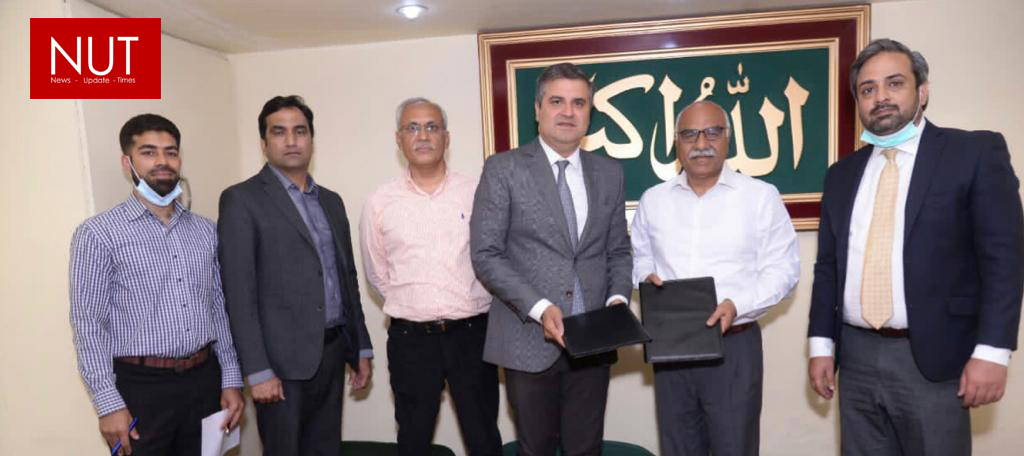
Lahore (Muhammad Yasir) Faysal Bank Limited and Akhuwat have come together in a strategic partnership to promote Shariah compliant affordable housing, under the Government of Pakistan’s low-cost housing finance facility for low-income individuals. The memorandum of understanding (MoU) was signed by Faysal Bank’s Head of Corporate & Investment Banking, Mr. Ali Waqar, and Dr. Amjad Saqib, CEO of Akhuwat.

Akhuwat is the world’s largest interest-free microfinance organization that constantly works to alleviate poverty and empower socially and economically marginalized communities. As part of the partnership, Akhuwat will assist Faysal Bank in the identification of eligible individuals who desire to obtain the affordable housing facility.

In turn, Faysal Bank the fastest growing Islamic and Best Emerging Bank of the country will proceed with the disbursement of affordable housing finance facility to the applicants as recommended by Akhuwat. Faysal Bank is among the earliest banks to have joined hands with Akhuwat, harnessing access to a greater network of potential clients from across the country who can benefit from the low-cost housing facility within the Shariah principles.

Expressing his views on this partnership, Mr. Yousaf Hussain, President and CEO of Faysal Bank said, “We are delighted to move forward in our mission to promote financial inclusivity. Through this partnership with Akhuwat, we look forward to uplifting the living standards of underprivileged communities, ensuring the provision of sustainable low-cost housing units to deserving people with low income, while also promoting the overall social and economic growth of the country.”

Dr. Amjad Saqib, CEO Akhuwat, also added, “This partnership with Faysal Bank has strengthened our efforts to assist deserving families in the country. Insha’Allah with Akhuwat and Faysal Bank’s collective efforts, we will make affordable housing a reality for everyone”.

Santex Products steps in to tackle period poverty in Sindh Prisons

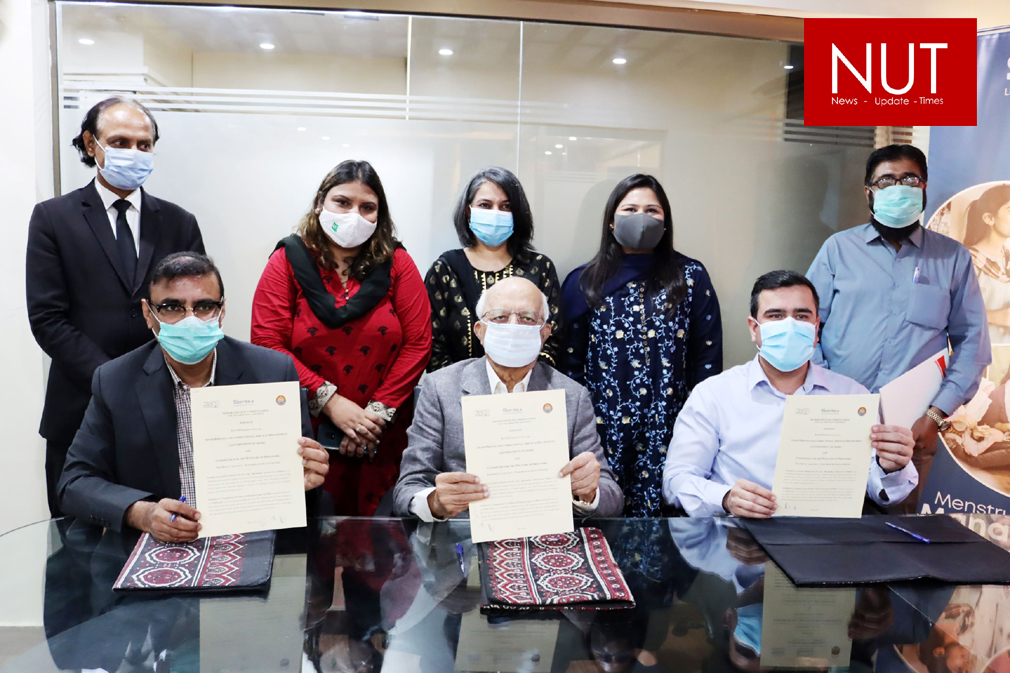
Lahore (Muhammad Yasir)  Santex Products Private Limited, a leading name in the personal hygiene care industry in Pakistan, has signed an MoU with Sindh Prisons and Correctional Services Department (Government of Sindh) and Committee for the Welfare of Prisoners- Legal Aid Society (CWP-LAO), to improve the access of menstrual products to female prisoners in Karachi, Hyderabad, Sukkur & Larkana.

Adequate access to safe sanitary products has always been a struggle due to the shame and stigma that surrounds periods. The situation is even more unsettling for the incarcerated women whose menstrual needs largely go unmet due to lack of resources.

Santex Products through its Butterfly Outreach program has been donating monthly supplies of sanitary napkins to the prisons to ensure accessibility of necessary menstrual hygiene products for inmates. Awareness sessions are also being conducted on Menstrual Hygiene Management (MHM) to educate female prisoners about the importance of safe feminine hygiene practices. The MoU with the Sindh Prisons and Correctional Services Department and CWP-LAO is a further extension of these efforts on a formal ground.

Speaking about the importance of this partnership, Ms. Rodrigues, Marketing Lead Santex Products, said, “We believe every woman from any walk of life, should be able to go through her monthly cycle with dignity. Access to menstrual products is a challenge for most and we are happy to see our joint efforts with CWP-LAO and Sindh Prisons Departments will result in better access and personal hygiene awareness for the female inmates”

Inspector General of Prisons (IGP) Sindh, Mr.  Kazi Nazeer Ahmed shared that this partnership initiative is an avenue to promote healthy recreational activities for inmates, also resulting in their improved mental health. It will support to secure improved rights for menstruating populations in prisons through ensuring improvement in the knowledge, attitude and practice parameters related to menstrual health of prisoners and prison staff.

Speaking on this signing ceremony, Justice (R) Nasir Aslam Zahid, Chairperson, CWP-LAO stated that “incarcerated women are less likely than males to have outside financial support and they do not earn enough from in-prison jobs to pay for necessities quantities are often limited and not always available when needed. it will be easier to ensure more visibility of the excellent work carried out through this partnership by Santex Products and the Sindh Prison Department, thus to improve confidence and self-esteem among the women inmates and the initiative will also help reduce anxiety amongst them.

Santex Products’s Butterfly Outreach Program aims to transform cultural attitudes, as well as break down barriers for women in the most practical ways, by helping them achieve their basic rights.