Launch of Google Career Certificates to Empower Youth and Women

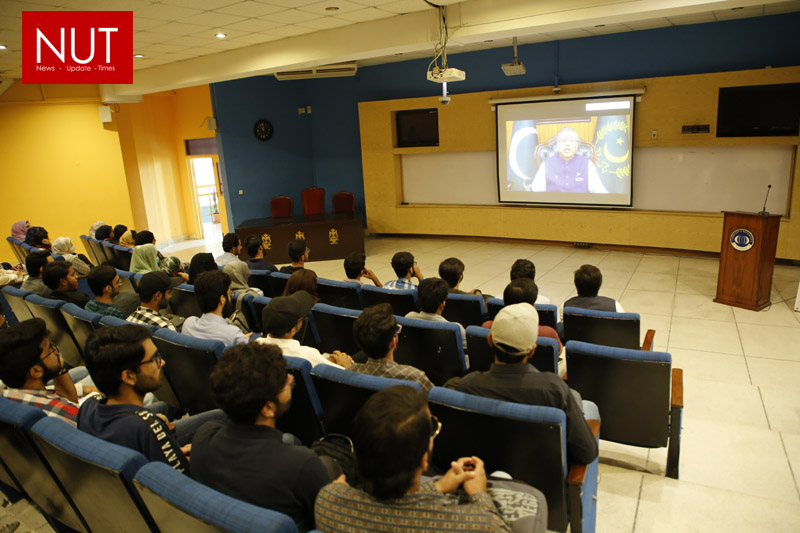
Islamabad (Muhammad Yasir) Pakistan is in dire need to capacitate the youth to enable them to contribute in the development of country, especially those who can not afford to attend the universities. These thoughts were expressed by President of Pakistan Dr. Arif Alvi, during his video keynote address in the launching ceremony of Google Career Certificates in Pakistan, being carried out jointly by Google, Institute of Rural Management (IRM) and Ignite.

Dr. Arif Alvi further said “I am very pleased that google, IRM and Ignite are launching google career certificates in Pakistan. This program has ensured the women participation throughout the program. These courses will play an important part in creating a shift towards digitization and introduction of digital technology.” He expressed hope that initiation of such projects will bring about the required digital revolution in Pakistan.

Dr. Arif Alvi stressed the youth to take benefit of these courses and enroll themselves in digital programs to increase their earnings as they are completely online and free.

During the ceremony, speakers from Google, Ministry of IT, Industry and Academia addressed the participants on the importance of the google career certificates in Pakistan.Dr. Roomi S. Hayat said that “he hopes that with the help of such programs, soon we would be a thriving country in the digital world”. CEO Ignite said that “Ignite has always contributed to the digital economy of Pakistan and through this certificates Ignite intends to further strengthen the digital economy”.
Participants were also given a detailed orientation session on how to enroll and join the google career certificate program.

Levi’s® Launches the Next Iteration of Buy Better, Wear Longer

Lahore (Muhammad Yasir) Levi’s® just launched the next iteration of its “Buy Better, Wear Longer” campaign which builds on the brand’s long-term commitment to making fashion more sustainable and prolonging the lifespan of its products. Levi’s® is on a mission to help consumers love their jeans for decades, not seasons.

To support this effort, Levi’s® created a cinematic short film from the perspective of a pair of Levi’s that tells a multigenerational story: the film takes us through the life of Levi’s most iconic design, the 501. Transformed through the decades with each owner, adapting to the style of the times, the 501 is just as relevant, and wearable today as it was in the 1960s.

“The campaign speaks to Levi’s® legacy, durability, and appeal to a broad global audience. A pair of Levi’s® ages beautifully, engaging generation after generation, with a few tweaks and changes. Timeless and versatile, yet fashionable — no matter the decade. This message is more relevant today than ever before, when we’re all thinking how we can contribute to a more sustainable future” – Karen Riley-Grant, Global Chief Marketing Officer

The Buy Better, Wear Longer campaign is both a plea and a promise. It’s a plea for consumers to be more intentional about their purchasing decisions and to look for ways to rewear, repurpose, and hold on to their clothes as long as possible, before passing them down to future generations. And it’s a commitment from the brand to continue its work on numerous fronts to be responsible stewards of the natural resources we use, to innovate across its design and manufacturing platforms to become more sustainable, and to move towards more circular products and practices across the board.

Climate, consumption, and community are at the core of our approach to sustainability, and Levi’s® is pursuing a variety of initiatives to support this vision: Investment in materials such as Cottonized Hemp and Organic Cotton, which reduce water consumption and pioneering Water<Less® manufacturing in denim. Most of all, Levi’s® has open-sourced their learnings and tools to affect broader change. Today, Levi’s continues to work alongside partners and leaders like Fashion for Good and the Ellen MacArthur Foundation to help shift the industry to a more circular model and Levi’s® R&D lab, WellThread®, constantly searches for radical new ways to make clothes that can reduce its environmental footprint.

“Reconfiguring supply chains takes time but we have found partners that are as concerned about their footprint, and are as excited to experiment as us. These collaborations have allowed us to introduce more circularity in how we make our products.” – Paul Dillinger, Vice President, Head of Global Product Innovation

The Buy Better, Wear Longer short film is available to view (HERE), and has launched worldwide across digital and social platforms. To build on their message, Levi’s® will also highlight stories from their partners and changemakers Xiye Bastida, Melati Wijsen, and Emma Chamberlain, who have been an integral part of the campaign since its launch last year and represent the next generation of voices on sustainability. For more information on Levi’s sustainability efforts, please visit https://www.levi.com/US/en_US/features/sustainability. We have also released our new sustainability report and an expanded slate of sustainability goals.

Levi’s® Buy Better, Wear Longer Short Film HERE.

Levi’s® Buy Better, Wear Longer BTS Video HERE.


THE WOMAN OF SUBSTANCE

THE WOMAN OF SUBSTANCE – STRONG WOMEN OF PAKISTAN SERIES BY Hijabi.Pk

Our beloved Pakistan owes its freedom equally to the struggles, help, and guidance of its remarkable women. From the mother-of-the-nation, Madar-e-Millat Mohtarma Fatima Jinnah to the Iron lady Begum Rana Liaquat Ali, all contributed to their capacity and helped the leadership to carve the way to an independent nation, today we call Pakistan. It was because of them that women were encouraged, motivated, and inspired to work together. Begum Rana Liaquat started the All Pakistan Women Association (APWA), right after the independence, to help the female refugees from Pakistan and to empower them and facilitate them in earning independently.

Pakistan has always been at the forefront of producing women leaders in every sphere of life, be it the first female prime minister of the Islamic world, Mohtarma Benazir Bhutto, Dr Fahmida Mirza as the first female speaker, Dr Shama Khalid as the Governor GB, Shamshad Akhtar as the Governor of State Bank of Pakistan, and Lt.Gen Nigar Johar, the first lady to hold 3-stars on her uniform.

Continuing the legacy of the great women at leadership positions enters, Humaira Farooqui, from the new generation of educated, tech-savvy, globally connected but locally committed entrepreneurs. She is the CEO of Hijabi.pk, a modest lifestyle brand of cultural and religious attire, available anywhere on just a click. She is a strong believer on empowering women, and has been using her outreach to support and strengthen the empowered women of our society, by inviting and sharing their remarkable stories with help of the digital world, which, like a ripple effect, impacts our society in various ways. To some, it’s like a moral aid, nourishment for young minds, motivation for those hesitant, and an overall solidarity with all women in society.

One of the story of this series ‘woman of substance’ featured; Alisha Jameel, a teenage female rickshaw driver who stood against the societal norms to provide for her family after the tragic death of her father. Alisha narrated that she is the youngest daughter of all the six sisters and it all started when her father (late) was very sick. He bought her a rickshaw, trusting her, even without his presence, that she would be strong enough to be the only bread winner of the family. It has always been her wish to drive a vehicle, to own her vehicle and make use of it. Her father taught her to drive and now she has a rickshaw for her daily livelihood to support herself and her family.

“It has not been easy. It was entirely a new experience in her life.” She quotes; “Although I only take passengers who are near my own area, I still meet new people every day. A lot of people are surprised to look at a girl in the rickshaw driver’s seat. Sometimes they ask whether I can actually handle the rickshaw or not. Some people can’t seem to understand my necessity to do what I am now doing as a proper profession. They tell me to choose a better career, or any other better means of income, but it’s not so easy to actually do that. Everyone makes the most of what their resources allow, and mine happens to be a rickshaw. On the other hand, many people are happy to see me doing something very good yet uncommon in our society. They encourage my reasons, and often say beautiful duas for me, which always makes my day. The daily chaos of the city with its fluctuating weather, is always an uplifting mood on days when the passengers appreciate me for basically being ‘the son of family’ to my own.”

She added further that aside from the passengers, the police and the government have been very understanding. They respect her work when they come across her on the streets. With the snippets of her story going viral on the internet, the government announced a house for her, for which she felt very blessed. She never thought that her hard work to support her family would bear its fruits so quickly. She is currently in contact with them, hoping for the best.

Alisha shares that her aim is to be capable enough to support her family. She believes that depending on others is not an option for her and she will work hard because currently she is the only one who can take care of her younger sister and her aged mother. Just because of the lack of a male figure in our house doesn’t mean she will be helpless.

Surbana Jurong to plan and design iconic residential project Sialkot Motorway City

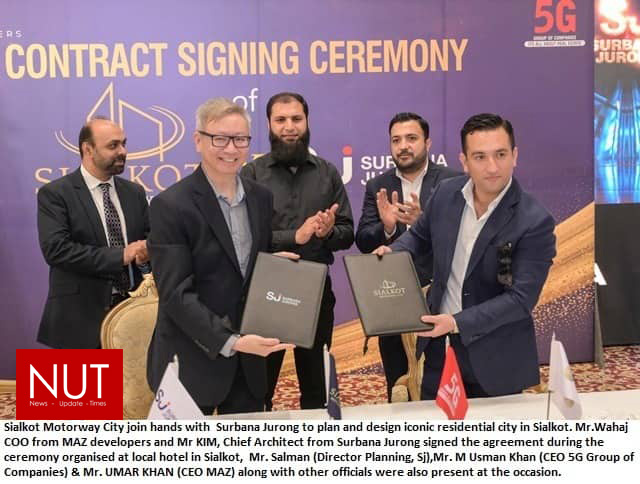
Pakistan (Muhammad Yasir) A prominent housing society, Sialkot Motorway City (SMC) has entered into a partnership with the world’s renowned company, Surbana Jurong (Sj) to plan and design the iconic residential project. The agreement signing ceremony took place in Sialkot, where officials of both the companies signed the agreement. Other senior officials of SMC and Sj were also present at the occasion.

The Sialkot Motorway City project was launched with the aim to deliver an iconic residential project to redefine the luxurious lifestyle for living in Pakistan. Like Singapore and other world’s top class cities, the SMC residential project will be the first master plan of its kind in Pakistan. The project will attract huge investment in the country. As Exclusive Sales partner, the 5G Group of companies is ensuring the project. The SMC residential project is the joint venture of MAZ developer and 5G Group of companies.

Surbana Jurong is the world’s renowned town designing, planning, managing and delivering consultancy firm with 70 years of successful track record. Sj has built more than a million homes in Singapore, created master plans in more than 60 countries and developed over 100 industrial parks globally.

Sj said that as a master planner of the SMC housing society, the company will prepare better plan for the SMC project as compared to the Singapore city. They said that SMC will give a new identity to Sialkot as well as Pakistan as a whole.

Mr Muhammad Usman Khan, Chairman 5G Group of Companies was present on the occasion of the contract signing ceremony. He discussed the revolutionary business opportunities that the SMC game changing project is expected to offer.

The housing society is easily accessible from main Sialkot city and the nearby towns. The project is located on the main Wazirabad Road on Motorway starting junction and at 10 minutes’ drive from Sialkot Cantonment. Motorway and Sialkot Airport are situated in close vicinity of the housing society.

For Further details Sialkot Motorway City official UAN number is 0304- 11 12 013.


Celebration of the Third Anniversary of Lord of Food Restaurant

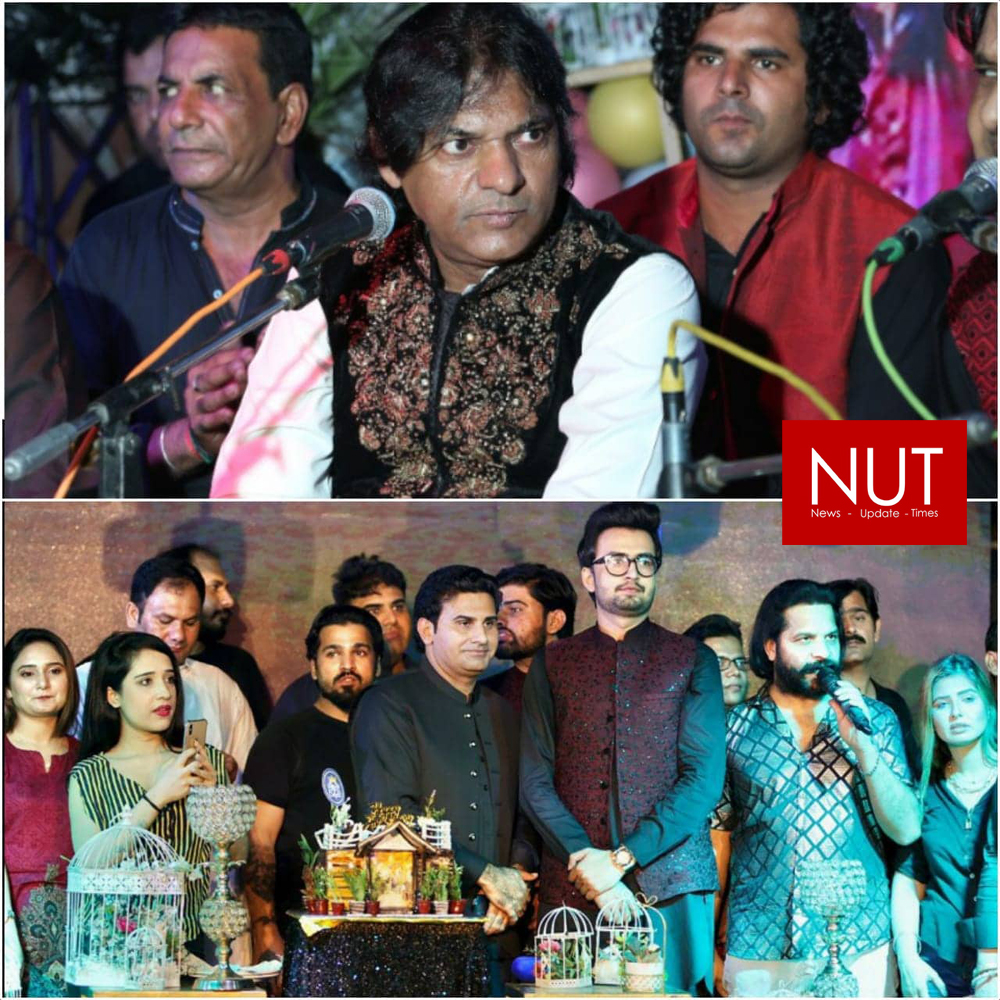
Lahore (Muhammad Yasir) A colorful celebration of the third anniversary of Lord of Food Restaurant was organized on this occasion, there were cake cut fireworks and Shermian Dad Khan and other artists performed their art in the presence of a large number of showbiz stars and Tik Tokkers. According to the details, a large number of citizens participated in the colorful celebration of the third anniversary of Lord of Food Restaurant including Tick Talkers,


singer Ahmed Nawaz Samia Sheikh, Chairman Lord of Food Restaurant Chaudhry Jamshed Gurayah cut the cake, followed by fireworks. On this occasion, singer Sher Miandad gave his wonderful performance, he won the applause of the audience by singing his famous Zaman Qawwals and songs, while Horiya Ismat presented a drum performance. The cultural dance group presented cultural dances on this occasion. DJ Butt, Ali Khan, Junaid Tariq, Model Malaika Ali, Actress Zara Malik, Model Iqra, Model Saeem and other Tik Tokers participated on this occasion. It was said that every year I become a part of this event like this People get entertainment opportunities from the events of such events should continue to be held.


Dastgyr Joins Hands with MoEngage

Dastgyr Joins Hands with MoEngage to Leverage its Insights-Led Customer Engagement Platform

Pakistan (Muhammad Yasir) Dastgyr, a Pakistan-based B2B E-commerce marketplace platform has partnered with MoEngage, an insights-led customer engagement platform, to better engage with its customers by understanding behavior and driving customer-centric strategies.

Having recently raised US$37 million in a Series A round, Dastgyr connects thousands of retailers with suppliers, ultimately providing its customers with real-time visibility on pricing and financing rates.

Dastgyr Joins Hands with MoEngage

Fulfilling over one million orders from 100,000+ customers, Dastgyr is working to ease the lives of mom & pop stores in Pakistan by boosting the income levels of both store owners and sellers. The E-commerce marketplace democratizes access to digital platforms for buying and selling. To drive benefit for the underserved retailers, Dastgyr needs to encourage adoption and engagement with its app. Driving app adoption has been a struggle owing to the resistance to technology among older store owners.

To better engage customers, it was essential to understand their behavior, accordingly create segments, then experiment with growth strategies based on the segment. The Dastgyr team could then iterate and frame new engagement strategies based on the results. With these objectives in mind, the  B2B E-commerce marketplace platform partnered with MoEngage to drive the desired business results.

‘We are delighted to partner with Dastgyr in their mission of connecting 2 million underserved retailers to suppliers. We’re dedicated to providing them with the insights they’re looking for. We’re also empowering Dastgyr to monitor customer journeys closely and automate triggers to speed up conversions. We’ve also added a layer of seamless support to help achieve their business goals’, said Shivangi Boghani, Associate Vice President – India, Middle East & Africa, MoEngage, while discussing the partnership.

Dastgyr can gather meaningful customer insights as they grow and expand into different verticals. The B2B E-commerce marketplace can now run targeted engagement and improve chances of final conversion, streamline onboarding, and boost retention.

 Talking about the integration, Asna Ashraf, National Growth Lead, Dastgyr, said, ‘Prior to implementing MoEngage, we were using large databases to extract and analyze insights, which rarely went beyond the surface level. With MoEngage, we have a streamlined approach to creating customer cohorts, from time spent on specific in-app features to utilizing RFM analysis. The insights-led approach has been instrumental in driving better adoption of our platform among retailers, suppliers, and end consumers. We look forward to utilizing MoEngage better and driving our business goals more effectively’.

Dastgyr joins the growing list of 1200+ global companies across 35 countries, such as Landmark Group, Edkasa, Krave Mart, Creditbook, Aimfit, Maqsad, Commercial Bank of Dubai, Airtel, Ola, Oyo, Mashreq Bank, among others, that trust MoEngage to deliver a consistent experience across multiple devices and touchpoints.

Stakeholders Demand Promoting Climate Smart Agriculture

Lahore (Muhammad Yasir)

Stakeholders claiming that flooded soils present significant obstacles in rehabilitation of the agricultural lands have proposed that the provincial agriculture departments must introduce improved crop varieties and changing agricultural practices which can help realize potential production gains. 
‘Some crop varieties are better suited for flood-based farming systems, such as very fast growing floating rice varieties, which are grown in areas as varied as Mali and Myanmar. Grasses can also be grown as flood pastures to meet livestock feed. The productivity of flood-based farming systems can also be boosted by fisheries, for example, fishponds and aquaculture which can supply local communities with protein, while requiring fewer inputs than other agricultural practices,’ said Dr. Adnan Arshad, an environmentalist and Director Climate Smart Agriculture programme at Potohar Organization for Development of Agriculture (PODA-Pakistan) and Aamer Hayat Bhandara Co-founder Agriculture Republic while talking to News Update Time.
They said floods also trigger the runoff of agricultural topsoil and flooded soil syndrome; the loss of useful fungi that mobilize plant nutrients from the soil. Erosion can result in the loss of essential plant-available nutrients and organic materials. In addition, the deposition of flood sediments may raise the soil’s NPK and Zn levels.
Flooding can also limit the amount of available phosphorus, hence diminishing the populations of microbes important for enhancing phosphorus availability. 
They were of the view therefore, soil health, including soil texture, structure, water-holding capacity, and nutrient availability should be recovered after flooding for enhanced agricultural productivity. The farming community must therefore prepare for the gradual restoration of their agricultural soils. Multiple recovery procedures are employed to manage the soil following flooding. 
Dr. Adnan Arshad said there is a need to minimize limitations to crop production and manage deposition in fields, farmers must evaluate if the material and objects may be tilled into the ground or whether they must be physically removed. Due to the size of the debris and the travel distance, physical removal is expensive. Additionally, certain laws forbid the addition of sediments to the river. 
He said promoting microbial and fungi activity in the soil is also essential. Symbiotic fungi called arbuscular mycorrhizae (AM) develop inside and on the roots of plants. Fungi penetrate roots without causing any harm to the plant. As a result, the plant gives the fungi nourishment in the form of carbohydrates, whereas the fungi give plant nutrients, particularly phosphorus, Dr. Adnan Arshad added.
There’s nothing left to pick from cotton, no land preparation for wheat sowing as water is discharging to Indus slowly followed by zero in-situ drain. His different proposals are being reproduced as under:
Distribution of water: Dividing the floodwater into smaller portions, and avoiding steep slopes where water can pick up speed, can help safely steer water. Other relevant flow diversion structures can be put place, including drop structures (to transition between levels), flood bed stabilizers (to prevent uncontrolled runoff) and water-spreading weirs (to reduce erosion). 
In-situ field management: Being able to manage the rise and drainage of floodwater within a field is also essential to be able to use the water productively. Several mechanisms can help in this matter: Dikes and soil bunds can help protect fields from unexpected floods and they can also allow farmers to drain or retain water as needed; drainage ditches can be used to channel away excess floodwaters; and reuse agreements can enable farmers to take turns using water from the same source.
Water loving crop varieties: Agriculture department must introduce improved crop varieties and changing agricultural practices can also help realize potential production gains. Some crop varieties are better suited for flood-based farming systems, such as for example very fast growing floating rice varieties, which are grown in areas as varied as Mali and Myanmar. Grasses can also be grown as flood pastures to meet livestock feed. 
Promote aquaculture: The productivity of flood-based farming systems can also be boosted by considering the through fishery, For example, fishponds and aquaculture can supply local communities with protein, while requiring fewer inputs than other agricultural practices. 
Internal governance: Flood-damaged farming systems are underappreciated and poorly understood by governments, donors and development agencies. To realize the full potential, governance must be improved, including by familiarizing policy makers, extension workers, academics and other water professionals with the potential for and benefits of floods-based farming.  
Aquifer recharge: Aquifer recharge is water that moves from the land surface or unsaturated zone into the saturated zone through well and boring techniques. It is more technical and expensive but very effective to drain maximum flood water to recharge groundwater. Local governments should take speedy actions and select sites with maximum standing flood water to drain from cultivated areas.   
For agricultural lands, flooded soils present significant obstacles. The most significant direct effect of floods is the accumulation of sand and debris on productive lands. Also triggers the runoff of agricultural topsoil and flooded soil syndrome; the loss of useful fungi that mobilize plant nutrients from the soil. Erosion can result in the loss of essential plant-available nutrients and organic materials. In addition, the deposition of flood sediments may raise the soil’s NPK and Zn levels. Flooding can limit the amount of available phosphorus, hence diminishing the populations of microbes important for enhancing phosphorus availability.
Therefore, soil health, including soil texture,  structure, water-holding capacity, and nutrient availability, should be recovered after flooding for enhanced agricultural productivity. The farming community must therefore prepare for the gradual restoration of their agricultural soils. Multiple recovery procedures are employed to manage the soil following flooding. 
First, to minimize limitations to crop production and manage deposition in fields, farmers must evaluate if the material and objects may be tilled into the ground or whether they must be physically removed. Due to the size of the debris and the travel distance, physical removal is expensive. Additionally, certain laws forbid the addition of sediments to the river.
The second procedure is to fix the physical destruction that erosion has done to the soil. The loss of soil will cause gullies and gaps to appear in the field. Tillage can help to reduce some erosion. The gullies are often stuffed with sediment first, then topsoil from another part of the field is filled in it. The farmer might be forced to give up on the field if the expense of the repair is too high.
Thirdly, it’s crucial to promote microbial and fungi activity in the soil. Symbiotic fungi called arbuscular mycorrhizae (AM) develop inside and on the roots of plants. Fungi penetrate roots without causing any harm to the plant. As a result, the plant gives the fungi nourishment in the form of carbohydrates, whereas the fungi give plant nutrients, particularly phosphorus.
Pakistan to be strong destination of RMG exports soon global recovery takes place

Lahore (Nut Desk) Senior Vice Chairman of the All Pakistan Textile Mills Association (APTMA) Kamran Arshad has pointed out that Pakistan would be a strong destination for exports of readymade garments (RMG) and finished products soon a global recovery takes place in the future.

According to him, the Customs department of the country should be ready for this change and speed up the removal of irritants in the Export Facilitation Scheme (EFS). He has also urged the Customs officials to enhance their interaction with the premier association of the textile industry to understand the dimensions of prevailing issues with regard to the EFS.

The SVP said news investments of $5 billion has already been made in the textile sector which has no potential to give exponential growth to the textile exports provided a business friendly environment continues in the country. He said the APTMA members are planning to set up 100 RMG manufacturing units ahead.

He said the Federal Board of Revenue (FBR) has already shown its strength in ironing out the export-relating issues and more is needed to be done on war footing basis.

He has appreciated the Board for carrying out up-gradation of the facility of Pakistan Single Window, and added that the upcoming launch of Port Community System and Trade Information Portal would be a welcoming development towards easing out RMG exports from Pakistan.  

Kamran has also stressed on the resolution of issues relating to the indirect exporters.

Social media:  “Customs department of the country should be ready for this change and speed up the removal of irritants in the Export Facilitation Scheme (EFS). The Customs officials to enhance their interaction with the premier association of the textile industry to understand the dimensions of prevailing issues with regard to the EFS,” SVP APTMA.


Member Customs assures APTMA of resolving EFS related issues on priority

Lahore (Muhammad Yasir) Mr. Mukarram Jah Ansari, Member Customs, Federal Board of Revenue (FBR), has assured the All Pakistan Textile Mills Association (APTMA) of resolving all customs related issues on priority.  

He was speaking to the APTMA members during his visit to APTMA House on Tuesday. Ms. Rabab Sikandar, Chief Collector Customs, Mr. Mubashar Baig, Director General IOCO, Ms. Anbreen Tarar, Collector Customs Appraisement, Lahore, Mr. Saeed Wattoo, Collector Customs Faisalabad, and Mr. Nayar Shafiq, Collector Customs Sialkot also accompanied him on the occasion.  

Chairman Northern Zone Mr. Hamid Zaman along with Senior Vice Chairman Mr. Kamran Arshad and Secretary General Mr. Raza Baqir received him at APTMA House, Lahore.  

Member Customs said that exports are the top priority of the government and keeping this in view APTMA was the very first organisation he was visiting after assuming the office of Member FBR.  

He said necessary changes will be incorporated in the relevant rules, regulations and laws whenever required. He added Pakistan Single Window is being upgraded and some 74 departments will be incorporated in it. He added that Port Community System and trade information portal will also be in place to facilitate the industry and necessary awareness sessions will be arranged shortly for information of trade and industry.  

He continued to state that in order to develop indirect export module for EFS before mid October, 2022. He also appointed Collector Faisalabad as focal person to resolve issues relating to wastages etc of textile sector.  

He asked APTMA to appoint a focal person to resolve issues on the module related to indirect exporters.  He also appointed Collector Faisalabad as focal person to resolve audit issues of the industry.  

Earlier, in his welcome address, Chairman APTMA North Zone Mr. Hamid Zaman highlighted several impediments in the implementation of Export Facilitation Scheme (EFS) introduced in July, 2021.  

According to him, the Indirect Export Module has yet not been deployed and manual filing of Indirect export GDs creating banking and refund difficulties. Also, he pointed out that the department was not allowing transfer of plant and machinery in case of the merger of The production units.  

He said the concept of revolving values should be Introduced where the amount of exported goods may be automatically restored in approved value. Also, automatic switching from any existing scheme to EFS without audit etc., Should be allowed under the scheme.  

He said the system should show available face value.  Module for zero rated procurement of local inputs not yet implemented, which requires immediate attention.  

He said the renewal of manufacturing bond licenses held up for want of PCA audit was  resulting in suspension of whole manufacturing and exports.  

According to him, Custom duty may be charged at the net transactional value, excluding  freight, port handling charges etc., as the WTO agreement authorizes  member states to include or exclude such charges.  

He further said that a lack of coordination between shipping line and customs was causing delays. There is a need of introducing digital audit and doing away with routine audit of calling voluminous record of all imports, purchases, manufacturing / supplies.  

He also suggested the implementation of open door policy at least for two hours a day.  

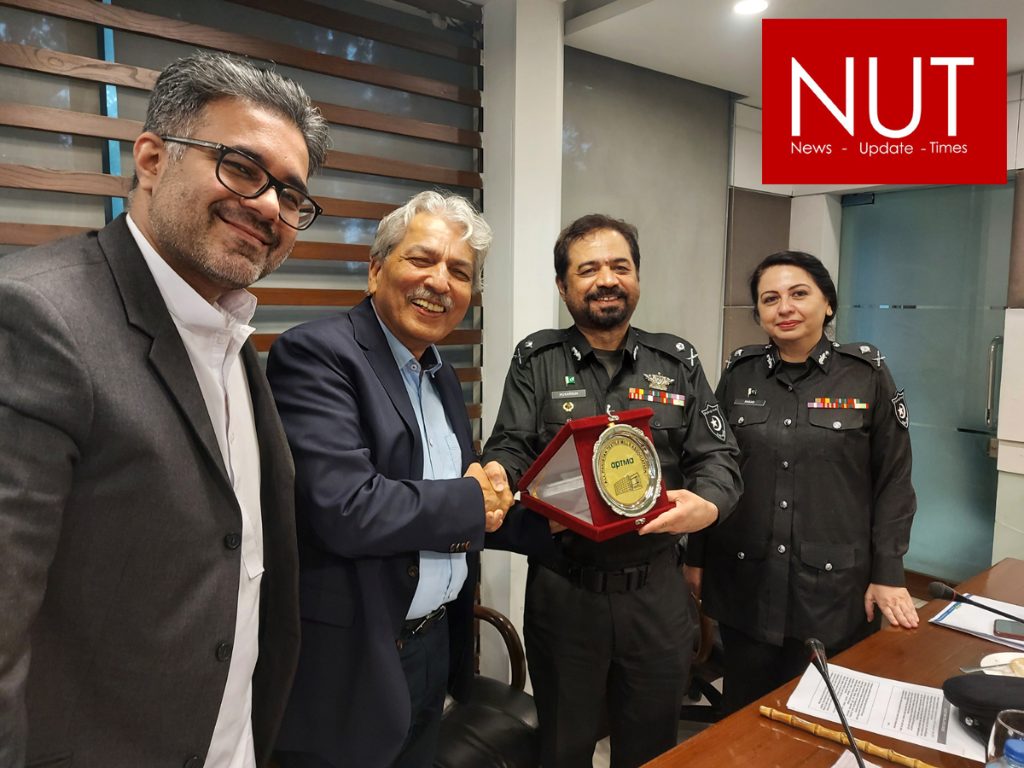
Mr Kamran Arshad presented vote of thanks while a memento was also presented to the visiting Member Customs at the end of the meeting.


Angelina Jolie visits Pakistan to support communities affected by devastating floods

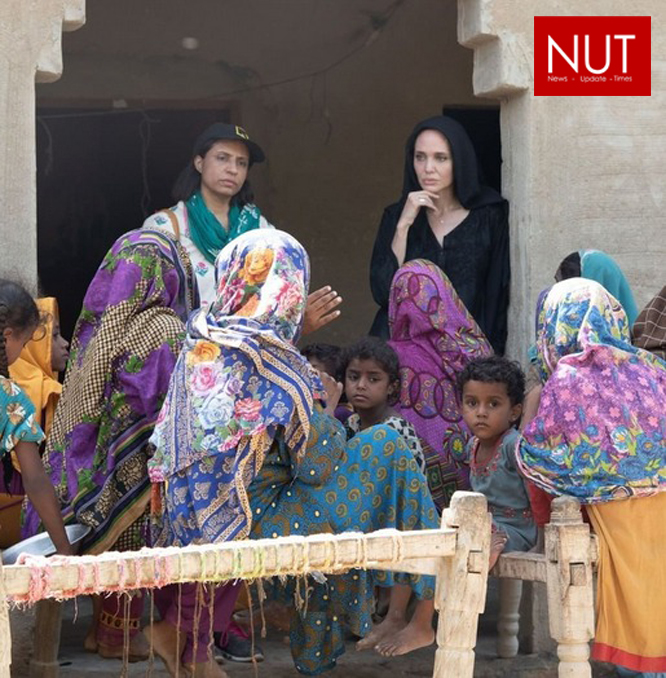
Lahore (Muhammad Yasir) International humanitarian Angelina Jolie is visiting Pakistan to support communities affected by the devastating floods. Heavy rains and floods across the country have impacted 33 million people and submerged one third of the country under water. Ms Jolie is visiting to witness and gain understanding of the situation, and to hear from people affected directly about their needs, and about steps to prevent such suffering in the future.

Ms Jolie, who previously visited victims of the 2010 floods in Pakistan, and the 2005 earthquake, will visit the IRC’s emergency response operations and local organisations assisting displaced people including Afghan refugees. 

Pakistan, which has contributed just 1% of global carbon emissions, is also the second largest host of refugees globally, its people having sheltered Afghan refugees for over forty years.

Ms Jolie will highlight the need for urgent support for the Pakistani people and long-term solutions to address the multiplying crises of climate change, human displacement and protracted insecurity we are witnessing globally.

Ms Jolie will see first hand how countries like Pakistan are paying the greatest cost for a crisis they did not cause. The IRC hopes her visit will shed light on this issue and prompt the international community – particularly states contributing the most to carbon emissions – to act and provide urgent support to countries bearing the brunt of the climate crisis.

Shabnam Baloch, Pakistan Country Director at the IRC said:

“The climate crisis is destroying lives and futures in Pakistan, with severe consequences especially for women and children. The resulting economic loss from these floods will likely lead to food insecurity and an increase in violence against women and girls. We need immediate support to reach people in urgent need, and long term investments to stop climate change from destroying our collective futures. With more rains expected in the coming months, we hope Angelina Jolie’s visit will help the world wake up and take action.”

IRC’s latest needs assessment shows people are in urgent need of food, drinking water, shelter, and healthcare. Every person surveyed reported women and girls have no access to menstrual hygiene products. So far, the IRC has reached more than 50,000 women and girls with humanitarian assistance, including dignity and hygiene kits to address the need for sanitation and menstrual items. We have been providing lifesaving services to flood-affected communities in Balochistan, Khyber Pakhtunkhwa and Sindh since early July and have reached almost 950,000 people with emergency supplies, food, healthcare and safe spaces.