Taliban seizes key districts as gov’t forces flee

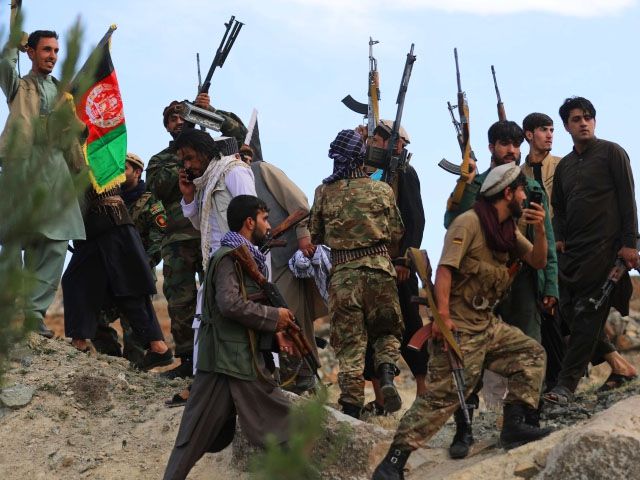
KABUL: The Taliban’s march through northern Afghanistan gained momentum overnight with the capture of several districts from fleeing Afghan forces, several hundred of whom fled across the border into Tajikistan, officials said.

More than 300 Afghan military personnel crossed from Afghanistan’s Badakhshan province as Taliban fighters advanced towards the border, Tajikistan’s State Committee for National Security said in a statement on Sunday. The Afghan troops crossed over at about 6:30pm local time on Saturday.

“Guided by the principles of humanism and good neighbourliness,” the Tajik authorities allowed the retreating Afghan government forces to cross into Tajikistan, said the statement.

Since mid-April, when US President Joe Biden announced the end to Afghanistan’s “forever war”, the Taliban has made strides throughout the country. But its most significant gains have been in the northern half of the country, a traditional stronghold of the US-allied strongmen who helped defeat them in 2001.

The Taliban now controls roughly a third of all 421 districts and district centres in Afghanistan.

Gains in northeastern Badakhshan province in recent days have mostly come to the armed group without a battle, said Mohib-ul Rahman, a provincial council member. He blamed Taliban successes on the poor morale of troops who are mostly outnumbered and lacking supplies.

“Unfortunately, the majority of the districts were left to Taliban without any fight,” said Rahman. In the last three days, 10 districts fell to Taliban, eight without a fight, he said.

Hundreds of Afghan soldiers, police and intelligence troops surrendered their military outposts and fled to the Badakhshan provincial capital of Faizabad, said Rahman.

Even as a security meeting was being held early on Sunday to plot the strengthening of the perimeter around Faizabad, some senior provincial officials were leaving the city for the Afghan capital Kabul, he said.

In late June, the Afghan government resurrected volunteer militias with a reputation of brutal violence to support the beleaguered Afghan forces but Rahman said many of the fighters in the Badakhshan districts put up only a half-hearted fight.

The Taliban also captured a key district in its former bastion of Kandahar after fierce night-time fighting with Afghan government forces, officials said on Sunday.

The fall of the Panjwai district in the southern province of Kandahar comes just two days after US and NATO forces vacated their main Bagram airbase near Kabul, from where they led operations for 20 years against the Taliban and its al-Qaeda allies.
Taliban seizes key districts as gov’t forces flee

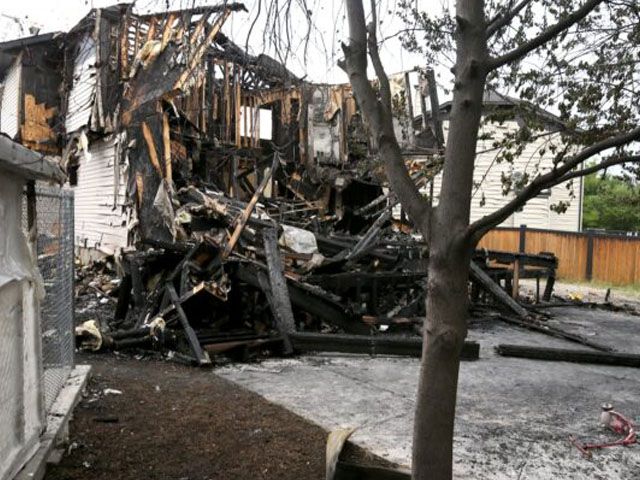
7 members of Pak family killed in Canada house fire

CHESTERMERE, Canada: At least seven members of a Pakistan-origin family lost their lives when their residence burned down in the Canadian province of Alberta on Friday.

Among the casualties were four children. Five of the residents were able to flee from the house during the fire. According to the prayer leader of Calgary mosque, Syed Suharwardy, there were two families residing in the house at the time of the incident.

He added that one of the families had arrived a few days ago to stay at the residence.

Foreign Office (FO) spokesperson Zahid Hafeez Chaudhri expressed grief over the incident and said, “Our thoughts and prayers are with the families of the victims of this tragic incident. We also pray for quick and full recovery of the injured”.

The spokesperson further stated that the country’s consulate general in Vancouver was in contact with Canadian authorities to ascertain the facts leading to the incident.

He added that officials were also in contact with the bereaved family to extend assistance to them.

The spokesperson further said that the cause of the fire was unknown, adding the authorities had ruled out the involvement of a criminal act.

Canada drew the world’s attention last month following the killing of a Pakistan-origin family in Ontario.

The family lost members from three generations after it was targeted in a “religiously-motivated” attack when a pick-up truck ran over them in the south of Canada’s Ontario province while they were waiting on the sidewalk to cross the road.

Police said the family fell prey for being Muslim and the attack appeared to be a “premeditated” one.

7 members of Pak family killed in Canada house fire

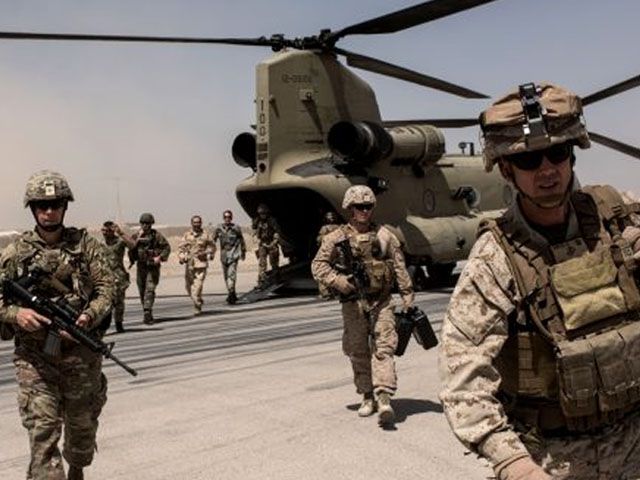
Afghan fighting flares up as US forces see exit

KABUL: Hundreds of Taliban fighters were killed in fierce battles with government forces across several provinces of Afghanistan, officials said Saturday, as Washington announced it would finish withdrawing its troops from the country by the end of August. Washington”s announcement came after all US and NATO troops vacated their main Bagram Air Base, from where the coalition forces led operations for two decades against the Taliban and their Al-Qaeda allies. Over the past 24 hours, more than 300 Taliban fighters were killed in fighting with government forces, the Ministry of Defence said Saturday. Scores were killed in air strikes, including a pre-dawn assault on Saturday, in the southern province of Helmand, where the insurgents and government troops have regularly clashed. There have been fears that Afghan forces would struggle without the air support that the United States has provided. “In recent days, the Afghan air force has intensified its air strikes against the Taliban hideouts and the insurgents have suffered casualties,” Attaullah Afghan, a member of Helmand provincial council, told media. The Taliban rejected the government”s claims. Both sides often exaggerate each other”s casualties and their claims are difficult to independently verify.

Afghan fighting flares up as US forces see exit

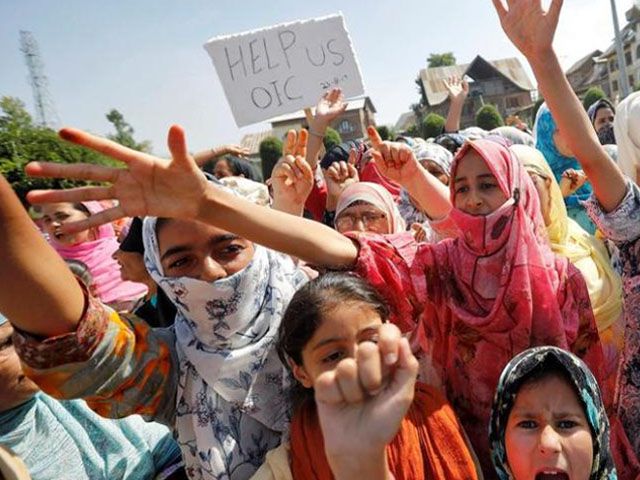
Anti-India protests as 5 youth martyred in IIOJK


ISLAMABAD: In Indian illegally occupied Jammu and Kashmir (IIOJK), people came out of their houses and staged a forceful anti-India and pro-freedom protest demonstration that resulted in clashes with the Indian troops who had martyred five youth in Rajpora area of the Pulwama district, KMS reported. Indian police used brute force and fired tear gas and shotgun pellets to stop scores of protesters from marching into the area where the cordon and search operation was conducted. The protesters chanted slogans such as “Go India, go back” and “We want freedom. ” No one was reported injured in the clashes.

Anti-India protests as 5 youth martyred in IIOJK

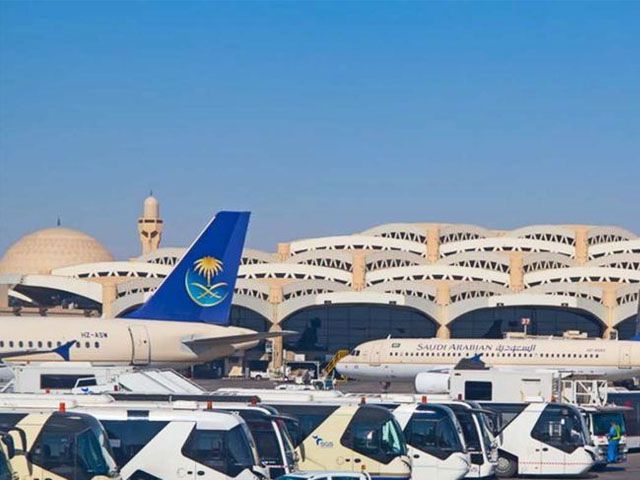
Saudi Arabia suspends UAE flights for virus variant


RIYADH: Saudi Arabia has suspended flights to three countries, including the neighbouring United Arab Emirates, to protect against a coronavirus variant, the interior ministry said Saturday. The move comes seven weeks after the oil-rich kingdom permitted fully immunised citizens to travel abroad, after a ban on foreign trips that lasted more than a year. The UAE, and especially Dubai, is a key leisure destination for Saudis. Flights to and from the UAE, alongside those to Ethiopia and Vietnam, will be suspended from Sunday, an interior ministry official said, quoted by the state media. Saudi citizens and residents returning from these countries will be required to quarantine for 14 days, it added. Citizens would be banned “from travelling directly or indirectly, without obtaining prior permission from. . . authorities”. The decision was taken due to “the spread of a new mutated strain of the (Covid-19) virus”, it added, without explicitly mentioning the increasingly globally emergent Delta variant.

Saudi Arabia suspends UAE flights for virus variant

Iran fears fifth wave of Covid linked to Delta variant


TEHRAN: President Hassan Rouhani expressed fears Saturday that Iran will be hit by a new wave of Covid-19 due to an outbreak of the Delta variant in the Middle East”s hardest-hit country. “It is feared that we are on the way to a fifth wave throughout the country,” Rouhani told a meeting of Iran”s anti-virus taskforce, warning the public to be careful as “the Delta variant” had entered the country from the south and southeast. Covid-19 has killed more than 84,000 people out of over 3.2 million infections in Iran, according to official figures that authorities admit do not account for all cases. Delta, first detected in India and now present in at least 85 countries, is the most contagious of any Covid-19 variant yet identified. The Islamic republic confirmed three cases of the Delta variant on May 5 in the central province of Qom. Iran”s health ministry has classified as “red” — the highest category on Iran”s coronavirus risk scale — the capital Tehran and nine other cities in Tehran province. The southern and southeastern provinces of Fars, Hormozgan, Kerman and Sistan-Baluchistan are also now classified as “red”. In red zones, all shops must stay shuttered except for those considered essential, including grocery stores and pharmacies. – Border controls – Authorities in Sistan-Baluchistan province said on Wednesday that they had closed travel across the border with Pakistan until further notice, although goods transport by road would be permitted. On Saturday, Alireza Raisi, the spokesman for the anti-virus taskforce, called for “strict controls of the country”s borders”, especially those on the eastern side of Iran. Strangled by US sanctions that have made it difficult to transfer money to foreign firms, Iran says it is struggling to import vaccines for its population of 83 million. Just over 4.4 million people have received a first dose of anti-Covid vaccine in Iran, while only 1.7 million have received the necessary two jabs, the health ministry says. “God willing, the situation will improve in terms of vaccinations from next week,” said Rouhani.

Iran fears fifth wave of Covid linked to Delta variant

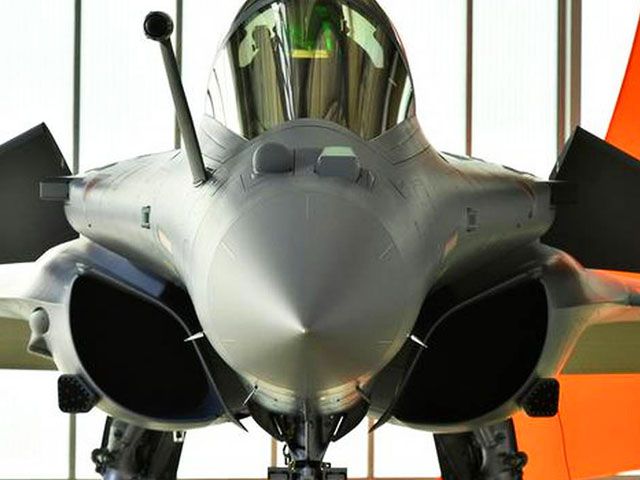
Rafale jets sale to India: French judge tasked to probe corruption


PARIS: A French judge has been tasked with investigating a controversial 2016 multi-billion-dollar sale of Rafale fighter jets to India on “corruption” suspicions, the national financial prosecutors´ office (PNF) said Friday. The 7.8-billion-euro ($9.3-billion) deal for 36 planes between the Indian government and French aircraft manufacturer Dassault has long been mired in corruption allegations. The PNF had intially refused to investigate the sale, prompting French investigative website Mediapart to accuse it and the French Anti-corruption Agency of “burying” suspicions surrounding the September 2016 deal. In April, Mediapart claimed “millions of euros of hidden commissions” were given to a go-between who helped Dassault conclude the sale, of which “some… could have been given as bribes” to Indian officials. Dassault retorted that no wrong-doing was flagged in the group´s audits. After the reports, France´s Sherpa NGO, which specialises in financial crime, filed an official complaint for “corruption” and “influence peddling” among other accusations, prompting an investigating magistrate to be designated to probe the deal. Sherpa had already asked for an investigation into the deal in 2018, but the PNF took no action. In this first complaint, the NGO had denounced the fact that Dassault chose Reliance Group as its Indian partner, a conglomerate headed by billionaire Anil Ambani, who is close to Prime Minister Narendra Modi. Dassult had intially won a contract in 2012 to supply 126 jets to India and had been negotiating with Indian aerospace company Hindustan Aeronautics Limited (HAL). By March 2015, those talks had almost reached a conclusion, according to Dassault. But in April of that year, after Modi paid an official visit to France, the talks suddenly broke down to general surprise. Reliance Group, which has no experience in aeronautics, replaced HAL and finalised a new contract for 36 jets. In January 2016, at the time of the negotiations, Reliance had financed a film co-produced by Julie Gayet, the partner of Francois Hollande, who was president at the time. Sherpa believes this could constitute “influence peddling”.

Rafale jets sale to India: French judge tasked to probe corruption

British queens statues toppled in Canada


WINNIPEG: Protesters have toppled statues of Queen Victoria and Queen Elizabeth II in the Canadian city of Winnipeg as anger grows over the discovery of the remains of hundreds of children in unmarked graves at former indigenous schools. A crowd chanted `no pride in genocide` before pulling down the statues of the monarchs. The action tool( place on Canada Day on Thursday, when traditionally celebrations take place across the country. However, many cities scrapped events this year as the scandal over the indigenous children made Canadians confront their colonial history. Prime Minister Justin Trudeau said the day would be `a time for reflection` Almost 1,000 unmarked graves have been found at former residential schools in British Columbia and Saskatchewan that were mainly run by the Catholic Church and funded by the government. For 165 years and as recently as 1996, the schools forcibly separated indigenous children from their families, subjecting them to malnourishment and physical and sexual abuse in what the Truth and Reconciliation Commission called `cultural genocide` in 2015. In Winnipeg, a crowd cheered as Queen Victoria`s statue fell outside the Manitoba provincial legislature. Protesters, many of whom wore orange clothing, also kicked the toppled statue and danced around it. The pedestal and statue were daubed in red paint hand marks. A nearby statue of Queen Elizabeth was also pulled down. She is Canada`s current head of state, while Victoria reigned from 1837 to 1901 when Canada was part of the British Empire. Protests in support of the indigenous children also took place on Thursday in Toronto, Canada`s financial hub, while a #CancelCanadaDay march in the capital Ottawa drew thousands in support of victims and survivors of the residential school system. Vigils and rallies were held across other parts of the country. Many participants wore orange clothing, which has become the symbol of the movement.

British queens statues toppled in Canada

Rising food prices deepen woes of world’s poorest

PARIS: Global food prices are rising at their fastest rate in a decade, exacerbating the troubles of the world´s most vulnerable nations as they struggle with the fallout from the coronavirus pandemic.

The United Nations´ Food and Agriculture Organization (FAO) is worried that soaring prices could foment further social unrest in countries already mired in political turmoil.

Here is a look at the situation worldwide:

WHERE ARE FOOD PRICES HEADED?

According to the FAO, food prices were nearly 40 percent higher in May than a year ago, the sharpest increase since September 2011.

On a 12-month basis, the price of corn has skyrocketed by 88 percent, soybean by 73 percent, grain and dairy products by 38 percent, sugar by 34 percent and meat by 10 percent.

“Obviously, it´s very concerning,” said Arif Husain, chief economist of the World Food Programme.

In 2007-2008, brutal increases in the price of basic foodstuffs sparked riots in a number of cities around the world. Peaking in 2010-2011, the price rises acted as a harbinger for the Arab Spring uprisings.

WHAT IS DRIVING THE PHENOMENON?

The global economy is rebounding but inflation is also rising as governments have spent huge sums on stimulus programmes after the pandemic brought economic activity to a standstill last year.

China, which the World Bank projects will notch up growth of 8.5 percent in 2021, is gobbling up basic foodstuffs such as oilseed, cereals and meat.

“It really is China which is currently fuelling the surge in food prices,” said economist Philippe Chalmin.

The US economy is also expected to bounce back strongly, with the World Bank projecting growth there of 6.8 percent this year.

But the economic recovery is “very uneven” across the world, with developing nations facing higher import bills while their income is not growing, said Josef Schmidhuber, deputy director of the FAO´s trade and markets division.

Other factors behind the surge in prices include a drought in Brazil, which is driving up corn prices, rebounding oil prices and an explosion in sea freight costs.

Rising food prices deepen woes of world’s poorest

130 countries, jurisdictions join framework for int’l tax reform

PARIS: A total of 130 countries and jurisdictions, representing more than 90 percent of global GDP, have joined a new two-pillar plan to reform international taxation rules, the Paris-based Organisation for Economic Co-operation and Development (OECD) announced on Thursday. The reform framework, the outcome of negotiations coordinated by the OECD for much of the last decade, aims to ensure that large multinational enterprises (MNEs) pay tax where they operate and earn profits. Under the framework, some taxing rights over MNEs, including digital companies, will be relocated from their home countries to the markets where they have business activities and earn profits, regardless of whether firms have a physical presence there. A global minimum corporate tax rate will be introduced for countries to use to protect their tax bases. With such a reform, taxing rights on more than 100 billion U. S. dollars of profit are expected to be reallocated to market jurisdictions each year, and the “global minimum corporate income tax, with a minimum rate of at least 15 percent, is estimated to generate around 150 billion U. S. dollars in additional global tax revenues annually,” the OECD noted. “This package does not eliminate tax competition, as it should not, but it does set multilaterally agreed limitations on it. It also accommodates the various interests across the negotiating table, including those of small economies and developing jurisdictions,” said OECD Secretary-General Mathias Cormann. Participants in the negotiation plan to finalize the remaining technical work on the framework by October this year and see its effective implementation in 2023.

130 countries, jurisdictions join framework for int’l tax reform