
KABUL: The Taliban claimed Friday to be in control of 85 percent of Afghanistan, including a key border crossing with Iran, following a sweeping offensive launched as US troops pull out of the war-torn nation. Hours after President Joe Biden issued a staunch defence of the US withdrawal, the Taliban said fighters had seized the border town of Islam Qala. In Moscow, a delegation of Taliban officials said they controlled some 250 of Afghanistan”s 398 districts — a claim impossible to independently verify and disputed by the government. Separately, Taliban spokesman Zabihullah Mujahid told AFP the Islam Qala border crossing was “under our full control”, while government officials in Kabul said a fightback was under way. “All Afghan security forces including the border units are present in the area, and efforts are under way to recapture the site,” interior ministry spokesman Tareq Arian told AFP. Hours earlier, Biden said the US military mission would end on August 31 — nearly 20 years after it began — having “achieved” its goals. But he admitted it was “highly unlikely” Kabul would be able to control the entire country. “The status quo is not an option,” Biden said of staying in the country. “I will not send another generation of Americans to war in Afghanistan. ” With the Taliban having routed much of northern Afghanistan in recent weeks, the government is holding little more than a constellation of provincial capitals that must be largely reinforced and resupplied by air. The air force was under severe strain even before the Taliban”s lightning offensive overwhelmed the government”s northern and western positions, putting further pressure on the country”s limited aircraft and pilots. Biden said the Afghan people alone should determine their future, but he acknowledged the uncertainty about what that would look like. Asked if a Taliban takeover was inevitable, the president said: “No, it is not. ” But, he admitted, “the likelihood there is going to be one unified government in Afghanistan controlling the whole country is highly unlikely”. The Taliban, for their part, welcomed Biden”s statement.
Category: World
World
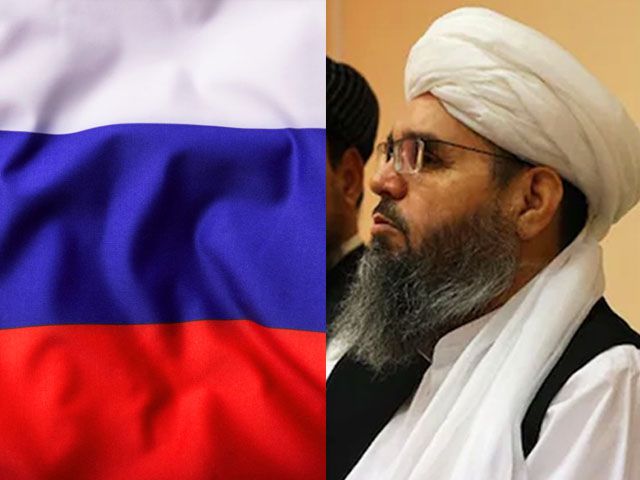
Taliban controls two thirds of Afghan-Tajik border: Russia

MOSCOW: Russia on Friday said the Taliban controls about two-thirds of the Afghan-Tajik border and urged all sides in Afghanistan to show restraint. “We have noted a sharp rise in tension on the Afghan-Tajik border. The Taliban movement quickly occupied a large part of border districts and currently controls about two-thirds of the border,” Russian foreign ministry spokeswoman Maria Zakharova said, adding that Moscow urges all sides to “show restraint”.
Shared interests with Pakistan go beyond Afghanistan: US

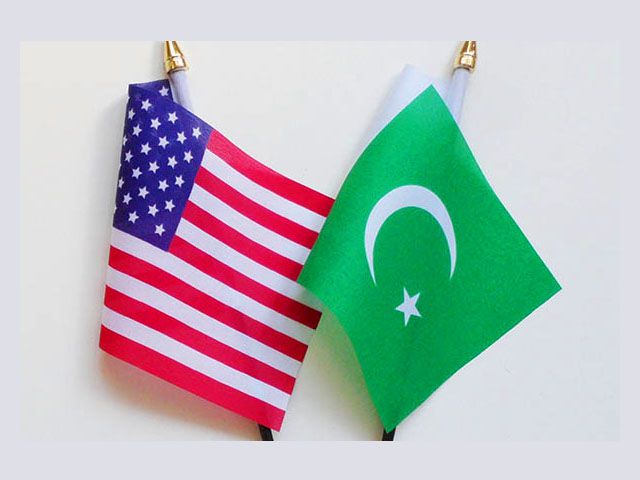
WASHINGTON: While the US acknowledges Pakistan as a “helpful and constructive partner” when it comes to Afghanistan, the shared interests of both the countries go well beyond that, media quoted US State Department spokesperson Ned Price as saying during a press briefing on Thursday.
He added that the US and Pakistan had shared interests in peace and stability in Afghanistan, and “our collective efforts will bring some semblance of peace and security there.”
However, Price said, the shared interests of the US and Pakistan went beyond Afghanistan and included broader counter-terrorism initiatives and steps for strengthening people-to-people contact.
he State Department spokesperson stressed that all of Afghanistan’s neighbours needed to play a constructive role for a “durable political settlement [in the country] and a ceasefire [between the Afghan government and Taliban].”
He added that the US was going to ensure that Afghanistan’s neighbours played a constructive role in the country.
Price’s remarks have come when the US pullout from Afghanistan is in final stages and the country is on the brink of civil war, descending into chaos in the face of assaults by the Taliban.
The present situation will likely lead to the redefining of Pakistan-US ties, which was evident when Prime Minister Khan categorically ruled out the possibility of Pakistan allowing US any bases and use of its territory for any sort of action inside Afghanistan.
“Absolutely not. There is no way we are going to allow any bases, any sort of action from Pakistani territory into Afghanistan. Absolutely not,” the prime minister had told Axios on HBO in an interview last month.
He had stated the same in an opinion piece for media, saying that: “We simply cannot afford this. We have already paid too heavy a price. Meanwhile, if the US, with the most powerful military machine in history, couldn’t win the war from inside Afghanistan after 20 years, how would America do it from bases in our country?”
More recently, Pakistan seemed to be further distancing itself from the US when the premier had stressed in an interview with English-language state broadcaster China Global Television Network that it was “very unfair” of the US and Western powers to “put pressure” on countries like Pakistan to choose sides and downgrade their relationship with China.
Afghan forces retake provincial capital: defence ministry

KABUL: Afghan government forces on Thursday wrested back control of a western provincial capital stormed by the Taliban a day earlier and hundreds of fresh troops have been deployed to the region, the defence ministry said.
It said some fighting was continuing on the fringes of Qala-e-Naw, capital of Badghis province, which borders the central Asian country of Turkmenistan.
Insurgents had on Wednesday seized key government buildings in the city including the police headquarters as part of a dramatic Taliban advance unfolding as foreign forces withdraw from Afghanistan after a 20-year-long intervention.
“The city is fully (back) under our control and we are conducting operations against the Taliban on the outskirts of the city,” defence ministry spokesman Fawad Aman said.
The ministry said 69 Taliban fighters had been killed in fresh operations on the edge of Qala-e-Naw — the first major provincial capital entered by the Islamist insurgents in their latest offensive.
A large quantity of Taliban arms and ammunition was also seized by government forces, the ministry said on Twitter.
The rest of Badghis province is in Taliban hands. Western security officials say the Taliban have captured more than 100 districts in Afghanistan; the Taliban say they hold over 200 districts in 34 provinces comprising over half the country. Main cities and provincial capitals remain under government control.
The insurgents have been gaining territory for weeks but accelerated their thrust as the United States vacated its main Afghan base, effectively ending an intervention that began with the ousting of the radical Islamist Taliban government in 2001.
Taliban advances have been especially dramatic in northern provinces where they had long been kept at bay. Stop-start peace talks between the government and insurgents remain inconclusive.
Later on Thursday, US President Joe Biden is scheduled to comment on the US withdrawal, which has raised fears of an outbreak of civil war there and drawn criticism.
Kabul sends in commandos as Taliban surround Afghan city

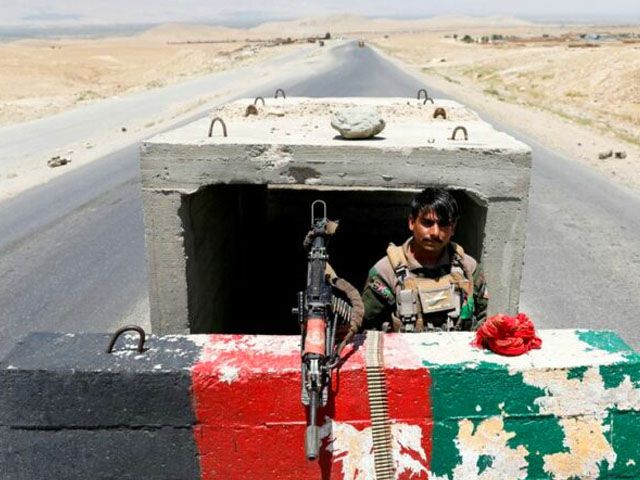
HERAT, Afghanistan: Plumes of smoke billowed over an Afghan provincial capital Thursday as fighting raged between the Taliban and government forces for a second straight day. The government flew hundreds of commandos into Qala-i-Naw, in northwestern Badghis province, the first regional capital to face an all-out assault by the Taliban since the United States stepped up its troop withdrawal. With the US pullout “90 percent complete”, according to the Pentagon, the insurgents have launched a blistering campaign to capture new territory, and fears are mounting that Afghan forces will collapse without vital American air support. In London, Prime Minister Boris Johnson said most British troops had now left Afghanistan as part of a NATO withdrawal in parallel to the US pullout. “I will not disclose the timetable of our departure, but I can tell the House that most of our personnel have already left,” he said in a statement to MPs Thursday. US President Joe Biden was due to speak on the US pullout later in the day after meeting his national security team. The withdrawals have drastically emboldened the Taliban, and video obtained by AFP showed thick smoke billowing over Qala-i-Naw Thursday, soundtracked by gunfire, as fighting raged. Badghis health official Abdul Latif Rostaee said at least 10 civilians had been taken to hospital since the fighting erupted. “The Taliban have resumed their attacks from several directions with light and heavy weapons,” Badghis Governor Hessamuddin Shams told AFP on Thursday. “Our security forces are bravely fighting them and the enemy is being pushed back. They are fleeing. We will give a hard blow to the enemy. ” On Wednesday, the Taliban briefly seized the police headquarters and the local office of the country”s spy agency, but were later pushed back. Qala-i-Naw resident Aziz Tawakoli said Taliban fighters were still roaming the city, however. “You can see them going up and down the streets on their motorcycles,” he said. Tawakoli said many of the city”s 75,000 people had fled their homes — either to nearby districts or to neighbouring Herat province. “The shops are closed and there is hardly anyone on the streets,” he said, adding that helicopters and planes had bombed Taliban targets through the night. Badghis provincial council member Zia Gul Habibi said the Taliban suffered casualties, but also surrounded the city. “All districts are under their control. . . People are really in fear,” she said. “All shops and government institutions are closed. There are still reports of sporadic fighting. ” – ”Women will not be able to work” – Parisila Herawai, a rights activist in the city, expressed concern for the safety of women in particular. “It is an emergency situation for all women, especially activists,” she told AFP. “If the Taliban plan to remain in the city, we will not be able to work. ” As news of the assault spread on Wednesday, social media was flooded with videos of clashes — with some showing armed Taliban fighters on motorbikes entering the city, as onlookers cheered. Local officials said some security officers had surrendered to the Taliban, and the insurgents opened the gates of the city jail, freeing hundreds of prisoners. Most had since been recaptured, officials said. Overnight, the defence ministry rushed hundreds of commandos to the city to launch a “large scale operation”, spokesman Fawad Aman said on Twitter. The attack on Qala-i-Naw comes as the Taliban carry out a blistering campaign across the country but mostly in the north, capturing dozens of districts since early May.
Global food prices fall for 1st time in 12 months: UN

ANKARA: World food prices fell in June for the first time in 12 months, the UN’s Food and Agriculture Organization (FAO) said on Thursday. Following 12 consecutive monthly increases, the FAO Food Price Index slipped 2.5% from May, averaging at 124.6 points this June. The figure was still 33.9% above its level in the same period last year, data showed. The fall was stemmed from declines in the prices of vegetable oils, cereals and, though more moderately, dairy products. The FAO Food Price Index is a trade-weighted index that tracks international market prices of five major food commodity groups. The vegetable oil price index posted the largest decrease at 9.8%, marking a four-month dip, driven by lower international prices of palm, soy and sunflower oils. The FAO Cereal Price Index slipped 2.6% from May, but remained 33.8% higher than its value in June 2020.The dairy price index went down by 1% during the same period as international quotations for all dairy products represented in the index fell, with butter registering the highest drop. On the contrary, the FAO Meat Price Index climbed 2.1% for the ninth consecutive month in June but still 8.0% below its peak reached in August 2014.The sugar price index also rose 0.9% month-on-month in June, marking the third consecutive monthly increase and reaching a new multi-year high.


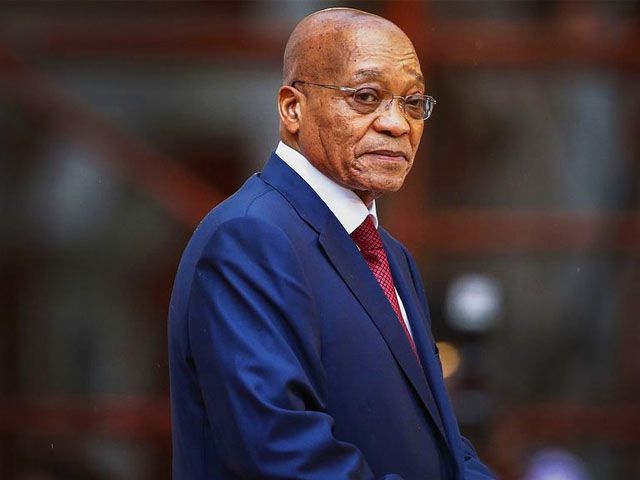
JOHANNESBURG: Jacob Zuma on Thursday began a 15-month sentence for contempt of court, becoming post-apartheid South Africa”s first president to be jailed after a drama that campaigners said ended in a victory for rule of law. Zuma, 79, reported to prison early Thursday after mounting a last-ditch legal bid and stoking defiance among radical supporters who had rallied at his rural home. His battle transfixed the country, placing a spotlight on the issue of impunity and tensions within the ruling African National Congress (ANC). South Africa”s top court on June 29 slapped Zuma with a 15-month term for refusing an order to appear before a probe into the corruption that entangled his nine years in power. As police warned he faced arrest from midnight Wednesday, Zuma handed himself in to a jail in the rural town of Estcourt in his home province of KwaZulu-Natal. Many South Africans hailed his incarceration as a watershed moment. Former corruption buster and ex-ombudswoman Thuli Madonsela hailed it as a “glorious day, in that it says that the rule of law prevails. ” If he had not gone to prison, “it would have sent shock waves to the system,” she said. The opposition Democratic Alliance said, “The law cannot be mocked and challenged with impunity. If the leader can go to prison, then so can anyone. ” But, it cautioned, the contempt sentence did not address the wider corruption, fraud, racketeering and money laundering that proliferated under Zuma. The Nelson Mandela Foundation struck a similar note.
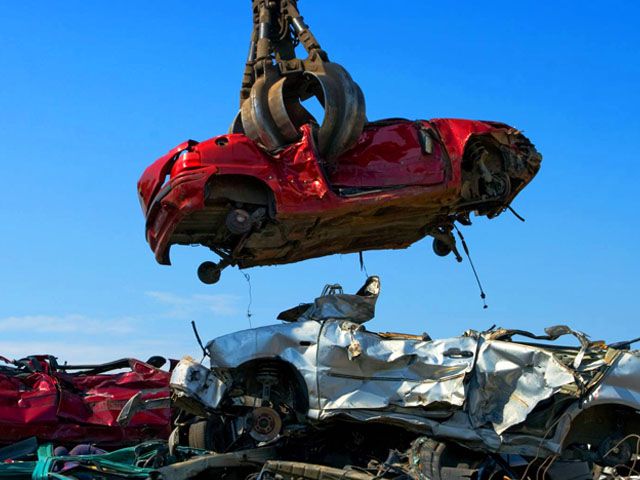
EU ready to condemn petrol cars as scrap heap

BRUSSELS: Europe”s prestigious carmakers lead the world in perfecting the internal combustion engine — but the days of the petrol motor are numbered, and the continent is changing gear. On Wednesday next week, the European Commission will unveil its plan to reduce carbon emissions from new vehicles to zero within the next decade, to fight climate change. The EU plans to be carbon neutral by 2050, but petrol and diesel cars remains the continent”s main mode of transport and the pride of its globally admired marques. Sources in Brussels expect the commission”s plan, part of a climate climate strategy, to foresee an end to new registrations of gas guzzlers from 2035. Europe”s existing emissions limit of less than 95 grams of CO2 per kilometre was to have been reduced by 37.5 percent in 2030. Exact figures are still under discussion, but Brussels is now expected to seek a 60 percent reduction by 2030 and a 100 percent reduction just five years later in 2035. The economic damage the coronavirus pandemic has damaged the road vehicle market as a whole, but electric cars have been an exception, with growth accelerating.
COVID 19 worldwide death toll 4m, says WHO chief

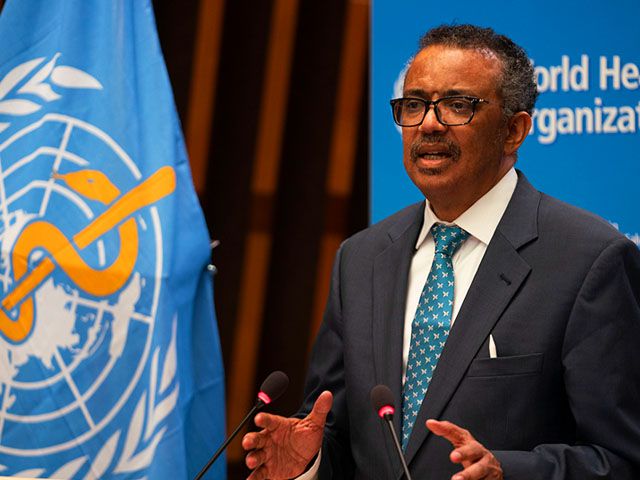
GENEVA: The world is not in good shape in fighting COVID-19, according to the World Health Organization on Thursday as the WHO chief announced the passing of the 4 million mark in fatalities, which he said is a likely underestimate. “We have just passed the tragic milestone of 4 million recorded COVID-19 deaths, which likely underestimates the overall toll,” said WHO Director-General Tedros Ghebreyesus speaking at a webinar. “Some countries with high vaccination coverage are now planning to roll out booster shots in the coming months and are dropping public health, social measures, and relaxing as though the pandemic is already over. “The WHO chief said that compounded “by fast-moving variants, and shocking inequity in vaccination (in) far too many countries in every region of the world we are seeing sharp spikes in cases and hospitalization. “- ‘Acute shortages of oxygen’He said this is leading to an acute shortage of oxygen treatments and driving “a wave of death” in parts of Africa, Asia, and Latin America. “Vaccine nationalism, where a handful of nations have taken the lion”s share, is morally indefensible, and an ineffective public health strategy against a respiratory virus that”s mutating quickly and becoming increasingly effective at moving from human to human. “He noted that at this stage in the pandemic, the fact that millions of health and care workers have still not been vaccinated is “abhorrent. “Tedros said variants are currently winning the race against vaccines because of inequitable vaccine production and distribution, which also threatens the global economic recovery. “It didn”t have to be this way, and it doesn”t have to be this way going forward,” he said. From a moral epidemiological and from an economic point of view, “now is the time for the world to come together to tackle this pandemic collectively,” said the WHO chief in a call for getting more vaccines to the developing world.
Bollywood Veteran star Dilip Kumar dies at aged 98

Bollywood Legendary actor Dilip Kumar , A biggest stars in the golden era of Indian cinema from the 1940s to the 1960s, died on Wednesday at the age of 98.
“With a heavy heart and profound grief, I announce the passing away of our beloved Dilip saab,” Faisal Farooqui, a family friend, posted on Kumar’s official Twitter.
https://twitter.com/TheDilipKumar/status/1412600233062699008?s=20
According to the Hindustan Times, Kumar had been admitted to the intensive care unit on June 30 to “address medical issues” related to old age. He was earlier admitted to the same hospital on June 6 after experiencing breathlessness.
Kumar is survived by his wife, Saira Banu, a popular leading lady in Bollywood in the 1960s and 1970s.
Condolences poured in as Bollywood and politicians alike mourned the loss of the actor. Prime Minister Imran Khan said that for his generation Kumar was the “greatest and most versatile actor”.
“I can never forget his generosity in giving his time to help raise funds for Shaukat Khanum Memorial Trust Hospital when the project was launched,” he said.
Apart from this, for my generation Dilip Kumar was the greatest and most versatile actor.
— Imran Khan (@ImranKhanPTI) July 7, 2021
New York Times Arts Tweet
Dilip Kumar, the last survivor of a triumvirate of actors who ruled Hindi cinema in the 1950s and ’60s, died at 98.
Dilip Kumar, the last survivor of a triumvirate of actors who ruled Hindi cinema in the 1950s and ’60s, died at 98. https://t.co/p9oG6XhnE9
— New York Times Arts (@nytimesarts) July 7, 2021
Shah Rukh Khan Reached Dilip Kumar Home early
More New HD Pics -2: @iamsrk at #DilipKumar sahab's home earlier today. pic.twitter.com/yGmcZwtNqc
— ♡♔SRKCFC♔♡™ (@SRKCHENNAIFC) July 7, 2021
Film Career
“The Tragedy King” Nicknamed because of his brooding good looks, tousled hair and deep voice, Kumar played the lead in some of the Indian film industry’s most commercially successful films of the period, earning him iconic status.
But although a Bollywood legend, he missed out on international fame after turning down the chance to play Sherif Ali in David Lean’s 1962 classic Lawrence of Arabia. The part went to an Egyptian actor, Omar Sharif.
Kumar was born Yusuf Khan on December 11, 1922 in Peshawar, then part of British-ruled India. His father was a fruit merchant who took his family to India’s entertainment capital in the 1930s.
But the son turned his back on the chance to take over the firm when the actress Devika Rani spotted him on his father’s fruit stall in the then Bombay, leading to a part in his first film, Jwar Bhata, in 1944.
Rani persuaded him to change his name, so he chose Dilip Kumar, allowing him to hide what he was doing from his disapproving father.
Although Jwar Bhata flopped and leading film magazines criticised his performance Kumar was undeterred and eventually broke through with the 1946 film Milan.
Among his most remembered roles was in the lavish historical romance Mughal-e-Azam, based on the life of one of India’s great Mughal princes.
The movie, released in 1960, was eight years in the making and cost a mind-boggling 15 million rupees, but soon became one of Bollywood’s biggest-grossing films of all time.
Kumar, who cited Hollywood greats Marlon Brando, Gary Cooper and Spencer Tracy as influences, later won acclaim in 1964 for the nationalistic Leader, screened against a backdrop of recent wars against China and Pakistan.
The 1970s saw fewer roles, as younger actors like Amitabh Bachchan took centre stage.
He took a five-year break after some flops, retur back in 1981 with the hit (revolution)Kranti and a part alongside Bachchan in Shakti (strength) the following year, plus a string of character roles.
Actor and lawmaker
After a series of badly-received films, he took up a more active role in politics in 1998 and worked to end the feuding between India and Pakistan.
The same year saw him receive the highest civilian honour in Pakistan, angering Hindu nationalists. Two years later he became a lawmaker for the then-opposition Congress party.
Unlike many actors who appeared in hundreds of films, the versatile Kumar carefully selected those, by Indian standards, which only increased his stature in the fiercely competitive industry.
In 2006 he accepted a lifetime achievement award at India’s National Film Awards in recognition of his contribution to Indian cinema.
Yet he still admitted that he was baffled at his success.