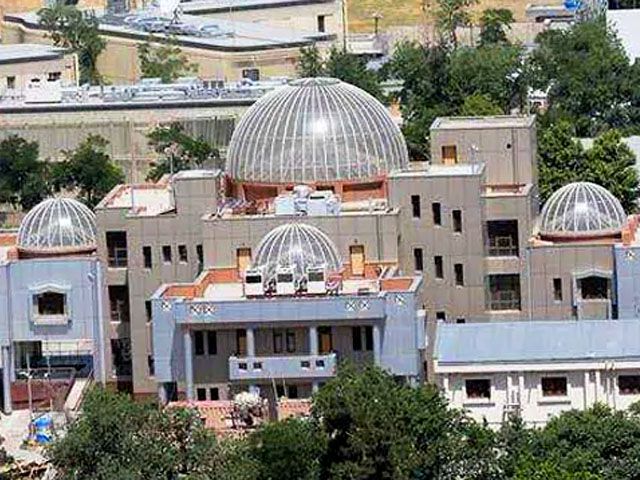
KABUL: The top US general in Afghanistan relinquished command Monday at an official ceremony in the capital, the latest symbolic gesture bringing America´s longest war nearer to its end. At a time when the Taliban are making sweeping advances across the country, General Austin “Scott” Miller — the highest-ranked officer on the ground in Afghanistan — handed command to General Kenneth McKenzie, a correspondent at the Kabul ceremony reported. Miller has been in Afghanistan since 2018, but in May was charged by commander-in-chief President Joe Biden with organising the final withdrawal of US troops, to be completed by the end of August. Since May, most of the 2,500 American troops remaining at that time have left, and the US has also handed over to Afghan forces Bagram Air Base, from where coalition forces carried out operations against the Taliban and jihadist groups for the past two decades. About 650 US service members are expected to be stationed in Kabul to guard Washington´s sprawling diplomatic compound, where Monday´s ceremony took place. Top Afghan officials and military officers attended the ceremony inside the heavily fortified green zone.
Top US general in Afghanistan relinquishes command
KABUL: India has evacuated about 50 diplomats and security personnel from its consulate in Kandahar, the former Taliban bastion in southern Afghanistan, after days of intense fighting, officials and a security source said on Sunday.
The insurgents claimed this week that they now control 85 per cent of Afghanistan, much of it seized since early May when US-led foreign forces began their final withdrawal from the country.
The Taliban clashed with government forces this week on the edge of Kandahar city, the capital of Kandahar province where the Islamist movement was born.
“The Consulate General of India has not been closed. However, due to the intense fighting near Kandahar city, India-based personnel have been brought back for the time being,” India’s Ministry of External Affairs said in a statement.
“This is purely a temporary measure until the situation stabilises. The consulate continues to operate through our local staff members.”
A security source said about 50 Indian personnel, including some six diplomats, have been evacuated from the consulate.
It was still unclear whether they were brought to Kabul or evacuated to New Delhi.
Last week Russia announced it had closed its consulate in the northern Afghan city of Mazar-i-Sharif. Earlier this month China also evacuated 210 nationals from the country.
The Taliban’s rapid gains have seen their fighters capture key border crossings and even attack a provincial capital.
The US withdrawal is now more than 90pc complete, the Pentagon announced this month, and President Joe Biden said on Thursday the US military mission would end on August 31.
Meanwhile, Afghan authorities said they have installed an anti-missile system at Kabul airport to counter incoming rockets, as the Taliban pressed on with a blistering offensive across the country.
The Islamist group’s rapid gains in recent weeks have raised fears about the security of the capital and its airport, with Nato keen to secure a vital exit route to the outside world for foreign diplomats and aid workers.
“The newly installed air defence system has been operational in Kabul since 2am on Sunday,” the interior ministry said in a statement.
“The system has proven useful in the world in repelling rocket and missile attacks.”
Ministry spokesman Tariq Arian said it had been installed at the airport, while security forces spokesman Ajmal Omar Shinwari said the system was given by “our foreign friends”.
“It has very complicated technology. For now, our foreign friends are operating it while we are trying to build the capacity to use it,” Shinwari said, adding that in the past week 1,177 Taliban fighters were killed in fighting with government forces.
India pulls out diplomats, security staff from Kandahar consulate
SPACEPORT AMERICA: British billionaire Richard Branson flew into space Sunday aboard a Virgin Galactic vessel, a voyage he described as the “experience of a lifetime” — and one he hopes will usher in an era of lucrative space tourism. The mission”s success allowed the swashbuckling septuagenarian to one up fellow tycoon Jeff Bezos — who owns space company Blue Origin, and is set to launch on July 20 — in the race to the final frontier. “I have dreamt of this moment since I was a kid, but honestly nothing could prepare you for the view of Earth from space,” he said, grinning during a post-flight ceremony where he and crewmates received their astronaut wings, before popping open the champagne to celebrate. Branson, three fellow passengers and two pilots (all Virgin employees) breached the US-recognized boundary of space, reaching an altitude of 53.5 miles (86 kilometers) and experiencing weightlessness for a few minutes aboard the VSS Unity. The spaceplane then lowered its wings and glided down to the ground at around 9:40 am Mountain Time (1540 GMT), about an hour after it had taken off attached to the belly of a massive carrier plane, which ascended 10 miles (15 kilometers) before dropping its payload. The rocket-powered Unity achieved a top speed of Mach 3 as it soared to space. “Congratulations to all our wonderful team at Virgin Galactic for 17 years of hard, hard work to get us this far,” Branson said during an intermittent live feed as Unity descended, calling it the “experience of a lifetime. ” The patchy video transmission was the only blemish on an otherwise drama-free flight, and more inflight footage is expected to be released later on. Branson scooped up his grandchildren and hugged loved ones after the trip. SpaceX boss Elon Musk, who came to watch the flight, quickly tweeted “Congratulations, beautiful flight!” Branson, the consummate showman, also unveiled a Willy Wonka-esque competition for space enthusiasts to win two free tickets on Virgin Galactic flights through the website Omaze — and a persona guided tour of Spaceport America.
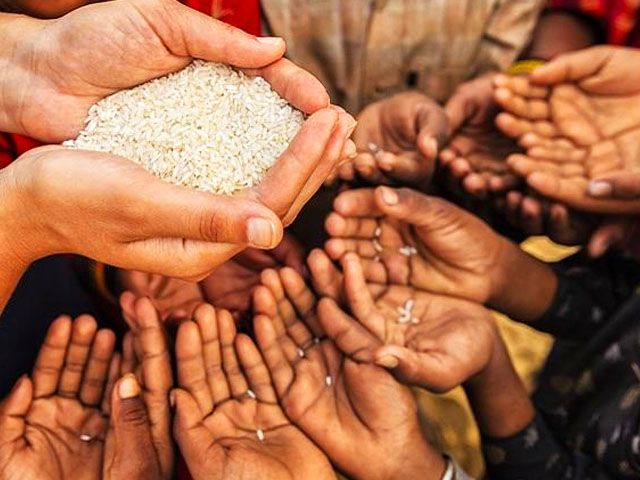
PARIS: The Covid pandemic caused an estimated 18 percent increase in the number of people facing hunger, a UN report released on Monday found, dealing a massive setback to efforts to ensure everyone has access to food. The world was already off track to achieve its goal of eradicating hunger by 2030, but the report warned that Covid had now sent it back in the wrong direction. The “economic downturns as a consequence of Covid-19 containment measures all over the world have contributed to one of the largest increases in world hunger in decades,” said the annual food security and nutrition report compiled by several UN agencies.Although the full impact of the pandemic cannot yet be determined, the report estimated around 118 million more people faced hunger in 2020 than in 2019, an increase of 18 percent. The rise in moderate or severe food insecurity was equal to the previous five years combined. “Nearly one in three people in the world (2.37 billion) did not have access to adequate food in 2020 — an increase of almost 320 million people in just one year,” the report said. One in 10 people were undernourished. The increase in hunger was widespread as the economic downturn affected almost all low- and middle-income countries.But the biggest impact was in countries where there were also climate-related disasters or conflict, or both. “The Covid-19 pandemic is just the tip of the iceberg,” said the report. “More alarmingly, the pandemic has exposed the vulnerabilities forming in our food systems over recent years as a result of major drivers such as conflict, climate variability and extremes, and economic slowdowns and downturns.” The UN agencies said there is a unique opportunity to reverse the dynamic this year however, thanks to two major food and nutrition summits plus the COP26 meeting on climate change.
NEW DELHI: Several people reportedly taking selfies near a historical fort in northern India were among nearly 80 killed by lightning strikes during the early stages of the annual monsoon season, officials said Monday. Deadly lightning strikes are common in the vast Asian nation during the June-September deluge, which bring respite from the summer heat across the northern Indian plains. Of the 76 killed, at least 23 people died in the mostly desert state of Rajasthan, including a dozen who were watching the storm cross Jaipur city from watch towers near the famous 12th-century Amer Fort late Sunday, a state disaster department official told media. “It was already raining when the people were there. They huddled in the towers as the rainfall intensified,” a senior Jaipur police officer, Saurabh Tiwari, added. He said up to 30 people were on the towers when the lightning struck. Emergency teams were checking if any victims had fallen into a deep moat on one side of the towers. “Some of the injured were left unconscious by the strikes. Others ran out in panic and extreme pain,” he added.
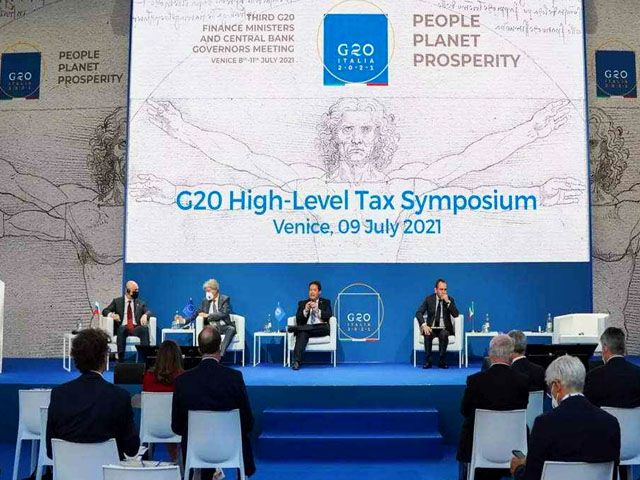
VENICE: G20 finance ministers on Saturday gave their backing to a `historic` global deal to tax multinational companies more fairly and urged holdout countries to sign up.
A framework for international tax reform, including a minimum corporate rate of 15pc, was agreed this month by 131 countries.
But the endorsement by the 19 biggest economies plus the European Union will help ensure it becomes a reality following years of negotiations.
`After many years of discussions and building on the progress made last year, we have achieved a historic agreement on a more stable and fairer international tax architecture,` the final statement said.
`We endorse the key components of the two pillars on the reallocation of profits of multinational enterprises and an effective global minimum tax.` French Finance Minister Bruno Le Maire was quick to hall the agreement, saying it was a once-in-a-century opportunity for reform.
The reforms aim to prevent countries competing to offer the lowest tax rates to attract investment, which has often resulted in multinationals pay-ing derisory levels of tax.
Final agreement is not expected until the run-up to the G20 leaders` summit in Rome in October.
The 15pc minimum tax rate was agreed on July 1 under the auspices of the Organisation for Economic Cooperation and Development (OECD).
Countries including the United States, France and Germany, along with aid agencies such as Oxfam, have been pressing for a higher rate.
But some nations are opposed even to this, including EU member Ireland, which lured Apple and Google to Dublin with low tax rates.
In their final statement, the G20 ministers said they `invite all members` of the negotiations… that have not yetjoined theinternationalagreement to do so` The minimum rate is expected to affect fewer than 10,000 major companies, but the OECD estimates an effective 15pc rate would generate an extra $150 billion in revenue per year.
The measure is one of two so-called pillars of global tax reform that have been under negotiation for years, but which have been given new impetus under US President Joe Biden.
G20 ministers give green signal to global tax reform
WASHINGTON: The United States will complete its troops pullout from Afghanistan next month to focus more on, what it considers, emerging threats from China and Russia.
Fighting stateless terror groups like Al-Qaeda and Daesh consumed the US security establishment, and trillions of dollars, since the September 11, 2001 attacks.
Biden predecessor Donald Trump came to office in 2017 promising to quit Afghanistan, calling the war there a “mess” and a “waste.”
The conflicts there and in Iraq had come to be characterized by unending troop deployments, persistent levels of violence, and no ability to conclusively defeat the enemy.
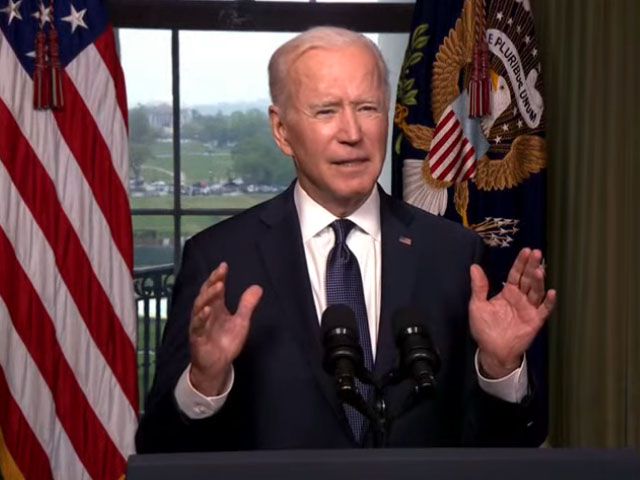
By 2020 Trump had overcome resistance and laid the ground for pullouts, leaving only 2,500 troops in each country by the time he stepped down in January. Biden accepted that trajectory, announcing Thursday that US military involvement in Afghanistan would conclude by August 31.
“We are ending America’s longest war,” he said. “The United States cannot afford to remain tethered to policies created to respond to a world as it was 20 years ago.”
The 9/11 attacks blindsided the US security establishment, forcing a whole-of-government refocus and the launching of the “War on Terror.”
The US and NATO allies invaded Afghanistan to oust the Taliban government, which had protected Al-Qaeda.
And then-president George W Bush took advantage to also invade Iraq to overthrow strongman Saddam Hussein, hoping to remake the Middle East and snuff out a broader threat.
The initial assaults largely succeeded quickly, with Al-Qaeda fractured and on the run in Afghanistan, and Saddam deposed and captured in Iraq.
But in both cases the United States and allies remained on the ground, hoping to rebuild each country, and unable to pull out without risking a return to the pre-9/11 situation.
Then, starting in 2013, US security leaders rebooted their views when new Chinese President Xi Jinping began aggressively expanding his country’s military.
Seeking to counter and surpass US military strength, China began building armed bases on disputed islets in the South China Sea, added a base in Djibouti and planned other bases around Asia and the Middle East.
Meanwhile in 2014 Russian President Vladimir Putin sent forces to seize Ukraine’s Crimea and supported an insurgency in eastern Ukraine.
US ending ‘forever wars’ to focus on China, Russia
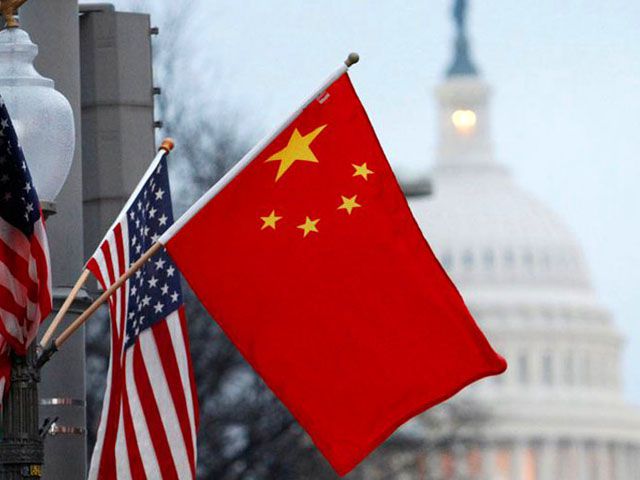
SHANGHAI: China said on Sunday it “resolutely opposes” the addition of 23 Chinese entities to a U.S. economic blacklist over issues including alleged human rights abuses and military ties.
The Ministry of Commerce said in a statement the inclusion of the Chinese entities was a “serious breach of international economic and trade rules” and an “unreasonable suppression” of Chinese companies.
Beijing “will take necessary measures to safeguard China’s legitimate rights and interests,” it said, citing a spokesperson.
The U.S. Department of Commerce said on Friday it had added 14 companies and other entities to its economic blacklist, saying they had been “implicated in human rights violations and abuses in the implementation of China’s campaign of repression, mass detention, and high technology surveillance against Uyghurs, Kazakhs, and other members of Muslim minority groups in the Xinjiang Uyghur Autonomous Region.” read more
Beijing denies the alleged abuses.
Entities included on the economic blacklist are generally required to apply for licenses from the Commerce Department and face tough scrutiny when they seek permission to receive items from U.S. suppliers.
Washington also added five entities it said directly support China’s military modernisation programmes related to lasers and battle management systems. It identified a further four entities for “exporting and attempting to export items” to entities already sanctioned by the U.S.
China condemns suppression as US expands economic blacklist
VENICE, Italy: An upsurge in new coronavirus variants and poor access to vaccines in developing countries threaten the global economic recovery, finance ministers of the world’s 20 largest economies warned on Saturday.
The G20 gathering in the Italian city of Venice was the ministers’ first face-to-face meeting since the start of the pandemic. Decisions include the endorsement of new rules aimed at stopping multinationals shifting profits to low-tax havens.
That paves the way for G20 leaders to finalise a new global minimum corporate tax rate of 15% at a Rome summit in October, a move that could recoup hundreds of billions of dollars for public treasuries straining under the COVID-19 crisis.
A final communique said the global economic outlook had improved since G20 talks in April thanks to the rollout of vaccines and economic support packages, but acknowledged its fragility in the face of variants like the fast-spreading Delta.
Virus variants threaten global recovery, G20 warns
“The recovery is characterised by great divergences across and within countries and remains exposed to downside risks, in particular the spread of new variants of the COVID-19 virus and different paces of vaccination,” it read.
VENICE: Finance ministers from the G20 gathered on Saturday for a second day of talks in Venice, where they are expected to give the green light to a “revolutionary” deal to tax multinational companies more fairly. A framework for global tax reform, including a minimum corporate rate of 15 percent, was agreed by 131 countries earlier this month. It aims to prevent a race to the bottom as countries compete to offer the lowest tax rates to attract investment, with many multinationals as a result paying derisory levels of tax. “If there is a deal today, there is no turning back. It will be implemented. . . it”s a kind of tax revolution,” French Finance Minister Bruno Le Maire said. He earlier told media that the minimum tax rate, which could be in place by 2023, “must be ambitious”, with his country, the United States and Germany among several nations pressing for a higher rate. But finance ministers and central bankers from the G20 — the countries with the 19 biggest economies and the European Union — are not expected to go further than the 15 percent agreed on July 1. – ”On the way” – Final agreement is not expected until the run-up to the G20 leaders” summit in Rome in October. But the Venice talks have been an opportunity to thrash out further details and exert pressure on those that have not yet signed up to the deal, struck under the auspices of the Organisation for Economic Cooperation and Development (OECD) — a club of 38 wealthy economies. Aid agencies including Oxfam also argue that 15 percent is too low, but some nations are opposed even to this, including EU member Ireland, which lured Apple and Google to Dublin with its low tax rates.
G20 ministers gather to green light global tax reform