New British Council commission, in partnership with the Victoria and Albert Museum

New British Council commission, in partnership with the Victoria and Albert Museum, marks 75th anniversary of Pakistan.

What is Seen and What is Not – Osman Yousefzada

Supported by ZVM Rangoonwala Foundation

The British Council and Victoria and Albert Museum (V&A) have launched What is Seen and What is Not by inter-disciplinary artist Osman Yousefzada, at the V&A in London. This series of interventions responds to the 75th anniversary of Pakistan and explores themes of displacement, movement, migration, and the impact of the climate crisis. The interventions across the museum are free to visit, and have been commissioned by the British Council in partnership with the V&A and the High Commission of Pakistan as part of the British Council’s festival season ‘Pakistan/UK: New Perspectives’.

Osman’s work is a tripartite of site-specific works, and brings together textiles, wrapped objects and a seating installation to showcase the rich variety of traditional and contemporary Pakistani craftsmanship. Together, the works present Osman’s unique and highly personal perspective on migratory experience and identity and offers a subtle and contemplative space to engage with objects and craft techniques rooted in the heritages of Pakistani culture. Working collaboratively with local craftsmen, Osman developed new techniques and stitches – working on non-traditional materials, which he compliments with painting, producing a body of work reflecting on shrines and ritualised spaces of transcendence.

Osman Yousefzada said: “It’s a great honour to be commissioned to reflect on the 75 years of Pakistan’s independence. What is Seen and What is Not offers a portrait of contemporary Pakistan, through a British diasporic lens as it attempts to reel away from colonial subjugation. However, Pakistan is still a casualty of neo-colonial structures, contributing less than 1% to green gas emissions and in return it is the 5th most vulnerable country to climate change, as rising temperatures result in great floods and an eventual loss of the Himalayan ice reservoirs, causing tremendous displacement and a loss of homeland to its people.”

 Skinder Hundal MBE, Director Arts, British Council said: “The British Council is proud to be working with Osman Yousefzada, the V&A and the High Commission of Pakistan on What Is Seen, What Is Not as part of our Pakistan/ UK New Perspectives Season. This project is an embodiment of what the British Council and the High Commission of Pakistan are setting out to achieve with the New Perspectives Season- creating a bridge between cultures, challenging perceptions, and opening up new narratives and channels of discourse between contemporary societies in Pakistan and the UK. As we mark the 75th anniversary of Pakistan, this work both acknowledges the important shared histories of our nations and creates space for new perspectives.”

Director of the V&A, Tristram Hunt said: “We are thrilled to curate these ambitious site-specific works by Osman Yousefzada, in partnership with the British Council and the High Commission of Pakistan, to mark the 75th anniversary of the foundation of Pakistan. What is Seen and What is Not is a commentary on the migratory experience, displacement and the effects of the climate crisis, while showcasing the ingenuity of Pakistani craftsmanship. Interventions such as this offer an opportunity to bring diaspora voices to the heart of the V&A, to be in conversation with the museum’s vast South Asia collection.”

Visitors to the V&A will first encounter Osman’s work in the Dome in the form of several large-scale textile banners depicting abstracted figures in motion. Handcrafted using different dying techniques with woven surface decoration and metallic threads, the figures are suggestive ancient talismanic symbols. The works will invite contemplation on the complex riches of both sacred and secular histories of South Asian culture and Pakistan’s identity today.

Moving through the museum and into the sculpture galleries, a wooden structure evoking makeshift shrines found around South Asia, will showcase domestic-sized wrapped objects cast in glass, clay and wrapped in richly woven textile. Appearing to contain domestic items such as a pot or vessel, the objects evoke themes of migration and reflect upon how displaced people travel with treasured possessions, making the journey from place to place, country to country, necessitated by social, political, or economic upheaval.

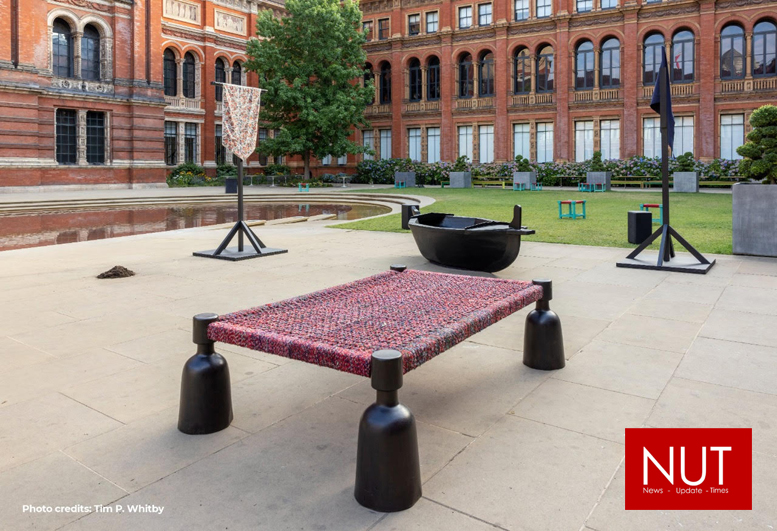
For the final intervention, the John Madejeski Garden will be transformed into a space for communal contemplation, with a number of colourful charpai and mora stools, designed to be used, moved and enjoyed by visitors, reflecting themes of displacement. Each charpai (a ubiquitous day bed found across South Asia) is handmade using different weaving techniques to celebrate the diversity of the textile heritage of Pakistan. Finally, at the centre of the Garden installation, visitors will encounter a wooden vessel, typically found in the mangroves of coastal Pakistan. Moored off water, the vessel symbolises the precarity of water-dependent communities and the erosion of natural environments at this moment of global climate crisis as well as colonial histories of exploitation.


PARAGLIDER PILOTS REACH K2

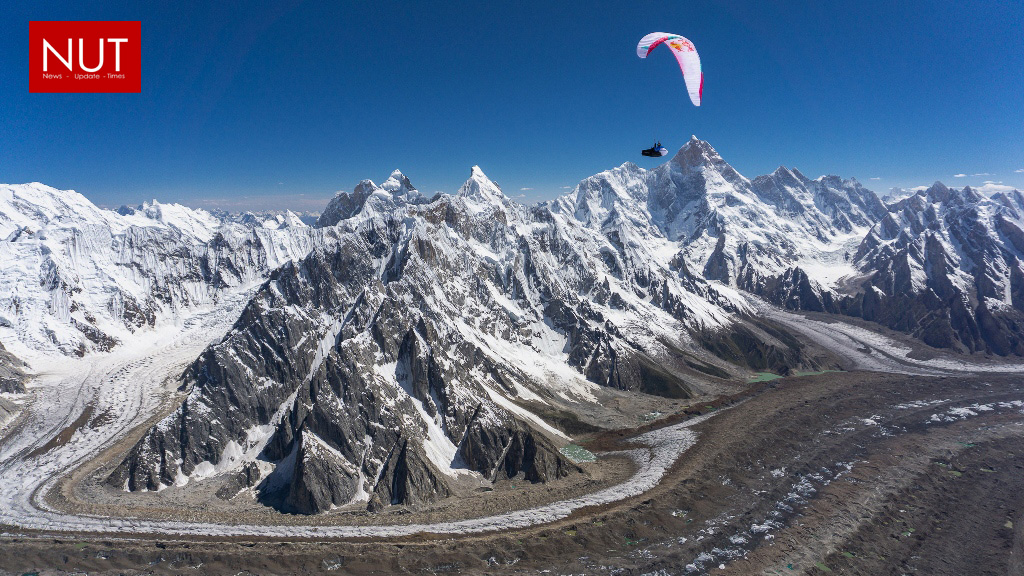
Pilots reach world’s second highest mountain and climb to 7,500m but still waiting for perfect weather conditions to soar above the summit.

Islamabad (Muhammad Yasir) The goal to fly a paraglider above K2 is still on – all the team need is a bit of luck. So says Belgian adventurer Tom de Dorlodot who is in the heart of the Karakoram exploring the Baltoro from the air with fellow flyers Horacio Llorens and Ramón Morillas.

The trio have spent the past three weeks flying new lines by paraglider – collapsible foot-launched wings, relying on pockets of warm air to climb above the region’s famously spectacular mountains.

“It’s been pretty intense,” Tom says. Speaking from Askole where the team has gone to pick up fresh supplies, he said the expedition has got off to a great start.

“On the first flight we flew the whole Baltoro glacier almost all the way to K2 which was incredible.  We’ve been really blessed with the weather. It’s been really amazing, big thermals, small fluffy clouds, never too big and no wind in the valley so it’s pretty safe to fly.”

The team enjoyed ten great flying days. On three occasions they got to K2, on four they made Broad Peak and some they tagged both on the same day. They’ve also explored close to Muztagh Tower, Gasherbrum and Masherbrum.

Days typically begin with an 800m hike to launch. “It’s extremely hot,” says Tom. “You’re dressed to fly at 8,000m and you’re carrying so much gear.”

From there the team launch by inflating their wing above their heads and running down a steep slope. Once in the air, it’s extremely committing.

“It’s always a big challenge,” adds Tom. “We have to fly 100km almost every day. You have to think, that’s 100km without any landing options. We were walking on the glacier the other day and it’s just a nightmare of big stones and rocks.”

One day Ramon landed at the base camp of Broad Peak. It took him two days to hike back.

The team has been re-charging in Askole and picking up fresh food supplies after living off rice and chapattis for five days. Due to regional floods that have damaged roads and bridges, supplies haven’t been getting through.

The plan is now to make one last attempt on K2 and then fly all the way back to Skardu to avoid the difficult journey overland. Ramon has left for Spain so it’s just Tom and Horacio now.

“There’s still not so much wind forecast but we’re hoping it will come and we can reach K2 and soar all the way up. It’s just a question of luck now. We need a bit of luck to make it happen – but it’s possible.”


French National Day celebrated at Kinnaird College

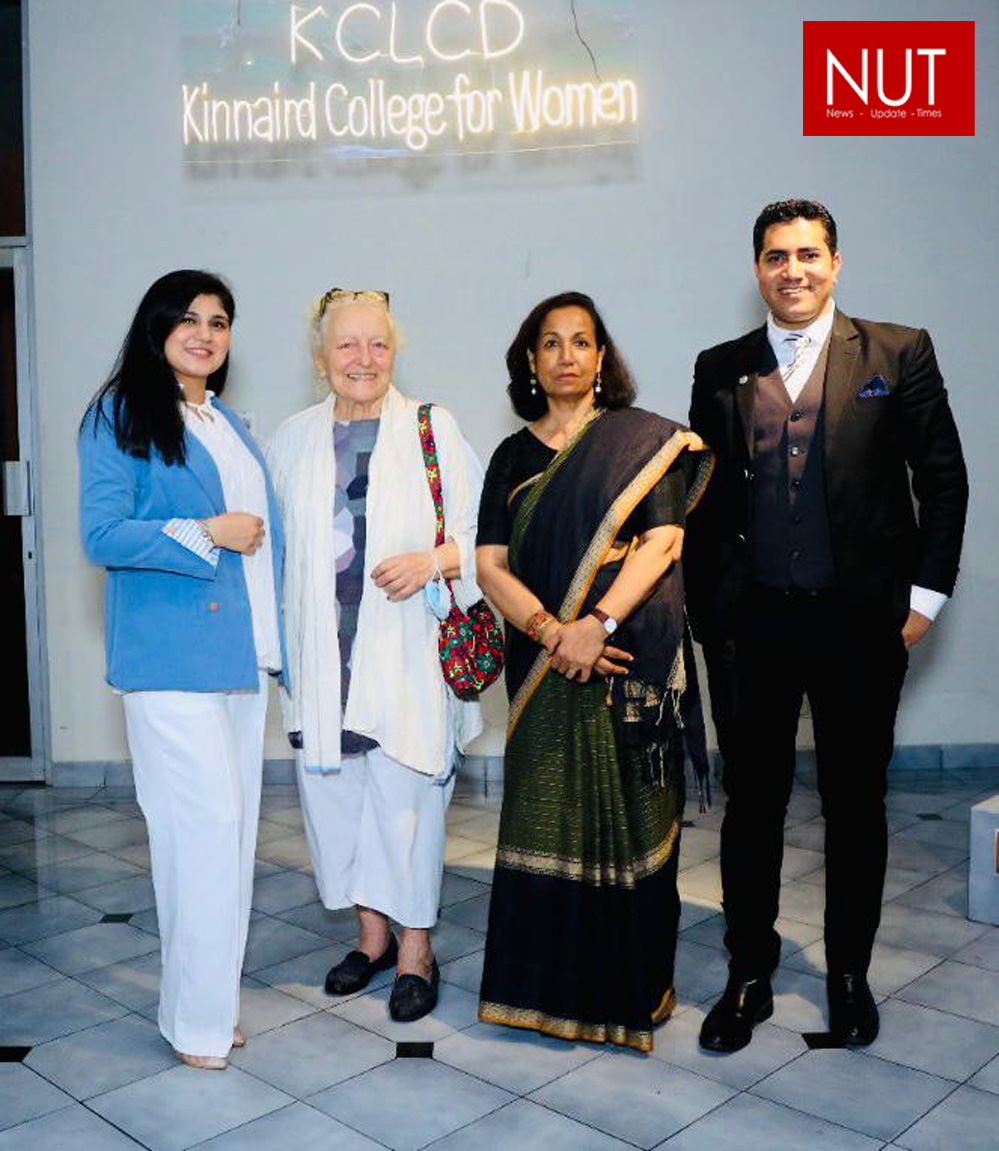
Lahore (Nut Desk) Kinnaird Centre for Learning and Cultural Development, Kinnaird College for Women in Collaborations with Youth Revolution Clan and Rouge London organized a session on “Growing Optimism in French-Pak Bilateral Relations” on the occasion of French National Day.

Dr. Rukhsana David Principal Kinnaird College welcomed the worthy guests and thanked KCLCD and YRC for organizing a session on National French Day to develop cultural understandings among students about French- Pak Bilateral Relations .

The Honorary Guest Ms Gisele Butt Mourlon , Veteran French-Pakistani Management Consultant , shed light on past and recent developments between Pakistan and France . Ms Gisele Spent has an experience of more than 50 Years in Serving Pakistani organizations as a Management Consultant. She encouraged and congratulated the KCLCD team for organizing and celebrating French Day at Kinnaird. Executive Director of KInnaird Centre for Learning and Cultural Development Mr. Rizwan Anwar said that we are thankful to the French Embassy and French Government for initiating the development projects in Pakistan.

He gave the idea of scientific , Academic and Cultural Collaborations between two countries in People to People Context towards the goals to strengthen the ties between Pakistani and French organizations in order to achieve success.

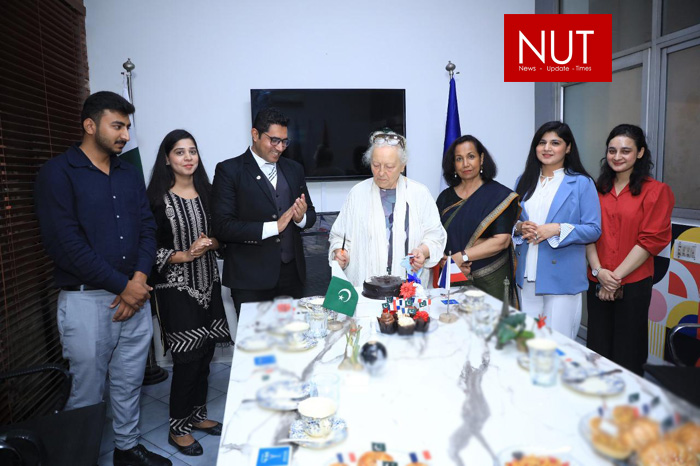
At the concluding remarks, Director KCLCD Ms Maha Jamil thanked the guests. Cake cutting Ceremony was also held at the end of the Event .

LCBDDA Collaborated With Rescue 1122 For Life Support And Fire Safety Training.

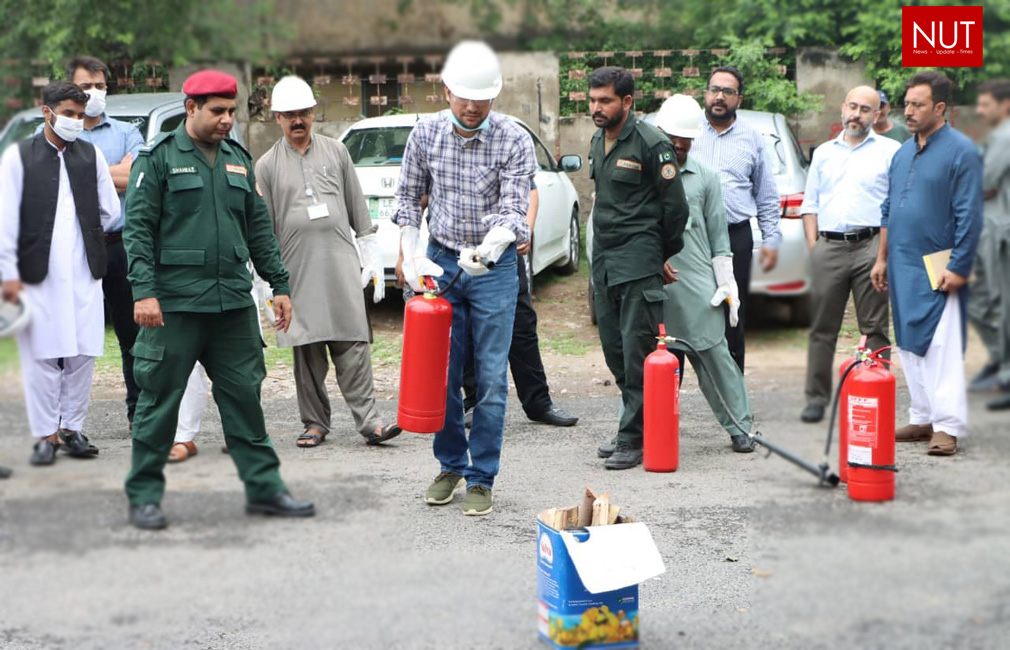
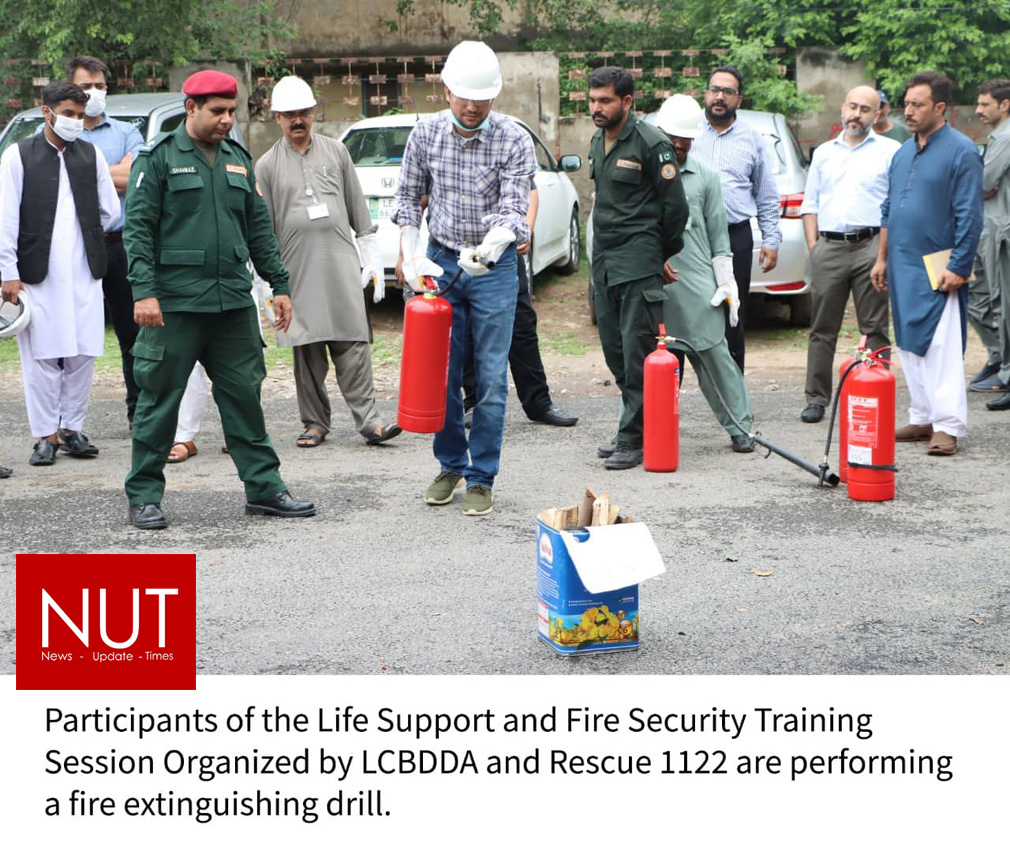
Lahore (Muhammad Yasir) To establish a Community Rescue Service through a training session on Basic Life Support and Fire Safety, Lahore Central Business District Development Authority (LCBDDA) also known as Central Business District (CBD) Punjab, collaborated with the Punjab Emergency Service Rescue 1122. The training session was conducted at CBD House Punjab. In this session directorate heads, mid-level management and ancillary staff of CBD Punjab underwent hands-on training in basic life support and fire safety. The employees of CBD Punjab were given a complete briefing on basic life support by seasoned rescue professionals of Rescue 1122 who are experts in basic life support, fire safety, rescue techniques, emergency evacuation, disaster preparedness and prevention. Rescue trainers told the participants that the main art of handling an emergency is to use your all senses and not to panic. They also gave a practical demonstration by using different props like mannequins and actual footage of basic life support skills including first aid, cardiopulmonary resuscitation (CPR), fracture, wound management, cardiac arrest, foreign-body airway obstruction, management for angina pectoris and myocardial infarction, burn injuries and fire evacuation as the first responder. As per increasing numbers of Covid 19 cases, attendees were also briefed about the initial treatment and quarantine process for a Covid 19 patient Mr. Imran Amin Chief Executive Officer LCBDDA while sharing his views on this training session said ‘’ Public safety is the cornerstone for a great society, basic life support training should be mandatory for everyone. We should feel proud of our rescue services who live their lives on the edge and risk it with prompt actions to save us from further misery during any emergency”. The training session was concluded by evaluating the participants and certificate distribution.

Leadership’s role is crucial for Pakistan’s progress: Arif Alvi

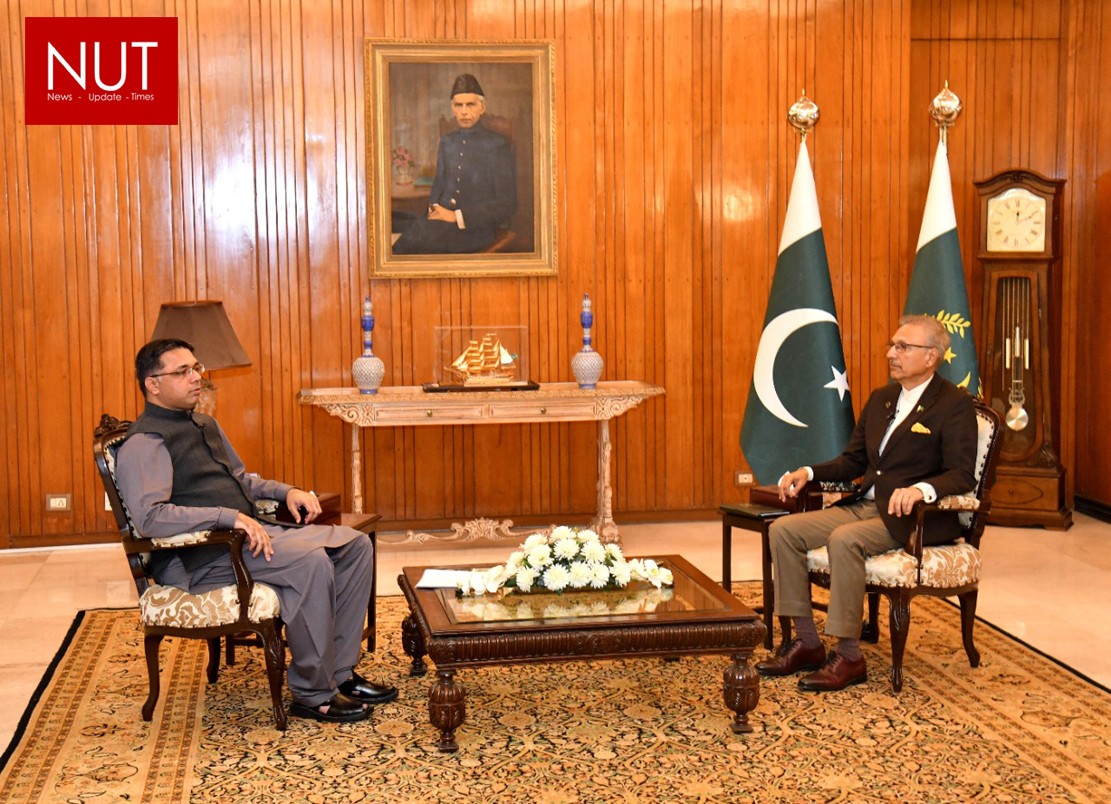
Islamabad (Muhammad Yasir) The role of leadership is very crucial in challenging times; it is about understanding issues and being persistent in the pursuit of solutions. If the leadership is clear-headed, it can lead the nation on the path to progress. This was stated by Dr. Arif Alvi, President of the Islamic Republic of Pakistan, in an exclusive interview with Muhammad Azfar Ahsan, CEO and Founder CORPORATE PAKISTAN GROUP and Nutshell Group.

He said that stability in the economy does not happen overnight; it needs sustainable efforts for an elected government based on competent people with the right skill set to address issues of public interest. In Pakistan, unfortunately, public representatives become part of the assemblies on the basis of relationships in different communities.

Dr. Alvi said that the Charter of Economy seems a very promising idea for the stability of the economy, but it is challenging in a country where different political parties have starkly different political ideologies; however, the best course of action for economic progress is a democratic setup which is empowered through votes.

Pakistan has fared far better than world economies during the last few years, particularly during the COVID-19 pandemic, the President said. He hoped that Pakistan will soon get out of the ongoing crisis, which has a lot to do with global inflationary trends as well as domestic uncertainties.

“I am optimistic that the situation will get better in Pakistan, which was first the victim of a long wave of terrorism that kept the foreign investors at bay. By the grace of God, we fought well against terrorists and prevailed. Then the COVID-19 pandemic came, and Pakistan fought that battle well too,” the President further said.

He emphasized that the adoption of knowledge and technology in the system is needed to bring change in our society, and this can be pursued better by the private sector than government institutions, but the policies should be consistent, and their implementation should be speedy.

Dr. Alvi said that he is a firm believer that the focus of Parliament and leadership should be on access to education for the masses. “There is a huge gap in education in Pakistan; it is going to be the single biggest issue in the next ten years. Uneducated people should receive suitable skills, and those with a mediocre educational background should be equipped with a better skill set,” he added.

The President praised the overseas Pakistanis for their unwavering support and valuable contribution to the economy, urging them to provide intellectual support for the empowerment of the Pakistani people, mainly through education.

The overseas Pakistani diaspora comprises workers, largely in the Middle Eastern countries, but a significant section, of up to 10%, is well settled in different countries; they can play a significant role for the development of Pakistan, the President said. “I requested them to adopt health and education institutions in Pakistan as the world needs human intellect. For instance, in cyber defense and cyber protection, the world needs 80 million professionals. I told them that every professional they train in this field will get work. There are so many other fields that need human resources,” he added.

Speaking about the geopolitical situation, Dr. Alvi opined that Pakistan should follow a smart approach which must be independent, while avoiding a definite tilt towards a specific bloc. To withstand pressures from different sides, he said that the economy needs to stand on its own feet. Plus, we must prefer sovereignty (khuddari) for the nation.

To a question about the growing polarization in Pakistani society and what should his role be as the head of the state, Dr. Alvi replied that he may not be able to convince the most polarized people to change their views, but he can unite the less polarized people around national causes.

“In COVID times, I did my best to keep Ulemas on board, and it worked very well. What we decided with the religious fraternity in Pakistan, the Muslim world followed the same later, e.g. keeping the mosques open for prayer during the pandemic,” Dr. Arif Alvi said.

He mentioned that the Presidency played a role in raising its voice on the issue of women’s right to inheritance. It also provided significant support to the PM Digital Skills Program, in which 24 million people participated, and a significant number out of them is making good money to support their families.

Regarding the future of Pakistan, Dr. Alvi said that the country is destined for development and prosperity due to its remarkable potential, but its institutions should be strengthened on a sustainable basis. A knowledge-based Pakistan needs less brick-and-mortar investment and more intellectual investment, he said.

The nation should elect a good leadership, and it is then up to the leadership to establish institutions and rid Pakistan of people with the vested interests, he concluded.

British Council organizes Pakistan Stories Film Screening as part of Pakistan/UK: New Perspectives

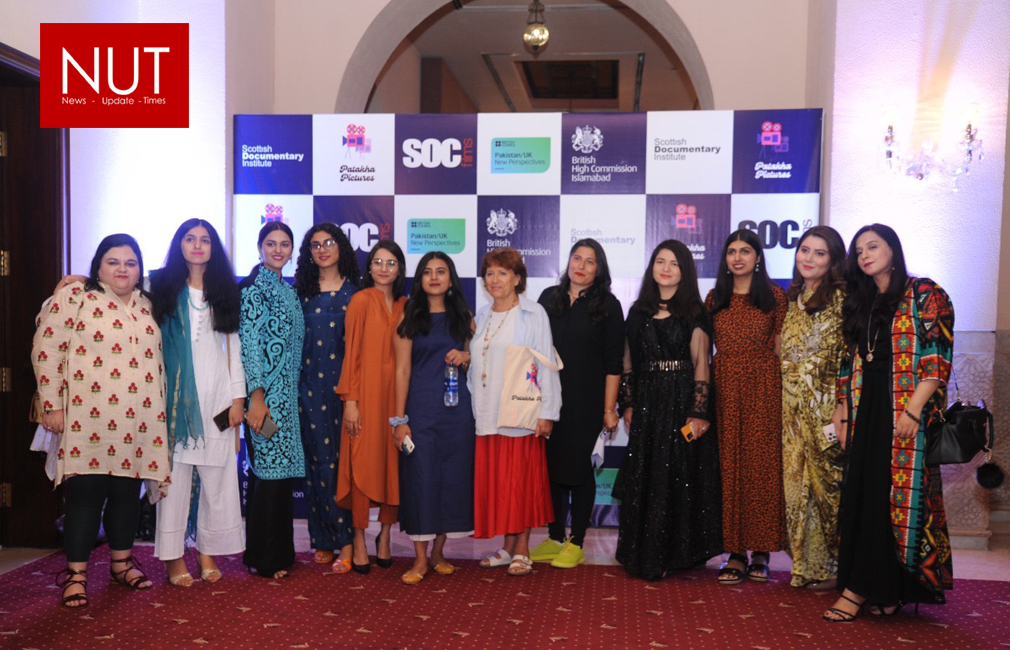
Islamabad (Muhammad Yasir) The British Council in collaboration with Patakha Pictures in Pakistan and the Scottish Documentary Institute in the UK organized a film screening event for “Pakistan Stories” at a hotel in Islamabad. Pakistan Stories seeks to support a new generation of female Pakistani documentary filmmakers to enable them to create engaging films that reflect on their society, and Pakistan’s 75 years of independence. 

The event celebrated the journey of the ten selected filmmakers through the programme. The filmmakers worked in pairs over a period of eight weeks and were mentored by experts in Pakistan and Scotland to develop and finance their creative skills so they could produce five short documentaries in a safe environment and reach new local and international audiences through their work. Important themes the documentaries cover include: early child and forced marriages, the rights of transgenders, women and disability, women in education and the feminist movement in Pakistan.

Guests at the event included the British High Commissioner to Pakistan, Christian Turner, the Deputy Director of the British Council, Mark Crossey, filmmaker and founder of Patakha Pictures, Sharmeen Obaid-Chinoy, the Director of the Scottish Documentary Institute, Noe Mendelle, as well as top diplomats, senior government officials, journalists, leading experts from the arts space, and young aspiring artists and filmmakers.

The British High Commissioner to Pakistan, Christian Turner said, “Film is a brilliant vehicle for telling stories and giving women voice.  With trailblazers like two-time Oscar winner Sharmeen Obaid-Chinoy, and by combining the best of UK and Pakistan expertise, we can unleash the potential of the next generation of female filmmakers and women and girls across Pakistan.”

The Deputy Director at the British Council Pakistan, Mark Crossey said, “The British Council is delighted to have enabled this platform for emerging female Pakistani filmmakers to hone their skills and tell stories about Pakistan as we mark it’s 75th anniversary with our Pakistan/UK: New Perspectives programme of activity. I look forward to these films being showcased across festivals in Pakistan and the UK.”

For Pakistan Stories, female documentary filmmakers from all across Pakistan submitted entries to be selected for the programme out of which ten were selected. The selected filmmakers went through a mixture of seminars, consultant-led advice and mentorship sessions including 18 practical documentary sessions online over eight weeks where they explored documentary creativity for the international film festival market.

 The founder of Patakha Pictures and leading filmmaker, Sharmeen Obaid-Chinoy said, “In the past week I have witnessed the growth of these ten filmmakers and I know that we are laying the seeds of a movement that will ensure that young women across Pakistan will be empowered to finally to tell their own stories in their own words.”

 Pakistan Stories screened five short documentaries at the event; Sinf-e-Taal by Amna Maqbool and Beenish Sarfaraz, My Mother’s Daughter by Ahmen Khawaja and Mariam Khan, Ways of Seeing by Seema Iqbal and Sehrish Kanwal, Haqeer by arzeen Aziz and Bushra Pervaiz and A Feminist’s Struggle by Fatima Syed and Areeba Naveed.

 The Director of Scottish Documentary Institute, Noe Mendelle said, “Scottish Documentary Institute is very excited to be part of a collaboration with Patakha Pictures and British Council Pakistan, involving nurturing female filmmakers in enhancing their directorial voice in documentary. Working with reality is a humbling experience and female filmmakers are especially well equipped creatively and mentally to engage with emotional, challenging stories that need to be shared with the rest of the world.”

The short documentaries will be displayed at various film festivals in Pakistan and the UK.

Federal minister talks about the truth ‘Pakistani media style’

Two-day conflict reporting conference concludes with Peace Journalism awards

Karachi (Muhammad Yasir) Social media has erased the line between truth and lies, and this is in my view is extreme reporting. Where facts, reality are manufactured but only if you have sufficient manpower and resource, you can alter reality, said Federal Minister of Power Khurram Dastagir Khan at the keynote address on the second day of the two-day conference on ‘Extreme Reporting: Conflict and Peace in the Digital Age’ held at the Centre of Excellence in Journalism at the Institute of Business Administration (CEJ-IBA) on Sunday.

“Extreme reporting is an endeavor that requires bravery and strength and courage. If you look at Pakistan’s history there have been courageous men and women who have tried to express the truth and they have suffered for it. For example, Journalists have been shot in broad daylight, kidnapped and what not.

“But the media has failed to save the public from lies. It has put us in a difficult position. It might be an exaggeration to say so but this erasure of the line between truth and lies is endangering democracy worldwide. But in this country, where democracy is a one leaf plant, is crushed every so often. The media’s challenges are immense – almost the same as those as elected representatives because there are certain truths that cannot be said in this country and that is a fact. Just look at Balochistan…why are we not allowed to talk about its truth,” he added. 

The federal minister touched upon the civil military relationship and how it impacts the economy, the 2018 elections, ownership of media outlets, evolving technology and what is the truth. He also recited a couplet by Allama Iqbal.

As the conference concluded, the CEJ-IBA recognized and awarded journalists with the Peace Journalism awards which were a part of the Peace Journalism Program held by the CEJ in collaboration with US Consulate Karachi.

Mehreen Burney from Lok Sujag, PTV World reporter Tayyaba Nisar Khan, freelance journalist Afifa Nasarullah (Best Multimedia Story), Lok Sujag’s Kaleemullah received awards for their outstanding stories.

Reporter Faiza Gillani received the Best Acknowledgement Award and Swat’s Asmat Ali Akhun of Daily Jehan got the Special Mention Award.

Speaking at the award ceremony, US Consul General Mark Stroh said: “It has been a really fascinating couple of days. The US is supporting this Centre and training because we are committed to supporting journalists in Pakistan. We are proud to support this training programs at the CEJ-IBA. A strong professional press is important – especially in conflict – and it is through such trainings and conferences where journalists can play their role in shaping the discourse.”

The day ended with dinner and a musical performance by The Sketches.

The second day of the conference kicked off with a session on reporting from a conflict zone. The session was moderated by seasoned journalist Aamer Ahmed Khan. The panel included CNN’s Sophia Saifi, journalist and editor Raza Hamdani, WIONews bureau chief Anas Malick, TNN’s Khalida NAz and BBC’s Sahar Baloch.

The panel discussed at length the dangers of reporting from a conflict zone and shared their personal experiences. They talked about the importance of safety trainings and mental health check ins.

‘Woman have to think about additional safety measures when reporting in conflict zones’, said Ms Saifi.

“You are never prepared enough to be in a conflict zone, regardless of how well you know the region or how much you’ve studied or learnt over the years,” said Mr Malick.

BBC Urdu correspondent Sahar Baloch agreed with Mr Malick and said that anything can happen in the field.

Talking about the pressure from the desk while reporting in a conflict zone, Ms Baloch said that there is a style guide but “we are still told what to say. There is a lot of pressure. In print, it is easier as you can write it but on TV or on camera it is different. It sets a tone for your entire coverage. Also look at social media which does set another narrative. Each and every situation, however, is different,” she added.

The second session of the day, ‘Beyond Conflict?’ was moderated by media personality and lawyer Ayesha Tammy Haq. She was joined on stage by journalist and researcher Iftikhar Firdous, author and communication specialist Shahzad Sharjeel, journalist and writer Umber Khairi and journalist Zia Ur Rehman on the panel.

The panel discussed reporting in a post conflict world and the need for media houses to invest in their reporters.

Talking about how the panel and participants were born in times of conflict and are products of conflict, Ms Khairi said that conflict is everywhere, the entire country is in conflict. “Yesterday at a session, we saw two politicians who had so much conflict in their tones and what they were talking about. I think it is important that when you look at conflict, you need to have some form of a reconciliation process as well.

For journalist Zia Ur Rehman, he only remembers conflict. “I was born in Karachi, my entire upbringing – school and university, everything was and still is in conflict. I don’t think conflict has ended, I think it has transformed and has a new face,” he said.

“If you look at Karachi, the conflict might look like its gone away but it has just been pushed into the background. The political, ethnic and sectarian conflict still exists but is not mainstream right now. We haven’t tried to understand or investigate why,” he added.

The last session of the day was ‘Is The Future Now?’ which was moderated by Dawn.com’s editor and chief digital strategist, Jahanzaib Haque. He was joined on stage by policy analyst and editor of The Friday Times and Naya Daur Raza Rumi, Balochistan Voices’ Adnan Amir, TV producer and co-founder of The Current Mehmal Sarfaraz and the founder of The Centrum Media, Talha Ahad.

“Digital media is not the future, it is the present. Legacy media is out. In less than a decade or so you will see less public trust in legacy media and their business sense as well. On the other hand, social media has its own issues and digital has its own issues,” said Mr Rumi. 

For journalist and researcher Adnan Amir, when he started his career in journalism in Quetta, there was no space for him to contribute and mainstream media was not interested in covering Balochistan much.

“So me and a few other journalists got together and started our own platform ‘Balochistan Voices’ to get the news out. It is in English so our news would be accessible to a wider audience. We focus on different stories. For example, we did a data journalism piece on highway deaths in Balochistan and found out that more people die on the highway than terrorism,” he said.

Conflict reporting conference kicks off at CEJ-IBA

Politicians, journalists, filmmakers, comedians talk about regulation, satire and the culture connection

Karachi (Muhammad Yasir) The two-day conference on ‘Extreme Reporting: Conflict and Peace in the Digital Age’ held at the Centre of Excellence in Journalism at the Institute of Business Administration washeld on Saturday with a keynote speech by veteran journalist Hamid Mir.

Mr Mir discussed how his career started and why it is important to groom young Pakistani journalists and teach them about journalism.

IBA’s Dr S. Akbar Zaidi and CEJ-IBA’s executive director Amber Rahim Shamsi welcomed the participants and speakers to the event.

According to Ms Shamsi, without political satire, without freedom of speech, without quality journalism, the world is a slightly nastier place. “Peace isn’t just the absence of conflict, it’s conditions where justice, equity, and harmony can flourish. Journalists don’t broker peace that’s the job of the politicians and frankly, they’re not doing a great job of settling disputes themselves – journalists help those seeking justice, and highlight inequity,” she said. 

“Meanwhile, social media has turbo-charged the politics of conflict and populism. We live in a world where heroes are easy to manufacture and villains even easier to vilify. It takes a few tik tokkers and YouTubers. Like and subscribe to my channel, follow me.

“Besides, why promote harmony when polarization gets the access to the powerful, the fame, the clicks and ratings? I hope that’s one of the many questions we can find an answer to over the next couple of days, and one of those questions is fundamental – why do we still need journalism when we can’t even assume that people learn about the world through good journalism,” she added.  

Dr Zaidi said that he was delighted to be part of the conference which brings together Pakistan’s best and bravest journalists talking peace and about the challenges they face in an age of growing conflict, from those related to control and regulations, to outright intimidation and threats.

Talking about conflict as a social scientist, Dr Zaidi said that in the social sciences, there is conflict in everything including the family – the hierarchy creates conflict and conflict can also have many forms.

Welcoming the participants to the two-day conference, Dr Zaidi said: “I hope there’s a lot of conflict in your discussion and some resolution too.”

The first day kicked off with a powerful session titled: do we need journalism? Moderated by journalist Shahzeb Jillani, the powerhouse panel which included, Lok Sujag’s chief editor Badar Alam, BBC’s Zeeshan Haider and Geo’s Benazir Shah.

The panel discussed the grim reality of the state of journalism in Pakistan and how important it is for the country now and in the future.

Mr Haider said that it wasn’t a question about creditability but trust. “A user is now basing news preference on if they like/dislike the person sharing the news (which is essentially their opinion). Verification of news or fact is secondary for them,” he said.

For Geo’s Benazir Shah while journalism is important and needed – the quality of what you read in the newspapers had gone down.

“The problem with consuming news on social media is that there will always be doubt — is this accurate and authentic? I get a lot of messages from my friends who will send me a link and ask if this is fake. There is also a misconception between a journalist and reporter. A reporter provides information and a journalist will provide it in context. There are a lot of layers in a media organisations which get eliminated in social media,” she added.

According to Mr Alam, journalism does not exist in a vacuum. “Conflict is essential for what we do. The conflict Pakistan is facing right now is not being resolved in a democratic way and so journalism cannot survive in an undemocratic atmosphere. There is no real democracy in this country so journalism right now is distorted and mutilated. If people don’t trust the media, you can’t blame them. Even within that, image in we have done good journalism and are still doing it,” he said, adding that while the future of journalism might not be bright but was there.

The second session, Foes and Friends: Media Laws and Regulations promised to be an explosive session with former information minister Fawad Chaudhry, State Minister for Petroleum Dr Musadik Malik, journalist Hamid Mir and lawyer Zainab Janjua. The session was moderated by prime TV anchor and journalist Maria Memon.

“Back in 2018, I predicted that media boom will be over and in the next five years it will just be social media. There is no proper mechanism for the media – there is no regulation,” said Mr Chaudhry.

In his opinion, Pakistani media needs three things to survive: regulation, proper mechanism and keep up with technology changes.

State Petroleum Minister Musadik Malik had a very different take on the topic. For Dr Malik, the media and politicians are the same. “I don’t think there is a difference. You can call them organisation, politicians, journalists – essentially they are all the same thing. They are the country’s elite and they are shocked. Their responses are of shock or as they say frozen in shock, and they do not know how to respond,” he said.

“We need to realise that the times have changed. The medium of news consumed has changed, politics has changed. It is all bankrupt but the question is: who shook them? The people,” he added.

The panel went on to debate on regulations, implementation, self-regulation, fake news and freedom of the press.

The third session of the day, Hasna Mana Hai, the panel had everyone laughing with their witty one liners and stories.

Comedian Shehzad Ghias Shaikh asked content creator Tamkenat Mansoor, writer, poet and communications expert Shahzad Sharjeel, musician Ali Aftab Saeed and Urdu columnist Yasir Pirzada to talk political satire, social commentary, comedy’s role in social change and is it difficult to write satire in Pakistan and what to do when the ridiculous is normal, the normal is ridiculous.

The last session of the day was: The Culture Connection – Track II with journalist Buraq Shabbir moderating the session.

The panel which included journalist and filmmaker Beena Sarwar, producer Misbah Shafique and Joyland director Saim Sadiq discussed cross cultural content, the need to collaborate and why culture exchange is important.

This conference is a part of the Peace Journalism program, held by the CEJ in collaboration with US Consulate Karachi, that began in May 2021 and will conclude this month. The program included online workshops on peace and conflict reporting, mobile journalism, data journalism, social media & photojournalism. The program also offered a mentorship with senior journalists. 

Celebrating Fathers for Everything that They Are

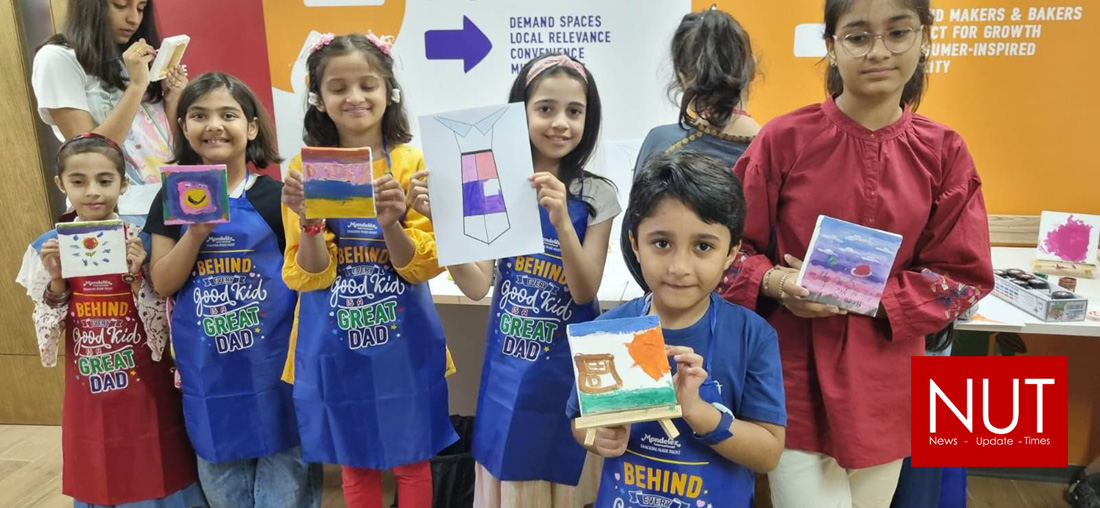
Pakistan (Muhammad Yasir) Fathers are the key pillar of the fabric of society by adorning many hats and supporting their families with love and care. In the words of the Australian poet, Pam Brown, “Dads are most ordinary men turned by love into heroes, adventurers, storytellers and singers of song.”  Every year, fathers are honored on the third Sunday in the month of June with a celebration dedicated to them. This year in the spirit of Father’s Day 2022, Mondelez Pakistan organized and celebrated this occasion at its offices. Kids of employees were invited to work, and a variety of activities were arranged to keep kids engaged and to demonstrate the significance that their fathers hold. The celebration by 
 
Mondelez Pakistan served an opportunity for all fathers who are a part of the Mondelez family with multiple benefits. It showcased how every father works hard, day in and day out, for their families. At the same time, it also shed light on the contributions that each employee has made towards the company and how Mondelez respects these efforts extensively. Featuring fun-filled activities for children that included face painting, magical performances, arts and crafts, refreshments and musical chairs, the event had everything that would keep a kid hooked for hours. Moreover, gaming options were also provided along with creative giveaways like hats, bags and keychains decorated with unique designs. 

Freedom for Oppressed Must be Beyond Prejudices: Experts

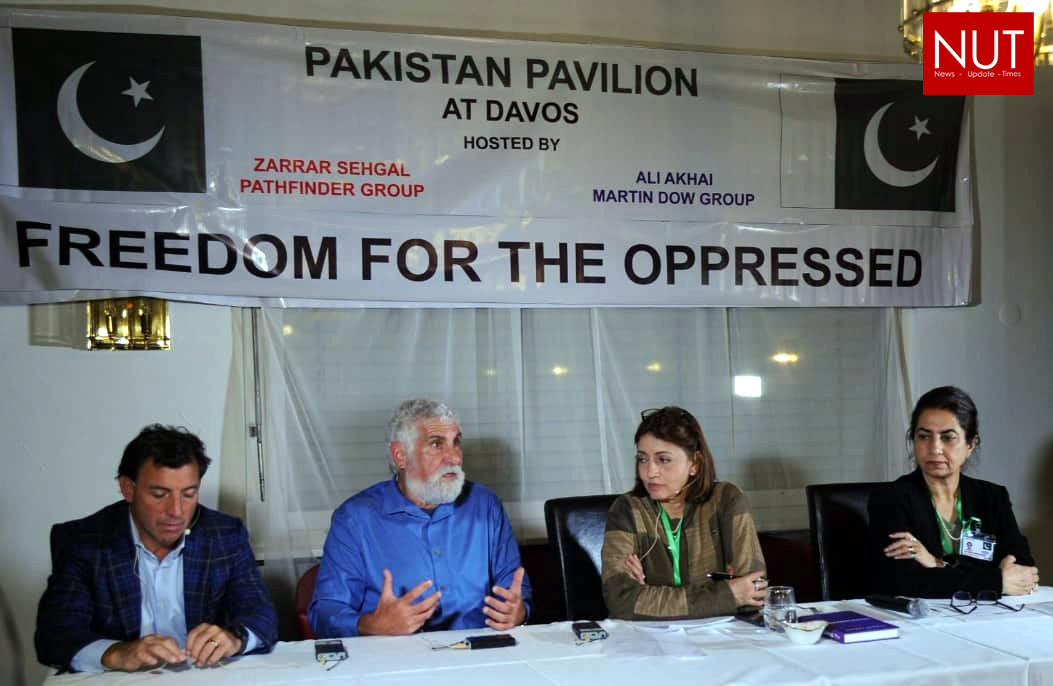
Pakistan (Muhammad Yasir) A global policy beyond prejudice to deal with the issues being faced by the oppressed people is the need of the hour, stated international affairs experts during a panel discussion. The panel discussion ‘Freedom of the Oppressed Classes was hosted by Pathfinder Group of Companies in collaboration with Martin Dow Group at Pakistan Pavilion on the sidelines of the World Economic Forum in Davos. The session was presided over and moderated by Dr. Huma Baqai, Pakistan’s eminent educationist and senior vice chairman of the Karachi Council on Foreign Relations (KCFR) while Dr Marc H. Siegel, President & CEO Siegel Associates, and Mr John DeBlasio, Chairman Continuity Global Solutions shared their views on this occasion. Prominent Pakistani lawyer Anwar Mansoor Khan could not attend the discussion due to some unavoidable reasons, however, his speech was read out to the audience by Dr. Samia Khan Babar. Initiating the discussion, Dr. Huma elaborated on the term oppressed saying that victims of each crisis around the globe were considered oppressed and undoubtedly, aggression was one of the major reasons behind a majority of these crises. She also described poverty not only as a major source of oppression but also as a crisis itself. On this occasion, Dr. Samia Khan Babar read out the speech of Anwar Mansoor Khan titled ‘Oppression Leads to Breach of Peace and Security’ in which he shed light on the legal status of global humanitarian crises including Kashmir and Ukraine. “To save a succeeding generation from the wars was the main motivation for the creation of United Nations but in the recent past we witnessed one of the permanent members having veto power launch aggression against Ukraine,” Mansoor said. He added, “The war of Yemen where Saudi Arabia with the blessings of powerful caused miseries and the destruction in Libya, Iraq, Kuwait, and Afghanistan were some examples of the aggression causing a breach of the world peace while it seemed that the members of the UN subscribed to such wars.” Referring to the Kashmir dispute, Anwar Mansoor Khan slammed the United Nations and its members, saying that the main purpose of the United Nations was to give the oppressed nations access to their rights but it turned out to be a distant dream. Mansoor said that the UN Security Council in 1948 passed a resolution 47/1948 declaring Jammu & Kashmir as a disputed territory between Pakistan and India and the responsibility was given to India to arrange the plebiscite under a representative of the UN Secretary-General with full authority enabling the people of Jammu & Kashmir to decide their fate. Anwar Mansoor questioned the silence of the United Nations on the flagrant violation of the resolution by India, saying that the UN Security Council had been reminded of the implementation of the resolution several times since 1948, but it could not be implemented due to Indian bigotry. Anwar Mansoor said that the UN was directly responsible for the ongoing atrocities against the people of Jammu & Kashmir. Referring to the UN Charter, Anwar Mansoor said that Chapter VII of the Charter indicates strict action against the invading countries but it has been observed that the permanent members of the UN Security Council blackmail the world body through their veto power. He said that the United Nations should immediately find a solution to the Kashmir issue, otherwise the escalating tensions between the two nuclear-armed neighbors could lead not only to a breach of peace but also to a major crisis in the wake of the war. While shedding the light on the situation in Kashmir, Dr. Huma Baqai said that Kashmir was a key dispute between the two nuclear states and its resolution was crucial given severe tensions in the region. Dr. Huma said that after the declaration of Jammu and Kashmir as an Indian territory under Article 370, efforts were being made to change the proportion of the population there and Hindus were being resettled in the valley which was a serious violation of international law. Huma Baqai said that resolution to the Kashmir dispute was in the best interest of both Pakistan and India as both the countries were spending more on military powers than they could afford in this regard. “As well-known Indian writer Arundhati Roy said, it’s not the Kashmiris who need freedom from India, it’s India that needs freedom from Kashmir,” Baqai said in her closing statement. Referring to the Russia-Ukraine war, Dr. Huma Baqai said that the Pakistanis could better understand the plight of the people of Ukraine because they had been seeing a practical example of the Afghan crisis in our neighborhood for the last 40 years. On this occasion, Dr. Marc Siegel, an internationally renowned human rights activist, said that the dream of emancipation of the oppressed classes did not seem to be based on reality.