Pakistanis say YouTube is the no.1 online video and music platform

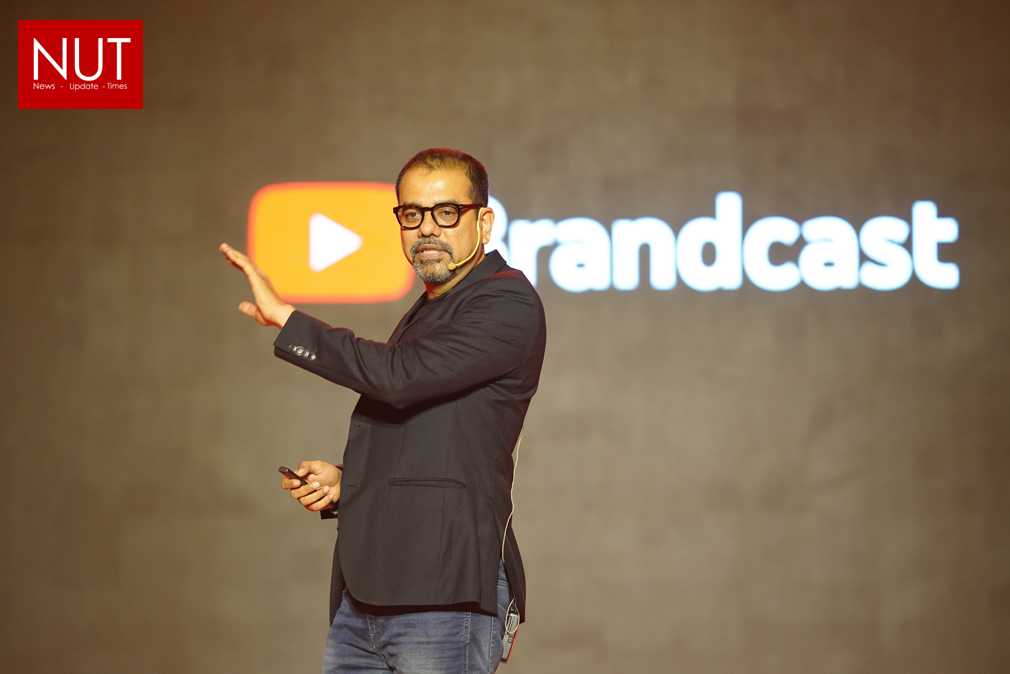
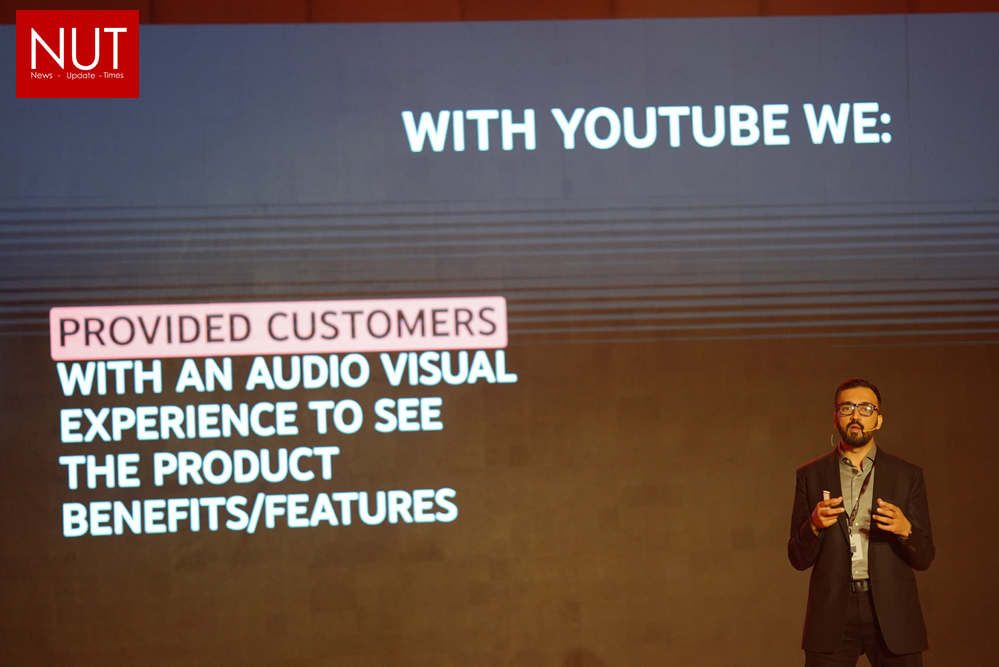
Karachi (Muhammad Yasir) YouTube hosted its first-ever YouTube Brandcast in Pakistan to celebrate YouTube’s creator community, and to share the latest insights, updates, and inspiration from brands succeeding on the platform. At Brandcast, YouTube also spotlighted how the platform is supporting the Pakistani creator ecosystem by building a reliable, multi-format platform that enables creators to build local and global communities that meet the evolving needs of their audiences

According to Google and Kantar’s Unlocking Digital in Rural Pakistan research, YouTube is the most popular online video platform in Pakistan with 62% of online Pakistanis ages 18-24 reported watching YouTube once a month or more. 

In fact, out of all Pakistani internet users, 91% say YouTube makes them feel positive, 78% consider YouTube to watch their favorite shows and content, 76% learned something new from YouTube, 75% claim that content on YouTube helped them dig deeper into their interests, 73% get the video content for all their moods on the platform.

The same study found that 48% of rural Pakistanis are now online, of which 78% watch YouTube. Of those that watched YouTube, 76% say that YouTube has unique content they can’t find anywhere else.

Farhan S Qureshi, Country Director Pakistan, Sri Lanka, and Bangladesh, at Google, said, “YouTube is about making connections and finding a community you can call home. It’s where viewers come to learn, unwind, and connect with their passions. The platform empowers people by not only giving them a voice but also financial stability. Since the platform resonates well with people of all ages and from all areas, it is no wonder that YouTube creates deep connections between brands, creators, and audiences in urban and rural areas of Pakistan.”

More content; stronger community

At the heart of YouTube are creators, who are helping build genuine connections by delivering personally engaging content. Whether long or short form, there is something on YouTube that will fit the bill. In the first quarter of 2022, the watch time of videos grew significantly compared to the same time last year. Digital marketing videos grew by over 95%, web development videos grew by over 90%, exercise videos grew by over 80% and live television videos grew by over eight times.

The total hours of content uploaded to YouTube by channels in Pakistan from June 2021 to May 2022 grew by over 25% when compared to the same time the year before.

YouTube’s multi-format creativity gives creators every screen and every format possible to succeed

This healthy growth in content uploaded to YouTube includes short-form videos via YouTube Shorts which was launched in July last year. Globally, YouTube Shorts is now averaging 30 billion daily views, growing four times from a year ago. Shorts has been hugely successful in Pakistan as well, a testament to Pakistanis’ evolving preferences in how they choose to consume content.

Marc Lefkowitz, Director of YouTube Partner Development and Management (APAC) added, “We have creators developing diverse content for podcasts, sketches, automobile reviews, tech reviews, tutorials, gaming, and more. There are more than 5,400 YouTube channels with more than 100K subscribers. That’s an increase of 35% over last year. More than 350 of these channels have more than a million subscribers. The platform intends to continue to extend its support to Pakistani creators so they can pursue their passions and build careers in a responsible manner.”

As of June 2021, the number of YouTube channels making 1 million PKR or more in revenue is up over 110%, year over year. Whether a Pakistani from a remote village in Punjab or a metropolis like Karachi, YouTube has proven to be an effective medium for communication across the languages of Pashto, Sindhi, Punjabi, Balochi, or Urdu; enabling everyday Pakistanis to turn their passion into full-time careers.

Kinnaird College organized an interactive seminar on “Positive Psychology & Cultivating Happiness”.

Lahore (Qasim Ali)

Kinnaird Centre for Learning and Cultural Development, Kinnaird College for Women, organized an interactive seminar on Positive Psychology & Cultivating Happiness. The purpose of the seminar was to educate and acquaint the students and attendants on positive psychology’s role in helping us making our lives more pragmatic and in the cultivation of happiness in our lives. The thought provoking seminar was conceived by Ms Rukhsana Mehmood and moderated by Ms. Taimia Sarwar & Ms. Tooba Imtiaz.

In the first fragment of the seminar, which was the presentations session, The keynote speakers enlightened the audience with their intellectual topics, Prof. Dr Ismatullah Cheema (also the patron in chief) presented on the topic, Positive Psychology: Past, Present & Future; Dr. Naushaba Hassan presented on Forgiveness & Mental Peace; Dr. Amina Obaid Khwaja on Hope, Wonder & Spirituality; Ms. Anisa Bandial on Optimism & Helplessness; Ms. Zara Haroon on The Power of Gratitude and Mr Farhan Hashmi on Finding happiness: the dilemma of being Ephemeral. They enlightened the audience and dilated upon historical review of the positive psychology including their own opinions.

Speakers said that the central question of this age is: How to be happy. With the hustle and bustle, hue and cry of this modern time, we have become too pre-occupied with work, stress and all the negatives we encounter in our indefatigable struggles. Martin Seligman, the father of positive psychology, and Csikszentmihalyi identified focus on human strengths, building best things in life and making life of normal people fulfilling as the fundamental goals of positive psychology. They introduced ideas such as wellbeing, happiness, strengths and virtues and flow in our field. Researches in positive psychology also found that focusing on positive events influences life in the long term and leads to a happier, healthier life.

The second fragment of the seminar was the panel discussion, chaired by Prof. Dr Amjad Tufail, including Prof. Dr. Ismatullah Cheema, Asst. Prof. Dr. Usman Rasheed, Dr. Rafiq Rafique, Dr. Uzma Ashiq Khan, Mr. Suleiman Khan and Dr. Naushaba Hassan among the other panelists.

In the third segment, the research students presented their research findings in front of the audience. The scientific session was chaired by Prof. Dr Rafia rafique.

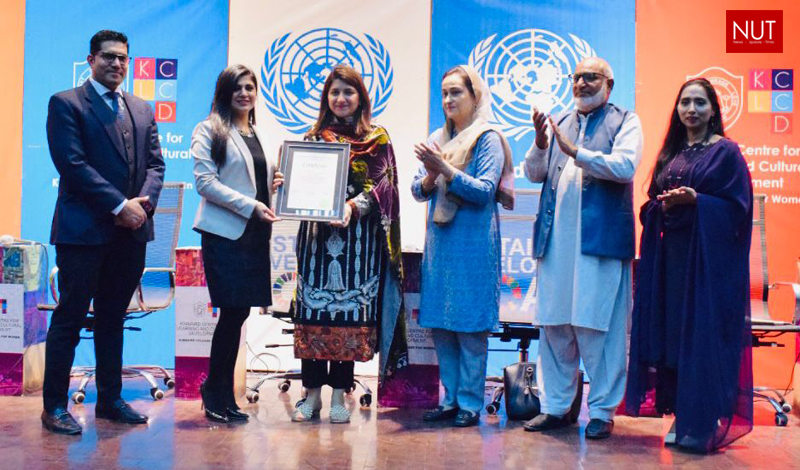
The event ended with a vote of thanks by the organizer Ms. Rukhsana Mehmood- senior consultant clinical psychologist (PMC) & course coordinator, PCCP (kclcd). Lastly, souvenirs were presented to the panelists and the speakers and certificates were awarded to the participants and audience of the seminar.

Executive Director KCLCD Kinnaird College for Women Mr Rizwan Anwar and Director Ms Maha Jamil distributed the Souvenirs among panelists and Keynote Speakers and appreciated the efforts of the organizers and esteemed Panel. Seminar was a Huge Success and had a great Feedback .

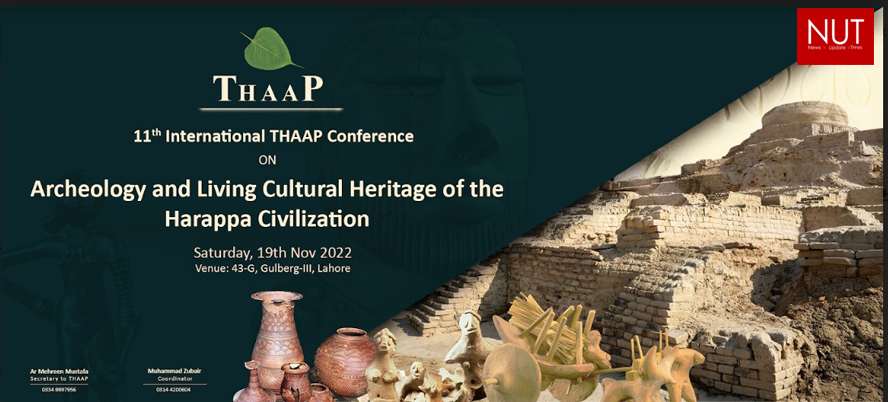
The 11th International THAAP Conference on Living Heritage of Harappan archaeology

7 Thought-provoking research papers on the Archeology and living cultural heritage of the Harappa civilization were presented at the 11th International THAAP Conference.

Lahore (Muhammad Yasir)

The 11th International THAAP Conference on archaeology and the living cultural heritage of the Harappa civilization is being held today at THAAP i.e., 19 Nov 2022. The conference, composed of two paper reading sessions and a round table session also featured a cultural exhibition by artisan Allah Ditta and Digital Exhibition by the Young Archeologist Association of Pakistan. 

The conference was an effort to collate and collect the works on Harappa culture in a systematic and comprehensive manner and to contribute to the body of knowledge. Historians, archaeologists, Punjabi scholars and researchers attended the conference and took great interest in thought-provoking sessions.
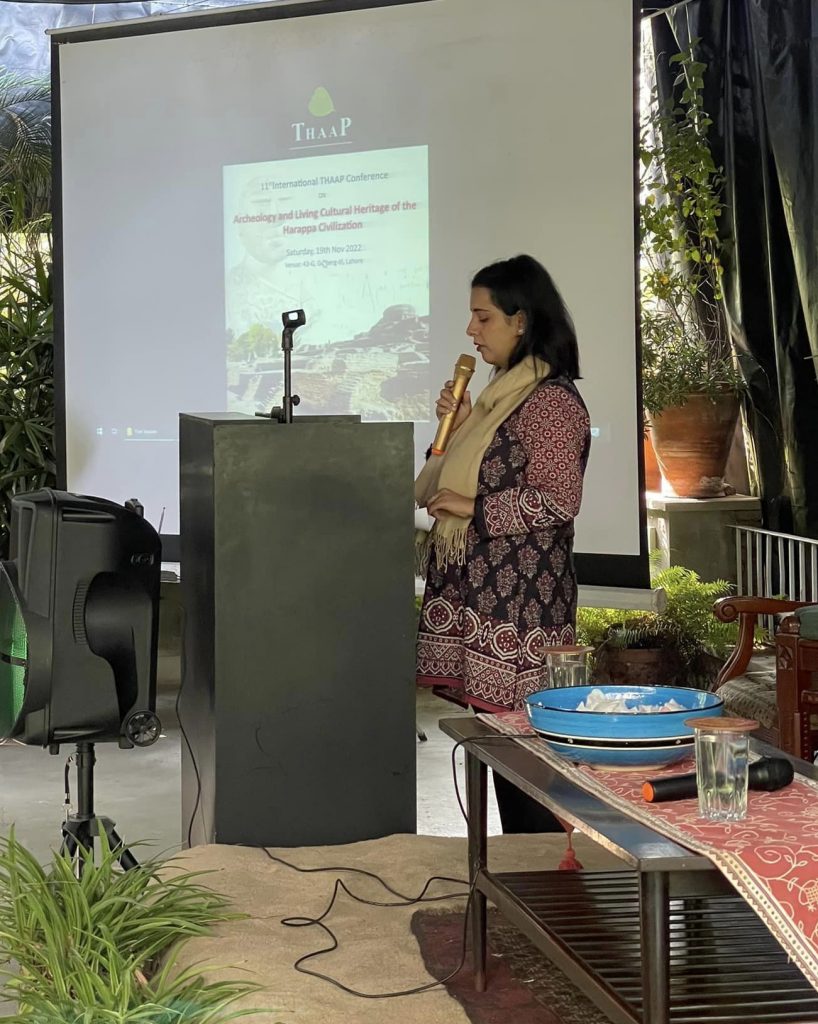

In the opening session Ar. Mehreen Mustafa, Secretary to THAAP, welcomed the conference participants and introduced the conference program briefly. Prof Sajida Haider Vandal, CEO of THAAP in her opening remarks recapped the context and history of the civilization and explained the significance of living cultural legacy and THAAP’s approach in terms of research, generation of knowledge, and its dissemination related to the theme.

The first paper reading session chaired by Prof Dr. Tariq Rehman features three research presentations. The first paper was presented by Ms. Sadia Qutub Hashmi and Ms Nomana Masood. The paper titled Symbolic Interpretation of Geometry in Indus Valley Pottery presented the analysis of geometric patterns painted on pottery excavated from the Indus Valley by breaking them down into symmetrical patterns and identifying the constituent shapes and motifs. The possible philosophical implications of the motifs were also explored in the paper.

The second paper of the session titled From Craft to Art: The visual and material journey of Ghugho Ghoray as pagan terracotta horses was presented by Ms. Sumbul Natalia. The paper investigated the origin of these figurines in Harappa, from becoming a symbol of tribute at the shrine of Ghoray Shah in Lahore, to finally making appearances in the contemporary art of Pakistan. The last paper of the session was presented by Ms. Sumbal Sarfraz. Her paper titled A Journey of Fine Muslin from Harappa civilization to Modern World -Tana Banna traced the evolution of the ancient art of Tana Bana through samples excavated at Harrapa as well as references to it in early literature. The paper also demonstrates the continuity of the old techniques in contemporary textile cultures in the subcontinent.


A lively question and answer session discussed the commonalities between the cultures, traditions, as well as religions of the subcontinent as exemplified by the Harappa civilization.

In his closing remarks the chairperson of the session Prof Dr. Tariq Rahman
appreciated the consistency that THAAP has displayed in continuing with conferences that highlight the heritage of the region and keep it alive in the youth. He also shared his appreciation for the work presented by the researchers in the session.

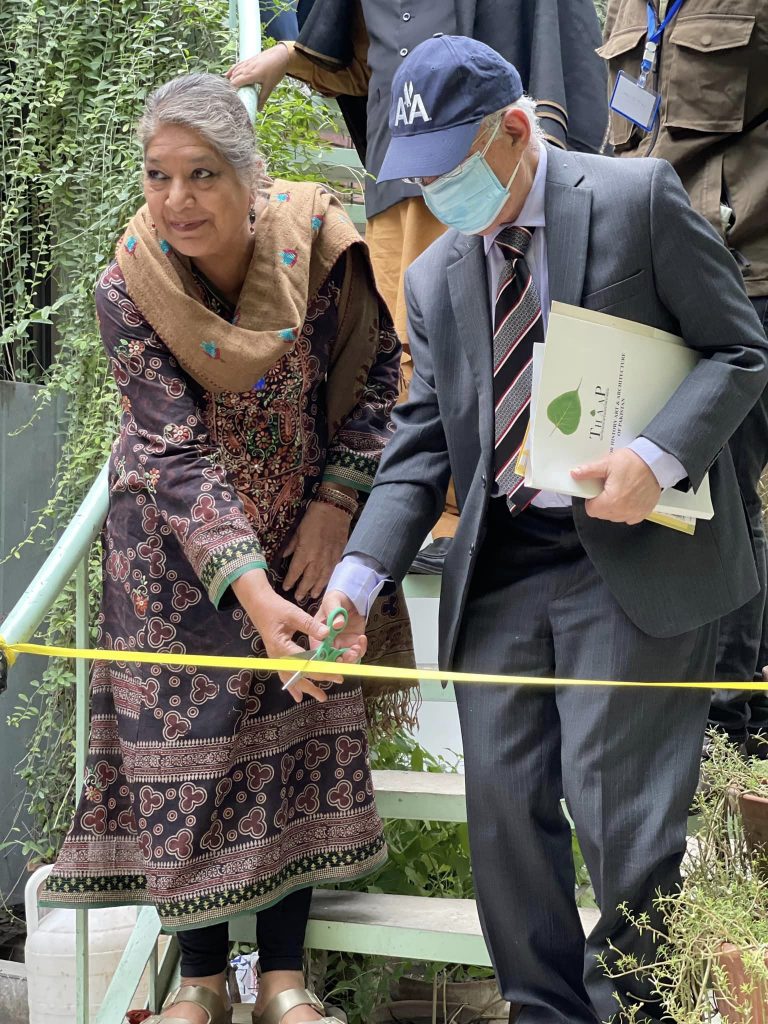
The first paper reading session was followed by the inauguration of the cultural exhibition featuring the crafts of Harappan Artist Allah Ditta. Dr. Tariq Rehman and Prof Sajida Haider Vandal together inaugurated the exhibit, which featured terracotta figurines, jewelry, and utensils. The conference also features a digital exhibition by YAAP which highlights the significance and relevance of Harrapan artifacts such as pottery, figures, jewelry, surgical instruments, etc. extracted from the archaeological sites.


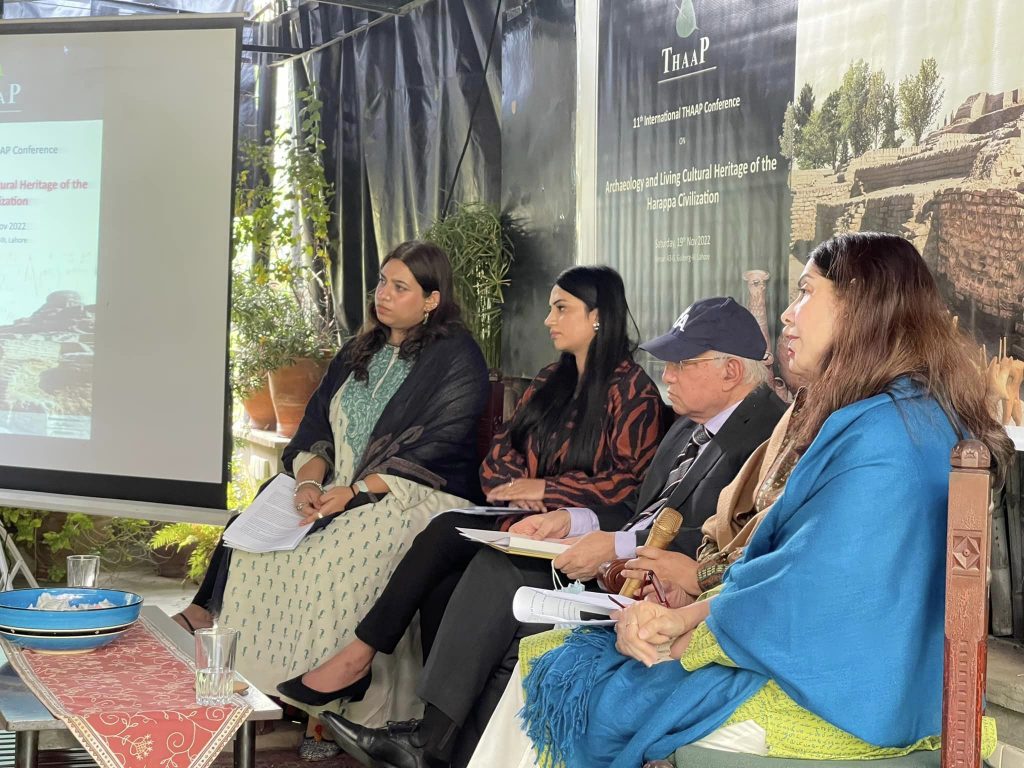
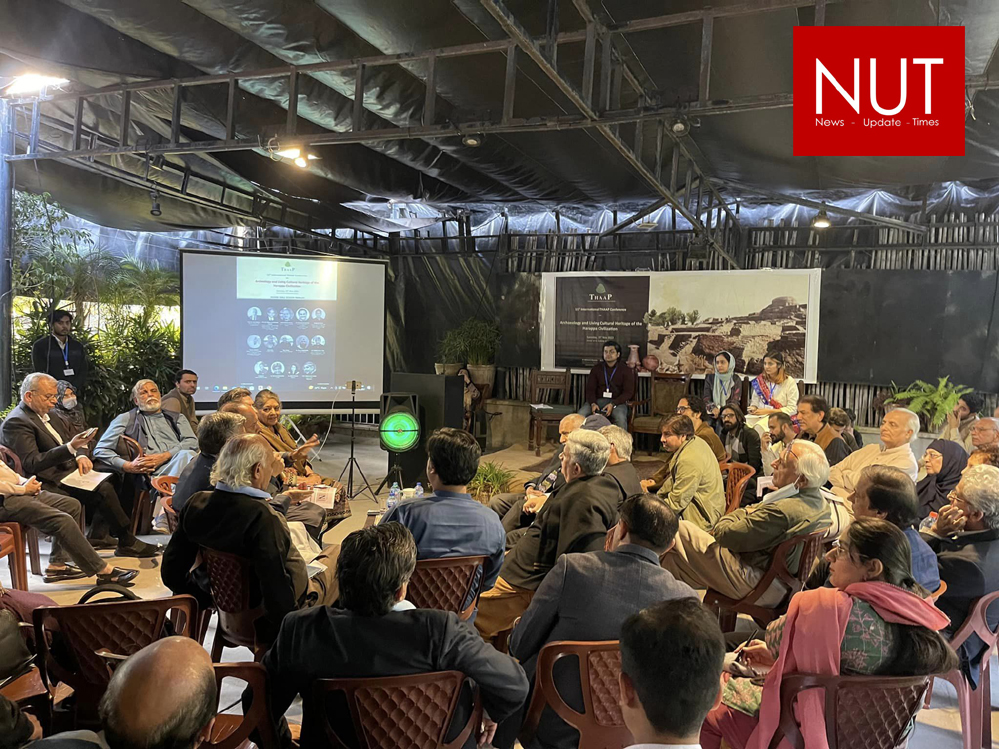
Followed by Lunch, the round table session on the theme of archaeology and the living cultural heritage of the Harappa civilization was moderated by CEO THAAP Prof Sajida Haider Vandal.

Prof Sajida Haider Vandal opened the session by emphasizing that the aim of the session was to gain a deeper understanding of Harappa by bringing together a diverse group of experts

Prof. Dr. Tariq Rahman, Dean & Professor at BNU and a Language Historian spoke about the lack of historical sources needed to make the Harrapan language and script decipherable however he spoke about the traces of it still persisting in spoken languages through the retroflex sounds which are common in Dravidian languages.

Prof. Dr. Mohammad Rafique Mughal, Professor Emeritus of Archaeology, Boston University, USA, and Former Director General of Archaeology, Govt. of Pakistan commented on the social and urban organization of Harappa, ones which persist in our ways of living in current times as well. He also spoke about possible genetic links between the original Harrapan dwellers and those who live there currently. He also emphasized the need to take a collective approach to history instead of a divisive one.

Maqsood Ahmad, Director of Archaeology at the Department of Archaeology, Government of Punjab, Pakistan paid a well-deserved tribute to the efforts made by Prof. Dr. M. Rafique Mughal in understanding the Harrapan civilization. He went on to show the recent developments made by the Archaeology Department on-site and shed light on the future initiatives of the department.

Hassan Khokhar, Deputy Director of Archaeology at the Department of Archaeology, Government of the Punjab, Pakistan discussed the challenges of archeology and conservation on private land and the efforts to bring the privatized property of Harappa into public ownership.

Nain Sukh, a Punjabi Scholar pointed out the references found in Rig Veda that can hint towards the belief system of the community. He also described linguistic connections that can be established to the text in Rig Veda mentioning technical terms of carpentry, leather, and pottery works.
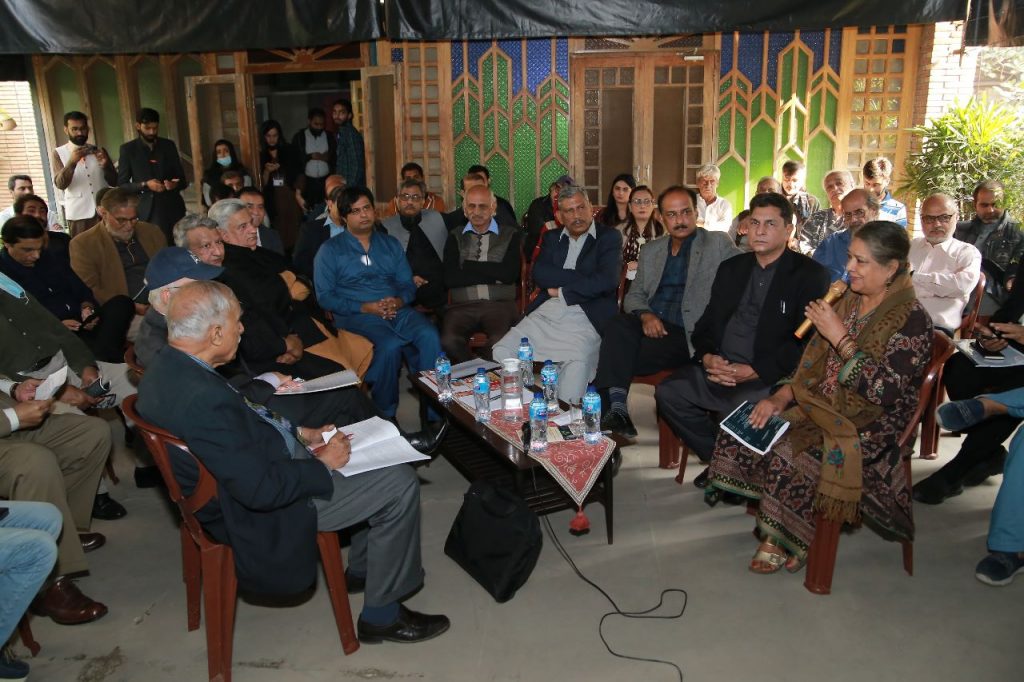

Iqbal Qaisar Punjabi Scholar & Historian emphasized that in order to understand Harappa it is essential to study the works of the Sufi saint, Baba Farid Gunj Shakar, and the founder of the Sikh religion, Baba Guru Nanak as they lived within a 60km radius of Harappa, and their description of the community and circumstances can give substantial evidence regarding the concerned subject. He also mentioned the relevance of the ancient community in the social structure described in the Punjabi folklore of Heer Ranjha.

Dr. Nadeem Omar Tarar, Gandhara Chair in Art History and Cultural Studies – University of Wah, Rawalpindi focused on the living heritage of Harappa. He discussed the links between Buddhist ruins in Sindh and their relevance with the adherents living in the vicinity. He also emphasized the need for an interdisciplinary approach as well as the need to move away from Eurocentric approaches to history to breaking new ground in research.

Shafiq Butt Development practitioner expanded upon Hassan Khokar’s words about bringing Harappa back into public ownership and gave a spirited and detailed overview of the efforts to do so spearheaded by him on the public as well as governmental levels.

Dr Tohid Ahmad Chattha, a historian mentioned how the ancient culture of Harappa is still alive for him and that in order to truly understand Harappa we need to study it in the context of other sites in the subcontinent. He also emphasized the need for establishing a formal Punjabi Research Center in educational institutions and departments in higher education institutes.

The discussion of the round table session stressed the need to engage the relevant community through cultural industries and other programs. It also delineated the need to involve young archaeologists, research, and artistic mediums such as music and theatre to highlight and celebrate the significance of Harappa Civilization.

The last paper reading session chaired by Shahid Nadeem features four research presentations. The first paper of the session was presented by Prof Dr Rifaat Saif Dar. Her paper titled Ancient Harappa in a state of Modernity explained how various research works suggest that ancient Harappa city has been most alive in her legacy than Mohenjo-Daro in the Indus Valley Civilization. The latter reflects multiple cultural traits from ancient times to contemporary times.

Asif  Mahmood Rana’s paper titled The Early Development of the Ancient Indian Religions and the Artefacts from Harappan Civilization investigated possible roots of Hinduism, Jainism, and Buddhism in Harappa through material evidence, linguistic comparison, and living traditions that test the claims of these religions originating from the region.

Dr. Khataumal presented the third paper of the session. His paper titled How to retain the legacy of the Harappan civilization in 2022 traced ancient discoveries from the ruins of Harappan civilization in the 19th century and suggest substantial metropolitan lessons to be considered for the modern age problems. The last paper of the session was presented by Iqra Azam.

Her paper titled Shiva Temple, Sukho Chak explained the geographical, historical, and political history and context of Sukho Chak and presented her archeological and architectural study of the remains of the Shiva temple in the area.

In his closing remarks, the chairperson of the last session Shahid Nadeem stressed that to keep the legacy of Harappa civilization alive we as a community and citizens need to take an interest in the study and celebration of Harappa civilization rather than leaving such endeavors purely to governments and other organizations. Additionally, he emphasized performance arts such as theatre and music as another important medium that can be employed in order to maintain the legacy of this great civilization.

Kinnaird College Celebrated the rich cultural diversity of Pakistan

Lahore (Qasim Ali)

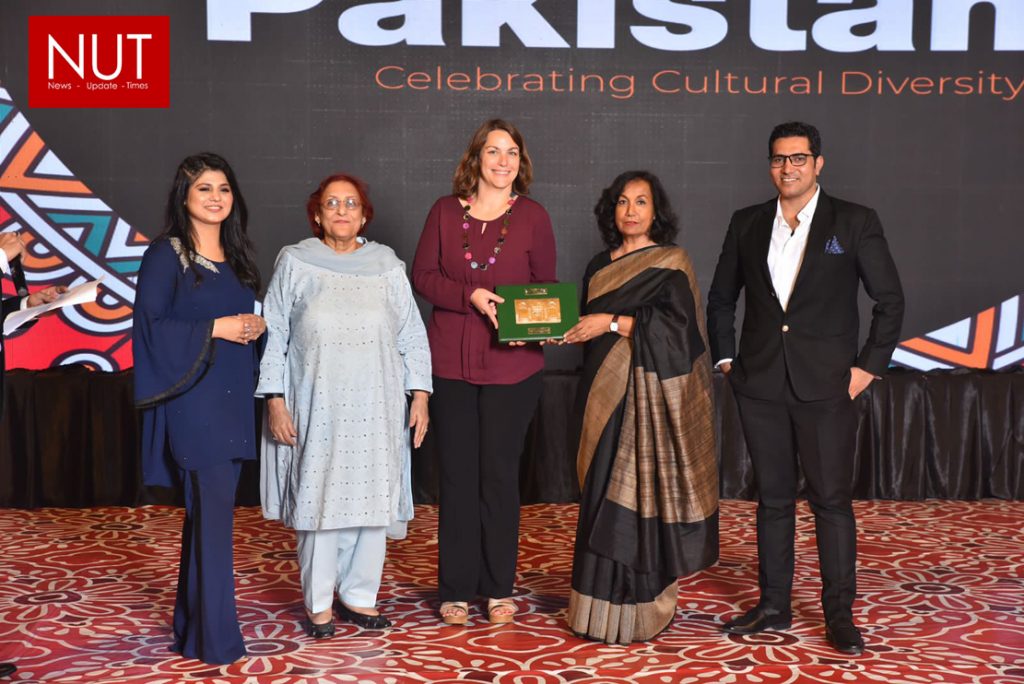
Pakistan has a rich vibrant culture, distinct traditions which attract everyone due to its exquisite grace and diversity. To highlight the cultural beauty of the gorgeous homeland, Kinnaird Centre for Learning and Cultural Developments, KinnairdCollege for Women organized a graceful cultural event entitled “Rhythms of Pakistan ”. Artists’ presented outstanding performances in traditional attires and reflected the centuries old traditions of all Five provinces including Punjab, KPK, Sindh, Balochistan, Kashmir and Gilgit Baltistan as well.

Envisioned by Kinnaird Center for Learning and Cultural Development (KCLCD), the event received outstanding applause from faculty, students and delegation of French Universities. Rectors, International Managers and Presidents of Top 15 universities of France attended the exclusive event and acknowledged the brilliant display of cultural performances and talent of young students.

Deputy Head of Mission from the French Embassy, Education Attaché and regional head of Campus France also appreciated the talent of performing groups. They took keen interest in learning about the folk dresses, traditions and elegant culture. The French delegation said that cultural diversity is the real beauty of Pakistan and we want to highlight positive, peaceful image of Pakistan so that Pakistan can achieve its due special place at the global level.

Dr. Rukhsana David, Principal Kinnaird College welcomed the distinguished guests on their visit at the campus. During the visit enhancement in academic collaboration and various proposals came under discussion. French delegation revealed the possible opportunities for Pakistani students in French universities and vowed to help Pakistani students for further study in various disciplines in every possible way.

Director KCLCD Ms. Maha Jamil and Rizwan Anwar UN Global Youth Ambassador on Sustainable Development Goals thanked the French delegation for offering their support in exchange programs and possible collaborations for Academic and Research Exchanges. While talking with the French delegation , Rizwan Anwar said that Kinnaird college is committed for high quality education to Pakistani female youth and collaboration with foreign universities will be enhanced in this regard.

11th International THAAP conference to highlight the Archeology and Living Cultural legacy of Harappa Civilization.

Lahore (Qasim Ali)

THAAP is organizing its 11th annual conference this Saturday at THAAP secretariat 43 G Gulberg Lahore. The theme of the conference is Archaeology and Living Cultural legacy of Harappa Civilization and it will comprise of Paper reading sessions, Round table discussions, cultural exhibition and much more.

The conference will start with the opening note by Ar Mehreen Mustafa , Secretary to THAAP and will be followed by the welcome remarks by CEO THAAP Prof. Sajida Haider Vandal. Renowned Language historian , Dean & Professor at BNU Dr. Tariq Rehman will chair the first paper reading in which scholars like Sadia Qutub Hashmi, Nomana Zaryab, Sumbul Natalia and Sumbul Sarfraz will present their critical research on topics such as symbolic interpretation of Geometry in Indus Valley Civilization, the visual and material journey of Ghugho Ghoray and the Journey of Fine Muslin from Harappa civilization to Modern World -Tana Banna”.

The conference will also host the exhibition of cultural crafts of Harappa Pottery by a Harappan artisan Allah Dita. Allah Dita learned the art of developing Harappa pottery from his father and has made 375 replicas of different Harappan artifacts given to him by the Archeological department from the Harappa Museum site. Recently he has also been awarded the World Crafts Council- Award of Excellence for Handicrafts 2021-2022 (WCC-AoE) in the Asia Pacific Region.

The paper reading session will be followed by the round table session in which expert and renowned archeologist, historians, scholars and development practitioners will discuss the Potential and Predicaments related to the archeology and living cultural legacy of the Harappan civilization. The session will be moderated by CEO THAAP, Prof Sajida Haider Vandal and will feature scholars like Prof. Dr. Tariq Rehman, Prof.Dr.Muhammad Rafique Mughal, Ihsan Nadeem Goraya,Dr. Muhammad Hameed, Ar Maqsood Ahmad, Hassan Khokhar, Dr Nadeem Omar Tarar, Dr Kalyan Singh Kalyan, Iqbal Qaisar, Shafiq Butt, Nain Sukh, Dr. Khola Cheema and Dr. Tohid Ahmad Chattha.

The participants will also discuss the salient features and significance of Archaeology and Living Cultural legacy of Harappa Civilization in a thought-provoking session.

The conference will also feature a digital exhibition by YAAP – Young Archeologist Association of Pakistan. The exhibition will feature and shed light on the living cultural legacy of Harappa civilization with the help of artifacts such as pottery, figures, sculpture, jewelry, seals, surgical instruments, etc. extracted from the archeological sites.

The conference will conclude with the last paper reading session, which will be chaired by Ajoka’s executive director Shahid Nadeem. Scholars such as Prof. Dr. Riffat Saif Dar, Asif Mahmood Rana, Dr. Kataumal and Iqra Azam will present their research papers on different aspects of Harappa civilization such as Ancient Harappa in a state of Modernity, The Early Development of the Ancient Indian Religions and the Artefacts from Harappa Civilization, retaining the legacy of the Harappa civilization and Shiva Temple
In sukho Chak.

In the closing ceremony of the conference Ar. Mehreen Mustafa secretary THAAP will present the Rapporteur General. The conference will be concluded after the certificate distribution ceremony followed by closing tea.

Telenor Pakistan and UNICEF partner to strengthen Child Online Protection

Lahore (Muhammad Yasir) Telenor Pakistan and UNICEF have partnered to scale the Child Online Protection agenda in Pakistan through their joint digital initiative, ‘Strengthening Child Online Protection for Children and Young People in Pakistan’. The program promotes safe and responsible internet usage among children, caregivers and educators through awareness and capacity-building efforts.

In addition to promoting safe internet usage, the program will support the government by developing localised policies and regulatory frameworks for the masses on child safety online. In the next three years, Telenor Pakistan and UNICEF will train 750,000 children, caregivers, and educators through a hybrid training module. They also plan to engage with key stakeholders for creating a suitable legal and policy environment with an evidence-based, consultative, and coordinated approach towards children and young people’s protection in the digital world.

At the partnership signing ceremony, Kamal Ahmed, Chief Corporate Affairs Officer, Telenor Pakistan, said, “Increased access to digital platforms brings progress to the society but raises safety concerns for children. Digital skills and online safety is a collective responsibility. Through this partnership with UNICEF, Telenor Pakistan will continue promoting digital inclusion, online safety, and new skillset to help young people navigate a connected world. Our ambition is to build the capacity and enable children, educators and caregivers to adopt measures for online protection.”

The rapid digital acceleration in recent years has fundamentally sped up the course of technological innovation, bringing with it innumerable benefits and some undesirable risks. With one in three internet users today being children, there needs to be a clearer focus on the child protection landscape. More than 30% of young people in 30 countries reported being cyberbullied, with one in five even skipping school.

Zainab Hussain Siddiqui, VP Sustainability Health Safety and Environment, Supply Chain Sustainability and Partnership, Telenor said, “Telenor Group’s global partnership with UNICEF plays a key role in realising on our ambition of empowering societies by promoting digital inclusion, increasing connectivity, and building skills for a digital future for children and young people.”

 “The internet today is a fundamental part of the lives of children and young people, increasingly thinning the line between the digital and physical worlds. Protection of young people is a global challenge that is constantly evolving due to the rapid advancements in technology and society. Thanks to initiatives like these, it is possible to build safe, age-appropriate digital environments for children and young people in Pakistan,” she added.

Through their previous collaboration, Telenor Pakistan and UNICEF successfully brought 2.5 million children across Pakistan the right to identity through their Digital Birth Registration program. With this new partnership, the two organisations hope to continue to provide young people with the knowledge to protect themselves from online risks.

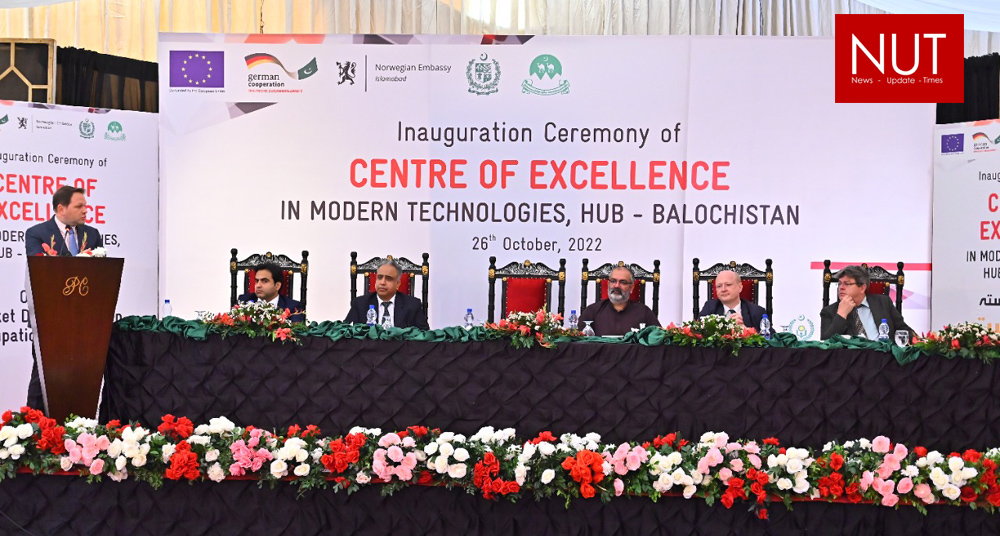
State-of-the-Art Centre of Excellence Inaugurated in Balochistan

Pakistan (Muhammad Yasir) A state-of-the-art Centre of Excellence (CoE) in Modern Technologies Hub, Balochistan inaugurated on Wednesday to strengthen skills development for youth and teachers of the Province.

The CoE aims to foster excellence in developing training programmes for youth and train practitioners in Technical Vocational Education and Training (TVET) sector with an ultimate goal to build a competent workforce with better job opportunities. The CoE will be pivotal in implementing a cascading model of teachers’ training and imparting skills training for trainees through modern lab facilities, career counselling and job placement services – all under one roof.

The Centre is the result of an upgradation of the existing TVET centre in Modern Technologies Hub which has been supported by a TVET Sector Support Programme and funded by the European Union (EU), the German Federal Ministry for Economic Cooperation and Development (BMZ) and the Norwegian government. It is implemented by Deutsche Gesellschaft für Internationale Zusammenarbeit (GIZ) GmbH in close collaboration with the National Vocational &Technical Training Commission (NAVTTC), Technical Education and Vocational Training Authorities (TEVTAs) and a number of public and private sector organizations at national and provincial levels.

The programme is supporting the establishment of five Centres of Excellence across Pakistan.Out of these, two are already completed in Peshawar and Islamabad, while the other two at Lahore and Kotri are nearing completion.

The CoE Hub Balochistan was presented to the Government of Balochistan in the presence of Mr. Nawabzada Gohram Khan Bugti, Advisor to Balochistan Chief Minister on Labor and Manpower, Secretary Labor and Manpower Mr. Tariq Qamar were present on the occasion were various development partners and a number of other representatives from public and private sector.  

While addressing the ceremony, the Advisor to the Chief Minister remarked that “The inauguration of this centre of excellence is a big achievement for the overall TVET sector of the country particularly for Balochistan. This CoE, he added, will support training of trainers and trainees in modern technologies which will ultimately equip the trainees to compete in the national and international labour markets”.

In his remarks, Secretary Labor and Manpower Department Govt of Balochistan  said: “We are overjoyed that the CoE is now complete and being handed  over to the Government of Balochistan which will set an example for rest of the country in providing outstanding training to instructors and trainees”.


Mr. Ovidiu Mic, Head of Cooperation of the European Union Delegation to Pakistan said that the EU considers TVET as a priority sector for the socio-economic development of Pakistan and has supported the TVET policy and reform process for over a decade.

“The establishment of the Centre of Excellence in Hub, is one of the key concrete achievements of our support. We expect that it will become the benchmark for all other institutes in Balochistan in aligning TVET in the province with the international standards,” he further added.

On behalf of the European Union Delegation to Pakistan, he congratulated the youth of Balochistan on having this facility in the province.

Dr. Rüdiger Lutz, Counsul General of the German Consulate, Karachi said that “The COE, equipped with modern technology labs will play key role for the province in training its teachers and students”.  

On behalf of the German government, he expressed: “I see a great potential in the Centre of Excellence for equipping youth with entrepreneurship skills besides paid jobs.

Speaking at the ceremony, Mr. Olaf Handloegten, Cluster Coordinator and Head of TVET Sector Support Programme, GIZ said that, “We hope that the management of the center will take advantage of the upgraded training facility for both TVET teachers and trainees and devise mechanisms to ensure that this CoE lives up to its full potential. Now it’s the time for the provincial government, NAVTTC and private sector of the province to ensure sustainability of these efforts and achievements.”

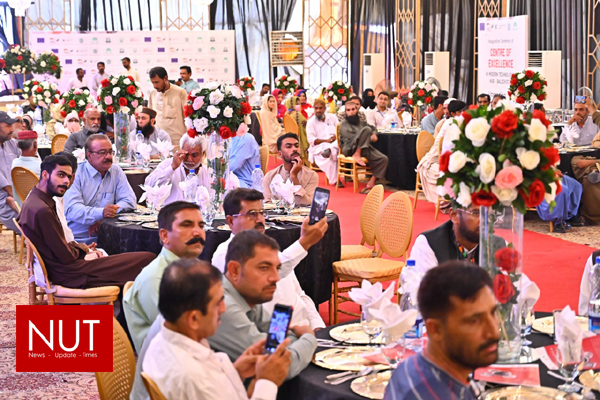
The event was attended by public and private sector representatives, relevant TVET bodies, teachers and students of the CoE.

The 51st THAAP Talk and book launch of Arshad Waheed titled “Other Days” was held at THAAP.

Lahore (Qasim Ali) Distinguished Writer Arshad Waheed enlightened the audience with an exclusive talk on his latest novel “Other Days” at THAAP Secretariat Lahore on Friday 21st Oct evening. Arshad Waheed has done his M.S.C in social policy and planning in developing countries from the London School of Economics, UK. He is serving as a Technical Advisor of Social policy and planning, at the Institute of Social Policy, Islamabad, Pakistan since 2002. He is also a prominent writer, who has a rich literary contribution. Besides writing famous novels, he has also translated the work of leading global writers Gabriel Garcia Marques and Milan Kundera. Ar Mehreen Mustafa, Secretary to THAAP welcomed the audience and introduced the mission and vision of THAAP Group. Naveed Alam was called upon to moderate the talk. Panelists for the talk Iqbal Haider, Nabila Kiani, and Raza Naeem talked in detail about their critical observations on the Novel, its plot, context, and the author’s technique of writing. Arshad Waheed was invited by the moderated to enlighten the audience about his journey as a writer and the journey of the Novel itself.

Arshad Waheed narrated selected parts of the Novel and presented the extracts from the story, introduction of the characters, and brief insight into the theme of the novel. Arshad Waheed’s latest novel “Other Days” explores the eventful life of Pakistani immigrants residing in the UK and facing the identity crisis in a fast-changing world. When the story proceeds, it unfolds the woeful events which characters have to suffer in past during college days, the socio-political atmosphere of the society, and the politically charged era, said the writer Arshad Waheed during his talk with the audience. He revealed that he did not try to impose any ideology on characters all took their path and represent their specific approach towards life. This is not only the story of the past but it connects with the present day society as well with interesting encounters. The session was then followed by a question and answer session. The talk concluded by CEO THAAP, Prof Sajida Haider Vandal. Professor Sajida Vandal thanked the writer Arshad Waheed for selecting THAAP as a platform to deliver an exciting talk on an interesting Novel. She also acknowledged the efforts of Naveed Alam, who was the moderator of the panel discussion. She announced that the THAAP 11th International Conference Is scheduled to take place on 19th Nov 2022 followed by the Book Launch event of Prof Dr. Tariq Rehman on 25 Nov 2022. The talk was followed by closing tea.

International Rescue Committee aims to assist 1.5 million flood affected people

Protection, cash assistance, food supplies, and access to health emerge as priority needs

ISLAMABAD (MUHAMMAD YASIR)  As the national coordinated efforts for provision of relief and subsequent rehabilitation of flood-affected people have been accelerated at all levels, there still needs much to protect flood victims from water borne diseases and ensure their rehabilitation.

The International Rescue Committee (IRC) was the first among other international organizations who had launched an emergency response in early July. The IRC response has so far supported over 300,000 individuals and aims to assist 1.5 million people in the flood affected districts in Sindh, Balochistan, Khyber Pakhtunkhwa and Punjab.
An Early Needs Identification (ENI) assessments carried out by IRC and its partners indicate that the immediate reported needs by communities are of cash assistance, food items, protection and health services.

“Currently, IRC is directing its efforts in 16 districts of Sindh, Balochistan, Khyber Pakhtunkhwa and Punjab. The ambit of our protection services is further supplemented by provision of integrated services of multipurpose cash support and psychological social support sessions to individuals, families and communities,” said Shabnam Baloch, Country Director, International Rescue Committee, Pakistan, while sharing details of the IRC’s ongoing and future programming for displaced people.

She said that the IRC response has so far supported nearly 300,000 individuals and emphasized that displaced families, and in particular women and girls remain a priority along with groups that have been economically and socially marginalized.
Assessments by UN indicate that Pakistan could see as many as 2.7 million malaria cases in the 32 worst-hit districts by January 2023, and 5.74 million more people are at risk from famine.

The IRC Country Director observed though the flood water levels are receding, yet the woes of those affected are compounding. “Therefore, responding to this colossal calamity is a collective responsibility and we need to step up our combined efforts.”
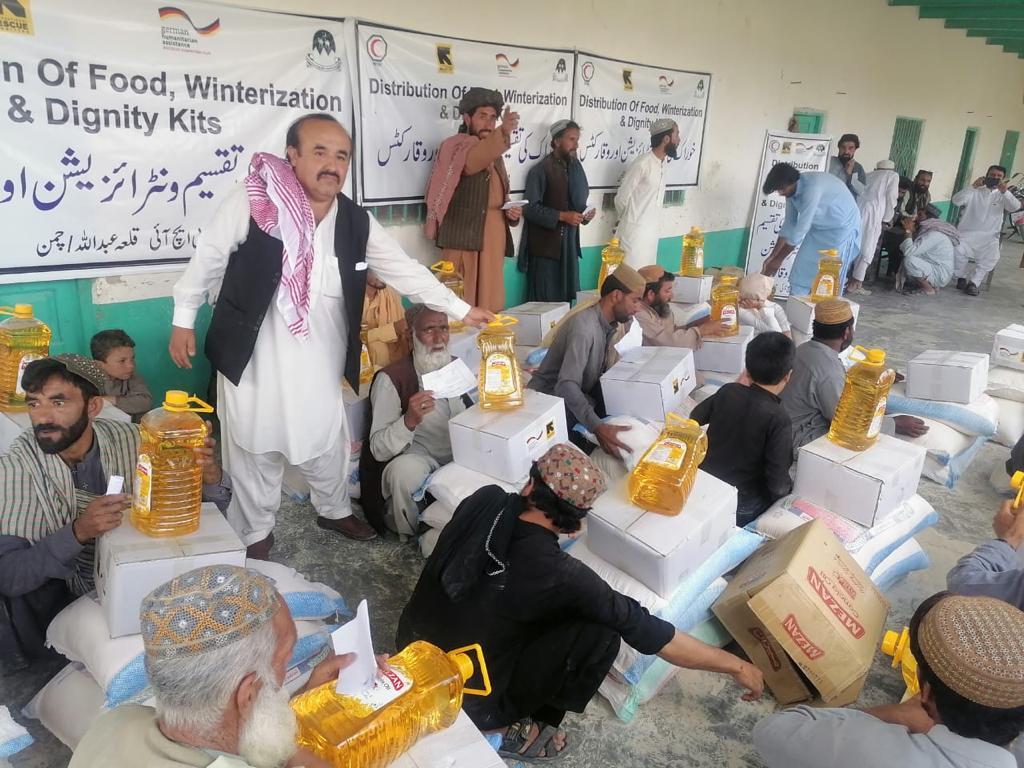
Shabnam Baloch said that IRC is supporting communities with food rations, household items and dignity kits. In addition to this in the intervention districts, IRC is establishing medical camps, safe spaces and arranging psychological social support sessions along with provision of safe drinking water and sanitation facilitates.

The IRC emergency response program is now being scaled up through a multilateral donors’ base. On ground activities are being supported by 9 local partner organizations.

Nearly 33 million people in Pakistan have been affected by catastrophic floods, the loss of human life has risen to 1,700 people, hundreds of thousands of homes have been damaged, over a million of livestock has perished and millions of acres of crops are ruined.

Pakistan is one of the world’s most climate-vulnerable countries. Today, there is no better example of a nation bearing the brunt of the effects of climate change as the floods at one point submerged one third of the country. However, Pakistan bears little responsibility for the growing climate crisis. Although Pakistan is world’s 5th most populous nation, the country is responsible for just 0.6 % of global carbon emissions. Thus, there is a need to initiate dialogues and discussions both nationally and globally on the discourse of climate change.

Strengthening employment prospects for retuning migrants

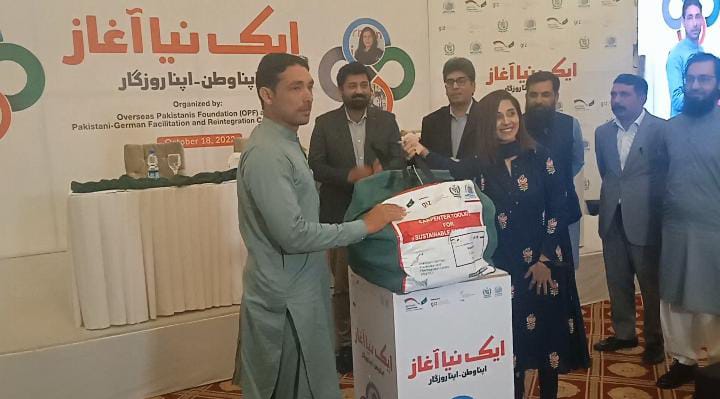
Islamabad (Muhammad Yasir)  For smooth integration and economic empowerment of returning migrants, Overseas Pakistanis Foundation (OPF) organized a ceremony where returning migrants were presented toolkits in the trades of electrician, plumber, carpenter, motor cycle mechanic and mason as an In-Kind support to help them start sustained self-employment. The activity is part of OPF efforts to support returning migrants to make a new start in Pakistan and achieve a sustainable employment. OPF is implementing a program on economic reintegration of returnees in collaboration with Deutsche Gesellschaft für Internationale Zusammenarbeit (GIZ) in Pakistan. It is commissioned by the Federal Ministry for Economic Cooperation & Development Germany, (BMZ) and is part of BMZ support for voluntary return & sustainable reintegration.

A Pakistani-German Facilitation & Reintegration Centre (PGFRC) has been established in OPF premises, Lahore with an advisory desk in OPF head office Islamabad. PGFRC is supporting and assisting returning migrants and the local population to have a sustainable source of income.

The ceremony was attended by the Chief Guest, Syed Mustafa Haider, Director welfare OPF, trade specific toolkits were handed over to 80 returning migrants as an In-Kind Support. These migrants have also completed a comprehensive business development training from PGFRC.

Dr. Mansoor Zaib Khan, Head of PGFRC, GIZ officials, members of Senate and National Assembly Standing Committees on Overseas Pakistanis & HRD, Members, OPF Board of Governors, senior government officials, representatives of international organizations and civil society representatives also attended the ceremony.

Syed Mustafa Haider, Director welfare OPF said that today’s ceremony is a testament to the commitment of Government of Pakistan which considers overseas Pakistanis as its roaming ambassadors abroad and is actively engaged in resolving their reintegration issues in Pakistan. Ministry of OP&HRD, through OPF is working in a focused manner on this issue.

Dr. Mansoor Zaib Khan, Head of PGFRC is informed that PGFRC is open to all Pakistani’s and all our services are free of charge. PGFRC is providing advice on training and skills development, technical and vocational training, advice on job market trends and opportunities, advice on finding a job in Pakistan, entrepreneurship and start-up support, psychosocial support, and information on the health system in Pakistan, information on living conditions and advice on getting microfinance and loans. He mentioned that more than 800 returning migrants in the trades of electrician, plumber, carpenter, and mason will benefit from this capacity building leading to In-Kind support intervention.

Several Pakistanis migrate abroad to work, but at some point, in their lives, they return to Pakistan and struggle to re-establish themselves and make a respectable living. Furthermore, the COVID19 pandemic impacted Pakistanis living in other countries, resulting in huge layoffs and the return and repatriation of tens of thousands of migrants from their intended destinations. When they returned, these migrants are very concerned about their job prospects. In these trying times, the PGFRC is a ray of hope.