Meri Pharmacy has opened its flagship pharmacy

Meri Pharmacy: A one of its kind pharmacy and health care centre now operational in Karachi With increasing inflation, Meri Pharmacy provides a much needed relief and easy access to affordable medicines

Karachi (Muhammad Yasir) Meri Pharmacy has opened its flagship pharmacy and health centre in PECHS, Karachi. The centre was toured by the distinguished Chief Guest Mr. Abdul Latif Sheikh, President and CEO, Pakistan Society of Health System Pharmacists and Guest of Honor Syed Adnan Rizvi, Director, Drug Testing Laboratory of Pakistan. During the tour, guests were briefed about the variety of medicines available as well as the health care services being offered. The event was attended by the pharmacists, health care providers and Meri Pharmacy team.

Meri Pharmacy is a new concept in community pharmacy and health care services. Operating 24/7, the centre will stock medicines from all the major pharmaceuticals in the country and offer up to 15% discount on the retail price. The centre will also offer express delivery of medicines catering to emergency cases. Meri Pharmacy brings a highly convenient medicine delivery platform whereby medicine purchase orders can be placed through the website, phone call, WhatsApp and Facebook with nationwide delivery service.

“I feel honored to be a part of this initiative. Meri Pharmacy is certainly going to be a game changer in the health sector of Pakistan. They are redefining the provision of complete health care setup under one roof that is in line with the international quality and health safety standards,” said Mr. Abdul Latif Sheikh, President and CEO, Pakistan Society of Health System Pharmacists.

“The need for holistic health services is on the rise in Pakistan. The changing fast-paced lifestyle leaves people with little time to take care of their health. That’s why they are looking for easy access to medicines and health related advice. Meri Pharmacy has been introduced based on this concept, making it convenient for everyone to get affordable medicines and drug poison information. They can either visit the centre or get in touch remotely through website, social media or phone call”, said Shahrukh Butt, Head of Operations, Meri Pharmacy.

Additionally, Meri Pharmacy will have trained pharmacists with expertise in health counselling and providing drug poison information. They are ensuring the availability of authentic medicines at these centres. Currently, Meri Pharmacy centres are operational in PECHS and Malir. The flagship centre in PECHS will also continue to offer free health check-ups for community welfare.


World Psoriasis Day commemorated by Macter International at Jinnah Hospital and Institute of Skin Diseases

World Psoriasis Day commemorated by Macter International at Jinnah Hospital and Institute of Skin Diseases

Lahore (Muhammad Yasir) Leading pharmaceutical company, Macter International Ltd. hosted a series of lectures to create awareness among healthcare professionals on the prevalence of psoriasis in Pakistan. Psoriasis is a long-lasting autoimmune disease characterized by patches on skin. These skin patches are typically red, dry, itchy, and scaly and varies in severity from small, localized patches to complete body coverage.

Prominent dermatologist Dr. Rabia Ghafoor, during her session at Jinnah Postgraduate Medical Center, Karachi said, “Psoriasis is not just a skin disease it’s an immune system disorder having effects beyond skin, patients do not take skin diseases seriously as they think it is not life threatening. Awareness level of skin diseases like psoriasis is very low despite the fact that its prevalence is increasing in developing countries.”

Dr. Rabia underlined that at least 2 to 3 percent Pakistanis suffered from Psoriasis and that it was imperative for doctors to understand the disease and enable patient get access to better management of this condition.

In a separate session held at the Institute of Skin Diseases, renowned consultant rheumatologist Dr. Saleha Ishaq (Aga Khan University Hospital) conducted an awareness session amongst doctors about clinical presentation of psoriatic arthritis and the comorbidities associated with it.

“Studies show that between 10 and 30 percent of people with psoriasis also develop psoriatic arthritis,” she stressed, mentioning the various modes of treatment available to manage the condition, including the advent of biologics.

Talking about the initiative, Aamir Naveed, Chief Operating Officer, Macter International Ltd said, “As an organization, our first responsibility is to our customers – the doctor who prescribes our product and the patient who uses them. Therefore, true to our commitment, we are pleased to host sessions on psoriasis for better awareness amongst HCPs on the occasion of World Psoriasis Day.”

The Pakistan Psoriasis Foundation reports that in an analysis of survey data from 5,000 psoriasis patients, 20% of women said that psoriasis was a large problem in their everyday lives, compared to 12% of men. Around 25 million people worldwide – 2 to 3 percent of the total population – have psoriasis.

Department of Health, KP and Novo Nordisk announces the launch of Changing Diabetes® Mobile Clinic

Department of Health, KP and Novo Nordisk announces the launch of Changing Diabetes® Mobile Clinic

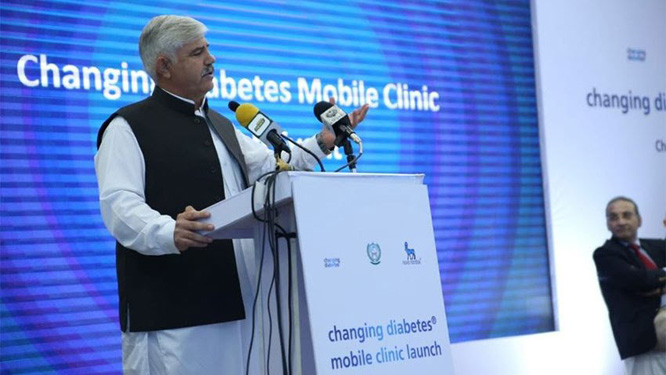
Lahore (Muhammad Yasir) The Department of Health, Khyber Pakhtunkhwa, under its project of Extension D-Talk and IFL (Insulin for life), announced the launch of Changing Diabetes® Mobile Clinic in collaboration with Novo Nordisk Pharma (Pvt.) Ltd. at a Press Conference held at the Chief Minister House, KP in the presence of Chief Minister, Mr Mahmood Khan,  Health Minister, Dr Hisham Iman Ullah, Secretary Health, KP, Mr M. Yahya Akhunzada, and Special Secretary Health, Dr Syed Farooq Jameel.

Addressing the Press Conference, Dr Hisham Iman Ullah said “Diabetes is a situation that needs to be addressed urgently as it poses a great burden on the economy of Pakistan. An initiative like Changing Diabetes® Mobile Clinic is certainly a step in the right direction”.

The Project Director, Prof. Dr A.H Aamir, shared that the objective of this collective initiative is to improve diabetes related outcomes through mutual collaboration and understanding of the local unmet needs of people with diabetes in the territorial areas of Khyber Pakhtunkhwa.

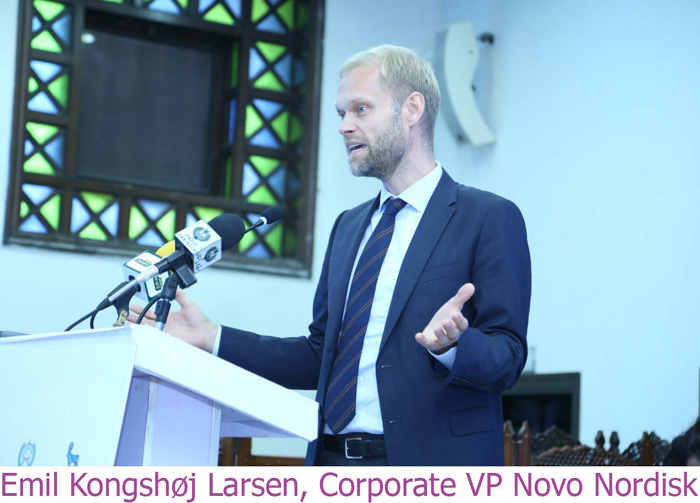
“As a collaborative partner, our focus is to create awareness by informing general public about diabetes and play our part in reducing the risk of complications associated with diabetes”, said Mr Emil Kongshøj Larsen, the Corporate Vice President of Novo Nordisk, who was also present at the occasion. At the same time, Mr Rashed Rafique, Vice President & General Manager of Novo Nordisk Pharma (Pvt) Ltd. expressed his views saying “Novo Nordisk in Pakistan is always at the forefront of improving diabetes care and this initiative is a depiction of our commitment to improve the lives of people with diabetes in the country”. 

The Changing Diabetes® Mobile Clinic will operate under supervision of Prof. Dr. A.H Aamir, Project Director, Extension D-Talk and Insulin for Life , a project of Health Department, Government of KP, across Khyber Pakhtunkhuwa.

Novo Nordisk is a global healthcare company with more than 95 years of innovation and leadership in diabetes care. This heritage has given us experience and capabilities that also enable us to help people defeat obesity, haemophilia, growth disorders and other serious chronic diseases. Headquartered in Denmark, Novo Nordisk employs approximately 41,600 people in 80 countries and markets its products in more than 170 countries. For more information, visit novonordisk.com, Facebook, Twitter, LinkedIn, YouTube.

MSS brings together key stakeholders to highlight why family planning is crucial for Pakistan’s development

MSS brings together key stakeholders to highlight why family planning is crucial for Pakistan’s development

Estimated 9,700 maternal deaths are reported in Pakistan every year, we all need to act immediately to change this situation

Lahore (Muhammad Yasir) Honouring International World Contraception Day celebrated earlier this week, Marie Stopes Society (MSS) hosted a seminar ‘Sehatmand ma, sehatmand bache, sehatmand Pakistan’ highlighting that a healthy mother leads to healthy children, thereby contributing to a healthy Pakistan. The Chief Guest of the seminar was honourable Secretary of Population Welfare Department, Mr. Zahid Ali Abbasi. The seminar stressed upon the need for family planning and birth spacing as the basic right of the mother and the child.

Other distinguished panelists at the seminar were Prof. Dr. Sadiah Pal, leading Gynecologist and a senior member at National Committee for Maternal and Neonatal Health (NCMNH), Syed Nasir Imam, Country Lead Public Affairs & Communication – Pfizer, Asma Balal, Country Director at MSS and Mr. Rashid Sami, Filmmaker. The panel was moderated by Dr. Xaher Gul, Director Strategy at MSS.

“Given the high rates of maternal mortality, childhood stunting and above 38% of the country’s population living in poverty, ensuring access to safe contraception directly contributes to the national development agenda,” said Asma Balal, Country Director at Marie Stopes Society.

“The need for family planning is staggeringly high in Pakistan. The Government of Sindh has been making concerted efforts to ensure the availability of contraceptives to the people of Sindh. Having said that, the grassroot challenges are present such as misperceptions, lack of trained health staff and others. To make a real difference in this area, there’s a need for awareness and proper counselling as well as combined efforts of the key stakeholders,” said Mr. Zahid Ali Abbasi in his remarks.

The event ended on a positive note where the role of the public and private sector was emphasized and new opportunities were discussed to create awareness about the issue and improve access to family planning services.


The Indus Hospital Partners with Getz Pharma to Make Karachi Rabies Free

Lahore (Muhammad Yasir) Getz Pharma Pvt. Ltd and Rabies Free Karachi (RFK), an initiative of the Indus Hospital Research Center(IHRC) are entering into a strategic partnership to eradicate Rabies from Karachi. As per this partnership, Getz Pharma will provide financial assistance, fund-raising support, and marketing expertise in an effort to eliminate Rabies from the society.
In Pakistan, over 160,000 dog bites occur annually, resulting in an estimated 2000 to 5000 human deaths annually. Most deaths from Rabies are not reported, since patients are taken to either faith healers or shrines. Compounding the issue of dog bites is the dwindling supplies of anti Rabies vaccine and Rabies immunoglobulin (RIG), both of which are essential for Rabies prevention after a bite from a rabid animal.

The vision of the RFK program is to implement an anti-Rabies program by implementing the One-Health Approach recommended by WHO, OIE and FAO, which aims to eradicate Rabies universally by 2030- (#zeroby30). This approach advocates Mass Dog Vaccination (MDV).It has been proven in many countries around the world that if at least 70% dogs are vaccinated in an area, it will provide herd immunity and eliminate Rabies in that area. Moreover, the problem of rapidly growing population of stray dogs can be reduced effectively by animal birth control (ABC) by surgically neutering or spaying dogs. MDV and ABC combined will considerably reduce the menace of stray dogs and eliminate Rabies

RFK undertook a pilot project of MDV and ABC in the fishing village of Ibrahim Hyderi from January to December 2018. After achieving success in the pilot phase the RFK initiative is now scaling up its program to cover all of Karachi in order to eradicate the incidence of Rabies in the city. According to the Program Director, RFK Dr. Naseem Salahuddin, the momentum has now become a movement to save the people from this dreaded disease.“We are grateful to Getz Pharma for their tremendous support, and hope that other members of civil society and government institutions will join in this movement.”

Getz Pharmais the Founding Partner of Indus Hospital Rabies Free Karachi program, which will be implemented effectively all across the city by investing in preventive measures. During the course of this project Getz Pharma will provide support for conducting epidemiologic research on dog bites and Rabies in Pakistan in order to record the factual statistics about their incidence. It will also support the marketing activities of the program, which will raise awareness about Rabies and promote kindness to animals. Most of the support will be utilized for the on-ground operations in the city for MDV and ABC. Regarding this partnership Getz Pharma’s MD and CEO Mr. Khalid Mahmood said, “Getz Pharma has been part of several initiatives in the fields of education, healthcare, culture, and environment. Rabies is a fatal disease that affects both humans and dogs and as a conscientious company that is concerned about public health we want to ensure that it is eradicated from Pakistan. Indus Hospital has been fighting on this front and we will do our part in combating Rabies.”

Today as the Indus Hospital and Getz Pharma sign this agreement for partnering on the Rabies Free Karachi initiative; they aim to save citizens from a dreaded disease. The plan is to achieve initial success in Karachi within two years and then to further scale up to the rest of the country.

PNDS to hold moot on Non-Communicable Diseases

Lahore (Muhammad Yasir Pakistan Nutrition and Dietetic Society (PNDS) on Wednesday announced to hold its first International Conference on Non-Communicable Diseases from November 1-3. The event to be held in Lahore was said being organized in collaboration with The Nutrition Society, United Kingdom and Ireland.

Dr. Romaina Iqbal, Chairperson of the Scientific Committee, highlighting relevance of the international conference mentioned that non-communicable diseases (NCD) are a major cause of poverty.

These are also a barrier to economic development and a serious threat to achievements of the Millennium Development Goals,” she said emphasizing the need to raise awareness about NCD among those at the helm of affairs at federal and provincial levels as well as practitioners and more importantly among the general public.


Khushhali Microfinance Bank sets up Medical Camps to provide Checkups

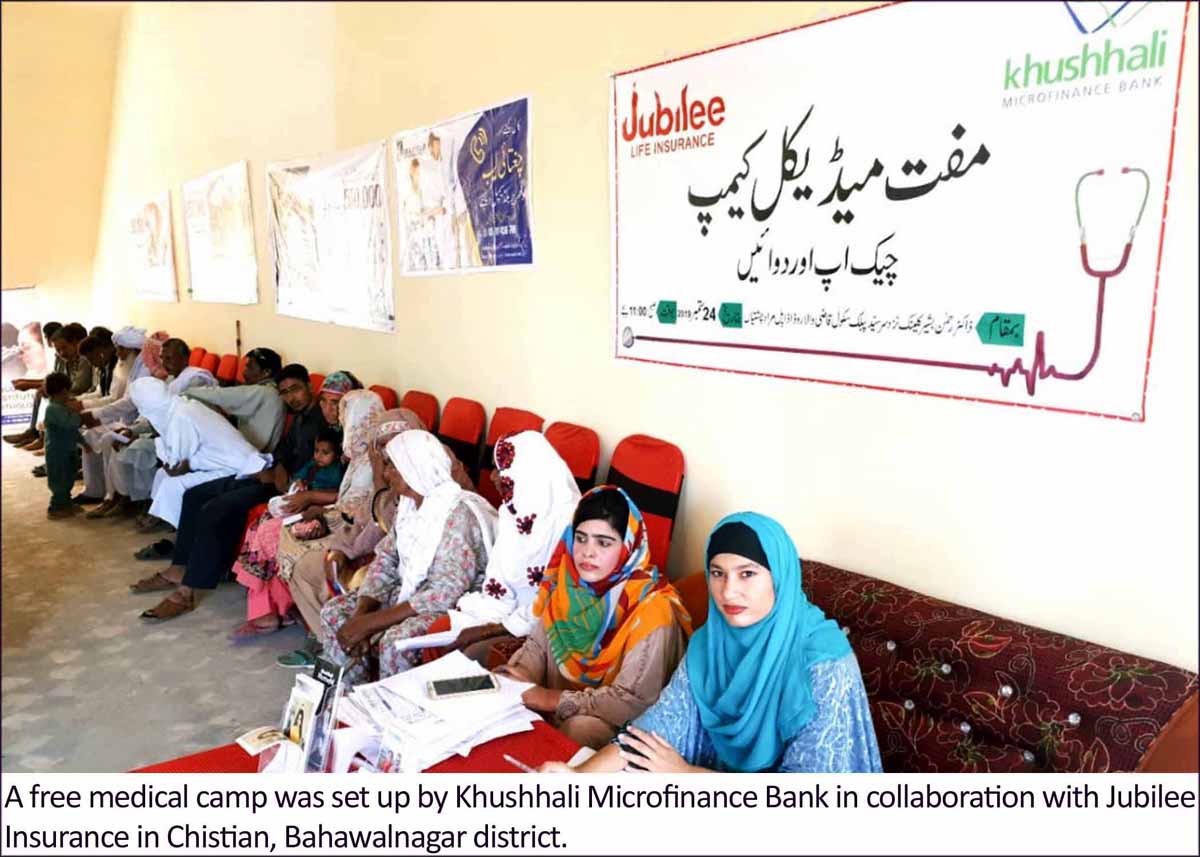
Lahore (Muhammad Yasir)  A one-day medical camp was held by Khushhali Microfinance Bank Limited (KMBL) in collaboration with Jubilee Insurance in the city of Chistian in Bahawalnagar district to provide free medical facilities like checkups, consultation sessions and medicines to the patients in the area.

It was the first medical camp arranged by a microfinance institute in the area. Doctors and paramedical staff were appointed at the camp to attend to the local people in general health care. An average of 160 patients were attended by each doctor and were provided with 5 days’ supply of free medicines.

General public of the area were informed by announcement banners and multiple area visits by KMBL officers. Moreover, the camp had a well-organized token system to handle the large number of patients. Senior citizens were given high priority for all medical facilities. Cold water was also available for all visitors.

Talking on the occasion, KMBL President, Ghalib Nishtar shared his views, “I’m proud to say that KMBL, among its other community initiatives, has now ventured into provision of free health services for the underprivileged. These medical camps are organized to provide basic healthcare services and general check-up to the aged and the underprivileged as well as to sensitize them on health care”.

As a part of its non-financial service initiatives, Khushhali Microfinance Bank Limited (KMBL) has organized series of medical camps in collaboration with Jubilee Insurance in rural areas where the availability of such medical facilities is highly limited. More than 30 such medical camps have been set up during this year till now by KMBL in areas with poorer populations.

Facebook combating vaccine related misinformation in Pakistan

In order to combat misinformation related to vaccine, Facebook has launched an in-product education tool that allows its users in Pakistan to connect to information about vaccines from the World Health Organization (WHO).

This in-product education unit, available in Urdu, will help to connect people to authoritative information about vaccines and will link off-platform when people search any vaccine-related keyword searches on Facebook and they receive an invitation to a group that discusses vaccines.

We are working to tackle vaccine misinformation on Facebook by reducing its distribution and providing people with authoritative information on the topic, said the official statement issued by Facebook.

We will reduce the ranking of groups and pages that spread misinformation about vaccinations in News Feed and Search. These groups and pages will not be included in recommendations or in predictions when you type into Search.

When we find ads that include misinformation about vaccinations, we will reject them. We also removed related targeting options, like “vaccine controversies.” For ad accounts that continue to violate our policies, we may take further action, such as disabling the ad account, Facebook said.

Facebook won’t show or recommend content that contains misinformation about vaccinations on Instagram Explore or hashtag pages.

It is exploring ways to share educational information about vaccines when people come across misinformation on this topic.

The social media platform may also remove access to our fundraising tools for Pages that spread misinformation about vaccinations on Facebook.

Leading global health organizations, such as the World Health Organization and the US Centers for Disease Control and Prevention, have publicly identified verifiable vaccine hoaxes. If these vaccine hoaxes appear on Facebook, we will take action against them.

For example, if a group or page admin posts this vaccine misinformation, we will exclude the entire group or page from recommendations, reduce these groups and pages’ distribution in News Feed and Search, and reject ads with this misinformation.

We also believe in providing people with additional context so they can decide whether to read, share, or engage in conversations about information they see on Facebook. We are exploring ways to give people more accurate information from expert organizations about vaccines at the top of results for related searches, on Pages discussing the topic, and on invitations to join groups about the topic. We will have an update on this soon, the Facebook statement said.

Congo outbreak – By Dr. Saima Salman

A TYPICAL day in the emergency department consists of a perpetual stream of patients coming in and out. Our senses have gotten accustomed to human suffering — perhaps it is our survival mechanism. In rolls a young man on a stretcher, in his mid-20s, barely breathing. His accompanying cousin provides a history of gastroenteritis and treatment is started on the lines of diarrhoea gone horribly wrong. The search for intravenous access proves futile. His veins have simply collapsed.

“Doctor, I cannot find IV access!”

Multiple attempts and ultrasound guidance allows us to finally establish an IV line. Resuscitation is underway. Team work at its best: glorified dramatically in television shows and movies, but far more mundane in real life.

“He is crashing, there is no pulse. We are starting chest compressions!”

CPR is started and out pours blood — from his mouth, his nose, from all the sites where intravenous access was attempted. Can this be haemorrhagic fever? We weren’t given a history of fever, were we? A quick retreat into the new crop of attendants that have come reveals that the patient was indeed running fever for a few days, and does have a positive history of animal exposure.

“Maintain strict contact precaution, I want infection control and infectious diseases departments on board. I want O negative blood stat!” Trying to sound calm under these circumstances, with not only the patient’s life at stake but also that of your team members, is not easy.

“Doctor, I have blood on my hands, there is blood on the floor. The more compressions we do, the more profuse is the bleeding!”

Amidst all these statements, his heart starts beating. A collective sigh of relief; he is intubated and artificial breaths are started. All laboratory investigations are sent to ensure continuity of care, to try and find the answer to all the whys.

“He is coding again, start CPR!” and the exercise begins one more time. One, two, three, four five, six…

Out pours blood, almost equal, perhaps more than what we are transfusing. Infection control and infectious diseases departments are standing by, witnessing our losing battle. Holding his cold hands, at times you wish that some life from you might find its way into his empty, lifeless torso.

Wailing and crying outside — his mother has arrived. But we have lost him and the code is called off. There is sanity amidst chaos: explaining precautionary measures to family members, tracing any persons who have had contact with the deceased, and assessing for preventive treatment. Informing the ambulance taking the dead body about the probable diagnosis is a task in itself.

Our job is not over yet. Now comes the debrief and panic. Did we miss anything? Is there anything more that we could have done? All the healthcare workers who may have been exposed must be listed. What about the nurse who is six-months pregnant? Or the resident who has just been through a traumatic, life-changing personal experience and already experiences anxiety? Do I carry it back home to my kids, my parents? Do I need to be put on prophylactic therapy with its multiple side effects? I am deeply unsettled waiting for the lab results to come back. What if they are positive? What if they are negative?

Similar scenes are being played out in emergency rooms across Karachi. The recent mass exposure to animals over Eidul Azha in combination with the heavy rains have led to a serious quagmire, both metaphorical and literal.

Crimean-Congo haemorrhagic fever is a viral haemorrhagic fever, spread through Ixodid (hard) ticks, found in wild and domestic animals such as cattle, goat and sheep. The virus is transmitted to humans through contact with infected ticks and animal blood. Human-to-human transmission can occur through exposure to infected blood or bodily fluids.

In spite of warnings issued from various forums, unsafe slaughter practices, infected animals and deplorable sanitary conditions have resulted in multiple cases being diagnosed across Karachi, with some resulting in mortality. This year, the outbreak is lasting longer and behaving unusually.

Healthcare subject specialists are doing their best, but is it enough? The general public needs to understand their role in contributing to such outbreaks, and how they can therefore prevent them. Dealing with such diseases is resource intensive, especially when precaution is better than cure.

It is therefore incumbent on us to be more responsible and proactive in ensuring better and safer slaughter practices. Karachi needs to have specific designated areas for slaughter outside the city limits and not in our galis and mohallas. Offal and other waste needs to be disposed off hygienically. It is essential that such an avoidable crisis is prevented from ever occurring again.

The writer is a consultant at The Indus Hospital, Karachi.


(This article was also published in Dawn on September 04, 2019)

Stimulus-ClimateLaunchpad Pakistan Final Determines

Stimulus-ClimateLaunchpad Pakistan Final Determines the Next Generation of Clean-Tech Entrepreneurs Ready to Fix Climate Change One Start-Up at a Time

Karachi (Muhammad Yasir)  The final round of Stimulus -ClimateLaunchpad green business ideas competition with a primary focus on identifying climate change solutions, was held in Karachi, Pakistan on August 31. The competition attracted 100 clean-tech entrepreneurs from across the country who submitted their applications and the top 20 teams competed to determine two best teams that will represent Pakistan at the Global Final competition later this year.

ClimateLaunchpad is the world’s largest green business ideas competition with the mission to unlock the world’s clean-tech potential that addresses climate change. Pakistan is participating for the first time in the ClimateLaunchpad program along with 50+ countries.

Geo Thermal Pakistan from Islamabad won Stimulus-Climatelaunchped Pakistan`s first edtion.The second prize winner Goats for water from Karachi and Fruges from Karachi came in third.

Hira Wajahat, National Lead ClimateLaunchpad Pakistan: “With the first edition of the ClimateLaunchpad competition in Pakistan, it is clear that climate change challenges offer massive business opportunity. Over 100 clean-tech entrepreneurs submitted their ideas and the top 20 have presented their business pitch today. We are excited about these entrepreneurs finding commercial, scalable solutions in a variety of market segments and getting ready for global impact.”

Parallel to the ClimateLaunchpad Pakistan Final, Stimulus organized the Pakistan Clean-Tech Innovation Conference that hosted a number of distinguished business leaders to deliberate critical climate concepts that have a direct impact on Pakistan’s economy and its national well-being. Speakers from various industries shared their experiences and thoughts on steps that need to be taken to overcome these challenges.  

Speaking at the occasion, Mr Malik Amin Aslam, Federal Minister and Advisor to the Prime Minister on Climate Change said that: “Pakistan’s takes its role seriously as a responsible member of the global community in combating climate change. The Ministry of Climate Change is giving due importance to mitigation efforts in sectors such as mobility and transport, forestry, industries, energy, urban planning, agriculture and livestock etc. And these efforts require innovation – new ways of thinking about old problems, and invention – new solutions to existing challenges.”

He also stated that “It is very encouraging to see efforts of organizations like Stimulus supporting programmes such as ClimateLaunchpad to introduce and promote business start-ups in the country through green-business and clean-tech innovation.”

Mr Noman Hasan, Executive Director, Lucky Cement spoke about various initiatives undertaken by Lucky Cement for climate change mitigation: “We place the promotion of environmental sustainability at the highest echelon among our business practices. Signing up with ClimateLaunchpad Pakistan was another significant way for Lucky Cement to lead the way for climate change mitigation efforts outside our immediate business environment. Lucky Cement is committed to enhancing the local economy by supporting home grown entrepreneurs and innovation. We hope to stimulate others present here today to take similar leaps of faith in their professional and personal capacities so that we may all collectively realize the promise of a greener future for Pakistan.”

Mr Habib Haider, Head of External Relations at Shell Pakistan spoke about “The transition to lower-carbon energy will feature enormous change in the types of products and services Pakistani consumers need. This competition is the perfect example of how we can achieve the shift to a lower-carbon future by bringing together the entrepreneurial innovative needed for this change. The challenge of tackling climate change can only be met through unprecedented collaboration.

We welcome efforts made by government of Pakistan and organizations like Stimulus, the local partner of Climate Launchpad, to collaboratively work towards supporting long-term climate goals that balance environmental pressures with development opportunities. “

Stimulus is an innovative consulting firm that intends to create awareness, symmetry, engagement and impact via the government, foreign missions and most significantly with the private sector to develop a clean technology / renewables eco-system for Pakistan. For this reason, Stimulus has also signed up with the Ministry of Climate Change for the Prime Minister’s Clean Green Pakistan Initiative.