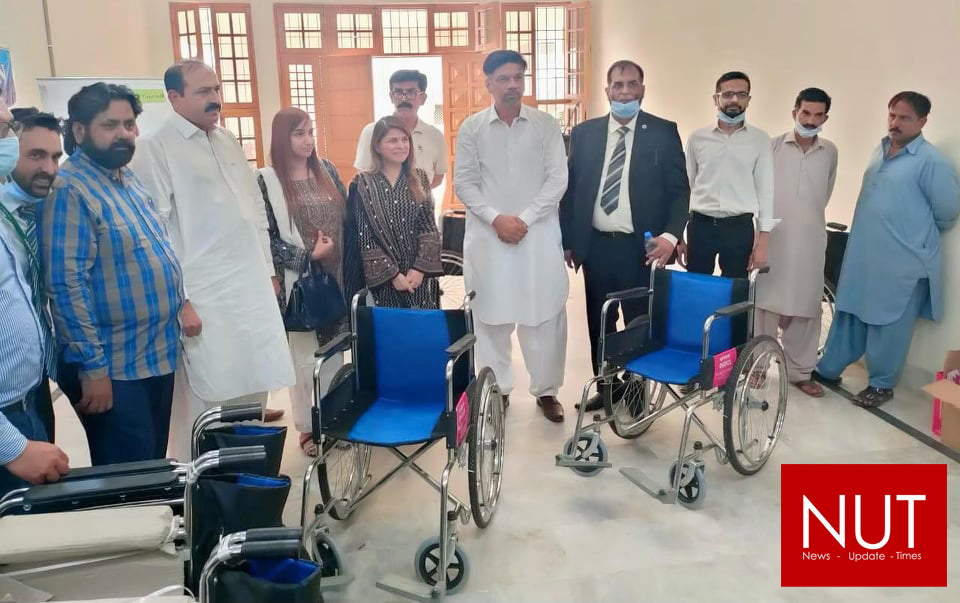
Cooperation of OGDCL, Dawood Global Foundation handed over wheelchairs to M.S Civil Hospital Hyderabad

Karachi (Muhammad Yasir) Karachi: With the cooperation of OGDCL, DAWOOD Global Foundation handed over wheelchairs to M.S Civil Hospital Hyderabad, as part of the Dawood Global Foundation’s “LADIESFUND 1000” initiative to give 1000 wheelchairs to those in need across Pakistan. Agha Mansoor Hyder, the representative of OGDCL appreciated the efforts of Dawood Global Foundation he also added that OGDCL always try to encourage the social welfare activities and today it has been proved.

Miss Tara Uzra Dawood, President, Dawood Global Foundation LADIESFUND, thanked OGDCL Management especially Mr. Saleem Baz Khan, the general Manager CSR of company, for supporting her foundation’s dream with this bismillah giving of the first wheelchairs. “We as a society must be there for our citizens struggling and in need. We are very humbled to be able to give these wheelchairs today and with the help of wonderful different collaborators, we hope to give wheelchairs across Pakistan.” Dr. Siddique Pahore thanked Dawood Global Foundation as well as OGDCL, the collaborator for this batch of 40 plus wheelchairs.

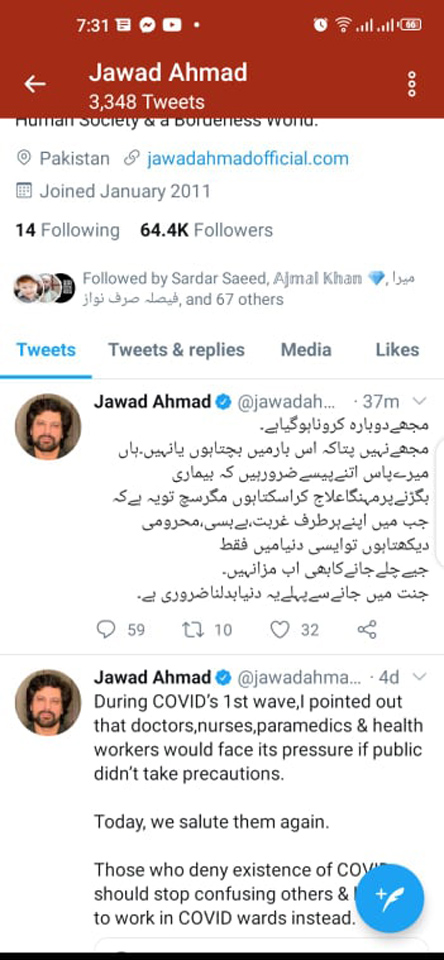
Chairman Barabri Party and well-known singer Jawad Ahmed fell victim to corona virus for the second time

Lahore (Muhammad Yasir) Well known Singer and Social Activist Jawwad Ahmad fell victim of Corona Virus for the second time. He have quarantined himself at home after being tested positive for corona covid 19. Jawwad Ahmad, Chairman Barabari Party Pakistan, shared this sad news with his fans and public via his official Twitter Handle. Singer Jawad Ahmed’s tweetee that: I have to do it again. I don’t know if I will survive this time or not: Jawad Ahmed While sharing his views he added that I have enough money to pay for expensive treatment, but the truth is that when I see poverty, helplessness, deprivation all around me, I feel very upset for the common citizens and it is no longer fun to just live in such a world. He vowed his mission to bring positive change once again and tweeted that it is necessary to change the world before going to next world. It is pertinent to mention that earlier, Jawad Ahmed was infected with corona virus on November 1 and he defeated it with prayers of his well wishers. Fans are sharing their concern for the health of star singer and wishing him speedy recovery.

NewsupdateTimes is also with Jawwad Ahmad and wish him best of health and complete recovery within a shory span of time.

Argentine president tests positive for COVID-19

NUT (DESK) Argentine President Alberto Fernandez announced early Saturday that he has tested positive for the coronavirus.

“The antigen test I had today after having a fever of 37.3 and mild headache resulted positive,” Fernandez said on Twitter.

He said he has gone under quarantine even before the result was known and added that people he came into contact with in the last 48 hours were notified.

Fernandez said his condition was good even though he received the news on his birthday.

The 62-year-old president received his first dose of the Russian Sputnik V COVID-19 vaccine on Jan. 21.


Single-dose CanSino COVID-19 vaccination from April 5

NUT (Web Desk) Federal Minister for Planning, Development and Special Initiatives Asad Umar chaired a meeting of the (NCOC) here in Islamabad to review the Covid-19 situation.

The NCOC session held with Asad Umar in the chair through video link and co-chaired by National Coordinator NCOC Lieutenant General Hamood Uz Zaman Khan.

The meeting was apprised that the single-dose CanSino Covid vaccine administration would commence in all the provinces from Monday onwards.

The forum emphasized that all Covid Vaccination Centers should ensure to facilitate above 65 years age individuals who already have been allowed walk-in vaccination facility.

The NCOC was informed that keeping in view the increasing Covid-19 disease spread, 594 more oxygen beds have been added to dedicated Covid health facilities with special focus on Swat and Peshawar.

It was also decided to enhance the monitoring mechanism to check violation of preventive COVID SOPs.

World Immunisation & Logistics Summit concludes

The HOPE Consortium and leading experts pledge to close the global immunisation gap

  •  Government ministers from the UAE, Bahrain, Saudi Arabia, UK, Nigeria, and Kenya, came together to discuss how the world can bridge the geographical gap in vaccine distribution.
  • The Chair of the Executive Board at WHO, Group Medical Director of International SOS, Director-General of the Red Cross, Regional Director of IATA in Africa & Middle East and representatives of the African Union joined discussions on the global healthcare system’s responsiveness to the pandemic.

Abu Dhabi (Muhammad Yasir) Abu Dhabi’s HOPE Consortium and world-leading experts marked the end of The World Immunisation & Logistics Summit today by pledging to close the global immunisation gap. Through a series of key discussions with global healthcare professionals, philanthropists, decision makers and senior government officials, the consensus was formed that innovation, ingenuity and inclusiveness are key to finding a global solution to the COVID-19 pandemic and ensuring equitable access to vaccines for all.

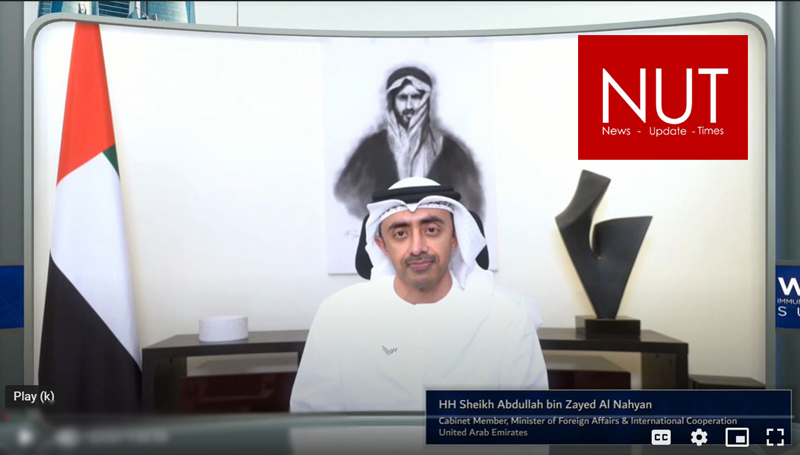
H.E. Abdullah bin Mohammed Al Hamed, Chairman, Department of Health – Abu Dhabi, delivered the opening address titled ‘Innovation, ingenuity and inclusiveness: Finding the human solution to a global challenge’. He spoke of the pace at which countries and communities had collaborated since the pandemic began. “In 2020 and so far this year, the COVID-19 global pandemic continues to be one of the largest and most complex global challenges in modern times. It’s incredible how the world has come together to tackle this issue that transcends communities, borders and continents,” he said.

Discussing the resilience and success that the world has shown, the Chairman said: “There are incredible technology and scientific advancements that have been developed as a result of the pandemic. Under one unified goal, countries around the world are working tirelessly to find solutions.”

Speaking of the achievements of Abu Dhabi and the HOPE Consortium to date, H.E. Abdullah explained: “We strongly believe no one can do this alone. Together, we have a capacity to handle over six billion doses of the vaccine this year, and we are already increasing this to deliver over 18 billion vaccine doses by the end of 2021, with the capacity to deliver this anywhere in the world. We believe the HOPE Consortium is a catalyst for even greater collaboration with partners worldwide.”

 “No one is out of this pandemic until everyone is out of this pandemic,” he concluded.

Robert Mardini, Director-General International Committee of the Red Cross then delivered a keynote address on ‘Equitable access to vaccines’, during which he said: “The COVID-19 pandemic has shown us that global solidarity is not only morally right, but strategically smart. The worst could be yet to come, for all of us, unless we succeed in ensuring equitable access to the vaccine in every part of the globe. Let us hope that the spirit of humanity and unity bringing different sectors together at this Summit will be an example for the international community everywhere.”

The first panel of the day themed ‘Demand planning, preparedness and overcoming challenges in vaccine administration’, began with distinguished global experts that included Prof. Nachman Ash, COVID-19 National Coordinator, Israel;  Nadhim Zahawi MP, Parliamentary Under Secretary of State and Minister for COVID Vaccine Deployment- UK; Dr. Farida Al Hosani, Official Spokesperson UAE Health Sector and  Manager, Communicable Disease Department, Abu Dhabi Public Health Center; and Rashed Saif Al Qubaisi, CEO Rafed.

These experts addressed the best ways to coordinate and overcome the challenges of a mass global COVID-19 immunisation programme, and discussed lessons learned from regional vaccination efforts. In particular, the group spoke about how COVID-19 has tested the preparedness and responsiveness of healthcare systems around the world. These healthcare systems now face an unprecedented challenge as countries work to secure vaccines for their citizens in order to achieve mass immunisation as quickly as possible.

The ‘Focus on Middle East: Coordinating vaccine logistics operations in the Middle East’ panel looked at how remote and conflict areas will be able to gain access to the vaccine., with the Middle East region being home to some of the highest inoculation rates in the world. The panelists examined vaccine programme implementations, the region’s ongoing challenges and how they are being addressed. Finally, the panelists discussed the role the Middle East can play in supporting the efficient and effective delivery of vaccines to other parts of the world.

Panelists for this session included: H.E. Dr. Mariam Ibrahim Al Hajeri, Assistant Undersecretary of Public Health Ministry of Health, Bahrain; H.E. Dr. Hani Jokhdar, Undersecretary of Public Health, Ministry of Health, Saudi Arabia; H.E Dr Hussain Abdul Rahman Al Rand, Assistant Undersecretary for Health Centers and Clinics and Public Health, Ministry of Health and Prevention, UAE; Simon Bland, CEO, the Global Institute for Disease Elimination (GLIDE); and Dr. Rana Hajjeh, Director of Programme Management , WHO-EMRO.

The importance of supply chain partnerships in bridging geographical gaps and overcoming financial and infrastructural challenges was the main topic of discussion during the ‘Focus on Africa: Overcoming complex logistical challenges to ensure equitable access to vaccinations across Africa’ panel. With an estimated total population of more than 1.2 billion people across 54 countries, Africa presents a significant funding and logistical challenge for authorities and NGOs working to ensure equitable access to vaccines across all communities. The panel discussed how supply chains can provide vaccine access to the continent, with perspectives from a range of experts including the Hon. Dr. Osagie Ehanire, the Minister of Health of Nigeria; Sen. Mutahi Kagwe EGH – Cabinet Secretary, Ministry of Health, Republic of Kenya; David Hadley, CEO , Mediclinic Middle East; Kashif Khalid, Regional Director- Africa & Middle East, IATA; and Bruce Mokaya Oriana, ICRC Head of Delegation in Addis and Permanent Representative to the Africa Union.

The final panel discussion of day two of the Summit was ‘Focus on Asia: Vaccine production and distribution across Asia’.

Panelists in this session included: Dr. Harsh Vardhan, Union Minister for Health & Family Welfare, Science & Technology and Earth Sciences, and Chairman, Executive Board, World Health Organization; Madhav Kurup, Regional CEO MESA, Hellmann Worldwide Logistics; and Dr. Pascal Rey-Herme, Co-Founder and Group Medical Director, International SOS.

The panelists shed light on the latest developments in vaccine production throughout the region. The panel discussed the current challenges facing distribution, and how further collaboration and partnership agreements can help overcome supply chain bottlenecks, especially as they relate to reaching remote and hard-to-reach areas. With millions of doses already dispatched, the current challenges facing distribution around the region, and how further collaboration and partnership agreements support the overall performance of the supply chain.

During the panel, Dr. Pascal Rey-Herme said: “Continuous worldwide collaboration and discussion around the current immunisation situation is critical. I am honored to be part of this forum. International SOS has been called on to support in many ways during the pandemic. From evacuations to helping clients with their return to business and safe travel, and now, increasingly, regarding vaccine programmes. As important as the production of vaccines is, efficient and widespread distribution is just as significant. We must not leave any part of the world behind in the fight against COVID-19.“

Over 4,000 senior decision makers, government officials, industry stakeholders, NGOs, and leading academics registered to attend the Summit. It provided an open forum for global players to discuss the logistical challenges associated with vaccine transport and distribution with the aim of finding solutions to achieve mass and equitable worldwide vaccine access.

The HOPE Consortium is a public-private partnership that has developed into a leading international effort, broadening its global transport and delivery capabilities by attracting new partners including Agility, Aramex, Bolloré Logistics, CEVA Logistics, DB Schenker, DHL, FedEx Express, Expeditors, Hellmann, Kuehne + Nagel, MICCO Logistics, RSA Global, and UPS.


*Introduction of Modern Medical Equipment by the Patients’ Aid Foundation (PAF) at JPMC*

Lahore (Muhammad Yasir) The Patients’ Aid Foundation (PAF) is a non-profit organization which was formed by a group of concerned citizens in the year 1990 with the aim to help alleviate the burden on Jinnah Postgraduate Medical Centre (JPMC) to ensure that quality healthcare is accessible to the thousands of patients who visit JPMC with hopes of getting the treatment they need. The Patients’ Aid Foundation (PAF) was formally registered under the Societies Registration Act XXI of 1860.
Basic healthcare is a right that every citizen is entitled to and the Patients’ Aid Foundation (PAF) makes sure that they do not just provide healthcare but quality healthcare through introducing state-of-the-art modern medical equipment at JPMC. These modern equipment are extremely useful as they provide precise details that are otherwise not possible to get. They also provide an accurate diagnosis and treatment but unfortunately these modern facilities are considered to be a luxury. Diagnosis and treatment through these modern medical equipment are very expensive and therefore only those who are privileged can afford them. However, the Patients’ Aid Foundation (PAF) has worked relentlessly to ensure that these modern medical equipment are available to the deserving patients of lower income groups. The treatment and facilities which the Patients’ Aid Foundation (PAF) provides with the collaboration of the JPMC officials and the Government of Sindh are nothing short of that of a private institute and that too completely free of cost.
CyberKnife, Tomotherapy, PET-CT, 1.5 Tesla Magnetic Resonance Imaging (MRI), Dexa Scanning Machine and Mammography Machine are some of the equipment that they have been introduced at JPMC. 
Cancer in the leading cause of deaths in Pakistan, contributing to a total 8% of deaths each year, that mostly occur in the lower income groups and it is expected to rise further. Most low-income families are not able to afford the treatment they need due to the fact that modern facilities are not easily affordable for them. However, the Patients’ Aid Foundation (PAF) has completely revolutionized cancer treatment by introducing modern medical equipment such as CyberKnife and Tomotherapy which are available to all without any charges. This way, the Patients’ Aid Foundation (PAF) has made quality medical treatment readily available for lower income groups.
CyberKnife is a robotic treatment which is able to treat cancerous tumors through a painless procedure of precise targeted radiation. This modern equipment is able to move in such a way that helps minimize radiation to surrounding healthy tissues, which would otherwise be at risk if manually operated. It is considered to be a miraculous treatment for high risk cancer patients and has a very high success rate. The cost of one session per patient goes up to PKR 100,000 but JPMC has become the only hospital in the entire world providing free of cost cancer treatment through the 2 CyberKnifes installed with the help of the Patients’ Aid Foundation (PAF). 
The Patients’ Aid Foundation (PAF) has also inaugurated the multimillion dollar Tomotherapy (Radiaxact X9) machine for the treatment of cancer. It has a built CT scanner that is able to target tumors in a 360-degree circle. This procedure is extremely effective with stage 1 through stage 4 radiation-sensitive cancers and just a few sessions, results are evident.
One session can cost upto PKR 80,000 but at JPMC this specialized cancer treatment is provided free of cost with the help and support provided by the Patients’ Aid Foundation (PAF). 
PET-CT Positron Emission Tomography – Computed Tomography (PET-CT), uses radioactive materials along with a special camera to monitor organ and tissue functions at a cellular level. With the help of PET-CT scan, medical diagnosis can be made through greater precision by producing 3D views which conventional PET imaging scans lack.  The PET-CT scanner is another revolutionary medical equipment that the Patients’ Aid Foundation (PAF) has introduced at JPMC which has helped detect diseases, particularly cancer, far more effectively. At any private institute, the cost of one session can go up to PKR 70,000, however, the Patients’ Aid Foundation (PAF) has ensured that this facility is available at JPMC completely free for those who are unable to otherwise afford it.
The Patients’ Aid Foundation (PAF) also increased the number of 1.5 Tesla Magnetic Resonance Imaging (MRI) machines that provide very precise details of body parts through high resolution scanning. JPMC treats multiple patients’ every day, without any charges whatsoever, through this non-invasive radiation free equipment installed by the Patients’ Aid Foundation (PAF) which would otherwise cost up to PKR 20,000 at any other institute. 
The Patients’ Aid Foundation (PAF) has also installed dual energy X-Ray absorptiometry machines at JPMC, known as the Dexa Scanning Machines, which are able to examine the bone health of women. This modern equipment is used to test the bone mass and density for detection of osteoporosis of deserving female patients. Osteoporosis is a condition that mostly affects women after menopause, however it may affect men and children as well. Women from low-income families might not even be aware of this problem and therefore with the inception of Dexa Scanning Machines at JPMC, the Patients’ Aid Foundation (PAF) has helped provide these scans free of cost which normally cost around PKR 5,000 at other facilities. 
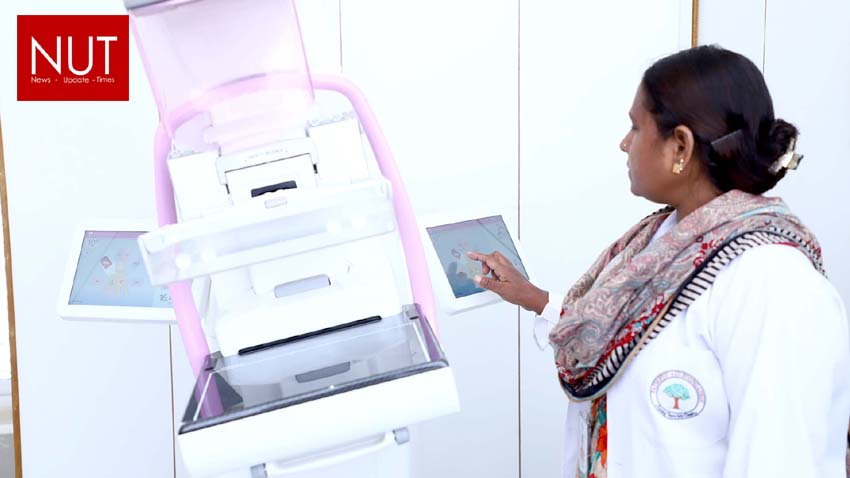
Moreover, the Patients’ Aid Foundation (PAF) has installed Mammographic Machines at JPMC for human breast examination and early detection of breast cancer. With the help of screening mammography, the risk of death due to breast cancer is reduced. This particular equipment is very useful when it comes to detecting different kinds of breast cancer, including invasive ductal and invasive lobular cancer. It also helps detect small tumors and this allows women with far more treatment options. One session per patient can cost up to PKR 5000, however, with the help and support provided by Patients’ Aid Foundation (PAF) this facility is provided free of any charge at JPMC.
With the inception of this modern, cutting-edge technology, the Patients’ Aid Foundation (PAF) has revolutionized healthcare services available to the masses.  With the support of generous donors, the JPMC officials and the Government of Sindh, the Patients’ Aid Foundation (PAF) is able to serve their motto “Humanity Meets Healthcare” by making the best healthcare services available to all the deserving patients of Pakistan. 

Speakers at The World Immunisation & Logistics Summit

Globally Acclaimed Leaders in Healthcare and Philanthropy join Lineup of Speakers at The World Immunisation & Logistics Summit

  • Senior decision-makers including Director-General of WHO, UNICEF, Gavi, Bill & Melinda Gates Foundation and Novavax among speakers.


Abu Dhabi –  Acclaimed global healthcare and philanthropic professionals, decision makers, experts and senior world government officials are joining the upcoming World Immunisation & Logistics Summit, a two-day event hosted by Abu Dhabi’s HOPE Consortium, to discuss a unified global approach to overcoming the COVID-19 pandemic, outlining how success can only be achieved through solidarity and international collaboration.

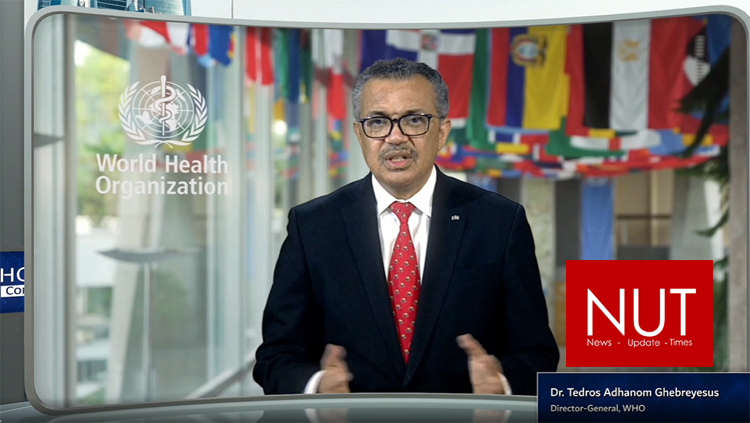
Global speakers include Dr. Tedros Adhanom Ghebreyesus, Director-General, WHO, Henrietta H. Fore, Executive Director of UNICEF, Prof. José Manuel Barroso, Chair of the Board of Gavi, the Vaccine Alliance, Mark Suzman, CEO, Bill & Melinda Gates Foundation, Stanley C. Erck, President and CEO, Novavax, Nadhim Zahawi MP, Parliamentary Under Secretary of State and Minister for COVID Vaccine Deployment, UK, Dr. E. Osagie Ehanire, Honourable Minister of Health, Nigeria, Prof. Nachman Ash, COVID-19 National Coordinator, Israel, and Wesley P. Wheeler, President, UPS Healthcare.

They will join H.E. Abdullah Bin Mohammed Al Hamed, Chairman, Department of Health, Abu Dhabi, H.E. Falah Mohammed Al Ahbabi, Chairman, Abu Dhabi Ports, Chairman of Abu Dhabi Department of Municipalities and Transport (DMT), H.E. Mohamed Ali Al Shorafa Al Hammadi, Chairman, Abu Dhabi Department of Economic Development, and Honorary Chairman of Hope Consortium in discussing topics such as ensuring vaccine access for developing countries, addressing challenges relating to logistics and supply chain integrity, and feature focus panels on the Middle East, Africa, and Asia.

The Summit is set to welcome over 1,000 senior decision makers, government officials, industry stakeholders, NGOs, and leading academics on March 29th – 30th, 2021. It will provide an open forum for global players to discuss the logistical challenges associated with vaccine transport and distribution with the aim of finding solutions to achieve mass and equitable worldwide vaccine access.

H.E. Mohamed Ali Al Shorafa Al Hammadi, Chairman, Abu Dhabi Department of Economic Development, and Honorary Chairman of Hope Consortium, said: “The HOPE Consortium reflects Abu Dhabi’s commitment to support regional and international efforts to combat the pandemic, in a manner that strengthens its strategic relationships with the consortium partners and leverages Abu Dhabi’s strategic positioning and outstanding logistics capability.”

He also stressed that “the Summit will come up with significant results through constructive discussions, which will in turn speed up the joint international efforts for hope and return of normal life to the rest of the world.

H.E. Falah Mohammed Al Ahbabi, Chairman of Abu Dhabi Ports and Chairman of Abu Dhabi Department of Municipalities and Transport (DMT), said: “The Summit is a testament to our ongoing commitment and dedication in cementing Abu Dhabi’s leading position as a trade and logistics hub to best serve humanity, with Abu Dhabi Ports playing a key role in making this possible through its advanced logistic capabilities. We will work with partners around the world to establish Abu Dhabi Ports as the central point for the distribution of vaccines and other pharmaceutical products and supplies, through our world-class cold storage and ultra-cold facility. This is not only for the COVID-19 pandemic, but also for the future of the world’s healthcare.

The Summit will play a significant role in generating new global partnerships needed for the next phase in overcoming the pandemic, which is perhaps one of the greatest logistical challenges in recent history. We strongly emphasise the importance of global and multi-lateral collaboration and look forward, with the support of our wise leadership, to contribute to this endeavor in any way possible.”

UNICEF Executive Director Henrietta Fore said: “The summit is an opportunity to reaffirm that strong and enduring private-public partnerships are critical to the fight against COVID-19. Only by working together can we help every country get back to normal faster, and restore hope that children can return to school, that communities can rebuild and that economies can recover.”

Prof. José Manuel Barroso, Chair of the Board of Gavi, the Vaccine Alliance, stressed: “Global and local supply chains have been critical to the success of deliveries and rollout of tens of millions of vaccine doses through COVAX.” Barroso added: “HOPE Consortium and the World Immunisation & Logistics Summit are excellent initiatives that clearly demonstrate the leadership of the United Arab Emirates in building innovative public private partnerships and bringing the world together to address the vital challenge of delivering COVAX to the last mile – their work will help us meet our goal of ending the acute phase of the pandemic.”

Nadhim Zahawi MP, Parliamentary Under Secretary of State and Minister for COVID Vaccine Deployment, UK, added: “As the UK’s Vaccines Minister, I am enormously proud to play my part in this national success story – it’s a huge team effort. More than 25 million of our adults have now received their first dose, cementing the status of our vaccination rollout as the fastest across Europe.

“The UK is a proud multicultural nation, home to people of myriad ethnicities and religious beliefs. We are working closely with faith leaders and grassroots organisations to give people in diverse communities across the country the best advice and information about the universal benefits of vaccination.

“We have been clear from the beginning that vaccines are the way out of this pandemic. They will protect people from this dreadful virus and save thousands of lives. We are backing worldwide vaccination efforts through our leading role in COVAX, and I am delighted to be joining figures at the heart of the global fightback against Covid-19 at this Summit.”

Ashish Koshy, CEO, G42 Healthcare, added: “The COVID-19 pandemic has impacted nations and people across the globe and through it all, a critical element has stood out, and that is the value of collaboration and partnerships when facing a crisis of this scale. At G42 Healthcare, we are proud of the role we continue to play bringing together our technological capabilities along with the expertise and knowledge of various partners and government entities to advance healthcare solutions and ultimately achieve a COVID-19 free world. We look forward to our participation in The World Immunisation and Logistics Summit to share learnings and learn anew, explore opportunities, and work together to future proof the health of our nations.”

A fully interactive, virtual 3D exhibition and networking zone will take place alongside the Summit offering attendees the opportunity to meet and network with key local and international stakeholders. The recently released agenda provides a preview on the topics and delegates, and can be viewed here. To register and secure your slot at the virtual Summit, please click here.

The HOPE Consortium is a public-private partnership which has developed into a leading international effort, broadening its global transport and delivery capabilities by attracting new partners, including Agility, Aramex, Bolloré Logistics, CEVA Logistics, DB Schenker, DHL, FedEx Express, Hellmann, Kuehne + Nagel, MICCO Logistics, RSA Global, and UPS.


Comprising leading Abu Dhabi entities, the Department of Health – Abu Dhabi, Abu Dhabi Ports, Etihad Cargo, Rafed, SkyCell, and Maqta Gateway, as well as a wide body of global logistics players, the HOPE Consortium is developing capacity to transport, store, and distribute 18 billion Covid-19 vaccine doses by the end of 2021.

2330 new COVID cases in Punjab

Lahore (NUT DESK)  As many as 2330 fresh cases of coronavirus with 48 deaths were reported in Punjab during the last 24 hours.

According to the data shared by the spokesperson of Punjab Primary and Secondary Healthcare Department (P&SHD), the number of coronavirus cases in the province reached 210,095 while death toll 6,188 and recoveries 182,596. The P&SHD confirmed that 1233 new cases of COVID-19 were reported in Lahore, 11 in Kasur, 23 in Sheikhupura, 23 in Nankana Sahib, 222 in Rawalpindi, 11 in Attock, 15 in Jehlum, 4 in Chakwal, 62 in Gujranwala,7 in Mandi Bahauddin, 8 in Narowal, 5 in Hafizabad, 79 in Sialkot, 32 in Gujrat, 181 in Faisalabad, 10 in Toba Tek Singh, 31 in Chiniot, 17in Jhang, 43 in Sargodha, 1 in Mianwali, 3 in Khoshab, 2 in Bhakkar, 90 in Multan,7 in Vehari, 22 in Khanewal, 2 in Lodhran, 2 in Muzaffargarh, 17 in Dera Ghazi Khan, 1 in Rajanpur, 40 in Rahimyar Khan, 31 in Bahawalpur, 9 in Bahawalnagar, 56 in Okara, 8 in Pakpattan and 22 in Sahiwal district during the last 24 hours.

The Punjab health department has so far conducted 3,735,705 tests for COVID-19. The Punjab health department has urged the masses to follow SOPs for their protection and cover their faces with masks. The people should wash their hands with soap several times in a day to protect themselves from COVID-19. Contact 1033 immediately on symptoms of coronavirus, the health care department urged the citizens.

41 000 toilets under Open defecation free Punjab project

Lahore (NUT DESK) The Public Health Engineering Department (PHED) has carried out a project “Open defecation-free Punjab” (ODF) successfully in the province to create a healthy environment. The PHED official sources told media on Friday that the first phase of the project had been completed in 10 districts of the province, adding that 41,000 toilets had been constructed by mutual contribution of the government and community.

He said that during the first phase, two million people were imparted awareness through a campaign via mass media, print media, social media, fixing messages on key points of villages. He said that the ODF evaluation of the villages was being carried out by the district ODF evaluation committees in 802 villages in phase-1 nowadays. He said that ODF phase-II would be started during April 2021 in the districts where planning for the project had been under progress. He said that the government had sanctioned Rs 125 million per year budget for the project. Under the three-year programme, the Punjab government, in collaboration with UNICEF, would be constructing around two hundred thousand toilets for 1.3 million population in around 1,775 high-risk villages across the province.

In Punjab, 13 per cent of the population still practises open defecation. A total of 125,000 household toilets would be constructed on self-help basis, and the government would educate people to adopt sanitation practices. Cost of 70,000 toilets for the poorest factions of society would be managed by the department, in collaboration with UNICEF. The government has chosen districts on the basis of Multiple Indicators Cluster Survey 2018, which includes Rajanpur, Dera Ghazi Khan, Bahawalnagar, Bahawalpur, Rahim Yar Khan, Lodhran, Bhakkar, Khushab, Chiniot and Jhang. These districts have open defecation ratio between 20% to 38%. Under the programme, 1,775 most vulnerable villages are being covered.The ODF project was inaugurated by Chief Minister Punjab Sardar Usman Buzdar on March 6, 2020 aiming to end the practice from the province.


PPAF, BRSP celebrate World Water Day in Quetta

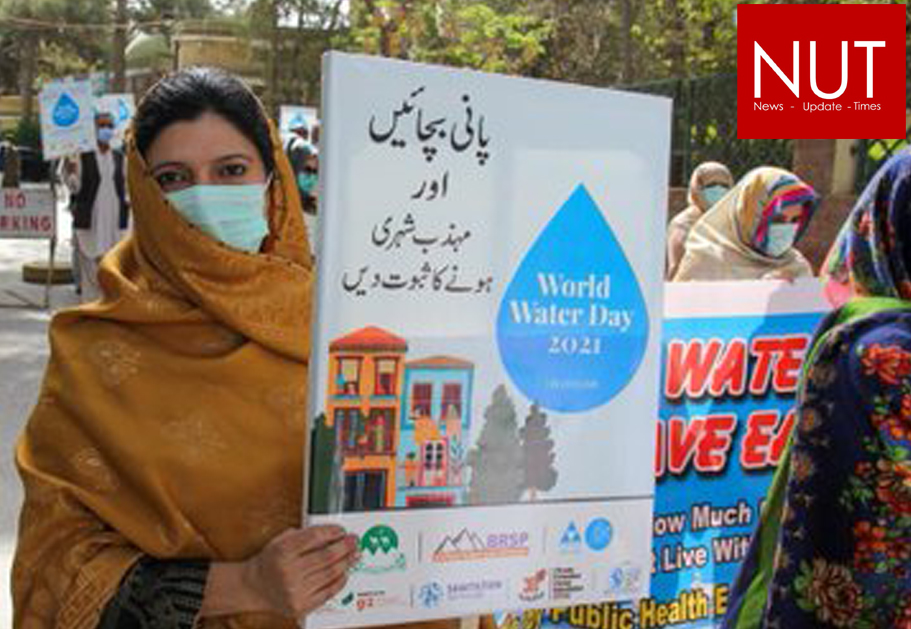
Quetta (Muhammad Yasir) Balochistan Rural Support Programme BRSP in collaboration with Pakistan Poverty Alleviation Fund (PPAF), PHED, WASA, & GIZ commemorated “World Water Day 2021” in Quetta. In this regard, an awareness walk on importance of water was organized from Metropolitan office to Serena hotel.

The participants were major stakeholders including line departments, teachers, students, civil society members, media representative. Honorable Governor Balochistan, Amanullah Yasinzai was the chief guest of the event. Holger Ziegler Consul General Sindh, Minister PHED Saleh Nasar Secretary PHED, Roshan Khursheed Bharucha, Chairperson PPAF attended the event.

Speaking at the occasion The Governor of Balochistan said that “We need to do more in order to get our province out of this predicament. Uncontrolled population growth, lack of urban planning and unregulated urbanization, both due to rural-urban migration as well as influx of refugees in Quetta city have further burdened our already stressed water sources. PHED is making efforts in the province to rehabilitate a desalination plant in Quetta and working on constructing dams which will provide some relief to our water deficient city.”

Nadir Gul Barrech, CEO of BRSP said,” BRSP worked to empower communities so that people are able to sustain and replicate BRSP’s interventions in their villages. This has been, especially, true in case of water and sanitation projects. BRSP and GIZ are continuously working to reach SDG 15 by 2030.”

The honorable guest of the event Saleh Nasar (Secretary PHED) speaking to the event said that “Quetta’s water supply is limited, QESCO and WAPDA struggle to provide electricity to the city and from time to time are forced to shut down tube wells. The fast-depleting water resources in the region call for prompt action in the right direction. A number of dams are in pipeline and we hope that we will be able to meet the demand for water in the coming years.”

The ceremony concluded with a prize distribution ceremony held for the participant of the video and photo competition.