Pakistan reports 3,447 new coronavirus cases in 24 hours

NUT (WEB DESK) Pakistan has reported 78 deaths in the last 24 hours by novel coronavirus as the number of positive cases has surged to 861,473. The nationwide tally of fatalities has jumped to 18,993 on Monday.

According to the latest figures issued by the National Command and Operation Center (NCOC) 3,447 persons were tested positive for COVID-19 in the past 24 hours.

Pakistan has conducted 37,756 tests in the past 24 hours out of which 3,447 persons were tested positive for the disease. The COVID Positivity Ratio was recorded at 9.12 percent.

Gov’t issues storage, usage guidelines for AstraZeneca

NUT (WEB DESK) The Ministry of National Health has, on Saturday issued storage and usage guidelines of COVID-19 vaccine AstraZeneca. As per the details, Pakistan has recently received 1.23 mln vaccine doses of Oxford University’s AstraZeneca.

AstraZeneca could be administered to a specific age group of men and women. The vaccine shot could be given to the male aged 18 years or above, and the women above 40 years of age. In the condition of fever, AstraZeneca vaccine should not be administered to a person. “Those infected with coronavirus will be administered the vaccine after recovery from the disease,” according to the guidelines.

AstraZeneca vaccine could also be administered to the hypertension, sugar and patients of heart ailment. The patients of severe diseases and those having blood clotting complaints should not be given AstraZeneca shot, according to the guidelines. A person undergoing organ transplant could be administered the vaccine after three months of the surgery.

According to the guidelines, no data is yet available for the use of AstraZeneca vaccine in people below 18 years of age. The guidelines, AstraZeneca needs to be kepts stored at 2 to 8 degree Centigrade temperature while it is administered in two doses with a gap of 12 weeks after the first dose-jab. 

World Immunization Week: Health Minister Stresses The Significance of Vaccination in Pakistan

The Ministry of National Health Services, Regulations and Coordination and the Federal EPI commemorated the “World Immunization Week (WIW), 2021” with the theme “Vaccines bring us closer.”

Every year the WIW is celebrated in the last week, aiming to promote the use of vaccines to protect people of all ages against infectious diseases. Vaccines save millions of lives every year and are widely recognized as one of the world’s most successful and cost effective health interventions. “This year’s theme Vaccine brings us closer urges greater engagement around immunization globally to promote the role of vaccines in bringing people together, and improving the health and wellbeing of everyone, everywhere” said, Dr. Akram Shah, National Program Manager, Federal EPI in his opening remarks during the event.

The world immunization week reminds all of us of our responsibility in taking action to bring the benefits of immunization to all. In this regard, I urge all parents to get their children vaccinated! When people ensure that their families and communities are protected with vaccines, we are all protected together, said Dr. Faisal Sultan, Special Assistant to the Prime Minister on Health during the opening ceremony of the World Immunization week (WIW). Immunizing children with vaccines can avert up to 17% of childhood mortality in Pakistan and thus help contribute towards achieving Sustainable Development Goal (SDG) 3, on reducing child morbidity and mortality, said Dr. Rana Muhammad Safdar, Director General Health. He added, diseases with higher transmissibility like measles and polio pose a much higher risk to hit back strongly.

Associated morbidity and mortality from these can further intensify the burden on our health system. In this regard, I urge parents to ensure essential immunization of their children. Essential or routine childhood immunization is a set of inoculations, given from birth to the age of 15 months. Completing the schedule protects children from 11 diseases that are preventable through vaccines, such as tuberculosis, polio (OPV & IPV), measles, diphtheria, pertussis (whooping cough), tetanus, haemophilus influenza type B, hepatitis B, diarrhoea, pneumonia, , and typhoid. The entire course is provided for free by the government’s EPI with support from global and technical partners, like Gavi, the Vaccines Alliance, the WHO and Unicef.

It is paramount that all eligible children are vaccinated against the 11 Vaccine Preventable Diseases inclusive of Polio. I humbly request all parents and care giver to work with Immunization teams and bring out your children for vaccination and encourage others to get vaccine for full protection of our communities, said Dr. Shahzad Baig, Coordinator NEOC during the launching event.

On the eve of World Immunization Week, I would like to stress that Immunization will help Pakistani children to grow into healthy adults. Vaccinated, healthy children can attend school and reap the benefits of education, and their parents are able to participate in the workforce, putting communities on the path to greater economic prosperity. WHO is supporting the government of Pakistan to reach every child everywhere across the country. We are very happy that the WHO-supported outreach vaccination reached to around 40% of Pakistani children despite the Covid-19 situation in 2020, said Dr. Palitha Gunarathna Mahipala, WHO Representative in Pakistan.

“During the World Immunization Week, more than ever before, we commend the heroic efforts of the frontline health workers, social mobilisers and community leaders for immunizing and protecting children and women across Pakistan,” said Aida Girma, UNICEF Representative in Pakistan. “As UNICEF reaches almost half of the world’s children with life-saving vaccines, we stand committed to continue our support to the national Expanded Programme for Immunization in an effort to fulfil every child’s right to immunization, especially the most vulnerable and in hard-to-reach areas.”

The ceremony ended with EPI Pakistan acknowledging the efforts of the vaccinators and frontline workers by presenting mementos to the best performing individuals from across the country.

Over 16,000 healthcare officials got infected during pandemic: Reports

According to the recent reports of the Health Ministry, over 16,000 healthcare officials have been infected by the novel Coronavirus in Pakistan. 

NUT (WEB DESK) The healthcare workers, as per details, affected by COVID-19 included 9,555 doctors, 2,296 nurses, and 4,154 other healthcare professionals. 

The sources in the Health Ministry said that currently 564 health professionals are self-isolating at their homes and 22 others are treated at hospitals. “15,266 healthcare workers have so far recovered from the infection,” they said.

Sharing province-wise details, the sources said that most of the healthcare professionals suffered or died from the virus in Sindh province. “3,362 doctors, 1,098 nurses, and 1,299 other health staffers contracted COVID-19 in the province with 53 of them succumbing to death,” they said.

The Health Ministry officials further shared that Punjab reported 3,377 Covid-positive health workers including 2,020 doctors, 493 nurses and 864 healthcare workers of which 28 died of it.

This Ramadan, help the Patients’ Aid Foundation (PAF)

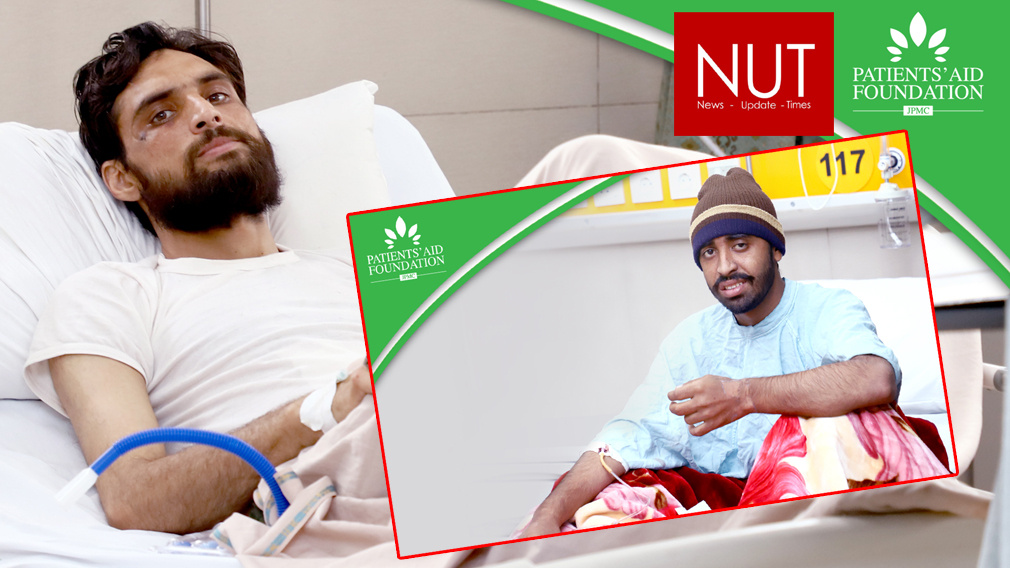
This Ramadan, help the Patients’ Aid Foundation (PAF) in its relentless pursuit of saving lives of needy patients through your Zakat & donation

Lahore (Muhammad Yasir) Being a developing country, it is evident that the healthcare system in Pakistan does not offer ideal healthcare solutions to its citizens, especially the vulnerable section of the society. The healthcare system in Pakistan is in quite the difficult phase despite many efforts as a considerable percentage of the population belong to lower income groups. The affluent groups do not face much hindrances as quality healthcare is readily available for them via private health institutes. However, the less privileged citizens of Pakistan are very much at a disadvantage as they are unable to receive standard quality healthcare which they so rightfully deserve.

One of the major barriers to access good quality healthcare is poverty. The relationship between poverty and access to quality healthcare is direct; due to financial instability. Lower income groups are unable to get quality healthcare services as the public sector is struggling against its limited financial budget. Availing quality healthcare services puts a great financial stress on the needy patients, many of the affected patients are not able to get the timely treatment or have to leave their treatment in between due to monetary shortcomings.

However, not all hope is lost. As a nation, there are many steps which we can take in order to help our government restructure the country’s healthcare system and policies. If you are privileged enough, then you are capable of becoming a part of this process to make quality healthcare accessible to all. With the help of your contribution via Zakat or donation, there is a lot of positive changes that can be brought to the healthcare system of Pakistan.

Being the Islamic Republic of Pakistan, we are also blessed to witness the Holy month of Ramadan which gives a beautiful option of Zakat to help relief the pain and suffering of less privileged patients. Through Zakat and other donations, the healthcare system can be improved in no time, making good quality healthcare services available to the less privileged citizens of our country.

The Patients’ Aid Foundation (PAF) is a non-profit organization formed in the year 1990 by a group of philanthropists who were majorly concerned about the healthcare system of our country. Through a public-private partnership with the Jinnah Post-Graduate Medical Centre (JPMC) and the Government of Sindh, PAF has helped revolutionise the healthcare landscape at JPMC. PAF is registered under the Societies Registration Act XXI of 1860 and with the Ministry of Finance and Taxation as a non-profit organization.

The Patients’ Aid Foundation (PAF) provides free quality healthcare services, to all those citizens who walk through the gate of JPMC in hopes of seeking treatment but cannot afford it. PAF has certainly made a lot of progress since its inception to transform public healthcare available for all at JPMC. PAF has helped inaugurate some of the latest, state of the art, modern medical equipment at JPMC which has helped treat life threatening diseases, completely free of cost. For instance, PAF is the only organization in all of Pakistan to introduce 2 CyberKnife units, PET-CT facility and Tomotherapy machine which treat less privileged cancer patients for free. PAF has helped treat millions of deserving patients at JPMC who were on the verge of losing hope and quite possibly their life.

During this Holy month of Ramadan, contribute towards the mission of the Patients’ Aid Foundation (PAF) to help in its relentless pursuit of ensuring that quality healthcare is accessible to the less privileged patients. You can contribute through various methods such as call to collect, bank transfers, online payments, or foreign remittances, all of which are mentioned on its website.

Getz Pharma and Tabba Heart Institute enter into a Joint Venture

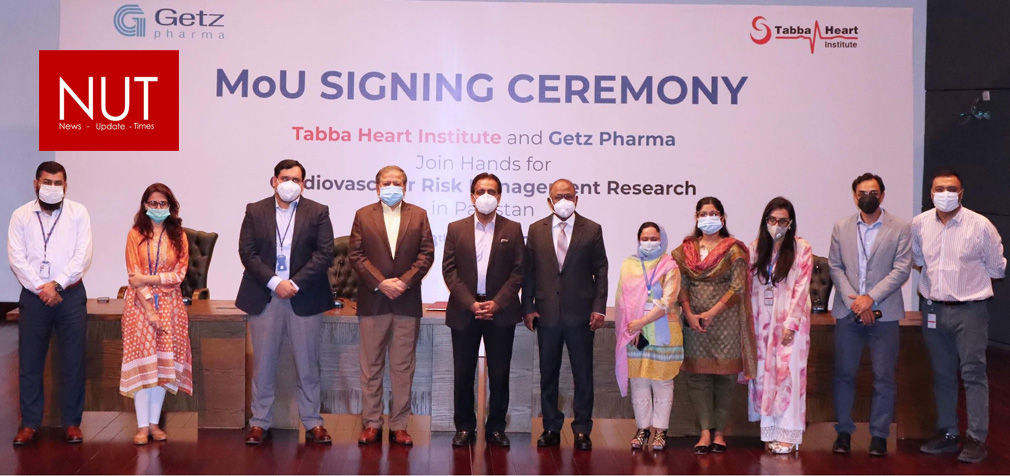
Getz Pharma and Tabba Heart Institute enter into a Joint Venture Agreement for the largest, first-of-its-kind, longitudinal cohort study on Atherosclerotic Risk Assessment in Pakistani Population


Karachi (Muhammad Yasir) Getz Pharma and Tabba Heart Institute, in order to address the issue of the rising health burden of ASCVD in Pakistan are entering into a Joint Venture Agreement for the largest, first-of-its-kind, longitudinal cohort study on Atherosclerotic Risk Assessment in Pakistani Population. This study aims to recruit healthy volunteers aged 30 years or older, from selected urban and rural areas of Pakistan, who are asymptomatic and have no cardiovascular disease. This would allow for assessing the participants’ risk factor profiles and follow them up for at least 10 years to document the incidence of ASCVD.

Pakistan is the second most populous country in South Asia, but most of the data on prevalence of ASCVD from South Asian regions is derived from India. As a result, the Pakistani population is highly underrepresented in global research as there is currently no comprehensive database on the native Pakistani population to assess the likelihood of developing ASCVD. Due to this high burden of disease, there is an urgent need for primary prevention and early screening for ASCVD in Pakistan.
About one-fourth of the world’s population, living in the South Asian region, are at an increased risk of atherosclerotic cardiovascular diseases (ASCVD). Although Western countries have made significant progress in reducing the global health burden of ASCVD, the prevalence of the disease continues to rise in South Asian countries, and ASCVD remains a leading cause of death.
Research shows that South Asians tend to have a higher likelihood of developing risk factors leading to ASCVD, develop cardiovascular events at an earlier age, as well as have higher mortality compared to White populations, according to multiple population-based studies. This higher incidence of ASCVD amongst South Asians can be attributed to various biological and lifestyle-related factors. However, most of the studies conducted so far have focused on migrant South Asian populations residing in the West, causing a large gap in the data for Pakistan-specific prevalence of ASCVD.
The findings from a study of this scale can provide groundbreaking results in the long-run, as it would help in informing future health policy targeting the native Pakistani population, and it would also allow early interventions for patients with risk of ASCVD from a younger age. Getz Pharma and Tabba Heart Institute are proud to lead an initiative of this scale with the aim to contribute to the growing research database in Pakistan and promote early screening and prevention for cardiovascular diseases in the country.
During the MoU signing ceremony, Khalid Mahmood delivered his opening remarks for this initiative: “As a pharmaceutical company, research is something we all depend on to develop medicines. Hence, investing in primary healthcare is crucial, especially for a country like Pakistan which spends a miniscule percentage of its GDP on healthcare, much less than what is required for it to spend, as per WHO recommendations. There is a need for developing nations to invest more on primary health compared to tertiary healthcare, and prevent diseases before they become an added burden on our hospitals.”
Dr. Bashir Hanif commented on the widespread potential of the study: “I can’t thank Getz Pharma enough for supporting this research. This is going to be a landmark study, which no one else has done in Pakistan before, and it will help shed light on the prevalence of cardiovascular diseases amongst the younger, native Pakistani population, under 40 years of age. There is a long way to go, but we hope that we will be able to accomplish this task via dedication and teamwork.”
So far, Getz Pharma has contributed 0.5 million USD to this longitudinal study. In addition, Getz Pharma and Tabba Health Institute will collectively raise a further 1.5 million USD over the course of the 10-year initiative.

HumWell comes to the rescue, with an all-inclusive telehealth service

Lahore (Muhammad Yasir) Responding to the increasing health care disparities and the right to health being compromised in the country, a group of experienced health professionals and technology experts have come together in a collaborative effort, under the platform of HumWell, to provide primary health care services remotely to the public at affordable costs.

HumWell is an all-inclusive telehealth application, available round the clock and powered by a tech-enabled and data-driven approach, that allows people from across the country to connect to qualified medical practitioners for their health care needs right from the comfort of their homes. Making the experience holistic, the app offers easy patient account creation that houses secured medical records, family profiles, and clinical and laboratory tests archive. A free healthcare library is also available on the application that facilitates health literacy and ensures the provision of promotive and proactive healthcare services to the communities.

In a country in which more than half of the population does not have access to primary medical care, HumWell has come out as a saving grace for Pakistan’s healthcare sector. From rising health care costs to socio-cultural norms, several factors play a role in hindering access to health services, disproportionately affecting low-income, rural, and underserved communities. HumWell intends to overcome these barriers to ensure good public health and reinforce the right to health as a fundamental human right for all Pakistanis.

Sharing his views on this initiative, Mr Adnan Zaidi, CEO HumWell said, “Driven by the mission of Sehat Sub K Liay, HumWell envisions to make healthcare accessible for all – leaving no one behind. Our team of qualified doctors is available 24/7 to provide all kinds of medical assistance over the phone to anyone reaching out from any part of the country. While all our services are affordable, new users can also avail one free doctor consultation on sign up.”

The HumWell service is currently available in English, as well as, Urdu, with plans of adding more regional languages soon. The application can be accessed through both the App Store and the Play Store.

(WHO) predicts a staggering over 1 billion smokers into 2025

International governments intensify support towards science-backed reduced-risk tobacco alternatives

Uruguay joins the list of progressive countries like Japan, the US and the UK, as it reverses ban on import and sale of heated tobacco products

Lahore (Muhammad Yasir) The World Health Organisation (WHO) predicts a staggering over 1 billion smokers into 2025 and beyond, indicating that tobacco control measures which are aimed at curbing adoption and encouraging quitting are proving to be not as effective. Countries are hence rethinking their traditional tobacco control policies; by adding a ‘harm reduction’ approach, to offer adults who would otherwise continue to smoke, scientifically substantiated less harmful products as alternatives.

The U.S. has always led the way in supporting “appropriate regulatory framework for new product innovations” taking a scientific approach. It requires manufacturers to file a premarket tobacco product application (PMTA) with the FDA, providing scientific data to demonstrate the product is appropriate for the protection of public health. U.S. laws also allow a manufacturer to submit applications for the FDA to evaluate whether a tobacco product may be sold for use to reduce harm or the risk of tobacco-related disease associated with tobacco products already in the market.

Similarly, in 2017, the U.K. Department of Health released its five-year tobacco plan for England, with an aim to reduce the smoking rates amongst adult smokers to 12 percent by 2022. The government acknowledged the role that science-backed innovations can play in helping adult smokers switch completely from cigarettes, and actively encourage smokers to consider using alternatives, which are less harmful. Subsequent annual evidence reviews by Public Health England validate the important role that alternatives can play in moving adults away from cigarettes.

Today, progressive tobacco control policies are also being adopted by both developed and emerging countries. Before 2016, electronic cigarettes were banned or effectively banned across nearly half of the EU. From there on, things have progressed and ideologies have advanced.

Recently, Uruguay, transitioned from a ‘Nanny State’ with restrictive tobacco control laws to a progressive state; giving the consumer, freedom of choice. In 2005, the Government announced a series of mandates to reduce tobacco consumption resulting in a multi-decade effort to significantly increase industry regulation. Some of these measures included prohibiting smoking in all public and private enclosed areas, explicit prohibition of ads, stringent health warnings to eventually prohibiting “the commercialization, import, registration as a trademark or patent and advertising of electronic cigarettes. In March 2021, in a historic decision, the Government of Uruguay reversed the ban on the importation and sales of heated tobacco products recognizing that tobacco products exist with “distinguishable risks” and noted that the industry can play a role in reducing the impact of smoking. The new decree recognizes the role of the state to ensure the health of its population and seeks tools to respond to the tobacco epidemic by offering alternatives based on scientific research.

Japan too represents a model example, known for its high adult smoking population. In 2014, the introduction of non-combustible alternatives in Japan helped reduce smoking rate in the world’s largest market of heated tobacco products (HTPs) by nearly a third in a span of three to four years. While the Government struggled with various nicotine replacement therapies (NTP), however with the introduction of heated tobacco products (HTPs) and through progressive regulations the country found success. By differently regulating heated tobacco products as compared to cigarettes, smoking rates reduced by over 30% between 2015-2019. A study by researchers working for the American Cancer Society reinforced the success of HTPs with combined sales of all tobacco products also declining.

While countries like Japan and Uruguay have embraced this change, some countries face resistance and foul play by global anti-tobacco organisations.  In Philippines the FDA admitted to foreign influence and hiring of people in drafting regulations advocating a ban on HTPs & vapes using anti-tobacco money based on international public health experts filing a resolution directing the House Committee on Good Government and Public Accountability to conduct an inquiry on the “questionable” receipt of private funding by Bloomberg Foundation. This discrediting development has found serious backlash from global public health experts, reinforcing the need for regulatory entities to operate without any interference or influence; to ensure consumer rights and welfare is not compromised.

Countries like Thailand, continue to adopt stringent tobacco control measures without considering technological innovations and scientific alternatives. Through 2005-20, 15 tobacco control measures were enforced, including eight tax increases, comprehensive bans on public smoking and advertising, total vaping ban, and plain packaging. According to a study by BMC Public Health [1][1] in 2019, comprising of an open access, peer-reviewed medical journal, while Thailand reduced the overall smoking prevalence rates from 23% to 19% (2003-17) – the tobacco policies haven’t been effective enough to achieve WHO’s 2025 voluntary global target of 30% relative reduction in tobacco consumption, also cautioning challenges pertaining to growing illicit tobacco trade impacting the country.

Closer to home, India represents the second largest smoking population in the world. While there has been a significant drop in smoking prevalence aligned to Global Adult Tobacco Survey (GATS), it is far from globally agreed targets to protect people from death and suffering from cardiovascular and other non-communicable diseases (NCDs).

Even with that, in 2019, the Indian Government banned alternatives in Electronic Nicotine Delivery Systems (ENDS). The ENDS Prohibition Act bans production/manufacturing, imports, export, transfer, sale, distribution, stocking and advertising of any such product. Two years into the ban, there is a sharp rise in illicit trade, black marketing of ENDS and worst of all, ENDS users switching back to consumption of conventional cigarettes. These stark outcomes need to be critically assessed by regulatory authorities before issuing blanket bans, as such – so, informed consumers can exercise their freedom of choice by having lesser harm alternatives available to them. Here, India is missing a sizeable public health opportunity.

Prescribe medicines with generic, not brand names, DRAP tells doctors

(NUT Desk) LAHORE: All provinces have been asked by the Drug Regulatory Authority of Pakistan (DRAP) to make sure doctors prescribe medicines with their generic names in the public and private sectors.

DRAP gave the instructions after public complaints on the PM’s Citizen’s Portal against pharmaceutical companies and doctors reportedly colluding to provide people with costlier medicines under a brand name.

A letter was written to the health secretaries of all four provinces, Azad Jammu Kashmir and Gilgit-Baltistan and the Islamabad commissioner by DRAP Pharmacy Services Director Dr Abdur Rasheed.

It said citizens had complained through the Prime Minister’s Performance Delivery Unit (PMDU) against company-influenced brand-based prescription of medicines by doctors in government and private sectors.

“This practice adds to the economic burden of the country and puts financial load on patients due to purchase of pricier brands. Such practice is also against the Code of Ethics for medical and dental practitioners,” the letter read.

DRAP, therefore, directed the health authorities across Pakistan to take necessary measures to promote generic prescriptions by doctors and discourage the practice of incentivised prescription.

The Drug Act 1976, in its Section 7 “Registration of Drugs”, Clause-8, says that single-ingredient drugs (containing one active ingredient) shall be registered generally by their generic names, while compound drugs (containing more than one active ingredient) shall be registered generally by their proprietary names. Drug Lawyers Forum President Noor Mahar said doctors and pharmaceutical companies collude and are involved in the unethical practice of writing even single-ingredient drugs with their brands names in violation of the regulatory law.

For instance, he named a brand medicine manufactured with Amlodipine salt for heart patients is being sold at Rs460, while same drug with the another brand name is available for Rs49.

Punjab reports 2,766 new Covid-19 cases, 28 deaths

Lahore (WEB DESK) Punjab has reported 28 more Covid-19 deaths in the last 24 hours, health department officials said on Monday.

According to Punjab’s Primary and Secondary Healthcare Department, 2,766 infections of the novel coronavirus were reported across the province in the last 24 hours.

The tally of deaths by Covid-19 in the province has reached 7,457 with 28 more deaths. The provincial capital city of Lahore reported 1,413 new cases of Covid-19 in last 24 hours, according to the health department.

The novel coronavirus claimed 73 more lives across Pakistan during the last 24 hours, taking the overall death toll to 16,316.

According to the National Command and Operation Centre (NCOC) on Covid-19, the country reported 73 more deaths due to the pandemic, while 5,152 new cases were reported during the said period.