HEALTHWIRE RAISES $3.3 MILLION TO FUEL ITS “QUALITY HEALTHCARE FOR ALL” VISION

Karachi (Muhammad Yasir) Healthwire, a health-tech startup and operator of one of the largest horizontally integrated ecosystem of healthcare service providers in Pakistan, has closed $3.3 Million in funding. The round drew participation from 47 Ventures, Habib Bank Limited, Dilsons Private Limited and angel investors from Silicon Valley. 

Healthwire was founded by Hamza Iqbal, a LUMS graduate, with a vision to make access to quality healthcare accessible and affordable for every citizen of Pakistan. Since its inception, Healthwire has been singularly focused on digitizing the operations of doctors, clinics, hospitals, labs and pharmacies and now boasts the largest and most widely integrated platform of thousands of health care service providers in over 60 cities of Pakistan.

In a statement, co-founder and CTO of Healthwire, Muhammad Nabeel said “The patient-doctor interaction is the point where the whole healthcare ecosystem converges. By having this interaction on our health-tech platform, we can ensure that quality healthcare is accessible to patients in the remotest areas of the country. The economies of scale of the tech platform allow us to ensure that this access is affordable and inclusive.

Khurram Zafar, Managing Director of 47 Ventures, and a seed investor in Healthwire said, “We are excited to be doubling down on one of the stars in our portfolio. The growth and momentum that Healthwire has built even during the tough COVID period is a testament to the strength and resilience of the team. It is destined to become the health tech leader of Pakistan.”

Sagheer Mufti, COO at HBL, commenting on the occasion said: HBL is excited to invest in Healthwire, as it is an integrated healthcare digital platform. It will ease the customer journey and improve quality of healthcare, particularly multiple healthcare providers. Through provision of embedded banking services, to providers like hospitals, clinics, labs, health insurance providers and pharmacies will be able to serve, patients more effectively. HBL and Healthwire partnership seeks to expand access to quality and convenient healthcare in Pakistan. With the Healthwire investment. and collaboration, digital financial inclusion will be widened, reaffirming HBL’s commitment to be a technology company with a banking license.”

Healthwire, building upon its strong presence in the healthcare service provider ecosystem, has now deployed a web and mobile application for patients to connect with those service providers. The platform is already connecting over 10,000 patients with doctors every single day.  The startup intends to use the funding to further fuel its growth and become the healthcare super app of Pakistan.

Hassan Sheikh, Director at Dilsons Private Limited while commenting on their investment in Healthwire said: Dilsons strategy to invest in Digital Healthcare fits well with integrated solution provider Healthwire. This gives us an opportunity to be part of Digital Health ecosystem which will shape the future of health tech. This partnership will enable us to be a part of Pakistan’s leading digital healthcare platform for disease management with strong capabilities and eventually leading to better healthcare outcomes for patients.”
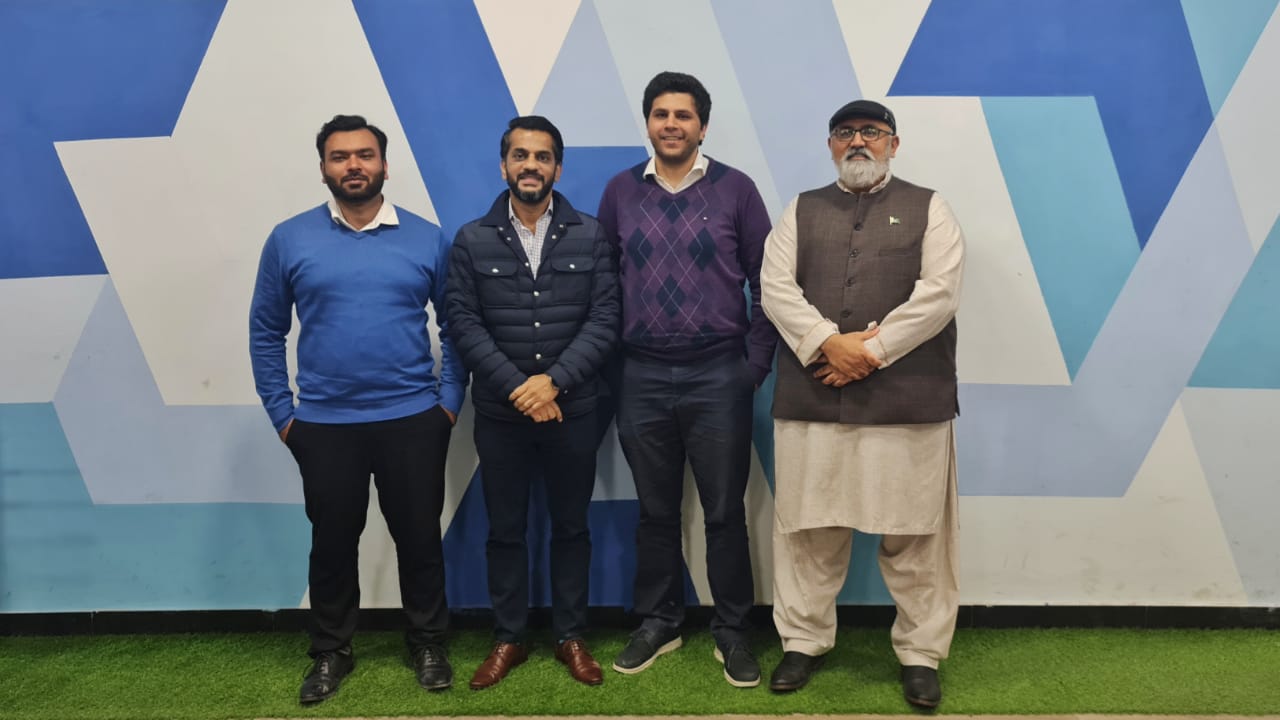
Caption: From Left to Right: Muhammad Nabeel (Co-Founder & CTO, Healthwire), Hassan Sheikh (Director, Dilsons Private Limited), Hamza Iqbal (Founder & CEO, Healthwire), Khurram Zafar (Managing Director, Healthwire).


COVID-19 Vaccine AstraZeneca helps boost Pakistan’s vaccination programme

COVID-19 Vaccine AstraZeneca helps boost Pakistan’s vaccination programme, with over 8.6 million doses supplied during 2021

Lahore (Muhammad Yasir) AstraZeneca has delivered over 8.6 million doses of COVID-19 Vaccine AstraZeneca (ChAdOx1-S [Recombinant]) to Pakistan during 2021 to help boost the vaccination programme. These doses were supplied to Pakistan via the COVAX global initiative and through donations from various countries, with more expected in the coming months.

Sameh El Fangary, Country President for GCC and Pakistan, AstraZeneca said: “As we continue to make strides in curbing the impact of the COVID-19 pandemic, we remain committed to ensuring the continued and accelerated supply of our vaccine. We are honored to have been able to support the Government of Pakistan in its national vaccination campaign efforts as the country continues to register low cases. Along with our COVAX partners who have played a fundamental role in delivering vaccines to countries worldwide, we will continue our work to combat the spread of the pandemic.”

To date, more than 2.3 billion doses of AstraZeneca’s vaccine have been released for supply to over 170 countries, and approximately than two-thirds of doses have gone to low- and lower-middle-income countries. AstraZeneca was the first global pharmaceutical company to join COVAX in June 2020 and to date, more than 230 million doses of its vaccine has been delivered globally through COVAX to 130 countries. AstraZeneca’s COVID-19 vaccine is estimated to have helped prevent 50 million COVID-19 cases, five million hospitalizations, and helped save more than one million lives.

COVAX is a global initiative co-led by the Coalition for Epidemic Preparedness Innovations (CEPI), Gavi (the Vaccines Alliance) and the World Health Organization (WHO), which works with governments and manufacturers to enable access to COVID-19 vaccines for people around the world regardless of income level.

RMI celebrates its 100th kidney transplant surgeries in KP

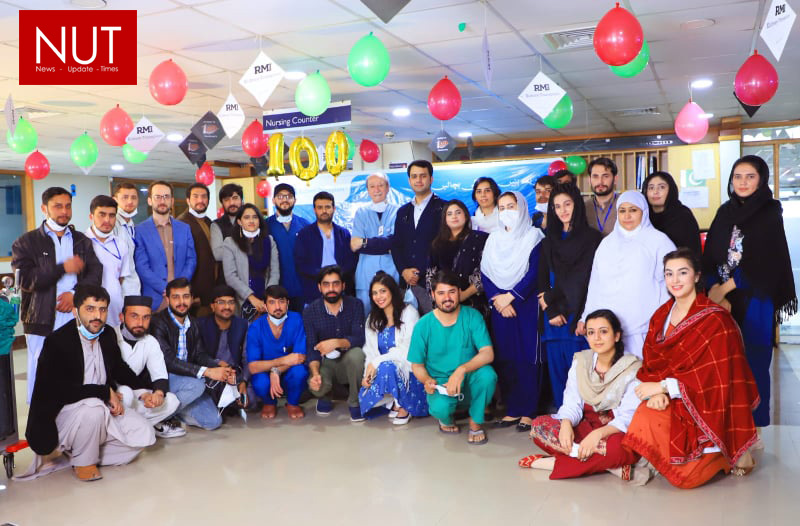
PESHAWAR (NUT DESK) Fully endorsing the Khyber Pakhtunkhwa government’s initiative of ensuring better health services to general people through Sehat Card, the private sector is practically contributing to the government’s efforts of complete health cover to population across the province. As part of this mission, a private sector health entity Rehman Medical Institute (RMI) has operated 100 kidney transplant surgeries including over 50 free of cost cases under the provincial government’s Sehat Card, in Peshawar.

The institute has established the Kidney Transplant Unit to provide state-of-the-art inpatient and outpatient healthcare to ensure complete cure. The RMI arranged a ceremony in Peshawar to celebrate its 100 successful kidney transplant surgeries and appreciate the KP government’s Sehat Card launched early this year to facilitate poor & marginalized population. The ceremony was attended by senior surgeons, healthcare professionals, patients and staff of RMI. While sharing the success of patients’ healthcare, Dr. Taqi F. Toufeeq Khan, Professor and Consultant Transplant Surgeon RMI, told the audience that the KP government’s Sehat Card has provided opportunity to get free-of-cost healthcare services and RMI has endorsed the government’s commitment and expanded its operations and treated patients.

The patients have not only treated but also ensured their one-month post-surgery examination for their healthy diet and timely medication, he said. He also said that RMI has managed 95 percent success in healthcare of patients through inpatient and post-health services. “We not only provide transplant but regularly monitor patient’s health to maintain our success percentage,” he maintained. Dr. Taqi also informed that they are expanding their Kidney Transplant Unit to provide global healthcare services to the patients through experienced and foreign qualified doctors and para-medical staff. In his remarks, Head of Nephrology RMI, Dr. Nisar Anwar, said that under the Sehat Card program, RMI has treated more than 50 patients in last six months while another 150 patients are in pipeline to get treatment.

He also said that, to ensure good healthcare facilities to patients, RMI seeks government support in accreditation of training institute to encourage youth in healthcare sector. “We have announced fellow-scholarship for young doctors,” he disclosed. He urged the provincial government to ensure supply of medicines for the kidney transplant patients and donors once surgery is done /after the surgery for their quick and complete recovery.

Shafiqur Rehman, Chief Executive Officer RMI, appreciated the efforts of surgeons and staff for completing the 100th kidney Transplant in a very limited time.


Aga Khan University Hospital Delivers the First-Ever Gene Therapy in Pakistan for Spinal Muscular Atrophy

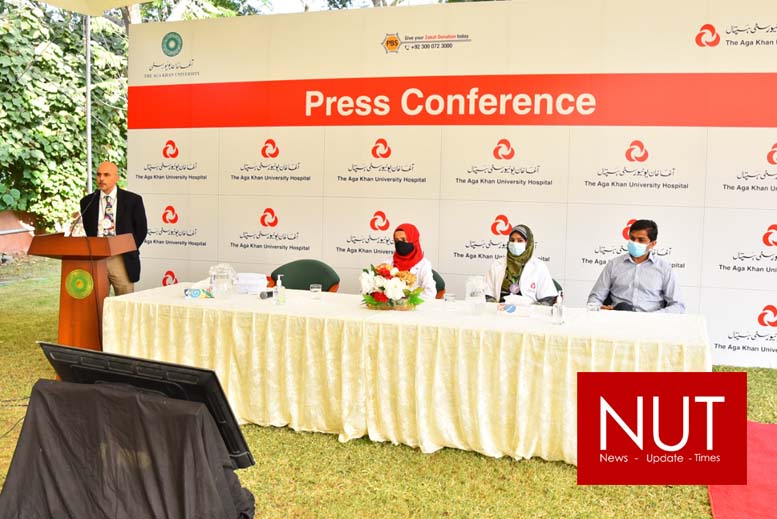
The Aga Khan University Hospital Delivers the First-Ever Gene Therapy in Pakistan for Spinal Muscular Atrophy

Geneticists deliver the first-ever gene therapy for Spinal Muscular Atrophy at AKUH, obtain extraordinary results

Shavez, a two-year-old boy from Chiniot, was diagnosed with Spinal Muscular Atrophy (SMA) at the age of 6 months. In this condition, patients experience muscle weakness, decreased muscle tone, limited mobility, breathing problems, delayed motor skills and scoliosis (curvature of the spine) and other serious health problems. Many children suffering from this condition do not survive beyond their second birthday.

This news devasted Shavez’s parents. His elder sister already had this condition, and they knew all too well what it meant for their child’s life. “Even though we had a daughter with the same condition, no doctor ever told us that the condition could occur again if we got pregnant”, said Liaqat Ali Ghauri, Shavez’s father.

SMA is a group of hereditary diseases that destroys motor neurons – nerve cells in the brain stem and spinal cord that control essential skeletal muscle activity such as speaking, walking, breathing, and swallowing, leading to muscle weakness and atrophy. Even though there is a lack of data to assess the prevalence of SMA in Pakistan, cousin marriages are the most common reason attributed for its occurrence. Global data suggests that 1 in 10,000 live births are affected by SMA with a carrier frequency of approximately 1 in 50.

Liaqat had done his research with his daughter and knew there were no treatment options available until 2019, when Novartis, a global pharmaceuticals company, developed a gene therapy drug to cure the condition. This medication had shown promising results for patients in the United States and Europe.

This is a new drug that only requires one dose to cure the disorder, but the cost of this drug is millions of dollars, making it out of reach for most people. Novartis developed a globally managed access programme to provide free-of-cost therapy to 100 patients a year to address this. Shavez was one such lucky patient, selected by Novartis to receive the drug and became the first such candidate in Pakistan.

Dr Salman Kirmani, Associate Professor and Chair, Division of Women and Child Health, at the Aga Khan University and his team, saw Shavez in June 2020, when he was one and a half years old, and applied for him to be part of Novartis’s Managed Access Program.  Soon, they received the nomination for the drug. Dr Kirmani’s team spent the next six months training the staff, working with authorities to receive the medication, and running the necessary tests to assess if Shavez was fit to receive the drug.

Shavez was administered the drug one day before his second birthday. Since then, he has received regular consultations and has shown significant improvement. The doctors at AKUH are hopeful that they will continue to see further progress in the years to come.

“We found out about this drug in 2019, but we thought we would not receive it until much later. But then, we found out about the programme and were lucky enough to have received it. Ten months later, we see significant improvement in Shavez’s condition, and we will continue to provide life-long follow-up to monitor his health”, said Dr Salman Kirmani.

“I thought our lives had ended, but we were living in hopes that there might be a miracle and one of our babies would survive. And there we have it, Shavez is recovering day by day. It is all because of the hard work of the doctors, nurses and staff at the Aga Khan University Hospital. Allah has been very kind to us”, said Mrs Liaqat.

For Shavez’s treatment, in addition to the drug cost, his family needed financial support to cover other treatment costs. This they received from Aga Khan University Hospital’s Welfare Programme. The hospital is committed to providing access to quality healthcare, and in 2020, supported over 850,000 indigent patients with welfare and zakat worth PKR 300 crore. Shavez received free-of-cost care at AKUH, making it possible for him to get world-class quality care at no additional financial burden to his family.

Pakistan will immunise 90 million kids against MMR

Lahore (NUT-DESK)

Today Dr. Faisal Sultan, Special Assistant to the Prime Minister on Health, launched a nationwide campaign to immunise more than 90 million children against the deadly measles and rubella diseases across Pakistan, in what is bound to become one of the biggest campaigns in the world.

More than 386,000 health professionals, including 76,000 vaccinators and more than 143,000 social mobilizers are mobilised for the two-week campaign supported by Gavi, the Vaccine Alliance, UNICEF, WHO and partners. The campaign targets children aged between 9 months and 15 years; those aged up to five will also receive the oral polio vaccine.


“Measles and Rubella are contagious diseases and can have severe complications for children even death. Effective vaccine against the Measles and Rubella is available to prevent children against the two diseases. I urge both the front-line workers to work with dedication and the caregivers to express their support by vaccinating their children against the diseases,” said Dr. Faisal Sultan, Special Assistant to Prime Minister on Health
Measles and Rubella are couple of devastating diseases that cause severe sickness and can take lives,” said Dr. Muhammad Akram Shah, National Programme Manager, Expanded Programme on Immunization. In recent years cases have surged dramatically in Pakistan. “Measles cases rose alarmingly affecting thousands of children and claiming many young lives. We need to vaccinate every child”, said Dr. Shah.


The campaign will be conducted in public and private health facilities, outreach centres as well as educational facilities, for 12 days from November 15th to 27th. Nearly half of the children who are to be immunized are enrolled in schools. The MR vaccine will be available in routine immunization schedule for children at 9 months and 15 months of age.

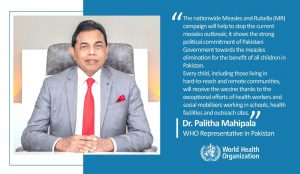
“The Measles and Rubella campaign will move us not only one step closer to maintaining measles elimination and accelerating rubella control, but also one step closer to reducing the overall child mortality across Pakistan. Every child has the right to access life-saving healthcare, ”said Dr. Palitha Mahipala, WHO Representative in Pakistan. “WHO is partnering with the Government of Pakistan and supports to ensure that all children get vaccinated against Measles & Rubella. We appreciate the strong political commitment of the Government of Pakistan towards the measles elimination for the benefit of all children in Pakistan.”

“Today’s world is still grappling with the very contagious measles and rubella viruses, none of which have gone away despite being entirely preventable with a simple vaccine,” said Ms. Aida Girma, UNICEF Representative in Pakistan. “UNICEF is proud to support the Government to ensure that safe, effective vaccines are available and delivered nationwide. By working together, we can contribute towards the global eradication of measles and rubella, to the benefit of children in Pakistan and across the world.”

Pakistan has demonstrated unwavering commitment toward restoring and strengthening immunisation services across the country over the past years, with promising results. Targeting every child is a priority to help ensure that vaccination is equitable for every child.

****************

Pakistan announces massive vaccination programme to counter Omicron threat

Lahore (NUT-DESK)

Federal Minister of Planning, Development and Special Initiatives Asad Umar said that vaccination is the most effective way of protection against the new coronavirus variant, Omicron, Monday.

Umar, who is also the chief of National Command and Operation Centre (NCOC), while addressing a joint press conference flanked by Adviser to the Prime Minister on Health Dr Faisal Sultan in Islamabad, warned that the Omicron variant will inevitably come to Pakistan.

The minister announced that the NCOC has made some decisions regarding the highly contagious new variant which is spreading fast across the globe.

He said that the country has only a few weeks to contain the Omicron threat.

“Measures to control the [spread of] new variant in Pakistan are underway but vaccination is the only effective way of protection against Omicron,” said Umar.

Informing the media about the NCOC decisions, Umar said that the government would launch a massive vaccination campaign across the country within two to three days.

“We cannot stop Omicron but can reduce its effects by adopting preventive measures,” he added.

Talking about the government’s preventive measures, the minister said that they were tightening restrictions for the passengers coming from abroad and increasing testing capacity in high-risk areas.

He urged the masses to get themselves fully vaccinated against the coronavirus. 

The minister further stated that the individual at high-risk of contracting the virus will be given a booster jab.

**************

Pakistan’s most Extensive Cardiometabolic Study for the Healthy Young Population

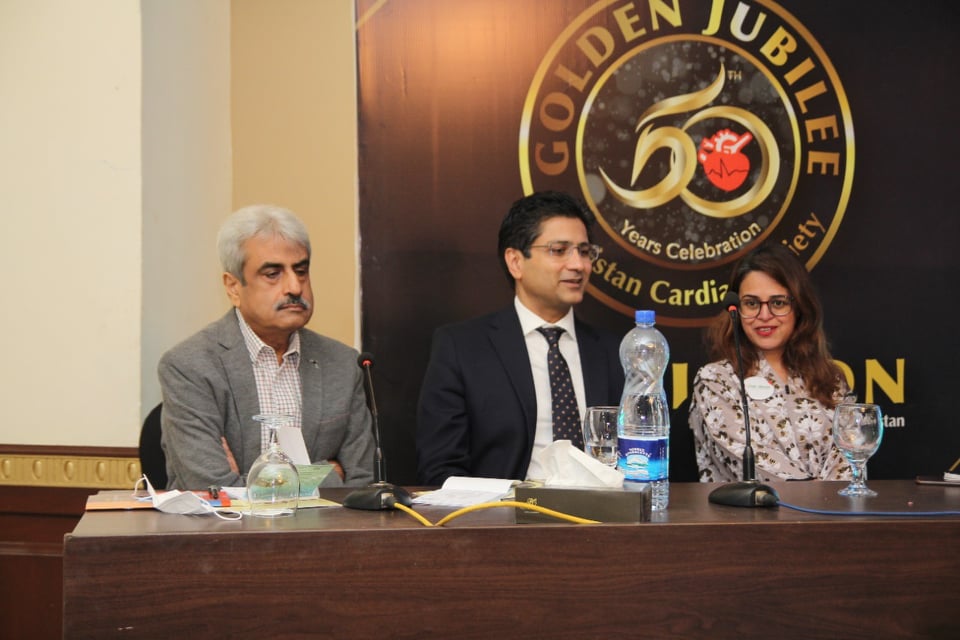
Lahore (Muhammad Yasir) Getz Pharma Pvt. Ltd.,in partnership with Tabba Heart Institute, announced the launch of Pakistan Study of Premature Coronary Atherosclerosis in Young Adults (PAK- SEHAT) Cardiovascular diseases continue to have a significant impact across the world among different populations. To address the issue of the rising health burden of ASCVD in Pakistan, Getz Pharma Pvt. Ltd and Tabba Heart Institute (THI) formally launched PAK-SEHAT- Pakistan Study of Premature Coronary Atherosclerosis in Young Adults, a nationwide study conducted through Pakistan’s first state of art mobile lab. PAK SEHAT project is the largest, first-of-its-kind, longitudinal cohort study on Atherosclerotic Risk Assessment in Pakistani Population.

This 10-year joint venture of Getz Pharma &THI (PAK SEHAT) will help determine risk factors for coronary heart disease so that early detection can be done and disease can be prevented rather than treated. Cardiovascular disease (CVD) is one of the leading causes of mortality worldwide, causing approximately 32% of annual deaths. The risk of cholesterol-associated CVD varies among different ethnicities; however, the risk is four fold in the South Asian (SA) Population compared to other races. Furthermore, almost 75% of all CVD deaths are in low and middle-income countries (LMIC), where there are finite health resources and a multitude of health-seeking barriers. The state of heart diseases in Pakistan also reflects a concerning picture.

According to the World Health Organization data published in 2018, coronary heart disease deaths in Pakistan reached 20% of total deaths, and Pakistan ranks 18 in cardiac mortality in the global ranking. Moreover, the numbers of potential CVD risk factors, including hypertension and diabetes, are also alarming in Pakistan, with 50% hypertension and 17.1% diabetes in the adult population. There is a drastic shift in CVD occurrence in young ages in the SA population, as evidenced by the groundbreaking INTERHEART study suggesting 10.6% of SA participants presented with a heart attack at <40 years of age. Therefore, this study primarily envisions screening the Pakistani individuals at a younger age to prevent increasing CVD burden in the future. This study aims to recruit healthy volunteers <40 years of age, from selected urban and rural areas of Pakistan, who are asymptomatic and have no cardiovascular disease.

This would allow for assessing the participants’ risk factor profiles and follow them up for at least five years to document the incidence of ASCVD. The objectives of PAK SEHAT includes: 1. To characterize the prevalence and severity of subclinical coronary atherosclerosis among young Pakistani men and women free of clinical CVD 2. To understand the impact, in terms of 5-year rates of cardiovascular events, by using the prognostic information provided by cardiac CTA and the other study tests and measurements to optimize cardiovascular prevention management in young Pakistanis. While Pakistan is the second-most populous country in South Asia, most of the data on the prevalence of ASCVD from South Asian regions is derived from India. As a result, the Pakistani Population is highly underrepresented in global research, as there is currently no comprehensive database on the native Pakistani Population to assess the likelihood of developing ASCVD.

Due to this high burden of disease, there is an urgent need for primary prevention and early screening for ASCVD in Pakistan. The findings from a study of this scale can provide groundbreaking results. It would help in informing future health policy targeting the native Pakistani Population, and it would allow early interventions for patients with risk of ASCVD from a younger age. Getz Pharma and Tabba Heart Institute are proud to lead an initiative of this scale with the aim to contribute to the growing research database in Pakistan and promote early screening and prevention for cardiovascular diseases in the country.

Healthcare summit demands slashing prices of life-saving drugs in Pakistan

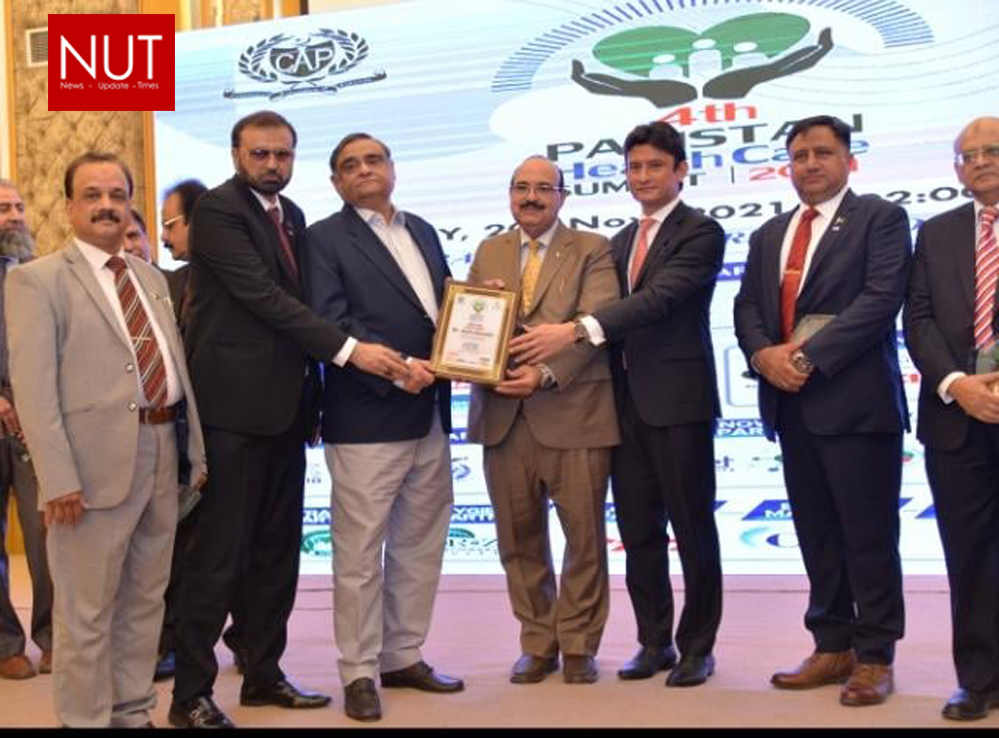
Karachi (Muhammad Yasir) The Prime Minister should immediately act to bring down the medicine prices in the country to ensure their availability to underprivileged people who have been facing acute problems in getting access to quality health care services. This was one of the consensus demand by the speakers who addressed the 4th Pakistan Healthcare Summit-2021 organised by Consumers’ Association of Pakistan (CAP) here at a hotel. The speakers demanded the government to immediately intervene to curtail the prices of life-saving drugs in the country so that they could be purchased by the patients belonging to middle and lower income groups. They said the medicine prices should be slashed keeping in view skyrocketing inflation in the country owing to which, people had a hard time finding quality health care services.

They demanded strict enforcement of the recently issued code of ethics of Drug Regulatory Authority of Pakistan (DRAP) to regulate relations between the pharmaceutical companies and doctors so not to incentivize the practice of prescribing medicines to the patients. They said the drug manufacturers should be taken to task by the government in accordance with the newly notified rules of the DRAP for offering undue favours to the doctors for prescribing to their patients the medicines produced by these companies. They urged the medical practitioners to fully adhere to the general code of ethics of their profession to make sure that every ailing citizen in the country got access to the best health treatment services in an honourable way.

The speakers, most of whom were associated with the health profession, also demanded the government to readily issue health insurance cards in Sindh to treat underprivileged patients who had no other means to get access to quality health care services. They said the destitute people in Sindh should get the facility of health insurance cards as was the case of people in Punjab and Khybe Pakthunkhwa. Speaking as the chief guest on the occasion, Chairman of Higher Education Commission Sindh, Dr Asim Hussain, said that government should give more attention to different fields of health care services. He said it was unfortunate that health and medical services had remained neglected fields in Pakistan. He said that getting best health care services was the fundamental right of every citizen, which should be fulfilled. He praised the effort on the part of the organisers of the conference to raise awareness about health care issues.

Dr Hussain, who also earlier served as an Advisor to PM, said the industries had to suffer much due to coronavirus health emergency. He also euologised the nationwide efforts to tackle the issue of coronavirus. He appreciated the services of health care professionals and workers who valiantly fought against the spread of coronavirus. The CAP Chairman Kaukab Iqbal said on the occasion that their association had been striving hard to protect the rights of consumers. He said the consumer protection act had been passed in all the four provinces of the country. He said that consumer protection departments had been constituted in different institutions. He said that they had been striving hard to ensure availability of the life-saving drugs in the country as he also acknowledged the role of Dr Asim Hussain in this regard.

Others speakers at the conference included Consul General of Malaysia Khairun Nazran Abdur-Rehman,CEO Dr. Minhaj A. Qidwai, former CEO Sindh Health Care Commission, Brig (retd) Azhar Manzoor Group Head Corporate Affairs Dr. Zia Uddin Hospital, University, Brig (retd) Malik Waqar Awan C.E.O Memon Medical Institute Hospitals, Brig (retd) Tariq Bungush , Medical Specialist, & Consultant APNA DIYLISIS KOHAT, Mr. Johar Minhal Regional Manager Malaysian Palm Oil Board, Salim Khan, DGM Exide Pakistan. Shahzeeb Sheikh Deputy Directr Sindh Food Authority , Former MNA Rehan Hashmi, Molana Azad Jamil.

Serious measures to be taken against Air Pollution; Ejaz Tanveer

President Pakistan Business Forum Lahore Mr. Ejaz Tanveer has shown his grave concern as the Air Quality Indicators declare the Lahore city as world’s most polluted city.
According to aqi.cn.org the air quality index in Lahore stands at 373 that falls in the hazardous category. Worst air quality in Lahore is causing serious health problems by making people terribly sick as respiratory diseases, throat and eyes infections are on the rise and the situation has gotten worse over the past decade; says Ejaz Tanveer.
Government should evaluate the issue on scientific basis and take deep rooted serious measures to cope with this challenge.
Mr. Ejaz Tanveer demands that the government should deal with the root causes of smog like crop burning, public transport smoke, factory emissions and other such factors.
He says government should facilitate vehicle manufacturers to shift on electric technology following the Euro 5 tandard for all vehicles being produced in the country, focus on planting trees and facilitate office to use buses for staff pick n drop.

Swyft Logistics introduce paid period leaves calling it Monthlies

Swyft Logistics becomes the first Pakistani company to introduce paid period leaves calling it Monthlies

Fostering a culture of trust, truth and acceptance Swyft Logistics becomes the first company in Pakistan to introduce a Period Policy. Starting today, all women at Swyft can avail up to 12 days of period leaves in a year.

Lahore (Muhammad Yasir)  Swyft logistics, a two year old tech based logistics startup with a 30% female workforce has created a “period policy” calling it “Monthlies” to allow employees to take time off during their periods without having to pretend they’re “sick” or face the stigma that lingers around menstruation.

Muhammad Uns, CEO of Swyft, said that the that the policy was specifically designed to combat that stigma:

“I have managed many female members of staff over the years and I have seen women at work who are bent over double because of the pain caused by their periods. Despite this, they feel they cannot go home because they do not class themselves as unwell.“And this is unfair. At Swyft Logistics we are very understanding. If someone is in pain – no matter what kind – they are encouraged to go home. But, for us, we wanted a policy in place which recognises and allows women to take time for their body’s natural cycle without putting this under the label of illness.”

More than just another leave policy, Swyft’s period policy encourages women to take time off as needed and discourages reluctance to speak openly about their bodies. It’s specifically designed to reshape the workplace conversation about bodies; to force us to acknowledge that we aren’t just thinking machines, we’re biological machines with complex processes and cycles. Part of the logic of Swyft’s policy is that productivity is affected by everything going on in your body, not just how many super foods you had for breakfast or how many hours of sleep you got last night. Research shows that womens’ productivity ebbs and flows in relation to their menstrual cycle – so workplaces should work with that natural flow, rather than against it.

In addition to creating a workplace that’s more understanding of the body’s natural cycles, Swyft wants to reduce stigma and end the perception of menstruation as illness. Sure you could use your sick leave to take a day off as needed, but should you have to take a sick day when you’re not sick? Menstruation isn’t a state of illness or aberrance – it’s an ordinary biological process.

https://web.facebook.com/swyftlogistics/videos/432983474874661/?extid=NS-UNK-UNK-UNK-IOS_GK0T-GK1C&ref=sharing&_rdc=1&_rdr

Swyft is the first and only company in Pakistan to provide a flex time or leave program specifically designed with menstruation in mind i.e., pre-approved 12 annual leaves calling it “MONTHLIES”