PFMA lauds PM for imposing ban on import of luxury goods

Lahore (Nut Desk) Pakistan Footwear Manufacturers Association has lauded the Federal government initiative to impose an immediate ban on the import of luxury goods as one of the major preventive steps to forestall the looming default and control spiraling hike in dollar price against rupee.

In a statement issued on Friday here, Chairman Pakistan Footwear Association Mr. Zahid Hussain said that the long-awaited but much-needed step under taken by Prime Minister Mian Muhammad Shahbaz Sharif would help in saving the precious foreign exchange besides arresting hike in dollar price. The ban on import of footwear would gear up local manufacturing and it will also generate more employments in the country.

However, Zahid Hussain the Chairman called upon the Prime Minister that the shipments which are enroute and their LCs (Letter of Credit) have been opened according to the bank record before May 19, they may be given one time exemption from this ban so that they are cleared on the ports without any delay.

The Chairman further said that the decision to ban import of luxury items will save the country’s precious foreign exchange while austere and financially stronger people must lead in this effort so that the less privileged do not have to bear this burden. “We will overcome all the challenges with resolve and determination,” he added. He said that it is wise decision of the Prime Minister which will support the balance of payments position, and will not apply on the imports in rupees or through barter mechanism by land routes.

The decision comes as the dollar has witnessed a meteoric rise against the rupee over the past few weeks on account of the country’s rising import bill, growing current account deficit and depleting foreign exchange reserves. On Thursday, the dollar shattered all records and soared to Rs200 in the interbank market.

Zong Launches Public Awareness Campaign for Customer Protection

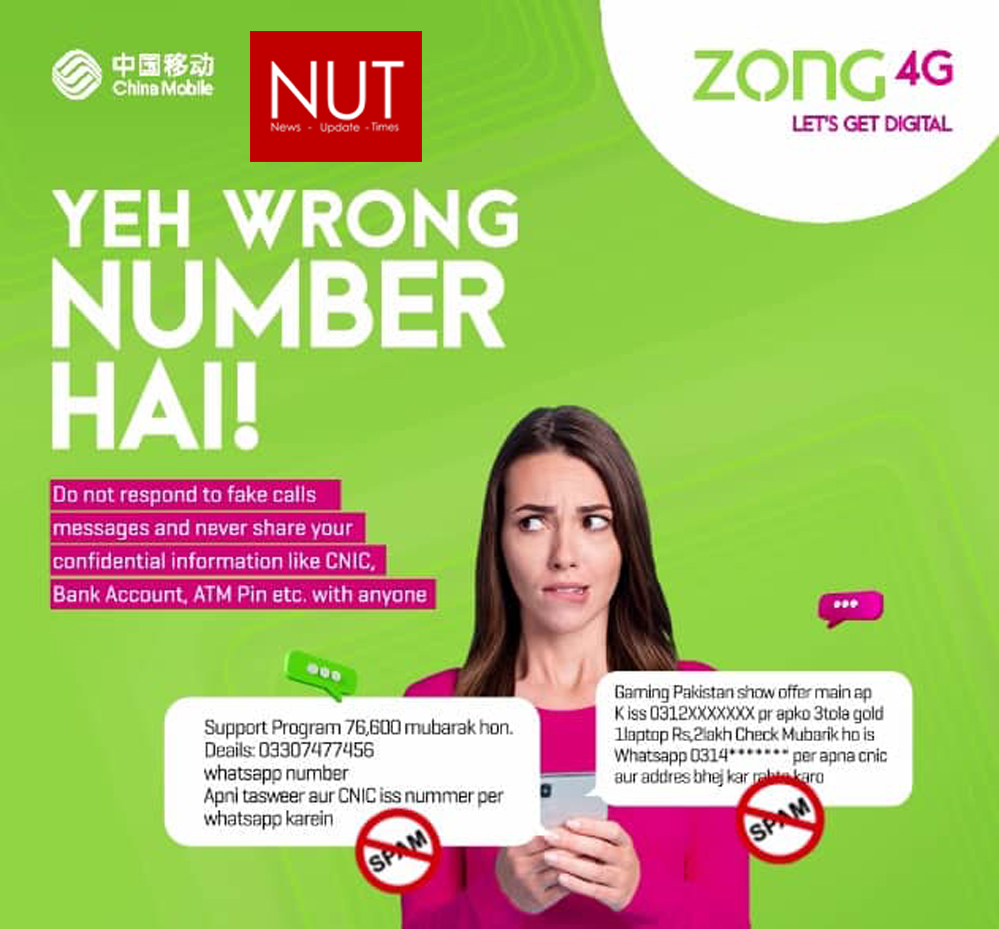
Lahore (Muhammad Yasir) Taking the lead in protecting the Pakistani telecom users, Pakistan’s cellular and digital services frontrunner, Zong 4G, has launched a nationwide public awareness campaign against thefts and frauds, which are becoming very common these days. Through the digital campaign, millions of Pakistanis are being educated on the growing occurrences of various forms of thefts and frauds that include fake prizes from game shows, fake calls from pretending bank agents, SMS with spam hyperlinks, etc. These scams usually target vulnerable users and are aimed at acquiring confidential information like CNIC numbers, credit/debit card details, bank account details, etc.

Here are some details of the scams that Zong wants the Pakistani telecom users to be wary of: Fake Prizes: Users get a fake call or message telling them that they have won some grand prize at one of the country’s leading game shows. They’re then tricked into sharing confidential information like CNIC numbers or card/account details.

Fake Calls: Telecom users get a fake call from a pretend bank/insurance agent asking them for their confidential information like CNIC number, card or account details. Fake SMSs: Sometimes users also get an SMS from an unknown number with some attractive message prompting them to click some spam link through which their sensitive information is stolen. “We’re a customer-centric company and whatever we do at our organization is for the benefit and welfare of our customers,” shared Zong’s official spokesperson. “Staying protected in today’s increasingly digital world is not easy and the users who are not cautious fall prey to such scammers.

But we are here to educate the Pakistani telecom users on how to get the best of the digital world while staying protected,” the spokesperson added. Being a customer-focused organization, Zong 4G has adopted a subscriber-level SIM blocking and CNIC blacklisting service to control fraudulent users. Customers continue to be at the heart of everything Zong does and the awareness campaign is a testament to that commitment.

DG NLC visited LCBDDA Downtown and Lahore Prime site

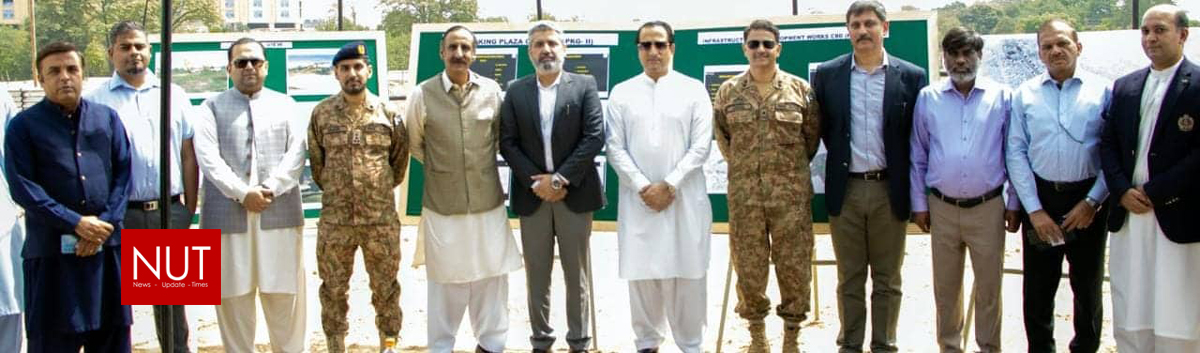
Lahore (Muhammad Yasir) Director General National Logistic Cell (NLC), Major General Yousaf Jamal visited Lahore Prime and Downtown site at Central Business District (CBD) Punjab to review work in progress. Chief Executive Officer, Lahore Central Business District Development Authority (LCBDDA), Mr. Imran Amin, Chief Operating Officer (LCBDDA), Brig (R) Mansoor Janjua and the concerned directorate heads of LCBDDA welcomed him on the site. DG NLC was accompanied by Brigadier (R) Umer Farooq, PD NLC (Central) and Colonel (R) Arslan, SPM NLC. The delegation was given a detailed briefing about ongoing infrastructural work and its progress. Mr. Riaz Hussain, Executive Director Technical Directorate of LCBDDA also updated on the on-going construction and excavation for parking plaza. While sharing his views about the visit, Chief Executive Officer (LCBDDA) Mr. Imran Amin said that “NLC has always played a pivotal role in the development arena of Pakistan and having them by our side for infrastructural development at CBD Punjab is very encouraging. This working relation will definitely accelerate development work at CBD Punjab”. DG NLC, Major General Yousaf Jamal said “The pace of the infrastructural development work at CBD Punjab is way beyond satisfactory level. After visiting the site and witnessing the ample business opportunities, it is cleared that why CBD Punjab is the center of interest for domestic and international investors”. The infrastructure development work is gaining pace at CBD Punjab with high-end quality standards and procedures, which are a step forward of turning the dream of economically stable Pakistan into reality.

Red Line BRT Project Implementation Agency to Plant 50,000 Trees

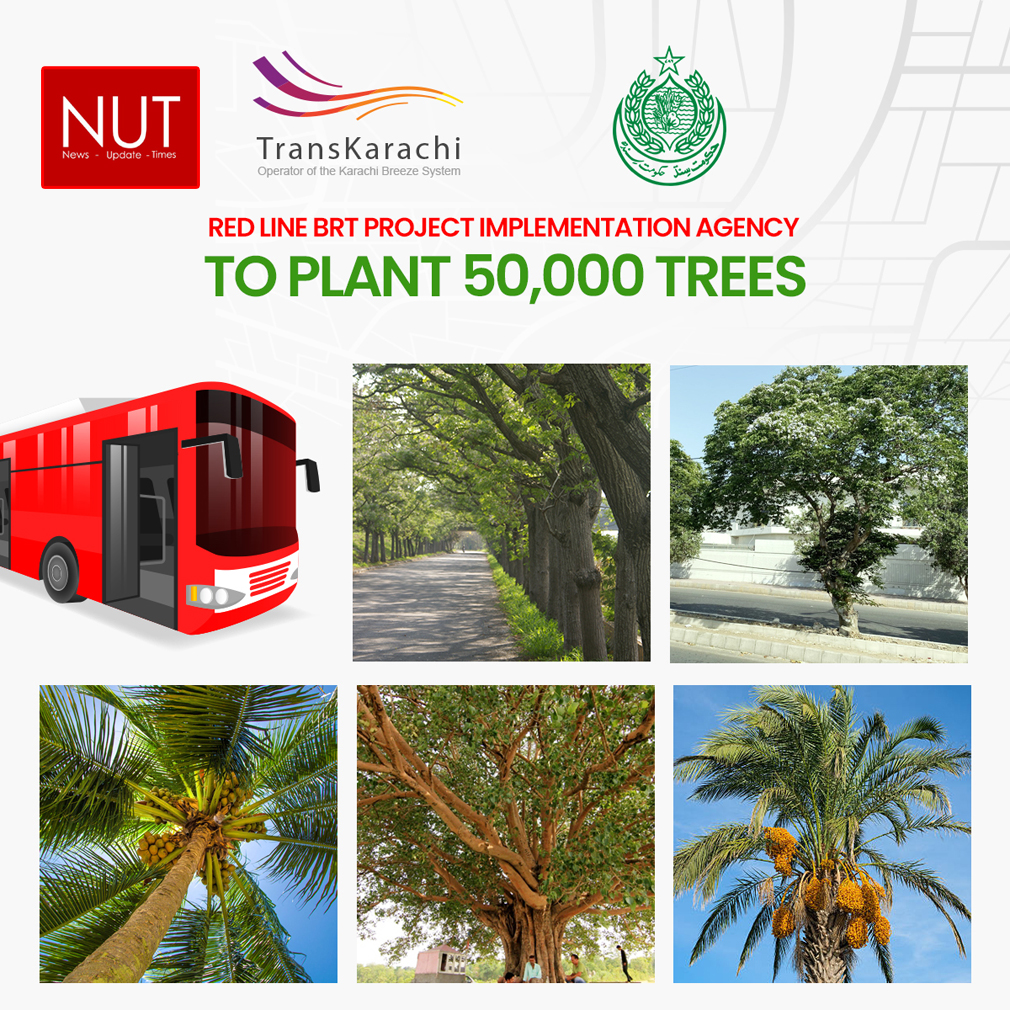
Karachi (Nut Desk)  TransKarachi, a Public Sector Company established and owned by the Government of Sindh to carry out the project implementation of the Karachi Bus Rapid Transit (BRT) Red Line, has initiated a tree plantation drive across Karachi through which 50,000 trees that are beneficial for the environment will be planted across the city.

These trees will be 5 feet high and include the likes of Lignum Tree, Gul Mohar, Coconut Palm, Khajoor and Peepal which are known to provide shade, bear fruit and produce oxygen throughout the year. Earlier in March this year, the Company rolled out an alternate route plan for the citizens of Karachi ensuring smooth traffic flow as people might face difficulties due to the development work. The Company also organized 3 Cheque Distribution Ceremonies to provide resettlement compensation to small businesses and vendors whose businesses have been impacted by the project before cut-off date.      

Wasif Ijlal, CEO, TransKarachi said, “The Red Line Project will be a game changer for the public transport sector in Karachi. Thousands of new employment opportunities have been created and once construction is in full swing, many more opportunities will be created. With daily expected ridership of 350,000 people, I am confident that Karachi is on its way to becoming a truly empowered city directly benefiting the youth which makes up for almost 70% of our population.”

The project will see the relocation of 8500 trees that may be cut to construct Karachi’s first BRT fueled by Bio Gas. 


Engro Fertilizers collaborates with Sindh Agriculture University for seminar on cotton production technology

Karachi (Muhammad Yasir)  Engro Fertilizers, Pakistan’s premier seed-to-harvest solutions provider, has partnered with the Sindh Agriculture University, Tando Jam, to organize a mega seminar on cotton production technology to help boost crop productivity and farmer’s livelihood.

Aijaz Ahmed Mahesar (Secretary Agriculture Sindh) was the chief guest on the occasion, while Dr. Fateh Muhammad Marri (Vice Chancellor, Sindh Agriculture University) presided the event. Khusrau Nadir Gilani (Chief Commercial Officer, Engro Fertilizers) and Hidayatullah Chhajro (DG Agriculture) were guests of honor at the event, which was also attended by more than 300 progressive farmers and other important stakeholders from the agricultural sector.

In his inaugural address, Dr. Fateh Muhammad Marri said that cotton had a lion’s share in the country’s agricultural sector and, as a raw material for the textile sector, played an integral role in promoting exports to earn foreign exchange for Pakistan. Hidayatullah Chhajro (DG Agriculture) added that the provincial Agricultural Department was committed to facilitate and improve the livelihood of farmers in Sindh as cotton was an important cash crop.

Speaking on the occasion, Khusrau Nadir Gilani (CCO Engro Fertilizers) highlighted that an estimated 1.5 million farming families grow cotton in Pakistan, making it one of the most important cash crops. However, Pakistan’s cotton production has been in steep decline for several years and although has recovered a bit to 7.4 million bales this year, but is still far below the potential. As a result of lower output, cotton has to be imported, thus, leading to loss of valuable foreign exchange and competitiveness of the country’s textile exports. Therefore, Engro Fertilizers envisions to support the government and other stakeholders to transform the agricultural landscape of Pakistan through its innovative products and services, and capacity-building sessions of farmers.

He added that that this seminar was aimed at training farmers in improved harvesting, and best crop and fertilizer management practices for increased profitability. Higher productivity and crop earnings would, consequently, encourage farmers to increase cotton cultivation area and support the economic development of Pakistan.

Aijaz Ahmed Mahesar also briefed the audience about the measures being taken by Government of Sindh to support the farmers. He appreciated Engro Fertilizers and the Sindh Agriculture University for this collaboration to increase awareness among farmers related to technology transfer and improved cotton-growing practices. Aijaz Ahmed Mahesar urged the farmers to follow expert recommendations shared and grow more cotton to improve their farm income and support the country’s GDP growth. Mahmood Nawaz Shah, a progressive farmer and Vice President of Sindh Abadgar Board, also thanked Engro and the University for arranging the seminar and shed light on the challenges faced by the farmers.

Unauthorized civil works compromise personal safety and KE infrastructure

Karachi (Muhammad Yasir)  KE Spokesperson today shared serious concerns over the dismal lack of safety protocols during civil works across the city, where laborers and excavators are digging roads in close proximity to KE’s underground infrastructure.

In the month of April alone, an alarming 26 incidents were reported across Karachi where unauthorized civil works were carried out resulting in damage to KE’s high voltage electricity lines. These included the industrial zones of Korangi and Bin Qasim, as well as residential and commercial areas across Shahra-e-Faisal, Surjani, Baldia and Gulshan. Between 2021 and 2022, 818 cases involving pickaxes or damage due to excavation have been documented by KE.

Commenting on the gravity of the situation, Director Communications and Spokesperson K-Electric Imran Rana stated, “As a responsible corporate entity, KE extends its fullest cooperation to ensure the functionality of the city’s infrastructure. These unfortunate incidents could have been easily prevented if proper protocols were followed and KE was intimated prior to the commencement of any civil work. We strongly urge all civic agencies to cooperate with us, so that we can ensure the safety of the laborers engaged in civil work alongside maintaining the integrity of our network for continued supply of reliable and uninterrupted power.”

K-Electric’s distribution and transmission infrastructure spans across a 6500 square kilometer territory bringing electricity to consumers via a network of high voltage and low voltage lines. Across the city, this infrastructure is installed after seeking due approvals from all concerned civic authorities and in compliance with the strictest safety standards. KE and other utility companies are required to seek new permissions and approvals in case they want to relocate their network or conduct any maintenance work which requires digging.

Similarly, any entity or individual conducting civil works is required to inform KE so that they can supervise the activity and preemptively inform residents in case any disruption to the electricity supply is expected. Unfortunately daily-wage laborers are often commissioned on informal contracts and asked to begin working without any proper protocols in place. This risks damage to KE’s underground lines which are carrying live current and can also result in injury or fatality for the workers. In severe cases, the supply of power to the area is also suspended as a result of the damage.

Entities and individuals intending to conduct civil works are required to submit complete details of their scope of work and intended date of execution to KE’s Customer Care Center serving the area for onwards processing. Furthermore, the complete details can be shared via email on permissions@ke.com.pk which will route the query to the relevant teams for further action. KE is committed to the provision of safe, secure, reliable, and uninterrupted power to the bustling city of Karachi.

Fresh data, research vital to tackle water shortage, climate change issues: Experts

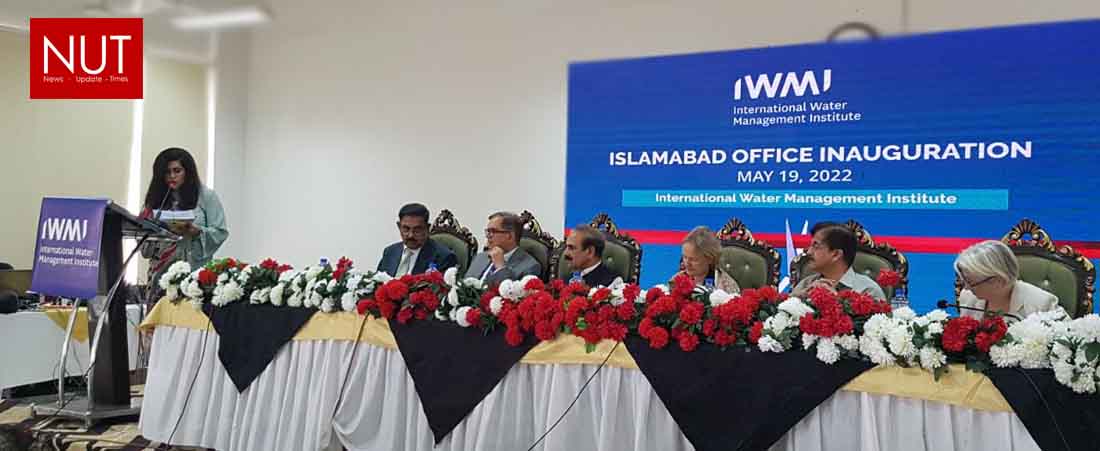
IWMI inaugurates liaison office in Islamabad for better coordination across Pakistan

Islamabad (Muhammad Yasir)  Experts have emphasized for employing latest data and research to ensure sustainable use of water and land resources in order to tackle the serious challenges of water shortage, climate change as well as food security in Pakistan.

They expressed these views at the inauguration of liaison office of the International Water Management Institute (IWMI) Pakistan in Islamabad on Thursday. Representatives from the diplomatic community, federal secretaries and officials from the development and private sector attended the ceremony.
Dr. Rachael McDonnell, Deputy Director General, IWMI, who inaugurated the liaison office, gave a presentation on climate change impacts on water resources availability in Pakistan.

She said that IWMI uses research for development approach to implement three strategic programs: 1) Water, Food and Ecosystems; 2) Water, Climate Change and Resilience; and 3) Water, Growth and Inclusion, to support the Pakistan government’s efforts to meet its targets under the Sustainable Development Goals.
Highlighting the IWMI’s priorities in Pakistan, Dr. Rachael added, “Our priorities – co-developed with federal ministries, provincial governments and development partners, are aimed to support the design and implementation of effective policies around water, food and climate; improve water use efficiency and productivity; and build stronger water institutions at all levels. Key research areas include disaster risk monitoring and climate resilience, water resources assessment, irrigation modernization, agricultural water management and capacity development.”
IWMI is an international, non-profit, scientific research organization, under the Consultative Group on International Agricultural Research (CGIAR), focusing on the sustainable use of water and land resources in developing countries. IWMI was established in Pakistan in September 1986 as a permanent research center.

In his remarks, Country Representative – Pakistan and Regional Representative – Central Asia, IWMI, Dr. Mohsin Hafeez, said, “IWMI Pakistan is working on projects related to improving water governance at federal and provincial levels, to help Pakistan adapt to the changing climate. By ensuring the availability of better water data and its use within the provinces, it will improve demand-driven sharing of water between competing uses.”

He further said, “We have field offices in Okara, Rahim Yar Khan and DI Khan, and this liaison office in Islamabad will improve coordination with stakeholders and address the growing water challenge.”
On the occasion, Pakistan Agricultural Research Council (PARC) Chairman Dr. Ghulam Mohammad Ali termed the IWMI role very significant in water resources management and PARC’s collaboration for sustainable irrigation development in Pakistan.

Talking on the occasion, Florence Rolle, Country Representative Pakistan shared an overview of living indus initiative in Pakistan.

Senior Joint Secretary Ministry of National Food Security & Research Humayun Javed; Chairman Federal Flood Comission, Ministry of Water Resources Engr. Ahmed Kamal and Senior Joint Secretary Ministry of Climate Change Dr. Mazhar Hayat gave their presentations on the implementation of various policies related to food security, water and climate change.

In the technical session, Dr. Muhammad Ashraf, Chairman, Pakistan Council of Research in Water Resources (PCRWR) informed the participants regarding the ongoing water situation in Pakistan.
The session was followed by a panel discussion on pathways for sustainable water resources management in the Indus Basin: Challenges and opportunities. The panelists included Muhammad Nawaz, Development Specialist, Water Resources Management, USAID; Dr. Bashir Ahmad, Director, Climate, Energy & Water Research Institute (CEWRI); Sardar Moazzam, Managing Director, National Energy Efficiency & Conservation Authority (NEECA).

The panelists called for protecting the Indus Basin from various threats such as climate change, unsustainable use and pollution, and suggested ways the government can ensure water security in Pakistan.

Mastercard and OPay announce strategic partnership

Mastercard and OPay announce strategic partnership to grow cashless ecosystem and advance digital financial inclusion for millions

  •  Partnership will enable OPay customers to pay on global online platforms backed by Mastercard’s secure Mastercard virtual payment solution linked to the OPay wallet.
  • OPay consumers will enjoy a superior digital experience for multiple lifestyle services and new digital commerce opportunities for, with or without a bank account.
  • In addition to digital commerce enablement, the two parties will jointly develop solutions to position OPay at the leading edge of financial services within the markets they operate in.

Lahore (Muhammad Yasir) Mastercard and fintech giant OPay today announced a strategic partnership, which marks a significant boost for wider financial inclusion and economic prosperity by opening up digital commerce to millions of people across Middle East and Africa.

The collaboration enables OPay consumers and merchants in the region – including Algeria, Morocco, Egypt, Nigeria, Ethiopia, Kenya, Pakistan, South Africa and the UAE – to engage with brands and businesses anywhere across the globe, thanks to a Mastercard virtual payment solution linked to the OPay eWallet.

This partnership is the latest milestone in Mastercard’s emerging market strategy where the technology company is collaborating with growing Fintech’s such as OPay to expand access to digital payments, enable multiple lifestyle services, create new pathways to financial inclusion and support the next generation of super-apps. Consumers are increasingly looking for seamless user experiences on a single platform offering easier interactions to complete various day-to-day needs, including sending and receiving money, ordering food and groceries, organizing transport, lending, investing and listing items they wish to sell.

In the initial phase of this partnership, OPay customers will benefit from the Mastercard virtual payment solution linked to their OPay wallets, to shop at well-known global brands for leisure, travel, accommodation, entertainment, streaming services and more. The service is available regardless of whether or not the customer has a bank account. It also allows small business owners to purchase from suppliers abroad and pay with the secure virtual payment solution.

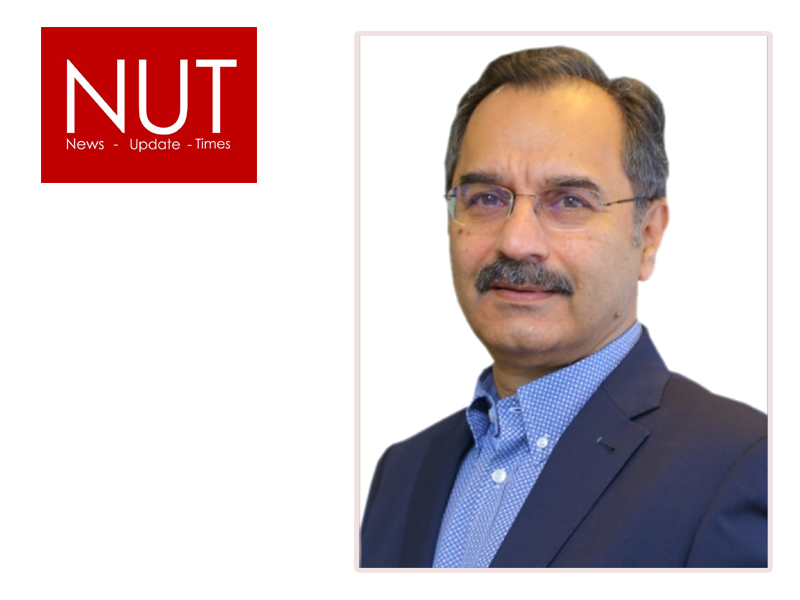
Amnah Ajmal, Executive Vice President for Market Development, Mastercard EEMEA, said: “At Mastercard, our innovation strategy is rooted in partnerships to support inclusion at scale. Our partnership with OPay demonstrates our commitment to supporting payments providers across the world to create an interconnected global payments ecosystem that benefits an array of consumers with unique needs.”

Yahui Zhou, CEO of OPay,said: “As the leading fintech in the Middle East and Africa, we are delighted to be partnering with Mastercard as we continue on our journey to promote financial inclusion, helping to open up the global economy to more consumers and businesses across Middle East, and Africa.”

Since its operations started in 2018, OPay’s active users have grown to 15 million in dozens of markets in which it operates. The company processes millions of transactions per day on average. In Nigeria alone, where OPay takes significant market share, users have saved billions of US dollars in the last four years through credit-linked savings accounts from their mobile wallets and small loans from lenders that use its platform.

Plans are in place to launch OPay services in other markets in the next three to five years, significantly driving the growth of digital inclusion and digital commerce, while at the same time widening OPay customer inclusion into the global economy.

Mastercard has made a worldwide commitment to financial inclusion, pledging to bring 1 billion people and 50 million micro and small businesses – with a focus on 25 million women entrepreneurs – into the digital economy by 2025.


(EBM) prioritizing employee engagement and employee wellbeing

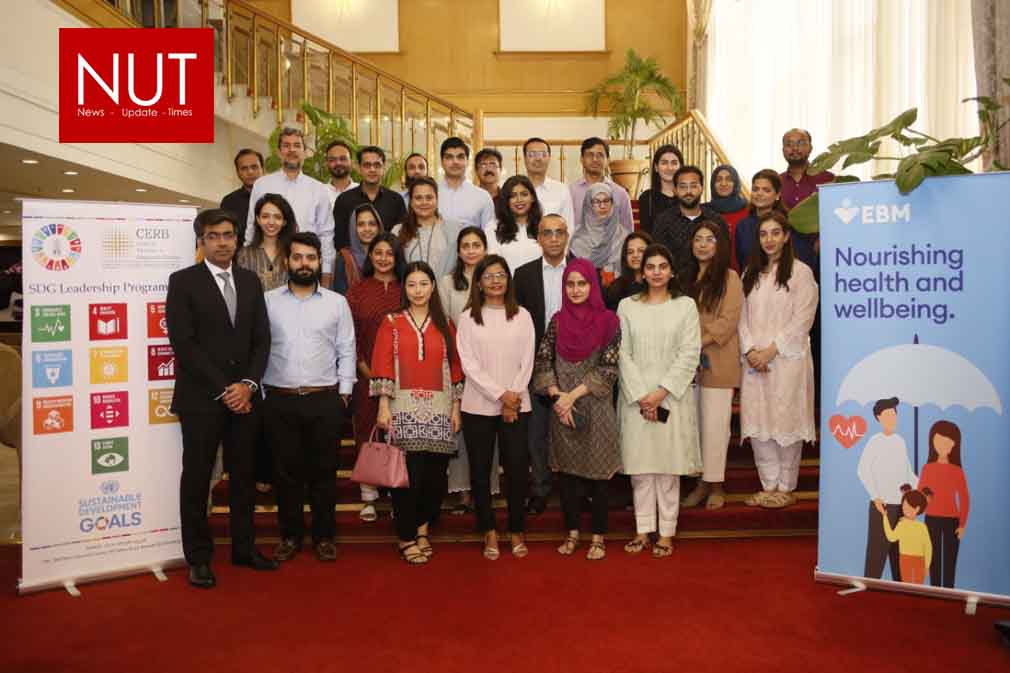
Karachi (Muhammad Yasir) English Biscuit Manufacturers (EBM) in partnership with the PBC’s Centre of Excellence in Responsible Business (CERB) hosted a workshop on employee wellbeing in the workplace as part of its ongoing project – SDG Leadership Programme. The workshop focused on the growing relevance of emotional wellbeing as a factor of employee wellbeing.  Organizations can commit to SDG 3 – Good Health and Wellbeing, by providing employees facilities which focus on both physical and mental health.

“The business case for employee well-being is clear,” remarked Dr. Zeelaf Munir, CEO of EBM. “It increases productivity as a result of a nourishing work environment. In such environments, employees genuinely flourish and grow alongside the company.” She further added how in addition to employee well-being, EBM remains committed to introducing initiatives to improve the well-being of stakeholders and the community at large.

The workshop was facilitated by the British Asian Trust, featuring experts supporting employee wellbeing mechanisms in the corporate sector. Experts from Taskeen, Saaya health, and Synapse raised awareness of the supportive roles that can be played at an individual level, by line managers in supporting diverse teams, and the importance of the knowledge of mental first aid.

‘The work-life balance is changing, with the advent of social media and technology. It is important now to realise when stress can be a positive driver and when it can lead to distress,’ highlighted Sanaa Ahmed, British Asian Trust. ‘Employee engagement has become key to managing employee health’.

Pak-Qatar Takaful Group Posts PKR 271 Million PBT

Karachi (Muhammad Yasir)  Pak-Qatar Takaful Group, which comprises of Pak-Qatar Family Takaful Limited and Pak-Qatar General Takaful Limited, reviewed and approved the financial statements of both the Companies for the year ended December 31, 2021 during the Board meeting recently. Pak-Qatar Takaful is Pakistan’s Pioneer and largest Takaful Group operating for more than a decade with the largest Takaful branch network nationwide.

Pak-Qatar Takaful Group achieved an aggregate turnover of around PKR 11 Billion. The Group Shareholders Fund posted a net consolidated profit after tax of PKR 207.5 Million; while, Participant Takaful Fund generated the net consolidated surplus of PKR 54.8 Million for the year 2021.

Profit before tax of Pak-Qatar Family Takaful Limited (PQFTL) increased to PKR 225 Million as compared to PKR 208 Million last year, a growth of 8% despite all challenges (economic and political) and the global pandemic caused by COVID-19. The company has increased its balance sheet footing through impressive growth in its investments and financing portfolio.

Pak-Qatar General Takaful Limited (PQGTL) posted the profit before tax of PKR 46 Million as compared to PKR17 Million last year, a growth of 170%.

Earnings per share (EPS) of Pak-Qatar Family Takaful Limited was recorded at PKR 1.34 while PKR 0.64 for Pak-Qatar General Takaful Limited.

The Board appreciated the management for their efforts despite Pandemic on the impressive results of the Group.