NAHEED.PK Honors Top Pakistani ATHELETES

Lahore (Muhammad Yasir) Naheed.pk, the commerce initiative of Naheed Supermarket, a leading name in retail shopping in Pakistan, honored the top athletes, in a colorful ceremony held recently as part of Conclave Pakistan 3.0, an event organized by e-Creatorz and America Pakistan Business Development Forum, to commemorate their successes. The event was graced by people from all walks of life, from Commissioner Karachi Iftikhar Shalwani to Sports legends including Wasim Akram and Samiullah Khan, came to show their support for the rising sporting stars of Pakistan.

Speaking at the occasion, Mr. Munsub Abrar, CEO of Naheed Supermarket, said: We at Naheed.pk understand the importance of a competition and the joys of winning. We extended our support and honor to our sportsmen and women who brought repute and laurels back to Pakistan.”

Showing his gratitude, legendry Cricketer Wasim Akram said, “Pakistan has a pleasant history and huge future potential in the sporting arena and all these people present here are the biggest proof of it”. He thanked Naheed.pk for its support to the sports. “I am happy to represent a heritage brand like Naheed.pk in honoring my fellow athletes.”

The event concluded with the Pride of Pakistan Awards being presented to Hockey legend Samiullah Khan, Cyclist Samar Khan, Mountaineer Samina Baig, Karate star Kulsoom Hazara,  Special Olympic Medal Holder Jasmine Sharif, Footballer Saddam Hussain, Tennis Star Nameer Shamsi, Badminton players Palwasha Bashir and Mahoor Shahzad, among others.


National Heritage and Tourism Workshop commenced at Lahore Fort

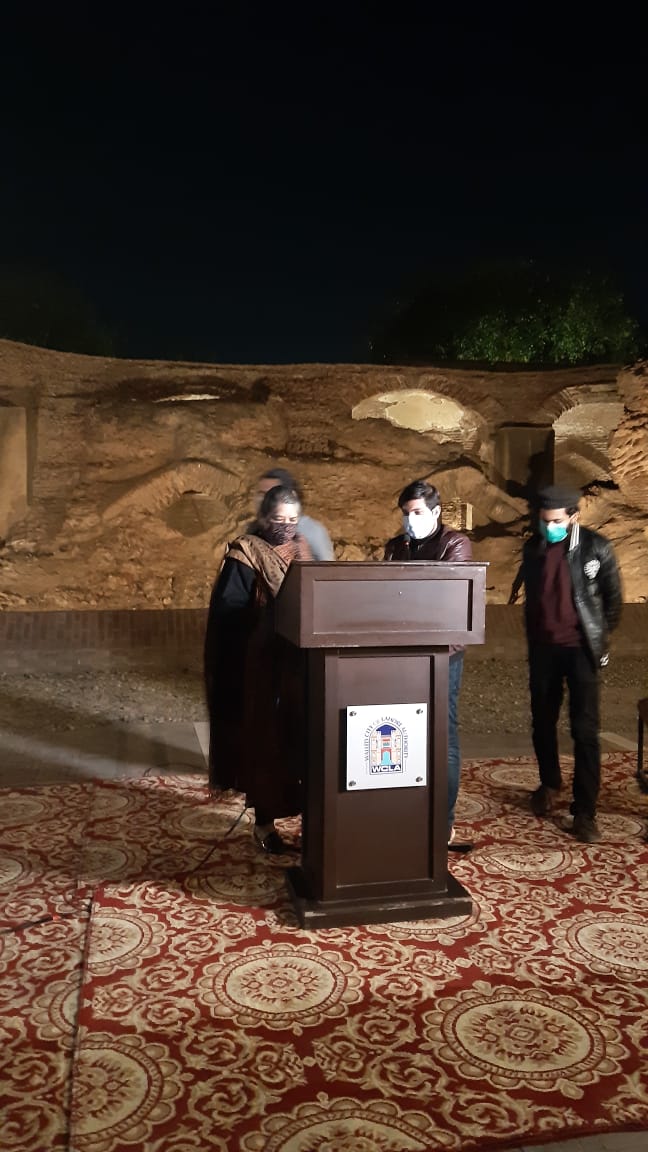
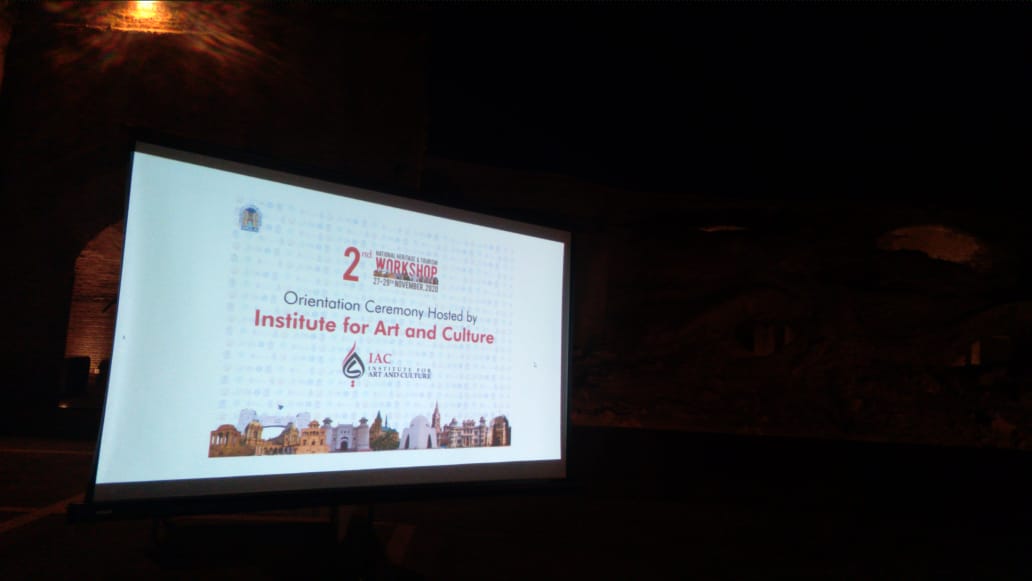
A collaborative effort to restore heritage sites and promote tourism of those heritage sites on behalf of Walled City Authority Lahore (WCLA) and the Institute for Art and Culture IAC) was taken on November 27th, 2020. The conference was held at Lahore fort, Royal Kitchens. It was joined by profound Scholars, Academicians and Architects to discuss the scope and future of conserving heritage sites in Pakistan. 
The event began with an introduction to the National Heritage and Tourism Conference, 2020 and its prime purpose. The orientation began with a speech by Prof. Sajida Haider Vandal (Vice-Chancellor, IAC) on the importance of conserving heritage sites and building an ecosystem which is sustainable for tourism and tangible cultural heritage. 
Mr. Omar (Assistant Professor, Head of Creative Partnership Development, IAC) spoke about the importance of the conference and why is the conservation of national heritage sites, important to the economy and sustainability of the communities that live near them. Questions and answer session was conducted that focused on them themes of sustainable tourism and cultural heritage.
 
The event was followed by dinner hosted by IAC. The Conference will take place till Sunday, 29th November at Lahore Fort, Royal Kitchen.

Telenor Group participates in WEF special dialogue with Prime Minister Imran Khan

Discussion explored how government and private sector can partner to help Pakistan progress towards a fully-fledged digital economy

Lahore (Muhammad Yasir) Sigve Brekke, the President and CEO of Telenor Group, today participated in a special virtual dialogue with Prime Minister Imran Khan as part of a country strategic dialogue on Pakistan hosted by the World Economic Forum (“WEF”). 

In the dialogue, Telenor Group called for greater cooperation between public and private sectors in bridging Pakistan’s significant gap in digital access.

Looking at the challenges contributing to this digital divide, Telenor Group emphasised the need to create an environment in which mobile operators can continue to strengthen connectivity, which is the building block of the digital economy. In this context, Sigve Brekke stated that fair and predictable regulatory and taxation regimes are necessary to improve business climate and a key requisite for future investment into Pakistan.

During the discussion, Brekke also highlighted how the global pandemic has elevated the role of connectivity and digital tools in everyday life. This critical infrastructure is offering people a lifeline as well as being an important fundament for economic activity and recovery going forward.

There is a danger that the digital acceleration we have experienced this year will leave some people behind. The economic impact of connectivity multiplies with greater participation; hence ensuring connectivity for all is critical. In recognition of this, Telenor continues to work to ensure digital inclusion for everyone in Pakistan.

How smartly telecom companies are looting innocent citizens

Lahore 5th October 2020 By Muhammad Yasir (New Update Times)

All the telecom companies operating in Pakistan including Jazz, Warid, Youphone, Telenor and Zong are doing exceptional business despite the fact that the corona pandemic devastated every sector of economy in Pakistan like the rest of the world, but the profit ratio or business graph of these multinational giants did not have a significant impact on them. What is this rocket science??

The basic reason of this is continuous looting and deceiving their loyal customers through regular hike in charges and fake media campaigns claiming their packages as best one.

All the companies take pride in claiming that their talk or internet packages are cheapest and fast track etc but reality is altogether. At the moment no company is providing satisfactory service to its users in Pakistan, that’s why calls for protests against these companies are arising day by day.

News update times talked with some citizens backing the protest to know the reason and it was revealed that Jazz and Warid have severe signal problem. People are complaining that soon after the alliance between Jazz and Warid this problem arose and it is getting worse with each passing day.

Zong internet packages are a real dacoity on the pockets of customers as internet speed is so slow that it takes ages to open a single page sometime.

Telenor talk rates and whatsapp bundle packages are too costly and it also has signal problems in big cities or densely populated areas especially in Lahore, Gujranwala and interior Sindh.

You phone is regularly hiking the price of its internet bundle which is affecting its loyal customers. Telecom companies in the country are looting the innocent customers through service charges and deduct a significant share of the customer’s money. The telecom operator charge this amount soon after customers load money into their account and this amount go to the operators. Interesting thing is that companies are charging this amount without any service and no justification is given from their side.

Earlier these charges were different but not all the telecom operators are charging same percent of all amounts. When contacted telecom officials told online that low tariffs, low ARPUs, expenses on infrastructure and other elements are the reason to deduct service charges from the consumers. Sounds of protests are arising day by day. Here is such a post indicating the sentiments of the general public.

Protest. Protest. Protest

Protest against double and extra taxes

88 on a load of 100

Why the balance of Rs. While every call and message is also tax deductible.

Why has the Rs 140 package become Rs 167?

By whose order is this done?

Loading Rs. 200 costs Rs. 152, ie to pack Rs. 167, you have to load Rs. 230. Thus, you have to pay Rs.

Tax on load of Rs.100 + tax on each package + call setup charges are being deducted after package? (Load of 100 falls in 50)

The Pakistan Telecommunication Authority should take action against all mobile companies in the public interest to stop looting the public in various ways once the tax has been deducted.

Chief Justice is requested to take Sumoto action to save the people from looting.

Share this message as much as possible.

Corporates collectively rescue employees while the rest of the city drowns due to poor infrastructure

While the spell of monsoon rains played havoc across the city, key city links were flooded, severing the city’s transportation system and leaving people stranded on roads. Amid the downpour, people were stranded at their offices with no transportation or food. In the wake of the emergency crisis and thunderstorm that shook the whole city, corporate proved to be the real heroes.

While employee accountability is commendable, the real core of corporate responsibility is ensuring that everyone in your organization is taken care of and a relationship of trust is built between the employees and the organization by meeting expectations of ethical and responsible behavior. In case of any catastrophe an organization is required to stand for its people and corporates in Karachi are a proof of that.

The emergency crisis on 27th August, brought down the city of lights on its knees. Many corporates stepped up and helped people stuck near Shaheen Complex and I I Chundrigar areas shift to nearby hotels, these included mostly banks like Standard Chartered, Bank Alfalah and JS Bank. The Bank’s ensured rooms were provided to their staff at a 5-star hotel along with dinner and breakfast. The teams worked swiftly and were on the ground till 5 am ensuring employees had dinner and were moved to their rooms.

Administration of K-Electric however managed to convert its office into a hotel, where employees were asked to stay the night with food and refreshments available to them.

Many banks and organizations also opted for Hotel Ramada, as the situation got worse at night. JS Bank and TCS also mobilized coasters and managed to get most of the staff home without charging any fee.

“Our senior management was on its feet till 5am in the morning, they facilitated us so well and ensured every person evacuated was given a room and food. This gesture makes me proud of my organization and their commitment towards their employees”, said one of the effected at Movenpick Hotel.

These organizations stand as an example to many, no differentiation of class or grade, not concerned if revenues were compromised, in the hour of need these companies stepped forward and pulled out all its employees out of this dire situation that literally fractured the infrastructure.


Eid Al-Adha 2021 in pakistan and how it is celebrate


Eid ul Adha 2021 in Pakistan and know about Eid al-Adha, one of Islam’s biggest event.

Eid Al-Adha celebrate in Pakistan on 1st August 2020 after declared by Mufti Muneeb (Pakistan Chairman of Ruet-e-Hilal Committee). Government announced three days as Eid  holidays.

Islamic scholar Mufti Muneeb-ur-Rehman has urged Prime Minister Imran Khan to declare three days of Eid ul Adha as public holidays. Addressing a press conference in Karachi on 29th July, Mufti Muneeb said that traditionally Eid Mubarak is a three-day celebration.

Last week, the federal government had announced a three-day holiday on account of Eid ul Adha.  According to the notification, the second day of Eid, would be the last holiday while Eid’s third day, Monday, is notified as a working day.

Addressing the press conference in Karachi, the religious scholar said there is “no conflict between ulema and science” and that the ulema “also have scientific knowledge”. He said meterologists from Pakistan Meteorological Department were a part of the decision making during the moon-sighting.

Why Muslim celebrate it?

One of the Muslim significant holidays in Islamic calendar, Eid al-Adha marks the annual Hajj Pilgrimage to Mecca in Saudi Arabia. It recite in the Quran of God appearing to Hazrat Ibrahim, “God prophet”, in a dream and commanding him to sacrifice his son as an act of obedience.

Muslims believe that as Ibrahim was about to sacrifice his son, God stopped his hand and gave him a sheep in place of his son. The storywas also recite in the Book of Torah.

To commemorate God’s test of Ibrahim, many Muslim families have an animal slaughtered, often through their local butcher and distribute the meat to family, neighbors and the poor.

It is a time of celebration when families gather for meals, visit relatives and friends, and children are given money and new clothes. It’s also a time when families visit the graves of their loved ones and donate to the poor.Best collection of eid mubarak gif images pics collection download free.

How does it celebrate?

The day begins with morning prayers. The celebrations continue with visits to friends and family, exchanges of gifts and feasts. But this year due to Covid19 government force people to follow SOP during Eid Celebration.

Eid Mubarak and Eid Saeed are routine greetings used during the observance to offer best wishes.

Its duration & Place?

The four-day religious holiday begins on the third day of the annual Hajj, the pilgrimage to Mecca that all Muslims who are physically and financially able are required to undertake once in their lifetime, some saving their whole lives to make the journey.

Because the timing of the festival depends on the sighting of the new moon, countries around the world sometimes celebrate it on different days, though most follow Saudi Arabia’s lead as it is the host of the Hajj.

This year, it will start Tuesday and end Sunday.

The Hajj pilgrimage 2020 | Newsupdatetimes

The Hajj pilgrimage among the five pillars of the Islamic faith is performed differently this year.

(NUT Desk): Hajj Date 2020, To keep Covid-19 infections at a minimum, the Saudi government has also imposed strict social distancing rules and engaged contact tracing technology. It is covering all travel, accommodation, food, and healthcare expenses of the admitted pilgrims this year.

On Thursday Sheikh Abdullah Al-Manee while delivering a sermon of the Hajj 2020 urged all Muslims to remain united in the bonds of brotherhood. Sheikh Abdullah Al-Manee impressed upon the need for showing compassion towards parents, children, relatives and all living beings.

He said The Holy Prophet (P.B.U.H) described the Muslim Ummah as one body. He said that Muslims should lead their lives according to Islam as it is the only way to lead a successful life.

Sheikh Abdullah Al-Manee, a member of the Council of Senior Scholars and Adviser at the Royal Court is delivering Hajj sermon from Nimra Mosque. He urged the faithful to keep fearing Allah and adopt piety. Prodding the path of Allah is the only way of emancipation.

“Islam forbids any excess against any Muslim or non-Muslim. We must fully comply the teachings of Sharia”, Sheikh Abdullah said and added that Islam brought blessings for the mankind.

He called upon media of the Muslim world to play role for the unity of Muslim Ummah.

“The peace and tranquility of mind can only be found through the religion,” he said. The pilgrims after listening to Hajj sermon will perform Zohr and Asr prayers together.The pilgrims will spend time in Arafat with prayers for acceptance of their pilgrimage and recitation of Qur’anic verses until sunset. After sunset, they will head to Muzdalifah, where they will stay until midnight, engaged in prayers after performing combined Maghreb and Isha prayers.

Hajj 2020: latest updates as the pilgrimage begins - The National

The five-day annual Hajj pilgrimage began in Makkah, Saudi Arabia on Wednesday 29th July with strict measures to contain the spread of the coronavirus.A downsized Hajj, this year the number of pilgrims have been drastically reduced to 10,000 from last year’s 2.5 million. The kingdom of Saudi Arabia has put strict safety protocols in place with a mandatory quarantine that began on Tuesday.

Saudi authorities initially said only around 1,000 pilgrims residing in the kingdom would be permitted for Hajj however, local media later reported that as many as 10,000 will be allowed to take part. Some 70% of the pilgrims are foreigners residing in the kingdom, while the rest will be Saudi citizens.

Digital banking opportunities for banks post COVID-19

Written By- Javeria Haseeb Co-Founder & Marketing Lead – Hysab Kytab

The COVID-19 pandemic which rapidly evolved these past few months, did, and still continues to present difficulties for people and businesses. From our personal health to business growth, everything is at risk. This single event has crippled the world’s economy and we are all slowly trying to find a way out – to find opportunity in this adversity.

Though the degree of damage varies, all sectors and businesses have been hit by this anomaly and are striving to survive through this crucial time. According to some analysts, this pandemic-driven situation may have a far worse impact on the global economy than that of the 2008 financial crisis.

The Changing Paradigm in Banking

Where institutions like the State Bank of Pakistan (SBP) and the World Health Organization (WHO) advised early on to use digital payment services such as internet banking and mobile phone banking, hard cash continues to be avoided as it was considered to be one of the carriers of this virus. To further control the spread, as well as with the systematic shutdown of public dealing, it became inevitable for banks and other financial institutions (FIs) to go digital entirely.

This situation called upon banks and FIs to adopt digital transformation, modify their product offerings and find a digital financial tool that could enable them to cater to the needs of their customers and transcend during these challenging times.

Banks were in a prime position to turn this threat into an unparalleled business opportunity by rapid adoption and acceleration of digital banking initiatives. Here’s why it is important to continue to prioritize digitalization and how to do it:

  • Digital is the only way to cater to customers’ financial needs instantly

The most prevalent form of direct connection with a bank’s customers has been disintegrated with the decline in traffic at bank branches because customers are relying heavily on digital mediums to fulfill their needs. These online and mobile banking mediums are an enabler to serve customers instantly without putting employees’ wellbeing at risk. With the right financial tools, banks can become the primary partner and advisor for their customers during and beyond this crisis.

  • Empower customers in making smarter financial decisions in this time of uncertainty

Apart from fears about physical health, this pandemic has left everyone concerned about their financial health, now, more than ever. It is the right time to put customers at ease by helping them emerge out of this crisis with a completely organized view of their finances. Providing them with a digital tool that not only lets them track their financial transactions, but also sorts them in terms of priority and notifies them when to put their spending on hold could help customers better understand their financial standing.

  • Digital meaningful targeting to build long-term loyalty

A research, conducted in the US, showed that 70% of millennials would rather go to the dentist than listen to what their bank has to say. This will become more real than ever post-COVID. The new ways of working will change the role of branch and relationship managers (RMs) drastically. With the help of a digital money management solution that allows RMs to communicate directly with their customers and understand their needs by using data-driven insights, banks will be able to target customers far more effectively by getting a 360-degree view of their finances. As a result, they will be able to build long term loyalty translating into higher revenue per customer.

An increasing demand for complete digital experience is an opportunity for banks to invest in digital financial solutions. Even after this crisis is over, it is still a smart investment as it adds further value in online banking and benefits banks with long term loyalty and a more engaging relationship with customers. Innovative Fintech companies, are well positioned to help banks adapt to this change and rollout a gratifying digital money management experience for their customers. 

Four things firms need to know about protecting employees during times of crisis

By: Emma Shakespeare, Regional Sales Director at SAP Concur

Are companies relieved of their duty to care for the wellbeing of their employees during this lockdown period? The answer is no.

Organizations owe it to their employees to keep them safe either while working remotely or traveling on official company business. In times of major disruption or heightened risk, companies need to take all necessary measures to ensure they can meet the necessary duty of care obligations and keep their employees informed and away from harm while they are operating on behalf of the organization.

Duty of care refers to a company’s moral and legal responsibility to care for the wellbeing of its employees during the course of business. 

Businesses should know where their people are, whether far away or close to the office, and must be able to alert employees during a crisis, provide them with any assistance they may need, and keep open lines of communication until everyone is safe. 

There are four things companies need to bear in mind during this time to ensure they live up to their duty of care obligations, namely:

  • You need to know where your teams are during a crisis

In one study, 77% of finance leaders said they were not confident they could quickly and accurately locate employees during an emergency.This exposes the employee and the employer to significant risk, especially during the types of global crises we’re experiencing in 2020. Companies need to take all reasonable steps to locate traveling employees and track their progress home until they are brought to safety.

  • You need to be able to communicate with teams throughout a crisis

Companies often fail at communicating with employees that are affected by a crisis. Organizations need a reliable, secure way to directly and instantly communicate with remote employees to warn them of potential risks, guide them through the crisis and ensure they can get to safety quickly and with as few issues as possible. It is simply not enough to send a static informative message but rather to elevate your duty of care platform to enable bi-directional communication for real-time coverage and protection.

  • Employees notice when companies fall short in their duty of care obligations

Alarmingly, one study found that 41% of employees that were near a natural disaster said they were never contacted by their company at all. Aside from possibly contravening their own duty of care obligations and opening the company up to legal issues, the experience for the employee is unlikely to lead to greater loyalty or productivity. Considering the importance of employee experience to talent retention and productivity, such companies may suffer reputational damage.

  • There are tools that help companies meet their duty of care obligations

Within our ranks we managed this serious challenge using our Concur Locate service part of the SAP Concur solution; which provides powerful capability for capturing and accessing real-time employee location data and communicating directly and securely.

Our customers have also used SAP Concur to reliably communicate with their employees regardless of the situation, at the same time providing employers a single tool to monitor employee location and gain intelligence on country-specific travel disruptions or risks. Companies were also able to mitigate risks associated with business travel by conducting assessments and providing alerts pre-trip, during a journey and after.

In short, during today’s unprecedented times, employers need to consider ways of providing a powerful employee risk management and safety communication solution that allows organisations to ensure their employees are safe, no matter where they are. By doing so, organisations can swiftly identify risks and assess impact, pinpoint employees’ locations and know their travel plans using machine learning, leverage multiple options for two-way communications, and deploy local response teams, if-and-when necessary.

Dairy contributes 11% to the GDP of Pakistan

Dairy sector has a potential to employ 60 million people in dairy & livestock sector; currently more than 10 million families are connected with milk processing companies. Altogether Pakistan produces 60 billion liters of milk per annum and has a potential to double the production through increasing milking yield per animal.
Pakistan Dairy Association is however grieved on the budget 2020-2021 as no initiatives were taken to revive the dairy sector of Pakistan despite submitting three proposals to the government in the interest of economic development of dairy sector and how government can raise revenue in medium to long term time frame. It is now high time for the government to take notice of dairy sector and make necessary decision to support the dairy sector. If immediate and supportive actions are not taken by the government, we are afraid that industry will collapse leaving millions of families deprived with employment, and livelihood, said by chairman PDA and CEO, Dairyland Pvt Ltd. Likewise if industry collapse, people will be deprived of safe milk resulting in stunting, wasting and underweight death toll. 
Pakistan is the 5th largest producer of milk in the world. Dairy contributes 11% to the GDP of Pakistan. In a conducive environment this has the potential to become an economic powerhouse for the country. Almost 44% of children under the age of 5 years are stunted and almost 15% are wasted. This is a national concern and shall be noticed by the government to support the dairy sector to produce quality and safe milk and make the milk available for every household of the country.
Dairy sector can play a vital role to revive rural economy, by only 1% increase in the market share of processed milk can result in additional 2 billion liters of annual milk production and over rupees 6 billion of tax revenue for the government, said by Senior vice chairman PDA and Managing Director, Friesland Campina.
Below are some facts and challenges of dairy sector in Pakistan.
Industry Contribution:
1. Industry spent over 500 million rupees in the rural farmer development program and capacity development.
2. Industry support farmers in efficient milk supply chain and educate them how to increase the milking yield of their animals. 
3. Industry invests almost 1.5 billion rupees to educate and create awareness about safe milk and change the negative perception of packaged milk.
Facts:
1. Only 5% of the total milk produce in the country is processed.
2. Raw & loose milk may be unsafe for human consumption, because there are no quality & regulatory measurement at farm level, further we have a poor & inefficient supply chain of milk. 
3. Almost 95% of milk consumed in Pakistan is unsafe, unregulated and untaxed.
4. Packaged industry is able to produce safe milk ensuring quality and nourishment. Industry also pays taxes and contribute to government revenues. All packaged milk are tested by government laboratory periodically to ensure safe milk standards.
5. Packaged industry purchase almost 120 billion rupees worth of milk annually from local farmers. 
Challenges:
1. Dairy industry has been declining since abolishment of zero rating tax i.e. 2016. Since past two years the industry is making losses. If this continues, processors will have no option but to close their doors for business.
2. The gap between the price of loose milk and packaged milk has increased due to lack of safe & quality milk available and poor supply chain.
Solution:
1. Zero rated sales tax regime is a win-win for Government and dairy sector.
a. Sales and profitability of industry will grow.
b. Creates incentives for new foreign direct investments (FDI) for modernization of the industry.
c. Government can earn upto rupees 25 billion in overall revenue through sales tax and income tax.
2. Minimum pasteurization law to be implemented in large cities like Karachi, Lahore, Faisalabad, Hyderabad, Multan and Rawalpindi/Islamabad so that raw milk is not sold without any format of packaging.